

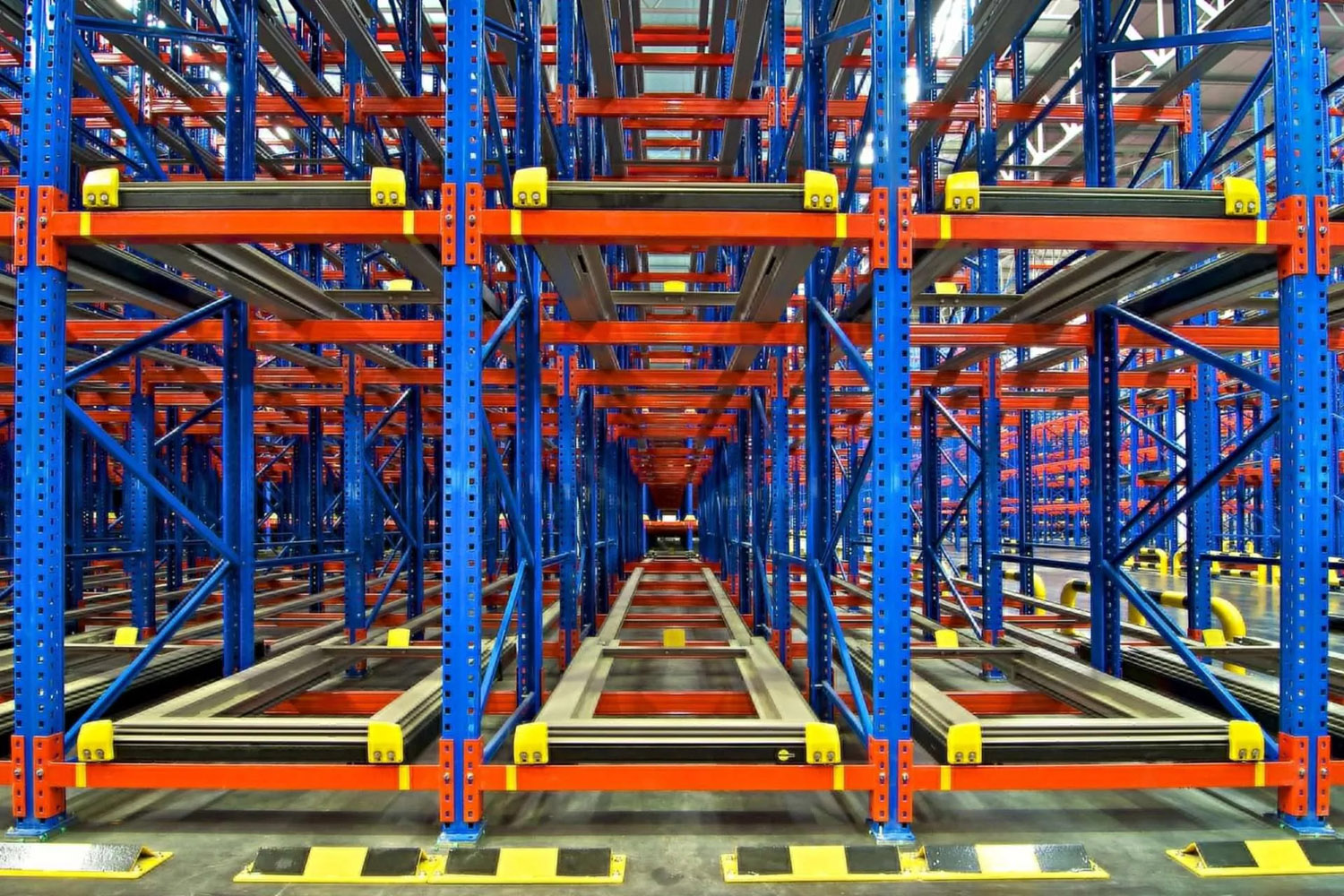













What is Push Back Racking?
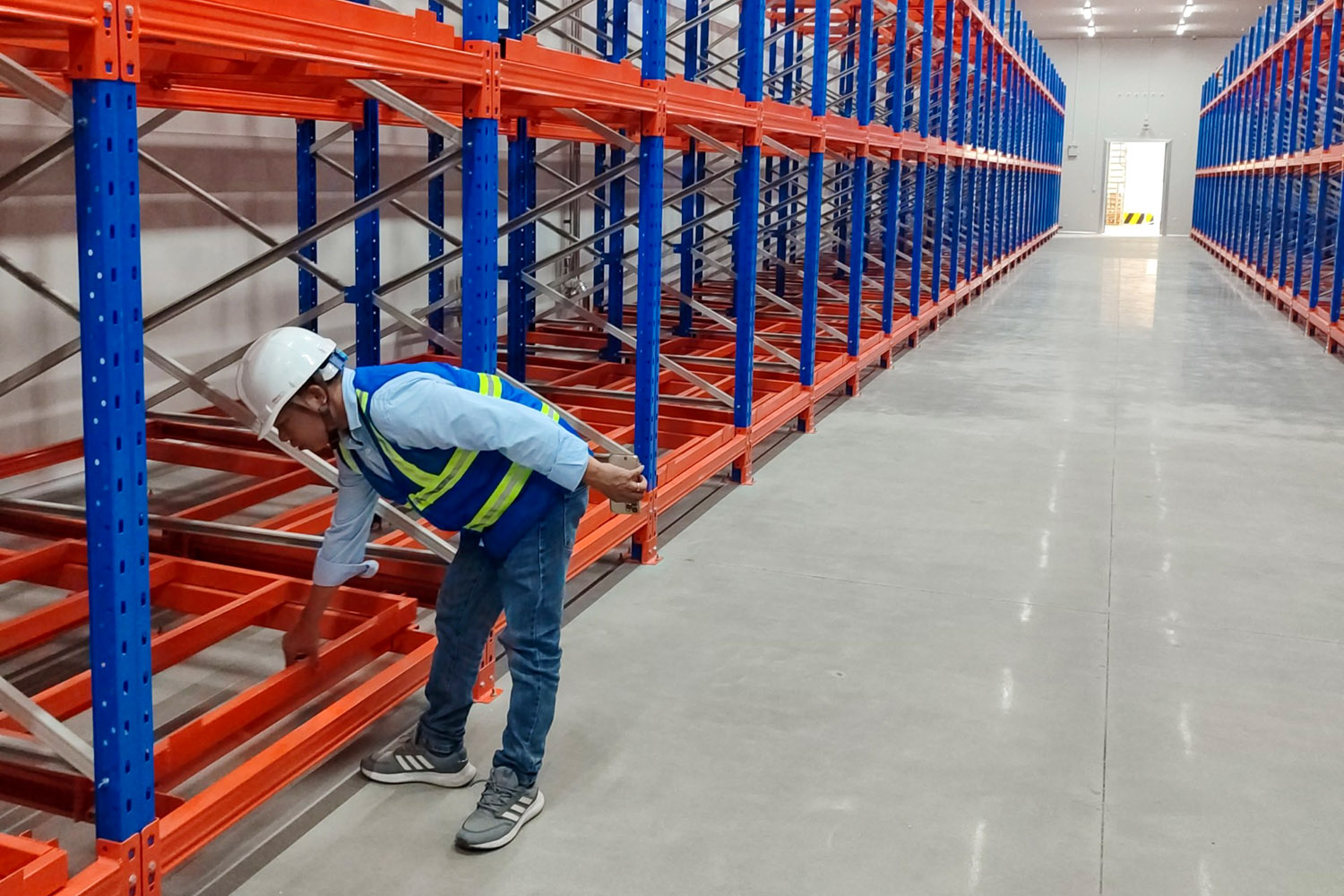
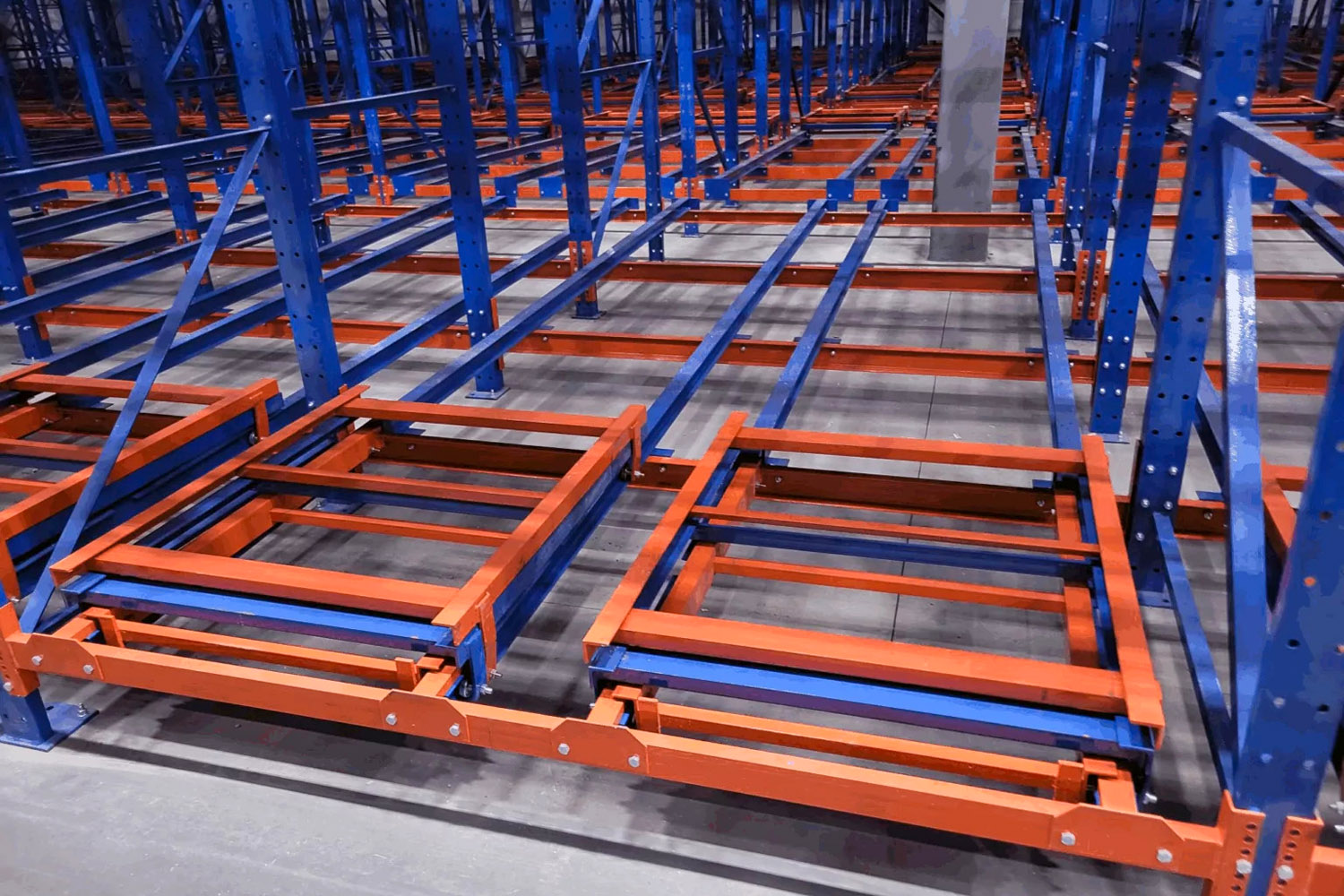
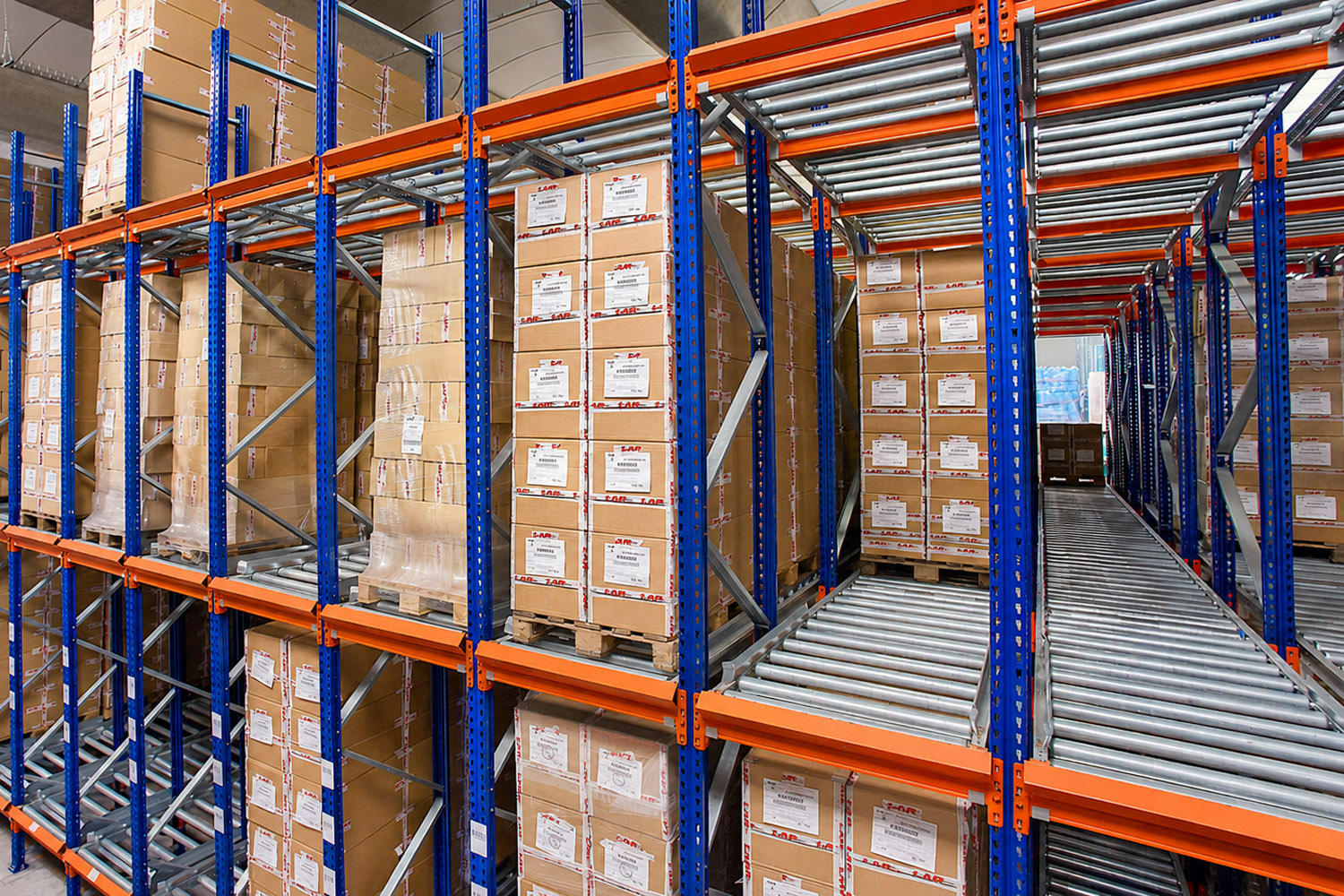
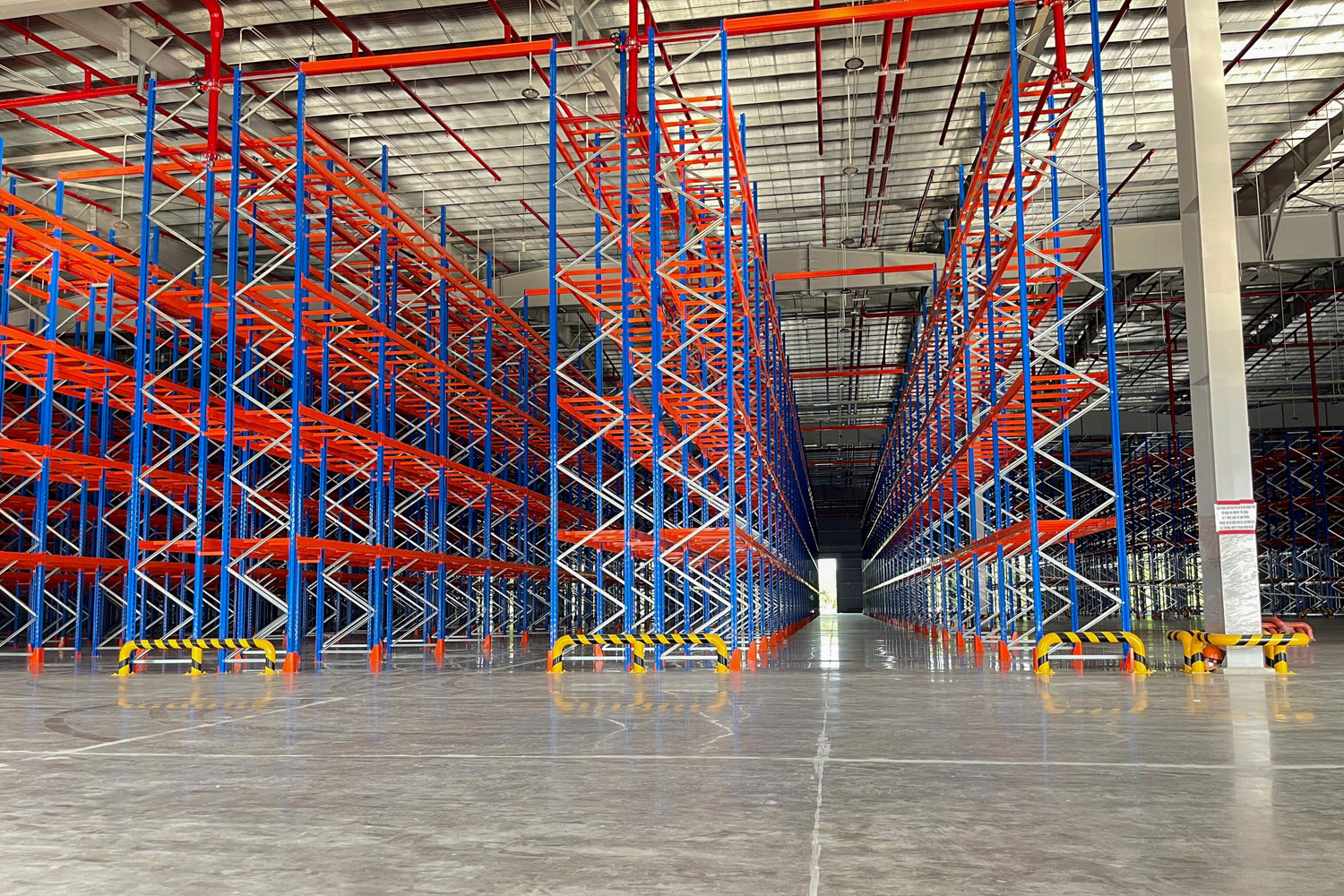
Push back racking is a high-density pallet storage system that stores pallets 2 to 6 positions deep on inclined rails or nested carts, allows forklifts to load and retrieve pallets from a single aisle, pushes existing pallets backwards when a new pallet is loaded, and uses gravity to move the remaining pallets forward to the pick face when the front pallet is removed. This makes Push Back Pallet Racking suitable for LIFO operations, where the last pallet stored is the first pallet retrieved.
Key Features:
- High density pallet storage: Stores multiple pallets deep in each lane, increasing capacity within the same warehouse area.
- LIFO stock rotation: Supports last-in, first-out inventory handling for suitable product categories.
- Single-aisle access: Pallets are loaded and retrieved from the same aisle, with pallet movement supported by carts or rollers inside the racking lane.
- Deep-lane configuration: Each lane can be designed with multiple pallet positions in depth, depending on pallet size, load weight and warehouse layout.
- Forklift-compatible operation: The system can be configured to suit different forklift types, pallet dimensions and handling requirements.
- Customisable design: Push Back Racking can be adapted to different pallet weights, lane depths, storage capacities and warehouse conditions.
Push Back Racking is commonly used in Australian warehouses that handle medium to large pallet volumes, limited SKU variety, batch storage and products that do not require strict first-in, first-out inventory rotation.
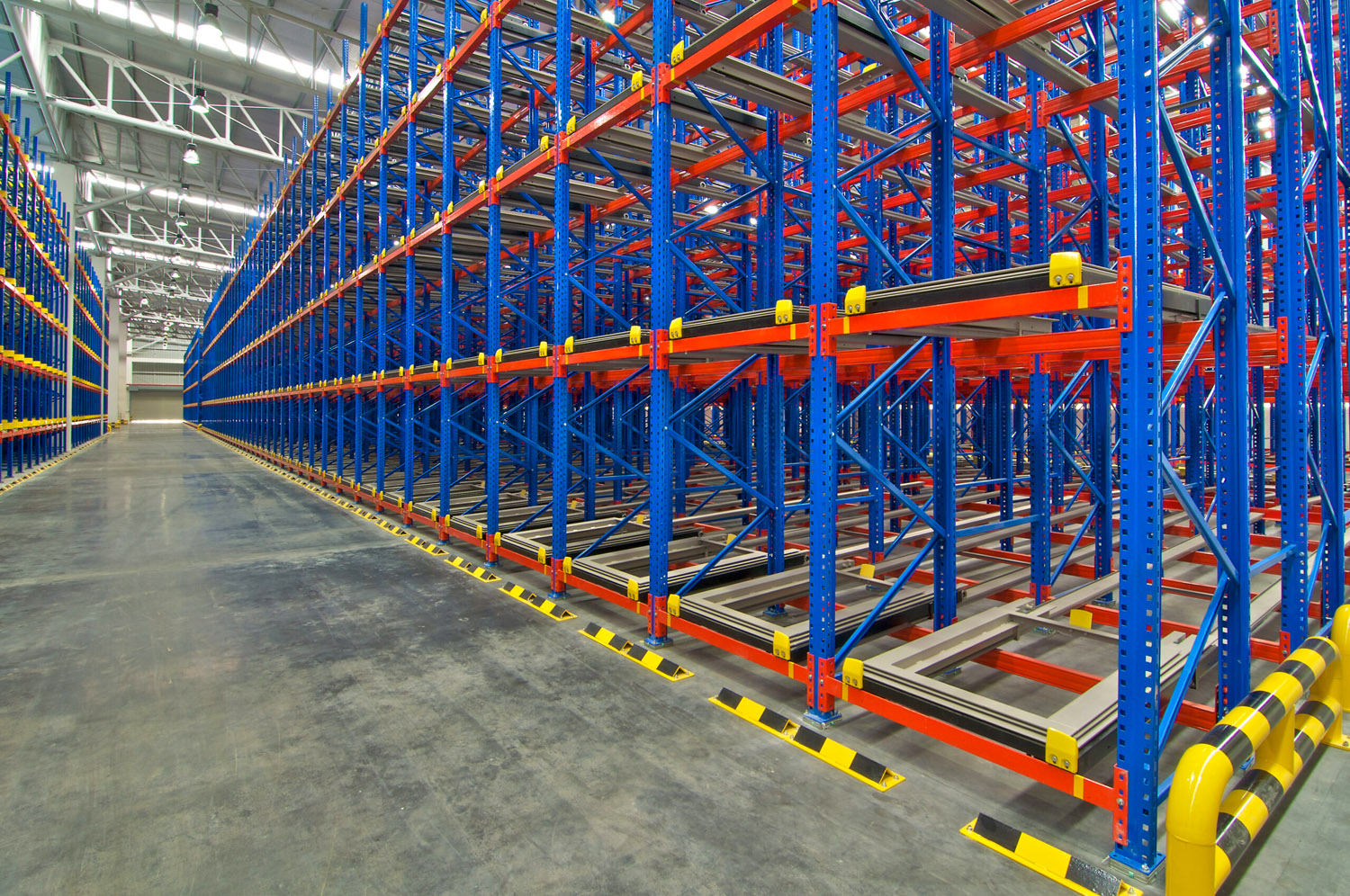
Read more: Drive-In Racking: Maximise High-Density Warehouse Storage
How Push Back Rack Works
Push Back Racking works through two main operating stages: loading and unloading.
Loading (Pushing Back)
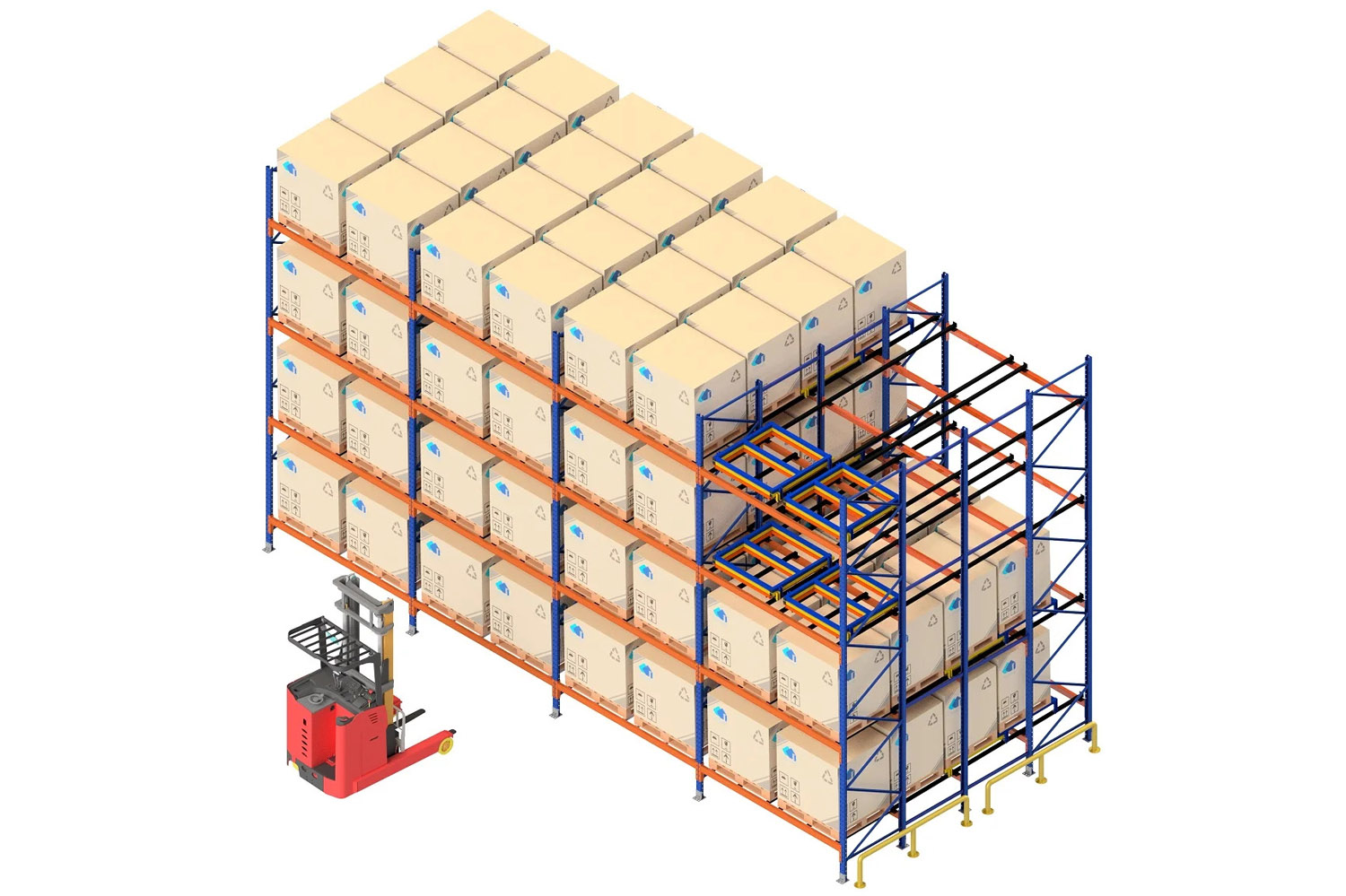
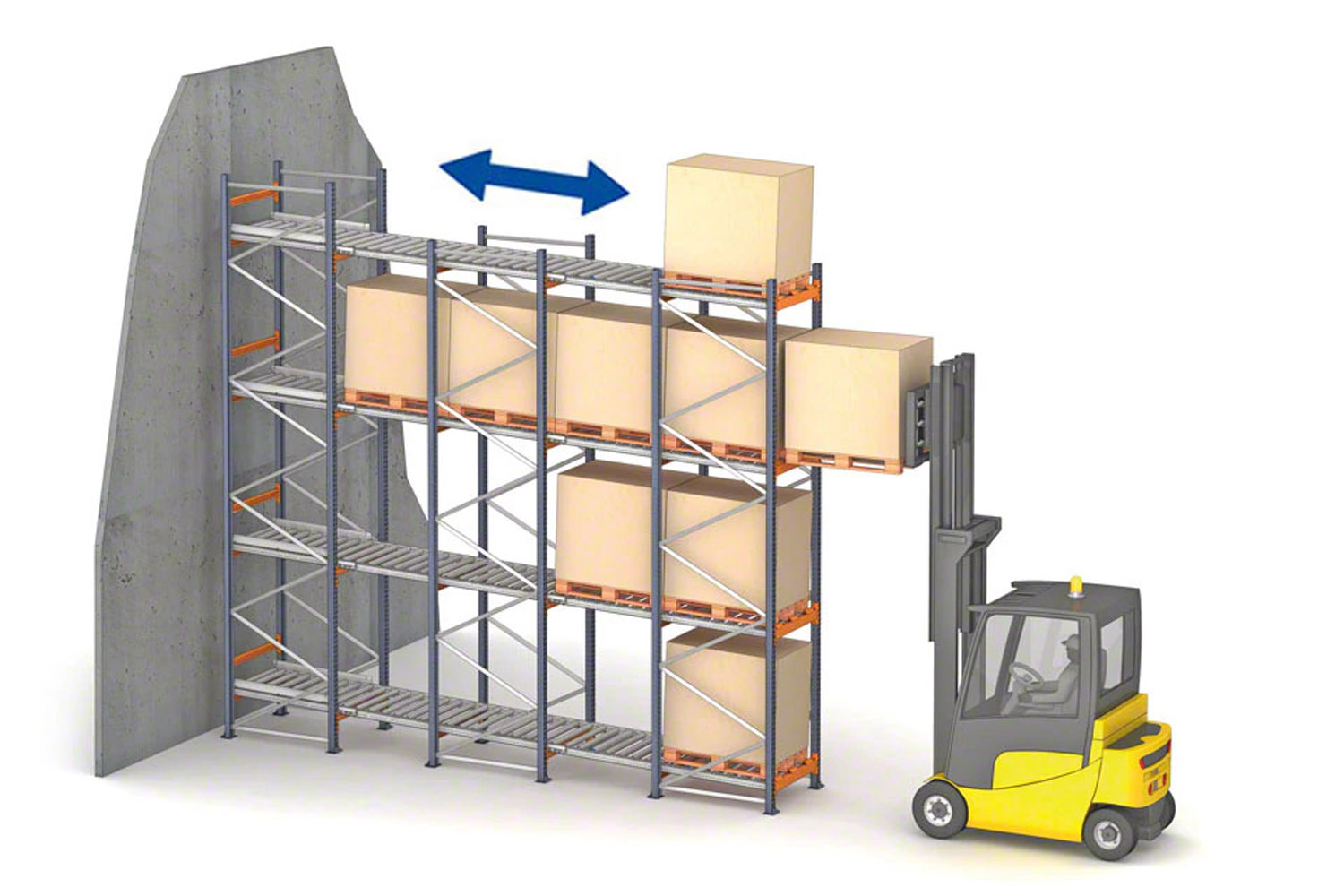
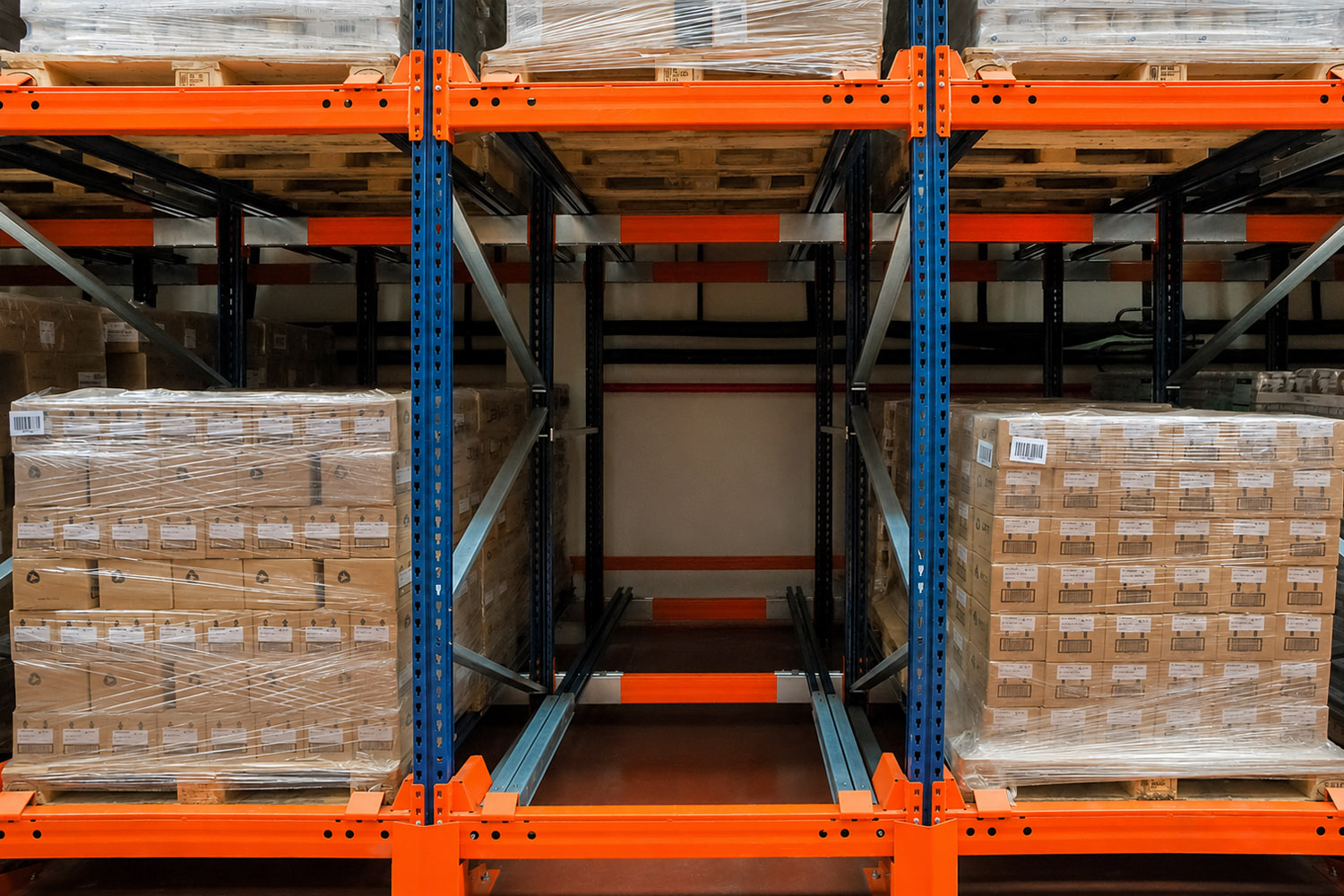
Push back rack systems use nested, wheeled carts on slightly inclined rails. Forklifts load new pallets from the front, pushing existing pallets deeper into the rack. When a front pallet is removed, gravity rolls the remaining pallets forward to the picking position.
Unloading (Gravity Flow)
When stock is retrieved, the forklift removes the front pallet. This is the last pallet loaded, which matches the LIFO principle. Once the pallet is lifted and moved away, gravity moves the remaining pallets forward by one position. The next pallet is then ready at the pick face.
This process shortens handling time, reduces forklift movement and improves pallet retrieval speed.
Push Back Racking System Structure
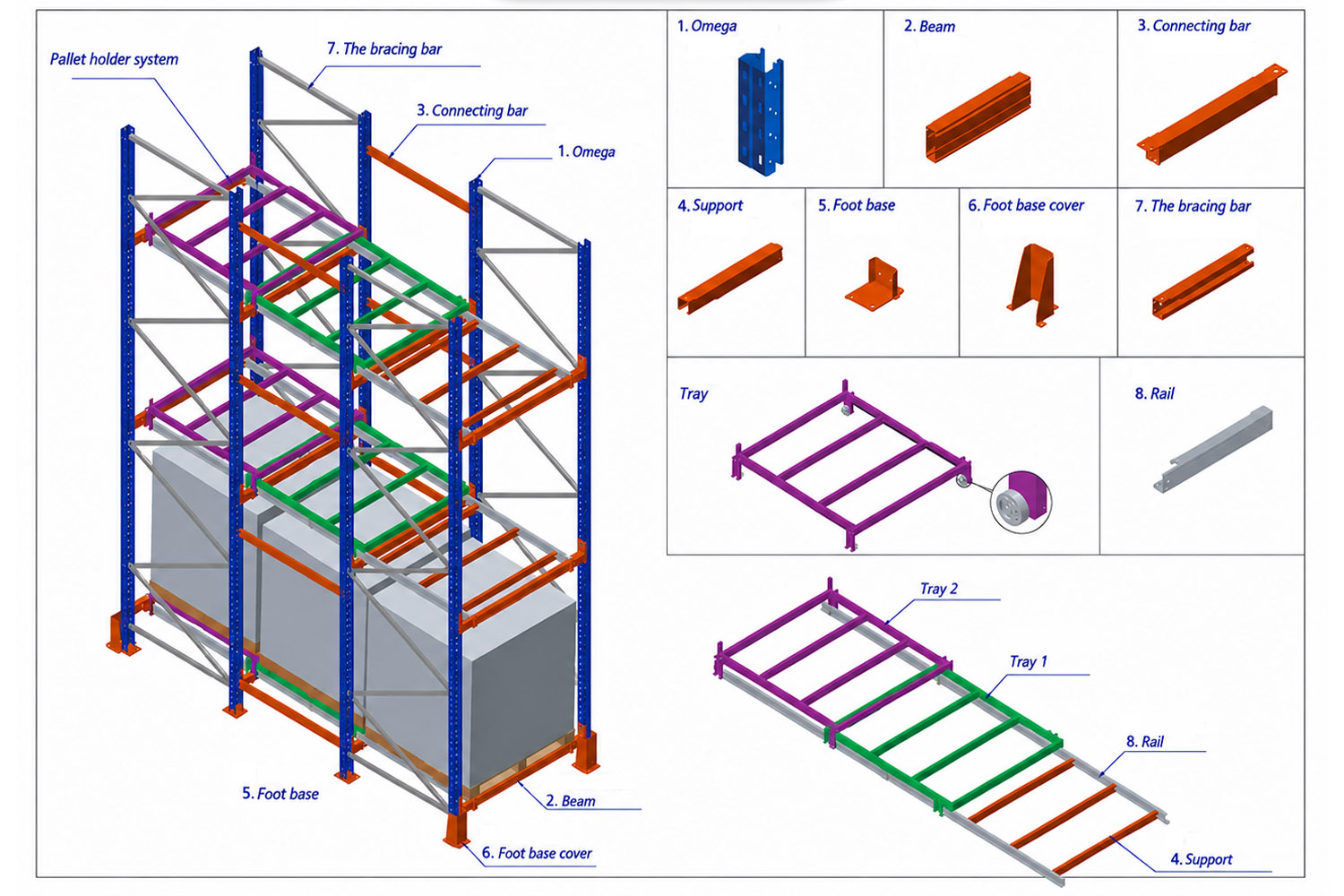
To understand how a Push Back Racking System works, it is important to look at the key structural components that support pallet movement, load stability, and safe warehouse operation.
Every reliable pallet support system starts with strong, well-designed components working together.
- Omega: The Omega upright forms the main vertical structure of the racking system, providing strength and stability.
- Beam: The beam supports the pallet load and connects the upright frames across each storage level.
- Connecting Bar: The connecting bar links key structural components together to keep the system aligned and secure.
- Support Bar: The support bar reinforces the pallet tray and helps distribute the load more evenly.
- Foot Base: The foot base anchors the upright to the floor, ensuring a stable and secure installation.
- Foot Base Cover: The foot base cover protects the base area from impact and improves overall safety.
- The Bracing Bar: The bracing bar strengthens the frame and helps the racking system remain stable during operation.
With each component working together, the Push Back Racking System delivers a stronger, safer, and more space-efficient storage solution.
Advantages of Push Back Racking System
For Australian warehouses operating under space, labour and throughput pressures, Push Back Racking offers a practical balance between high-density pallet storage, efficient forklift movement, safer operation and long-term cost optimisation.
Key Benefits of Push Back Pallet Racking:
- Higher storage density: Increases pallet positions within the existing warehouse footprint.
- Faster loading and retrieval: Reduces forklift travel because pallets are loaded and retrieved from the same aisle.
- Good fit for LIFO inventory: Works well for non-perishable goods, long shelf-life products, manufacturing buffers, packaging materials, retail backstock and bulk storage.
- Reduced forklift damage risk: Keeps forklifts in the front aisle instead of inside the racking structure, reducing the risk of direct impact to internal frames.
Overall, Push Back Racking is a cost-effective solution for Australian businesses that need to maximise pallet capacity, improve warehouse productivity and reduce operational inefficiencies without immediately expanding their warehouse footprint.
Read more: Pallet Flow Racking: Advantages, Structure, and Applications
Applications for Push Back Racking System
Push Back Racking is most effective when a warehouse stores multiple pallets of the same SKU and does not require strict FIFO stock rotation.
Common applications in Australia include:
- 3PL and logistics warehouses: Suitable for contract logistics providers managing medium-turnover SKUs, where each customer or SKU can be assigned to a dedicated lane.
- Retail distribution: Suitable for promotional stock, seasonal inventory, bulky goods, department store products and replenishment pallets.
- Manufacturing: Effective for raw materials, packaging, components, work-in-progress inventory and finished goods awaiting dispatch.
- Food and beverage: Suitable for non-perishable goods, long shelf-life products, beverage pallets, packaging materials and ambient storage.
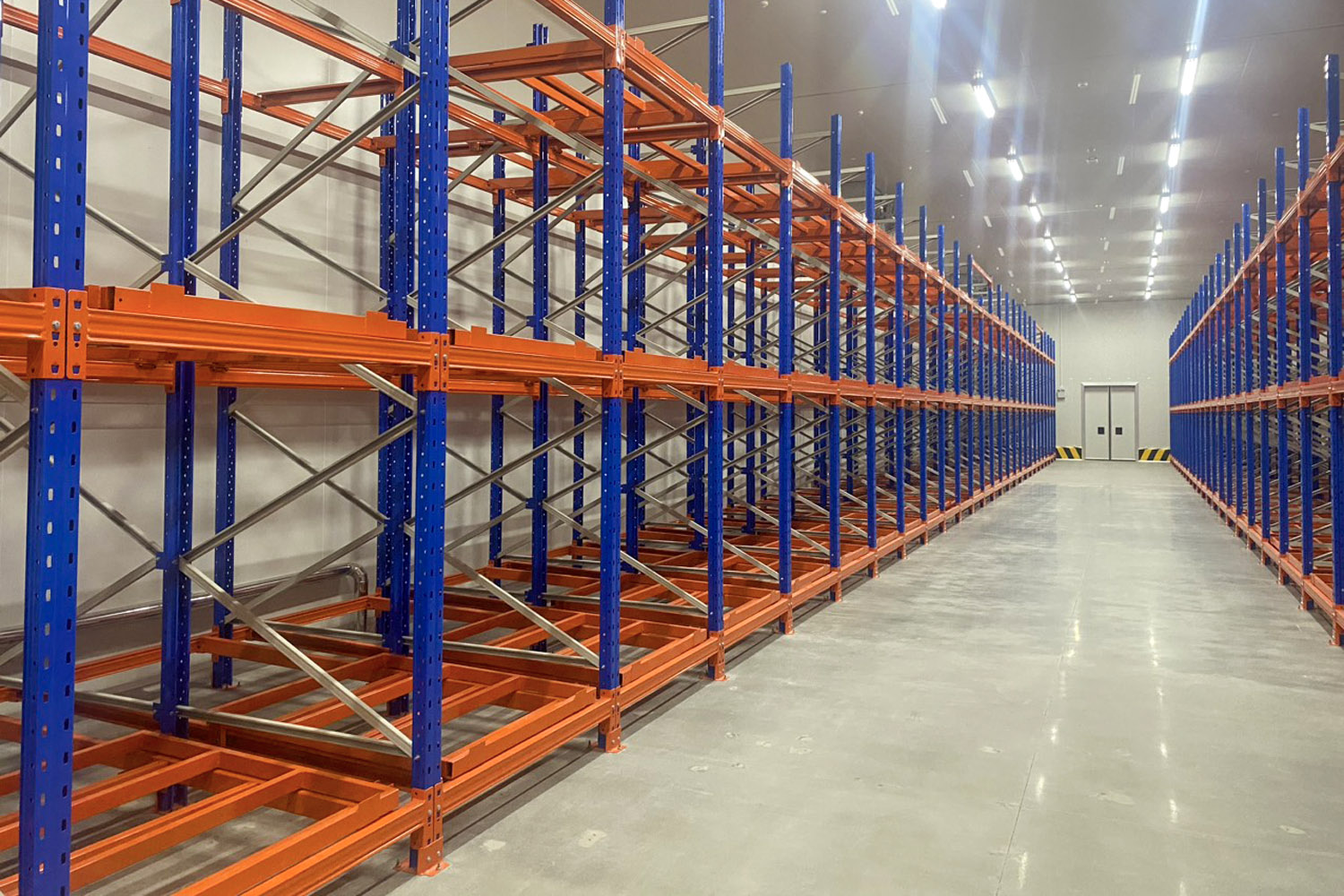
- Cold storage and cool rooms: Valuable in temperature-controlled environments where every square metre is costly to build and operate.
- E-commerce and omnichannel retail: Useful for bulk reserve storage that supports forward picking and high-volume fulfilment operations.
As a practical rule, if your warehouse stores multiple pallets of the same SKU, uses LIFO stock rotation and needs higher density than selective racking without full automation, Push Back Racking should be considered.
Why Choose Vinatech Australia for Push Back Racking
Vinatech Australia provides Pallet Racking Systems for warehouses across Australia, with services including free consultation, warehouse surveys, free 3D design drawings, fast quotations, nationwide installation and periodic maintenance.
For Australian businesses, the core value propositions include:
- Direct manufacturer supply capability
- Custom warehouse racking design
- Free warehouse survey and 3D design
- System planning aligned with AS 4084:2023
- Nationwide installation support
- Long-term warranty and maintenance options
- Solutions for ambient warehouses, cool rooms and cold storage facilities
Vinatech Australia: Industrial Warehouse Racking – Warehouse Shelving Solutions
- Website: https://vinatech.com.au/
- Phone number: 0406 916 355
- Email: info@vinatech.com.au
- Address: 34 Paramount Bvd, Cranbourne West VIC 3977, Australia
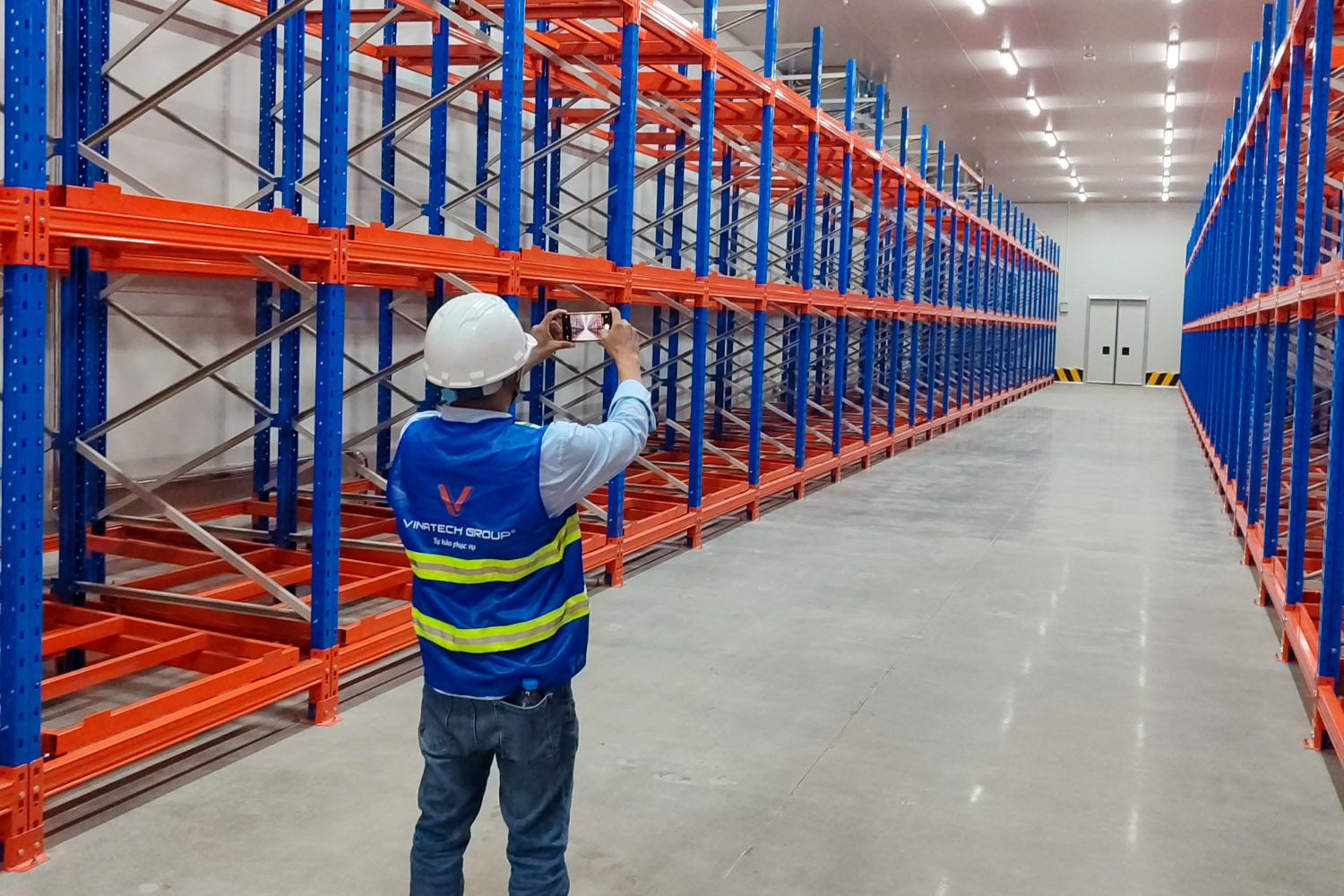
Push Back Racking is an ideal high-density storage solution for warehouses looking to maximise storage capacity while maintaining efficient pallet handling. Suitable for logistics, manufacturing, cold storage, and distribution operations, push back racking offers an excellent balance between storage density and accessibility. With customised designs, AS4084-compliant systems, and professional installation support, Vinatech Australia delivers reliable Push Back Racking solutions tailored to modern warehouse requirements.
FAQ About Push Back Racking
Push back racking is a high-density storage system that uses inclined rails and nested carts to store pallets multiple positions deep. Pallets are pushed back as new ones are loaded.
Push back racking works by placing pallets on carts that move along inclined rails. When a new pallet is loaded, it pushes the previous pallets backward, and when a pallet is removed, the others move forward automatically.
Push back racking increases storage density, reduces aisle space, improves warehouse organisation, and enhances picking efficiency for medium to high-volume operations.
Push back racking is commonly used in logistics, food and beverage, retail distribution, manufacturing, and cold storage industries where high-density storage is required.
Push back racking can accommodate standard wooden, plastic, and metal pallets, provided they meet system design and load specifications.
The load capacity depends on system design, materials, and cart structure. Push back racking is typically designed for heavy-duty pallet loads and must comply with Australian Standard AS 4084.
Push back racking operates on a LIFO basis using carts, while pallet flow racking uses gravity rollers and supports FIFO, making them suitable for different inventory strategies.
Selective racking provides direct access to each pallet, while push back racking increases storage density but limits direct access due to its multi-deep design.
Push back racking is not ideal for FIFO systems because pallets are stored and retrieved from the same side, making it more suitable for LIFO operations.
Yes, push back racking is designed for LIFO storage, where the last pallet loaded is the first pallet retrieved.
It improves efficiency by reducing forklift travel, increasing storage density, and enabling faster loading and unloading within limited warehouse space.
Disadvantages include reduced selectivity, higher initial cost compared to selective racking, and limitations for FIFO inventory management.
Costs vary depending on system depth, design complexity, and materials. While more expensive than selective racking, it offers better space utilisation and long-term efficiency.
Maintenance includes checking carts, rails, and structural components to ensure smooth operation and prevent safety issues.
You should evaluate supplier experience, system quality, compliance with Australian standards, design capability, and after-sales support.



Reviews
There are no reviews yet.