




The decision involves more than fitting additional bays into a floor plan. Your trucks, floor condition, available height and daily pallet movements must work together. This guide explains how VNA racking operates, what infrastructure it requires and which trade-offs you should assess.
Compare VNA with other pallet racking layouts to assess the trade-off between aisle width and pallet access.
1. What Is VNA Racking and How Does It Work?
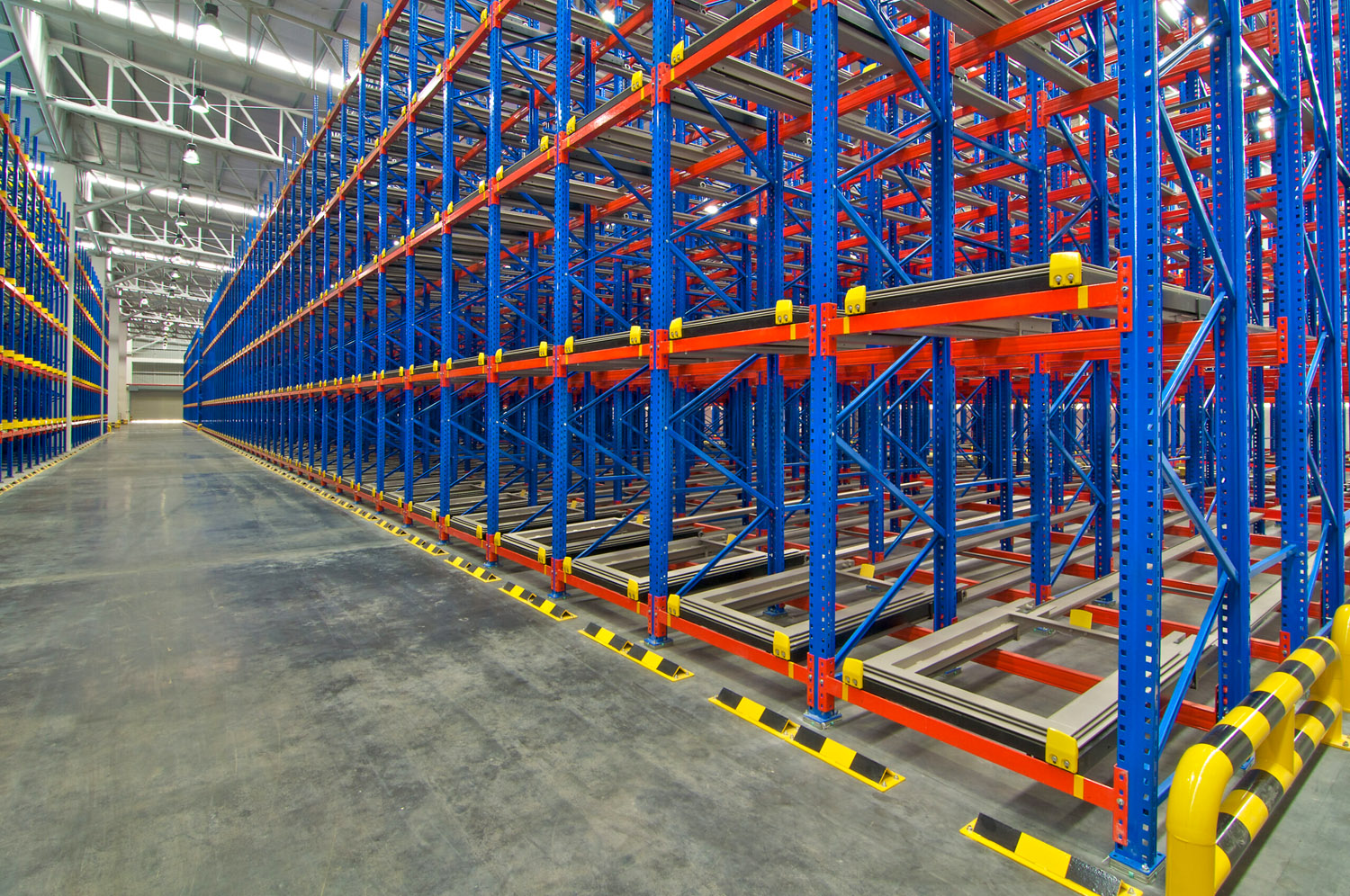
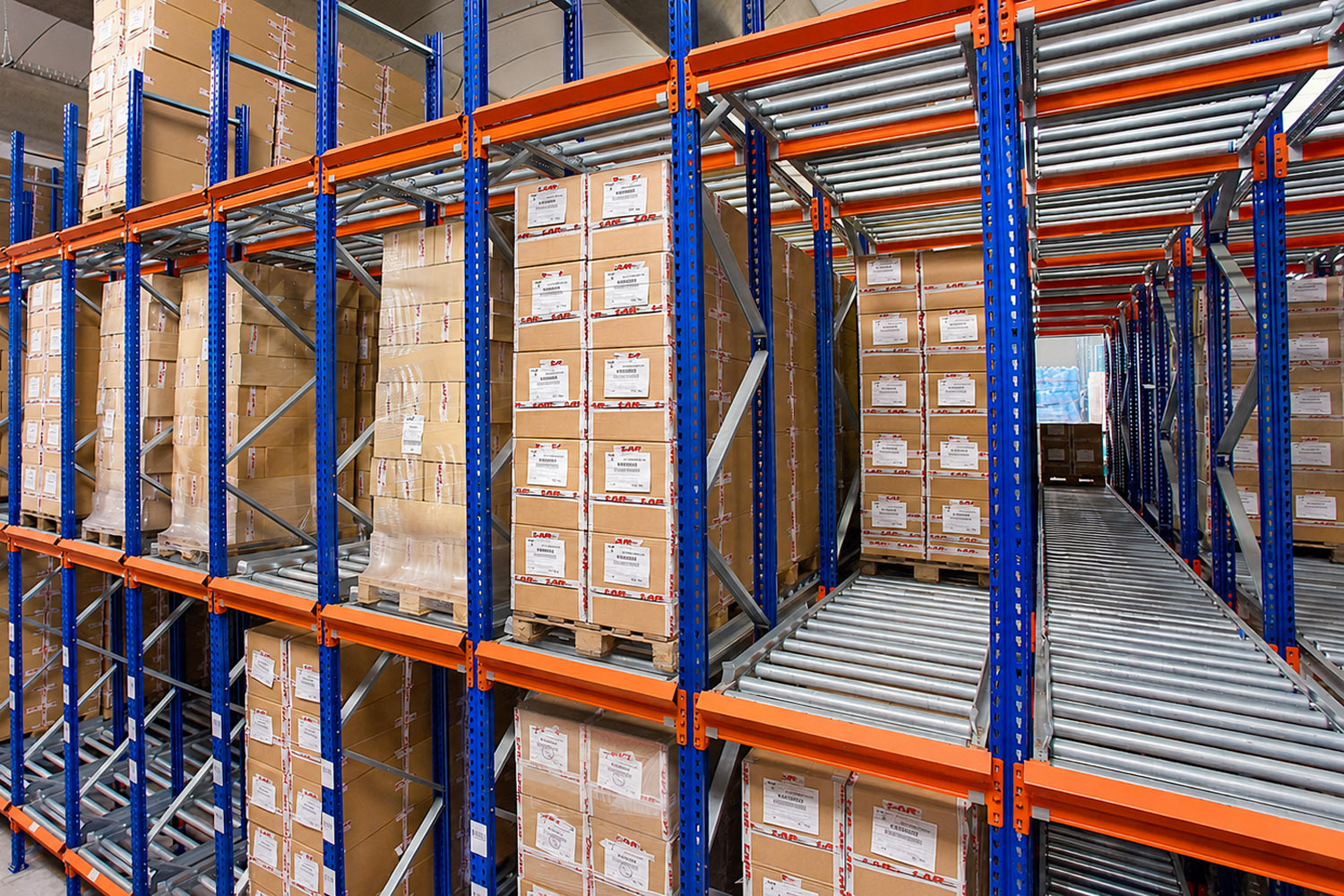
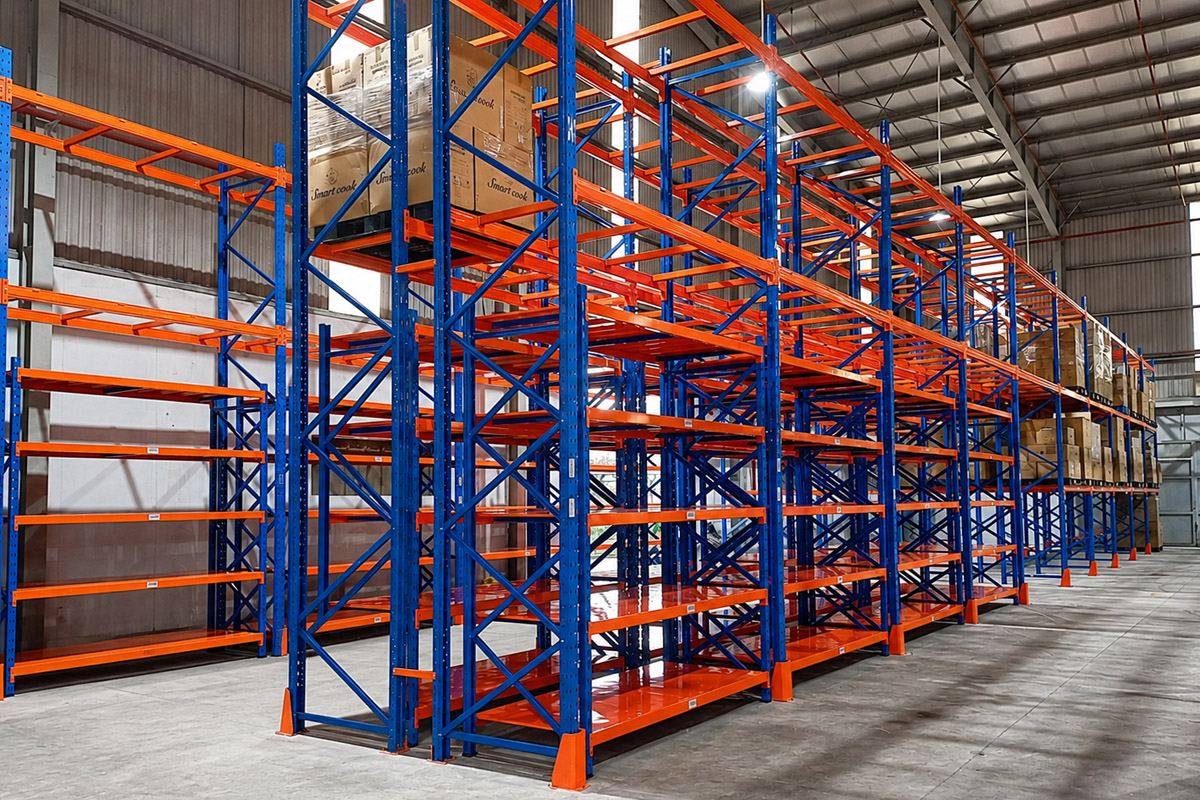
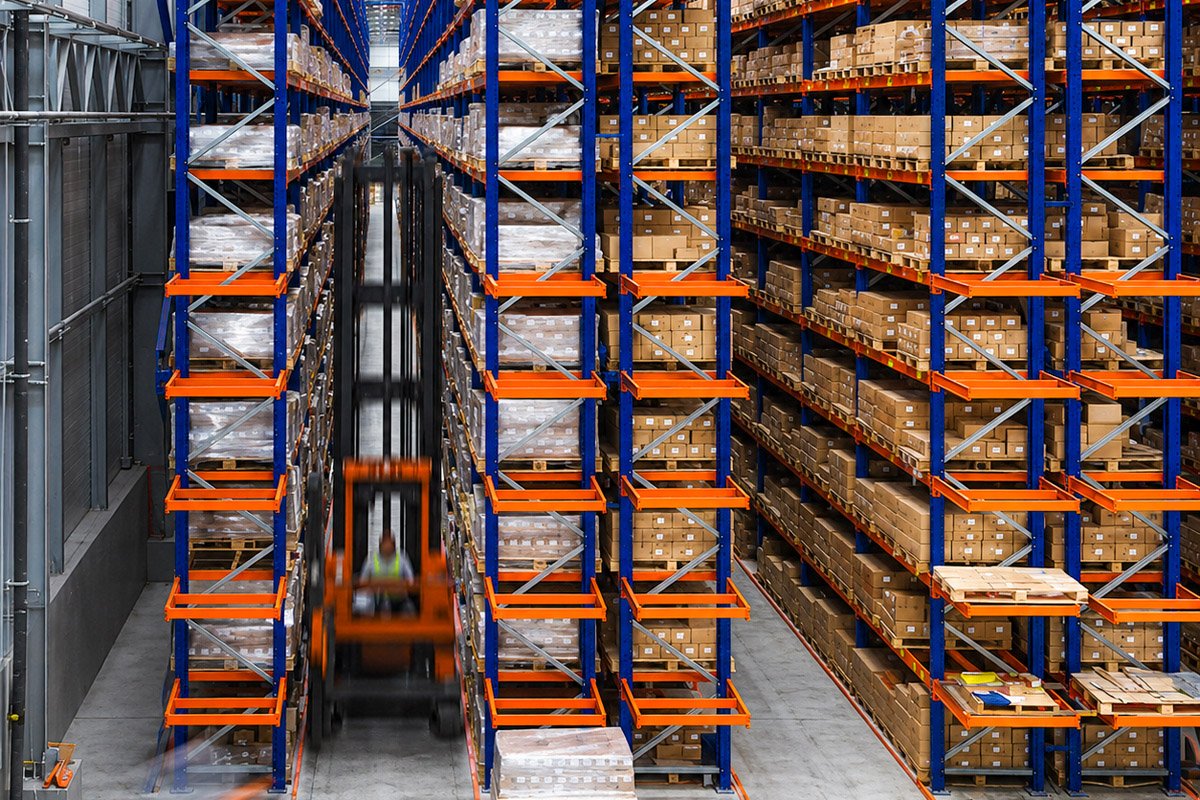
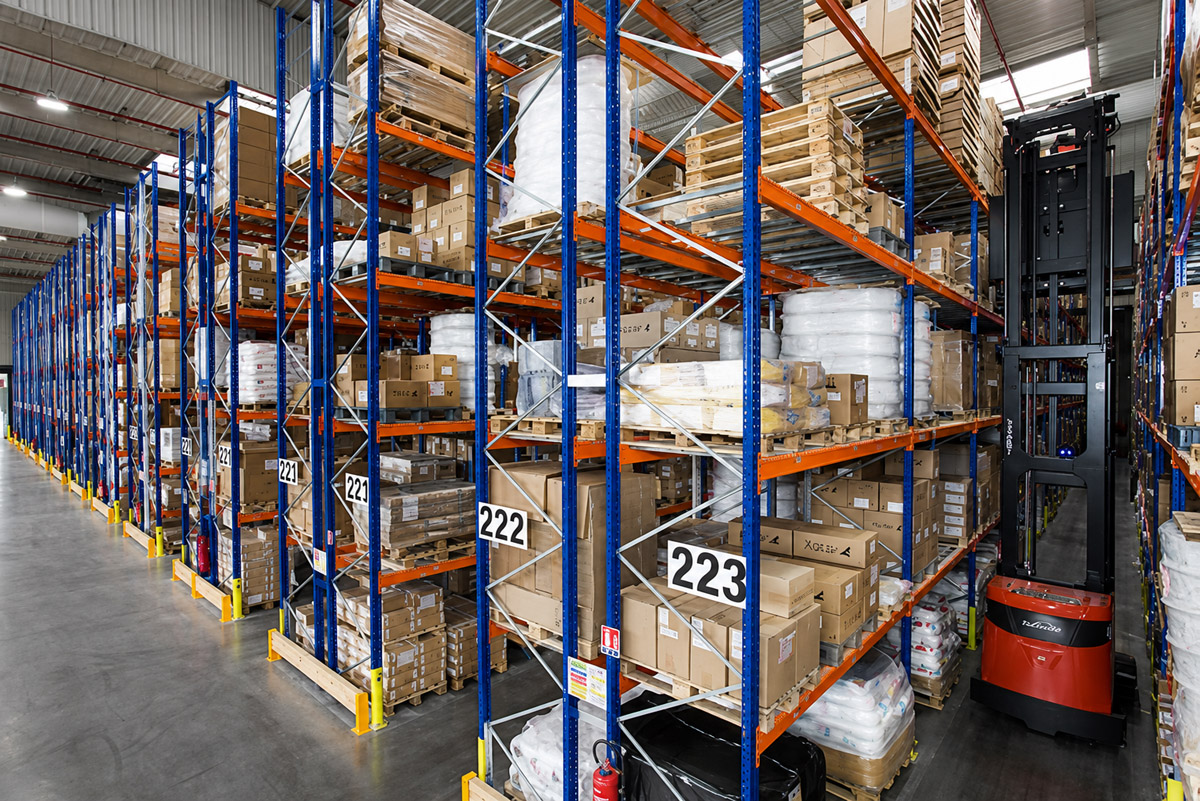
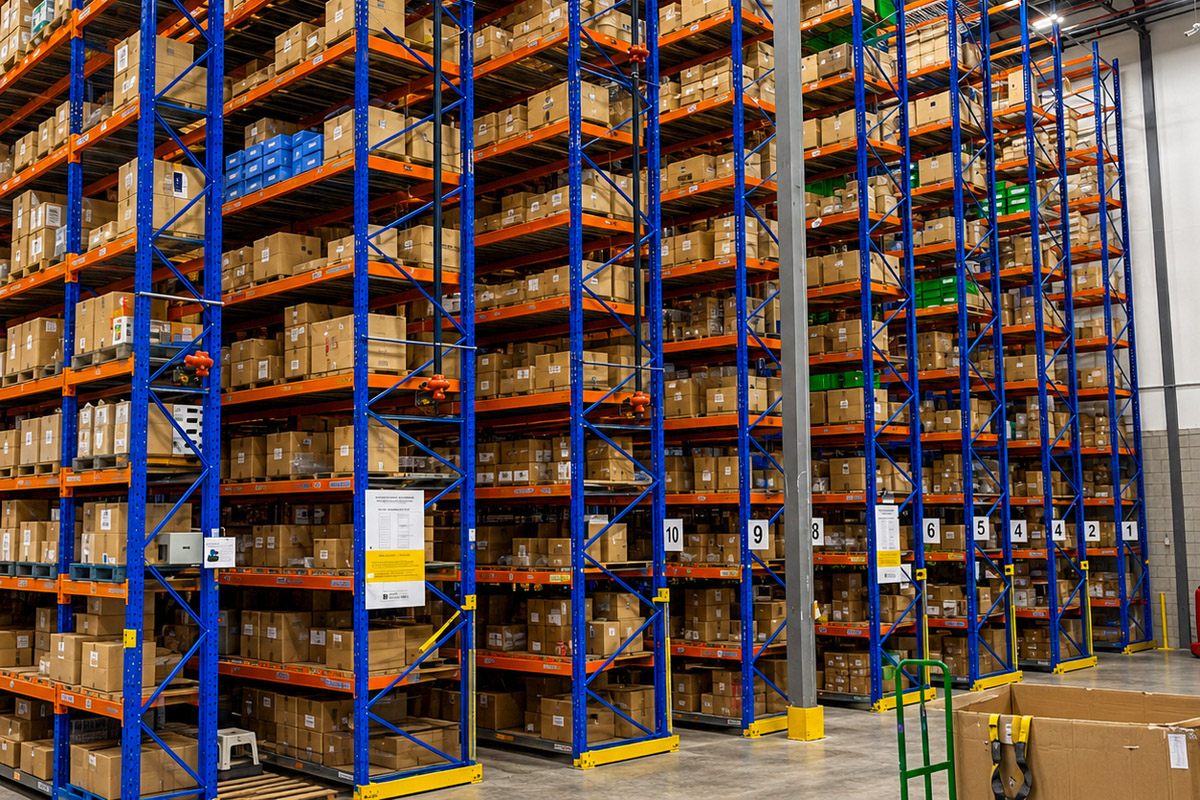
VNA racking is a selective pallet storage system arranged with narrower operating aisles to increase capacity within the available warehouse space. Pallets remain individually accessible, so operators can retrieve a load without first moving another pallet out of its position. The layout also makes use of available building height.
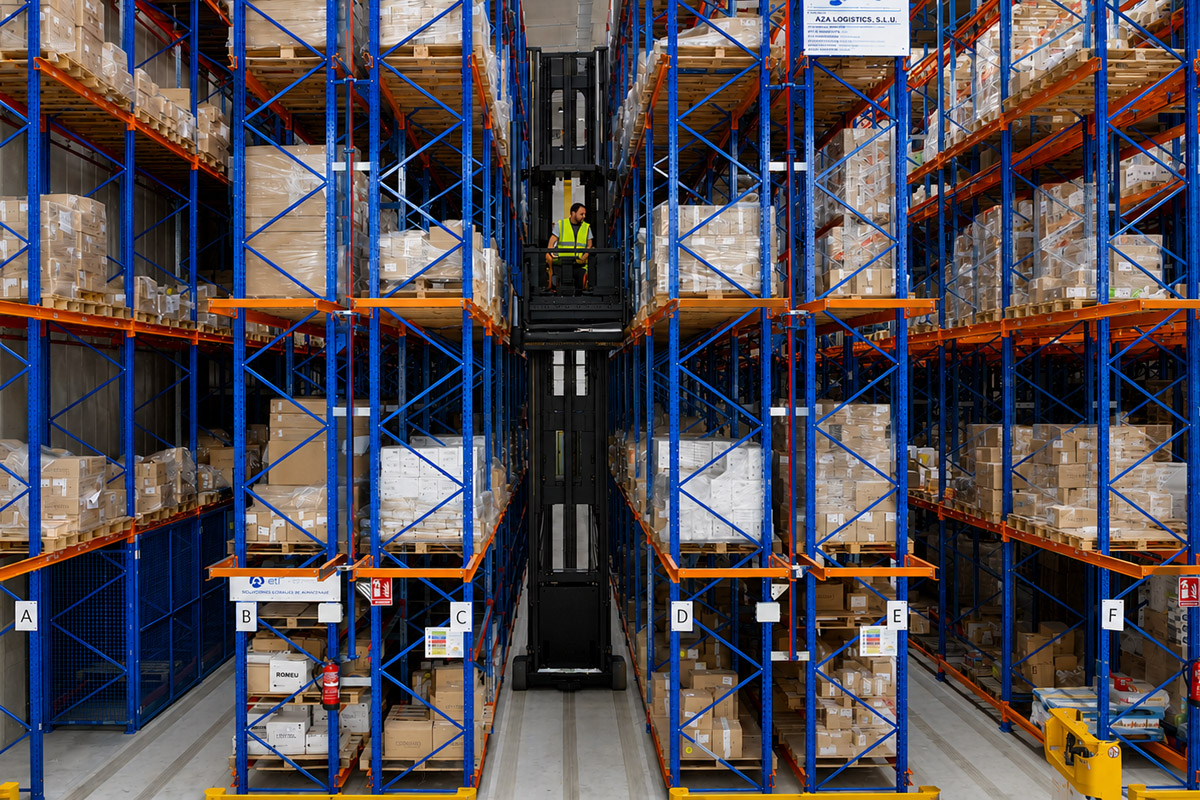
Specialist handling equipment makes this arrangement possible. Rather than turning a conventional forklift towards the rack, a suitable VNA truck positions its forks to handle pallets within the restricted aisle.
Some VNA trucks can operate in aisles approximately 1.5–1.8 m wide, according to Jungheinrich. However, this is an equipment capability rather than a universal layout specification: your required clearance depends on the selected truck and load.
| Consideration | Standard selective pallet racking | VNA racking |
| Aisle width | Wider aisles accommodate conventional forklift manoeuvres | Narrower aisles are matched to specialist equipment |
| Space utilisation | More floor area is allocated to operating aisles | Reduced aisle space can accommodate additional storage |
| Pallet accessibility | Direct access to individual pallets | Direct access to individual pallets |
| Handling equipment | Commonly uses counterbalance or reach trucks, depending on layout | Requires suitable VNA handling equipment |
The table compares standard selective pallet racking and VNA racking in terms of aisle width, space utilisation, pallet accessibility and handling equipment requirements.
Your achievable capacity will depend on pallet dimensions, load weights, equipment clearances and usable building height. A layout comparison should establish the gain for your warehouse rather than rely on a general percentage.
>> Read More:
- Pallet Racking: Structure, 6 Common Types and Safety Standards
- Selective Pallet Racking – Efficient Pallet Storage Solution
2. Key Equipment and Infrastructure Requirements
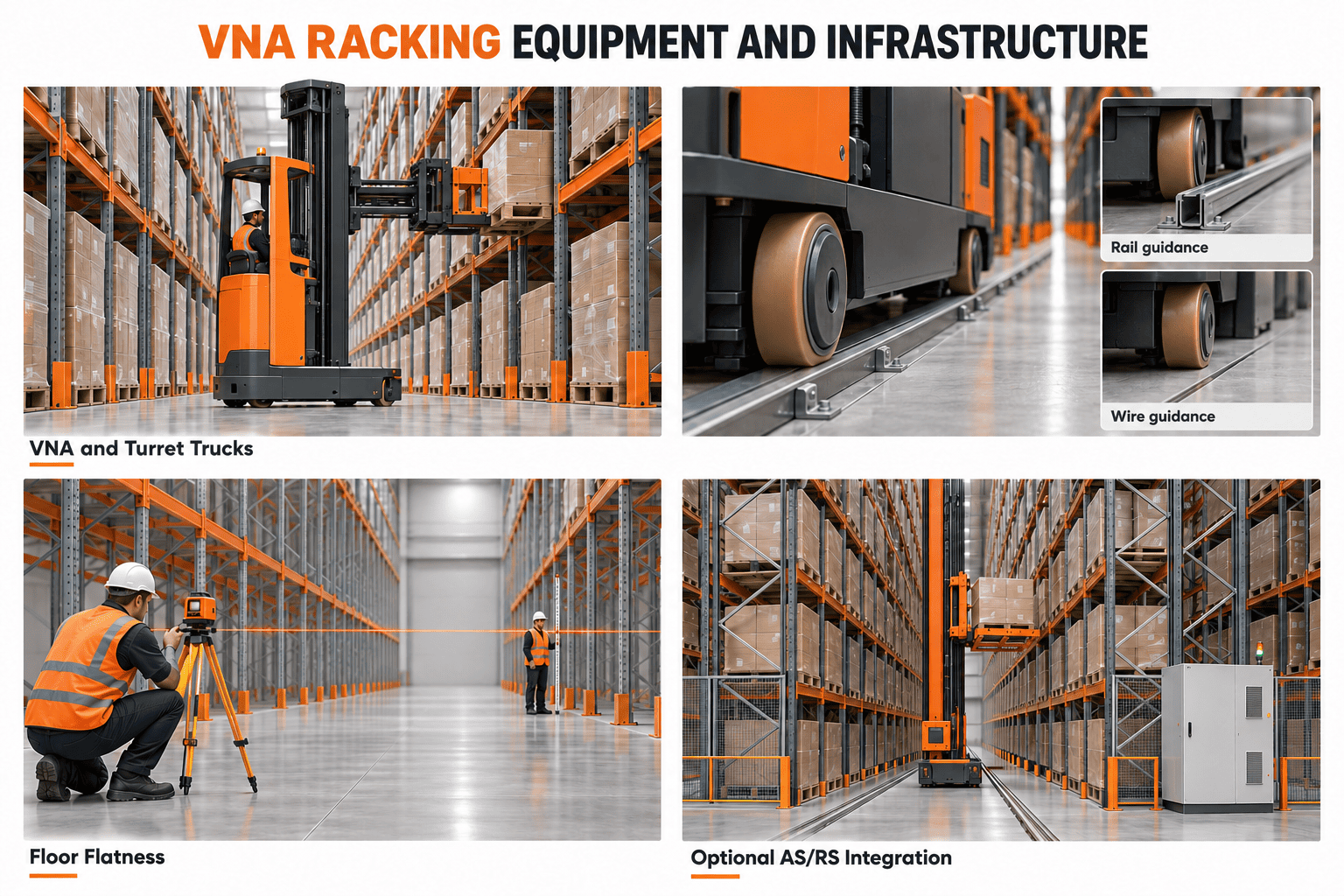
A workable VNA installation requires compatible trucks, appropriate guidance, suitable floor tolerances and coordinated planning for any automation. These elements determine whether operators can use the proposed layout reliably at the required handling rate.
VNA and turret trucks
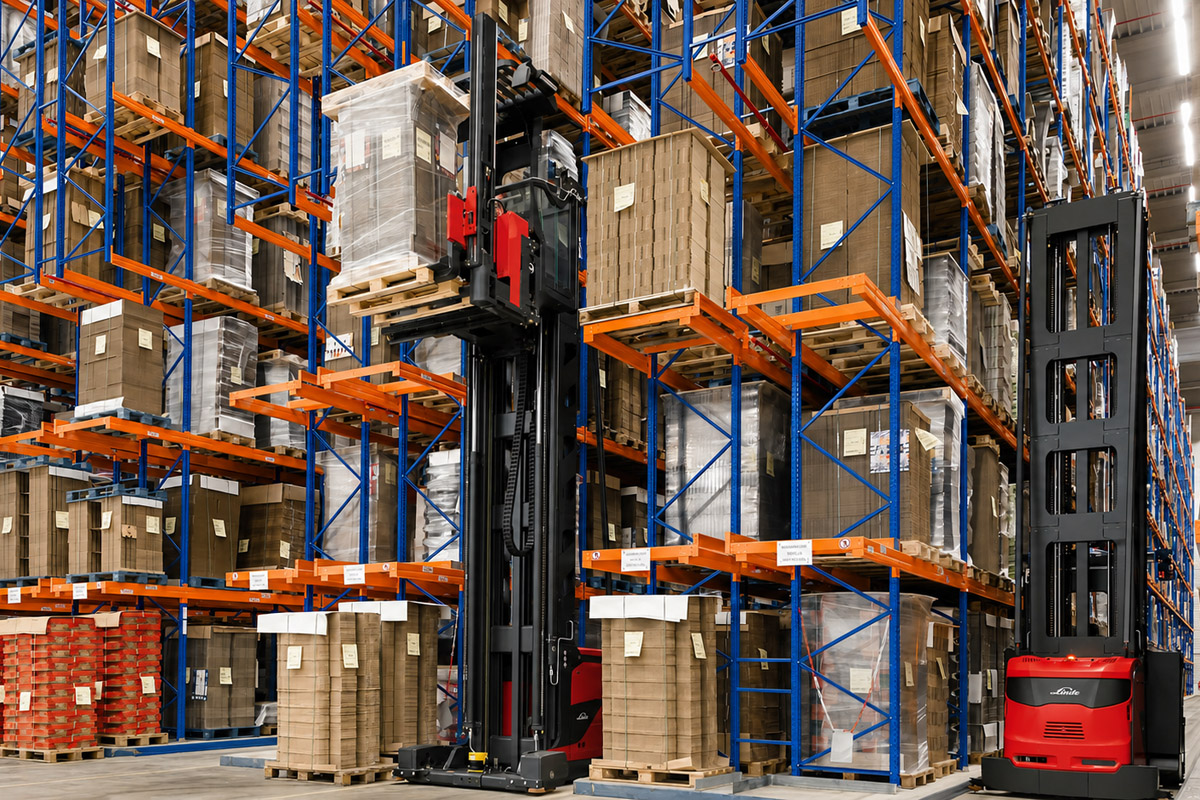
Conventional counterbalance forklifts generally lack the manoeuvring space needed inside VNA storage aisles. Turret trucks use a rotating fork assembly to handle pallets on either side without turning the entire vehicle. Other specialist configurations use different handling mechanisms, so equipment selection should follow your pallet and picking requirements.
You should confirm the truck’s capacity at your intended lifting height, alongside pallet dimensions and aisle clearances. Keeping your existing forklift fleet may still be practical for movements outside the storage aisles.
Guidance systems
Rail or wire guidance helps keep compatible trucks aligned within narrow operating aisles. Mechanical systems use floor-mounted rails, while inductive systems use an embedded wire that the truck detects and follows.
The choice affects both the floor works and equipment specification. Confirm compatibility before installation, including how trucks enter and leave each aisle.
Floor flatness
Floor tolerances are particularly important when trucks travel through restricted clearances and handle loads at height. Unevenness can affect truck stability and load positioning, making the floor an essential part of the system assessment.
Arrange a floor survey against the selected equipment supplier’s requirements. A surface that performs adequately with your current forklifts may require remedial work for a proposed VNA operation; the assessment should establish this before the layout is finalised.
Automation integration
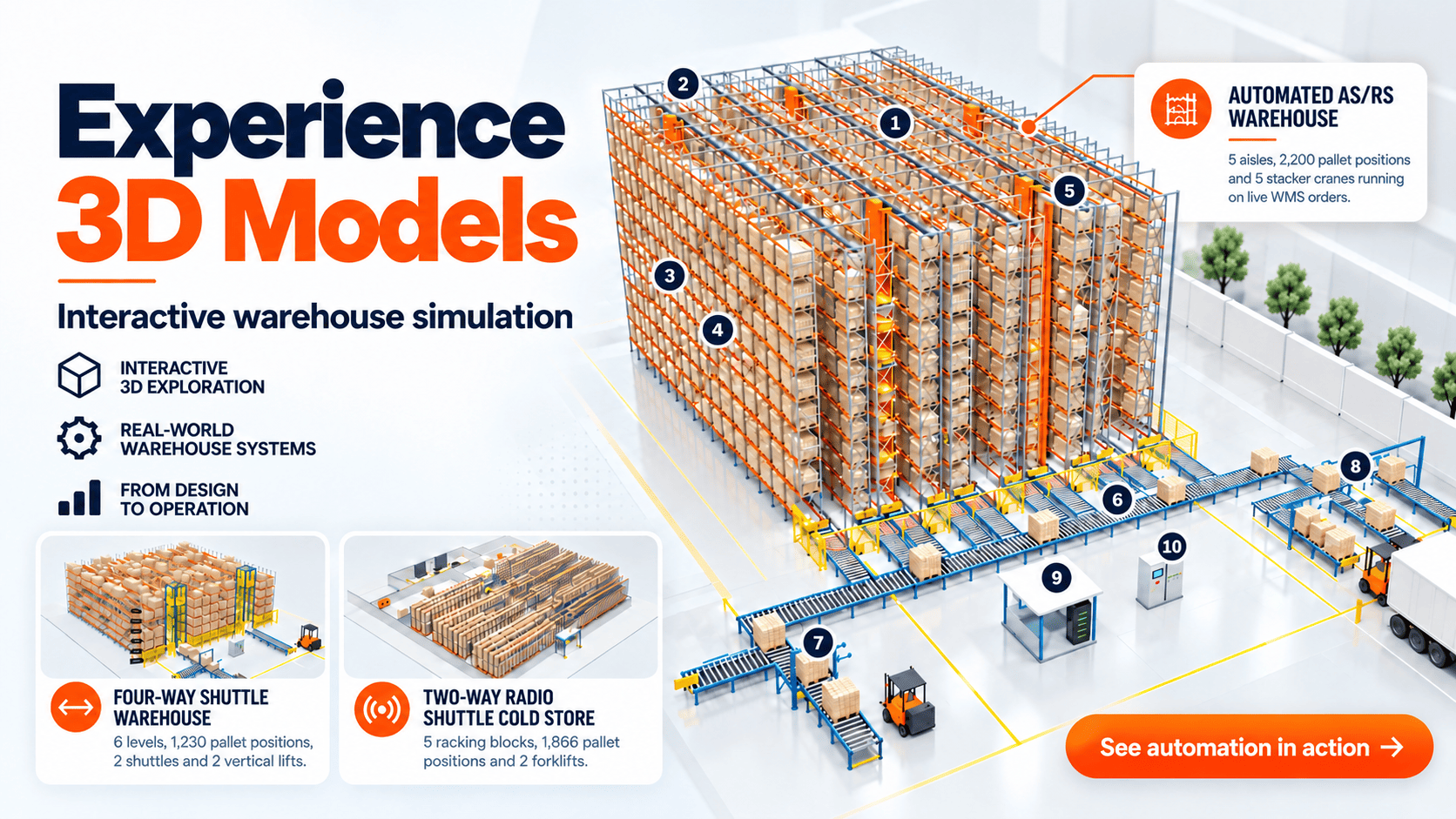
Suitably configured VNA storage can incorporate an automated storage and retrieval system (AS/RS), including trilateral stacker cranes that place and retrieve pallets.
If automation forms part of your longer-term plan, assess it during the initial design. Ask suppliers to confirm how the proposed racking, floor, equipment and controls would support that transition, including any modifications required.
3. VNA Racking Benefits and Operational Trade-offs
VNA racking offers greater storage density and individual pallet access, balanced against specialist equipment costs, infrastructure requirements and traffic constraints. The strongest business case considers both how much stock you can store and how efficiently you can move it.
| Benefits | Operational trade-offs |
| More storage within an existing footprint | Investment in specialist trucks and associated infrastructure |
| Better use of available vertical space | Equipment capability and floor condition must support the operating height |
| Direct access to individual pallet positions | Restricted opportunities for trucks to pass within storage aisles |
| Potential suitability for a varied stock range | Handling arrangements must accommodate the required picking and replenishment activity |
The table highlights four benefits of VNA racking: increased storage capacity within the existing footprint, better use of vertical space, direct access to individual pallets, and potential suitability for a varied stock range.
Before committing, compare the proposed installation against your current operation:
- Storage demand: How many additional pallet positions do you need?
- SKU profile: Which products require frequent individual access?
- Building suitability: Can the available height and floor support the proposal?
- Handling capacity: Can the layout accommodate peak pallet movements?
- Total investment: Have trucks, guidance, floor works and installation been included?
>> Read More:
- Double Deep Racking: Maximise Warehouse Storage Density
- Drive-In Racking: Maximise High-Density Warehouse Storage
4. Featured VNA Racking Projects by Vinatech
Explore how Vinatech’s Very Narrow Aisle (VNA) Racking solutions maximise warehouse storage capacity, optimise vertical space and maintain 100% direct pallet accessibility.
Distribution Centre – High-Density VNA Racking
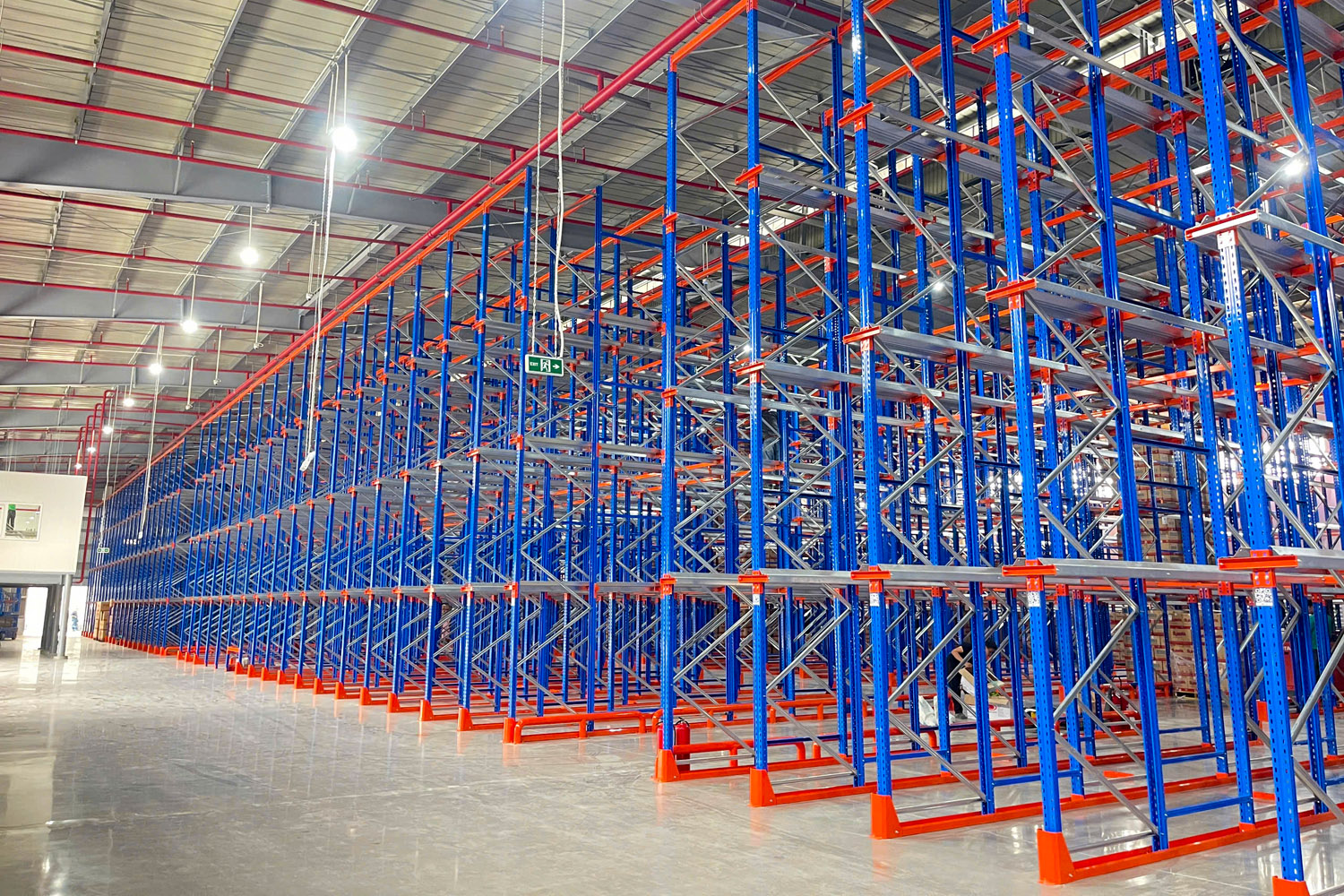
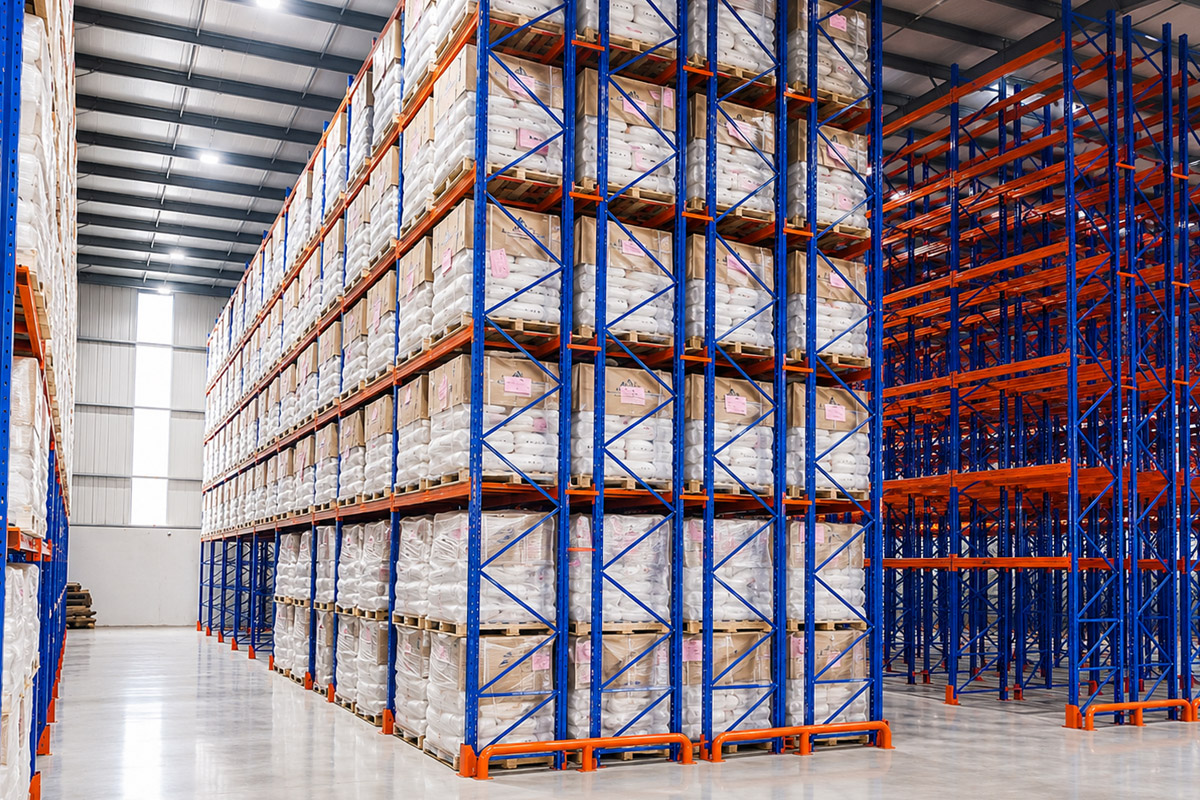
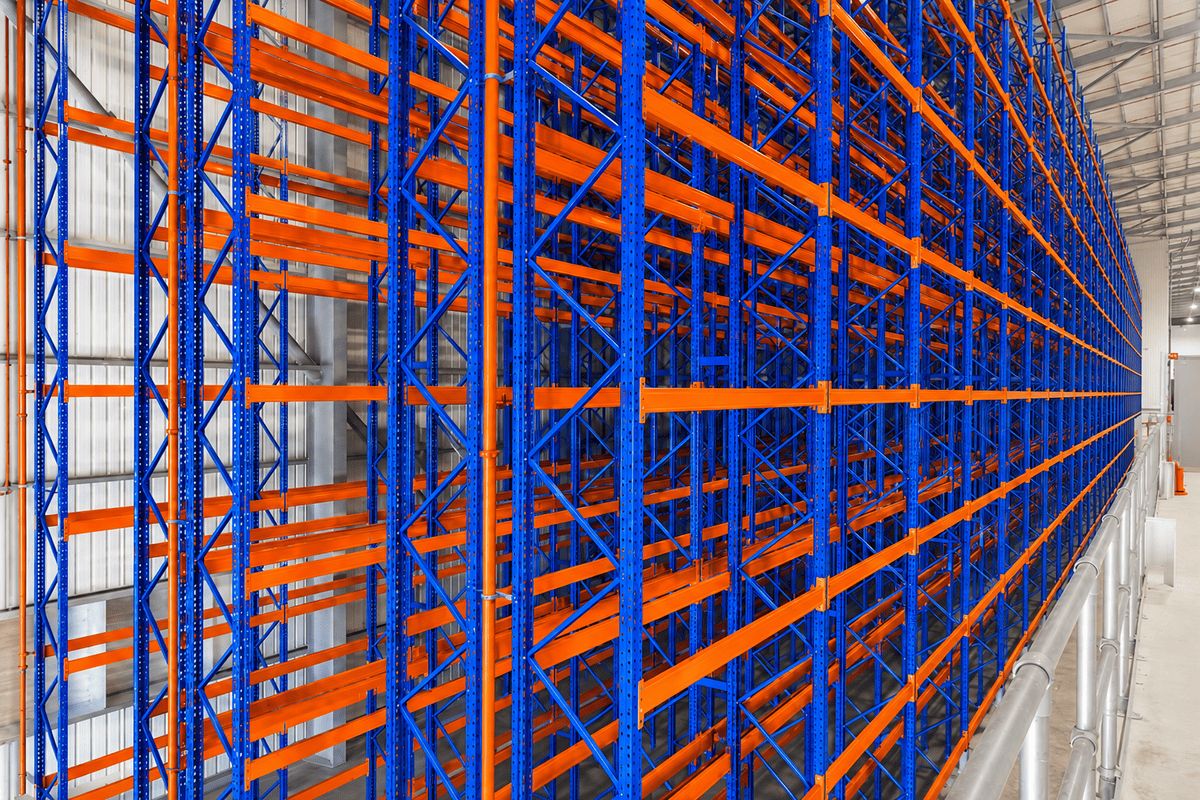
Vinatech implemented a Very Narrow Aisle (VNA) Racking System for a 12,000 m² distribution centre, featuring high-bay storage and narrow operating aisles to maximise warehouse space utilisation. The system reduces conventional forklift aisle requirements while maintaining 100% direct access to individual pallets, supporting efficient inventory handling across multiple SKUs.
This project demonstrates how VNA Racking increases storage density, optimises vertical warehouse space and supports efficient high-volume distribution operations.
Distribution Centre VNA Racking Project – Vinatech Australia
Discover Vinatech’s warehouse racking solutions to make better use of warehouse height and aisle space.
In summary, Very Narrow Aisle Racking can increase storage density while preserving direct pallet access. Its suitability depends on your building, equipment and movement requirements. Compare the additional capacity with the investment and handling implications before choosing a layout. Discuss a warehouse layout assessment with your racking and equipment suppliers to establish whether it suits your operation.
FAQs about VNA racking