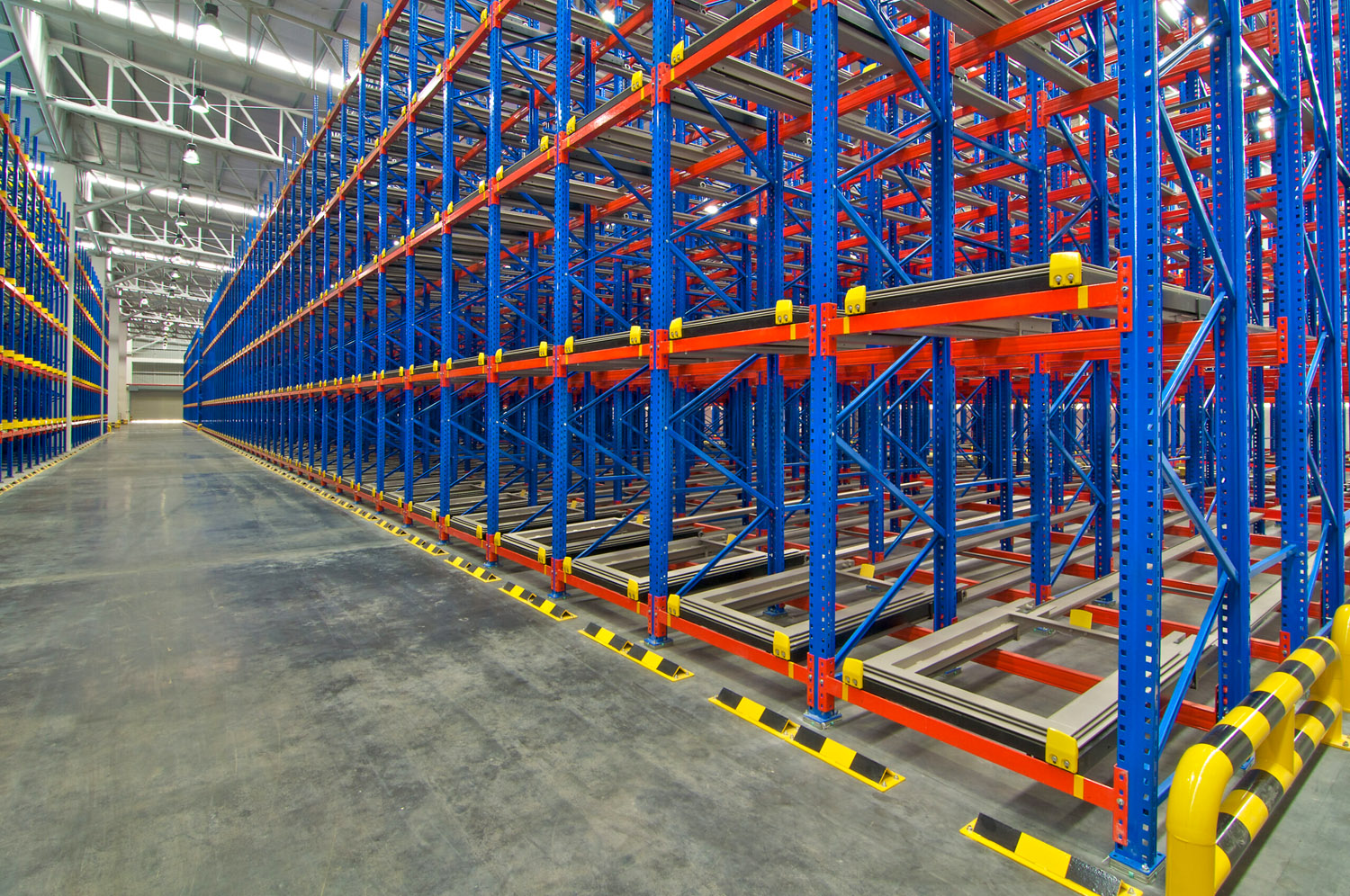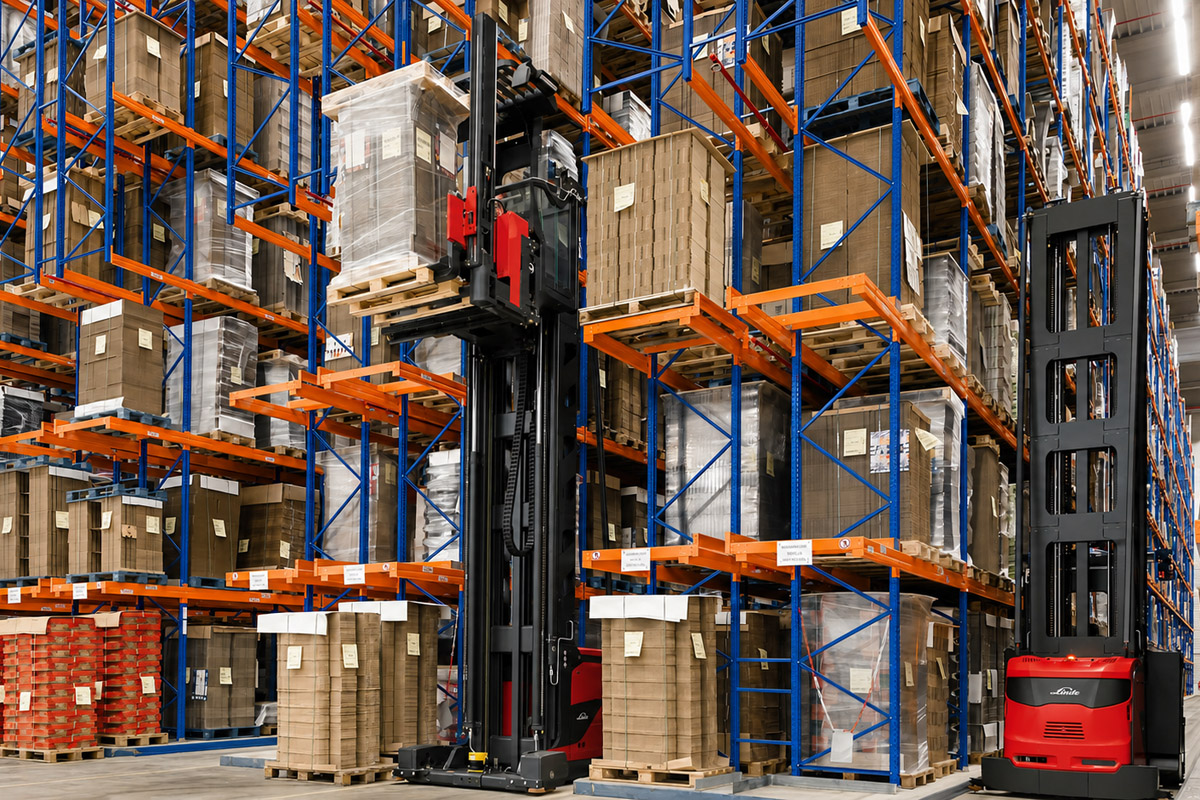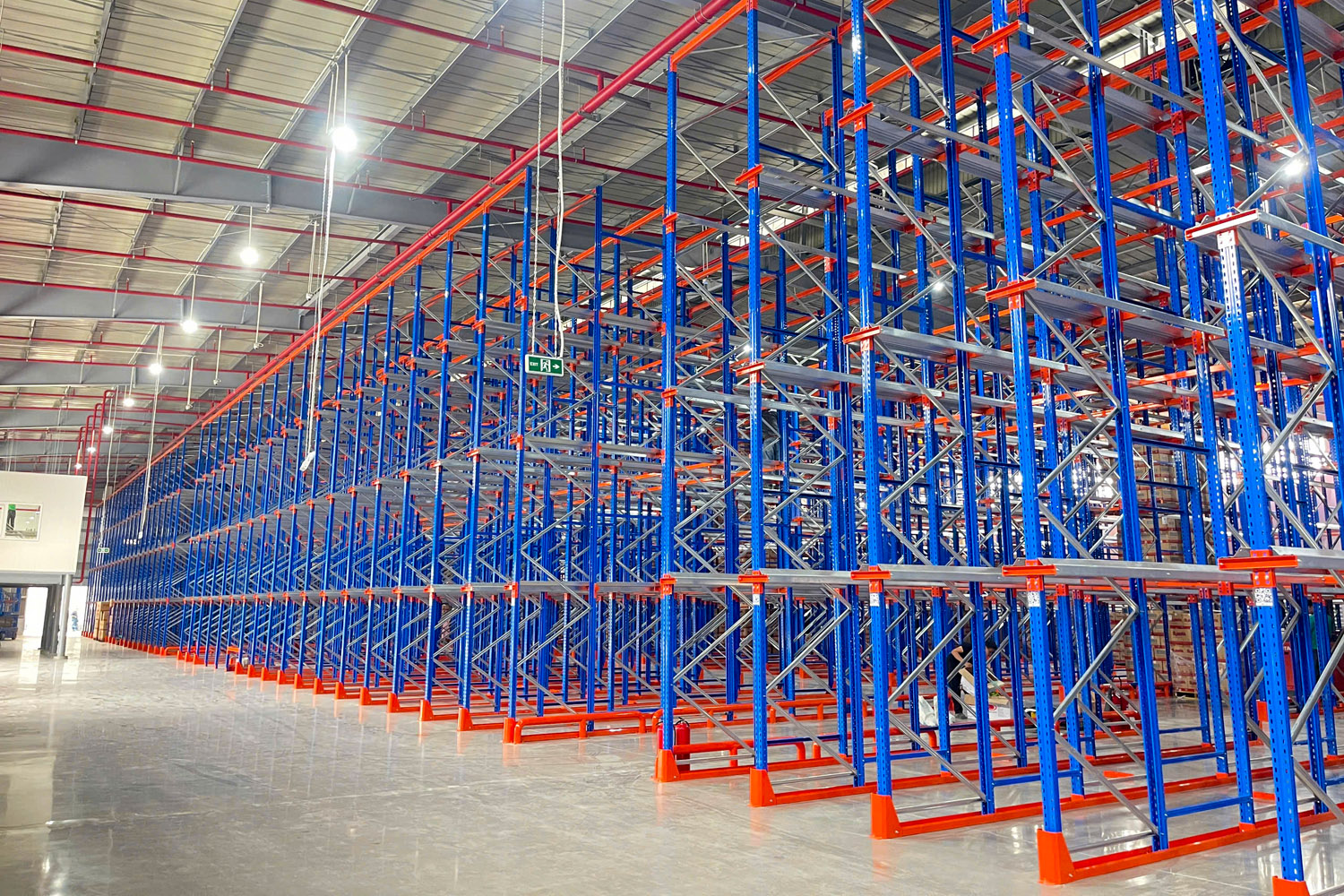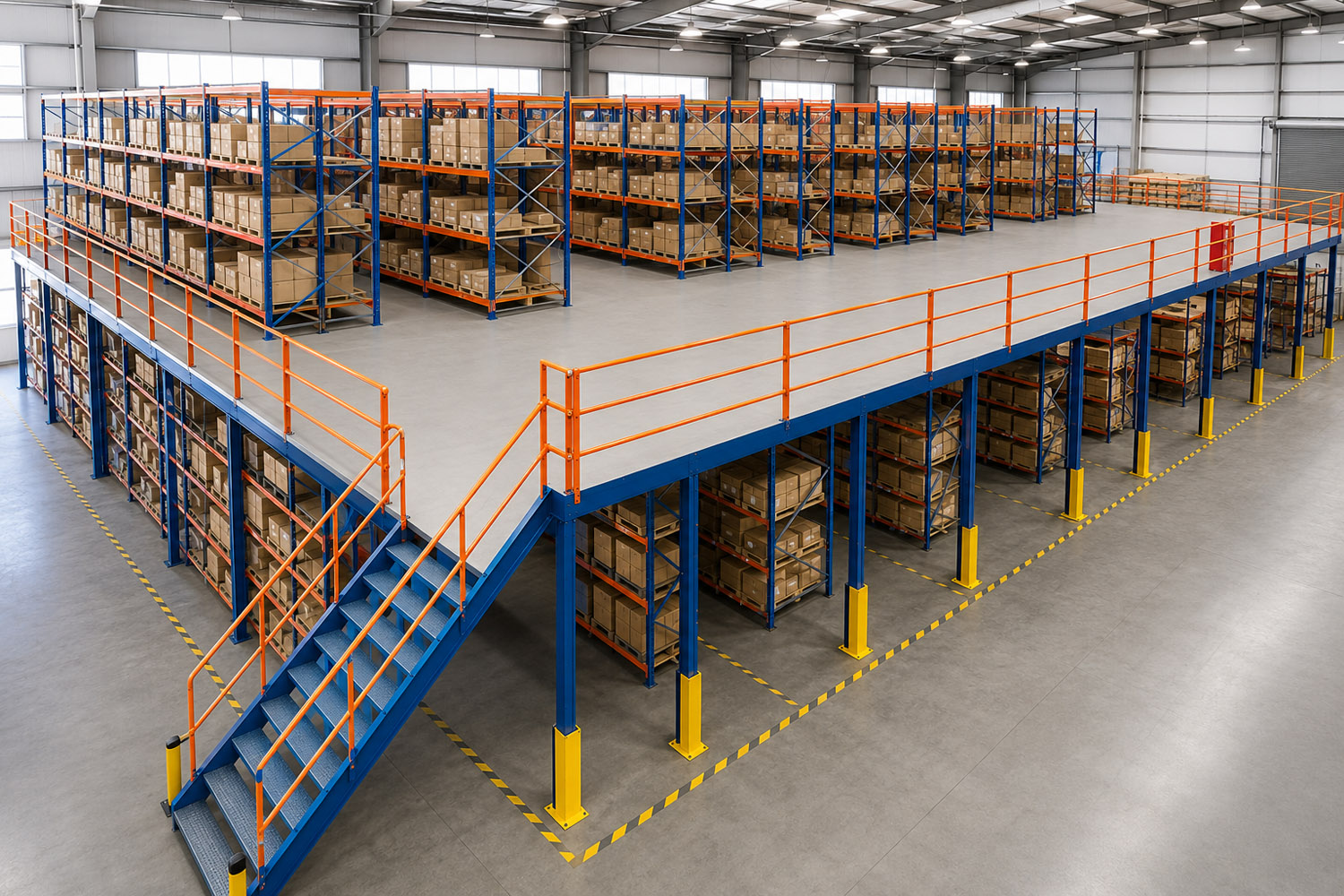













Choosing the right heavy duty shelving starts with understanding what you store and how you access it. Whether you need garage shelving or warehouse storage shelving, load capacity, shelf dimensions, decking material and future expansion all matter. This guide explains the main options and the factors you should check before buying.
1. Types of Heavy-Duty Shelving Systems
The main options to consider are longspan shelving, heavy-duty pallet racking, wire mesh shelving and modular shelving systems. These warehouse storage solutions cover different aspects of storage: longspan describes a shelving format, pallet racking supports palletised goods, wire mesh describes the decking, and modular refers to how a system can be configured or expanded. A single installation can combine several of these features.
Longspan Shelving
Longspan shelving suits cartons, tools, components and bulky items that are loaded and retrieved by hand. Its open bays provide room for larger goods, while adjustable shelf levels help accommodate stock of different heights. It is a practical industrial shelving option for workshops, stockrooms and warehouse picking areas.
If your current shelves leave too much unused space above short cartons, adjustable levels can help you use that space more effectively. You can organise smaller products in labelled containers and allocate separate levels to larger items.
Before choosing a configuration, check:
- Usable shelf dimensions: Make sure the goods fit within the actual storage area.
- Shelf and bay capacities: Confirm both limits for the proposed configuration.
- Decking suitability: Choose a surface that supports the shape and weight of your goods.
- Picking access: Allow enough room to lift and remove items comfortably.
Longspan shelving is worth considering when you need accessible storage for individual items without using a forklift for every retrieval.

Heavy Duty Racking
Heavy duty racking is designed for goods stored on pallets and handled using equipment such as forklifts. It serves a different purpose from hand-loaded shelving, making it a suitable option for warehouses that receive, store and dispatch palletised stock. Selective pallet racking, for example, provides direct access to individual pallets.
The deciding factor is how you move the goods, rather than weight alone. A workshop storing heavy components individually may need shelving; a warehouse moving complete pallet loads may need Warehouse pallet racking.
When evaluating a pallet storage system, provide your supplier with:
- Pallet dimensions and maximum loaded weight.
- Overall height of each loaded pallet.
- Required number of pallet positions.
- Forklift type and operating requirements.
- Available floor area and storage height.
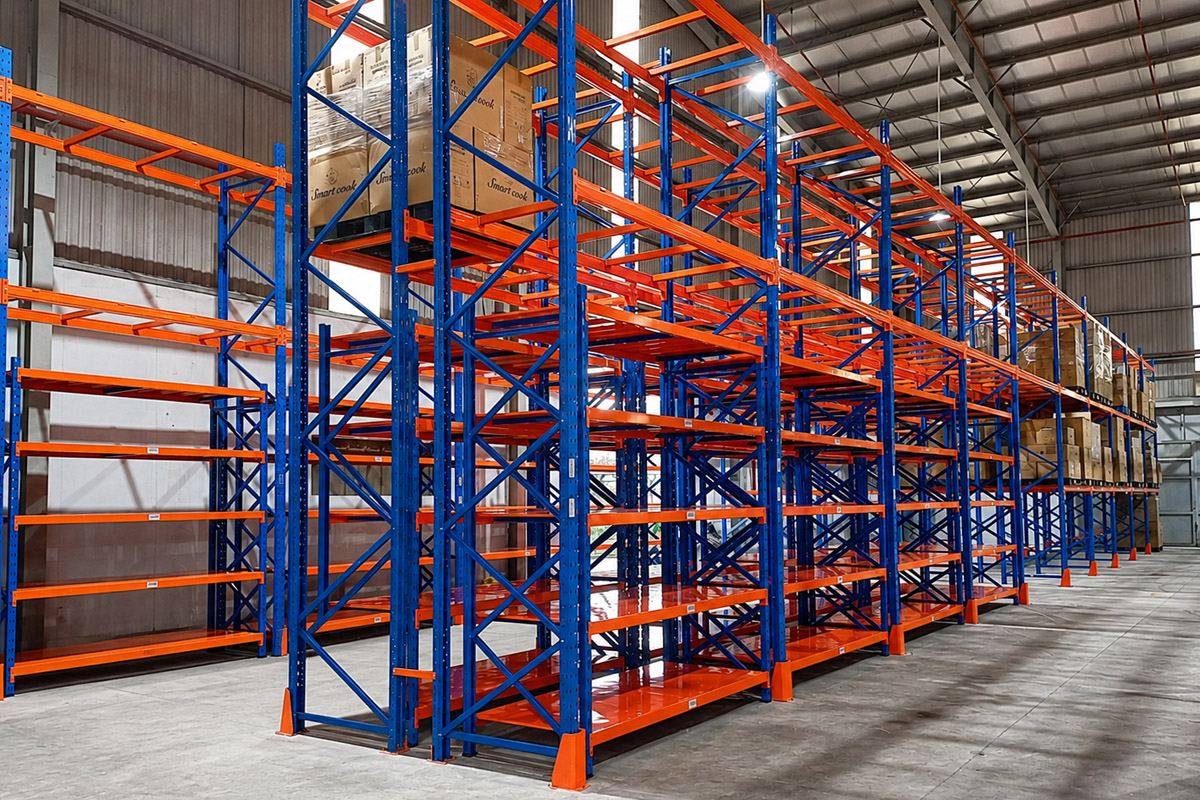
Wire Mesh Shelving
Wire mesh shelving provides an open storage surface that allows air and light to pass through the shelves. Mesh decking can be fitted to compatible shelving systems, including longspan configurations, making it an option for businesses that want better visibility through storage levels. The open surface can reduce the area where loose dust settles compared with a solid shelf, although it still needs regular cleaning. It is particularly useful to consider when goods benefit from ventilation or staff need to inspect shelf contents from different angles.
Choose the mesh opening size to suit what you store. Small components, narrow feet or uneven item bases may need a different surface or an approved support arrangement. You should also confirm the load rating of the complete shelf configuration. Mesh appearance or wire thickness alone does not establish how much weight the shelf can carry.
Modular Shelving Systems
Modular shelving systems let you build a storage configuration from compatible bays, shelves and accessories, then adapt it as your needs change. Some ranges offer a starter configuration with options to add shelving or accessories later. This can be useful when you want to organise a smaller area first and expand gradually.
Understanding the components makes purchasing easier:
- Starter bay: The initial bay used to establish a shelving run.
- Add-on bay: An extension designed to connect to a compatible existing bay.
- Complete shelving kit: A packaged set of components for a specified configuration.
- Accessories: Compatible dividers, hooks, bins or other additions offered for the system.
If you expect to expand, ask whether matching components will remain available and which changes the system supports. Avoid assuming that shelves

>> Read More:
- Slotted Angle Shelving | Flexible sizes, reliable strength
- Longspan Shelving: Specifications, Types and Configurations
2. What factors should you consider when choosing heavy duty shelving?
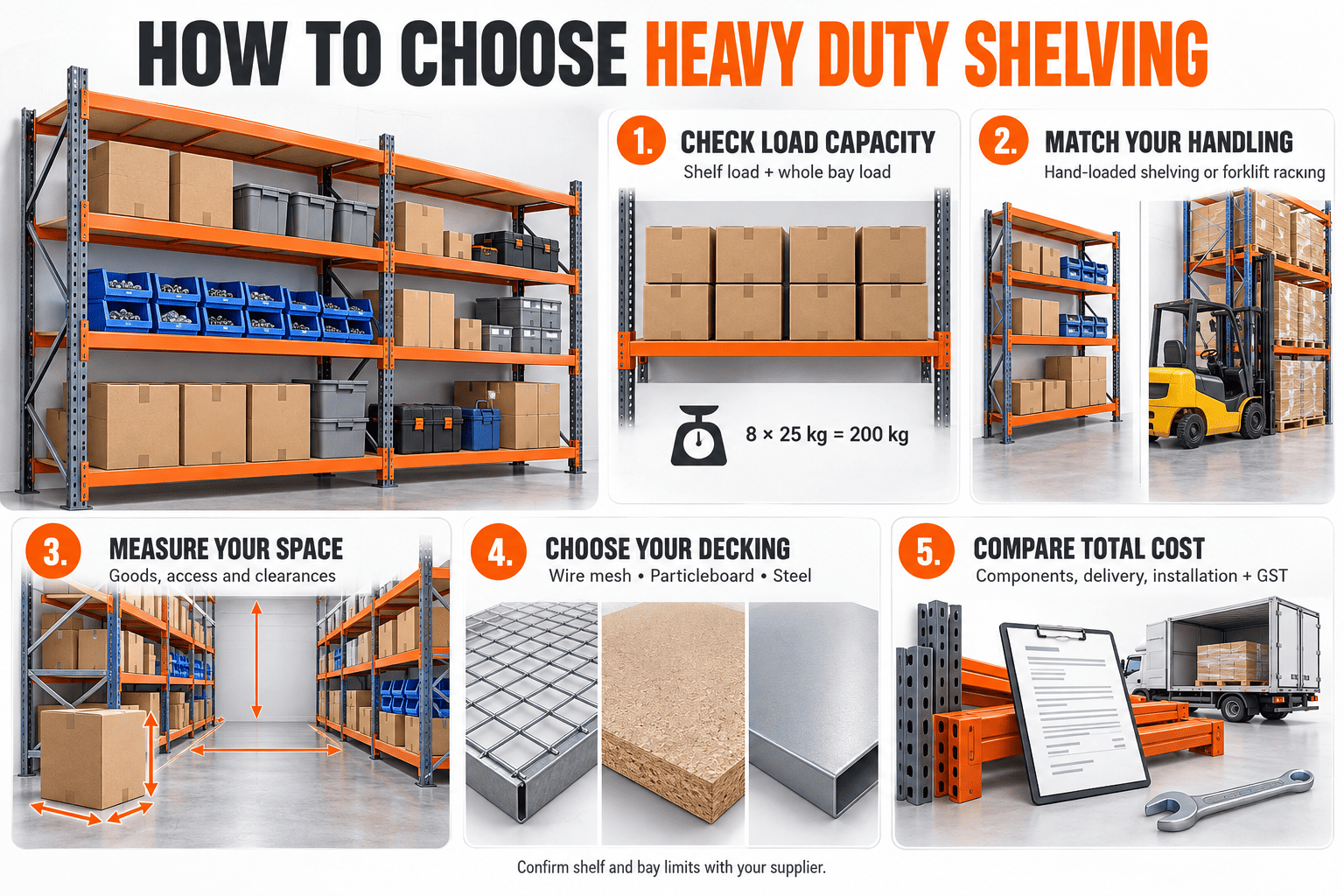
Choose heavy duty shelving by matching its load capacity, dimensions, decking and handling requirements to your goods and available space. Check the limits of both individual shelves and the complete bay before deciding on a configuration. A shelf that fits the room can still be unsuitable if it does not support the way you store or retrieve items.
Calculate the load on each shelf and the whole bay
Estimate the maximum combined weight of everything you intend to place on each level. Checking only the heaviest individual item will underestimate the load when several items share a shelf.
For example, eight cartons weighing 25 kg each create a total shelf load of 200 kg. You still need to check how that weight is distributed and whether the full bay remains within its stated capacity.
Manufacturers may specify ratings for a uniformly distributed load (UDL), meaning weight spread across the shelf surface. A heavy machine resting on a few small feet creates a different loading condition. Shelf and bay limits should both come from the supplier’s specifications.
A higher advertised capacity does not replace checking the loading conditions. Ask the supplier to confirm suitability for concentrated loads, unusual items or planned configuration changes.
Match shelving or racking to your handling method
Choose hand-loaded shelving when staff retrieve cartons, tools or individual components. Consider pallet racking when goods remain on pallets and move by forklift.
Some industrial shelving uses pallet-racking components but is configured for hand-loaded goods. This is why the intended application matters more than the product name alone.
Measure the usable space and your goods
Measure the area available for installation, then check the external dimensions and usable shelf space of the proposed system.
Allow for:
- Doors, columns and other obstructions.
- Space to turn, lift and carry goods.
- Access to items at the back of each shelf.
- Clearance above stored goods.
- Any handling equipment used nearby.
If you want to maximise vertical storage, consider how people will access the upper levels as part of the layout.
Select decking that suits the items and environment
Decking should support the goods properly and suit the conditions where the shelving will operate.
- Wire mesh: Consider it when airflow and visibility matter; check that smaller items cannot fall through the openings.
- MDF or particleboard: Consider a solid surface for general storage, while checking the manufacturer’s restrictions on moisture exposure.
- Steel panels: Consider them where a solid metal surface is useful; confirm the finish is suitable for any anticipated moisture, oils or cleaning products.
Avoid selecting decking by material name alone. The panel, supports and frame must work together as an approved configuration.
Compare the complete supply cost
Compare equivalent configurations rather than headline prices. Check whether the quote includes decking, support components, accessories, delivery and installation, and whether GST is included. When comparing pallet racking suppliers, also ask what load documentation, installation guidance and racking inspection support they provide.
To receive a useful quote, provide your available dimensions, item sizes and weights, preferred number of shelves and delivery postcode. Photos of the storage area can also help explain access constraints.
In conclusion, choosing the right heavy-duty shelving starts with the goods you store and how you handle them. Choose longspan shelving for hand-loaded stock, pallet racking for palletised goods, and decking suited to your items. Check shelf and bay capacities, usable dimensions, and compatible expansion options before buying. Share your storage requirements with Vinatech Australia to receive a suitable configuration and a clear, itemised quote.