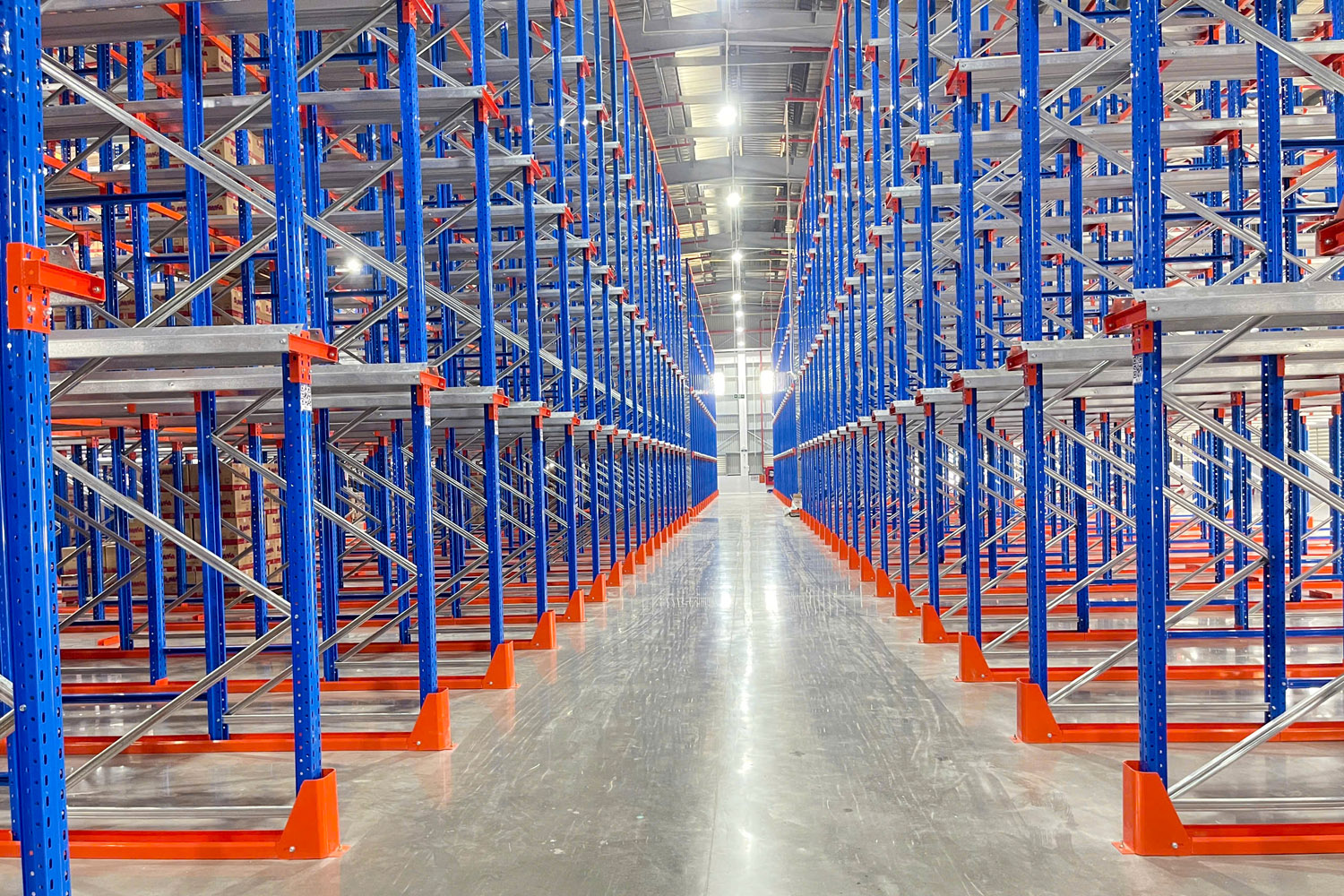
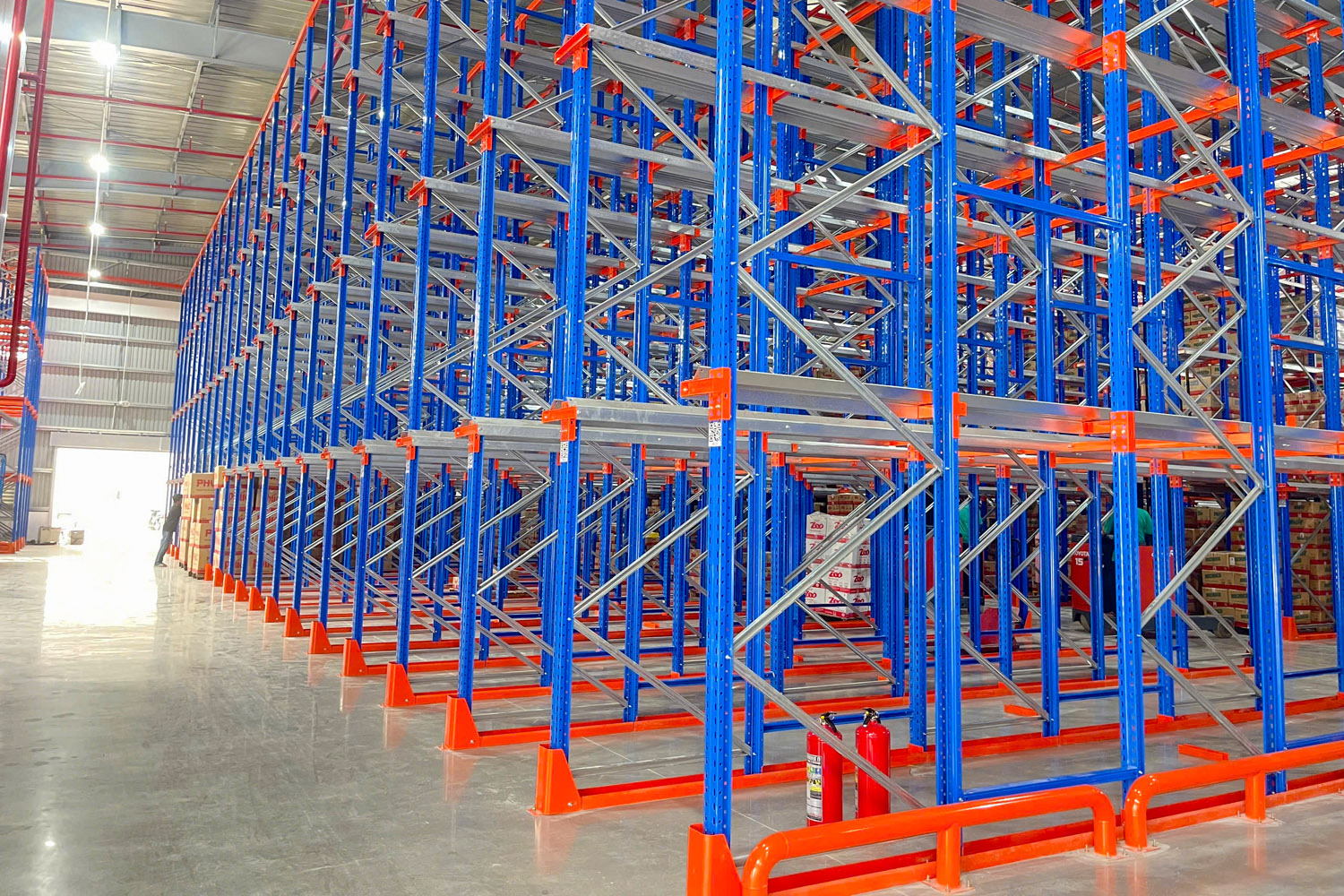
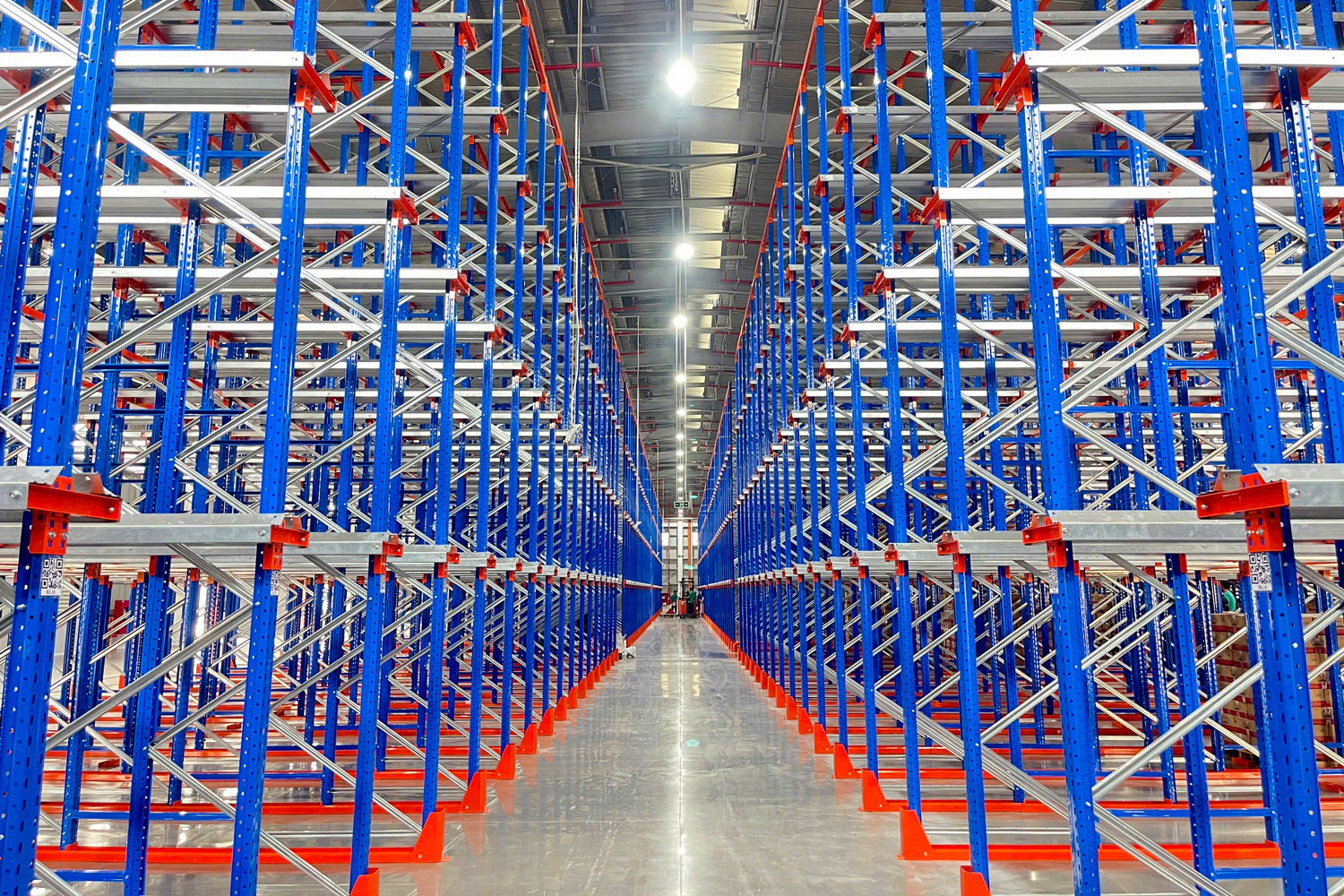
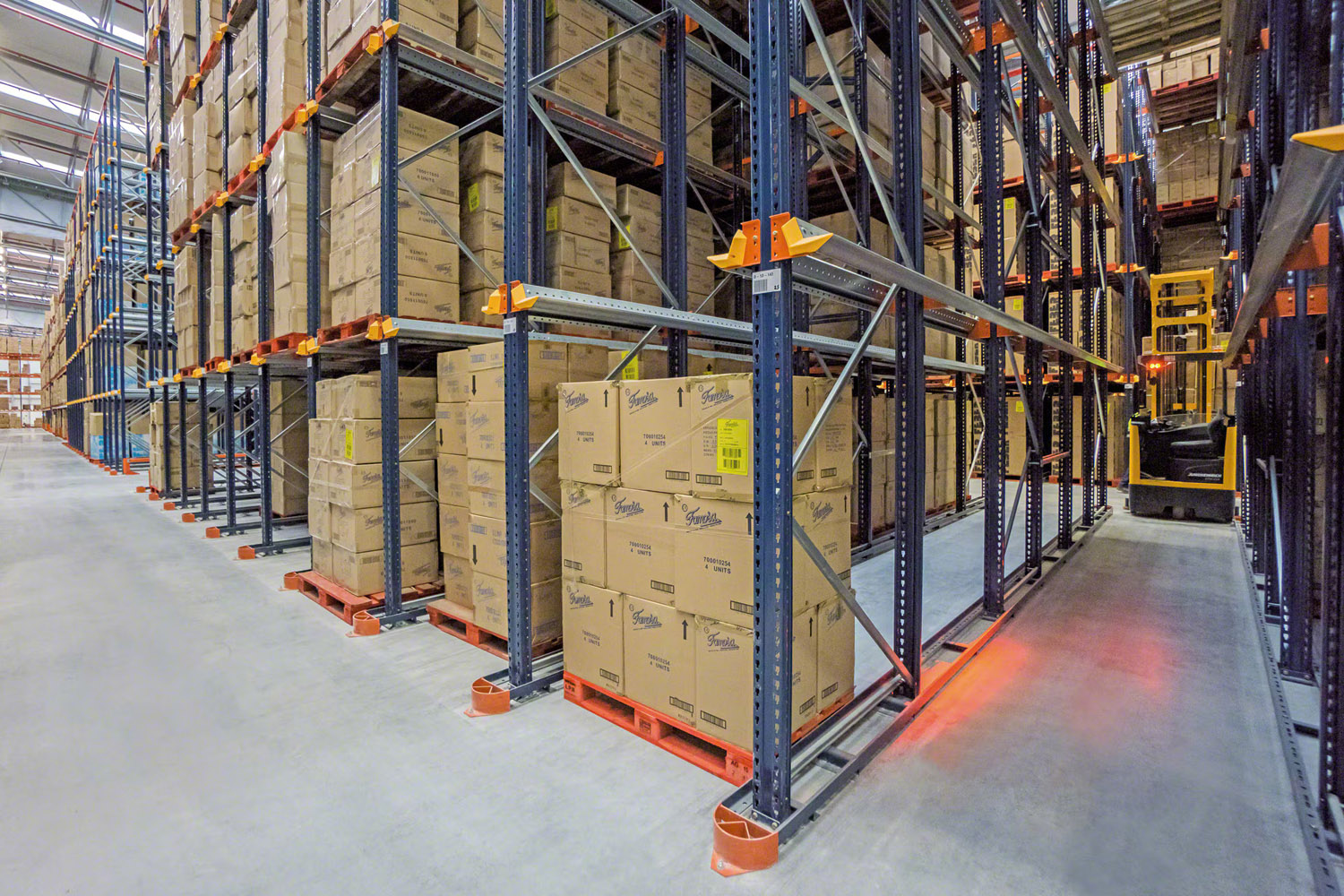
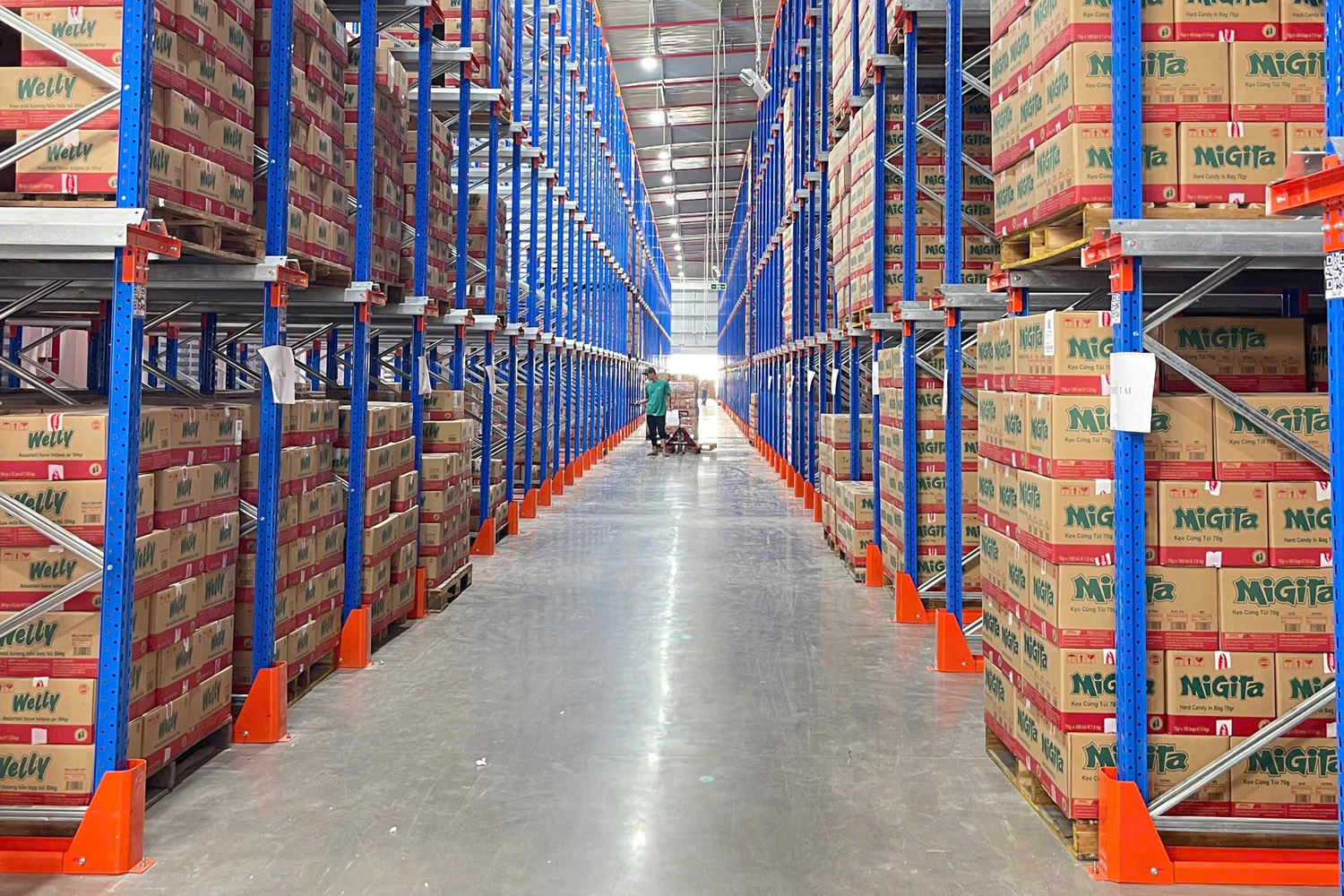
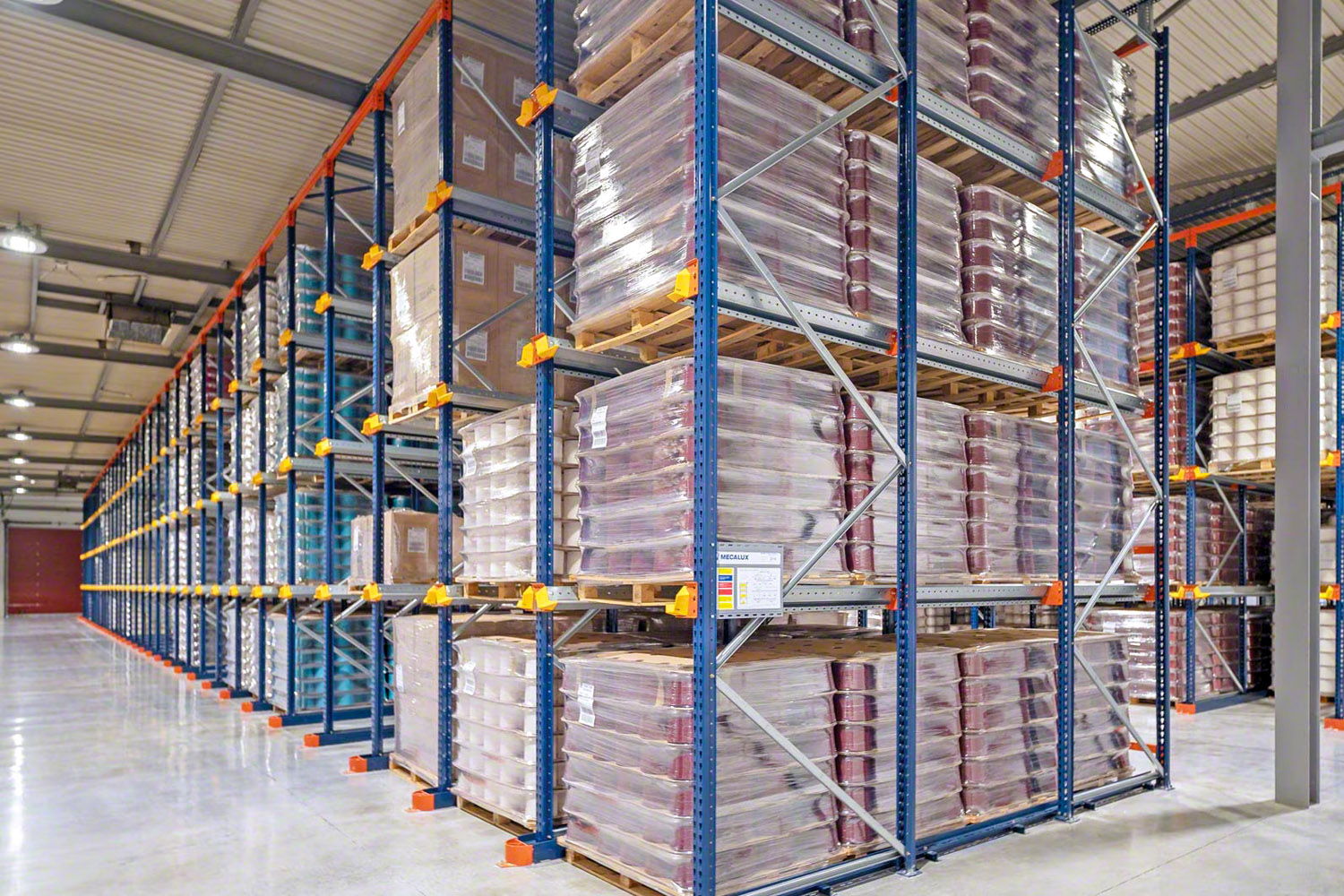
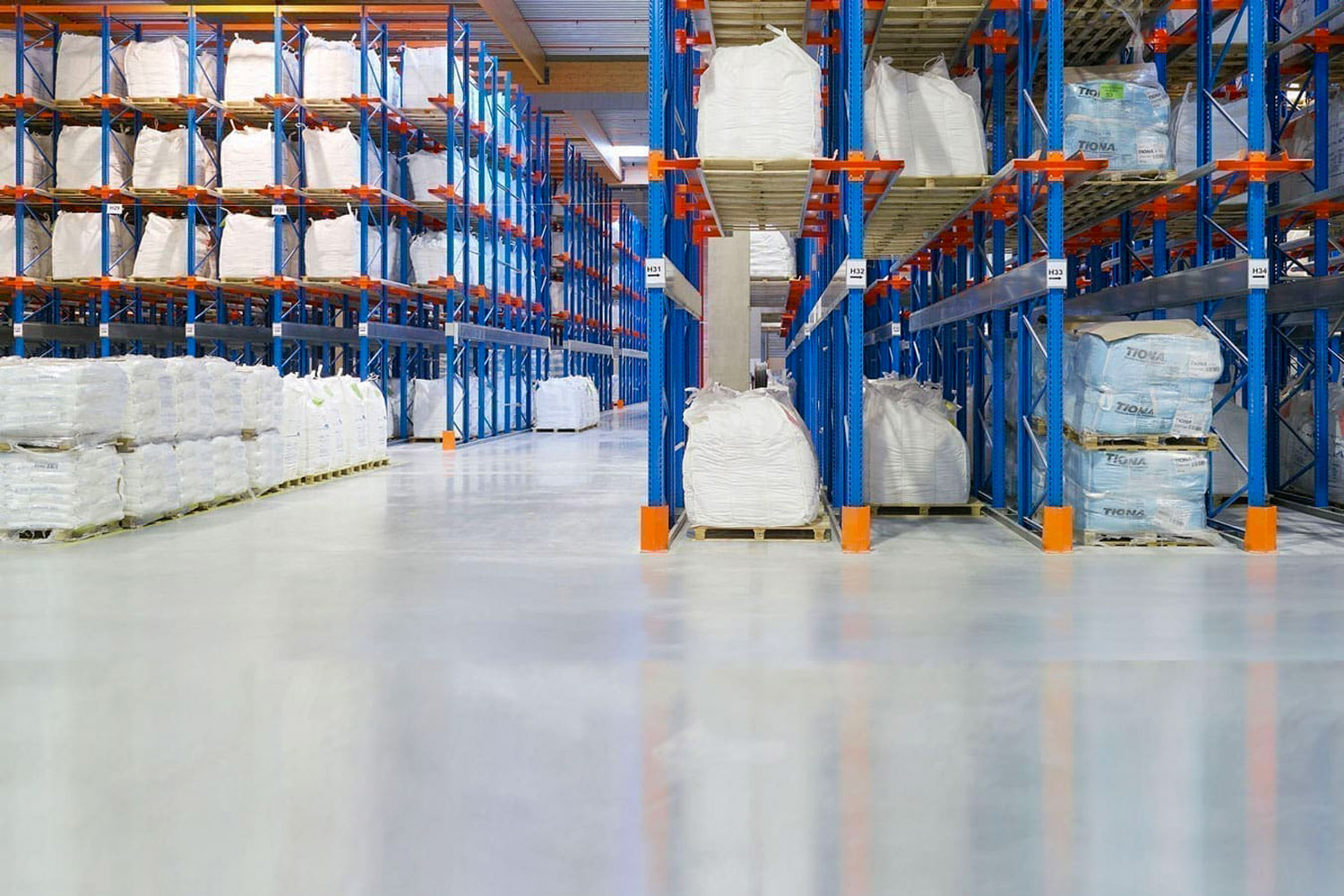




This guide explains how drive in pallet racking works, how it compares with drive through racking, and what to assess for your Australian warehouse.
How Does Drive-In Racking Work?
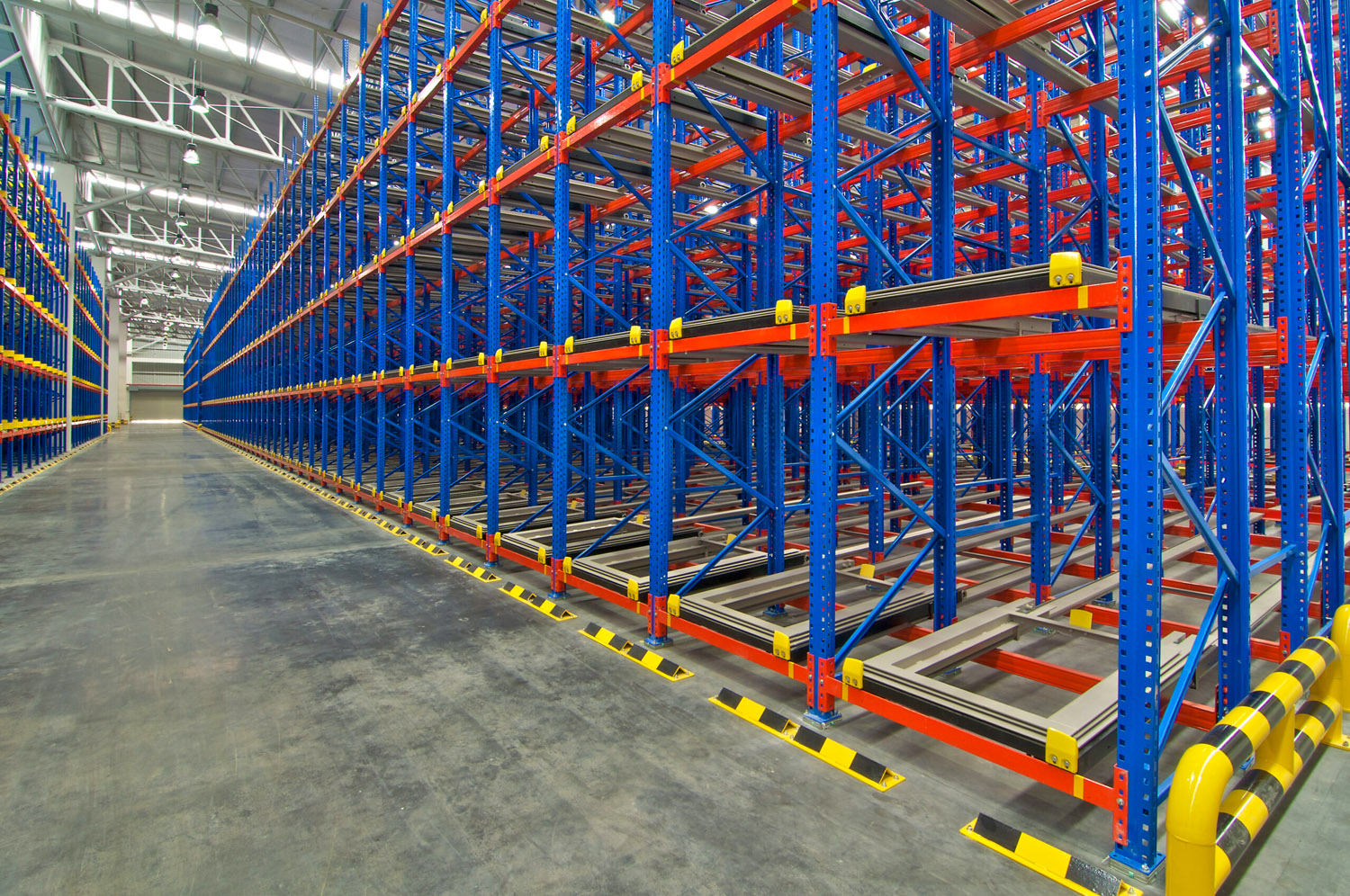
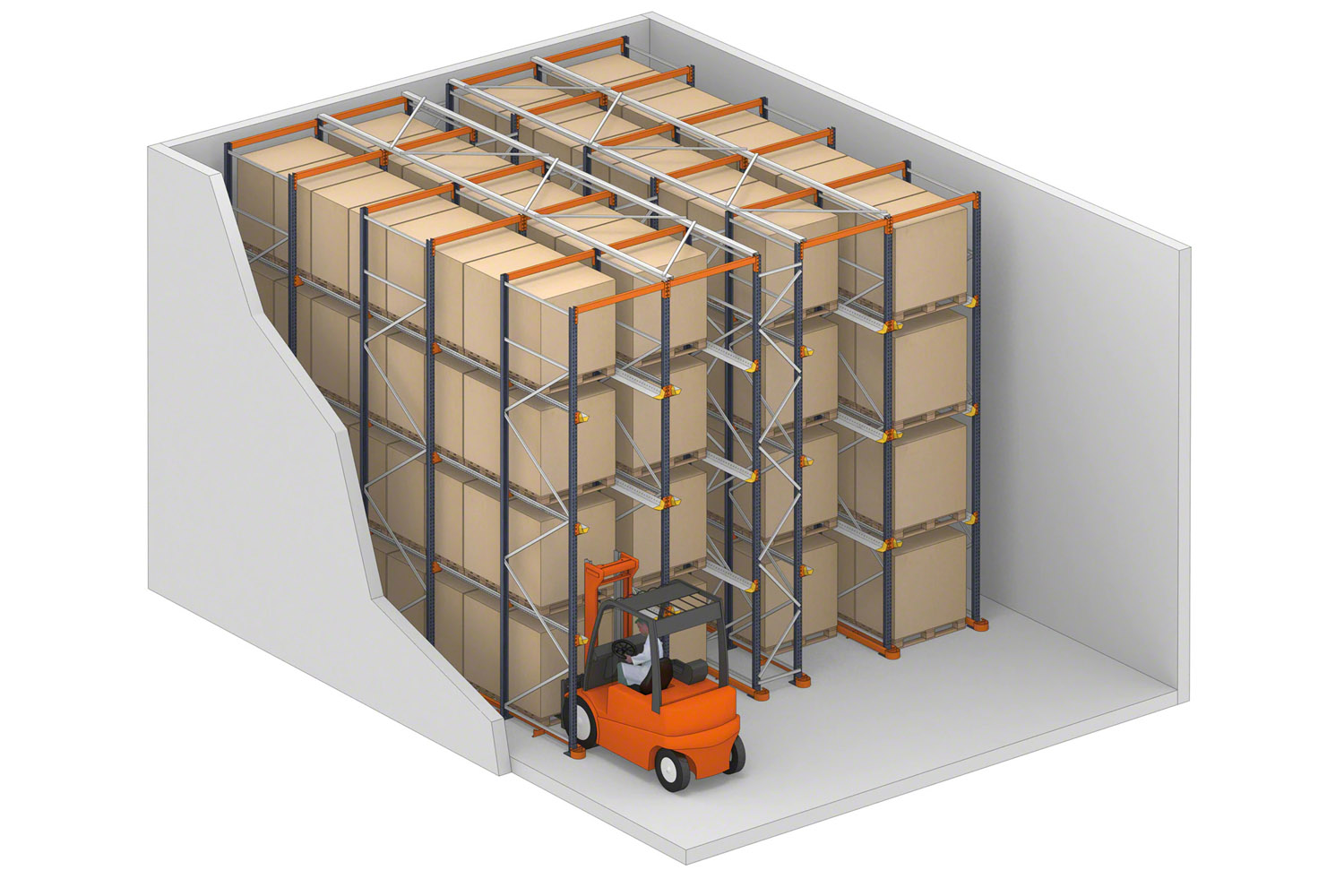
Drive-in racking works by loading and retrieving pallets through the same end of a storage lane, following a Last-In, First-Out (LIFO) sequence. The last pallet placed in a lane is the first one available for removal. This is also called First-In, Last-Out (FILO).
Operators follow the supplier’s loading sequence for the installed configuration. Within a storage level, pallets occupy the deepest available positions first, with subsequent loads placed progressively towards the entrance. During retrieval, the accessible front pallet is removed before loads behind it.
For example, imagine three pallets placed in one lane level. Pallet A goes into the deepest position, followed by B, then C nearest the entrance. The retrieval order is C, B, then A.
The pallets remain stationary on their rails; they do not roll forwards when another pallet is removed. Forklifts must enter the structure to reach the next accessible load, making equipment compatibility and accurate positioning essential.
>> Read More:
- Pallet Racking: Structure, 6 Common Types and Safety Standards
- VNA Racking: Maximize Warehouse Space with Very Narrow Aisles
- Warehouse Racking Mezzanine – Maximize Vertical Storage Space
Drive-In vs Drive-Through Racking
The main difference between drive-in and drive-through racking is access: drive-in uses one end for loading and unloading, while drive-through provides access from opposite ends. That difference affects stock rotation and the floor space needed around the rack.
| Feature | Drive-in racking |
Drive-through racking |
| Access | Entry and exit through the same end | Access from two opposite ends |
| Stock rotation | LIFO | Can support First-In, First-Out (FIFO) with controlled loading and retrieval |
| Pallet retrieval | Front loads must be removed before those behind | Loads can be retrieved from the end opposite the loading face |
| Layout | Requires operating access at one end | Requires operating access at both ends |
| Typical fit | Bulk stock that can follow LIFO | Bulk stock requiring an organised FIFO flow |
>> Read More:
- Pallet Racking Systems For Storage Solutions Australia
- Selective Pallet Racking: Specifications, Components and Applications
Benefits of Drive-In Racking for Australian Warehouses
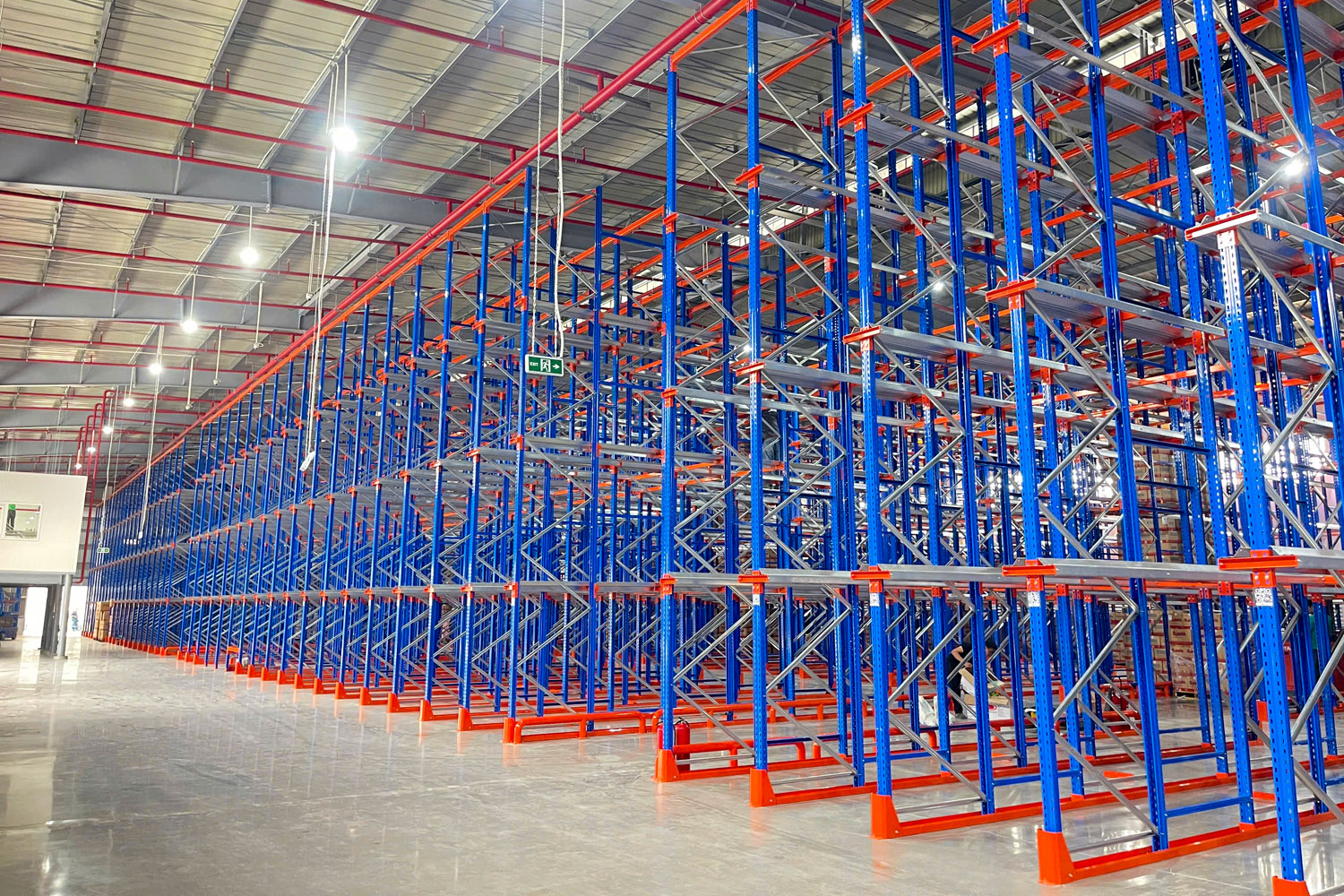
Drive-in racking offers three main benefits: greater storage density, efficient bulk storage and better use of temperature-controlled space. The practical value depends on whether your stock profile keeps the lanes well occupied.
- More pallet positions within the available footprint: Reducing intermediate aisles lets you dedicate more floor area to storage. This can help when you need additional capacity within an existing building.
- Efficient storage of uniform goods: Multiple pallets of the same product can share a lane, reducing the need to provide separate aisle access to each load.
- Better use of cool rooms and freezers: Dense storage can make more of the space available inside a temperature-controlled enclosure. Actual operating costs still depend on refrigeration, handling activity and the wider facility.
- Clear lane allocation: Assigning lanes by SKU or batch helps your team organise bulk inventory, provided location records stay accurate. au
There is no universal capacity increase. Compare proposed layouts using your actual stock volumes, lane occupancy and access requirements rather than relying on a headline percentage.
Limitations of Drive-In Racking
The main limitations of drive-in racking are restricted pallet access, dependence on compatible pallets, forklift impact risk and unused positions within partially filled lanes. These factors can reduce the benefit of a dense layout if it does not match daily operations.
- Restricted access becomes a problem when you need a specific pallet behind other loads. Retrieving it may require additional handling. Selective racking is generally more practical where individual pallet access is a frequent requirement.
- LIFO also limits stock rotation. Goods with expiry dates or strict dispatch priorities need careful assessment, because older stock can remain behind newer arrivals.
- Pallet consistency matters because loads rest on rails with defined support positions. Mixed sizes, damaged pallets or unsuitable pallet construction can compromise support. A pallet that works elsewhere in your warehouse may still be unsuitable for this system.
- Forklift impact is another concern. Operators manoeuvre inside the rack structure, where limited clearance increases the chance of contact. Appropriate protection, training, damage reporting and inspections belong in the operating plan.
- Honeycombing reduces usable capacity. This occurs when positions remain empty because lane allocation or stock rotation rules prevent them from being filled with other goods. A layout can have many nominal pallet positions but fewer positions available for your current inventory.
Assess usable storage capacity under normal stock levels, not just the number of positions shown on a layout drawing.

How do you choose drive-in racking for an Australian warehouse?
Choosing drive-in racking requires you to match the system to your inventory, pallet construction, forklift fleet, site conditions and stock rotation requirements. Start with operating data, then ask a suitably experienced supplier or designer to assess the proposed configuration.
- Review your inventory profile. Record pallets per SKU, typical stock levels and dispatch frequency. Check whether each allocated lane will remain reasonably full as inventory changes.
- Confirm the rotation method. You should establish whether LIFO is acceptable before selecting lane depth. If FIFO is necessary, assess a drive-through layout alongside other suitable options.
- Check every pallet format. Confirm compatibility with the Australian standard pallets or other formats used on site. Provide actual dimensions, construction details and condition requirements; imported pallets may differ from those your rack was designed to support.
- Specify the complete load. Supply pallet weights in kg and overall load dimensions in mm, including packaging or product overhang. The design must accommodate the loaded pallet, not just the empty pallet base.
- Match the forklift to the structure. Check truck dimensions, operating clearances, lift height and lifting capacity at the required height. Confirm suitability across the full storage depth.
- Balance lane depth with accessibility. Deeper lanes provide more positions behind each entrance, but can increase travel and complicate stock allocation. Compare likely occupancy rather than choosing the deepest option available.
- Assess the operating environment. For cool rooms or freezers, have the supplier confirm suitability for the temperature and site conditions. Include rack protection and maintenance access in the layout review.
- Confirm design and maintenance requirements. Ask the designer to identify applicable Australian standards and document the design basis. AS 4084.1:2023 covers steel storage racking design. WorkSafe Victoria references AS 4084.2:2023 for operation and maintenance, while noting that specialised systems such as drive-in racking may need additional safety measures.
- Compare the complete cost. Include design, installation, protection, inspections, maintenance and handling implications. A lower purchase price may offer less value if poor lane utilisation creates ongoing operational costs.
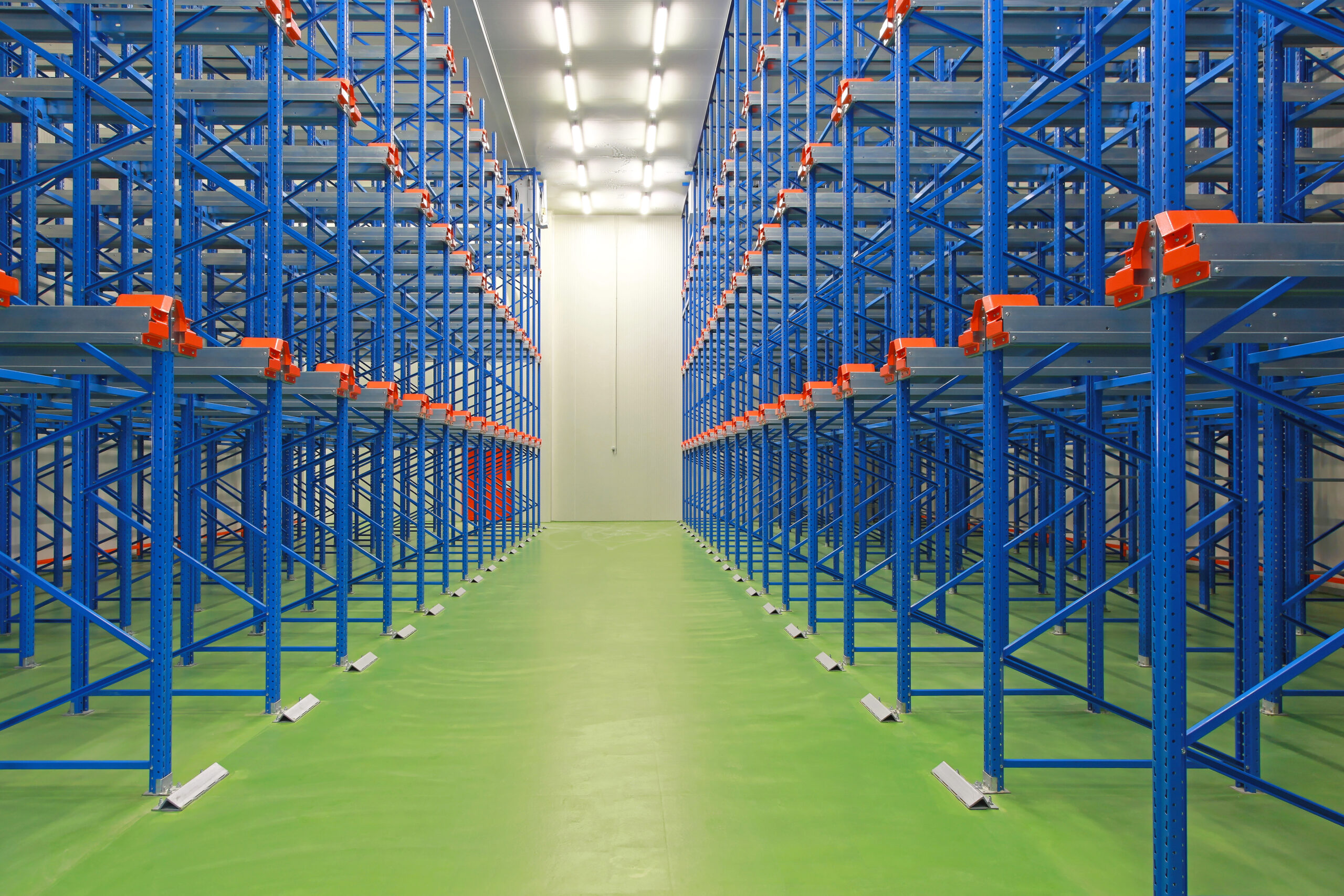
In summary, drive-in racking can increase storage density when you hold many pallets of the same product and can operate with LIFO. Drive-through racking provides two-ended access and can support a controlled FIFO process. Your choice should account for usable capacity, pallet compatibility, forklift access and maintenance requirements. Before committing, have the proposed layout assessed against your actual inventory and operating conditions.
Featured Drive-In Racking Projects by Vinatech
Explore how Vinatech’s Drive-In Pallet Racking solutions maximise warehouse storage density, reduce aisle space and support efficient bulk inventory management.
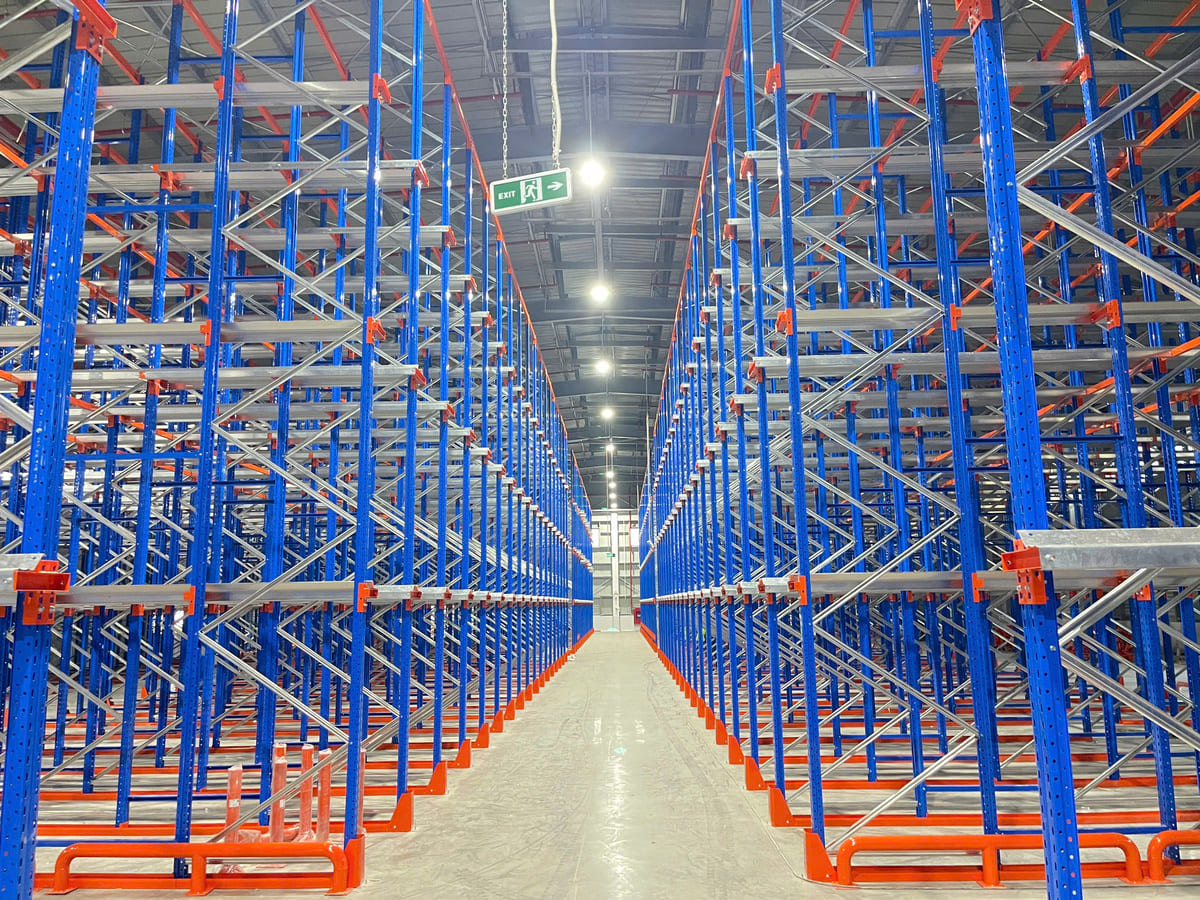
1. Logistics Warehouse – Space-Efficient Drive-In Racking
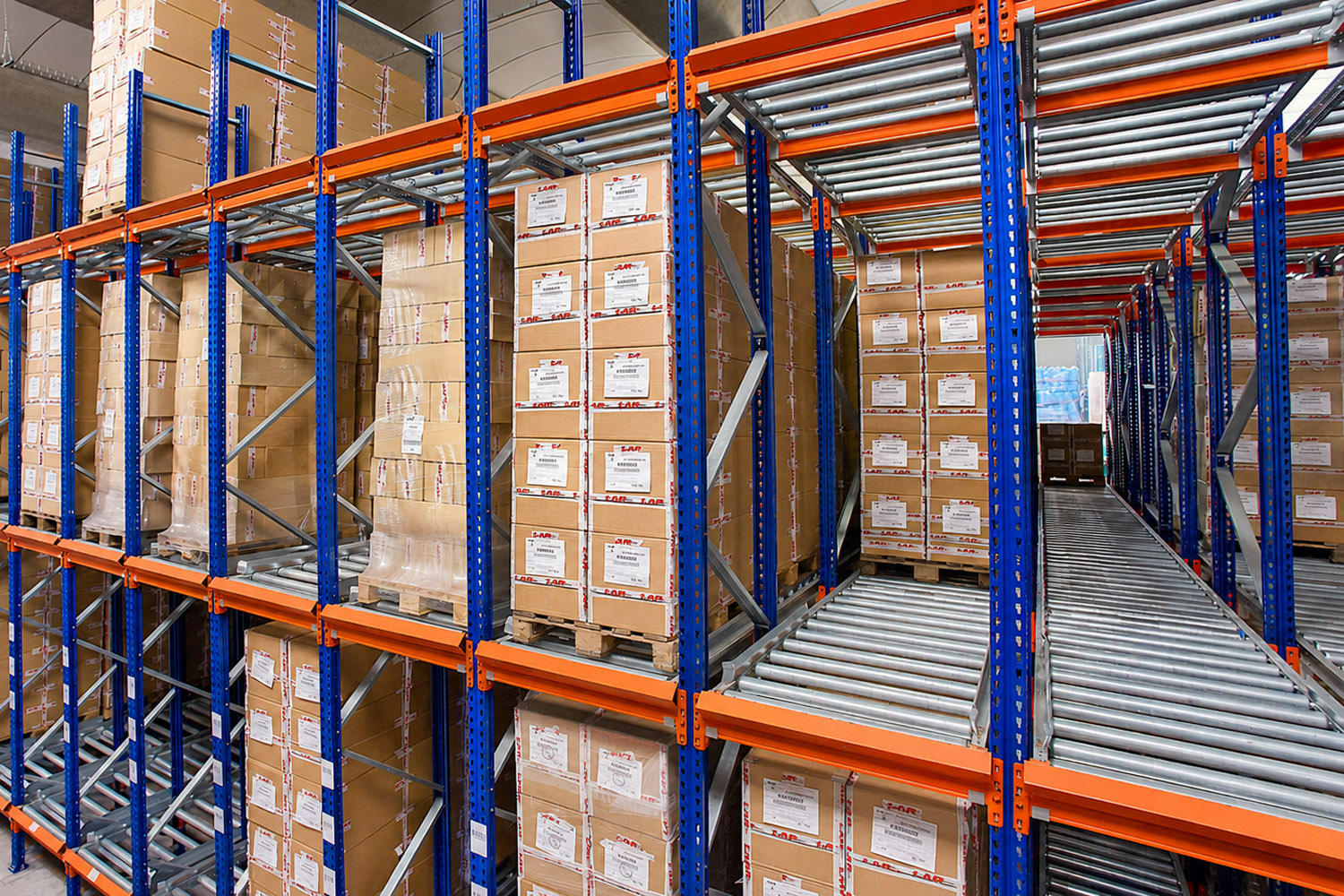
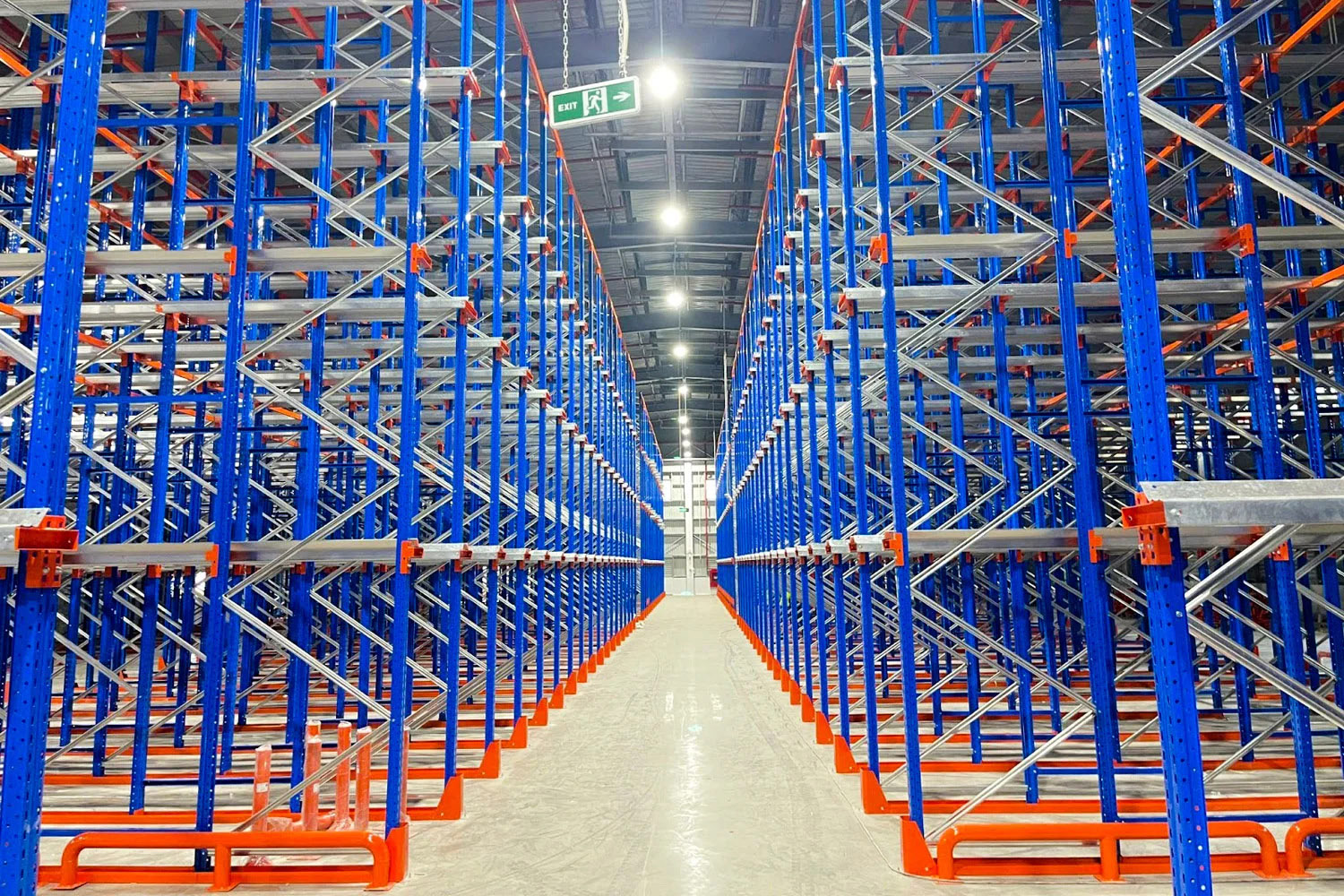
Vinatech implemented a Drive-In Pallet Racking System providing approximately 7,200 pallet positions within a 6,000 m² warehouse, featuring 10-metre-high racking and deep-lane storage configurations.
The system achieved approximately 45% higher pallet capacity compared to conventional Selective Racking, while reducing forklift aisle requirements. This project demonstrates how Vinatech’s Drive-In Racking solutions maximise warehouse space utilisation and support efficient, high-volume logistics storage.
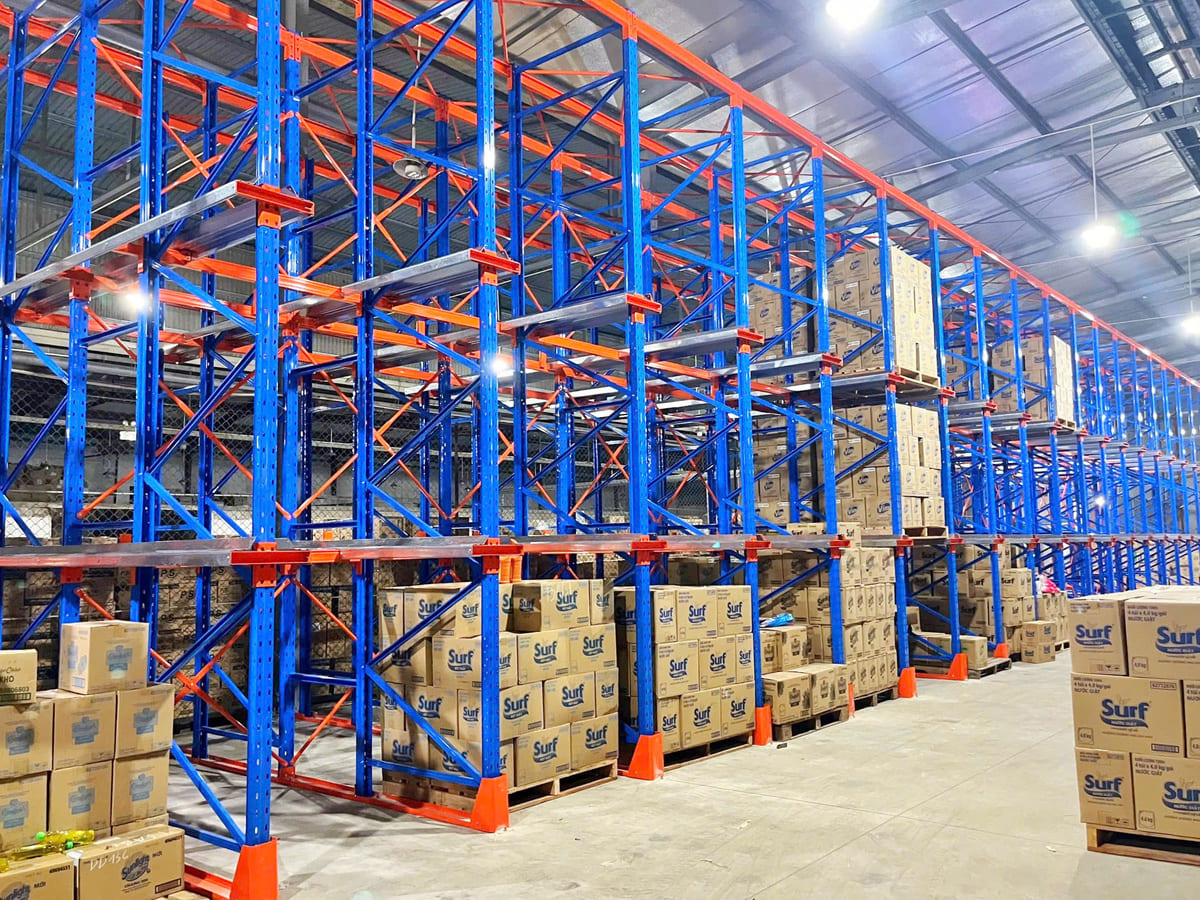
2. Bulk Storage Warehouse – Drive-In Pallet Racking
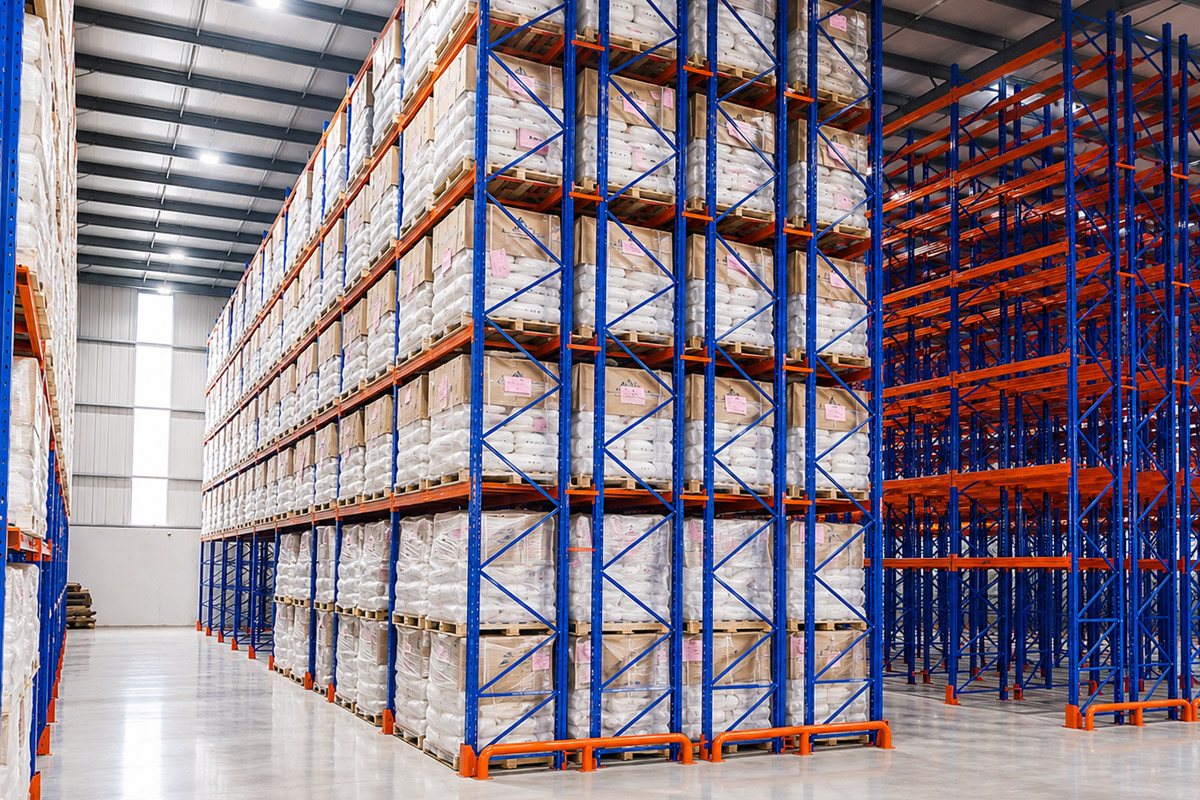
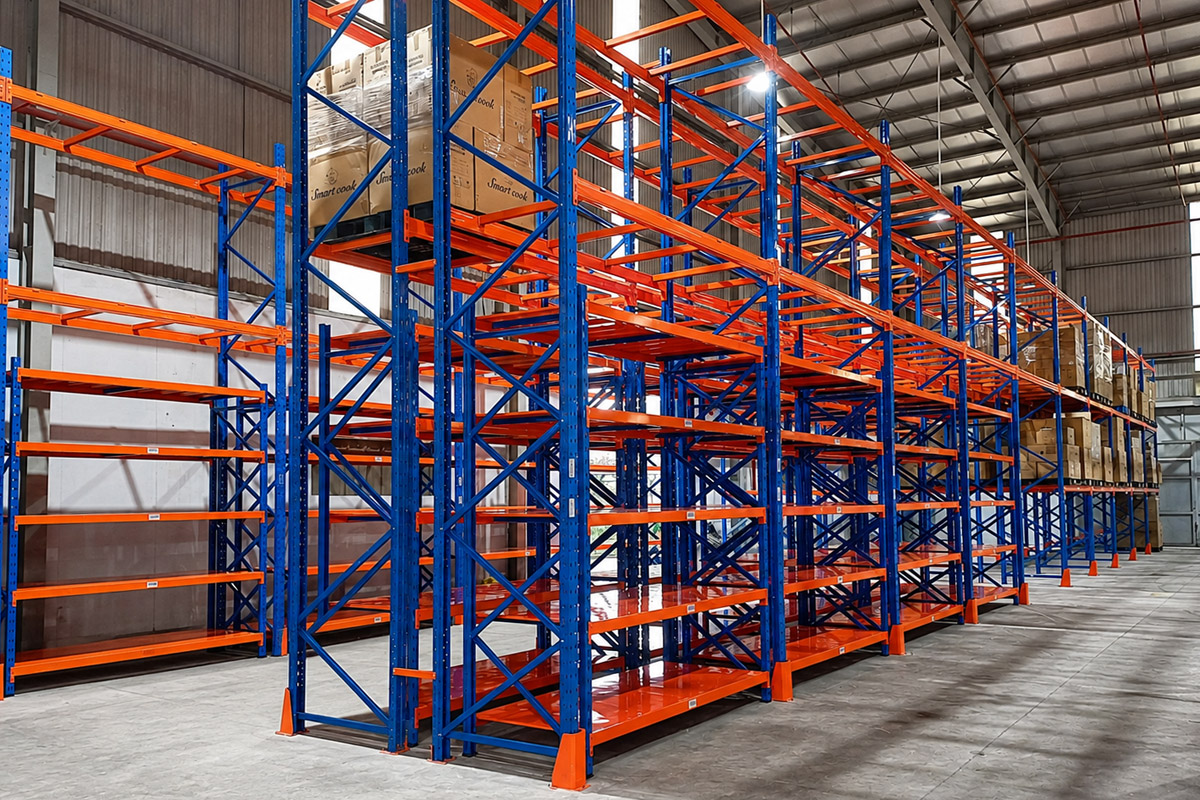
Vinatech’s Drive-In Pallet Racking Solution is designed to maximise storage density for warehouses handling large quantities of similar palletised goods.
The deep-lane storage configuration reduces conventional forklift aisle requirements, enabling more efficient use of available warehouse space. This project illustrates how Drive-In Racking can support space-efficient bulk storage, organised inventory management and cost-effective warehouse operations.
Why Choose Vinatech Australia for Drive-in Racking?
Choosing the right Drive-in Racking System requires more than maximising warehouse storage capacity. An effective solution should provide direct pallet access, efficient inventory management, safe forklift operations and flexibility for future expansion.
Vinatech Australia delivers customised drive-in racking solutions designed to optimise warehouse space, streamline pallet handling and support long-term operational efficiency.
- End-to-end project solutions: Comprehensive support from warehouse assessment, racking design and manufacturing to professional installation and after-sales service.
- 100% direct pallet accessibility: Drive-in racking provides individual access to every pallet, enabling efficient stock picking, loading and retrieval without moving other pallets.
- Optimised warehouse layouts: Customised configurations maximise vertical storage space while maintaining appropriate aisle widths and forklift accessibility.
- Designed to Australian standards: Racking systems are designed in accordance with AS 4084:2023 requirements.
- Customised load configurations: Rack dimensions, beam levels and load capacities are tailored to pallet sizes, inventory requirements and warehouse operations.
- 2D and 3D warehouse designs: Detailed layouts help customers evaluate pallet capacity, aisle arrangements and material handling workflows before installation.
- Factory-direct manufacturing: Direct manufacturing supports competitive pricing, consistent product quality and flexible racking configurations.
- Flexible and scalable storage: Adjustable beam levels and modular designs accommodate changing inventory volumes, different pallet sizes and future warehouse expansion.
- Versatile industry applications: Suitable for logistics, FMCG distribution, manufacturing, retail, food and beverage storage, and e-commerce fulfilment.
- Australian-based support: Vinatech Australia provides local project coordination and after-sales assistance from 34 Paramount Blvd, Cranbourne West VIC 3977.
With extensive experience in warehouse storage solutions, Vinatech Australia provides drive-in pallet racking systems that maximise space utilisation, ensure direct pallet accessibility and support efficient, scalable warehouse operations.
Vinatech Australia: Industrial Warehouse Racking – Warehouse Shelving Solutions
- Website: https://vinatech.com.au/
- Phone number: 0485 083 868
- Email: info@vinatech.com.au
- Address: 34 Paramount Bvd, Cranbourne West VIC 3977, Australia
FAQs about Drive-In Racking
Drive-in pallet racking is a high-density storage system that allows forklifts to drive directly into the racking lanes to store pallets multiple positions deep, maximising warehouse space by reducing the number of aisles.
Drive-in racking offers much higher storage density by eliminating multiple aisles, while selective racking provides direct access to every pallet but requires more aisle space.
Drive-in racking typically operates as a FILO (First-In, Last-Out) system because pallets are loaded and retrieved from the same side.
Drive-in racking can reduce aisle space significantly and increase storage capacity by up to 60–80% compared to selective racking, depending on the warehouse layout.
Industries such as food and beverage, cold storage, manufacturing, and logistics benefit most from Drive-in systems due to high-volume, low-SKU inventory.