

1. What is Double Deep Racking?
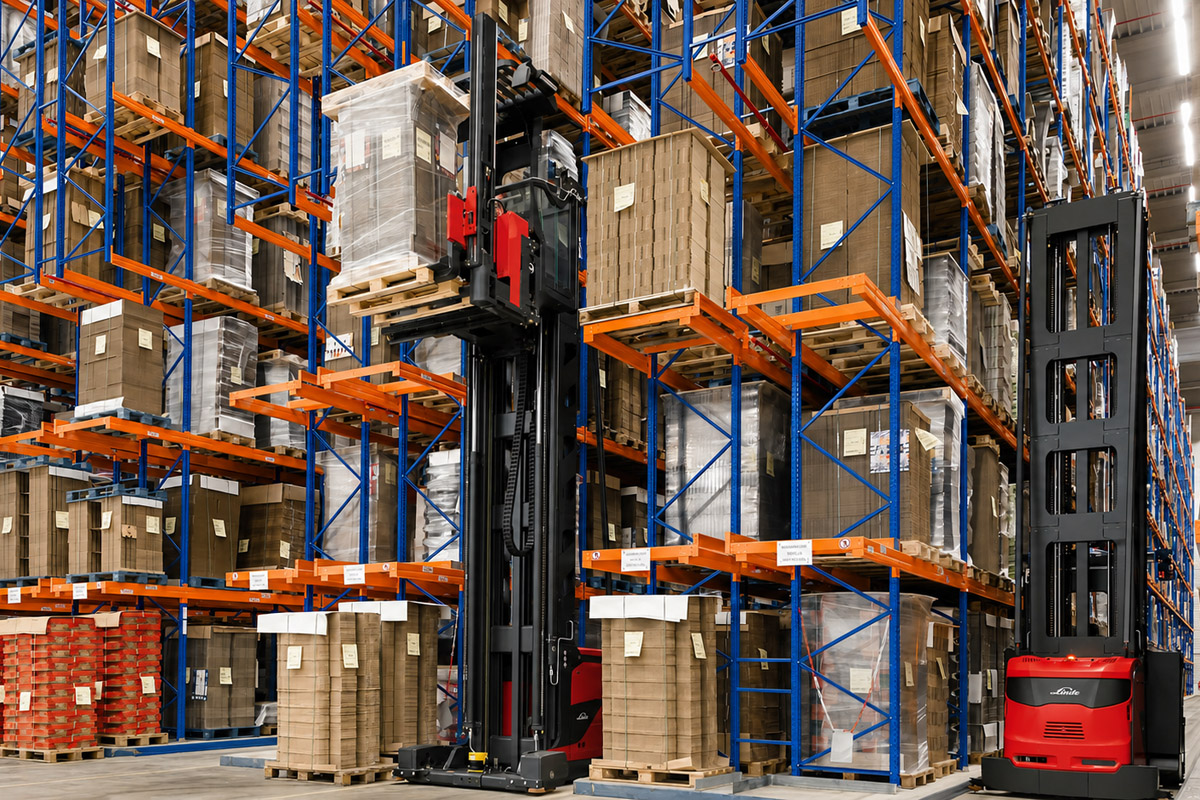
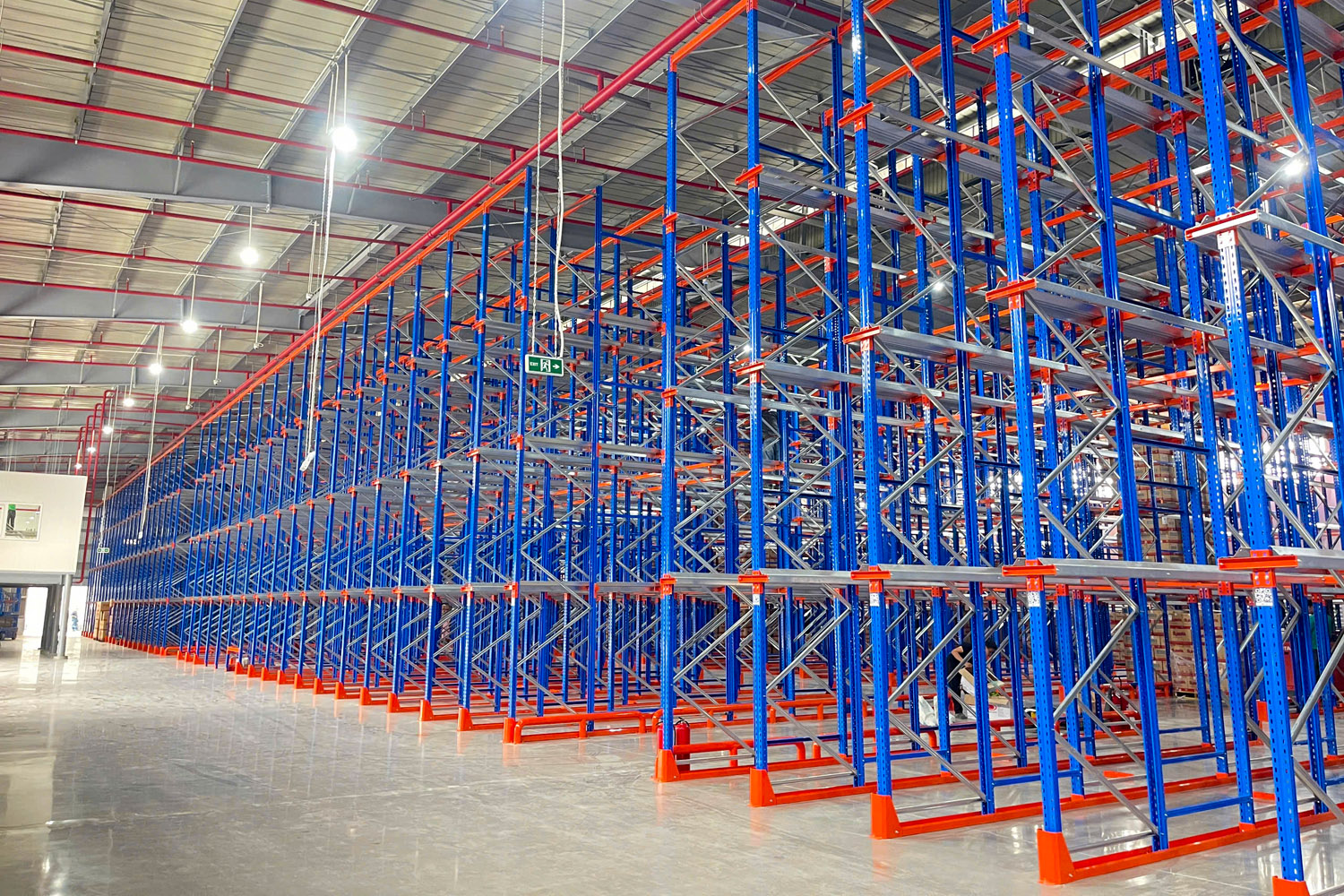
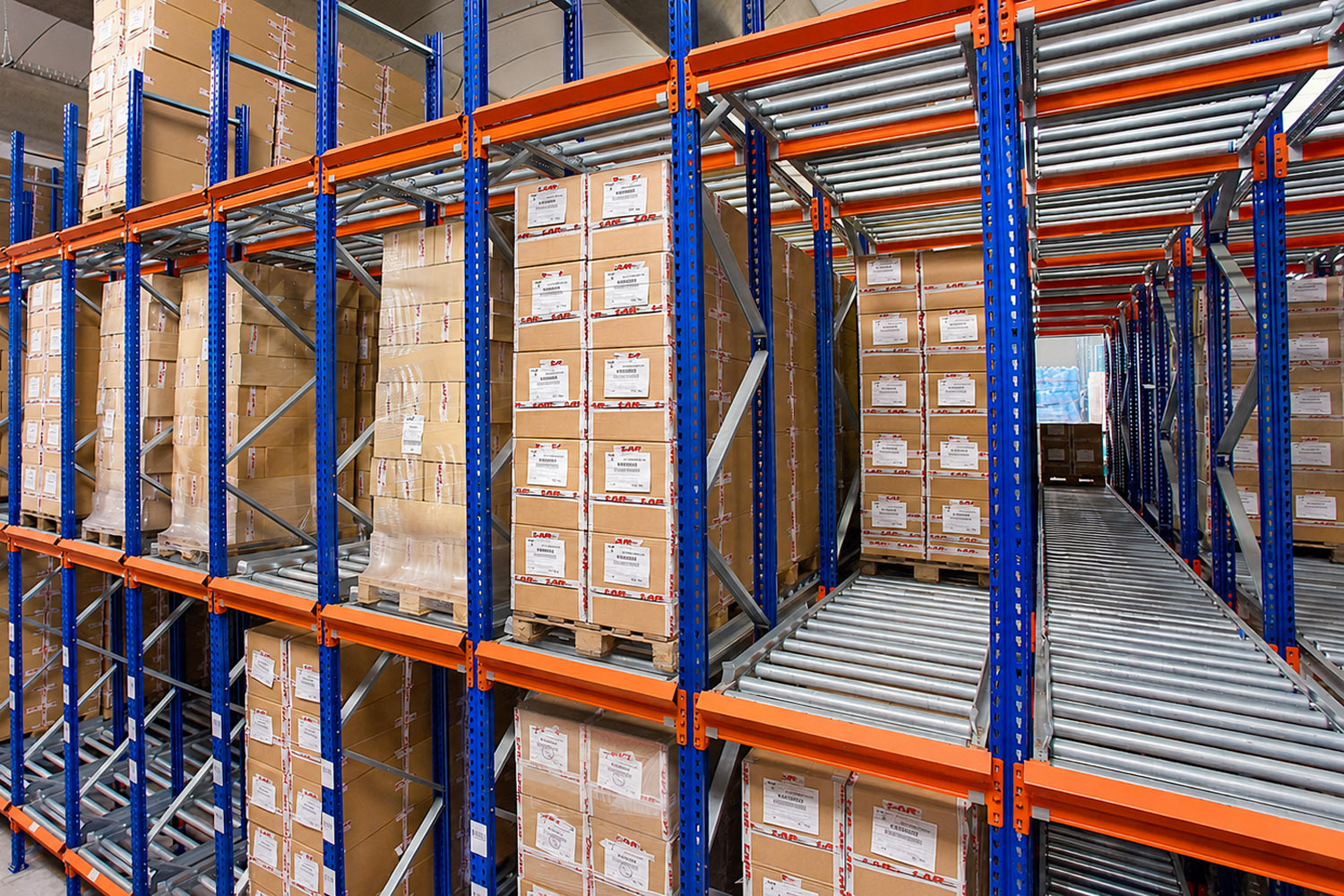
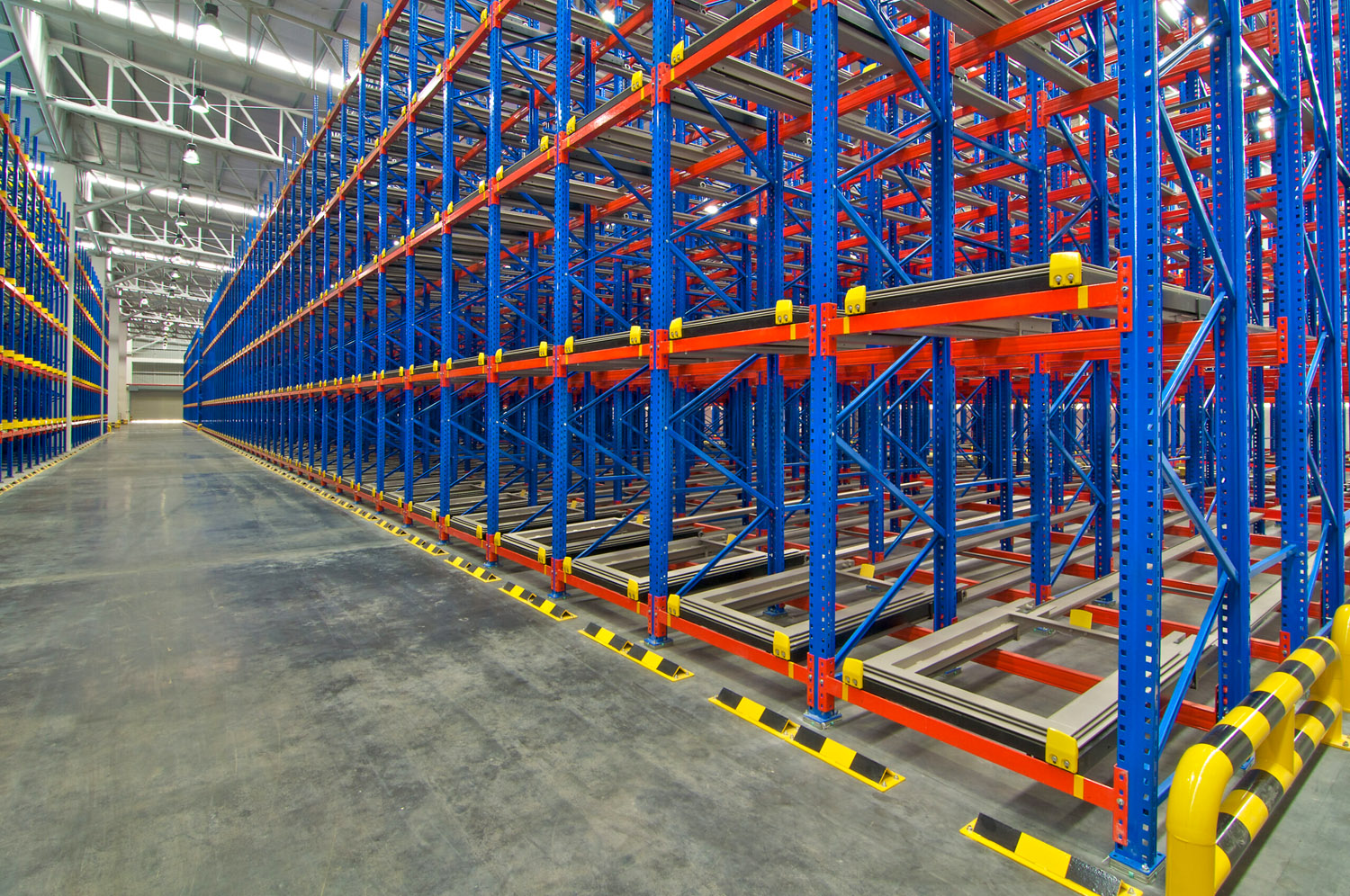
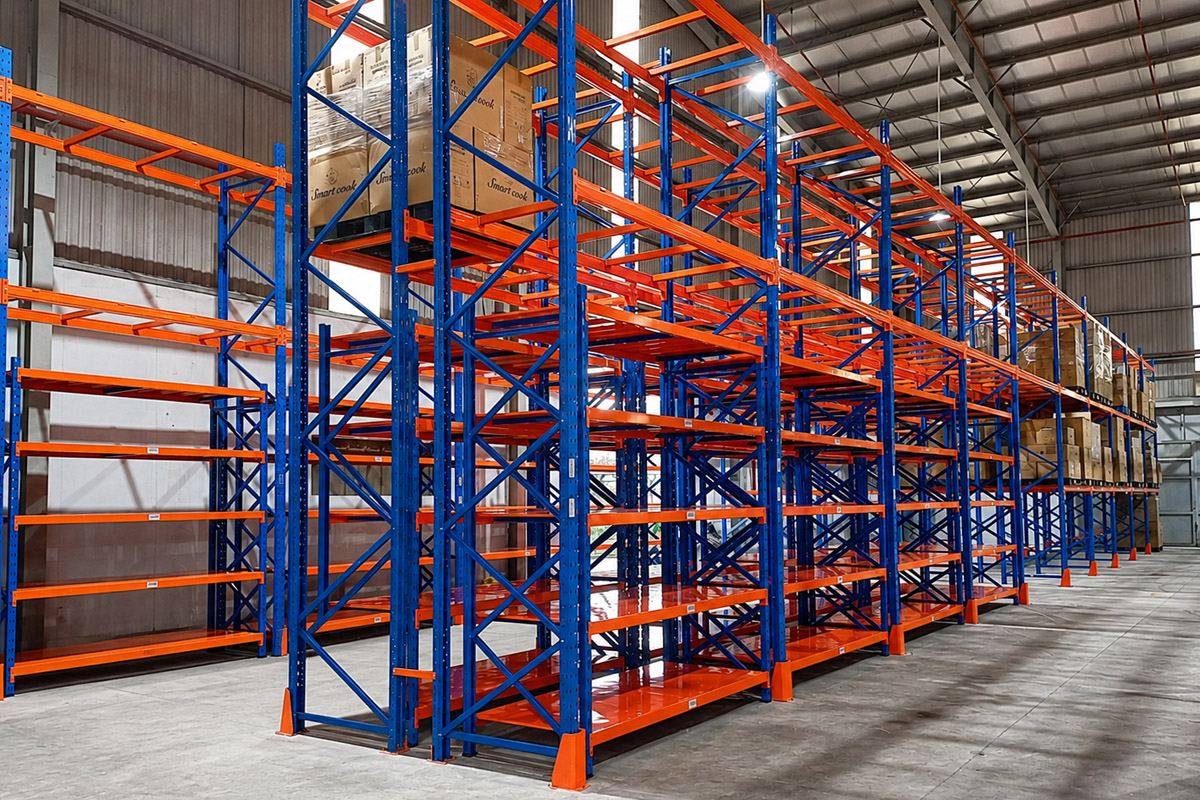
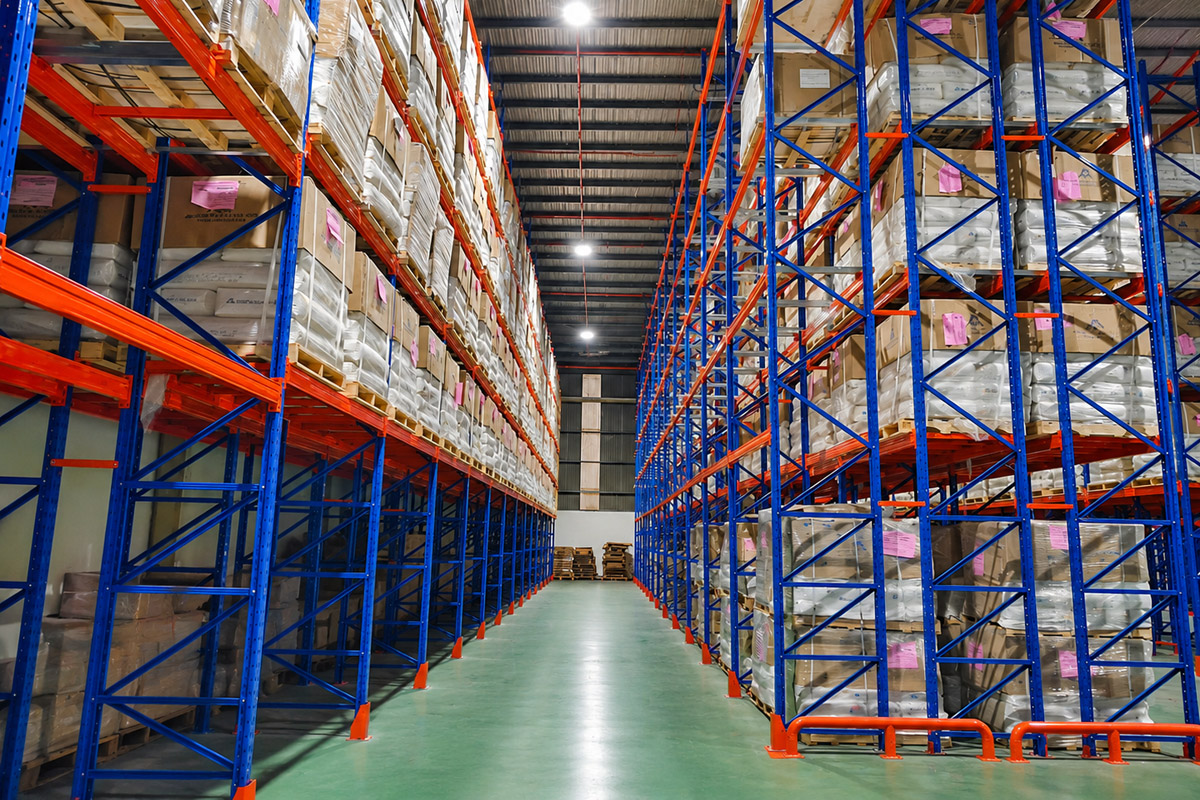
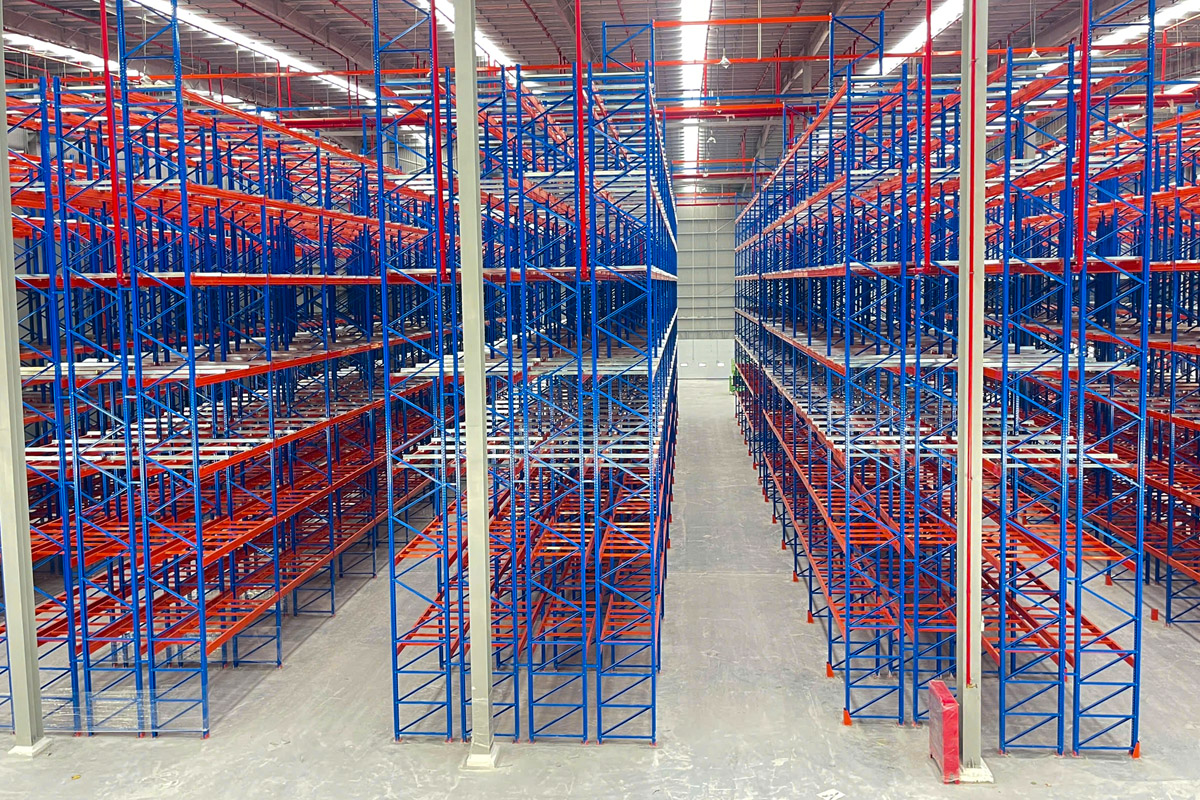
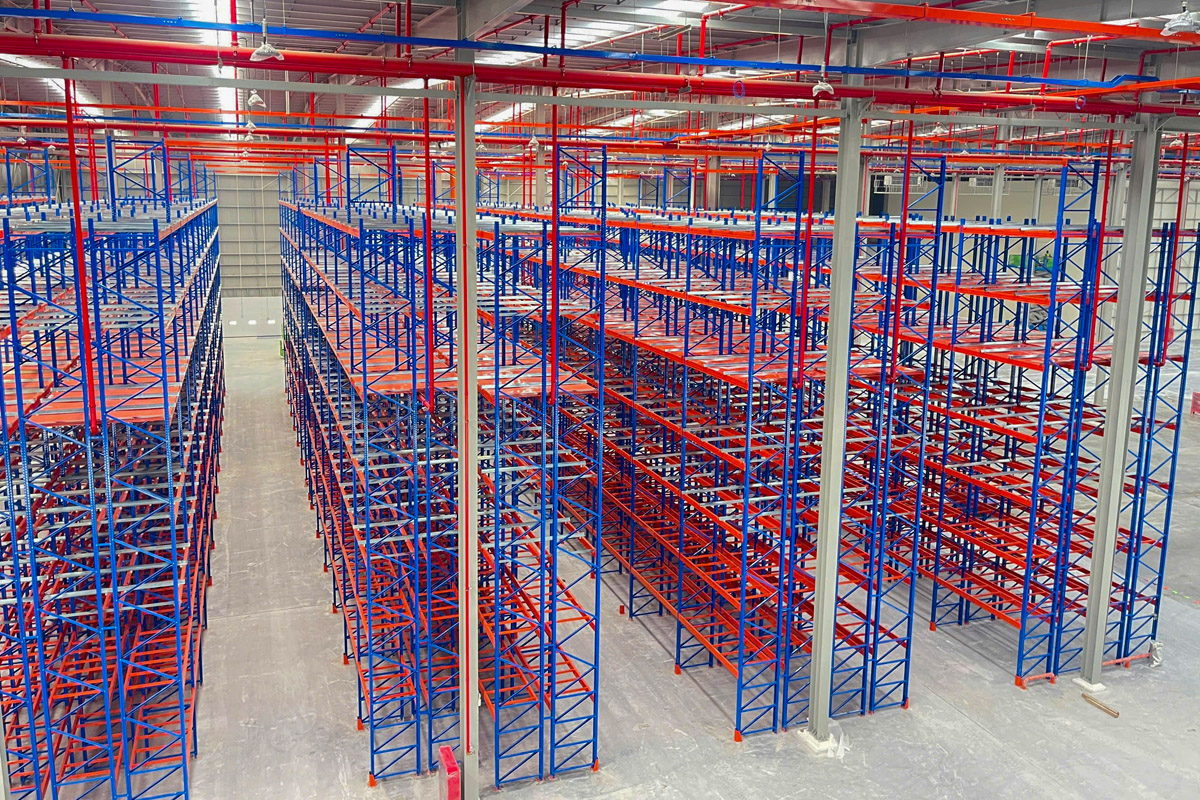
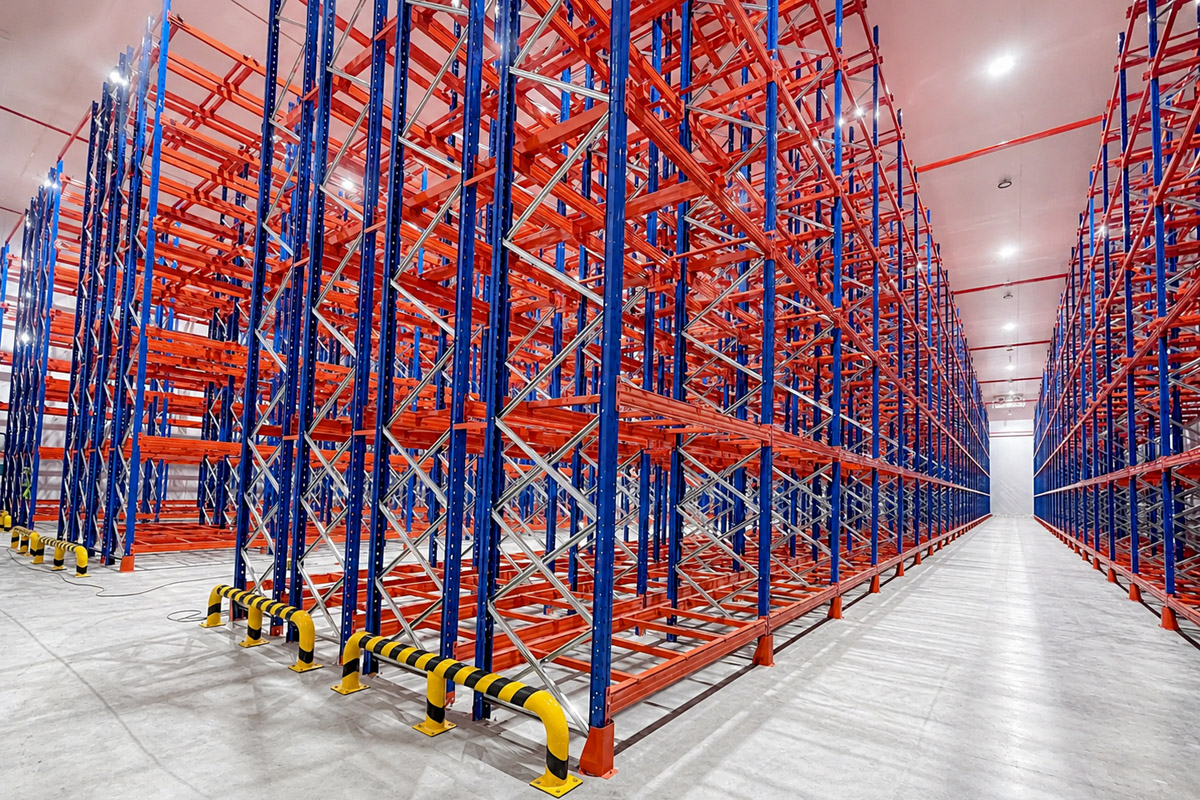
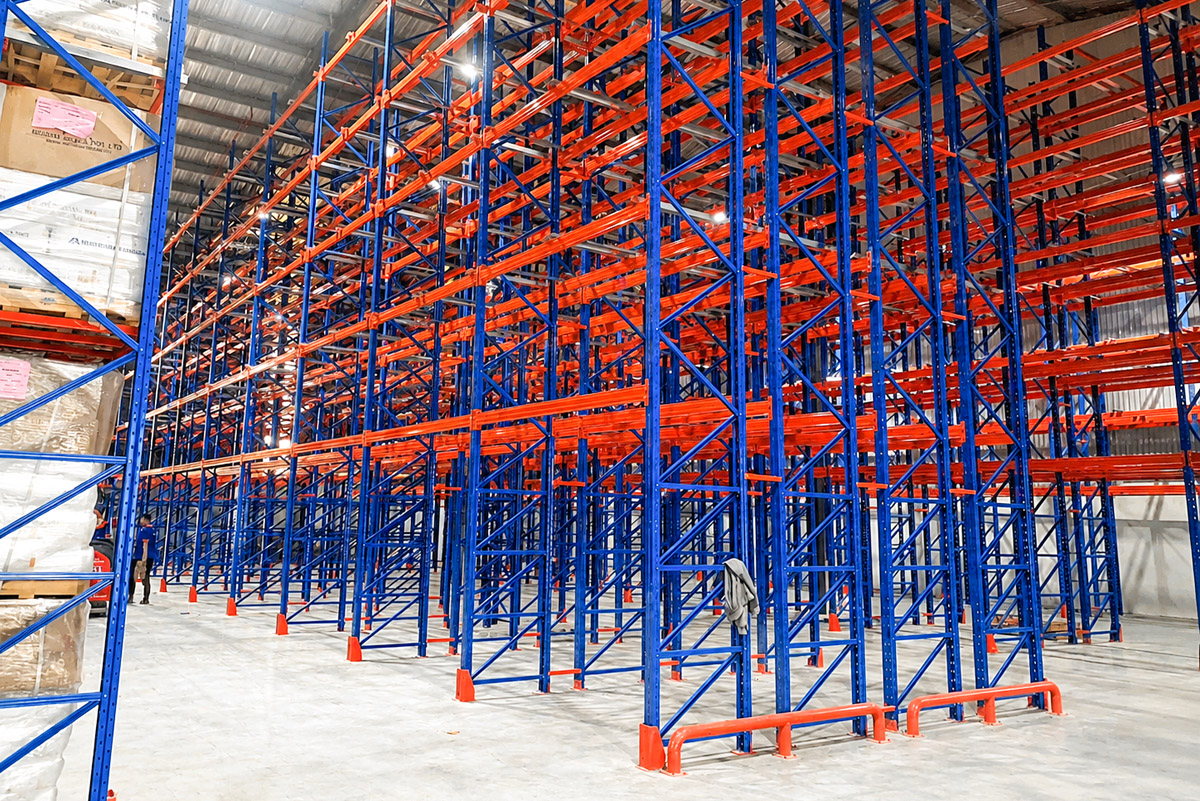
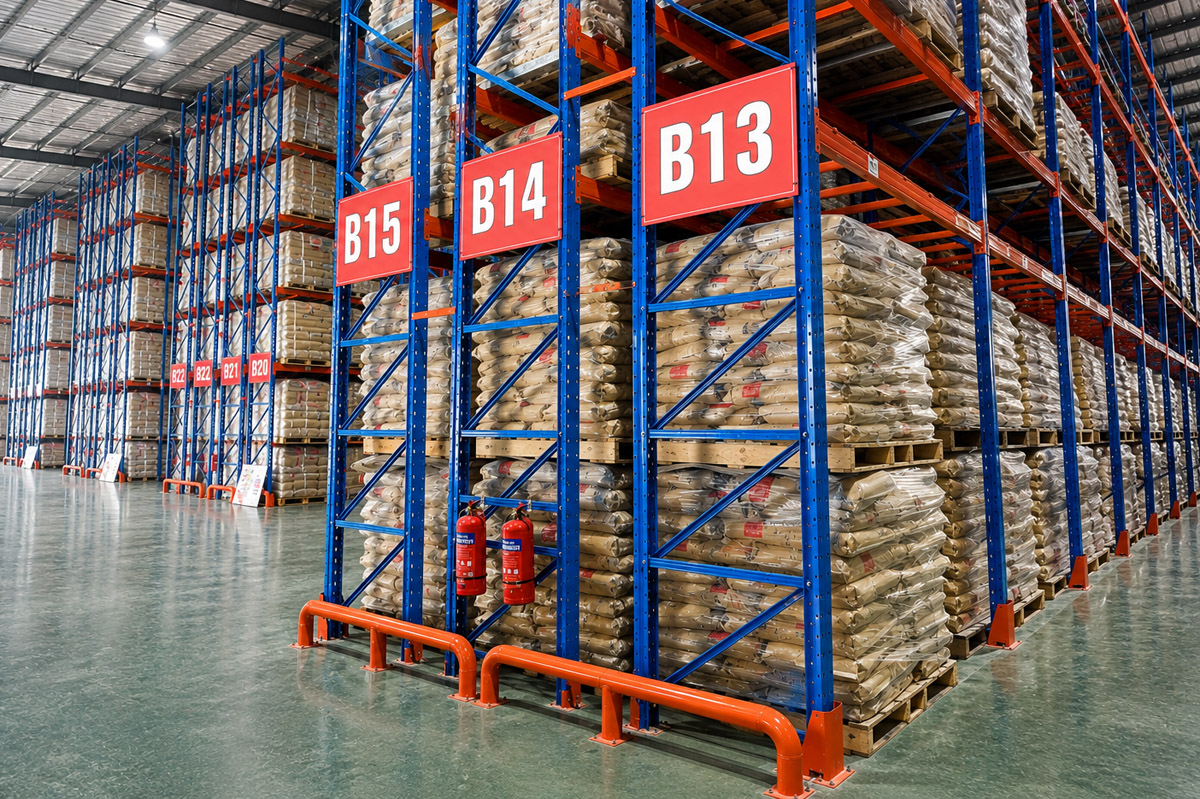
Double deep pallet racking is a warehouse storage system that places one pallet behind another, with both positions accessed from the same aisle. The rear pallet remains blocked while the front position is occupied. The system uses steel frames and beams, with pallet supports and protective accessories specified for the application. A purpose-built reach mechanism allows the forklift to place and retrieve pallets at the rear.
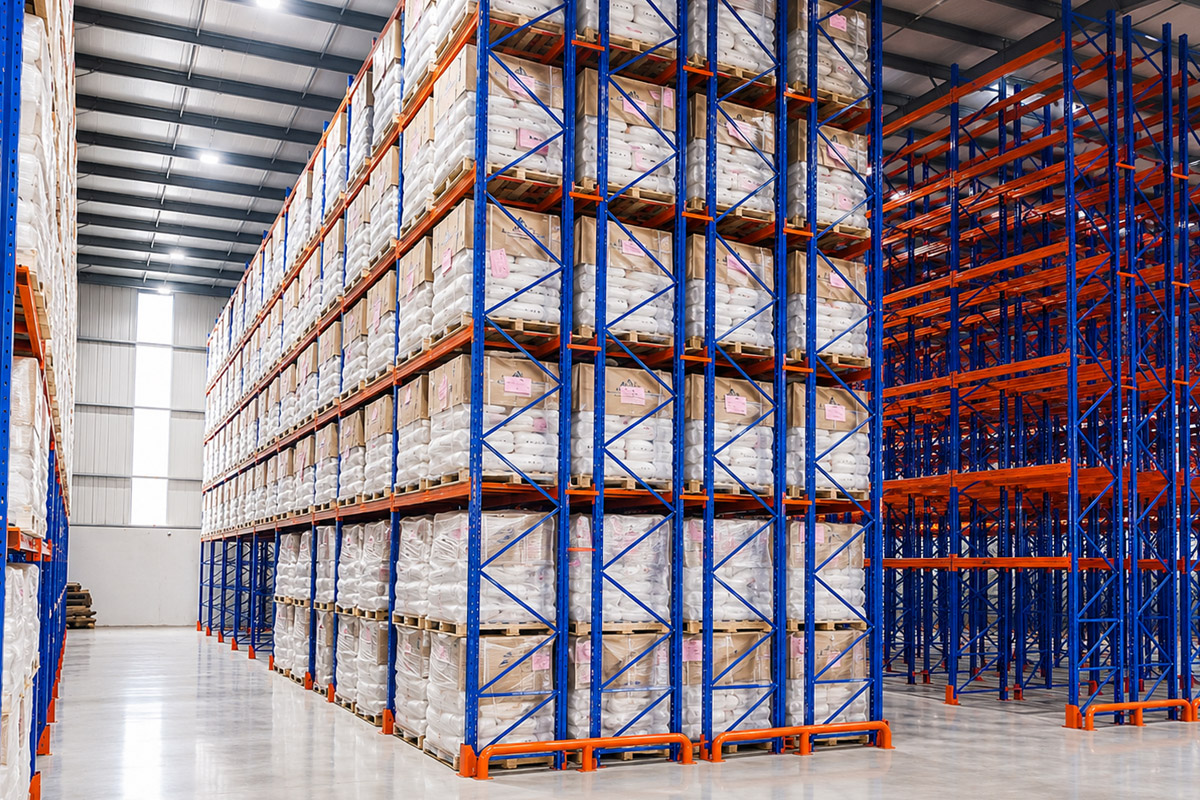
Double Deep Racking vs Selective Racking
The main difference is accessibility: selective racking provides direct access to each pallet, while double deep racking places a second pallet behind the first.
| Feature | Selective pallet racking | Double deep pallet racking |
| Storage depth from aisle | One pallet | Two pallets |
| Immediate pallet access when full | Every pallet | Approximately half |
| Storage density | Lower in a comparable conventional layout | Higher through reduced aisle allocation |
| Handling equipment | Compatible conventional equipment | Compatible double-deep equipment |
| Typical stock profile | Many SKUs with individual access needs | Multiple pallets per SKU |
| Rotation flexibility | Individual pallets can be selected | Rear access depends on the front position |
Consulting on Double Deep Racking Systems for Your Warehouse
Call: 0485 083 868 Get In Touch
2. How Does Double Deep Racking Work?
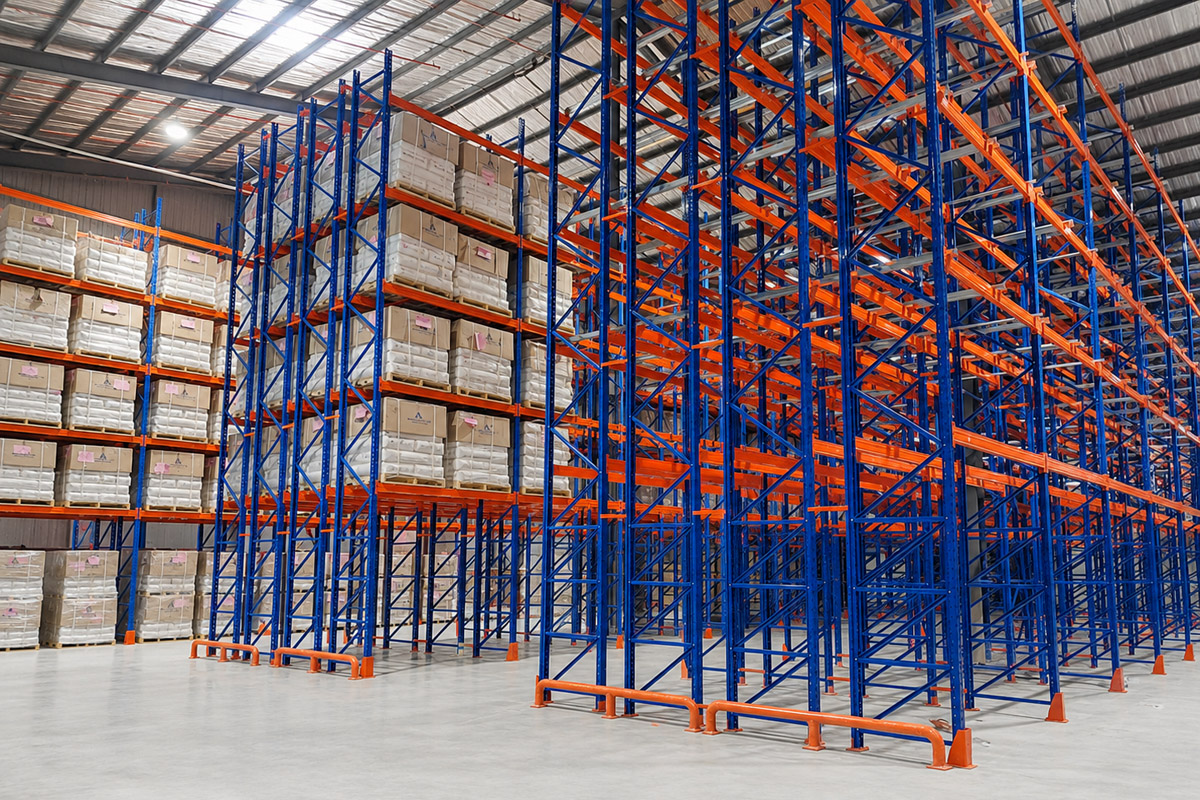
Double deep racking works by loading the rear position before the front position and retrieving the front pallet before accessing the rear.
Loading and Retrieval Sequence
The basic sequence for a front-and-rear pair is:
- Load the rear pallet: Place pallet A into the rear position using a compatible double-deep reach truck.
- Load the front pallet: Place pallet B directly in front of pallet A.
- Retrieve the front pallet: Remove pallet B to clear access.
- Retrieve the rear pallet: Extend the reach mechanism to collect pallet A.
Operators should follow the supplier’s instructions for the installed configuration. This sequence explains access within a pair; it does not replace a project-specific loading procedure.
LIFO Stock Rotation and Pallet Access
Each occupied pair generally operates on a Last-In, First-Out (LIFO) basis, also called First-In, Last-Out (FILO). The front pallet is loaded last and must be removed first.
When all paired positions are occupied, approximately 50% of pallets are immediately accessible. This describes physical pallet access, rather than the percentage of product lines available for dispatch. Toyota identifies this combination of two-deep storage and 50% selectivity as a defining feature of the system.
>> Read More:
- Pallet Racking Systems – For Storage Solutions Australia
- Industrial Warehouse Racking: 7 Types for Australian Warehouses
3. What Are the Benefits of Double Deep Racking?
The main benefit is more pallet storage within a given warehouse footprint, particularly where aisle space limits capacity.
Higher Storage Density
Reducing the number of aisles allows more floor area to accommodate pallet positions. However, two-deep storage does not automatically double total warehouse capacity.
Published estimates vary. Storeplan describes increases of up to 30% over selective racking, while Warehouse Cubed gives an approximate 30-40% improvement. These are supplier estimates, rather than guaranteed project outcomes.
Better Use of Existing Premises
Additional pallet positions may help defer relocation or building expansion. The financial case should include the racking, compatible trucks, installation and any changes to operating costs.
For example, a layout that hypothetically increases capacity from 1,000 to 1,300 positions delivers a 30% gain. Whether that gain is worthwhile depends on how many positions remain usable with the actual stock mix.
Practical Storage for Repeated Product Lines
Two-deep storage suits product lines regularly held in multiple pallet quantities. Pairing the same SKU front and rear reduces the chance of an unrelated product blocking the required stock.
4. What Are the Limitations of Double Deep Pallet Racking?
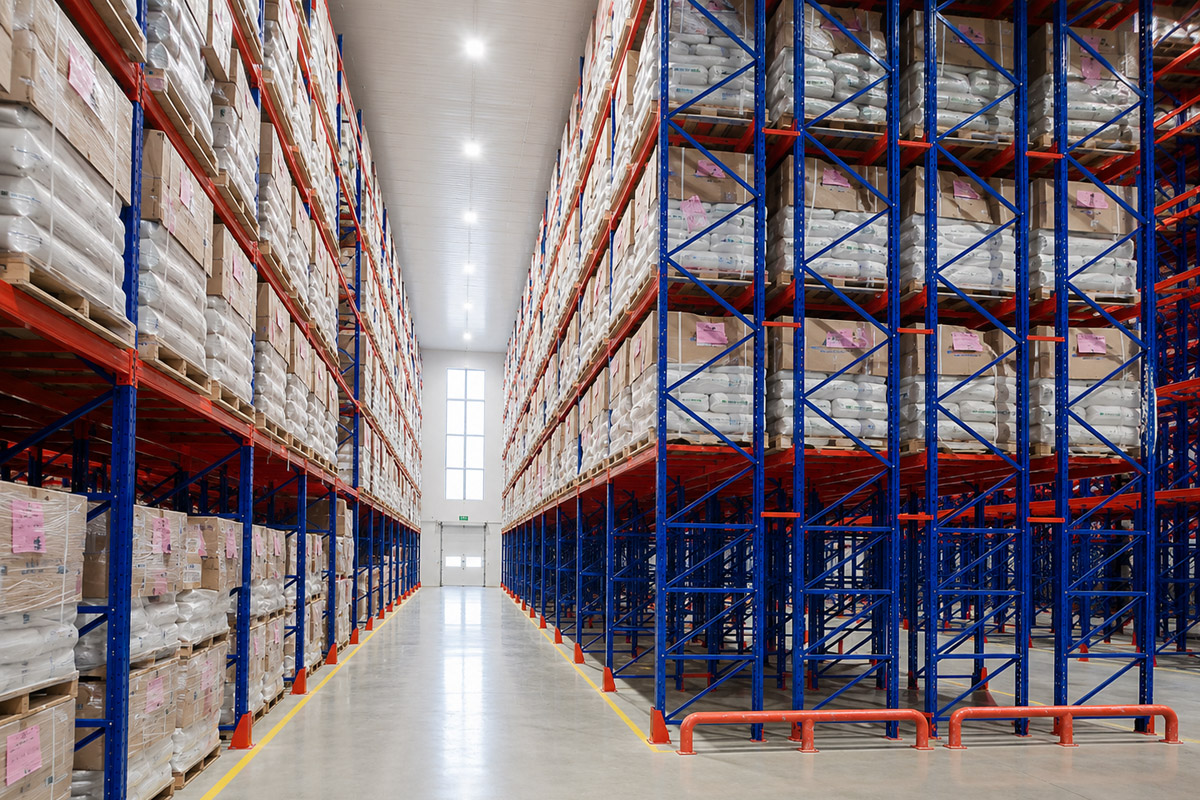
Double deep racking reduces direct access and requires equipment capable of reaching the rear positions. These trade-offs should be assessed before selecting a layout.
- Blocked rear pallets: Accessing a particular rear pallet may require moving the front pallet first.
- Additional handling: Relocations can add work when batches or retrieval priorities differ.
- Stock allocation constraints: A front position may need to remain empty if filling it would block stock needed soon.
- Equipment investment: Compatible double-deep trucks may add to the project cost.
- Visibility challenges: Rear positions, particularly at height, require careful positioning and suitable visibility arrangements.
The layout should therefore be assessed against peak pallet movements as well as maximum storage capacity. Greater density alone does not establish faster throughput.
What Forklift Does Double Deep Racking Require?
Double deep pallet racking requires a compatible truck with sufficient reach to serve the rear position. Common mechanisms include telescopic forks and purpose-designed pantograph systems.
Do not assume a standard reach truck can operate the layout. Before finalising the design, confirm:
- Reach distance and pallet entry compatibility.
- Available truck capacity at the required height and reach.
- Aisle width and manoeuvring clearances.
- Pallet dimensions, load overhang and unit-load weight.
- Floor conditions and operator visibility.
5. Warehouse Applications for Double Deep Racking
Double deep racking suits warehouses that hold repeated pallet loads and can accommodate restricted access to rear positions. Common applications include cold storage, manufacturing, retail distribution and selected third-party logistics operations, although suitability depends on how stock moves through each facility.
- Cold storage and food distribution: Increasing pallet density can help you make better use of refrigerated storage space. The system is most practical when products are held in consistent pallet loads and compatible batches. For date-sensitive goods, you should assess expiry dates and retrieval sequences carefully, as rear pallets cannot be accessed independently.
- Manufacturing and FMCG: Manufacturers and fast-moving consumer goods (FMCG) businesses often hold multiple pallets of raw materials, packaging or finished products. Double deep storage can accommodate these repeated loads near production or dispatch areas, provided replenishment and retrieval patterns suit the arrangement.
- Retail and wholesale distribution: Bulk replenishment stock, promotional lines and seasonal products can suit two-deep storage when quantities are high enough to fill paired positions. If your operation involves frequent access to many different products in small quantities, selective racking may offer more convenient access.
- 3PL and contract logistics: Third-party logistics (3PL) providers can use double deep racking for customers with predictable, high-volume stock. Its suitability is more limited when customer requirements change frequently or many SKUs occupy only one pallet position. You can also consider allocating double deep storage to suitable product lines within a mixed racking layout.
6. Double Deep Racking Components, Design and Safe Operation
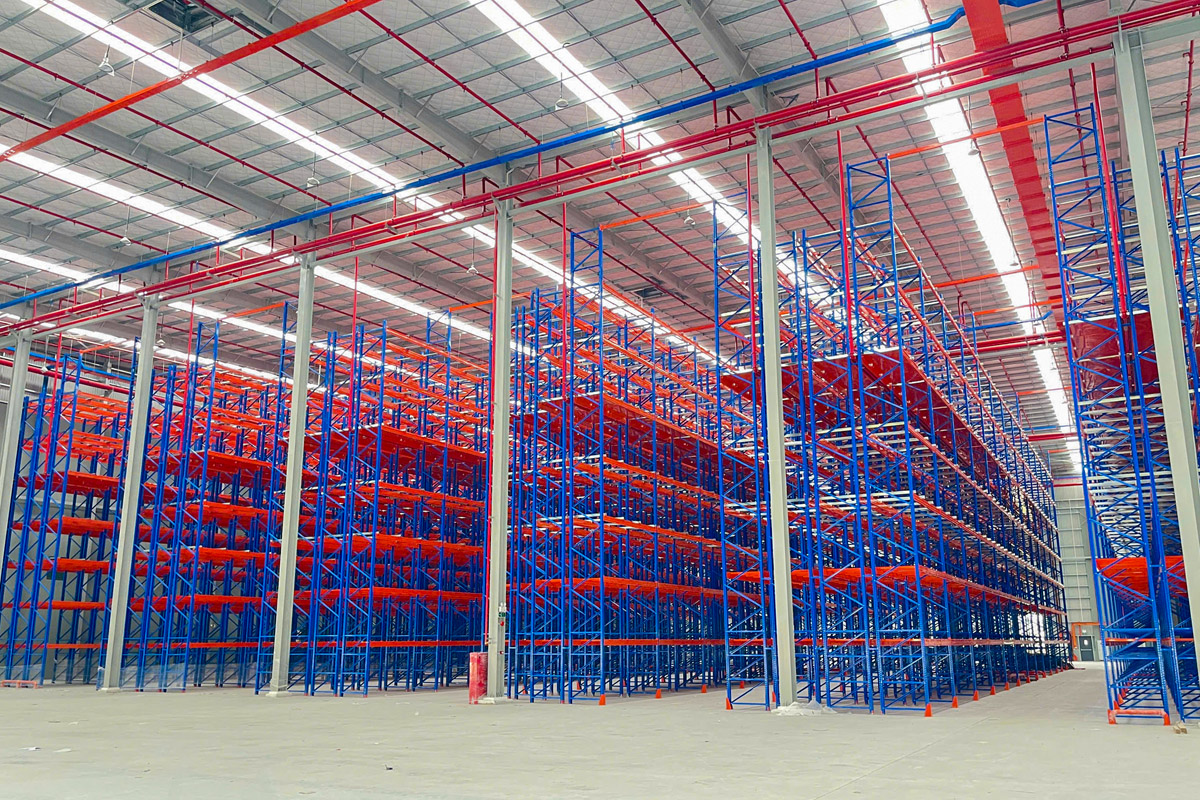
A double deep system needs an approved configuration matched to its pallets, loads, handling equipment and operating environment.
Typical components include upright frames, beams, baseplates, anchors and beam locking devices. Pallet supports, guides, backstops, mesh protection and impact protectors should be specified where appropriate to the design.
Relevant Australian standards include:
- AS 4084.1:2023: Steel storage racking – Design.
- AS 4084.2:2023: Steel storage racking – Operation and maintenance, including applicable amendments.
Safe operation also requires clear load information, trained operators, damage reporting and inspections. Changes to beam levels or rack configuration need competent assessment because they can alter safe working loads. WorkSafe Victoria notes that double-deep systems may require additional measures beyond its guidance for standard selective racking.
>> Read More:
- VNA Racking (Very Narrow Aisle): Specifications and Benefits
- Drive-In Pallet Racking for Warehouses
7. Featured Double Deep Racking Projects by Vinatech Australia
Explore how Vinatech’s Double Deep Racking solutions maximise pallet storage capacity, reduce aisle requirements and improve warehouse space utilisation across different industries.
1. Food & Beverage Warehouse – Double Deep Pallet Racking
Vinatech implemented a Double Deep Pallet Racking System providing approximately 9,000 pallet positions within a 7,500 m² warehouse, featuring 10.5-metre-high racking, 5 storage levels and a 2-pallet-deep configuration.
The system achieves approximately 1,200 pallet positions per 1,000 m², reducing forklift aisle requirements while supporting efficient inventory organisation.
This project demonstrates how Double Deep Racking maximises storage density, optimises warehouse space and supports high-volume food and beverage distribution.
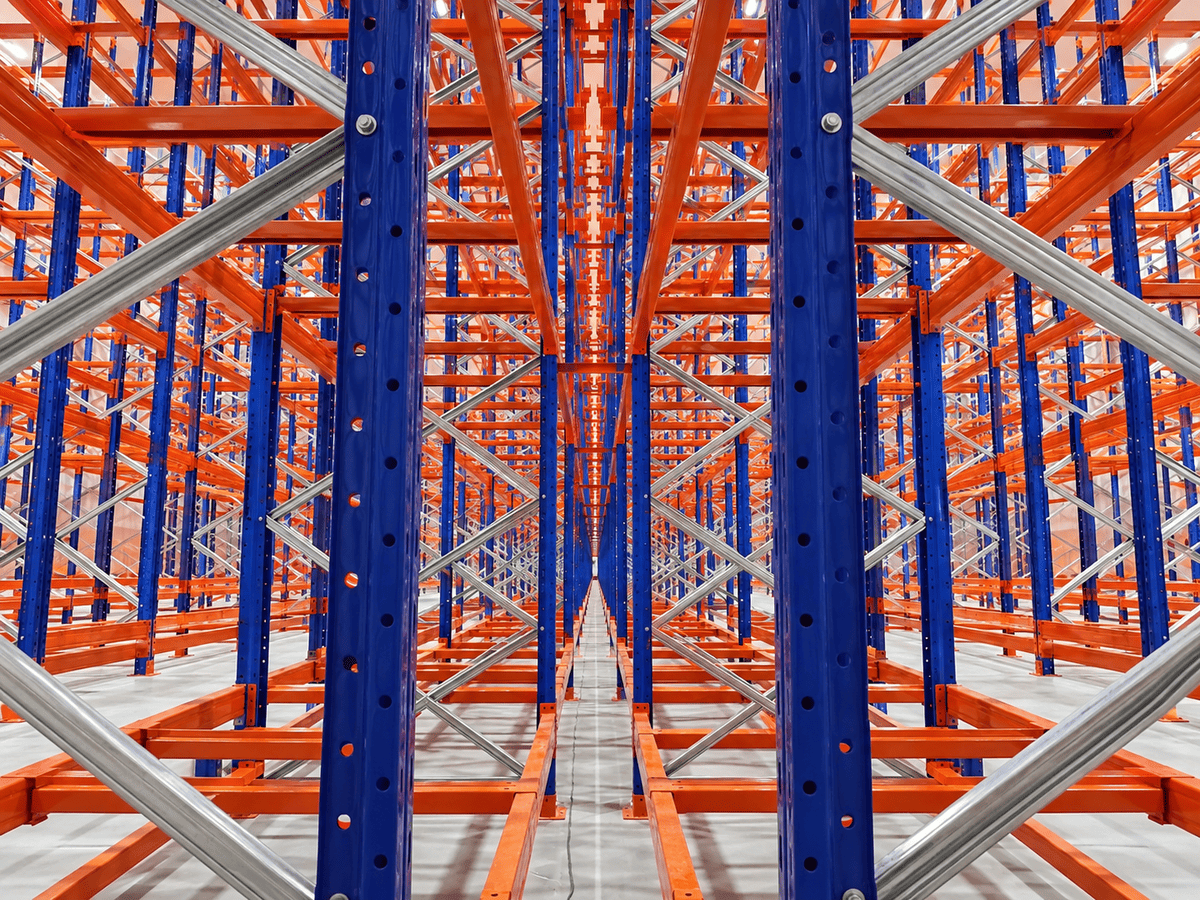
Food & Beverage Double Deep Racking Project – Vinatech Australia
2. Manufacturing Warehouse – Double Deep Pallet Racking
Vinatech implemented a Double Deep Pallet Racking System providing approximately 8,200 pallet positions across an 8,000 m² warehouse, featuring 9-metre-high racking and a 2-pallet-deep storage configuration.
The system achieves approximately 1,025 pallet positions per 1,000 m², reducing conventional forklift aisle requirements while maintaining practical access to different inventory groups.
This project highlights how Double Deep Racking increases storage capacity, improves space utilisation and supports efficient high-volume logistics operations.
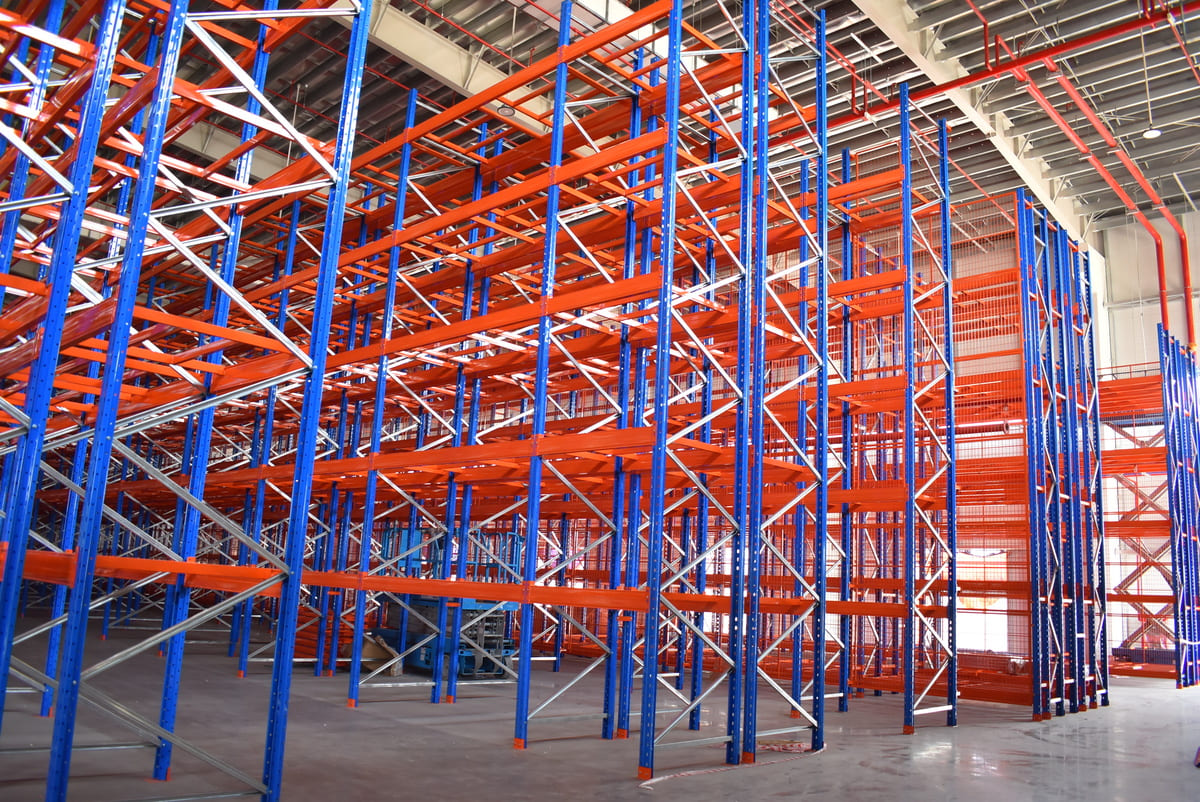
Manufacturing Double Deep Racking Project – Vinatech Australia
Explore Vinatech’s industrial storage solutions to find a layout that balances capacity and pallet access.
Double deep racking can increase pallet capacity within your existing warehouse by reducing aisle requirements and storing pallets two deep. It is particularly suited to high-volume product lines, where multiple pallets of the same SKU make restricted rear-pallet access easier to manage. Achieving the right result depends on balancing storage density with stock rotation, forklift compatibility and daily handling requirements.
Considering double deep racking for your facility? Contact Vinatech Australia to discuss your warehouse layout, pallet loads and inventory profile, and explore a configuration that supports your storage needs.
FAQs about Double Deep Racking
Double deep racking is a high-density warehouse storage system that stores pallets two positions deep instead of one, increasing storage capacity while reducing aisle space.
Double deep racking works by placing pallets in two rows deep within the rack. Specialised reach trucks are used to access both front and rear pallet positions efficiently.
The main benefits include increased storage density, reduced aisle space, improved warehouse space utilisation, and lower cost compared to fully automated systems.
Selective racking provides direct access to every pallet, while double deep racking stores pallets two deep, increasing storage density but reducing accessibility.
It is best suited for high-volume, low-SKU goods with consistent pallet sizes, such as packaged products, bulk items, and non-perishable inventory.