



What is a 2-way Pallet Shuttle System?
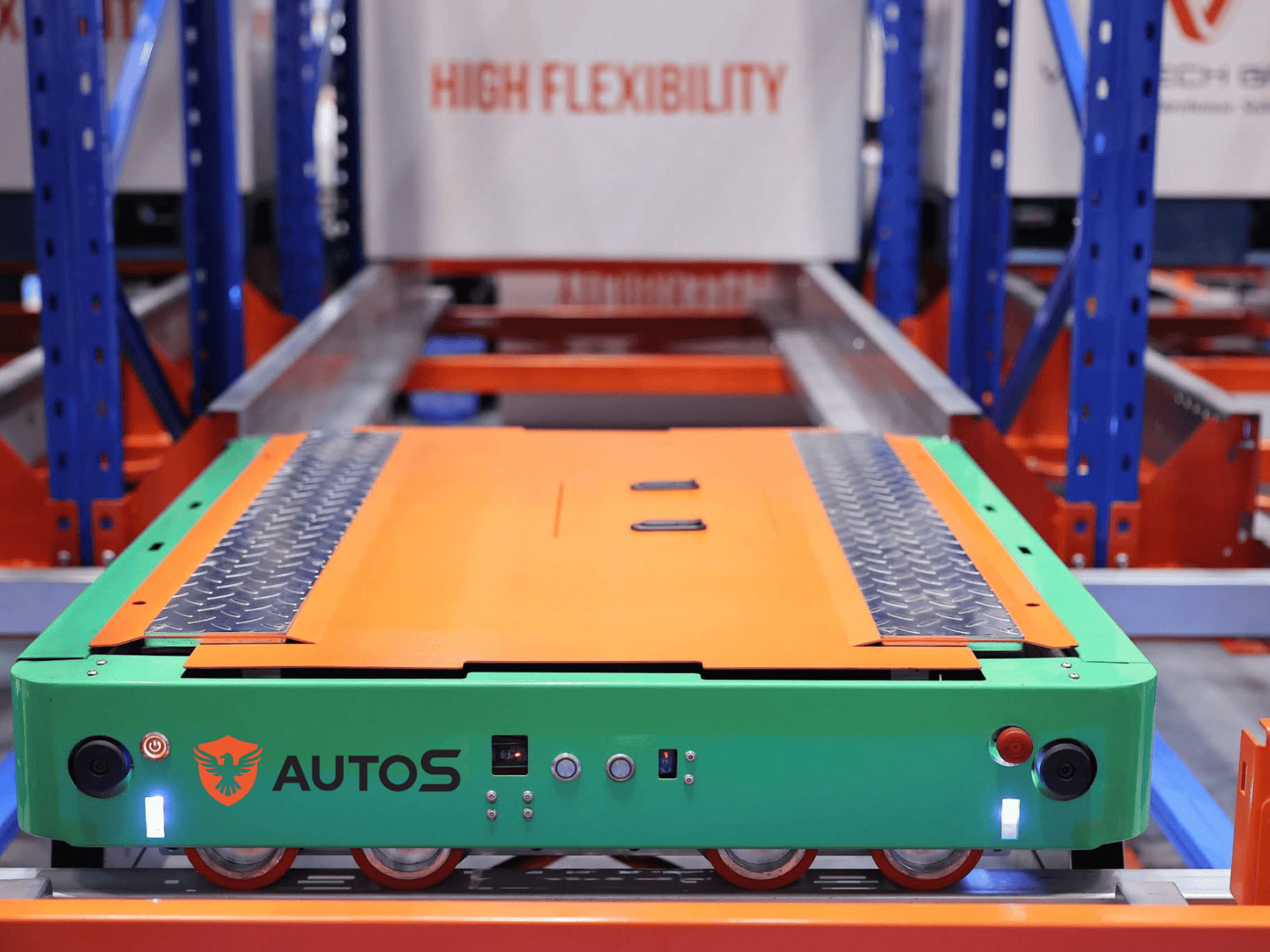
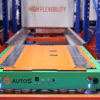
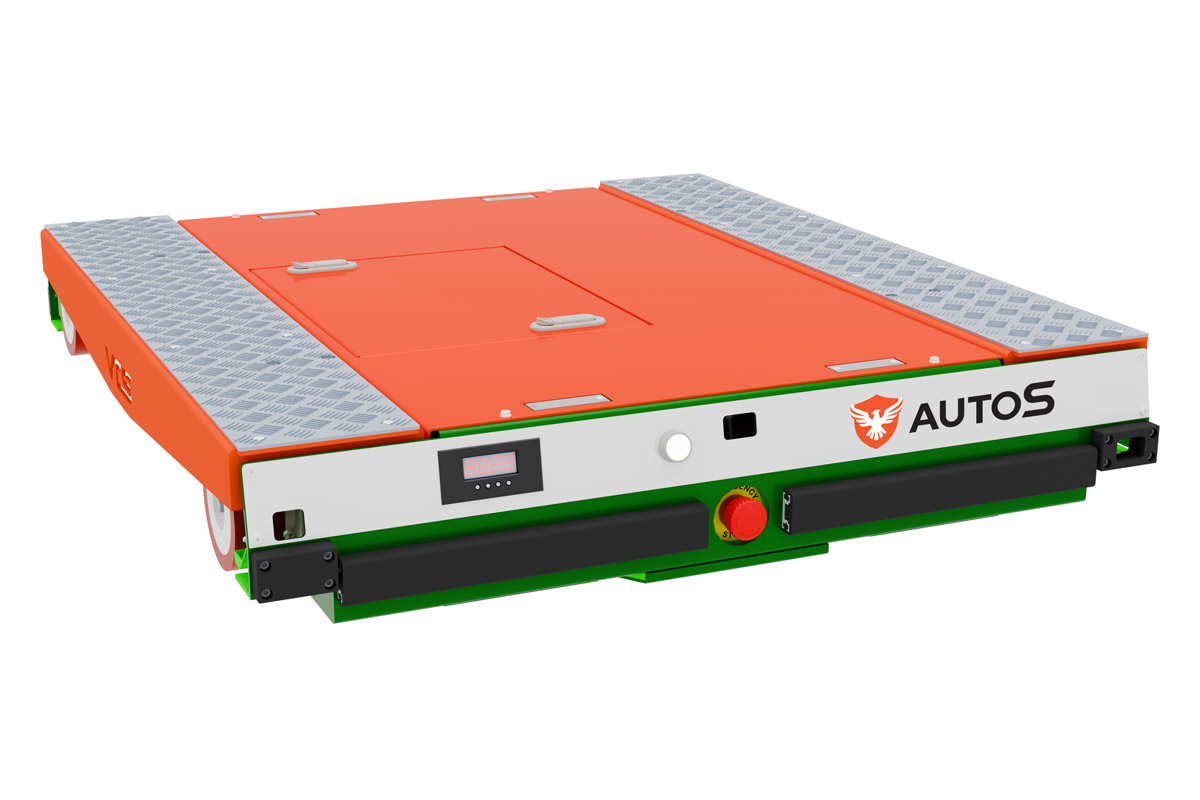
A 2-way pallet shuttle system is a semi-automated warehouse storage solution that uses a battery-powered mobile shuttle robot to transport pallets in two directions along guided rails within the racking structure.
Unlike traditional racking systems that require forklifts to drive deep into storage lanes, the 2-way shuttle operates via a remotely controlled shuttle that moves pallets horizontally into storage positions. This eliminates direct forklift interaction with the racking structure, significantly reducing the risk of rack and product damage.
Technical Specifications of 2-Way Pallet Shuttle Systems
The 2-way shuttle racking system is engineered with standardized technical specifications to ensure stable operation, high positioning accuracy, and safe performance in demanding industrial warehouse environments.
| Pallet size |
1000 x 1200 mm / 1200 x 1000 mm
|
| Load capacity/Pallet | 500 – 1500 kg |
| Racking Depth |
Up to 40m (20-30 pallets deep)
|
| Racking Height |
Up to 20-30 levels (depends on forklift)
|
| Shuttle Speed |
No load: 1.2 m/s With load: 0.8 m/s
|
| Motor Power | 24V 650W |
| Battery Charging Time | 3.5 hours (full charge) |
| Continuous Operating Time |
8 hours (ambient temperature)
6 hours (cold storage conditions) |
| Operating Temperature | -30°C ~ +40°C |
These technical specifications demonstrate that the 2-way shuttle system delivers industrial-grade performance suitable for warehouses handling 100-500+ pallets per day. The solution is particularly effective for high-density storage, cold chain logistics, and operations requiring flexible FIFO/LIFO inventory management.
Components of a 2-Way Pallet Shuttle System
A 2-way pallet shuttle system is a semi-automated high-density storage solution that combines specialised racking, an autonomous shuttle vehicle, and intelligent control technology to streamline pallet handling. The system is designed to maximise storage density while reducing forklift travel and manual intervention.
1. Pallet Shuttle Vehicle
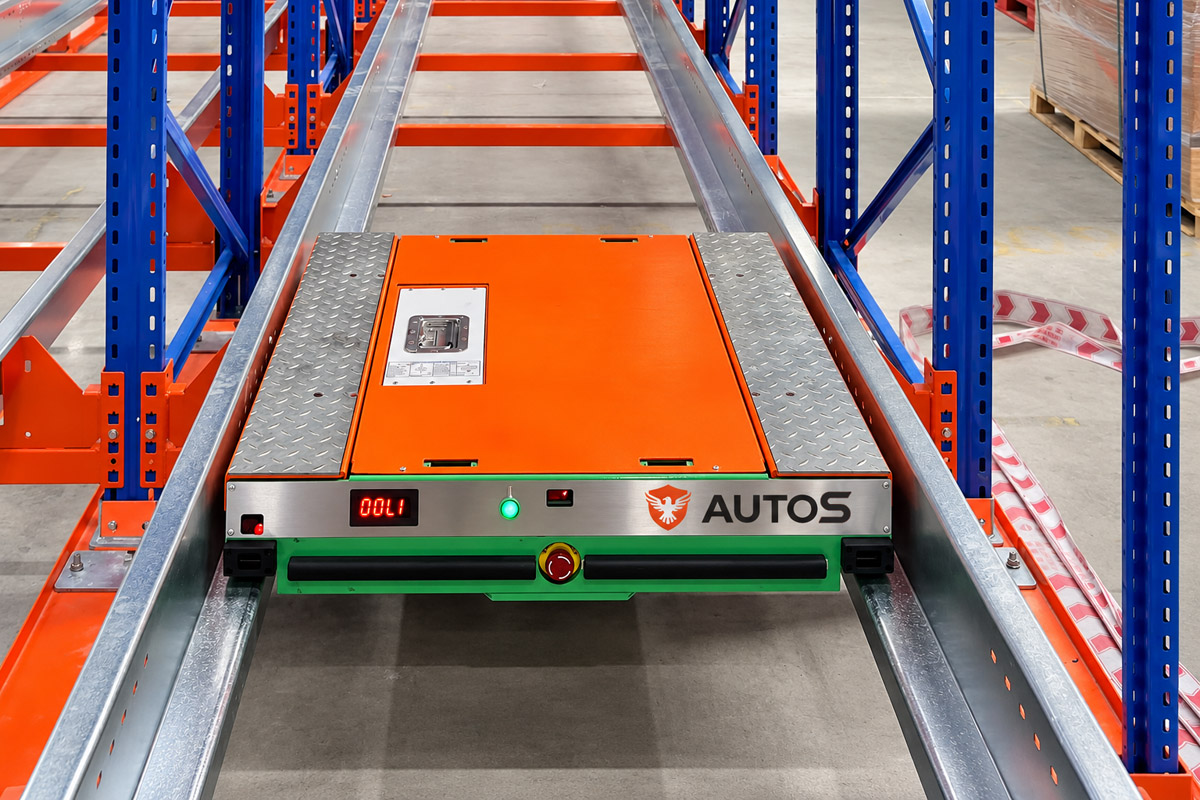
The pallet shuttle is the core component responsible for transporting pallets within the storage lanes. Operating on fixed rails, it automatically loads, moves, and retrieves pallets throughout the racking system.
- Drive System: An electric motor powers the shuttle’s wheels, enabling smooth movement along the rail tracks.
- Lifting Mechanism: An integrated lifting platform raises pallets slightly during transport, allowing the shuttle to move loads safely and accurately.
- Battery System: Most shuttles are powered by rechargeable lithium-ion batteries that provide extended operating time and support continuous warehouse operations.
- Sensors and Safety Devices: Built-in sensors detect pallet positions, monitor travel paths, and ensure precise shuttle positioning while preventing collisions or operational errors.
2. High-Density Racking Structure
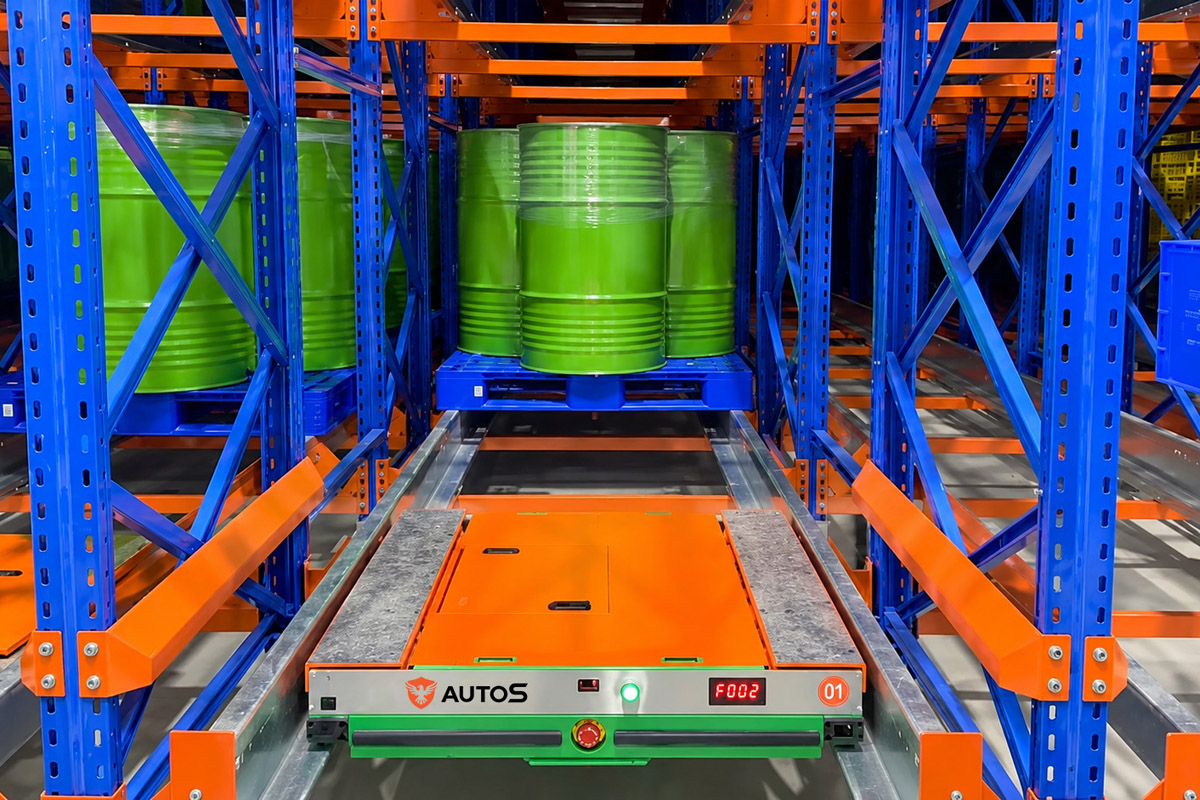
The racking system provides the framework that supports both pallet storage and shuttle movement.
- Upright Frames and Beams: Heavy-duty steel uprights and beams form the primary load-bearing structure of the system.
- Guide Rails: Specially designed steel rails are installed on each storage level, allowing the shuttle to travel efficiently through deep storage lanes.
- Pallet Guides and Stops: Guide components help maintain proper pallet alignment and ensure safe positioning within the storage channels.
- Rack Protection Systems: Floor anchors, upright protectors, and impact guards enhance structural stability and protect the racking from accidental forklift damage.
3. Control and Communication System
Operators manage shuttle movements using dedicated control devices and warehouse software.
- Remote Control or Tablet Interface: Wireless controllers allow operators to issue commands such as loading, retrieval, inventory counting, and continuous cycle operations.
- Warehouse Management Integration: The system can be integrated with Warehouse Management Systems (WMS) to improve inventory visibility, automate workflows, and support FIFO or LIFO inventory strategies.
4. Handling and Support Equipment
Additional equipment supports the daily operation and maintenance of the pallet shuttle system.
- Forklifts: Forklifts are used to position the shuttle in different storage lanes and place pallets at the lane entrance.
- Shuttle Transfer Mechanisms: Specialised fork pockets and locking devices secure the shuttle during transport between storage lanes.
- Battery Charging Stations: Dedicated charging stations ensure batteries remain fully charged and ready for continuous operation.
- Maintenance Equipment: Service carts and maintenance tools enable safe inspection, recovery, and servicing of shuttle units when required.
By combining automated shuttle technology, high-density racking, and intelligent controls, a 2-way pallet shuttle system delivers efficient pallet storage, improved warehouse productivity, and optimised space utilisation.
Read more: Pallet Racking Systems | 6 Types for Australian Warehouses
How Does a 2-Way Pallet Shuttle System Work
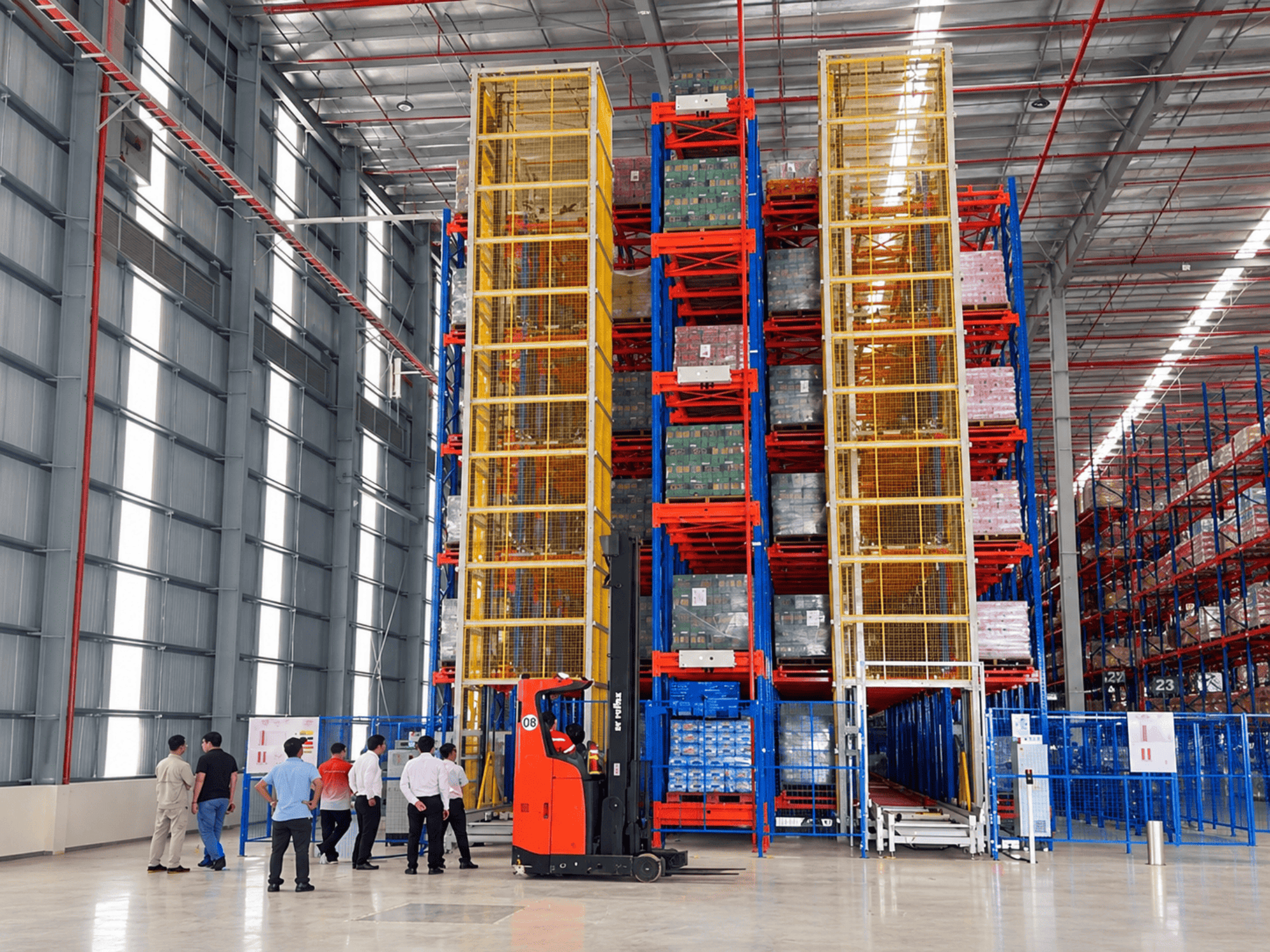
A 2-way pallet shuttle system replaces traditional drive-in racking or manual deep-lane storage with a battery-powered shuttle that moves pallets autonomously along fixed rails within storage lanes.
In this system, forklifts remain outside the racking structure, while the shuttle manages all internal pallet movements. This reduces aisle requirements, minimises the risk of rack damage, and significantly improves operational safety and efficiency.
Step-by-Step Workflow
- Shuttle Positionin: A forklift places the shuttle device at the entrance of the selected storage lane where loading or retrieval will take place.
- Pallet Loading: The forklift then positions a pallet onto the entry point of the lane, directly aligned with the shuttle unit.
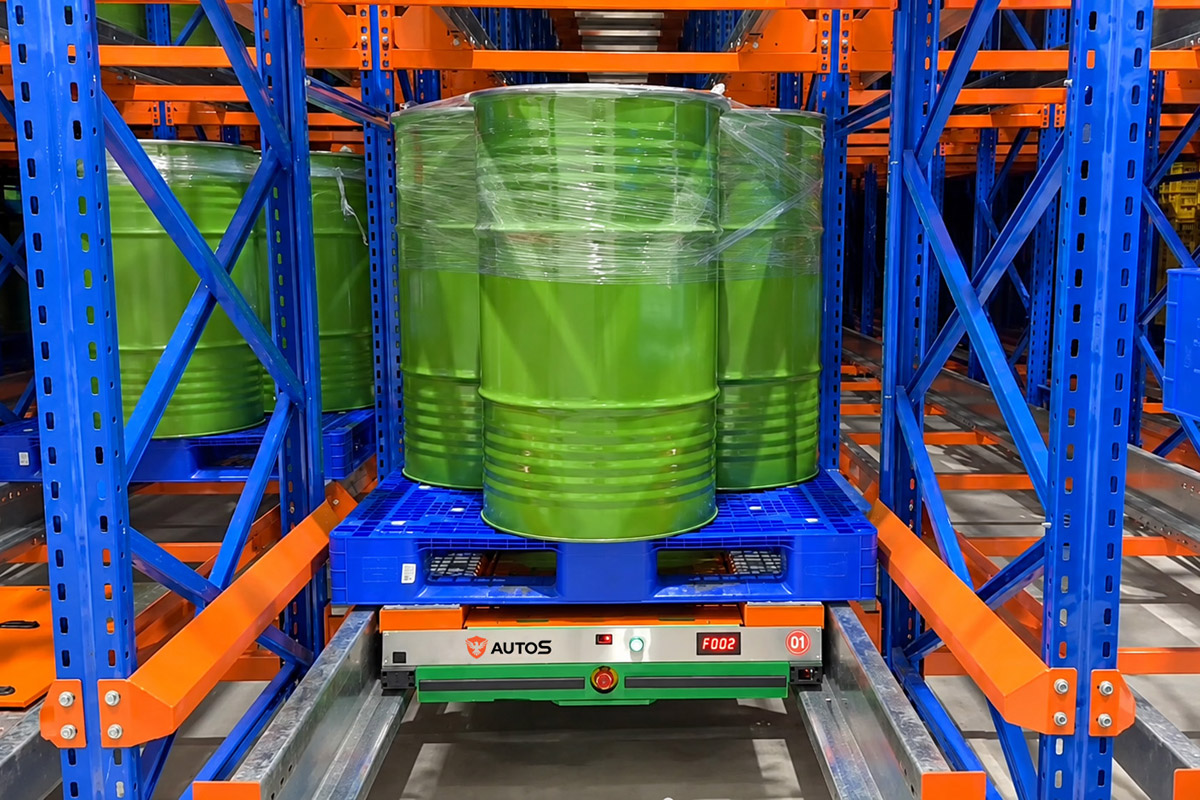
- Automated Transport: Using a remote control or warehouse management interface, the operator commands the shuttle to move. The shuttle lifts the pallet slightly, travels along the rail-guided lane, and transports it to the first available storage position deep inside the rack. Sensors onboard help ensure accurate positioning and safe handling.
- Retrieval Process: For unloading, the shuttle reverses the process. It moves beneath the front pallet, lifts it, and transports it back to the aisle entrance, where it is picked up by the forklift.
Through this cycle, the 2-way shuttle system enables efficient Last-In, First-Out (LIFO) or controlled storage operations while maximising storage density and reducing manual forklift travel.
Key Benefits of a 2-Way Pallet Shuttle System
A 2-way pallet shuttle system helps warehouses maximise storage capacity, improve operational efficiency, and enhance workplace safety. By automating pallet movement within deep storage lanes, the system reduces forklift travel and optimises overall warehouse performance.
- Maximised Space Utilisation: By reducing the number of access aisles required, 2-way pallet shuttle systems create high-density storage configurations that significantly increase pallet capacity compared to conventional selective racking.
- Faster Throughput: Forklifts operate only at the front of the racking, while the shuttle performs all internal pallet transport. This reduces handling time, accelerates loading and retrieval processes, and improves inbound and outbound productivity.
- Enhanced Warehouse Safety: Because forklifts no longer need to enter storage lanes, the risk of rack collisions, product damage, and workplace accidents is substantially reduced. This contributes to a safer and more efficient operating environment.
- Flexible Inventory Management: Depending on the racking configuration, the system can support both First-In, First-Out (FIFO) and Last-In, First-Out (LIFO) inventory strategies, making it suitable for a wide range of products, from perishable goods to bulk storage applications.
- Lower Operating Costs: Automation reduces manual handling requirements and allows fewer forklift movements to manage larger inventory volumes. This can lead to lower labour costs, reduced equipment wear, and improved efficiency, particularly in cold storage and temperature-controlled facilities.
- Improved Storage Accuracy: Integrated control systems and shuttle automation help ensure pallets are stored and retrieved accurately, reducing inventory errors and improving stock visibility.
A 2-way pallet shuttle system is a cost-effective high-density storage solution that combines automation, flexibility, and operational efficiency. By reducing forklift travel and maximising storage utilisation, it helps warehouses increase capacity, improve productivity, and maintain accurate inventory control. For businesses looking to optimise warehouse performance without investing in a fully automated AS/RS, the 2-way pallet shuttle system offers a reliable and scalable solution.
Featured 2-Way Shuttle Racking Projects by Vinatech
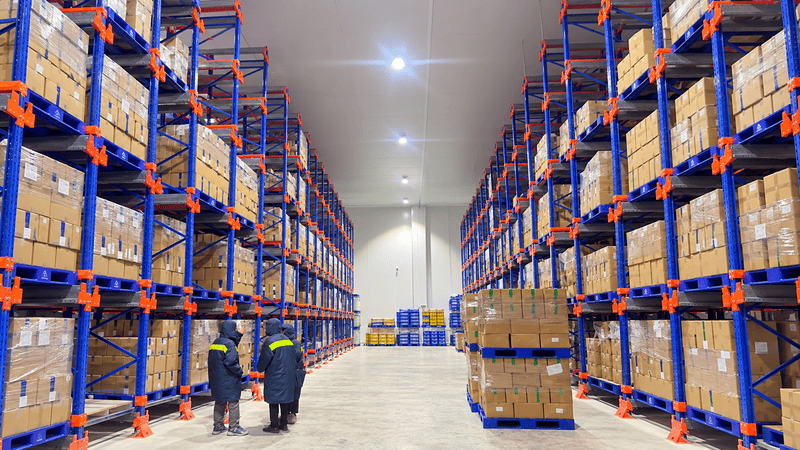
Seafood Cold Storage – 2-Way Shuttle Racking
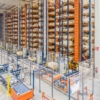
Vinatech implemented a 2-way shuttle racking system providing approximately 1,500 pallet positions within a 2,000 m² cold storage facility, featuring 6.5-metre-high racking and 8 storage lanes operated by a single shared shuttle.
This solution maximises refrigerated storage space, improves batch-based inventory management and reduces automation investment while maintaining efficient pallet handling.
View Seafood Cold Storage Project
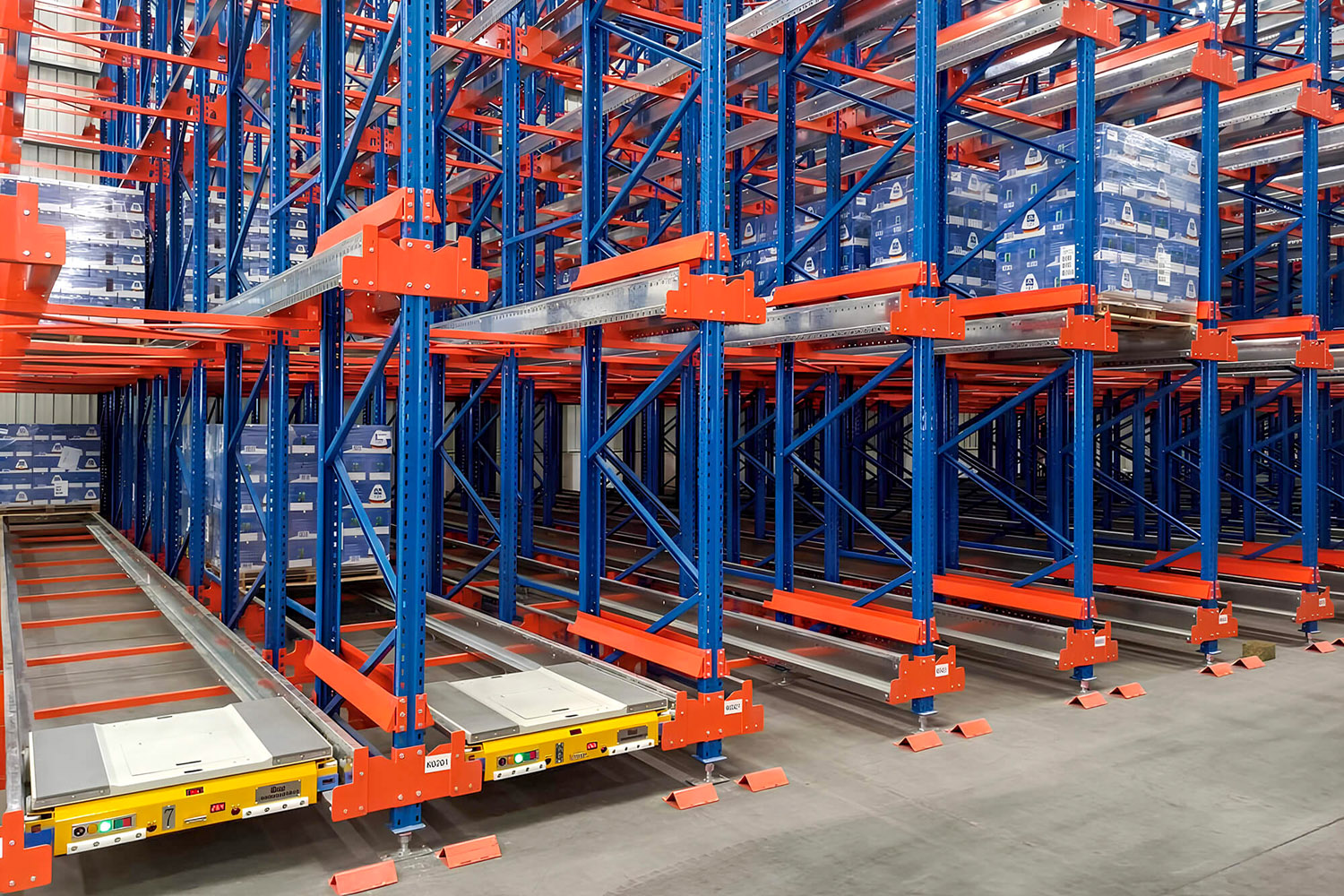
High-Volume F&B Storage – 2-Way Shuttle Racking
Vinatech implemented a 2-way shuttle racking system offering approximately 6,000 pallet positions, achieving a 40% increase in storage capacity compared to conventional Selective Racking.
This project demonstrates how shuttle automation maximises storage density, reduces forklift travel and improves inventory management for high-volume food and beverage operations.
View High-Volume F&B Storage Project
Why Choose Vinatech for Pallet Shuttle System?
Vinatech is a leading provider of pallet shuttle system, helping businesses improve storage efficiency, increase operational productivity, and accelerate order fulfilment through advanced warehouse automation technologies.
- End-to-end project support: Warehouse assessment, layout design, manufacturing, supply and professional installation.
- Customised storage planning: Each proposal reflects pallet specifications, product movement, access frequency and available space.
- Designed to Australian requirements: Systems are designed in accordance with AS 4084:2023.
- 2D and 3D warehouse layouts: Visual plans help customers review capacity, aisle arrangements and workflow before installation.
- Factory-direct manufacturing: Direct supply supports competitive project costs and greater configuration flexibility.
- Multiple racking options: Customers can compare accessible, high-density, flow and semi-automated storage systems.
- Scalable configurations: Layouts can accommodate additional bays, new product zones and future operational growth.
- Solutions for different industries: Suitable for logistics, food distribution, manufacturing, retail, cold storage and e-commerce.
- Professional installation: Coordinated installation supports accurate assembly and efficient project completion.
- Integrated warehouse systems: Pallet racking can be combined with shelving, mezzanine floors and automated solutions.
- Australian-based support: Customers receive project coordination and after-sales assistance from Vinatech Australia’s local team at 34 Paramount Blvd, Cranbourne West VIC 3977.
Vinatech Australia provides a complete project service designed around the actual warehouse environment.