
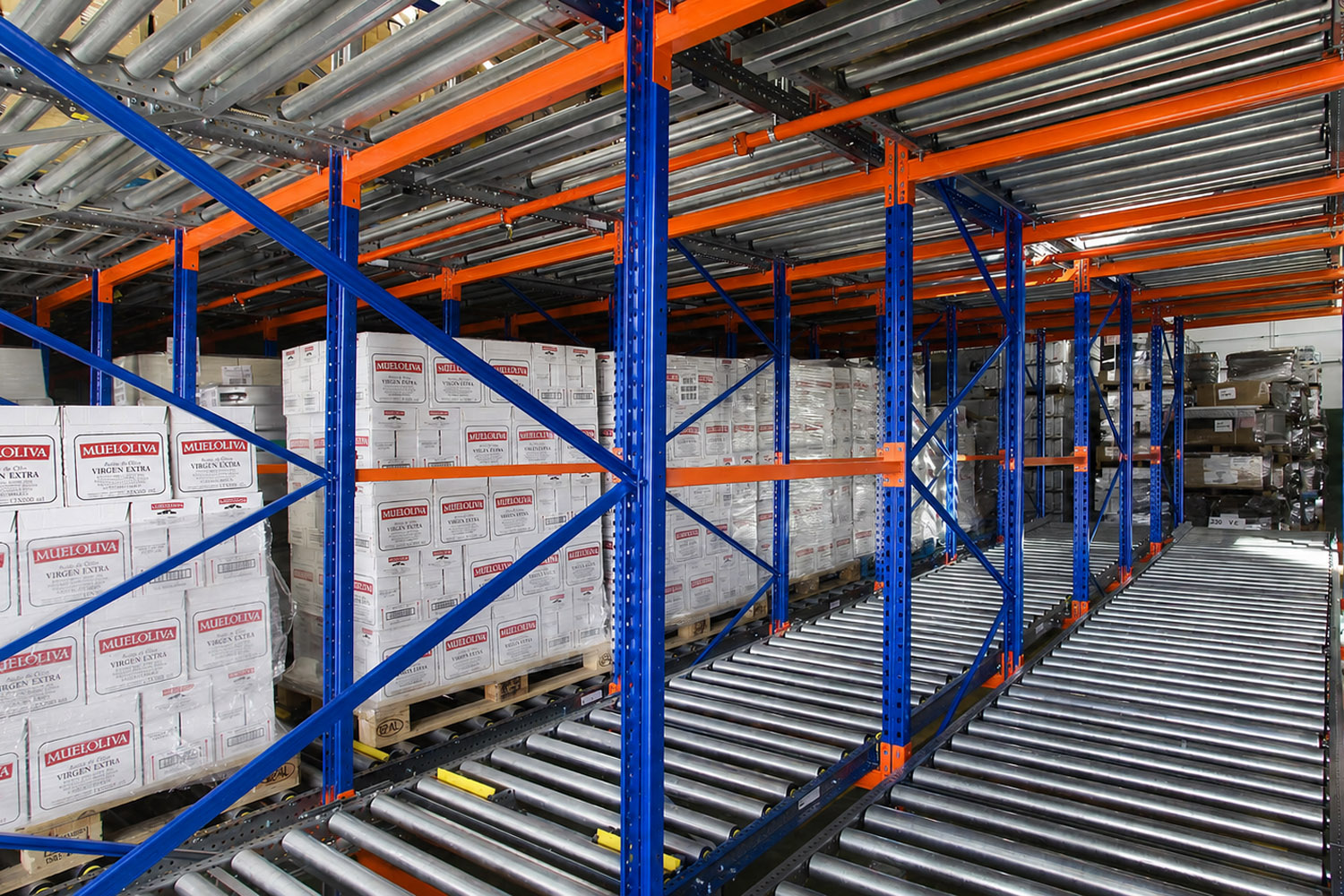
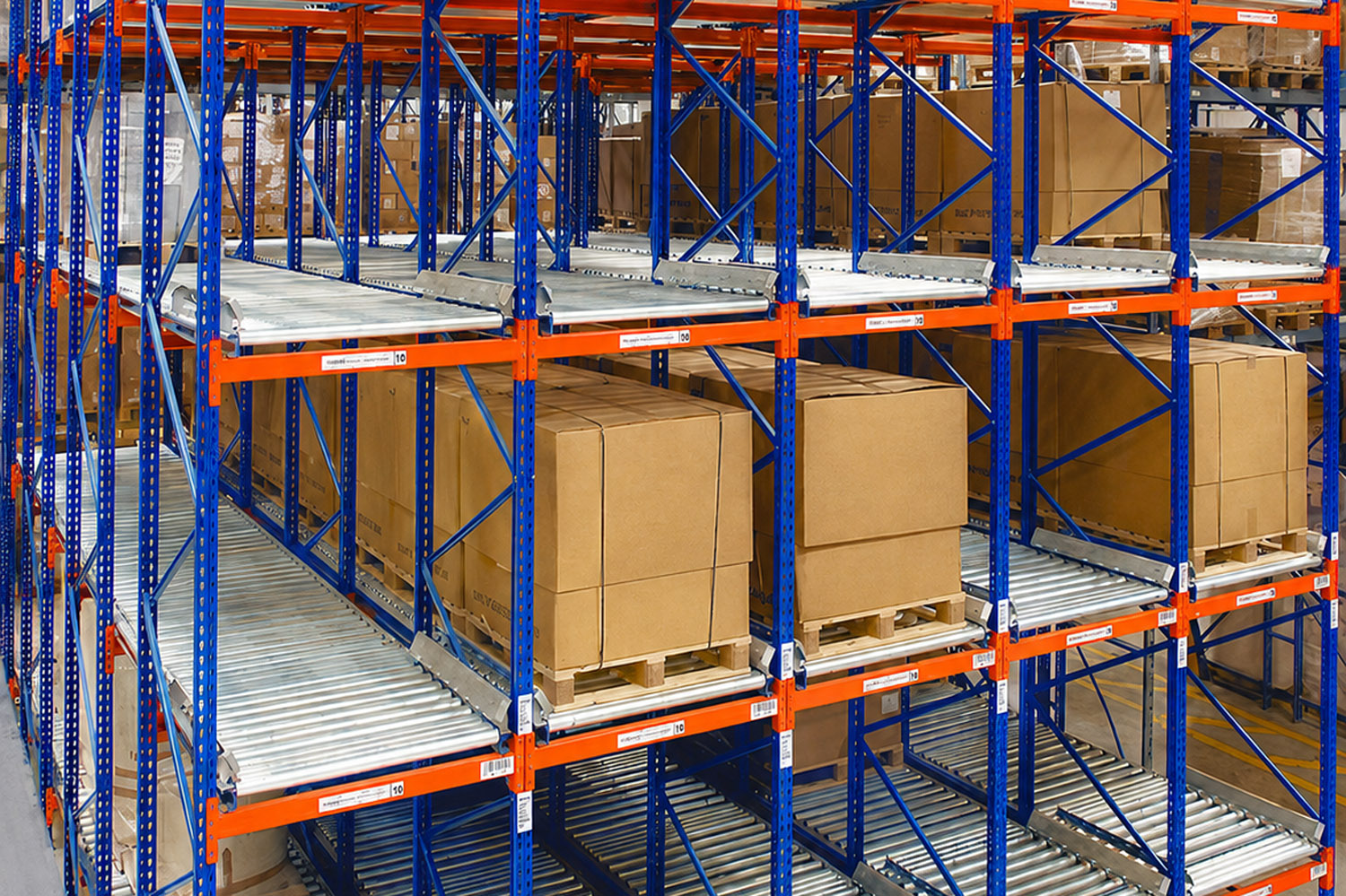
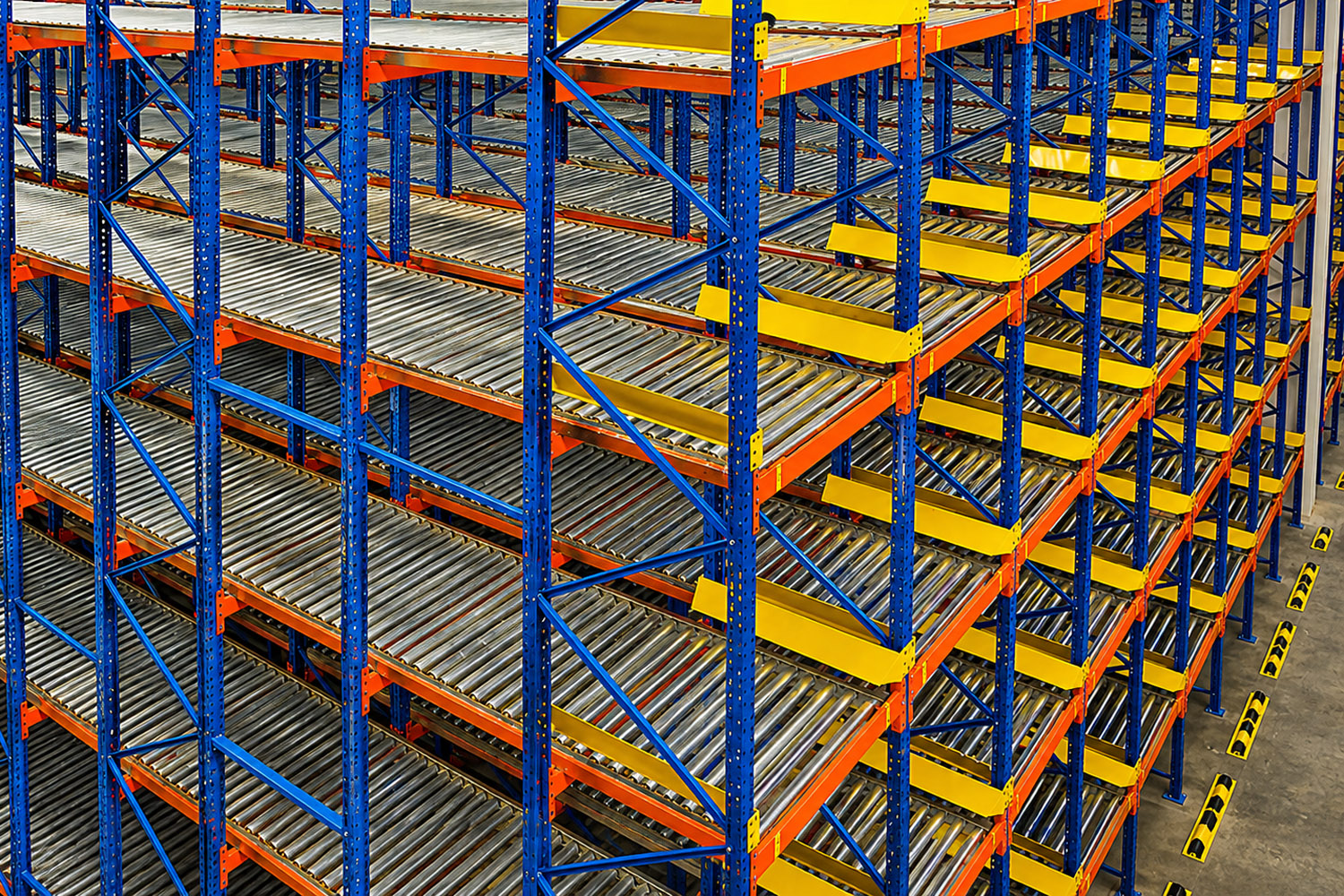




What is a Pallet Flow Racking System?
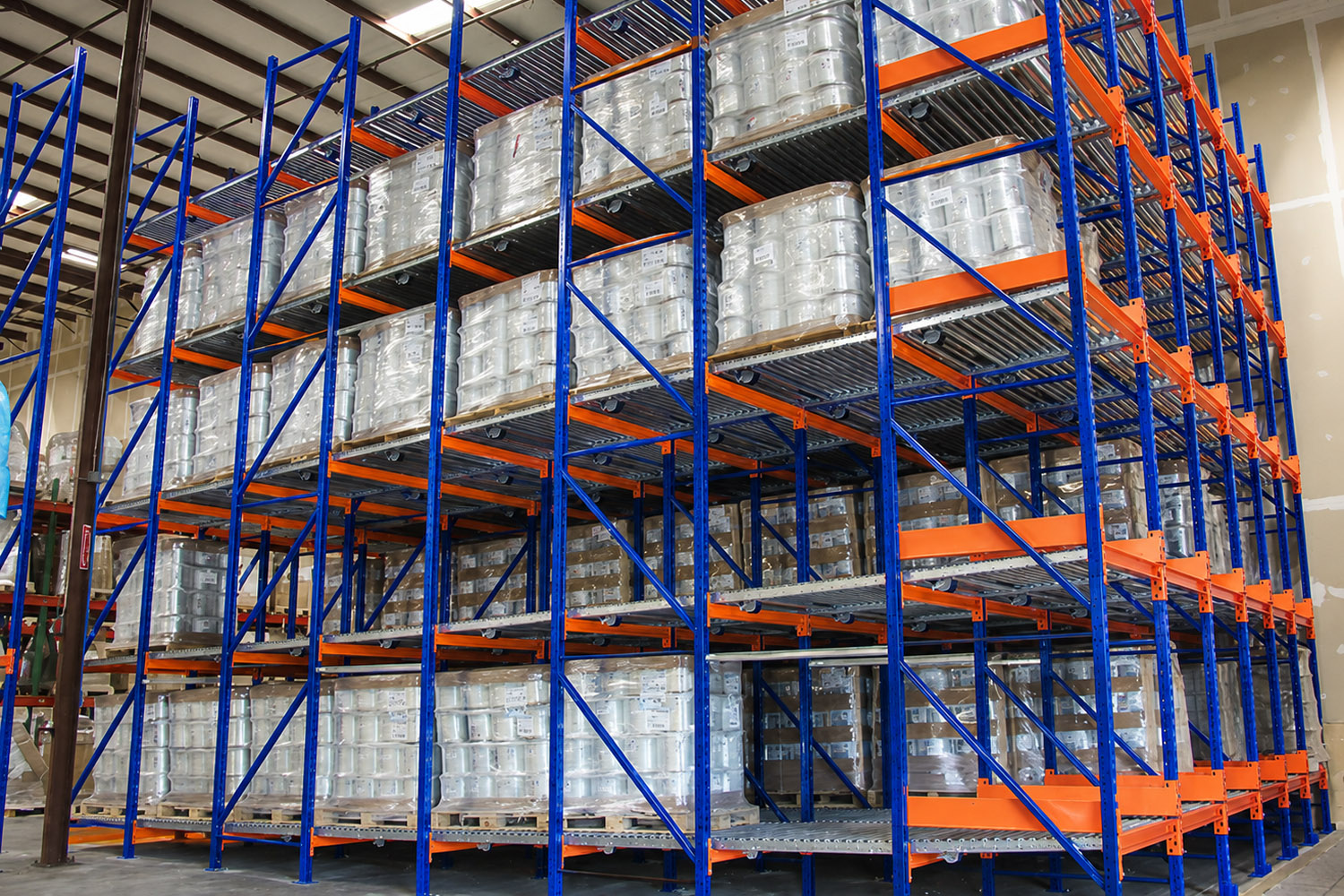
A Pallet Flow Racking System (also known as gravity flow) is a high-density, dynamic storage system that uses inclined roller tracks and gravity to automatically glide pallets from the loading end to the dedicated retrieval end. It optimizes warehouse space by utilizing deep lanes and operating on a strict First-In, First-Out (FIFO) basis.
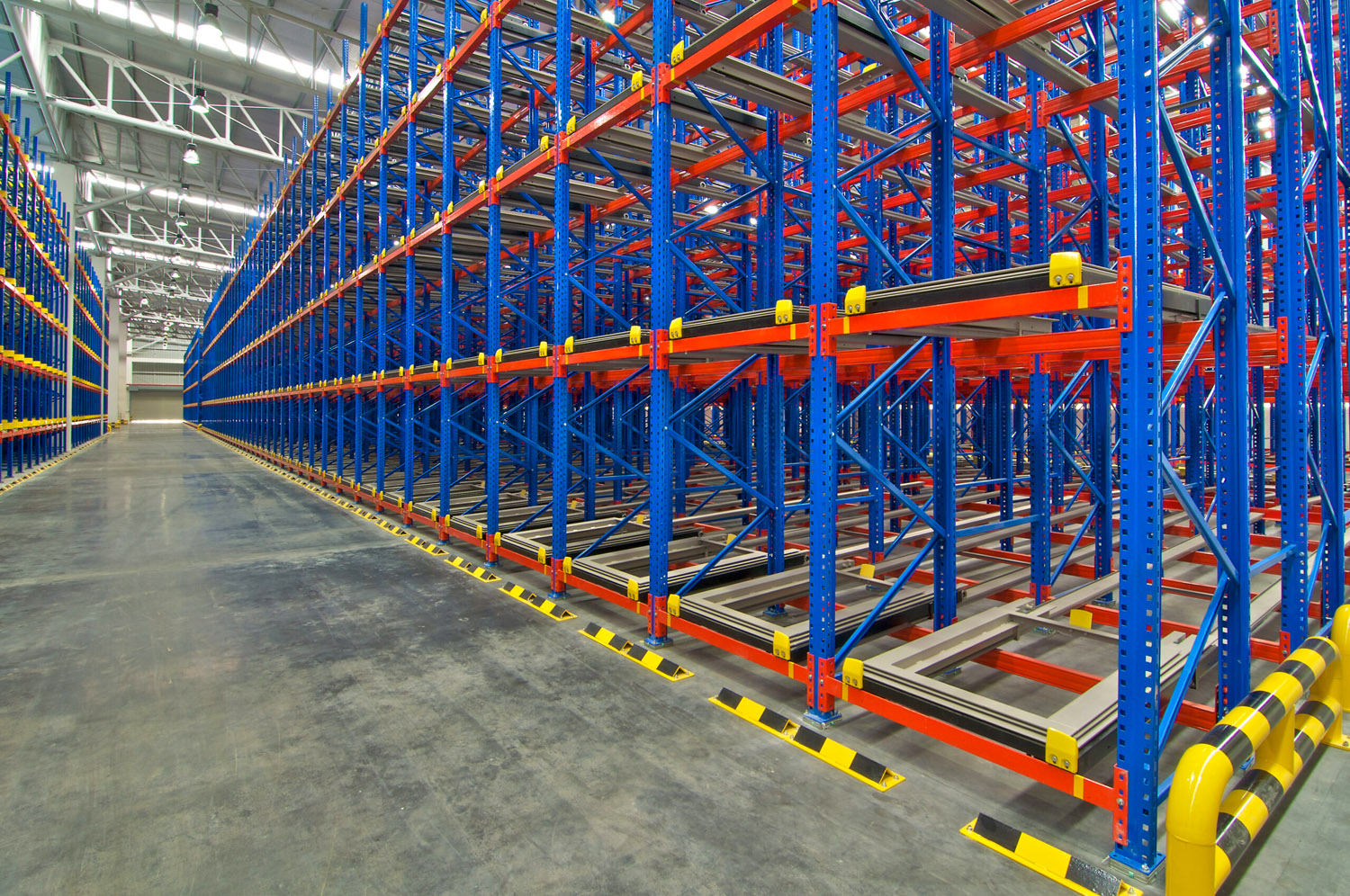
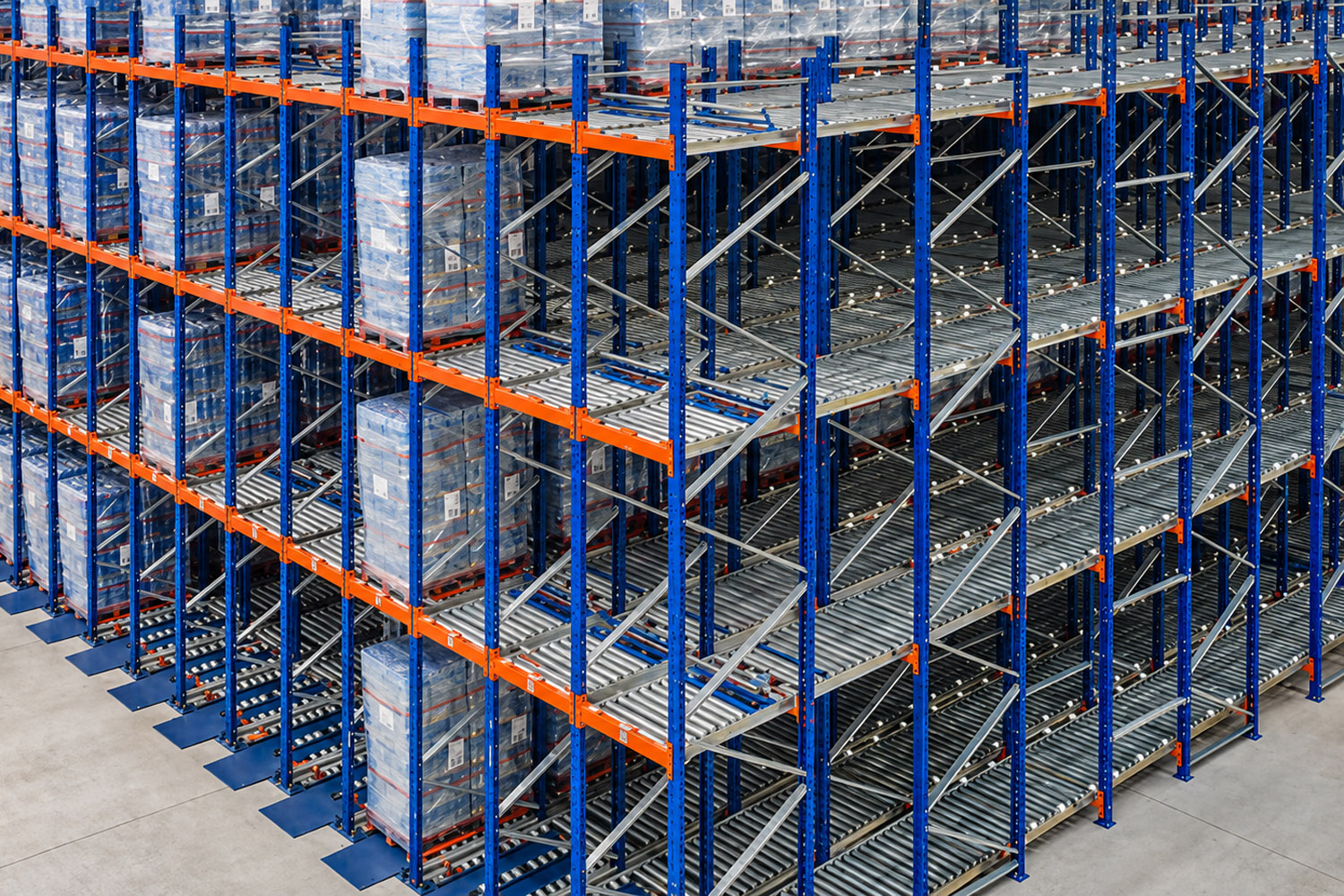
The system uses slightly inclined storage lanes fitted with rollers. Palletised goods move by gravity from the loading side to the picking or unloading side.
The operating principle is simple. A pallet is loaded into one side of the pallet racking system. It then moves along the roller tracks towards the opposite side. When the front pallet is removed, the next pallet automatically moves forward into the picking position.
>> Read more:
Push-Back Racking Systems Australia for LIFO Warehouses
Selective Pallet Racking: Specifications, Components and Applications
Types of Pallet Flow Racking Systems
Pallet flow racking systems are high-density storage solutions that use gravity-driven tracks to move pallets automatically from the loading side to the picking side. Depending on the track design and operational requirements, different system configurations are available to accommodate various pallet types, load capacities, and warehouse environments.
Wheel Rail (Skatewheel) Systems
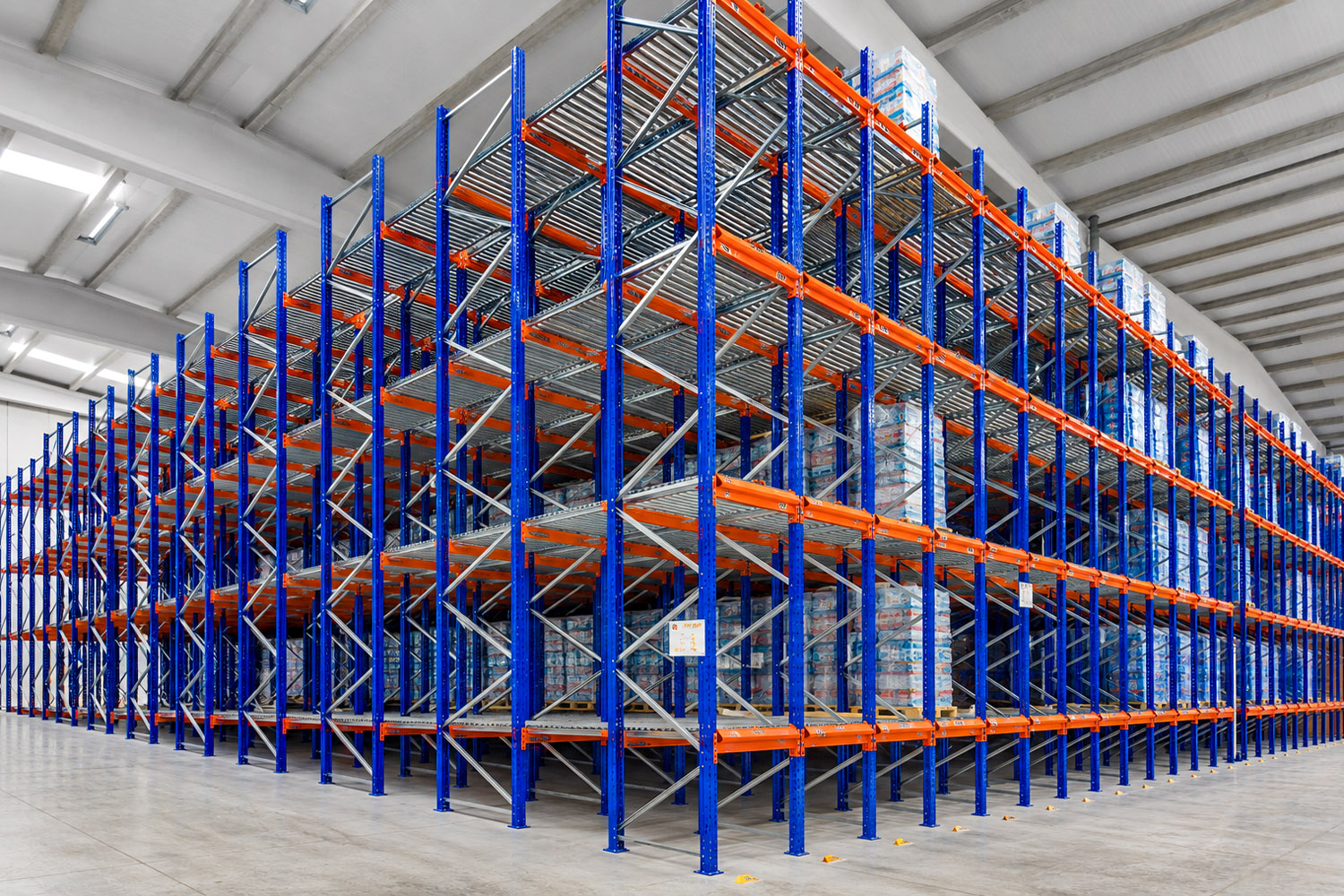
Wheel rail systems use multiple rows of small steel or plastic wheels to support pallet movement. They offer a cost-effective and versatile solution for warehouses handling standard pallets with consistent dimensions and good pallet quality. Due to their efficient design, skatewheel systems are widely used in general warehousing and distribution applications.
How Does a Pallet Flow Racking System Work?
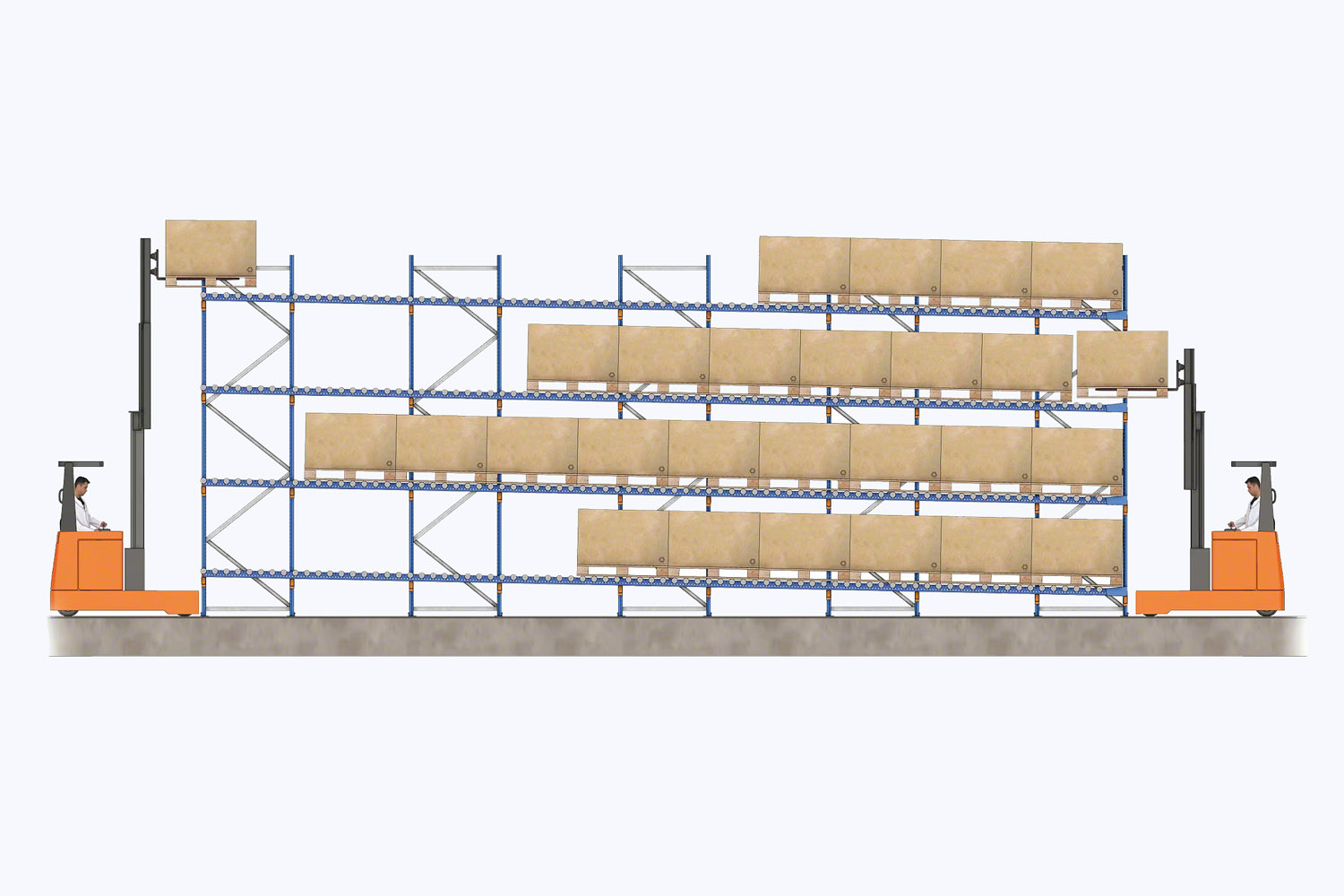
Pallet flow racking works by using inclined roller tracks and gravity to move pallets automatically from the loading side to the retrieval side. The system supports FIFO inventory management, improves warehouse efficiency, and maximises storage capacity.
- Loading: Forklift operators load pallets into the elevated loading side of the storage lane. Each pallet is placed onto roller tracks designed to support smooth and controlled movement.
- Gravity-Assisted Movement: Once loaded, pallets move forward automatically along the inclined rollers under the force of gravity. This eliminates the need for forklifts to enter the storage lanes and reduces product handling.
- Speed Control: To ensure safe operation, the roller tracks are equipped with speed controllers or centrifugal braking mechanisms. These devices regulate pallet movement, preventing excessive acceleration and minimising the risk of product damage.
- Retrieval: At the picking face, the front pallet rests against a stop mechanism ready for retrieval. When the pallet is removed, gravity automatically advances the remaining pallets to the next picking position, maintaining a continuous flow of inventory.
- FIFO Inventory Rotation: Because pallets are loaded from one side and retrieved from the opposite side, pallet flow racking naturally operates on a **First-In, First-Out (FIFO)** basis. This makes it ideal for industries handling perishable, date-sensitive, or high-turnover products.
Pallet Flow Racking Structure
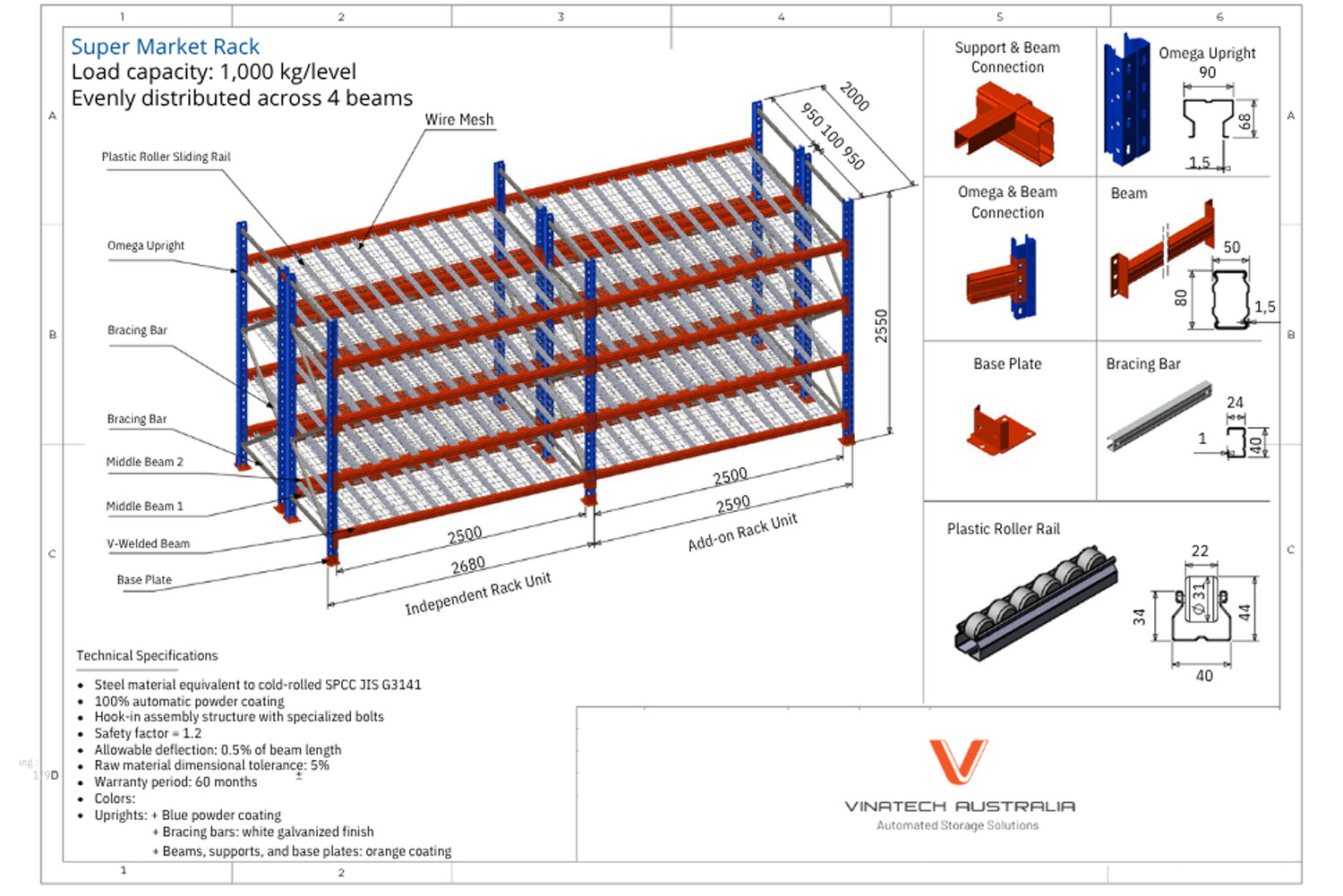
A Pallet Flow Racking system is made up of structural components and movement-control components. The final configuration depends on pallet weight, pallet size, lane depth, warehouse height, floor condition and forklift type.
- Omega Upright: Vertical load-bearing frame that supports the rack structure and connects with beams and bracing bars.
- Plastic Roller Sliding Rail: Sliding rail with plastic rollers designed to help goods move smoothly along the rack lane.
- Bracing Bar: Structural support bar used to reinforce the rack frame and improve overall stability.
- Middle Beam 1: Intermediate horizontal beam that supports the storage level and helps distribute the load evenly.
- Middle Beam 2: Additional intermediate beam used to strengthen the rack level and increase load support capacity.
- V-Welded Beam: V-shaped welded beam designed to provide strong horizontal support for the rack platform.
- Base Plate: Bottom support plate fixed under the upright to spread the load and stabilize the rack on the floor.
- Wire Mesh: Mesh decking surface placed on the rack level to support goods and improve load distribution.
- Independent Rack Unit: Standalone rack section that can operate independently without needing to connect to another unit.
- Add-on Rack Unit: Extension rack section connected to the independent unit to expand storage capacity.
- Plastic Roller Rail: Roller rail component with plastic rollers used to guide and move goods efficiently within the rack system.
>> Read more:
Drive-In Racking Maximise High-Density Warehouse Storage
Double Deep Pallet Racking: How It Works, Benefits, and Applications
Ideal Applications for Pallet Flow Racking
Pallet Flow Racking is best suited to warehouses with high stock movement, clear FIFO requirements and a need to maximise storage density without slowing inbound or outbound operations.
- Food and beverage distribution: Pallet Flow Racking is well suited to goods with expiry dates. Dairy products, beverages, packaged food, fresh produce and frozen goods all benefit from enforced FIFO rotation.
- Cold storage and freezer warehouses: Cold storage operators need to maximise every square metre because temperature-controlled space is expensive to build and run. Pallet Flow Racking increases storage density while reducing unnecessary forklift movement inside controlled-temperature areas.
- Pharmaceutical and healthcare logistics: For pharmaceuticals, medical supplies and healthcare products, batch control and expiry-date management are operational priorities. FIFO pallet flow supports more reliable stock rotation.
- 3PL and logistics providers: 3PL providers need flexible, high-throughput storage for customers with predictable stock movement. Pallet Flow Racking can be allocated by customer, SKU, batch or dispatch profile.
- Retail and FMCG distribution: Retail distribution centres handling high-volume SKUs can use pallet flow lanes to support faster replenishment, reduce congestion and keep the picking face ready for dispatch.
Featured Pallet Flow Racking Projects by Vinatech
Explore how Vinatech’s Pallet Flow Racking solutions maximise storage density, support FIFO inventory rotation and streamline pallet handling across logistics and distribution warehouses.
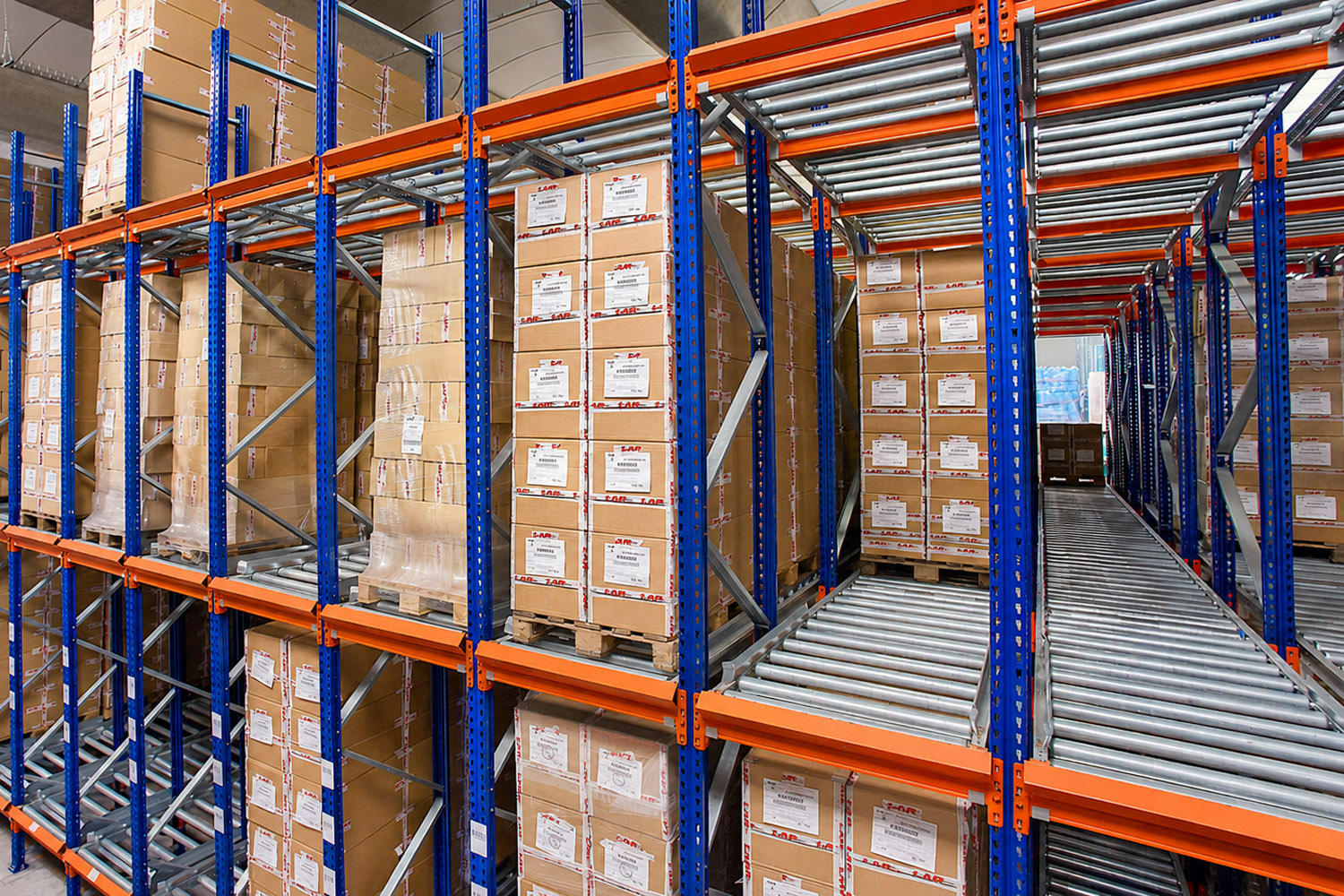
1. 3PL Logistics Warehouse – Pallet Flow Racking
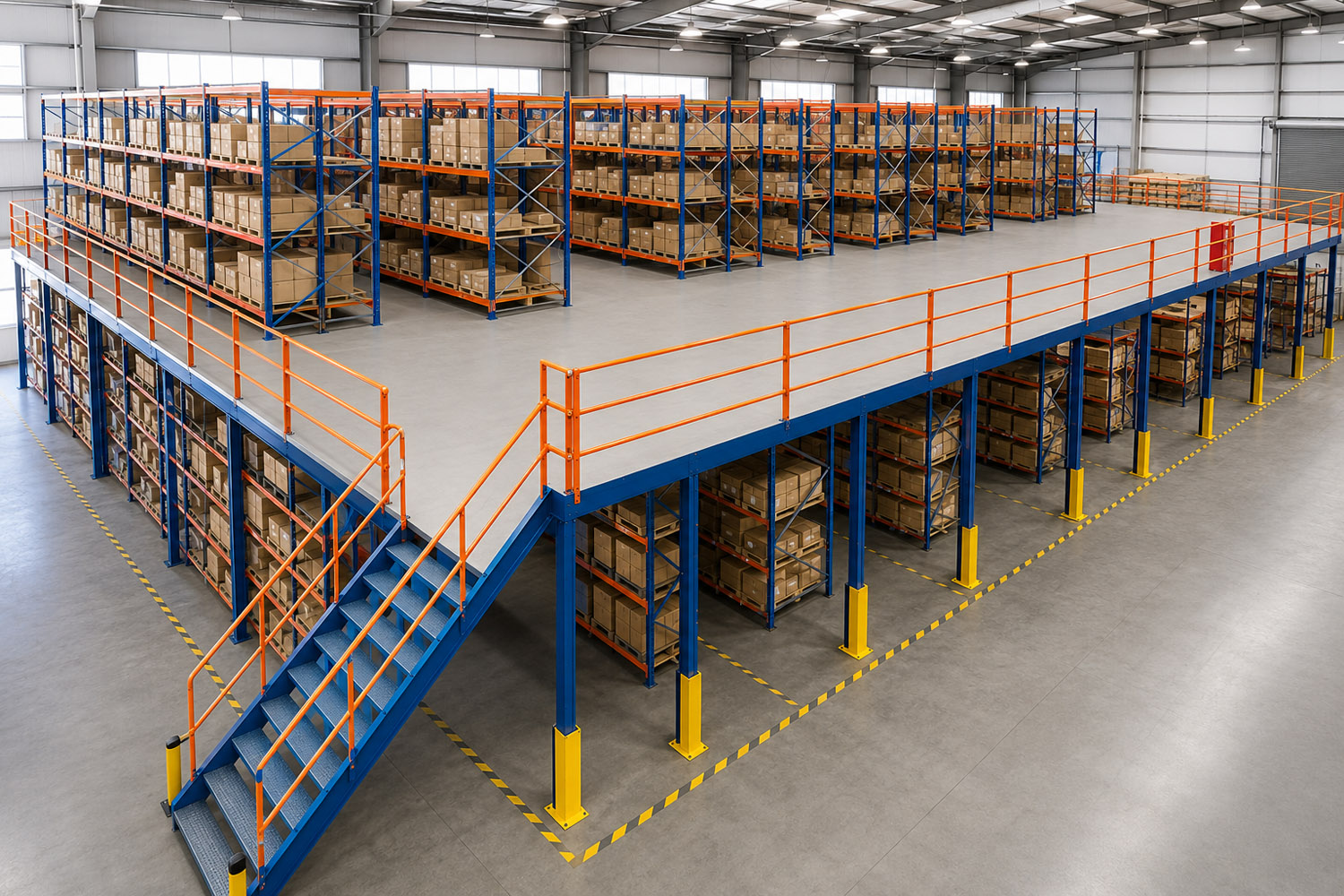
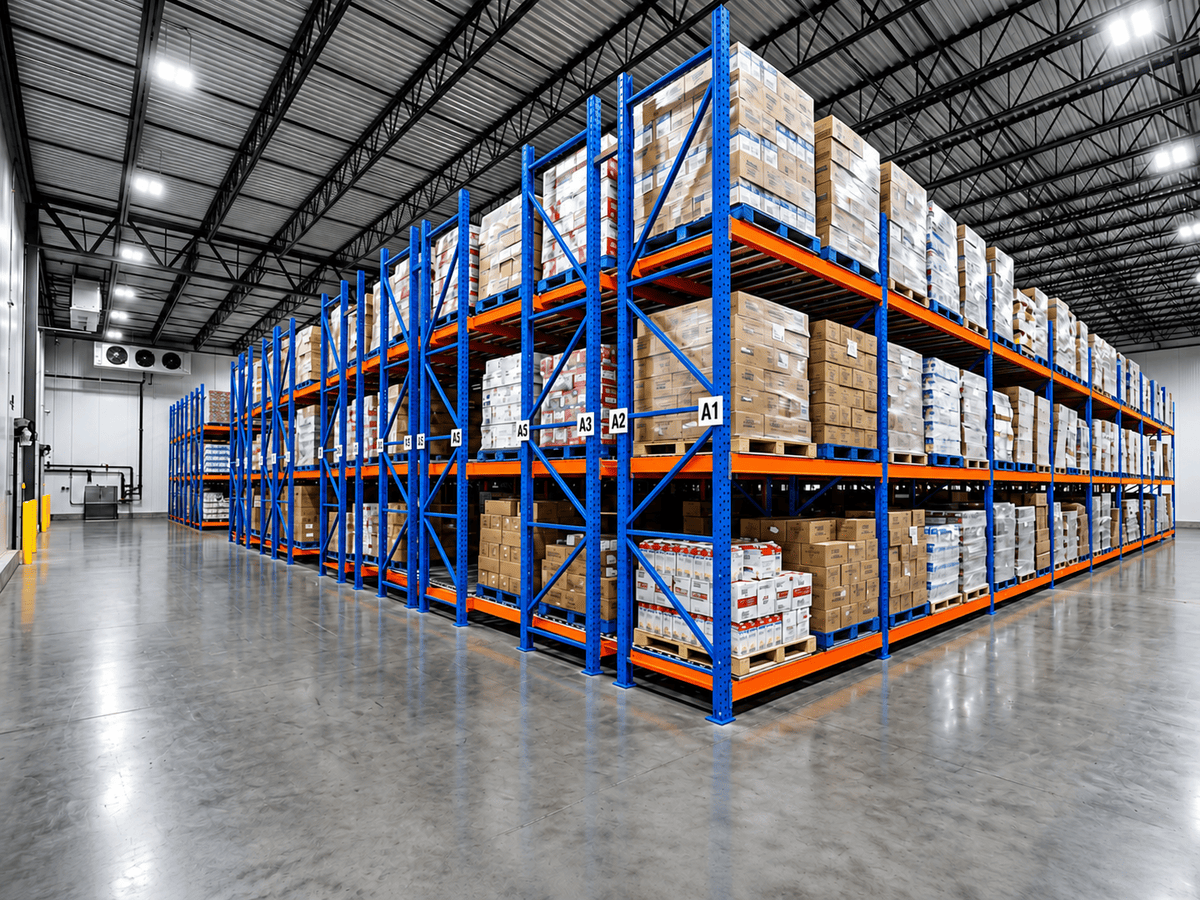
Vinatech Australia proposed a Pallet Flow Racking System providing approximately 7,200 pallet positions within a 9,000 m² warehouse, featuring 4 storage levels and gravity-fed lanes accommodating 6 pallets deep. The system is designed to support FIFO stock rotation, with separate loading and retrieval aisles to minimise unnecessary pallet handling.
This solution demonstrates how Pallet Flow Racking can optimise warehouse space, improve stock rotation and support efficient multi-customer inventory management in 3PL logistics operations.
2. High-Volume Distribution Warehouse – Pallet Flow Racking
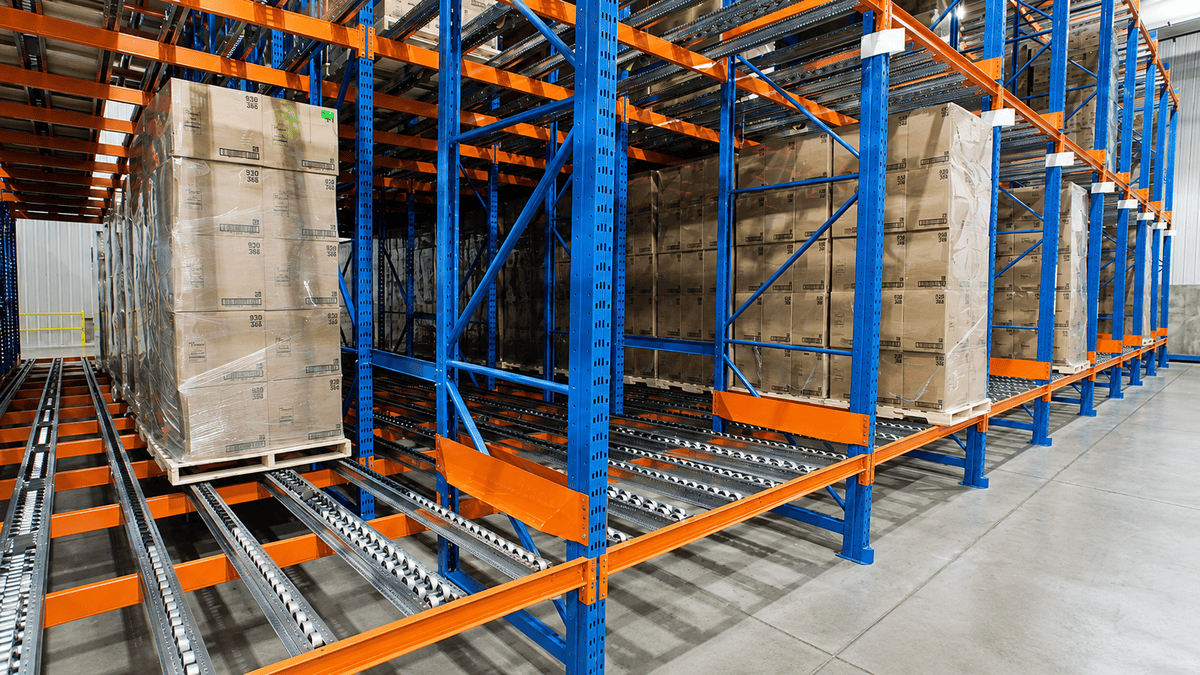
Vinatech Australia proposed a Pallet Flow Racking System providing approximately 5,400 pallet positions across a 7,500 m² warehouse, featuring 4 storage levels and 6-pallet-deep gravity-fed storage lanes. The system supports FIFO inventory rotation, enabling pallets to move automatically towards the retrieval face while separating replenishment and dispatch operations.
This project demonstrates how Pallet Flow Racking can maximise storage density, streamline pallet movement and support efficient inventory management for high-volume FMCG and food distribution.
Why Choose Vinatech Australia for Pallet Flow Racking?
Choosing the right Pallet Flow Racking System requires more than maximising warehouse storage capacity. An effective solution should provide direct pallet access, efficient inventory management, safe forklift operations and flexibility for future expansion.
Vinatech Australia delivers customised selective pallet racking solutions designed to optimise warehouse space, streamline pallet handling and support long-term operational efficiency.
- End-to-end project solutions: Comprehensive support from warehouse assessment, racking design and manufacturing to professional installation and after-sales service.
- 100% direct pallet accessibility: Pallet Flow Racking provides individual access to every pallet, enabling efficient stock picking, loading and retrieval without moving other pallets.
- Optimised warehouse layouts: Customised configurations maximise vertical storage space while maintaining appropriate aisle widths and forklift accessibility.
- Designed to Australian standards: Racking systems are designed in accordance with AS 4084:2023 requirements.
- Customised load configurations: Rack dimensions, beam levels and load capacities are tailored to pallet sizes, inventory requirements and warehouse operations.
- 2D and 3D warehouse designs: Detailed layouts help customers evaluate pallet capacity, aisle arrangements and material handling workflows before installation.
- Factory-direct manufacturing: Direct manufacturing supports competitive pricing, consistent product quality and flexible racking configurations.
- Flexible and scalable storage: Adjustable beam levels and modular designs accommodate changing inventory volumes, different pallet sizes and future warehouse expansion.
- Versatile industry applications: Suitable for logistics, FMCG distribution, manufacturing, retail, food and beverage storage, and e-commerce fulfilment.
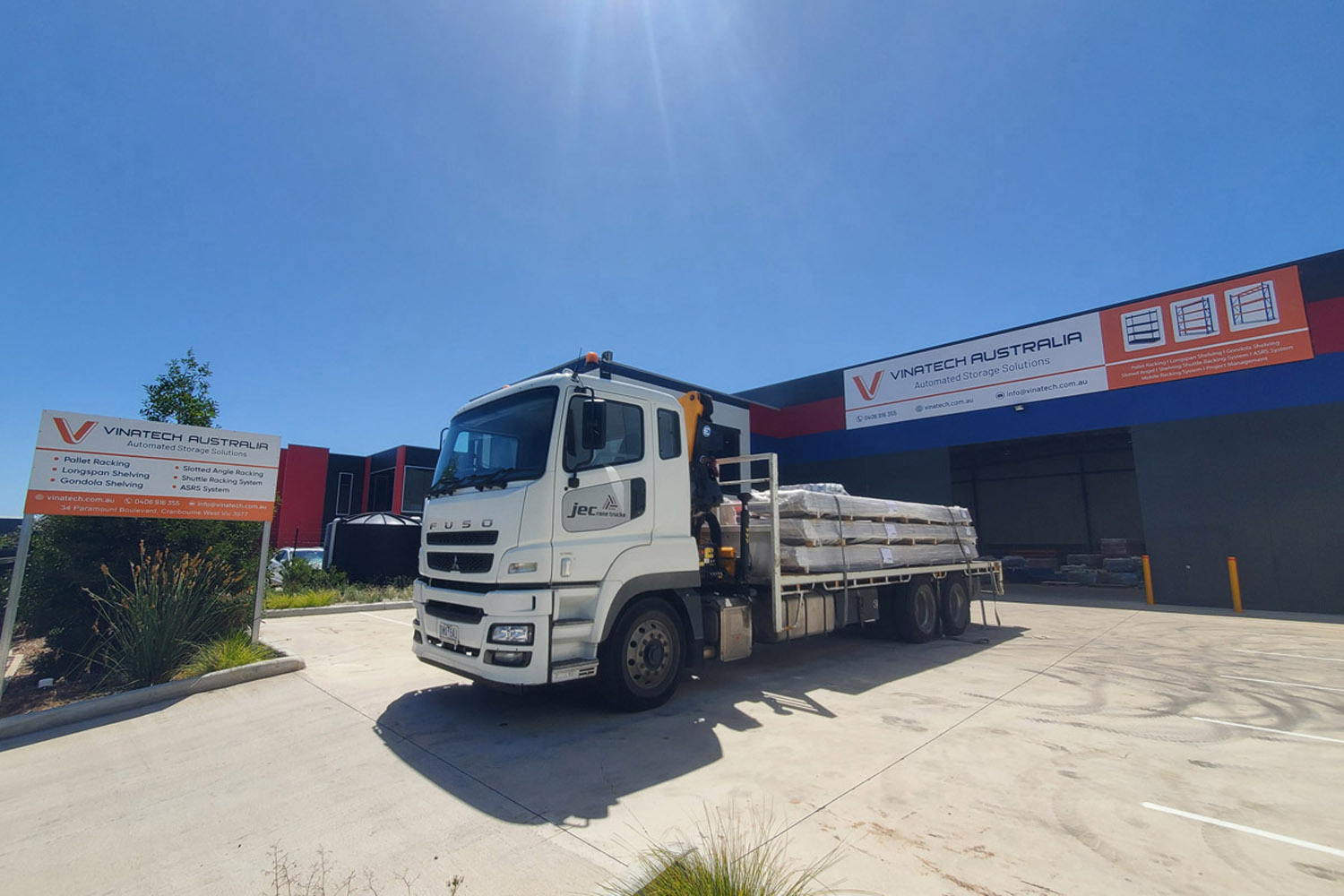
- Australian-based support: Vinatech Australia provides local project coordination and after-sales assistance from 34 Paramount Blvd, Cranbourne West VIC 3977.
With extensive experience in warehouse storage solutions, Vinatech Australia provides selective pallet racking systems that maximise space utilisation, ensure direct pallet accessibility and support efficient, scalable warehouse operations.
FAQ about Pallet Flow Racking
Pallet flow racking is a high-density storage system that uses gravity rollers to move pallets from the loading side to the picking side. It is designed to optimise storage and improve inventory rotation.
Pallet flow racking operates using slightly inclined rails fitted with rollers. Pallets are loaded at one end and move forward automatically by gravity as pallets in front are removed.
Pallet flow racking increases storage density, improves picking efficiency, reduces forklift travel, and supports efficient inventory management in high-volume warehouses.
Pallet flow racking supports FIFO by allowing pallets to be loaded from one side and retrieved from the opposite side, ensuring the first pallet in is the first pallet out.
Pallet flow racking is widely used in food and beverage, cold storage, logistics, retail distribution, and manufacturing industries where FIFO inventory is critical.