













What is a Pallet Flow Racking System?
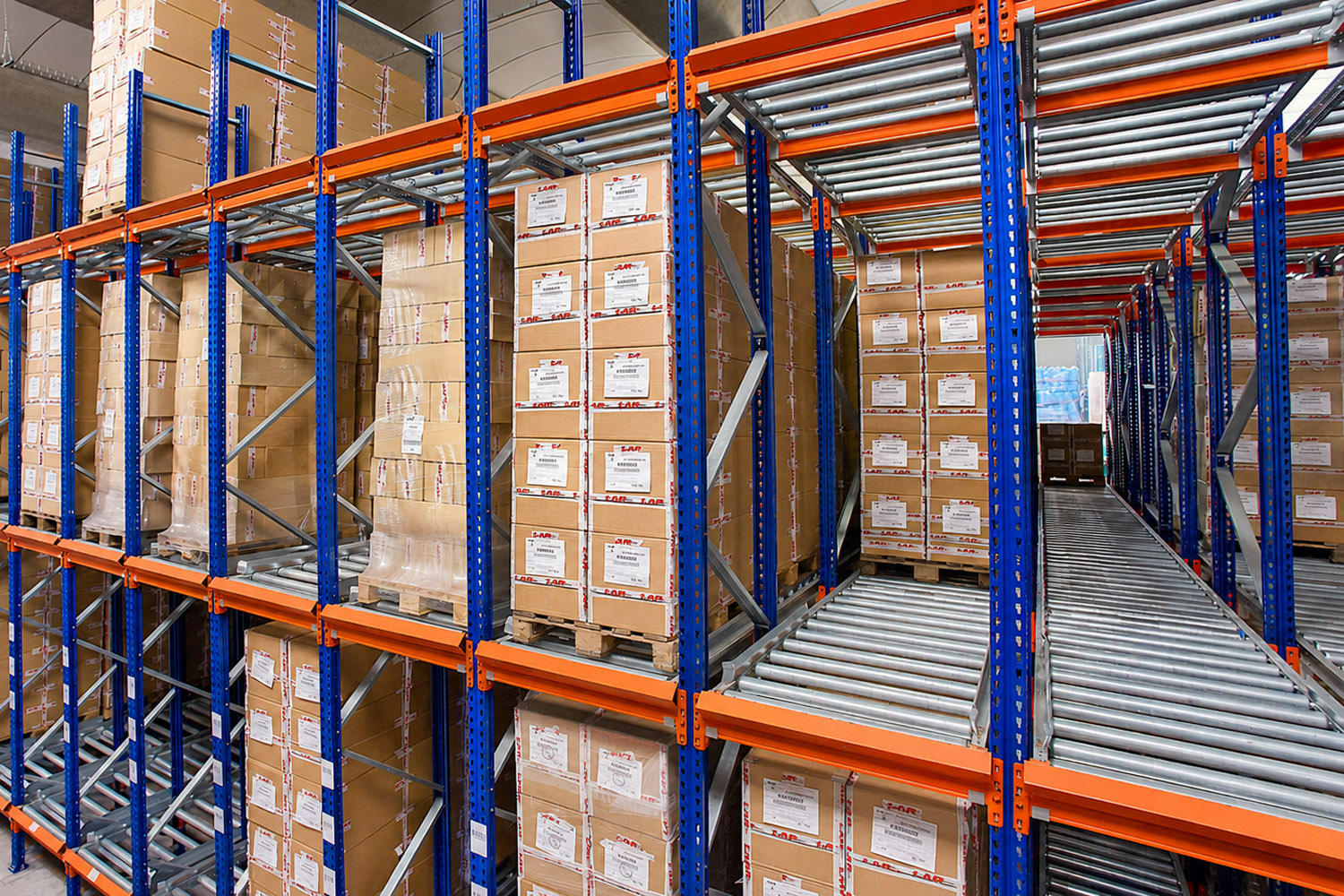
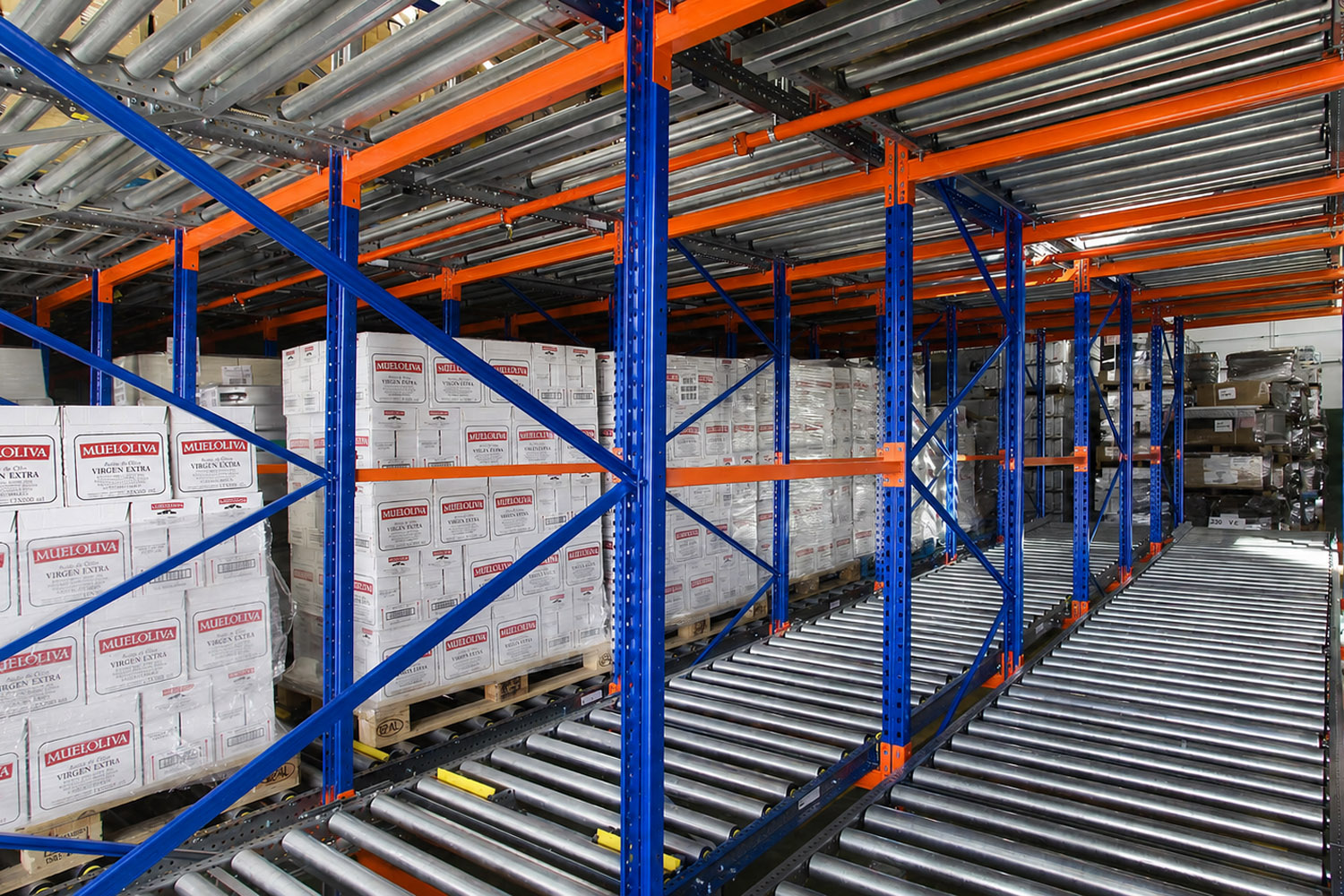
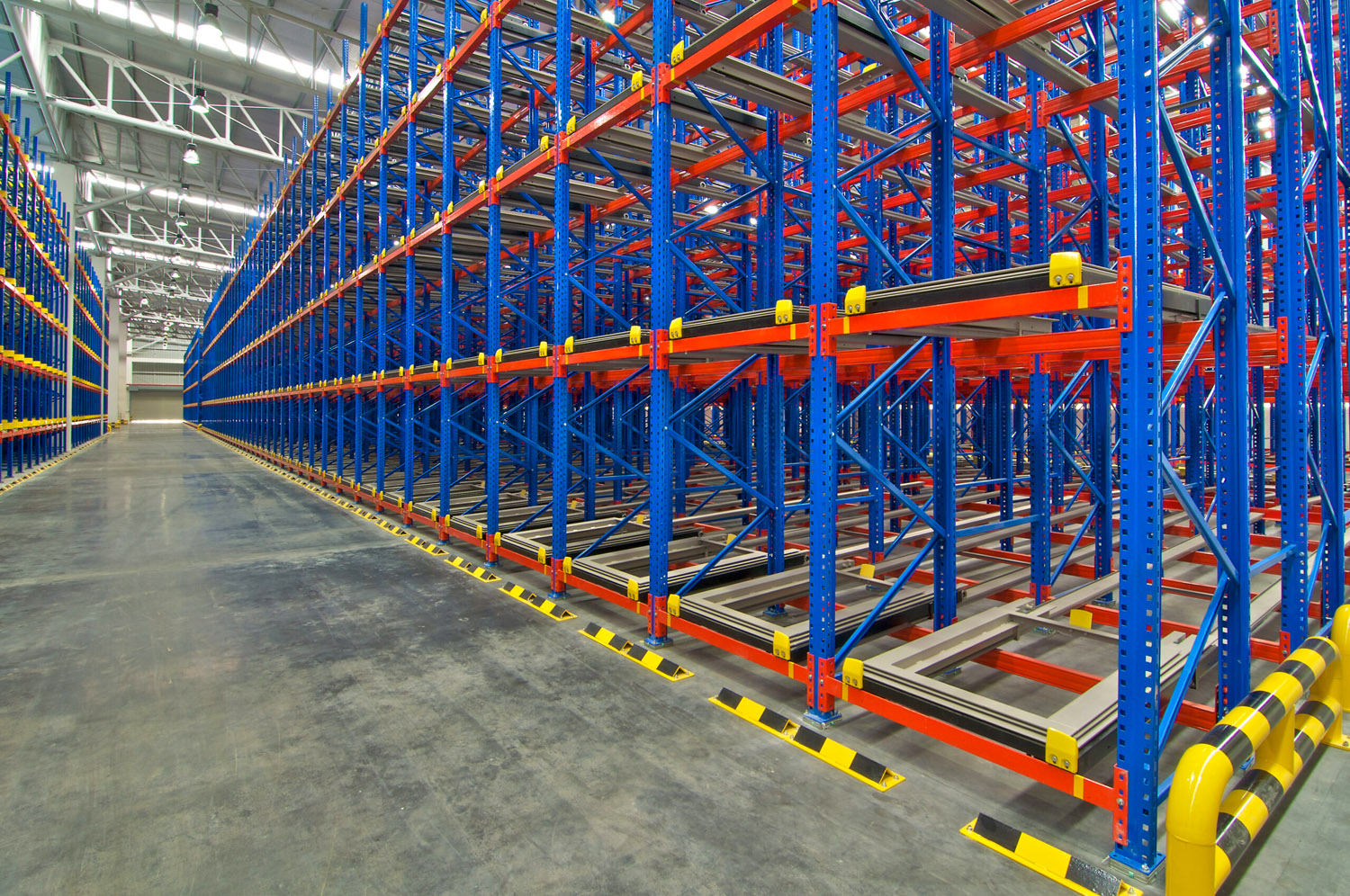
A Pallet Flow Racking System (also known as gravity flow) is a high-density, dynamic storage system that uses inclined roller tracks and gravity to automatically glide pallets from the loading end to the dedicated retrieval end. It optimizes warehouse space by utilizing deep lanes and operating on a strict First-In, First-Out (FIFO) basis.
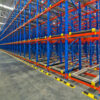
The system uses slightly inclined storage lanes fitted with rollers. Palletised goods move by gravity from the loading side to the picking or unloading side.
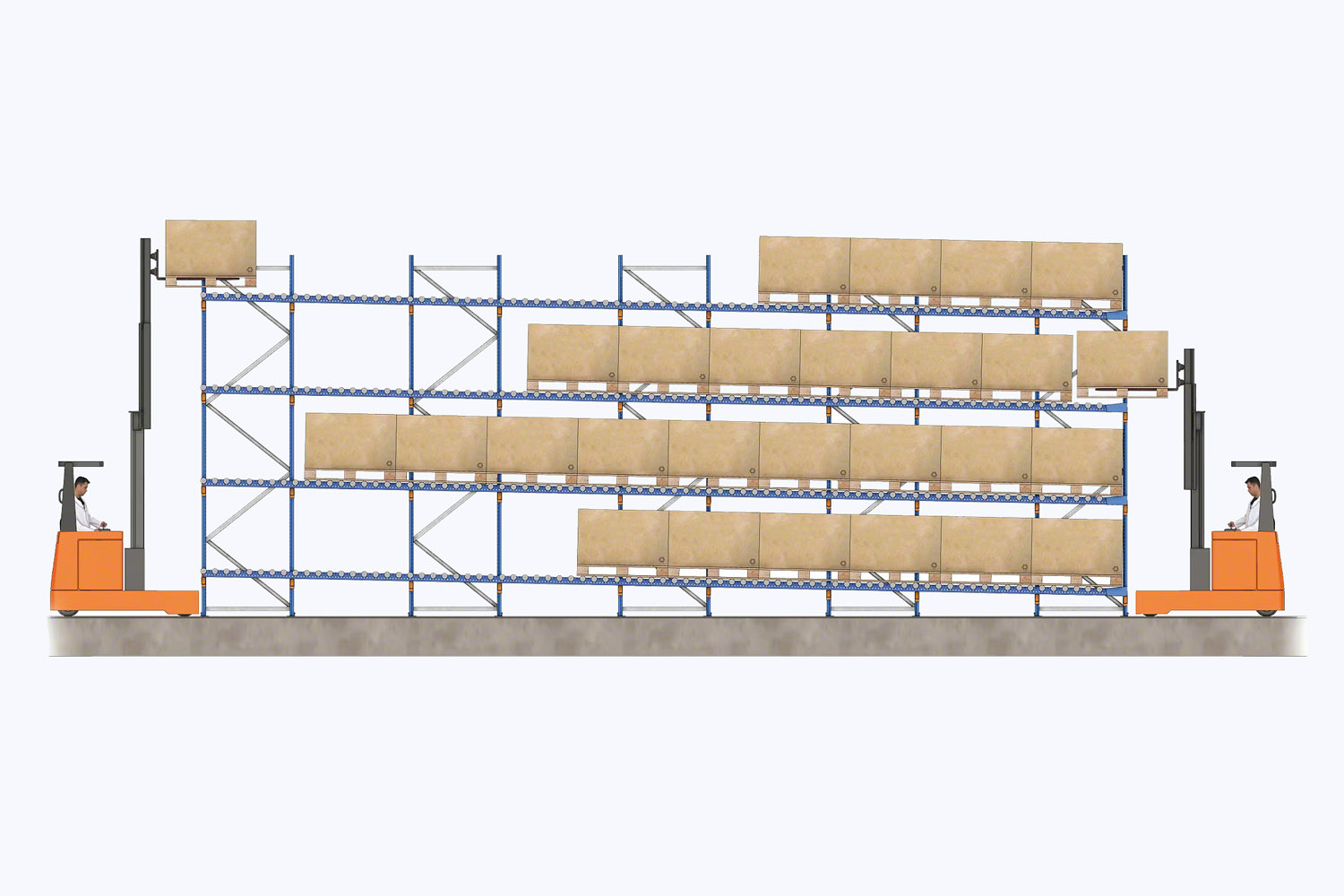
The operating principle is simple. A pallet is loaded into one side of the racking system. It then moves along the roller tracks towards the opposite side. When the front pallet is removed, the next pallet automatically moves forward into the picking position.
Read more: Push-Back Racking Systems Australia for LIFO Warehouses
Pallet Flow Racking System types
There are two common types of flow racking that Australian warehouse operators should understand before choosing a system.
Carton Flow Racking
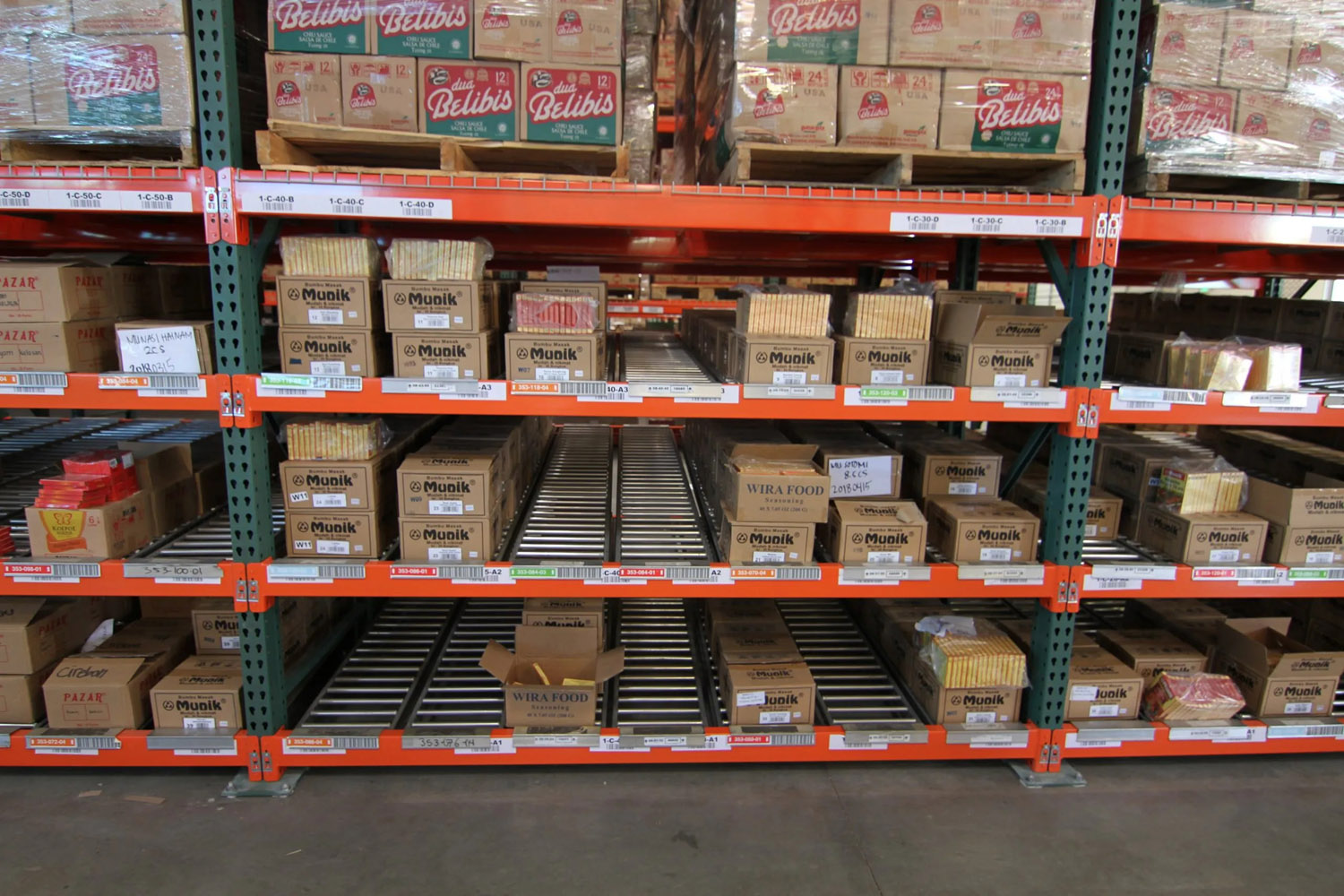
Carton Flow Racking is designed for lighter goods such as cartons, plastic bins and totes. It is commonly used for order picking, e-commerce fulfillment, spare parts storage, retail distribution and line-side production supply. This system usually uses smaller roller tracks or wheel beds. Goods are loaded and picked manually, making it more suitable for carton-level or piece-picking operations than full pallet handling.
Pallet Flow Racking
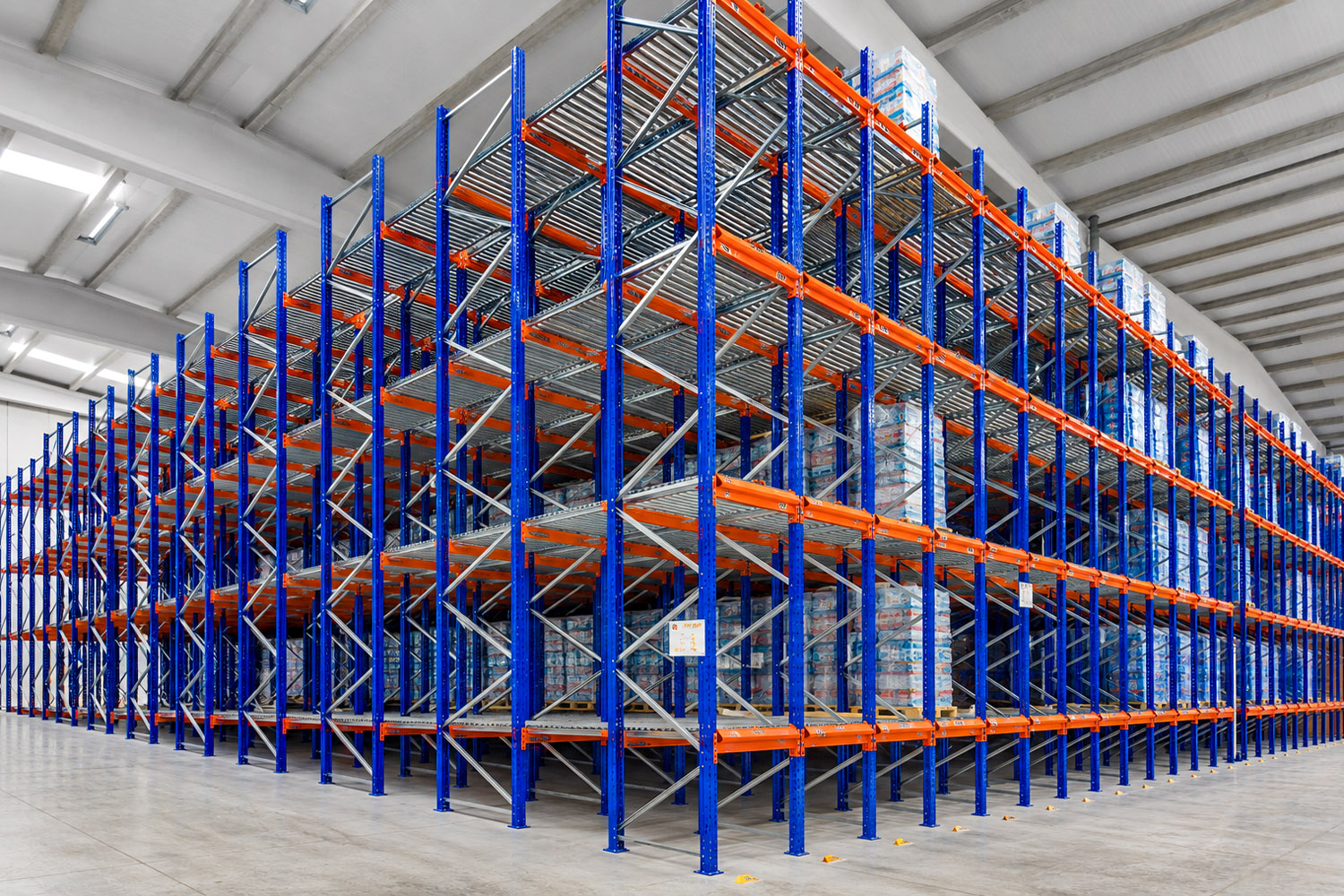
Pallet Flow Racking is the heavy-duty version designed for palletised goods. It supports forklift-based loading and unloading and is suitable for high-density pallet storage, where each lane is typically assigned to one SKU or one batch group.
It is commonly used for:
- Food and beverage pallets
- Cold storage pallets
- Pharmaceutical and medical supply pallets
- FMCG distribution
- Manufacturing buffer storage
- Bulk storage for 3PL operations
- Retail distribution centres
How does a Pallet Flow Racking System work
Pallet Flow Racking operates on a simple gravity-fed principle, but it delivers strong efficiency gains in inventory control and warehouse movement.
Pallet storage
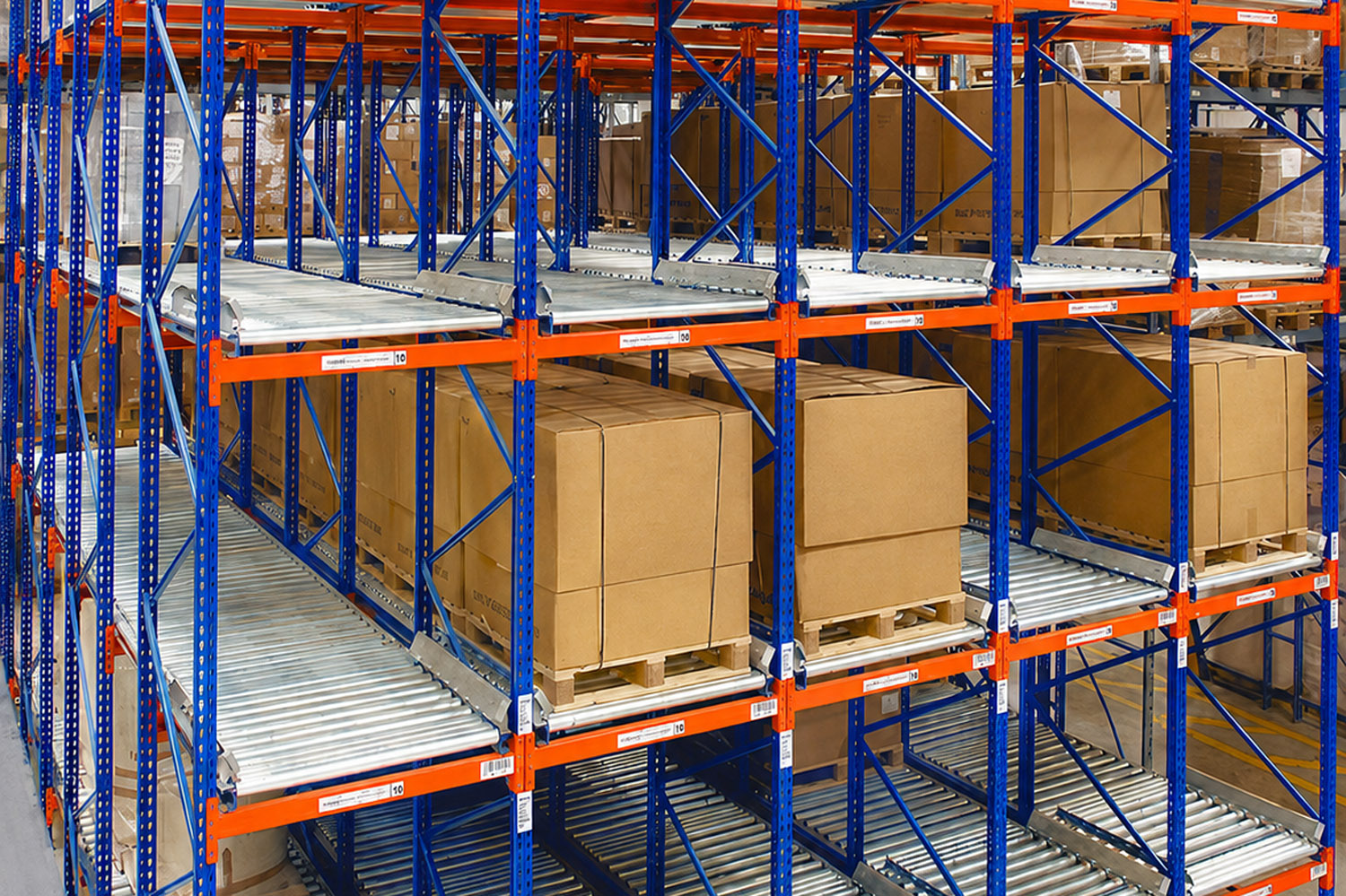
A forklift places the pallet at the higher end of the pallet flow lane. The pallet is loaded in the correct orientation so that its base sits securely on the rollers.
At this stage, goods are organised into dedicated lanes based on SKU, batch, expiry date or dispatch plan. This layout supports cleaner stock control and more predictable outbound movement.
Pallet movement
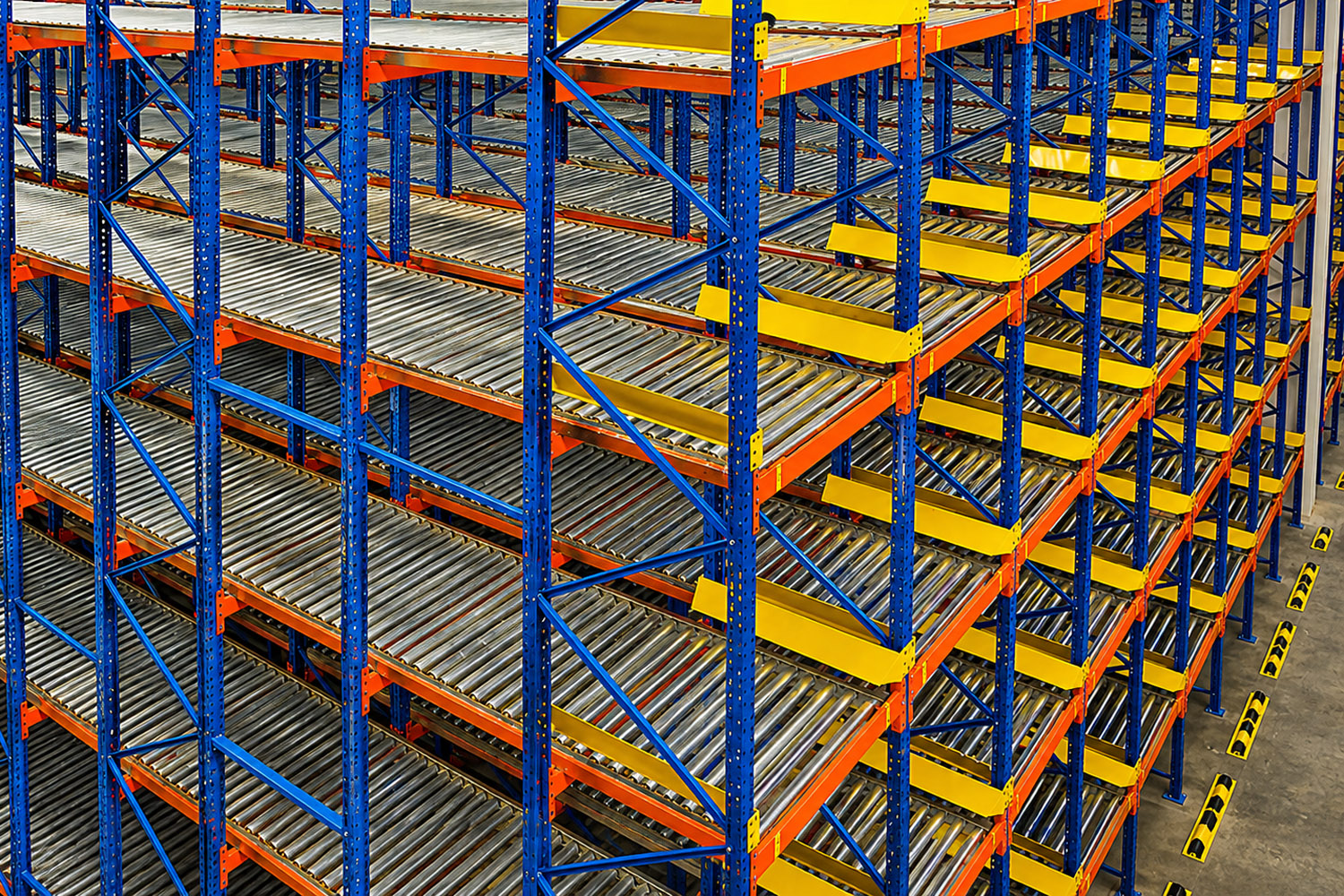
Once loaded into the lane, the pallet moves along the roller system by gravity. Rollers, speed controllers and guide rails help the pallet travel smoothly, control movement speed and reduce impact between pallets in the same lane.
During this process, the forklift does not need to enter the racking structure to push or retrieve the pallet. This reduces travel distance, congestion and unnecessary handling.
Pallet removal
At the picking side, the forklift removes the pallet from the lower end of the lane. Once the first pallet is removed, the remaining pallets automatically move forward by one position.
This continuous movement supports the First-In, First-Out principle. It helps businesses manage expiry dates, batch control and the risk of obsolete or overdue inventory more effectively.
Pallet Flow Racking Structure
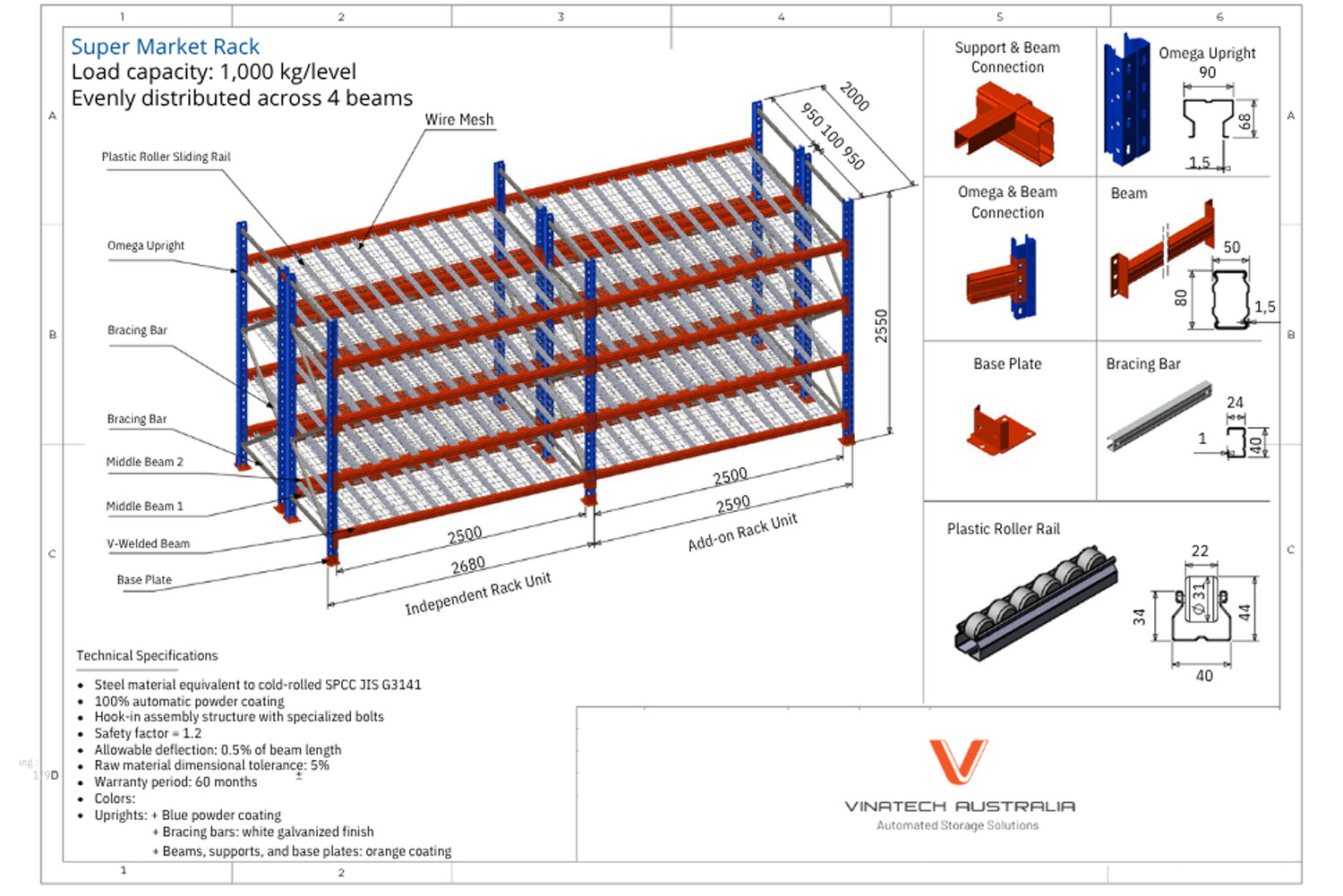
A Pallet Flow Racking system is made up of structural components and movement-control components. The final configuration depends on pallet weight, pallet size, lane depth, warehouse height, floor condition and forklift type.
- Omega Upright: Vertical load-bearing frame that supports the rack structure and connects with beams and bracing bars.
- Plastic Roller Sliding Rail: Sliding rail with plastic rollers designed to help goods move smoothly along the rack lane.
- Bracing Bar: Structural support bar used to reinforce the rack frame and improve overall stability.
- Middle Beam 1: Intermediate horizontal beam that supports the storage level and helps distribute the load evenly.
- Middle Beam 2: Additional intermediate beam used to strengthen the rack level and increase load support capacity.
- V-Welded Beam: V-shaped welded beam designed to provide strong horizontal support for the rack platform.
- Base Plate: Bottom support plate fixed under the upright to spread the load and stabilize the rack on the floor.
- Wire Mesh: Mesh decking surface placed on the rack level to support goods and improve load distribution.
- Independent Rack Unit: Standalone rack section that can operate independently without needing to connect to another unit.
- Add-on Rack Unit: Extension rack section connected to the independent unit to expand storage capacity.
- Plastic Roller Rail: Roller rail component with plastic rollers used to guide and move goods efficiently within the rack system.
Read more: Drive-In Racking Maximise High-Density Warehouse Storage
Advantages of Pallet Flow Racking System
Pallet Flow Racking delivers the strongest value when a business needs faster handling, tighter inventory control and better use of existing warehouse space.
Higher storage density
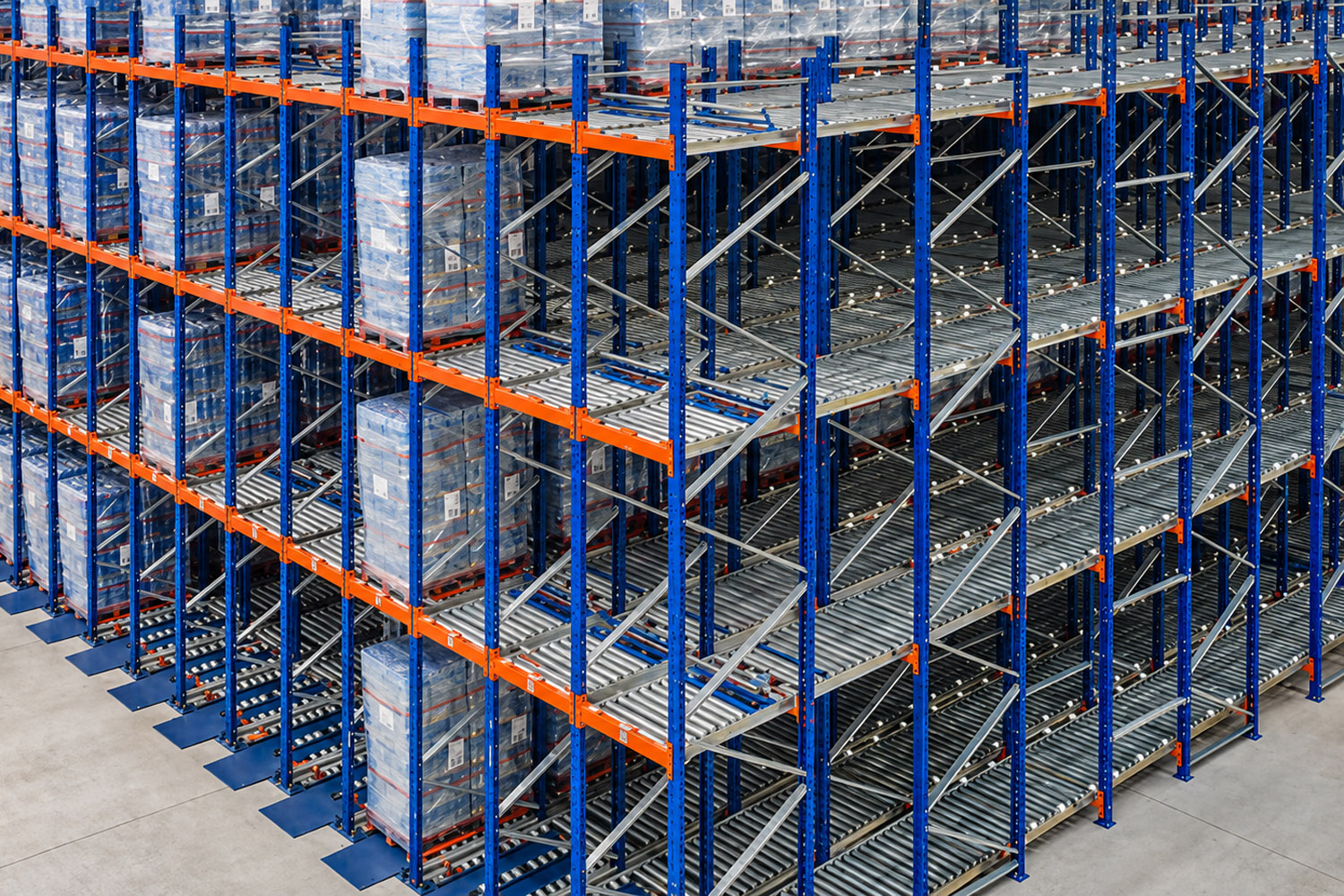
Pallet Flow Racking reduces the number of internal aisles usually required by selective pallet racking. As a result, businesses can store more pallets within the same warehouse footprint. For companies facing high warehouse space costs, improved pallet density can help delay expansion and generate a stronger commercial return from the existing facility.
Strong FIFO control
FIFO is one of the main reasons businesses choose Pallet Flow Racking. The system naturally presents older stock at the picking face first.
This is especially important for:
- Expiry-date control
- Batch management
- Food safety
- Pharmaceutical stock rotation
- Seasonal products
- High-volume FMCG
- Manufacturing buffer stock
Reduced forklift travel
Because pallets move by gravity, forklifts do not need to enter every storage lane. This reduces travel distance, turning time and aisle congestion. In Australia, labour and equipment time are significant warehouse operating costs. The Fair Work framework for warehousing and wholesale operations also reinforces the need to manage labour efficiency carefully.
Stronger commercial return for suitable SKUs
Pallet Flow Racking has a higher upfront cost than selective racking because it includes roller tracks, braking systems, engineering design and more complex installation.
However, for the right warehouse profile, the return can come from:
- More pallet positions per square metre
- Reduced forklift travel
- Faster loading and picking
- Fewer stock rotation errors
- Lower expiry-related losses
- Better use of leased or owned space
- Reduced need for warehouse expansion
Ideal Applications for Pallet Flow Racking
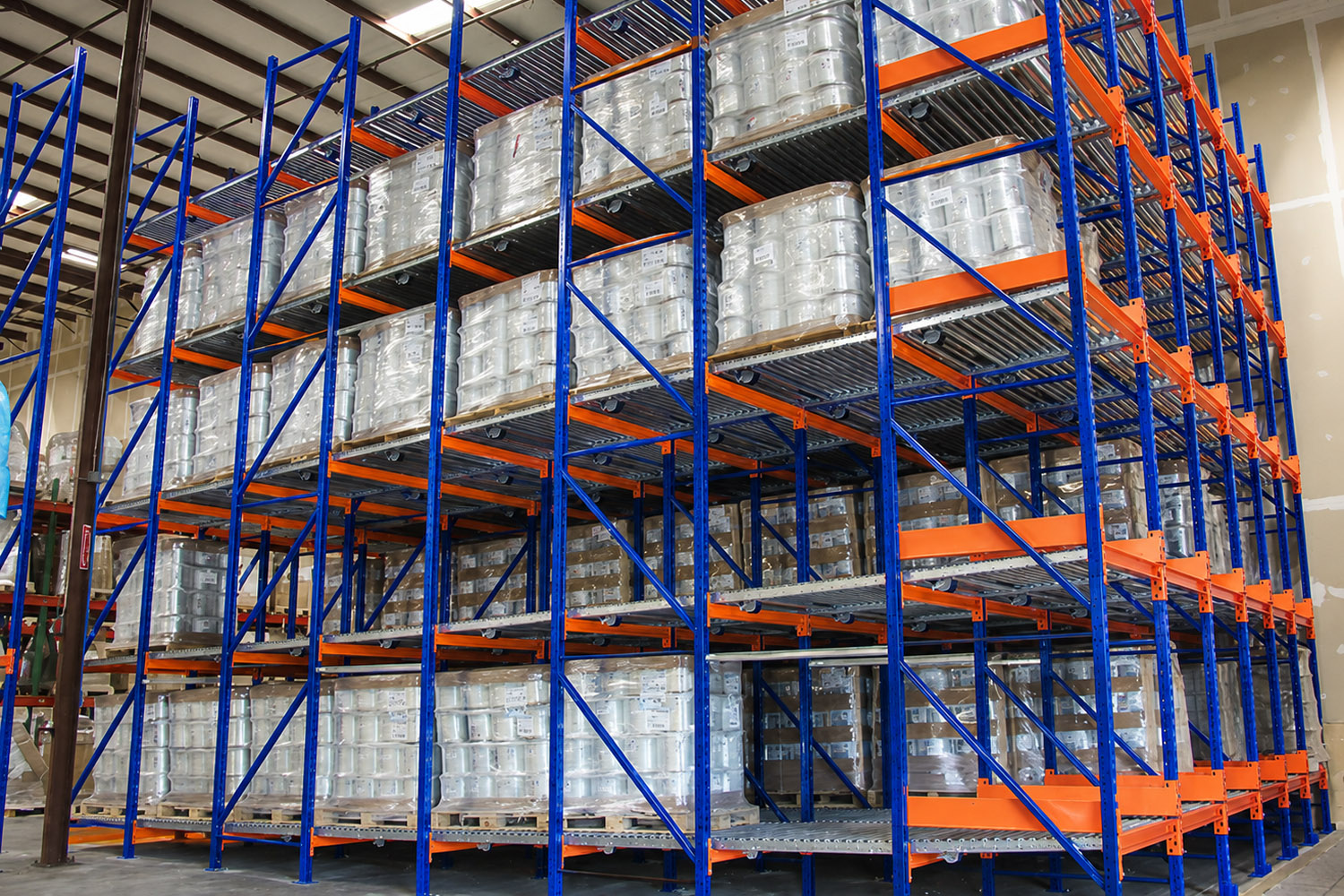
Pallet Flow Racking is best suited to warehouses with high stock movement, clear FIFO requirements and a need to maximise storage density without slowing inbound or outbound operations.
- Food and beverage distribution: Pallet Flow Racking is well suited to goods with expiry dates. Dairy products, beverages, packaged food, fresh produce and frozen goods all benefit from enforced FIFO rotation.
- Cold storage and freezer warehouses: Cold storage operators need to maximise every square metre because temperature-controlled space is expensive to build and run. Pallet Flow Racking increases storage density while reducing unnecessary forklift movement inside controlled-temperature areas.
- Pharmaceutical and healthcare logistics: For pharmaceuticals, medical supplies and healthcare products, batch control and expiry-date management are operational priorities. FIFO pallet flow supports more reliable stock rotation.
- 3PL and logistics providers: 3PL providers need flexible, high-throughput storage for customers with predictable stock movement. Pallet Flow Racking can be allocated by customer, SKU, batch or dispatch profile.
- Retail and FMCG distribution: Retail distribution centres handling high-volume SKUs can use pallet flow lanes to support faster replenishment, reduce congestion and keep the picking face ready for dispatch.
About Vinatech Australia and customer policies
Vinatech Australia provides pallet racking systems and automated warehouse solutions for distribution centres across Australia. Its services include consultation, warehouse design, racking installation, maintenance and replacement.
Key service highlights for Pallet Flow Racking include:
- Free consultation
- Free warehouse survey
- Free 3D design drawings
- Fast quotation
- Nationwide installation
- Periodic maintenance
- Custom warehouse racking design
- Suitability for ambient, chilled and cold storage warehouses
- Warranty support
- Contact via phone, email or website enquiry form
Leave your details today to receive a free consultation, warehouse survey and 3D Pallet Flow Racking design proposal. This will help your business compare cost, capacity and compliance requirements before making its next warehouse investment.
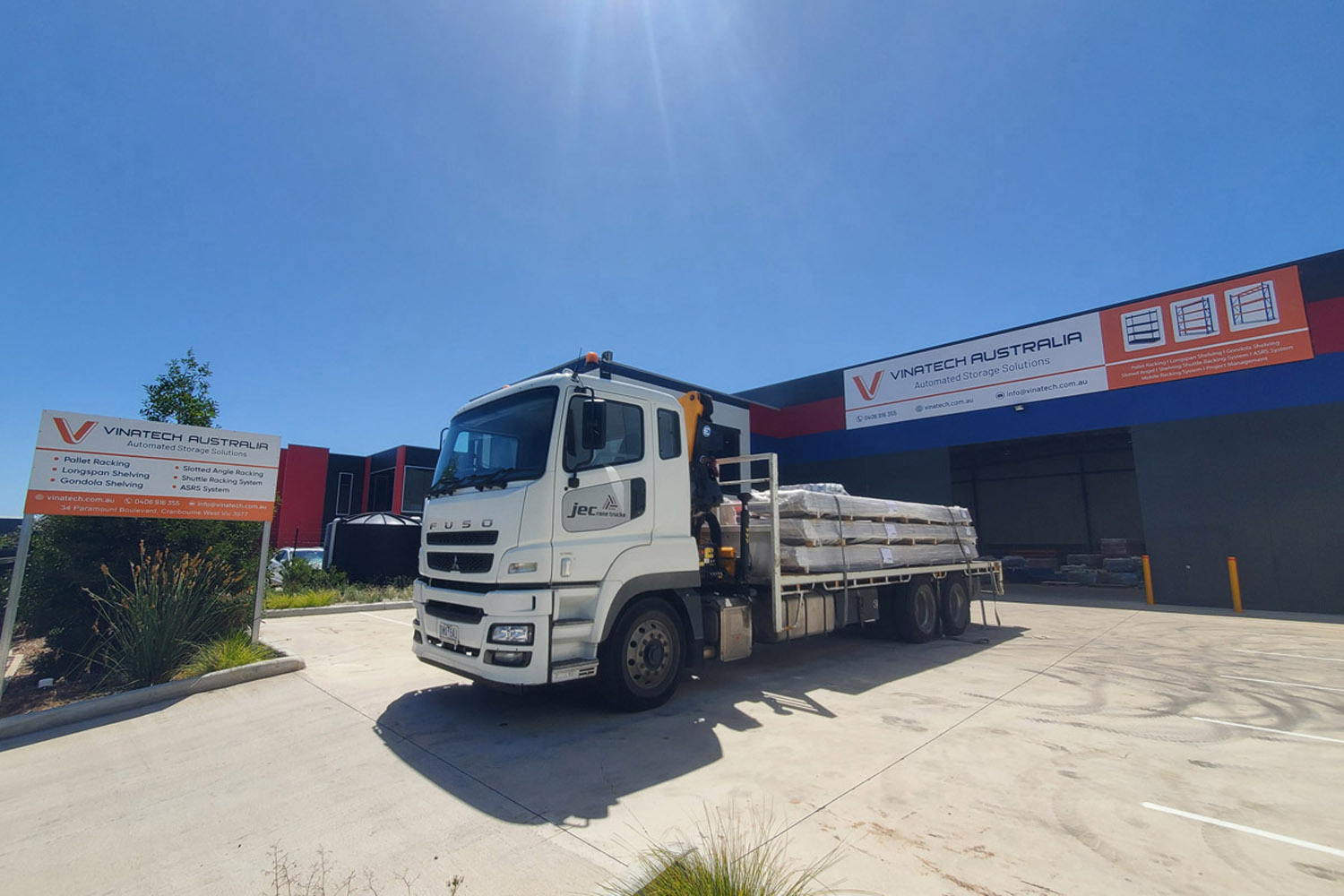
Vinatech Australia: Industrial Warehouse Racking – Warehouse Shelving Solutions
- Website: https://vinatech.com.au/
- Phone number: 1800 129 711
- Email: info@vinatech.com.au
- Address: 34 Paramount Bvd, Cranbourne West VIC 3977
FAQ about Pallet Flow Racking
Pallet flow racking is a high-density storage system that uses gravity rollers to move pallets from the loading side to the picking side. It is designed to optimise storage and improve inventory rotation.
Pallet flow racking operates using slightly inclined rails fitted with rollers. Pallets are loaded at one end and move forward automatically by gravity as pallets in front are removed.
Pallet flow racking increases storage density, improves picking efficiency, reduces forklift travel, and supports efficient inventory management in high-volume warehouses.
Pallet flow racking supports FIFO by allowing pallets to be loaded from one side and retrieved from the opposite side, ensuring the first pallet in is the first pallet out.
Pallet flow racking is widely used in food and beverage, cold storage, logistics, retail distribution, and manufacturing industries where FIFO inventory is critical.
Pallet flow racking can handle standard wooden, plastic, and metal pallets, provided they meet size and weight specifications required by the system.
The load capacity depends on system design, roller quality, and structural components. Systems are typically designed for heavy-duty loads and must comply with Australian Standard AS 4084.
Pallet flow racking uses gravity rollers and supports FIFO, while push back racking uses carts and operates on a LIFO basis, making them suitable for different inventory strategies.
Selective racking provides direct access to every pallet, while pallet flow racking increases storage density and improves flow but reduces direct accessibility.
Yes, pallet flow racking is ideal for cold storage as it maximises storage density and reduces forklift operation time in low-temperature environments.
It improves efficiency by reducing handling time, minimising forklift travel, streamlining picking processes, and ensuring smooth inventory rotation.
Disadvantages include higher initial investment, more complex installation, and reduced flexibility compared to selective racking systems.
Costs vary depending on system size, design complexity, and components. It requires higher upfront investment but delivers strong long-term efficiency and ROI.
Maintenance includes inspecting rollers, tracks, and structural components to ensure smooth pallet movement and system safety.
You should evaluate supplier experience, product quality, compliance with Australian standards, system design expertise, and after-sales support.




Reviews
There are no reviews yet.