







What is a Shuttle Racking System?
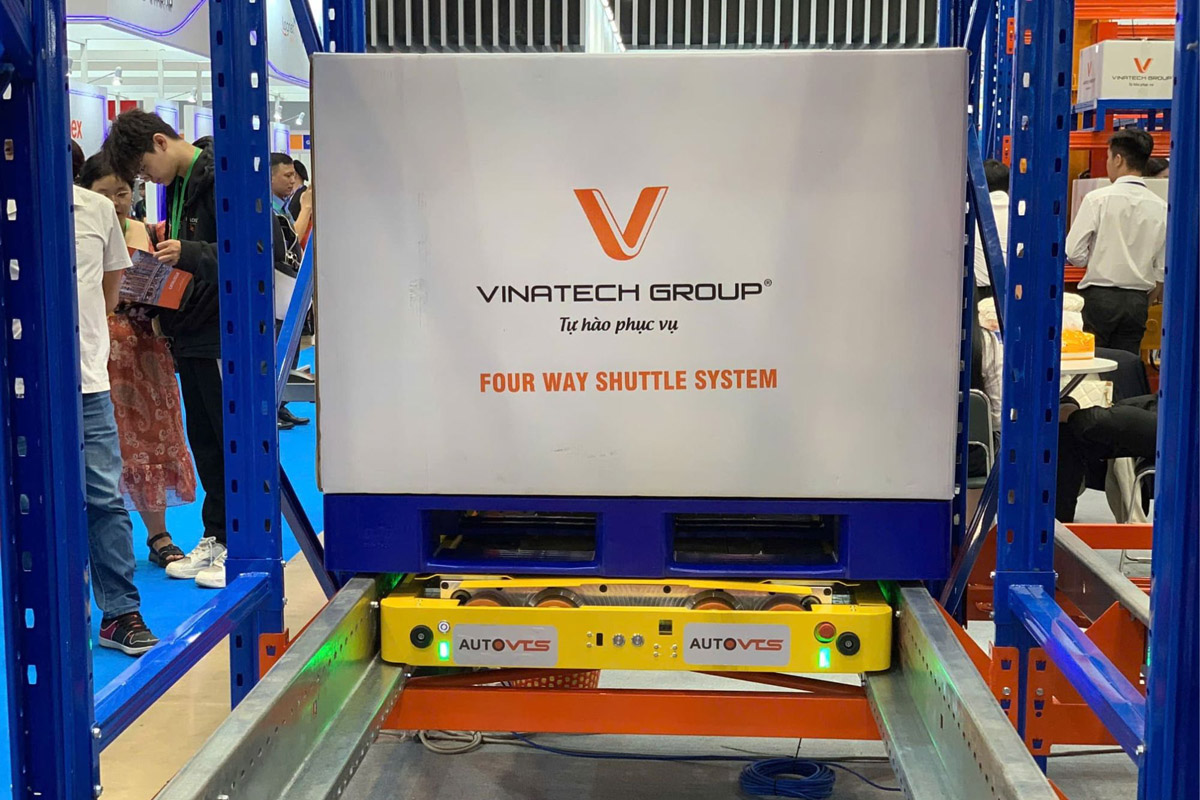
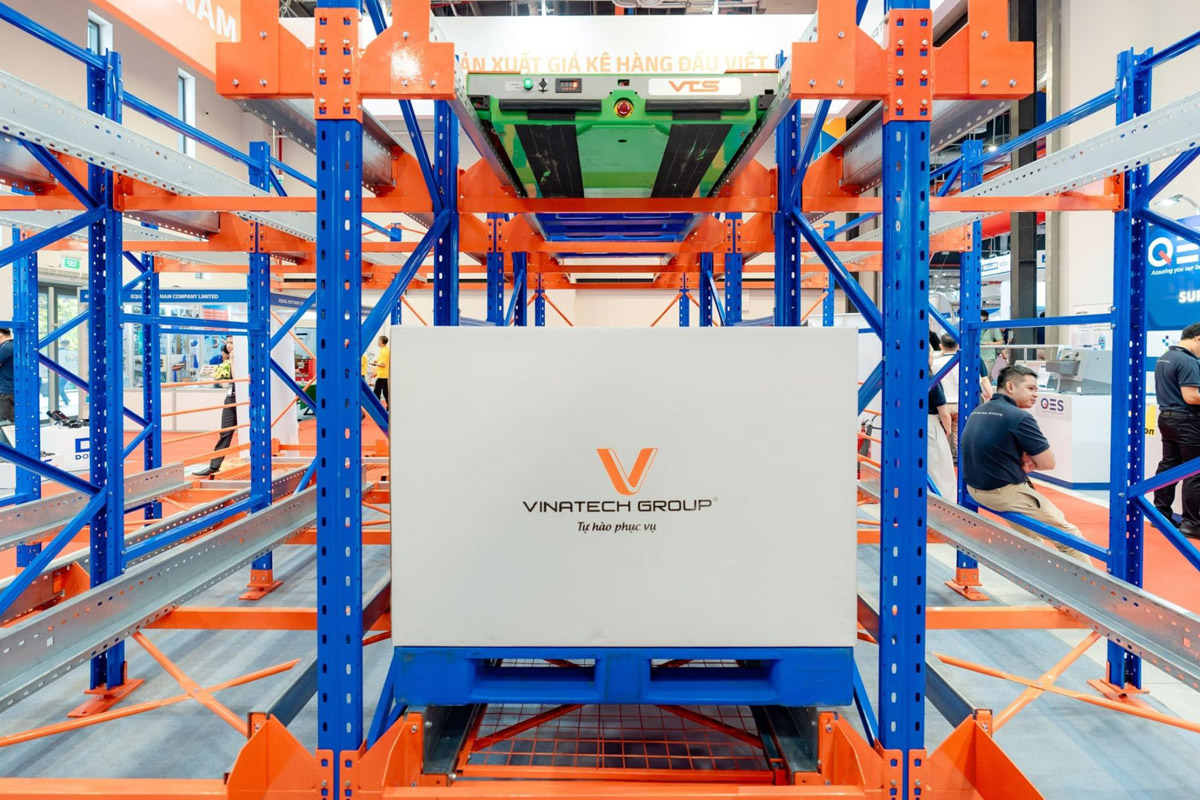
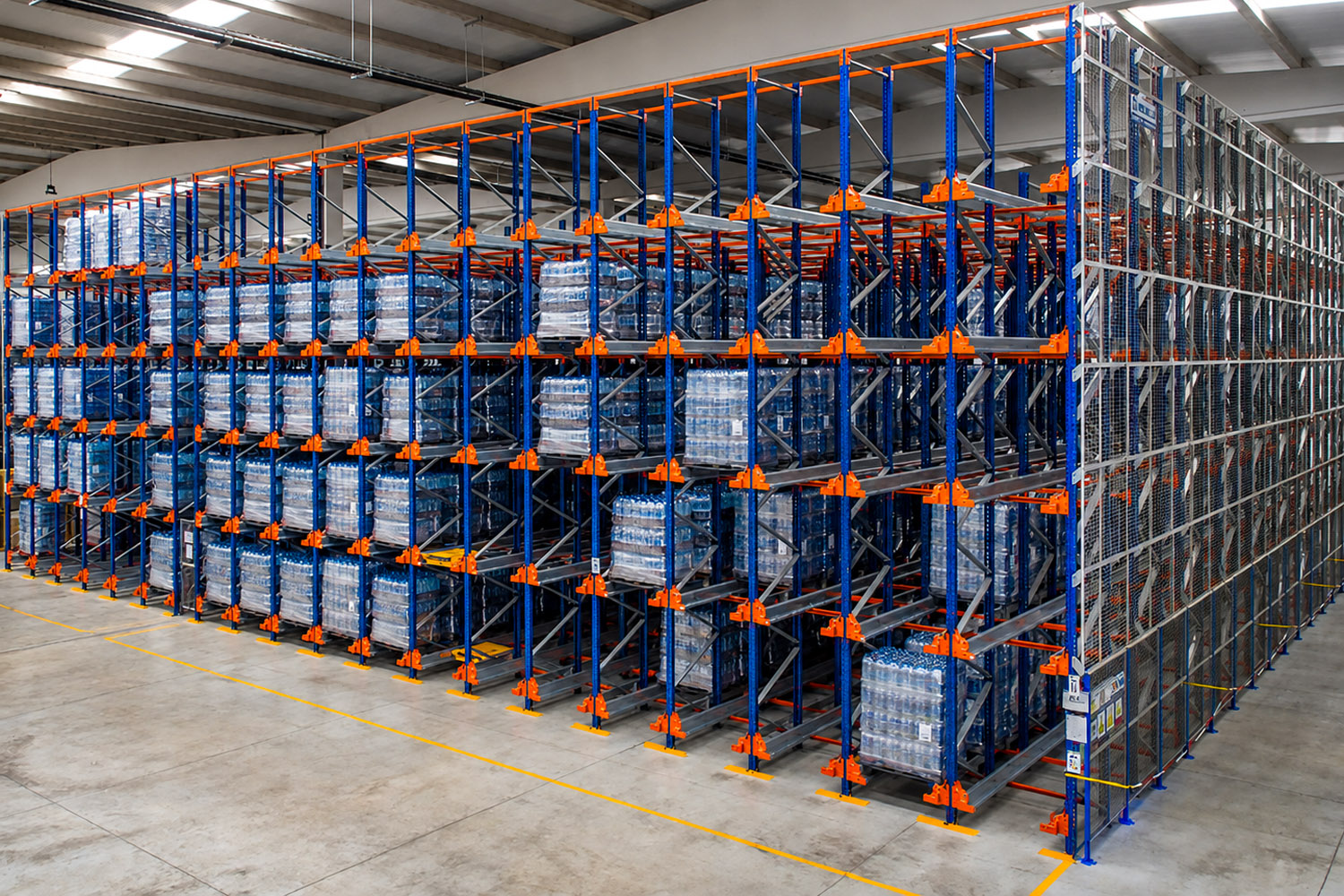
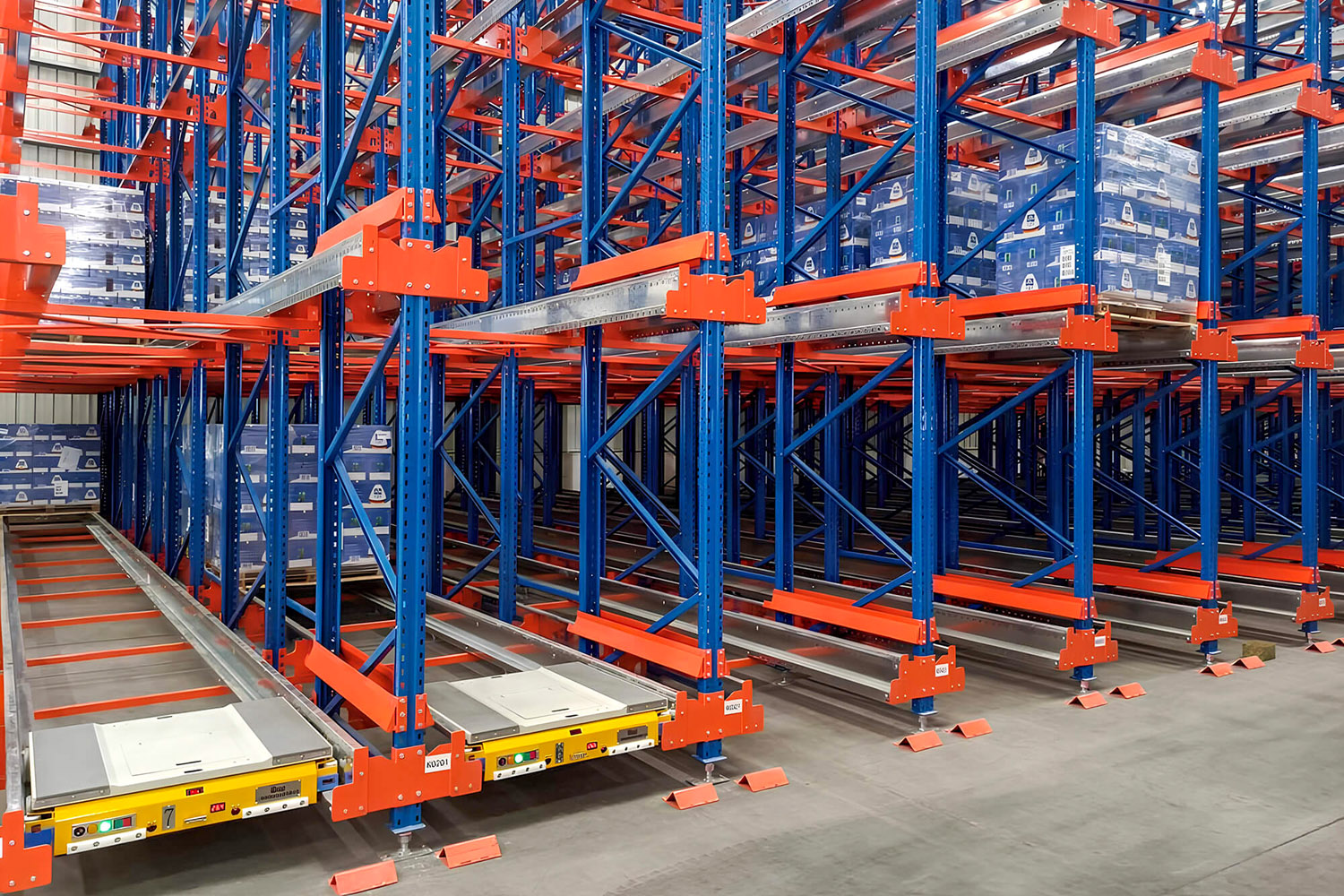
Shuttle Racking System are automated warehouse solutions for high-density pallet storage that use battery-powered or motor-driven transport vehicles to move pallets along rails within deep storage aisles.
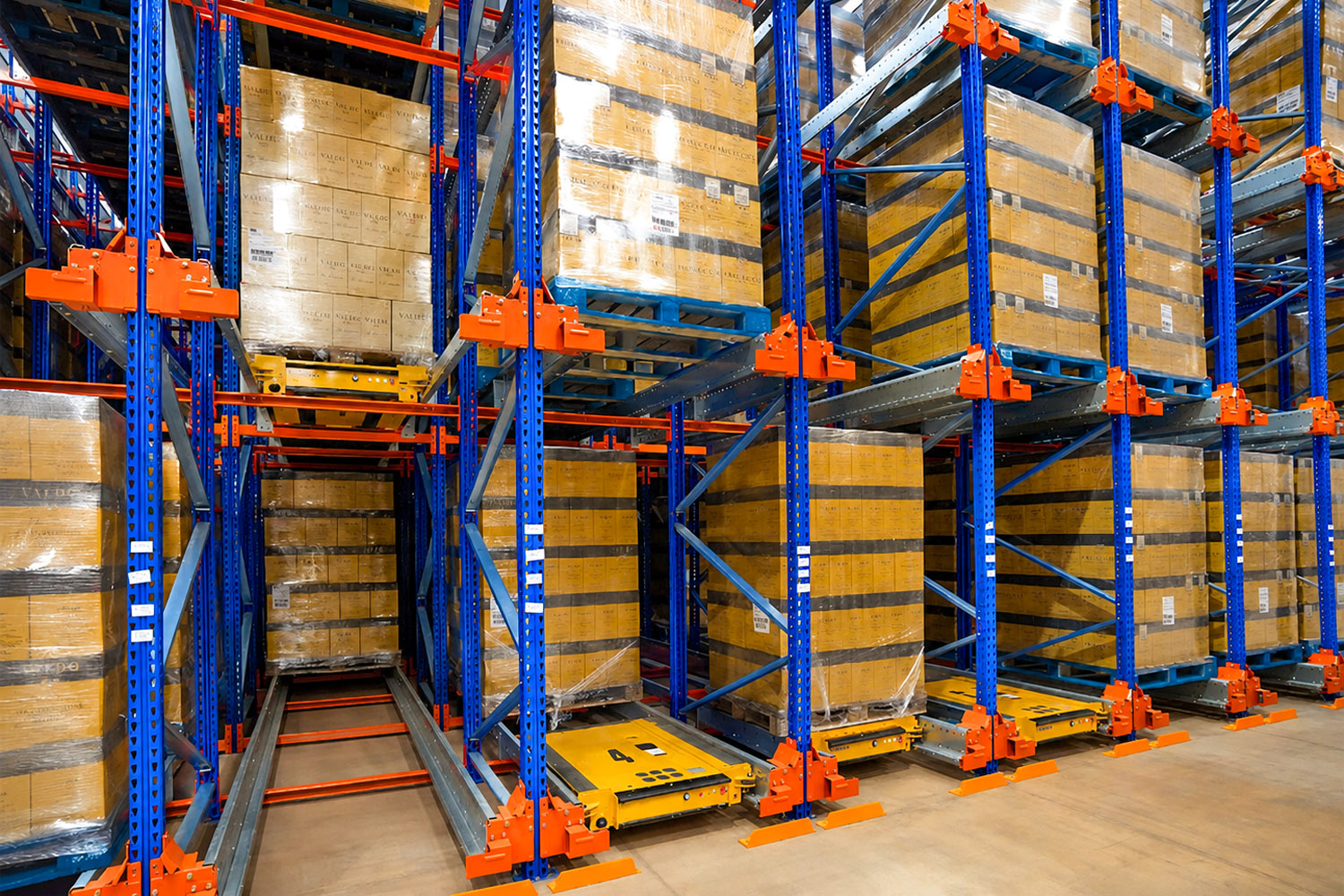
In a traditional drive-in racking system, forklifts usually enter the racking structure to place or retrieve pallets. With a Pallet Shuttle System, the forklift only places the pallet at the lane entrance. The shuttle then moves the pallet into the storage channel and places it in the required position.
The main benefit is simple: businesses can store more pallets within the same warehouse footprint while improving safety and operational productivity. For Australian warehouses facing high property costs, rising labour expenses and increasing pressure to optimise storage capacity, shuttle racking provides a practical path towards automation without requiring a fully automated AS/RS system.
Read more: 2-Way Shuttle Storage System for Industrial Warehousing
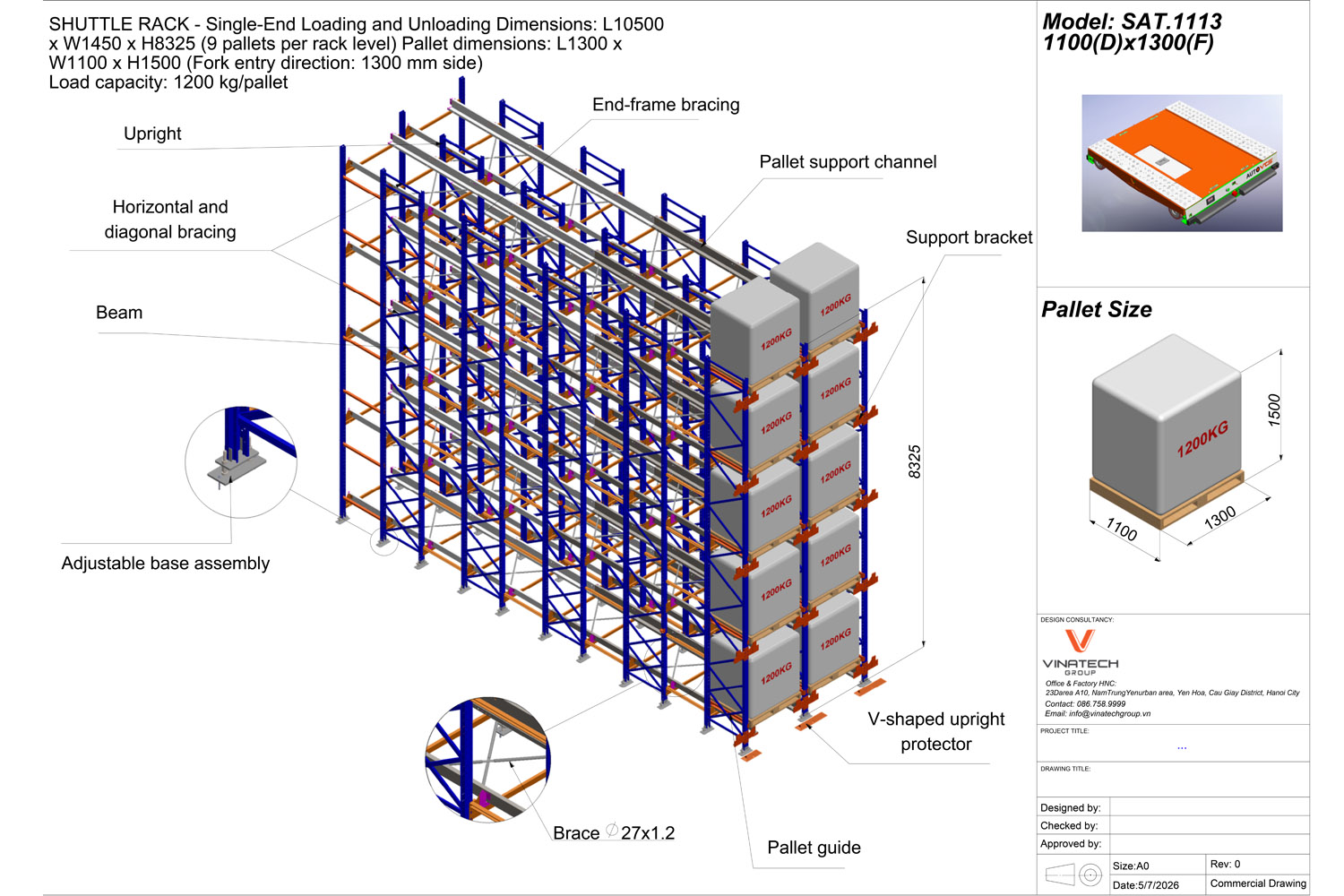
Shuttle Racking system components
This section should be completed once the official component details are confirmed.
- Upright: The main vertical frame that supports the entire shuttle rack structure and load levels.
- Beam: The horizontal load-bearing member that connects uprights and supports each storage level.
- Horizontal and Diagonal Bracin: Reinforces the rack frame and improves structural stability against side movement.
- End-frame Bracing: Strengthens the end frames and helps maintain the rigidity of the rack system.
- Pallet Support Channel: Supports pallets along the storage lane and ensures stable pallet placement.
- Support Bracket: Connects and supports key load-bearing components within the rack structure.
- Adjustable Base Assembly: Allows the rack base to be levelled and securely positioned on the warehouse floor.
- Pallet Guide: Guides pallets into the correct position during loading, unloading, and shuttle operation.
- V-shaped Upright Protector: Protects the rack uprights from forklift impact and reduces the risk of structural damage.
- Brace Φ27×1.2: Provides additional reinforcement to improve frame strength and rack stability.
How does a Shuttle Racking System work?
A Shuttle Racking System combines high-density pallet racking, guide rails, an automated shuttle, forklifts and a control device.
The operating process is straightforward
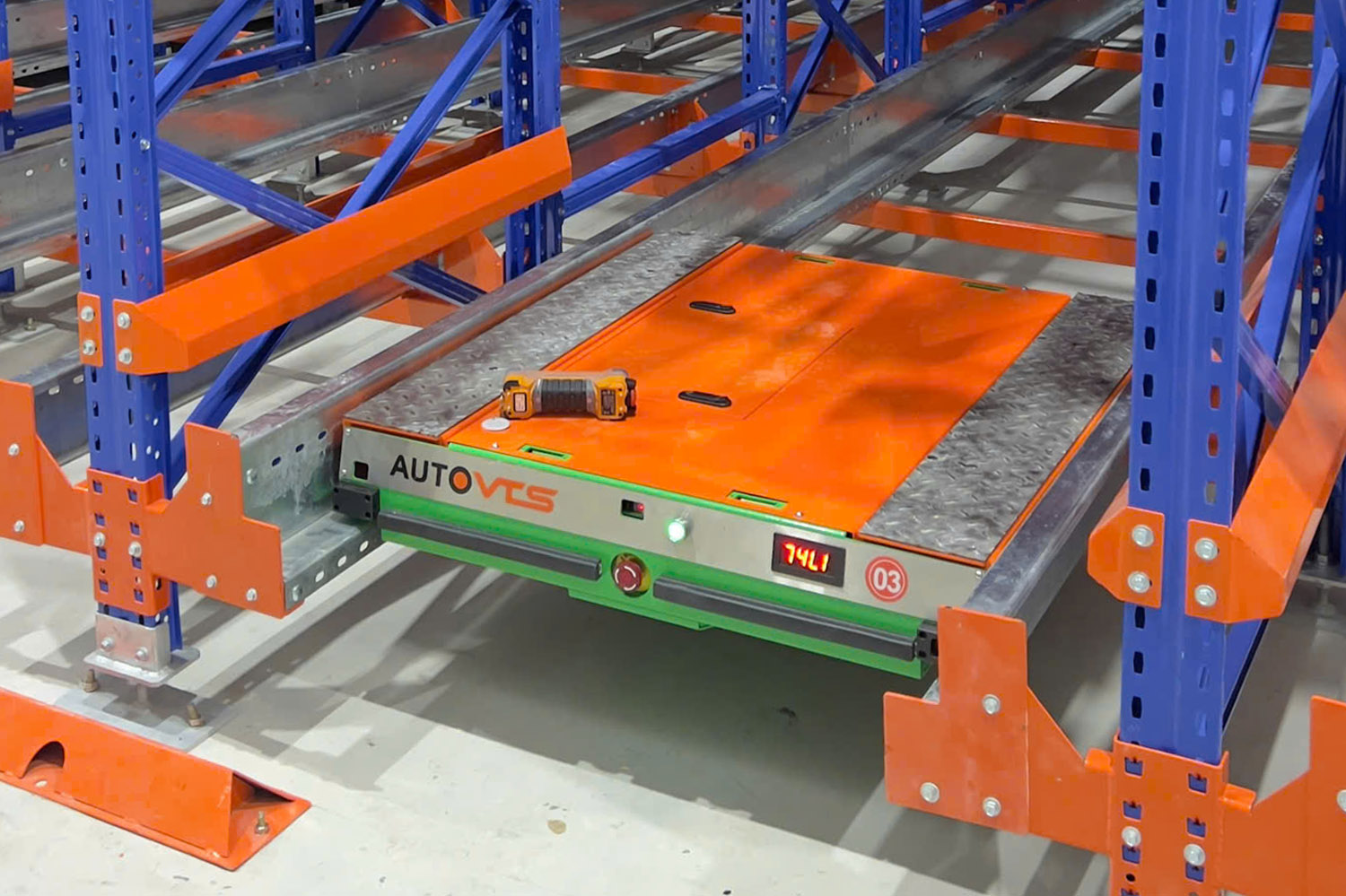
- First, the forklift places the shuttle into the required storage lane.
- Next, the forklift places pallets at the lane entrance. The operator sends a command using a remote control, tablet or integrated warehouse control interface.
- The shuttle then lifts the pallet, moves along the rails inside the storage channel, places the pallet in the first available position and returns to the lane entrance for the next cycle.
- For retrieval, the process works in reverse. The shuttle moves to the selected pallet, lifts it, brings it back to the lane entrance and allows the forklift to collect it.
A Shuttle Racking System can usually operate in two inventory modes
- LIFO – Last In, First Out: pallets are loaded and retrieved from the same side. This mode is suitable for bulk storage, non-perishable goods and high-density storage requirements.
- FIFO – First In, First Out: pallets are loaded from one side and retrieved from the opposite side. This mode is suitable for products with expiry dates, staging areas, dispatch buffers, and food and beverage warehouses.
The system can be configured for either FIFO or LIFO, depending on the warehouse layout and operational requirements.
Read more: 4-Way Shuttle Storage System for Industrial Warehousing
Advantages of Shuttle Racking System
Before investing in a warehouse storage system, Australian businesses need to understand more than how the system works. They need to know how it can improve daily operations, reduce handling time and support long-term efficiency. For warehouse managers and supply chain teams, the value of a Shuttle Racking System goes beyond storing more pallets.
Higher storage density without immediate relocation
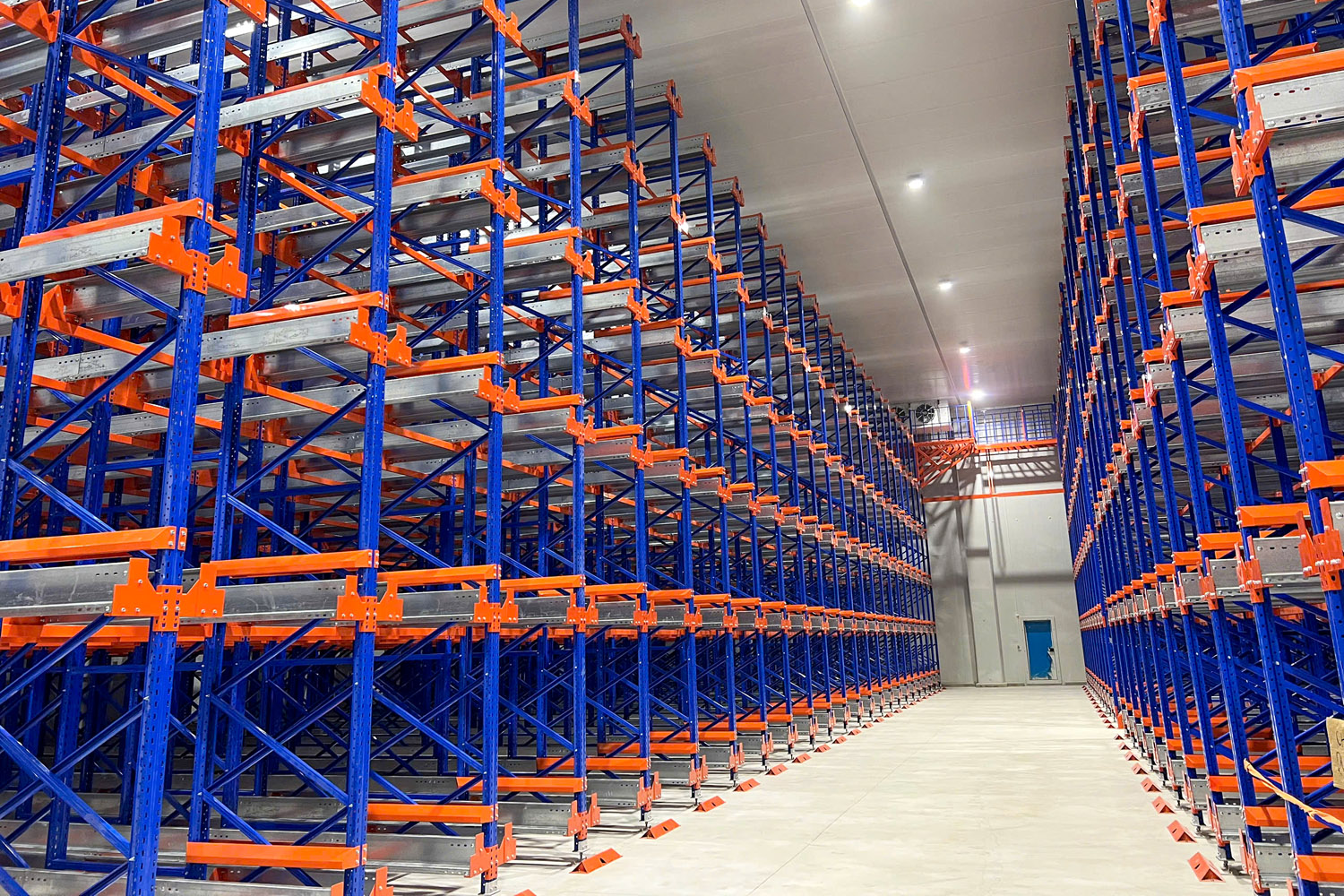
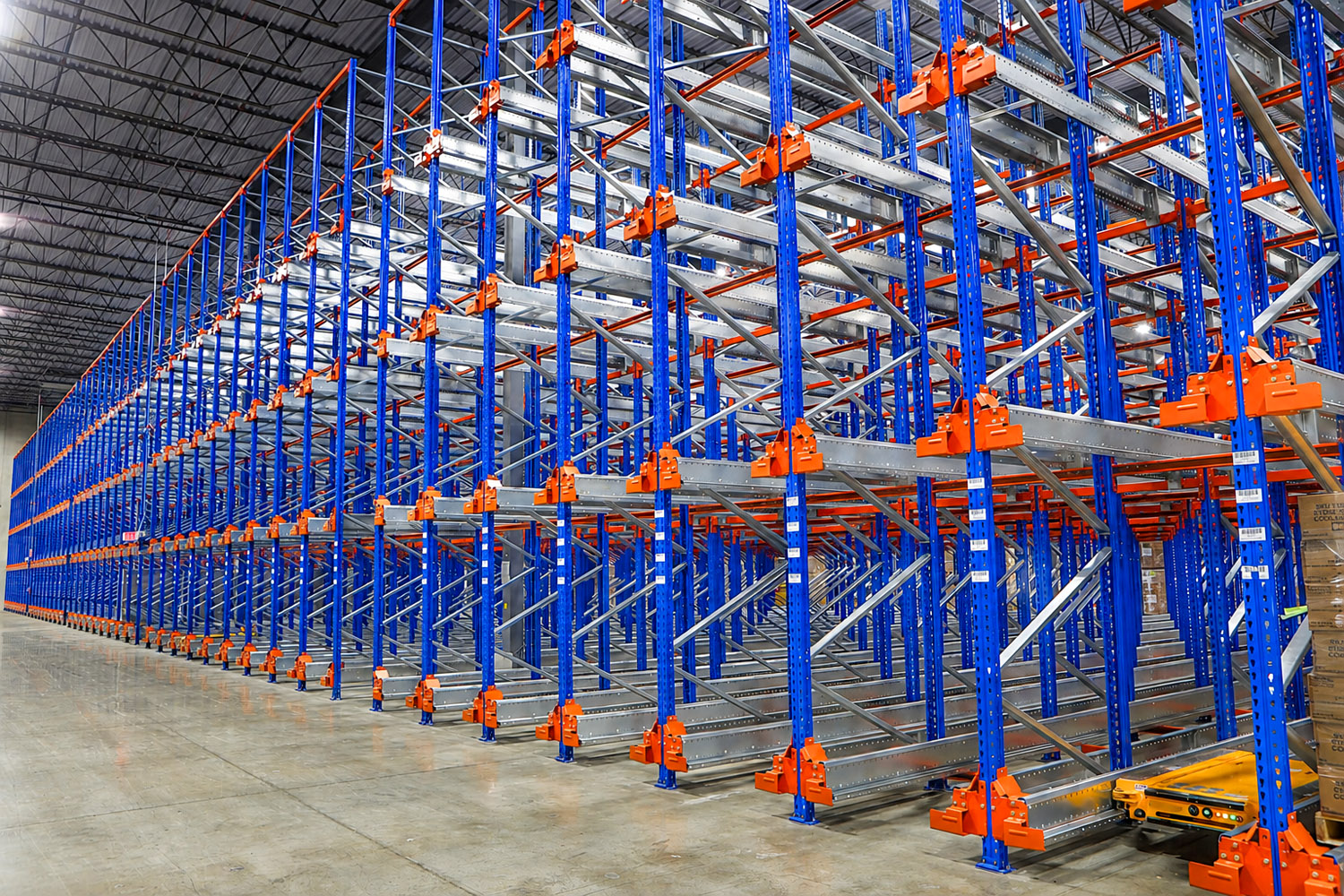
The biggest advantage of a Shuttle Racking System is higher storage density. Because forklifts no longer need to travel deep into each storage lane, the system reduces the number of aisles required. More warehouse floor space can therefore be converted into pallet storage positions.
For Australian businesses dealing with high warehouse rental costs or limited expansion options, shuttle racking can help delay or avoid the need to move into a larger facility. This benefit is especially valuable in cold storage, 3PL, FMCG, food and beverage, manufacturing and retail distribution environments, where pallet volume is high but floor space is limited.
Faster pallet handling and reduced forklift travel
A shuttle system improves productivity by separating forklift movement from in-lane pallet movement. In manual deep-lane storage systems, forklift drivers spend time entering lanes, aligning pallets, reversing and manoeuvring carefully around the racking structure. With a shuttle system, the forklift places the pallet at the lane entrance, while the shuttle handles the repetitive movement inside the rack.
This helps reduce forklift travel, shorten handling cycles and improve pallet flow in high-volume operations.
Safer warehouse operations
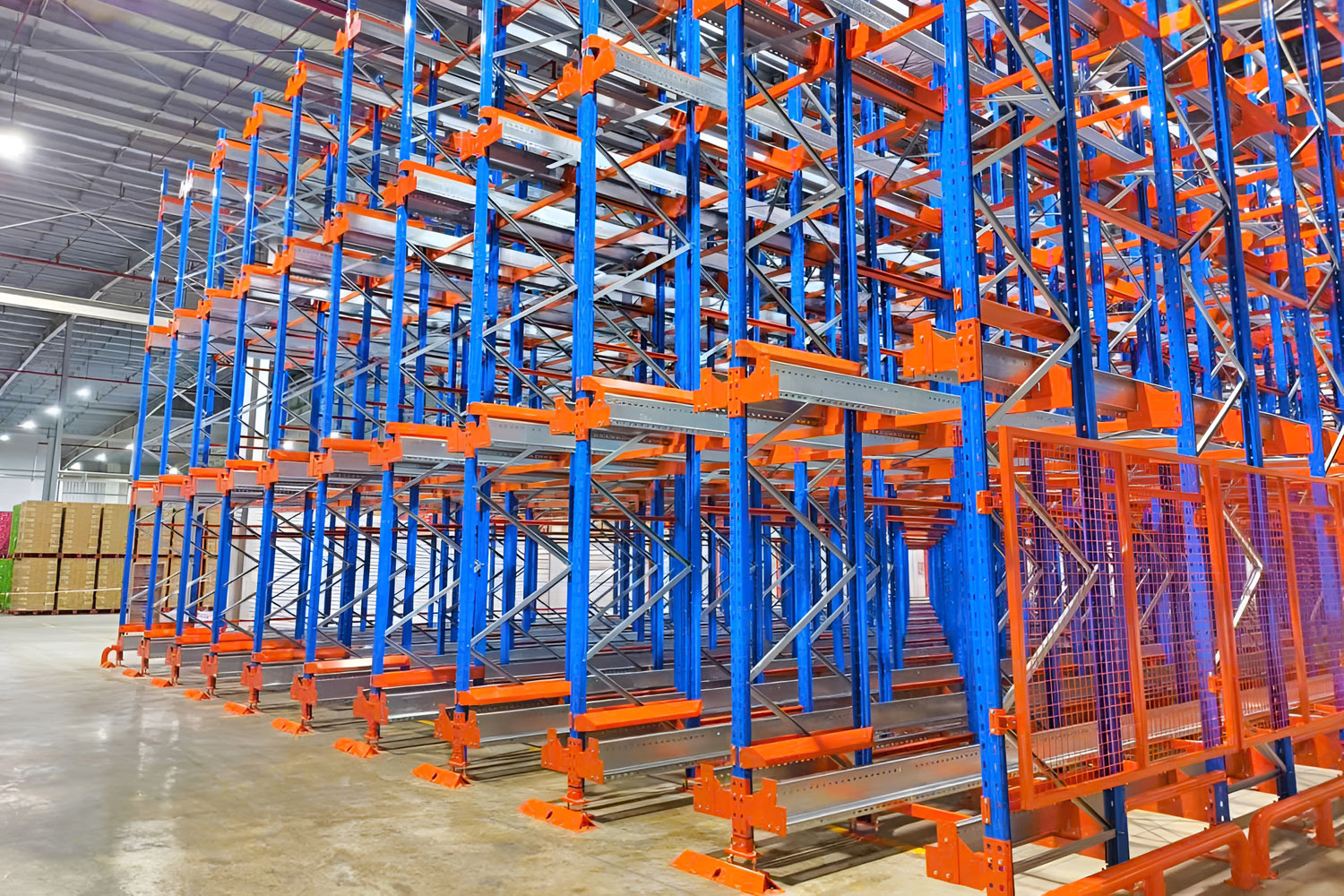
Safety is one of the key reasons businesses consider shuttle racking. By reducing forklift movement inside the racking structure, a shuttle system can lower the risk of impact damage to uprights, beams and guide components. This matters because racking damage can affect load capacity, structural stability and warehouse safety.
Shuttle racking also helps reduce manual handling errors during pallet placement and retrieval. For warehouses operating at high throughput, this can support safer and more consistent daily operations.
Lower long-term operating cost
A shuttle system usually requires a higher initial investment than selective pallet racking or basic drive-in racking. However, the business case should be assessed based on total operating cost, not just equipment cost.
Although shuttle racking can require a higher upfront investment, it can create value by increasing pallet capacity, reducing manual movement, improving safety and making better use of expensive warehouse space.
| Cost factor | Conventional racking | Shuttle Racking System |
|---|---|---|
| Initial equipment cost | Lower | Higher |
| Storage density | Medium | High |
| Forklift travel | Higher | Lower |
| Labour dependency | Higher | Lower |
| Rack impact risk | Higher in deep-lane systems | Lower |
| Suitability for high-volume SKUs | Moderate to strong | Strong |
| Automation readiness | Limited | Strong |
Applications of Shuttle Racking System
A Shuttle Racking System performs best in warehouse environments where storage density, pallet throughput and operational efficiency are critical. It is particularly useful for businesses that handle large pallet volumes, repeated pallet movements and high-capacity storage requirements.
3PL and logistics warehouses
3PL providers often need to store large volumes of goods for multiple customers while maintaining fast inbound and outbound operations. A Shuttle Racking System is useful when a 3PL warehouse manages customer-specific pallet groups, high-volume SKUs, seasonal inventory or high dispatch requirements. The system allows operators to group pallets by lane and improve space utilisation, rather than relying only on conventional selective racking.
Cold storage, chilled storage and frozen food warehouses
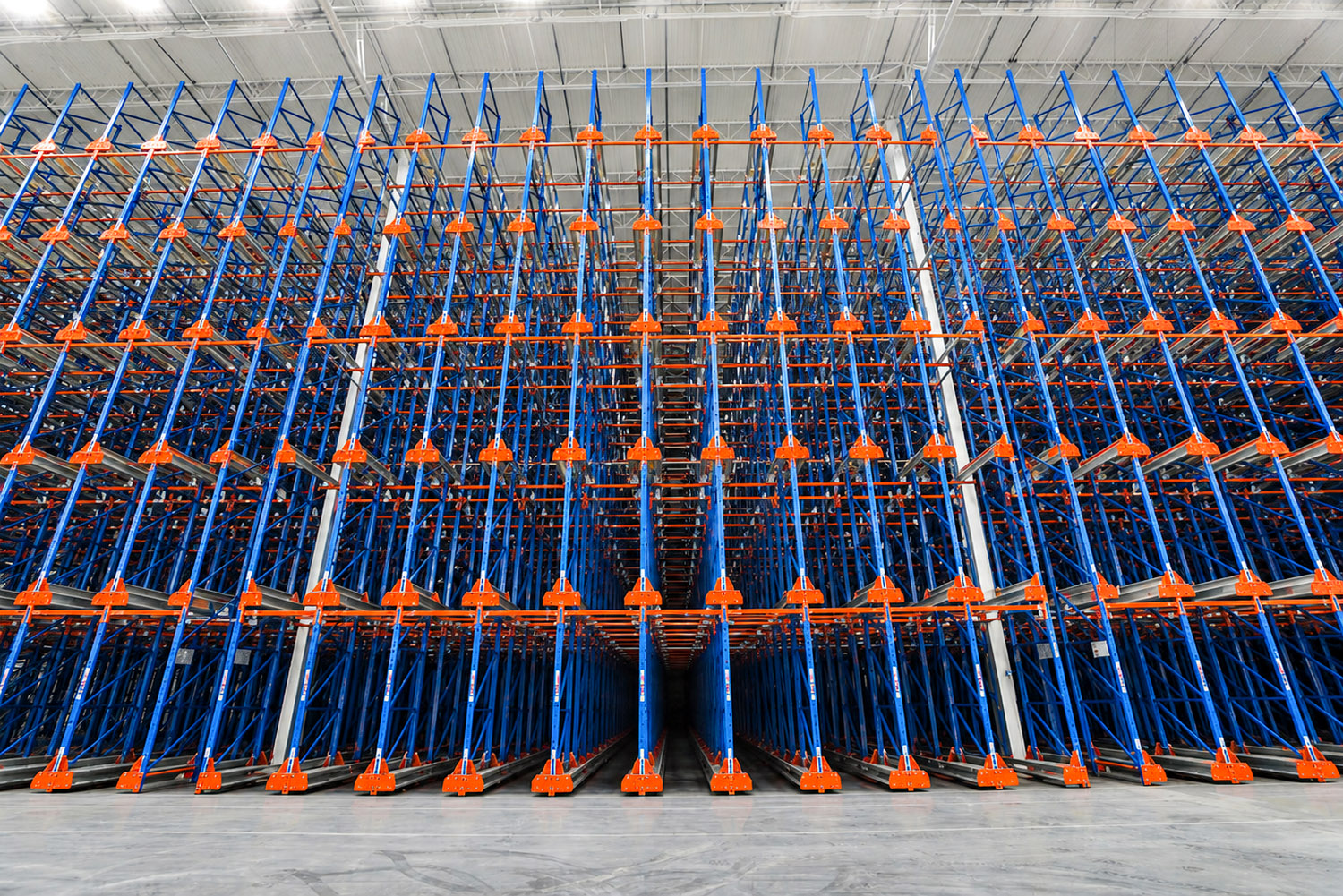
Cold storage is one of the strongest applications for shuttle racking.
A Pallet Shuttle Racking System is especially suitable for:
- Frozen seafood
- Dairy products
- Meat and poultry
- Packaged frozen food
- Beverage distribution
- Temperature-controlled 3PL warehouses
- Because cold storage space is expensive to build and operate, shuttle racking helps businesses maximise storage capacity while maintaining efficient pallet handling.
Food and beverage distribution
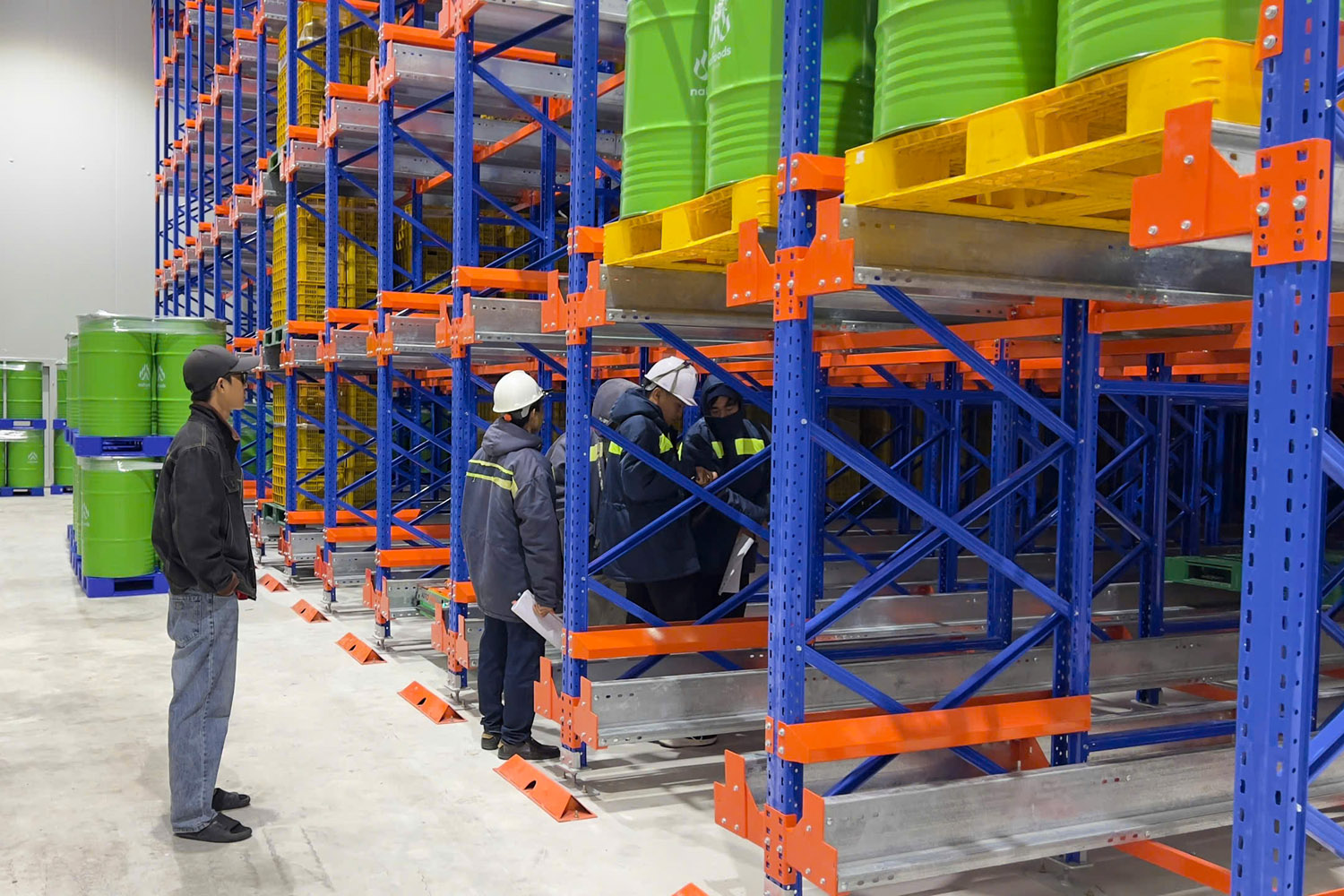
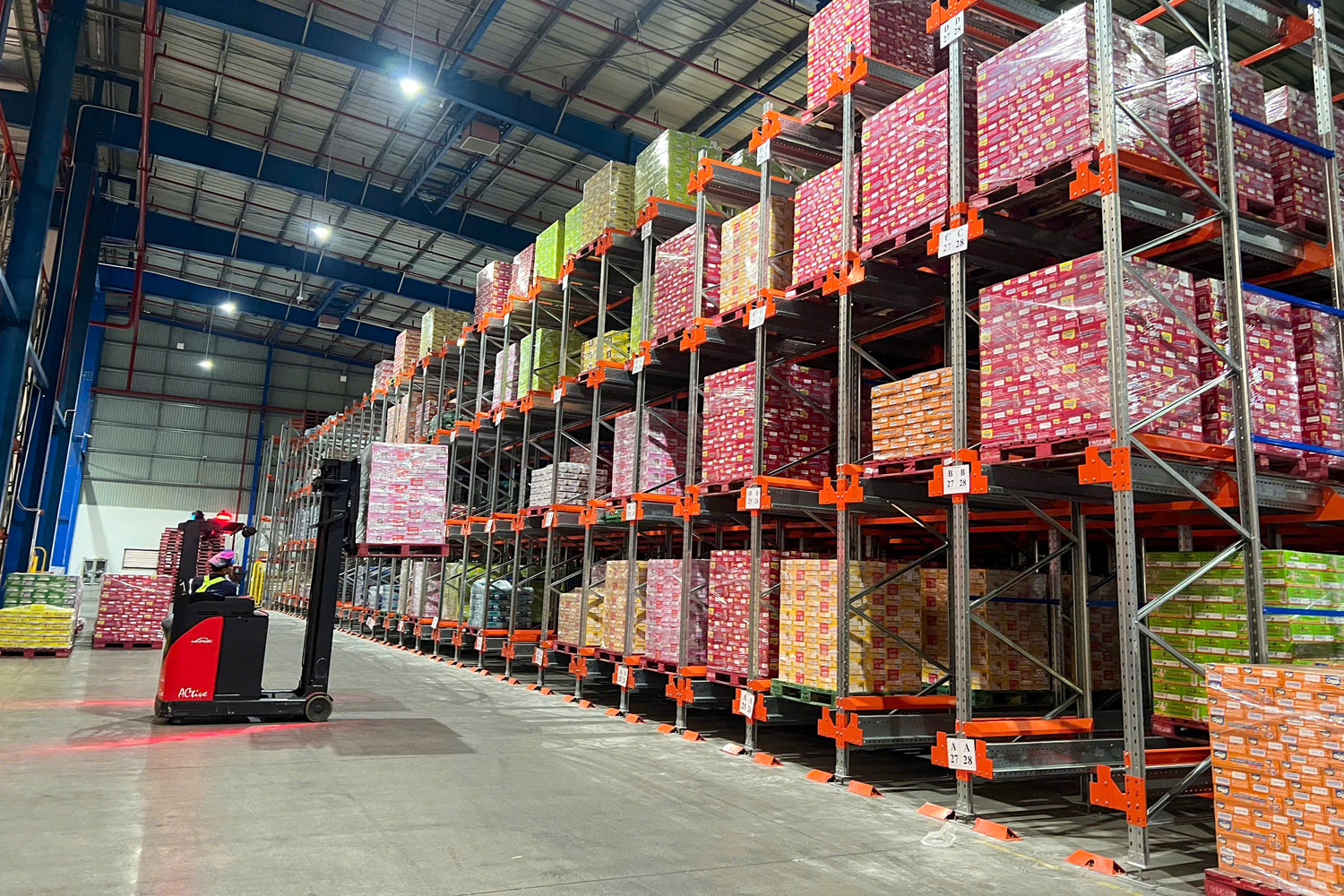
Food and beverage warehouses often require both high-density storage and controlled inventory rotation. For non-perishable goods or products with longer shelf lives, LIFO shuttle racking can provide very high storage density. For products with expiry dates, a FIFO layout can support better stock rotation and more disciplined dispatch operations.
This makes shuttle racking suitable for beverage pallets, packaged food, ingredients, FMCG products and promotional stock.
Manufacturing and production buffering
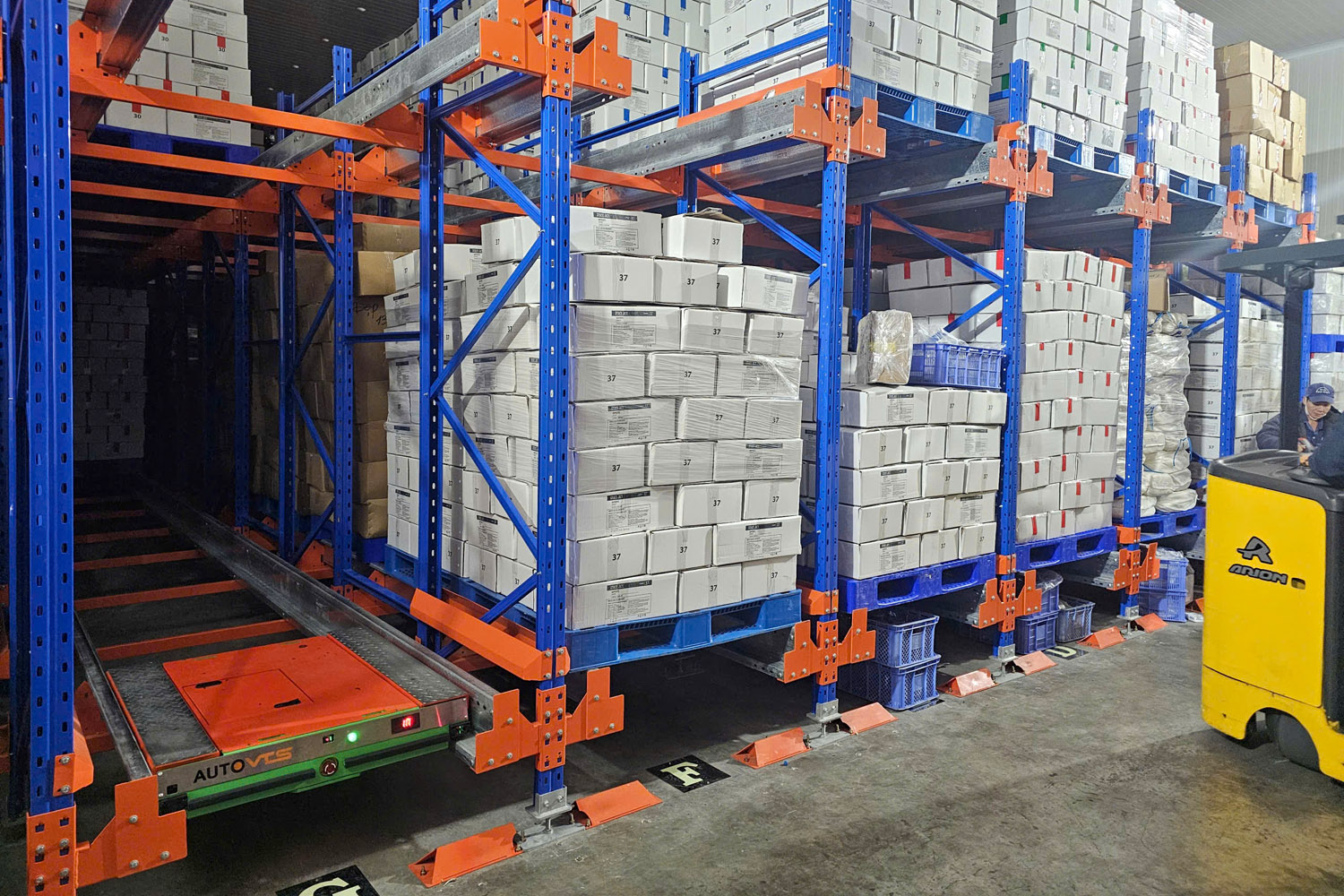
Manufacturers can use a Pallet Shuttle System to store raw materials, work-in-progress goods or finished products by batch.
Common applications include:
- Raw material staging
- Finished goods storage
- Packaging material storage
- Production buffers
- Export pallet consolidation
- This is useful when production runs generate large quantities of similar products that need to be stored temporarily before dispatch.
Retail and e-commerce distribution
Retail and e-commerce warehouses often handle fast-moving inventory, seasonal demand and promotional goods. A shuttle racking system is not always the best solution for every SKU, especially when a warehouse needs direct access to thousands of individual pallet positions. However, it can be highly effective for high-volume products, reserve storage and replenishment buffers.
Why choose Vinatech’s Shuttle Racking for your warehouse?
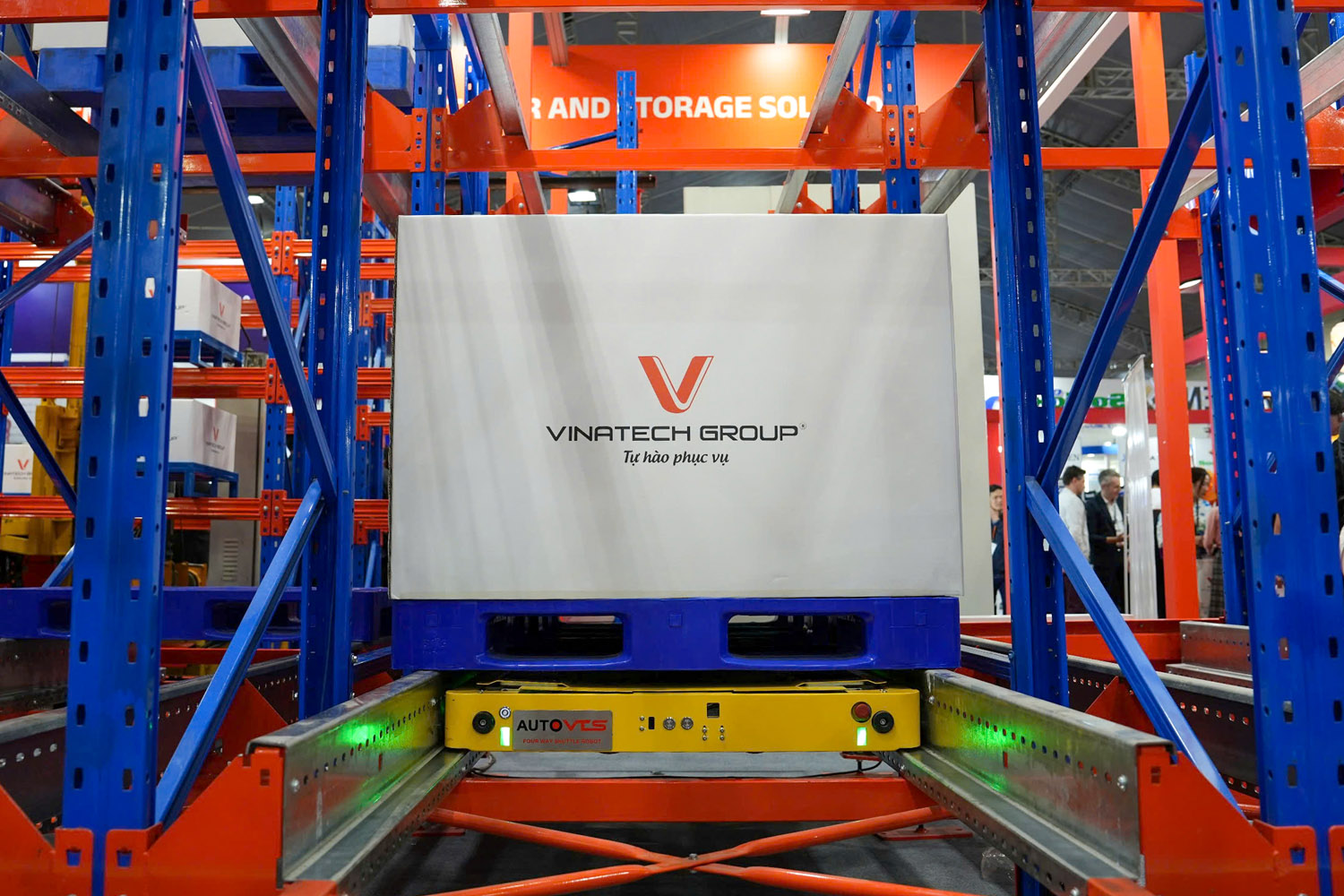
Vinatech Australia is positioned as a storage solutions partner for businesses that need more than basic pallet racking. Its shuttle racking solution is designed to support higher storage density, safer pallet handling and more efficient warehouse operations.
Engineering-led design for Australian warehouses
Vinatech Australia provides consultation, warehouse surveys and 3D design support to help businesses visualise the layout before implementation. This is particularly useful for warehouse managers comparing selective racking, drive-in racking, double-deep racking, pallet flow racking, mobile racking, AS/RS and shuttle systems.
AS 4084-aligned safety focus
Australian businesses need racking systems that are designed, installed and maintained in line with relevant safety requirements. AS 4084 is one of the key standards for pallet racking design, operation and maintenance in Australia. Vinatech Australia states that its racking systems are certified AS4084-2023.
Vinatech Australia supports businesses from planning and installation to warranty, maintenance and replacement when required.
Take the Next Step in Warehouse Automation
Unlock a new level of density and efficiency in your warehouse. The Vinatech Shuttle Racking System offers a powerful and cost-effective way to automate your storage operations and gain a competitive edge.
Contact Vinatech Australia today for a free, no-obligation consultation. Let us demonstrate how a Shuttle Racking solution can transform your facility. Request a quote and discover your potential return on investment.
- Hotline: 0406 916 355
- Email: info@vinatech.com.au
- Address: 34 Paramount Bvd, Cranbourne West VIC 3977, Australia
FAQ About Shuttle Racking System