



Pallet racking systems have become an indispensable storage solution in today’s modern warehouses. By maximising vertical space, organising goods systematically, and enabling quick handling with forklifts, these systems allow businesses to run safer, cleaner, and more efficient operations.
Key Components of a Pallet Racking System
Understanding the key components of a pallet racking system is essential for designing a warehouse storage solution that is safe, efficient, and flexible. Most pallet racks are made from cold-rolled steel, a material known for its strength and durability, allowing the system to handle heavy loads with ease. At the same time, pallet racking is designed to be adaptable, giving businesses the flexibility to adjust and customize their storage setup to meet different inventory needs.
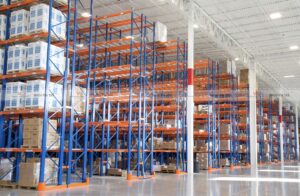
Uprights and Frames
Uprights are the vertical steel columns that are designed to withstand heavy loads from stored goods and are typically anchored securely to the floor with baseplates to prevent tipping.
A key feature of uprights is the series of holes or slots running along their length, which allow horizontal beams to be attached and adjusted at various heights. This enables businesses to easily change the spacing between rack levels to accommodate different pallet sizes and product dimensions.
Frames are formed by connecting two uprights with diagonal bracing. This bracing system enhances rigidity, minimises lateral movement, and keeps the structure stable under heavy loads or accidental impacts.
In short, the combination of uprights and bracing components creates a solid steel framework that directly determines the load capacity and structural integrity of the entire pallet racking system.
Beams, Crossbars, and Decking
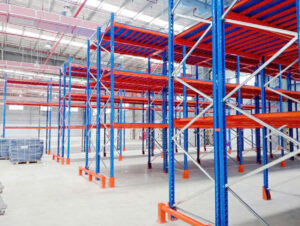
Beams are horizontal steel bars that connect directly to the uprights, forming the shelving levels that support pallets. They are the primary load-bearing elements of the system, determining both its storage capacity and operational stability.
Crossbars, positioned perpendicular across the beams, provide additional reinforcement and reduce the risk of pallets slipping or falling through gaps. They also make pallet placement easier, especially for smaller or irregular pallets. Acting as an added safety feature, crossbars help distribute uneven loads more evenly across the beams.
Decking, typically made of wire mesh or wooden panels, is placed over the beams and crossbars to create a solid surface for storing goods. Wire mesh decking is particularly popular as it allows light, air, and sprinkler systems to pass through effectively, ensuring compliance with fire safety regulations.
Together, beams, crossbars, and decking not only maximize load capacity but also enhance safety, flexibility, and the overall lifespan of the pallet racking system.
»» Read more: Selective Pallet Racking – Efficient Pallet Storage Solutions
Safety and Support Accessories
To enhance the stability and safety of pallet racking systems, various support accessories such as baseplates, anchors, bracing, and protective guards play a vital role in reinforcing the structure and preventing potential damage during operation.
Baseplates and Anchors
Baseplates are flat steel plates attached to the bottom of uprights. Their function is to evenly distribute the load from the entire racking system onto the floor, while also providing a stable surface that helps prevent sinking or tilting.
Anchors are used to secure the baseplates to the warehouse floor with bolts or specialised expansion fasteners. This anchoring system ensures that the racks remain firmly in place, preventing movement, rotation, or collapse caused by forklift impact, mechanical vibrations, or even seismic activity.
In Australia, the AS 4084 standard requires pallet racking systems exposed to forklift operations to be anchored with multiple fasteners per baseplate. This regulation is designed to guarantee load-bearing capacity, long-term stability, and compliance with safety requirements.
Proper anchoring not only protects the structural integrity of the racks and stored goods but also plays a critical role in reducing accident risks, creating a safer working environment for warehouse personnel.
Bracing and Protective Guards
Bracing is installed in the form of diagonal or horizontal bars connecting the uprights, enhancing rigidity and keeping the racking frame upright. This reinforcement protects pallet racks from lateral movement or deformation under heavy loads. Common types of bracing include K-bracing, X-bracing, and Z-bracing, each providing different levels of stability depending on rack design and seismic resistance requirements.
Protective guards act as an important “shield,” safeguarding racking systems from damage caused by forklifts or other warehouse equipment. Common options include column protectors, side guards, and end-of-aisle guards. These accessories absorb impact, minimising damage to both the racking structure and handling equipment, thereby extending system lifespan and improving overall warehouse safety.
In addition, depending on storage needs, businesses can incorporate specialised accessories to optimise performance. These may include crossbars for added pallet support, decking (wire mesh, steel, or wooden panels) for secure surfaces, and custom holders for cylinders or coils. Such components not only increase flexibility but also ensure that goods are stored safely and appropriately according to product characteristics.
»» Read more: A Glossary of Common Pallet Racking Terms You Need to Know
Installation and Maintenance Best Practices
Ensuring the longevity and safety of any pallet racking system begins with proper installation, secure anchoring, and is sustained through regular inspections and maintenance.
Secure Assembly and Floor Anchoring
Proper installation and floor anchoring are critical steps to ensure stability and operational safety. The process begins with preparing the site, accurately marking positions, and erecting the upright frames in precise alignment. Horizontal beams are then connected to the uprights, creating balance and providing the correct spacing for pallet storage.
Once the basic frame is in place, technicians secure the baseplates to the concrete floor using specialised drills. The drilled holes must be thoroughly cleaned with a vacuum or wire brush to guarantee proper adhesion before inserting anchors.
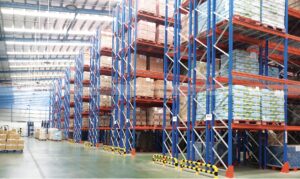
After installation, the entire pallet racking system should be carefully inspected for balance, load-bearing capacity, and joint stability. Properly anchoring pallet racks not only prevents movement caused by forklifts or collisions within the warehouse but also protects the structure against environmental vibrations or seismic activity. This step is considered a fundamental requirement in the standard design of any pallet racking system, helping to ensure long-term durability, safety, and reliability.
Routine Inspections and Repairs
Quarterly detailed inspections should focus on the condition of joints, baseplates, floor anchors, and any signs of rust or component damage. This step is essential for identifying potential safety risks in time and maintaining the structural integrity of the racking system.
In addition to internal checks, businesses should arrange for a comprehensive annual assessment conducted by qualified experts to ensure compliance with warehouse safety standards. During these evaluations, special attention must be given to tightening bolts, replacing damaged components, removing defective pallets, and updating load capacity signage. Safety accessories such as bracing, column protectors, and end-of-aisle guards should also be inspected regularly to confirm their effectiveness.
Maintenance should always follow the manufacturer’s guidelines and comply with AS 4084 standards. Furthermore, modern inventory management systems should record accurate data on the size and weight of stored goods, ensuring that racking is always used within its designed load capacity. Above all, it is crucial to measure the weight of each unit load before placing it on the rack to prevent overloading and potential structural failure.
Choosing the Right Pallet Racking System for Your Needs
Selecting the ideal pallet racking system begins with understanding the different types available and evaluating the key factors that influence performance, safety, and cost-efficiency for your warehouse operations.
Different Types of Pallet Racks
There are several types of pallet racking systems, each with its own advantages and limitations suited to different storage needs:
- Selective Pallet Racks: The most common and versatile option, offering direct access to every pallet. However, they require wider aisles and provide lower storage density.
- Drive-In Pallet Racks: Operate on a LIFO (Last In, First Out) principle, best suited for homogeneous products with fewer SKUs and low turnover rates.
- Push-Back Pallet Racks: Use a cart-on-rail system where new pallets are loaded from the front, pushing older pallets backward. This design offers higher storage density than selective racks but typically supports fewer SKUs.
- Pallet Flow Racks: Operate on a FIFO (First In, First Out) principle, ideal for products with shorter shelf lives or where expiry date control is critical.
The choice of pallet racking system ultimately depends on your inventory characteristics, including SKU count, turnover rate, pallet size and weight, as well as the level of accessibility required.

Factors to Consider Before Buying
When investing in a pallet racking system, the following factors should be carefully considered:
- Load Capacity: Ensure the racking structure can safely support the weight and type of goods being stored.
- Warehouse Environment: Take into account ceiling height, temperature conditions (e.g., cold storage), and any space limitations.
- Budget: Balance the initial investment with expected operational efficiency and long-term maintenance costs.
- Scalability: Choose a system that can be easily reconfigured or expanded as storage needs and business growth evolve.
Why Choose Vinatech for Your Pallet Racking Solutions
When it comes to building a warehouse that is safe, efficient, and scalable, choosing the right partner is just as important as selecting the right racking system. Vinatech Australia is a trusted international manufacturer and supplier of pallet racking systems, with proven expertise across multiple industries and diverse storage requirements.
Beyond delivering durable, high-quality products, Vinatech provides consulting, layout design, and professional installation services to help Australian businesses maximise floor space, improve accessibility, and streamline warehouse operations. Whether you operate in retail, manufacturing, logistics, or cold storage, Vinatech offers reliable solutions tailored to local conditions.
With Vinatech Australia, you gain not only premium pallet racking systems but also a long-term partner committed to safety, efficiency, and sustainable growth for your warehouse operations in Australia.
𝐕𝐢𝐧𝐚𝐭𝐞𝐜𝐡 𝐀𝐮𝐬𝐭𝐫𝐚𝐥𝐢𝐚 – 𝐒𝐦𝐚𝐫𝐭 𝐖𝐚𝐫𝐞𝐡𝐨𝐮𝐬𝐞 𝐒𝐨𝐥𝐮𝐭𝐢𝐨𝐧𝐬
- Website: https://vinatech.com.au/
- Phone number: 0485 083 868
- Email: info@vinatech.com.au
- Address: 34 Paramount Bvd, Cranbourne West VIC 3977, Australia

William Harris is the Production Director at Vinatech Australia, with more than 10 years of experience in industrial warehouse racking, manufacturing, warehouse optimisation and smart storage technologies. His professional background combines engineering, production management and warehouse operations, enabling him to oversee the development of storage systems designed for safety, durability, efficiency and long-term operational performance.