



Warehouse Storage Density is a critical factor that defines how effectively a business utilizes its warehouse space. It reflects the balance between maximizing available storage capacity and minimizing operational and facility costs, directly influencing overall productivity and efficiency within the supply chain.
What is Warehouse Storage Density?
In logistic, warehouse storage density is a key metric that indicates how efficiently the available floor area and vertical space are utilized to store goods. In other words, it is a matter of space optimization, how to store the maximum amount of inventory while still ensuring smooth inbound and outbound operations.
For warehouse systems operating under dedicated or fixed storage policies, space requirements often fluctuate depending on seasonality or production volume. When storage density is too low, valuable space is wasted and operating costs increase; conversely, when density is too high, movement, picking, and organization reduce overall efficiency.

Therefore, in modern warehouse management, storage density is not merely a technical indicator but a strategic factor that balances space optimization and operational performance. Different storage solutions have a direct impact on this density:
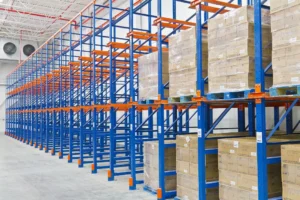
- High-density systems, such as drive-in racking or mobile shelving, increase storage capacity within the same footprint and are ideal for products with long-term storage or slow turnover.
- Low-density systems, such as selective pallet racking, prioritize accessibility and faster picking, making them suitable for high-turnover goods, though they require more floor space.
»» Read more:
Why Calculate Warehouse Storage Density?
Understanding and calculating warehouse storage density brings significant practical benefits, helping businesses optimize costs, space utilization, and overall operational efficiency.
- Reduced operating costs: By maximizing the use of available space, businesses can minimize the need for warehouse expansion or rental of additional facilities. Higher storage density reduces rental expenses, energy consumption, and maintenance costs associated with unused areas.
- Improved inventory management: Knowing the ratio of stored goods to total warehouse capacity allows managers to monitor space utilization more effectively, avoiding both overcapacity and underutilization. This supports more accurate inbound and outbound planning and accelerates product turnover.
- Increased storage density: Allowing more products to be stored within the same footprint enhances inventory control by improving turnover efficiency, picking accuracy, and order fulfillment speed.
A solid understanding of warehouse storage density directly influences layout and equipment decisions. It guides warehouse managers in choosing the right racking systems, aisle widths, and material handling equipment, such as forklifts or automated picking solutions, to achieve the best balance between accessibility and density.
Key Metrics and Factors in Calculating Warehouse Storage Density
To accurately calculate warehouse storage density, businesses must consider a range of key factors and metrics that reflect the real utilization of available space.
Measuring Warehouse Dimensions
A common way to assess warehouse efficiency is by calculating the percentage of usable storage space currently in use. This metric is determined by dividing the total number of storage locations currently occupied by the total number of available storage positions in the warehouse.
A higher utilization rate means the warehouse space is being used efficiently, maximizing storage capacity. A lower rate indicates underused or poorly designed space. Most businesses target around 85% utilization to balance capacity and operational flexibility.
To achieve an accurate calculation, it’s important to recognize that not all warehouse space can be used for storage. Areas such as offices, aisles, loading docks, forklift charging stations, and emergency exits must be excluded from the calculation. The remaining space is considered the “usable area”, the true foundation for rack placement, forklift pathways, and inventory storage zones.
Understanding Pallet and Rack Dimensions
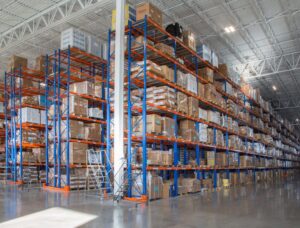
The most common pallet size today is 1200mm x 1000mm (ISO standard), however, there are several variations, such as 1165mm x 1165mm (Australian standard) and 1219mm x 1016mm (North American standard). Upright pallet racks typically range in height from 8 to 24 feet, with 12 and 16 feet being the most commonly used sizes in the industry.
Determining warehouse storage density requirements depends on several key factors:
- Weight and size of stored products: Bulky or heavy goods require more spacing and sturdier rack structures, which reduces the number of pallets that can be stored.
- Inventory levels needed to meet demand: Each business has different inventory strategies, such as seasonal stock or safety reserves, that directly affect storage capacity needs.
- Space for personnel and equipment operations: Forklifts, conveyors, and travel aisles require designated clearance areas to ensure both safety and operational efficiency.
Each racking system has a different load capacity, typically ranging from 500 kg to 2000 kg per level, depending on the material, height, and type of pallet used. When calculating storage density, determining the safe load capacity is essential to ensure structural integrity and operational safety.
⇒ Reference: https://igps.net/what-are-iso-standard-pallet-dimensions/
Step-by-Step Guide to Calculate Warehouse Storage Density
To accurately determine warehouse storage density, businesses need to combine both basic calculations and real operational factors within the warehouse.
Basic Calculation Formula
To calculate warehouse storage density, first determine the volume utilization ratio — the ratio between the total volume of stored goods and the total available warehouse volume. This index indicates the efficiency of warehouse space utilization, and businesses can clearly evaluate the efficiency of their current storage capacity utilization.
Regular monitoring of this metric helps identify potential problems in shelf layout, inventory management, or operational processes. Adjustments can then be made, such as increasing vertical storage heights, narrowing aisle widths, or implementing high-density racking systems.
Advanced Calculations Incorporating Operational Factors
When moving into advanced warehouse storage density calculations, the analysis goes beyond physical volume and must also account for various operational factors such as aisle width, stacking rules, safety clearances, equipment accessibility, and fire safety regulations.
Impact of Aisle Width and Stacking Rules
- Wider aisles improve forklift maneuverability but reduce total storage area.
- Narrow aisles increase density but may require specialized equipment like narrow aisle forklifts.
- Stacking rules, such as maximum pallet height and weight limits, affect vertical space utilization.
Stacking rules and storage height
- Stacking height depends on the type of goods, pallet strength and shelf load. Light, sturdy goods can be stacked higher, while fragile or heavy goods need to limit the number of stacking levels.
Safety & Access Adjustments
- Consideration should be given to minimum clearances to ensure air circulation, forklift visibility, and escape routes.
- A minimum clearance of 0.3 – 0.5 metres should be left between loads and walls or ceilings.
- Escape routes should be at least 1 metre wide and not be blocked by loads.
Best Practices to Optimize Warehouse Storage Density
To achieve optimal storage density while maintaining both operational efficiency and safety, businesses must combine the right racking system selection with a well-planned warehouse layout design.
Choosing the Right Racking System
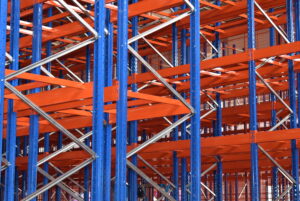
Selecting the appropriate racking system directly impacts storage density, operational performance, and overall warehouse costs. A properly designed racking system allows for maximum utilization of both vertical and floor space, while ensuring easy access for forklifts and warehouse staff.
In general, high-density racking increases storage capacity within the same footprint by minimizing aisle space and placing goods closer together. However, this can reduce flexibility and slow down product retrieval. Conversely, low-density racking allows for faster and easier access to goods but requires more floor space.
Choosing the right racking type should be based on product characteristics, turnover frequency, inventory rotation, and the level of automation in the warehouse. A balanced approach between density and accessibility helps optimize storage capacity, reduce operating costs, and enhance long-term warehouse efficiency.
Layout Optimization Strategies
In addition to racking selection, warehouse layout design plays a crucial role in optimizing storage density while maintaining safety and smooth operations. A well-organized layout maximizes available space, shortens travel distances, and improves overall productivity.
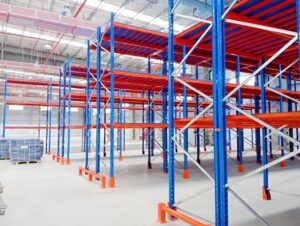
Instead of expanding the warehouse space, using high-rise racking systems or mezzanine structures can significantly increase storage capacity without incurring additional space costs. During the design phase, the warehouse’s clear height and equipment limitations must be considered to ensure that goods can be stored and retrieved safely at maximum height.
Optimizing aisle width is essential to balance storage density and safe movement. When well-designed, a warehouse layout can increase storage capacity by 10–30%, lower operating costs, and enhance daily material handling efficiency.
Key Factors Influencing Warehouse Storage Density
Warehouse storage efficiency depends not only on floor area and ceiling height but also on various technical and technological factors involved in its design and operation.
How Does Load Capacity Affect Storage Density?
Load capacity is a key factor influencing how goods are arranged and how densely they can be stored in a warehouse. Every pallet and racking system has its own load limits, designed to ensure safety and structural integrity during operation.
Understanding the different types of load capacities allows businesses to organize inventory properly, avoiding overloading that could damage equipment or compromise rack stability.
- Static load refers to the maximum weight a pallet can hold when resting on a flat, stable surface.
- Dynamic load is the maximum weight a pallet can support while being moved, typically one-third or one-quarter of its static load.
- Racking load indicates the weight a pallet can bear when supported between two beams in a racking system.
Exceeding these load limits can cause racks to bend, tilt, or collapse, leading to serious safety risks and costly damage. Therefore, when calculating storage density, it is essential to ensure that the total weight of stored goods is evenly distributed and within safe load limits for each rack position.
Underestimating load capacity may prevent businesses from utilizing their full storage potential, resulting in wasted space. Accurately determining load capacity helps maintain a balance between structural safety and optimal space utilization.
Can Technology Improve Storage Density Calculations?
Instead of relying on manual estimates, businesses today use Warehouse Management Systems (WMS) and digital tools to collect, analyze, and optimize spatial data in real time.
Modern WMS software offers powerful capabilities such as:
- Automatically tracking rack locations and capacity in real time, allowing precise monitoring of space utilization.
- Analyzing load weight and product volume, and issuing alerts when there is a risk of exceeding safe rack limits.
- Recommending optimal storage layouts, arranging goods based on size, weight, turnover rate, and suitable storage zones.
- Integrating with IoT sensors and automation systems to measure stacking height, load distribution, and storage density accurately across different warehouse areas.
With the support of technology, businesses can minimize human error, while optimizing warehouse layout and operational workflows based on real, data-driven insights.
»» Read more:
Why choose Vinatech Australia?
Vinatech Australia is a trusted partner for businesses seeking high-quality racking solutions that optimize storage space and investment costs.
With years of expertise in the design, manufacturing, and installation of warehouse racking systems and smart storage solutions, Vinatech stands out through its superior product quality, dedicated customer service, and flexible customization capabilities — delivering reliable, space-efficient solutions tailored to every warehouse’s operational needs.
—————————————————————————————————————
Vinatech Australia – Smart Warehouse Solutions
🌐 Website: https://vinatech.com.au/
☎️ Phone number: 0485 083 868
📩 Email: info@vinatech.com.au
📌 Address: 34 Paramount Bvd, Cranbourne West VIC 3977, Australia

William Harris is the Production Director at Vinatech Australia, with more than 10 years of experience in industrial warehouse racking, manufacturing, warehouse optimisation and smart storage technologies. His professional background combines engineering, production management and warehouse operations, enabling him to oversee the development of storage systems designed for safety, durability, efficiency and long-term operational performance.