
Automation in manufacturing is transforming the way products are made — combining advanced technology, robotics, and intelligent systems to create faster, safer, and more efficient production processes. By minimizing human error and optimizing every step of the workflow, automation helps businesses improve productivity, reduce costs, and maintain consistent product quality. As industries continue to innovate, automation stands at the heart of modern manufacturing, driving growth and competitiveness in a rapidly changing world.
What is Automation in Manufacturing?
Automation in manufacturing refers to the application of technology to perform production processes automatically, rather than relying entirely on manual labor. This includes the use of intelligent control software, integrated machinery, and industrial robots to operate production lines more smoothly, accurately, and efficiently.
The core goal of automation is to increase efficiency, reduce costs, and enhance production capacity. With real-time data and intelligent analytics, factories can optimize each stage of production, minimize errors, and maintain consistent product quality.

Beyond improving productivity, automation also helps businesses lower operational costs by eliminating repetitive tasks, reducing downtime, and maximizing resource utilization. Another key benefit is improved workplace safety, as machines can handle hazardous or physically demanding tasks — allowing workers to focus on creative, analytical, and decision-making roles.
According to the International Federation of Robotics, there are currently around 3.5 million industrial robots operating worldwide. This figure represents a year-on-year growth rate of over 30%, reflecting a strong surge in demand for automation technologies since the pandemic.
Read more: What is a Good Profit Margin? How to improve Profit Margins?
Benefits of Automation in Manufacturing
Automation offers numerous benefits, from increased efficiency to cost savings. By minimizing human intervention, businesses can reduce errors and enhance productivity. Moreover, automation can lead to significant improvements in quality control and data accuracy.
Increased Productivity and Efficiency
Automation in Manufacturing — the application of machinery, robots, and automated processes in production lines — allows tasks to be completed faster, more accurately, and with greater consistency than manual labor. As a result, businesses can shorten production and manufacturing times while enabling employees to focus on tasks that require higher levels of skill, critical thinking, and creativity.
When machines take over production stages, the risk of human error is almost entirely eliminated. Automated systems can operate with exceptional precision and stability, unaffected by fatigue or health factors like humans. Each product is monitored according to strict standards of accuracy and uniformity, helping businesses maintain low defect rates and improve overall quality.
In today’s competitive market, customers expect not only high-quality products but also reliable suppliers — those who can deliver on time and maintain consistent standards. Automation in Manufacturing helps companies control production schedules, ensure consistent output, and fulfill orders with greater accuracy. When customers receive their products on time and as expected, satisfaction increases — strengthening the company’s reputation and brand image in the marketplace.
Improved Worker Safety
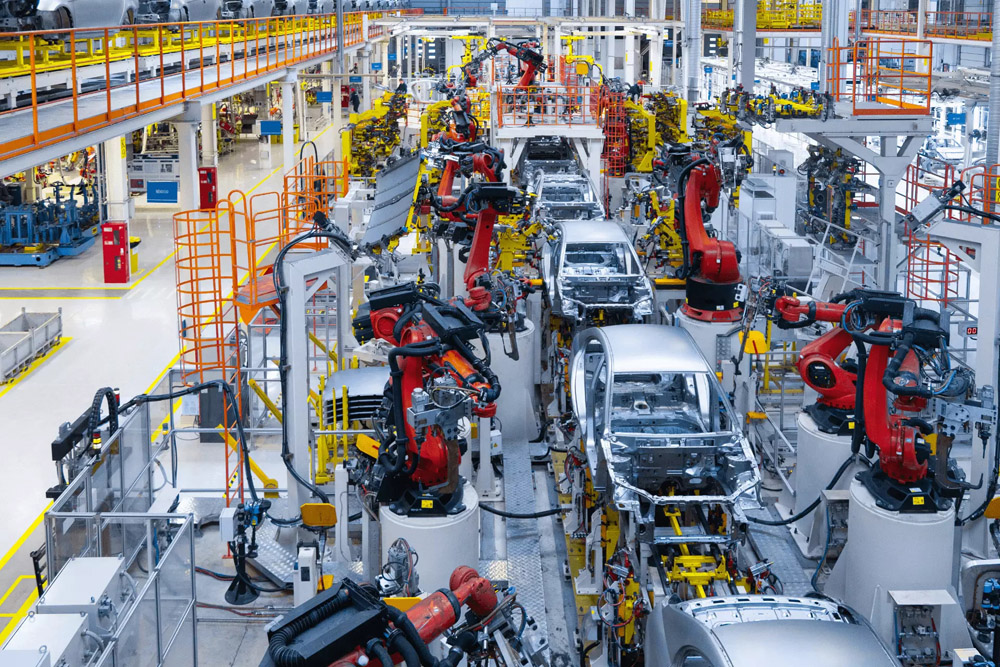
In many factories, automation takes over tasks involving heavy lifting, working in high-temperature environments, handling toxic chemicals, or performing repetitive motions that can cause fatigue and injury. For instance, robotic arms can manage hazardous materials or operate in confined spaces — areas where humans would face higher risks.
When machines handle these high-risk tasks, workers can focus on supervision, maintenance, or data-driven decision-making — roles that are safer and add greater value. This not only protects employees’ health but also helps businesses reduce downtime, compensation costs, and the pressure associated with unsafe working environments.
Reduced Operational Costs
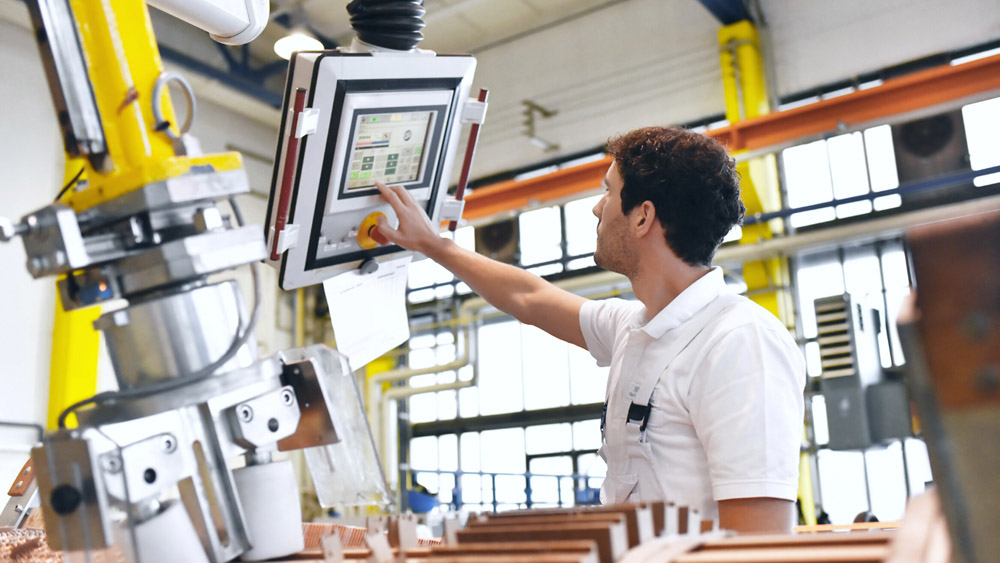
Automation in manufacturing helps businesses significantly reduce operational costs over time. While it may require an initial investment, the long-term benefits are well worth it. Automated systems and machinery can replace many human-driven processes while operating more smoothly, accurately, and with fewer errors. This not only saves on labor expenses but also optimizes the entire production process — from preparation to final output.
Beyond cost savings, automation also opens the door to more effective data collection and analysis. As processes become digital and interconnected, production data is automatically recorded in real time, instead of being compiled manually — which is time-consuming and error-prone. As a result, businesses can analyze trends, identify bottlenecks, and make more informed improvement decisions for the future.
Read more: Cost of Production: Key Costs & Calculation Guide
Challenges of Implementing Automation
Although automation in manufacturing offers numerous benefits for manufacturers, successfully implementing it requires organizations to overcome several key challenges during the process.
High Capital Investment
One of the biggest barriers to adopting automation is the high initial investment cost. Setting up automated systems often demands substantial spending on machinery, robots, control software, sensors, and integration equipment compatible with existing production lines.
For small and medium-sized enterprises, this investment can pose a significant challenge. In addition to equipment purchases, businesses must also consider the costs of installation, testing, employee training, and maintenance, all of which contribute to the overall expenditure.
However, despite the large upfront cost, automation should be seen as a long-term strategic investment. Over time, automated systems deliver clear benefits such as increased productivity, reduced labor costs, fewer production errors, and greater energy efficiency. Many companies find that the initial investment quickly pays off through operational savings and sustainable competitive advantages that automation provides.
Workforce Adaptation and Training
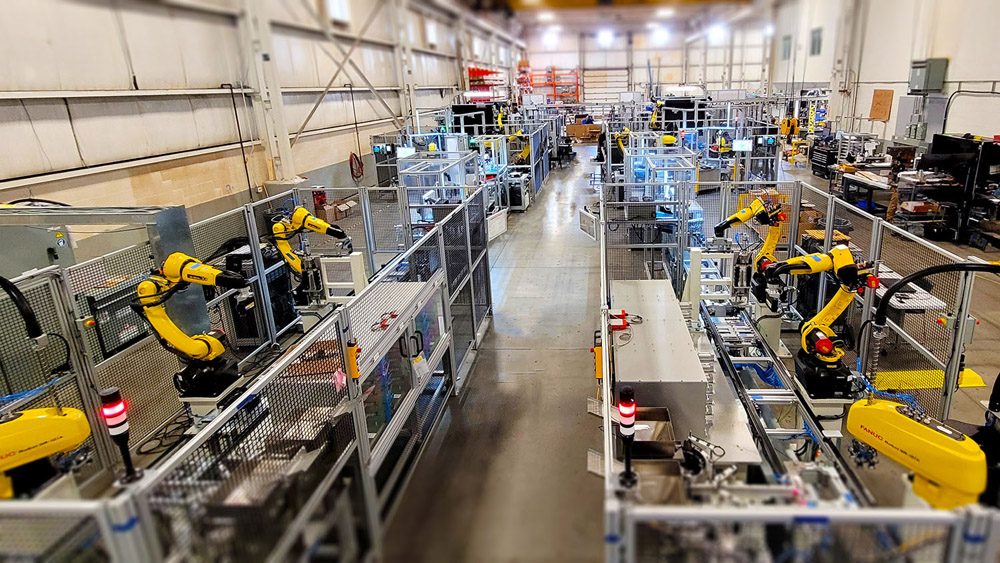
Automation doesn’t eliminate human jobs — it transforms them. Instead of performing repetitive manual tasks, employees now take on roles that involve operating, monitoring, and maintaining automated systems.
To ensure a successful transition, companies need to upskill their existing workforce. Employees should be trained to work alongside robots, use modern control software, and analyze production data. This not only improves operational efficiency but also enhances employees’ technical capabilities and long-term value within the organization.
Key Technologies in Manufacturing Automation
According to Deloitte’s 2025 Manufacturing Report, 92% of surveyed manufacturers that automation in manufacturing and smart manufacturing will be the key drivers of competitiveness over the next three years. By adopting, connecting, and optimizing technologies such as sensors, data systems, physical automation, and artificial intelligence (AI), manufacturers can pave the way to move faster and further toward fully integrated smart manufacturing operations.
Robot công nghiệp và robot cộng tác
Industrial Robots and Cobots
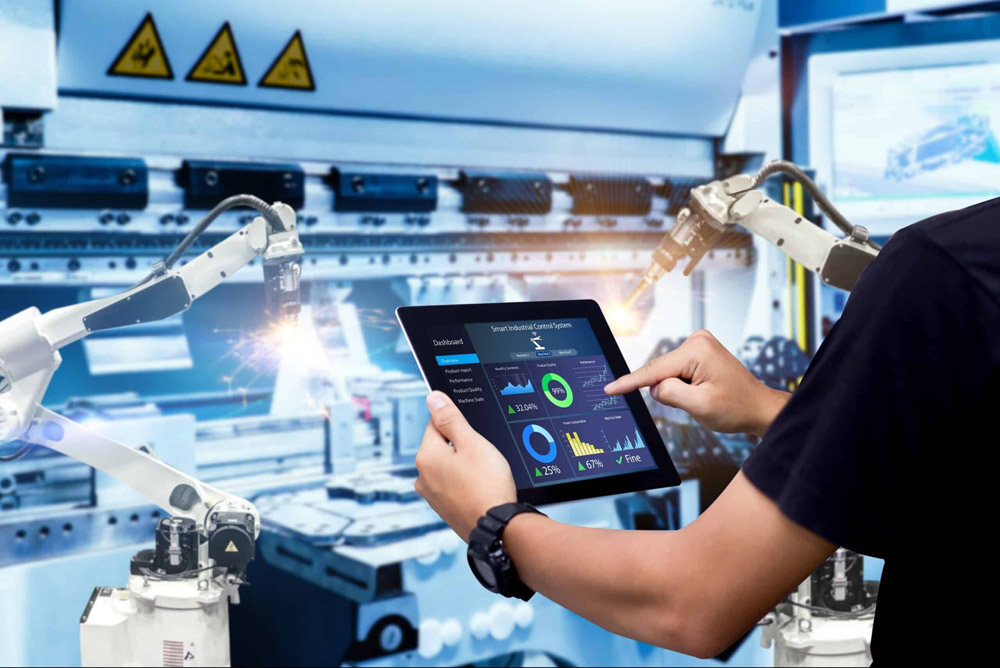
Traditional industrial robots are typically large, powerful machines designed to perform repetitive tasks that require high precision, such as welding, painting, assembling, or packaging. These robots operate within designated safety zones and can work at exceptional speed and accuracy, making them ideal for mass production environments in industries like automotive and electronics manufacturing.
In contrast, collaborative robots (cobots) are designed to work safely alongside humans. Unlike traditional robots that must be separated by safety barriers, cobots are equipped with advanced sensors, force control systems, and vision technology that allow them to detect human presence and avoid collisions. Cobots are especially well-suited for small and medium-sized enterprises (SMEs) thanks to their flexibility, easy reprogramming, and ability to quickly switch between different tasks.
By combining industrial robots and cobots, businesses can build a balanced automation model — leveraging the power and speed of traditional robots while benefiting from the adaptability and user-friendly nature of cobots. This integration not only increases productivity and operational efficiency but also enables factories to scale their operations safely and intelligently.
IoT and AI Integration in Manufacturing
The combination of the Internet of Things (IoT) and Artificial Intelligence (AI) is transforming modern manufacturing into a smart, data-driven ecosystem. These two technologies work closely together to provide real-time insights, support more accurate decision-making, and optimize every stage of the production process.
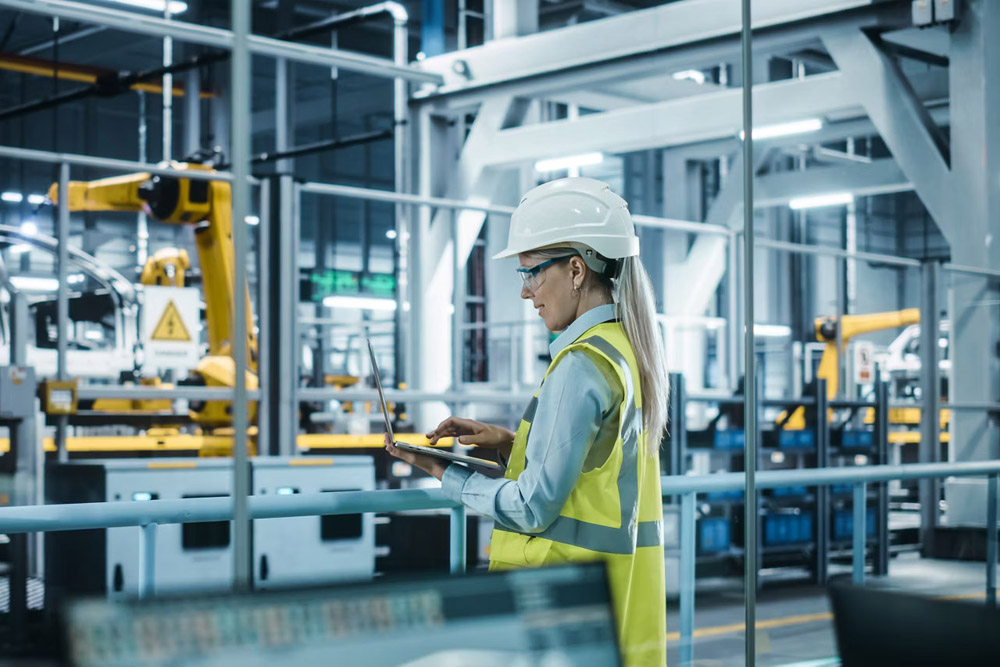
With IoT-enabled smart sensors, machines and equipment can continuously collect and share data on performance, temperature, vibration, and energy consumption. This data is then analyzed by AI-powered systems to identify operational patterns, predict equipment failures, and recommend proactive maintenance — a process known as predictive maintenance. By detecting potential issues before they cause disruptions, manufacturers can reduce repair costs and avoid unplanned downtime.
Beyond maintenance, automation in manufacturing powered by AI and data analytics also helps optimize production scheduling, inventory management, and quality control. With the ability to process vast amounts of data, manufacturers can make faster, more accurate decisions — leading to improved efficiency, reduced waste, and smarter operations overall.
Choosing the Right Automation Partner
Selecting the right automation partner is one of the most critical decisions when a business begins its journey toward smart manufacturing. A strong partner not only provides advanced technology but also ensures that the solution is designed to align with your company’s goals, operations, and long-term growth strategy.
When evaluating automation providers, businesses should consider several key factors:
- Experience and Expertise: Choose a partner with proven experience in your specific industry. Their track record demonstrates a clear understanding of production challenges and the ability to deliver reliable, effective solutions.
- Technology Offerings: Look for a provider that delivers modern, scalable automation technologies — from robotics and AI systems to control software and IoT integration.
- Customization Capabilities: Every business is different. The right partner should be able to design flexible, tailored solutions that fit your processes instead of offering one-size-fits-all systems.
- Support and Maintenance Services: Dependable after-sales support, technical assistance, and system maintenance are vital for ensuring long-term performance.
- Cost-Effectiveness: The best partner isn’t necessarily the cheapest, but the one who provides the best balance between quality, performance, and return on investment (ROI).
Ultimately, a trusted automation partner is more than a supplier — they are a strategic collaborator who helps your business implement, optimize, and expand automation solutions effectively and sustainably.
Vinatech Australia – Pallet Racking & Smart Warehouse Solutions
- Website: https://vinatech.com.au/
- Phone number: 0406 916 355
- Email: info@vinatech.com.au
- Address: 34 Paramount Bvd, Cranbourne West VIC 3977, Australia

My name is William Harris, and I am the Production Director at Vinatech Australia. I oversee the entire manufacturing operation for our industrial warehouse racking systems and the development of smart warehouse solutions.