

Vinatech Supplies Pallet Racking Systems Throughout Smithfield, NSW
Vinatech Australia supplies, designs and installs pallet racking in Smithfield and surrounding industrial areas across Western Sydney. We support warehouses, distribution centres, manufacturing facilities and logistics operations with storage systems tailored to each site’s capacity and operational requirements.
Our pallet racking services cover Smithfield and nearby areas including:
- Smithfield NSW 2164
- Wetherill Park
- Pemulwuy
- Greystanes
- Woodpark
- Guildford West
- Fairfield West
- Fairfield Heights
- Fairfield
- Yennora
- Prospect
- Villawood
- Horsley Park
Whether you are fitting out a new warehouse, expanding an existing facility or upgrading an inefficient storage layout, Vinatech can provide a complete solution from warehouse design and rack manufacturing to supply and professional installation.
Read more: Pallet Racking in Victoria
Our Pallet Racking Systems in Smithfield
Vinatech Australia provides a complete range of pallet racking systems in Smithfield, from conventional warehouse storage to high-density and automated solutions.
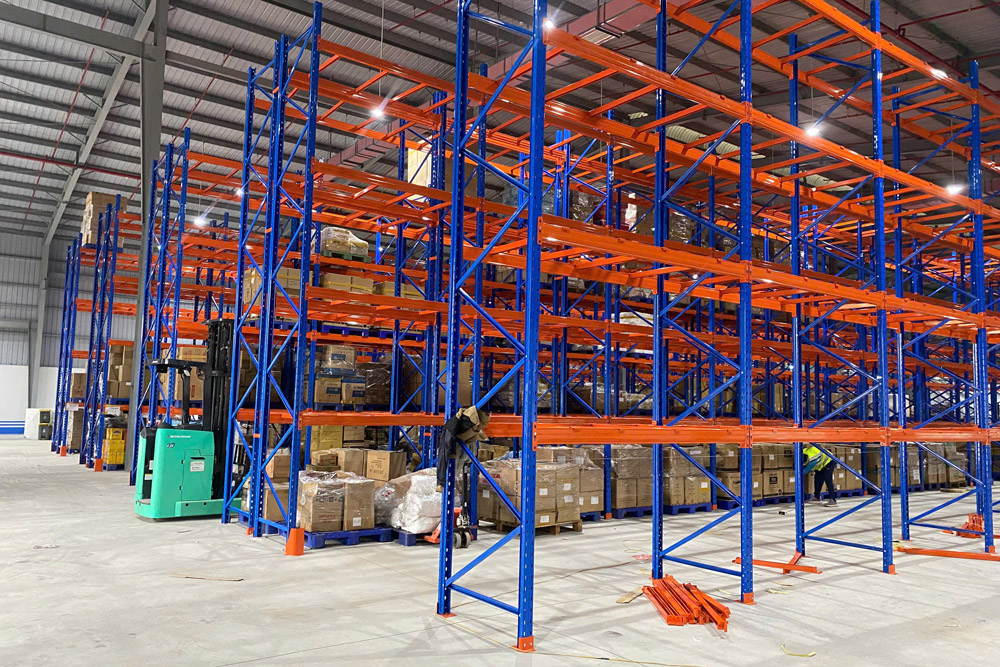
Selective Pallet Racking
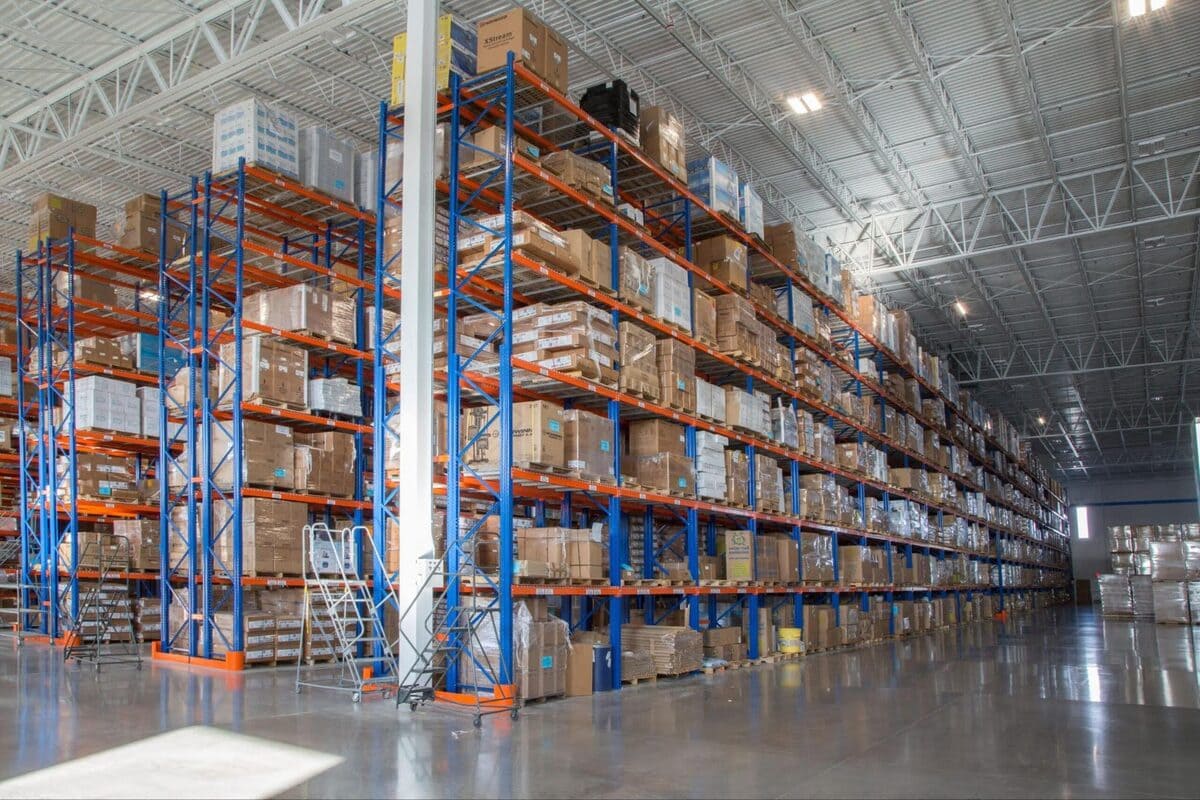
Selective Pallet Racking is one of the most widely used warehouse storage systems because it provides direct access to every pallet position. It is particularly suitable for Smithfield warehouses handling a large number of SKUs or products with frequent stock movement.
Key advantages:
- 100% direct access to individual pallets
- Ideal for high SKU variety
- Simple stock rotation and inventory management
- Easy to configure and expand
- Suitable for a wide range of forklifts
- Cost-effective for general warehouse applications
Its flexible configuration also allows beam levels and bay dimensions to be adapted to different pallet sizes and load requirements.
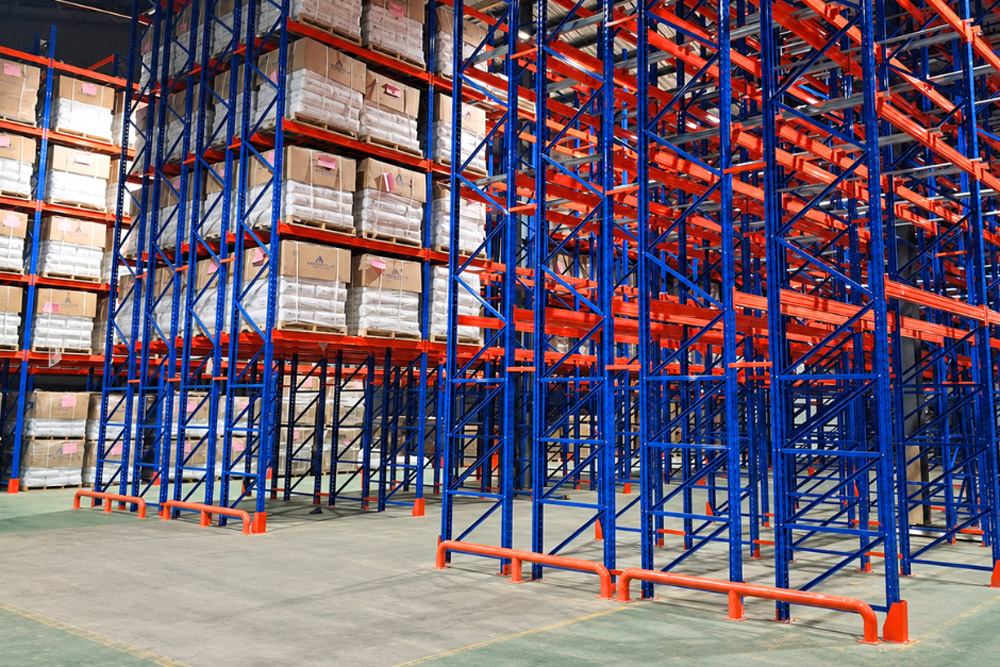
Double Deep Racking
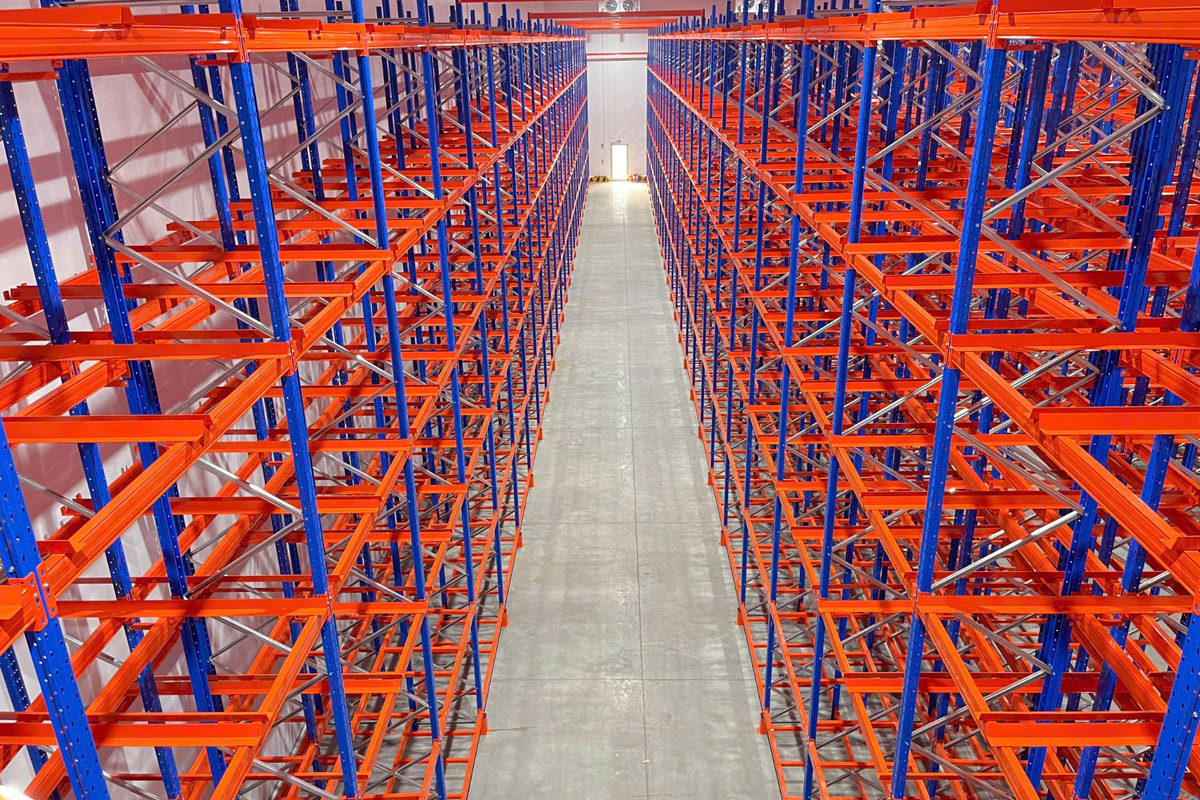
Double Deep Racking stores pallets two positions deep, allowing warehouses to increase storage density while reducing the number of forklift aisles required.
Key advantages:
- Higher storage density than Selective Racking
- Reduces the number of required aisles
- Makes better use of warehouse floor space
- Suitable for medium to high-volume pallet storage
- Flexible beam levels and rack configurations
- Effective balance between capacity and accessibility
It is particularly suitable for operations storing multiple pallets of the same SKU and businesses looking to increase pallet capacity without moving to a larger warehouse.
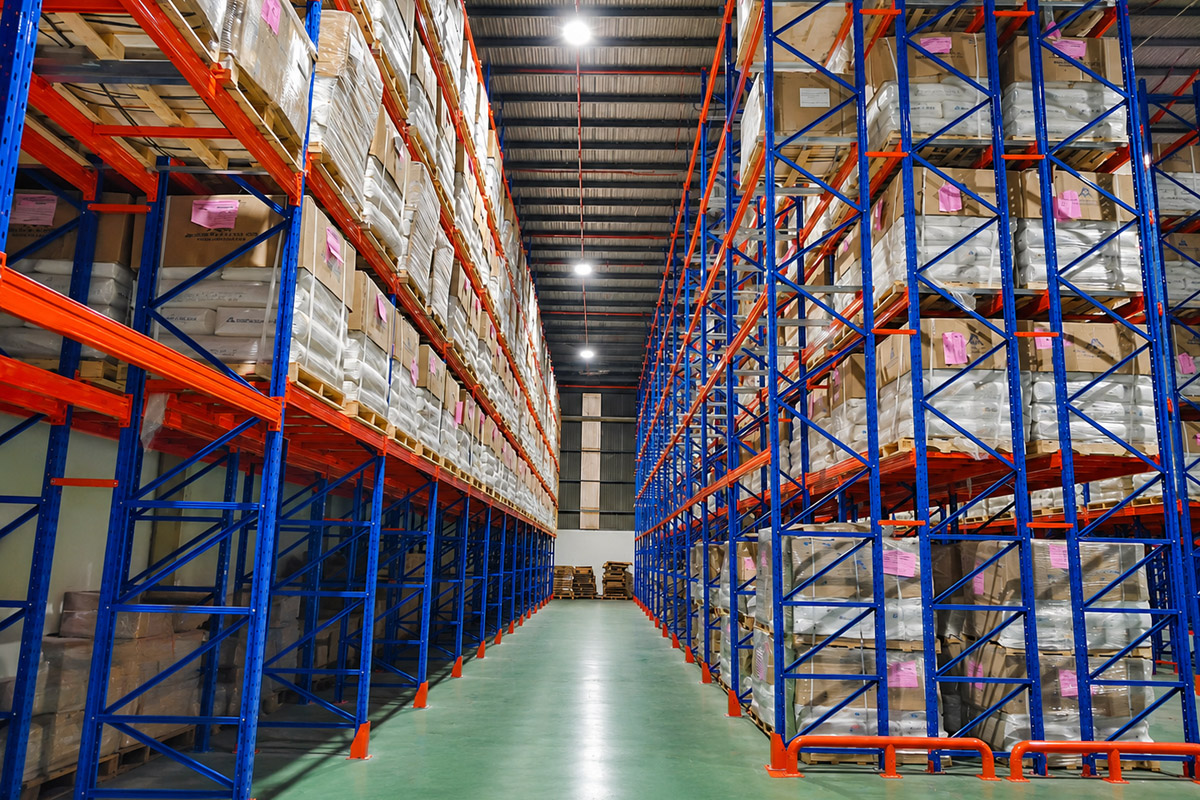
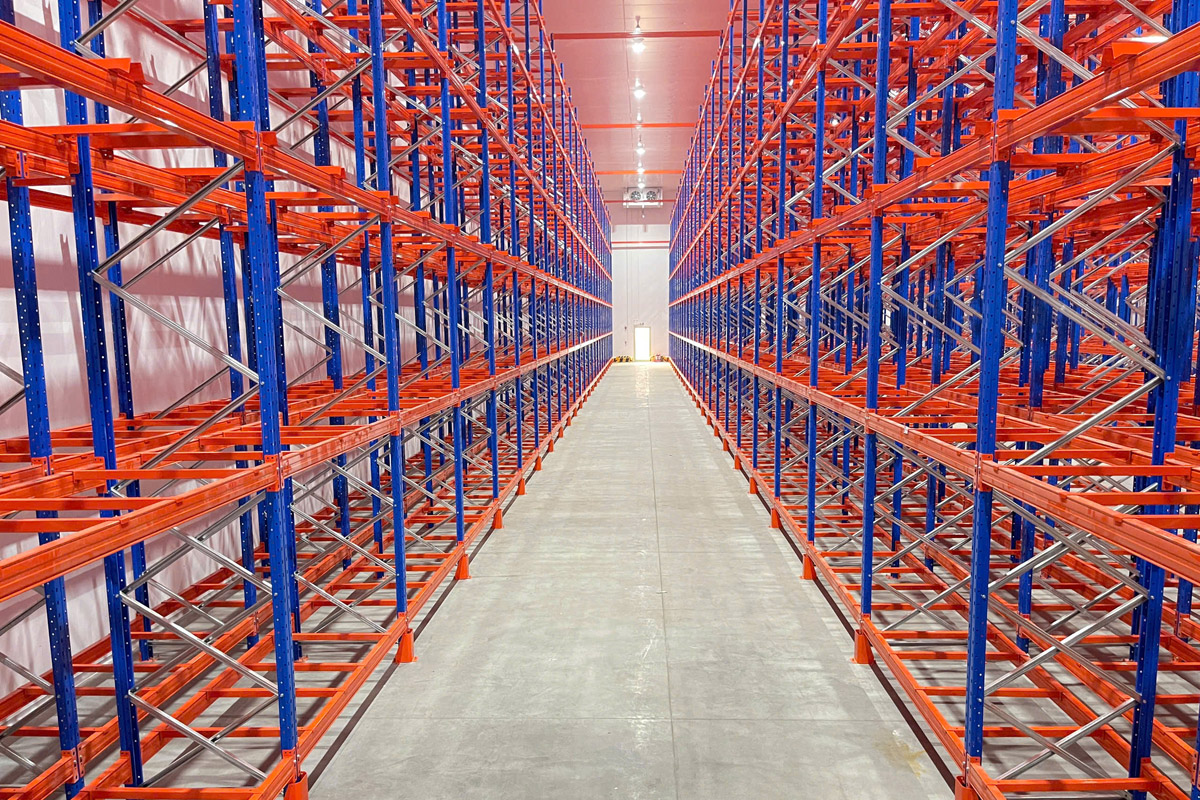
Drive-In Racking
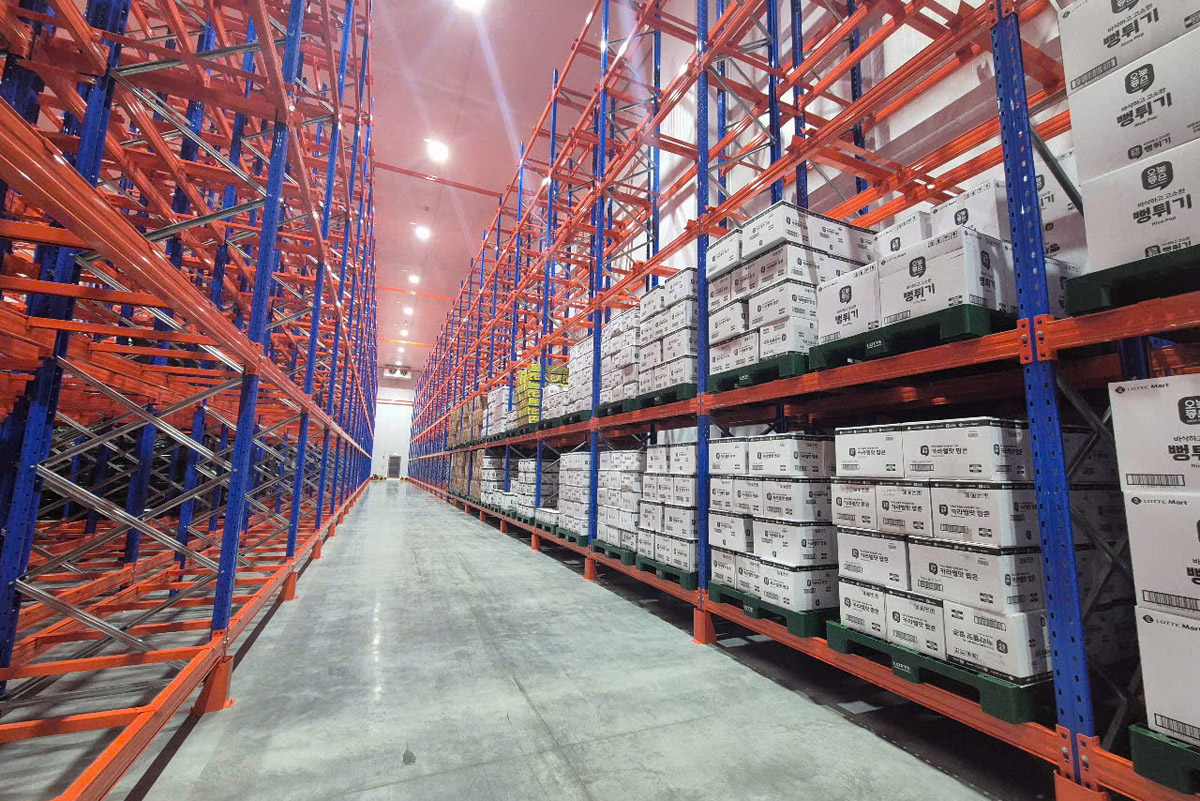
Drive-In Racking is a high-density pallet storage system where forklifts enter dedicated storage lanes to load and retrieve pallets.
Key advantages:
- High-density pallet storage
- Maximises warehouse floor utilisation
- Reduces aisle requirements
- Ideal for low-SKU, high-volume inventory
- Suitable for bulk and seasonal stock
- Commonly used in manufacturing and cold storage environments
By eliminating most internal aisles, the system can maximise pallet positions within a limited warehouse footprint. It is particularly effective for businesses storing large quantities of the same product.
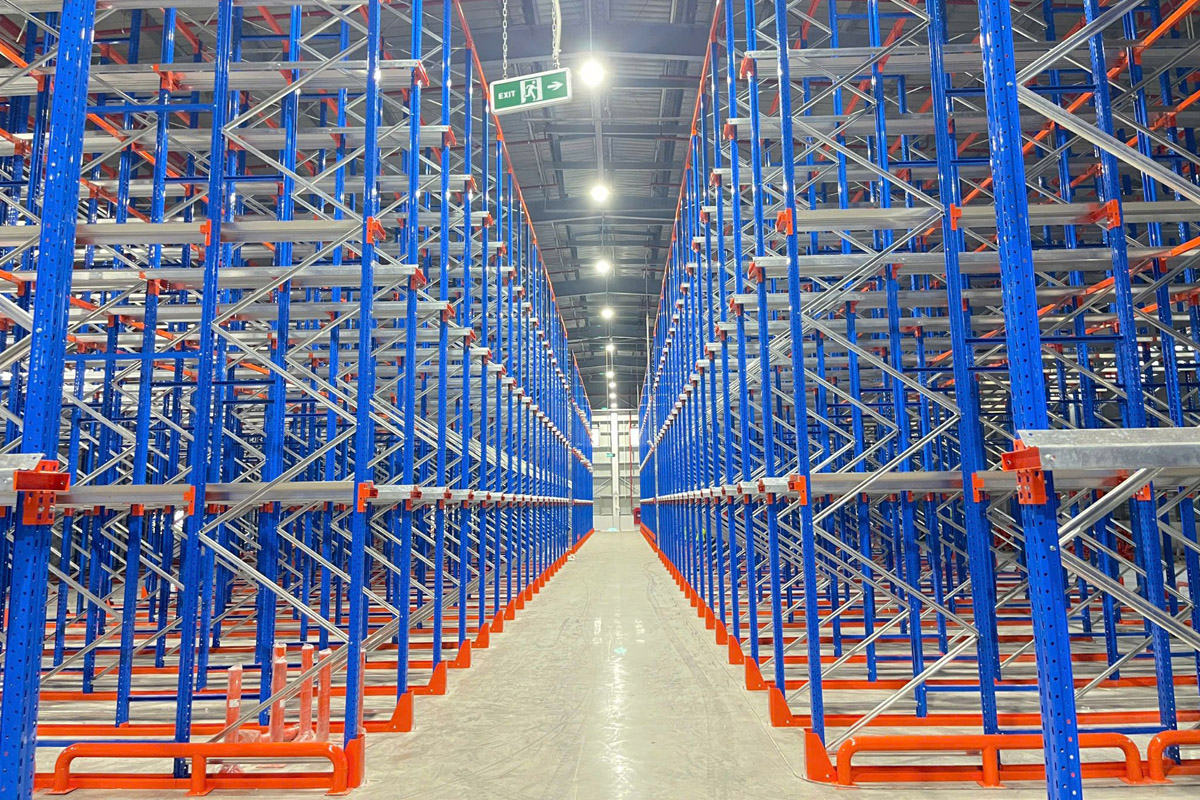
Push Back Racking
Push Back Racking uses inclined rails and pallet carts to store multiple pallets within each lane. When the front pallet is removed, the remaining pallets automatically move forward towards the picking face.
Key advantages:
- High storage density
- Multiple pallets stored per lane
- Faster loading and retrieval
- Forklifts remain outside the rack structure
- Reduces travel distance for operators
- Suitable for Last-In, First-Out inventory management
This provides high-density storage while allowing forklifts to operate from the aisle without entering the racking structure.
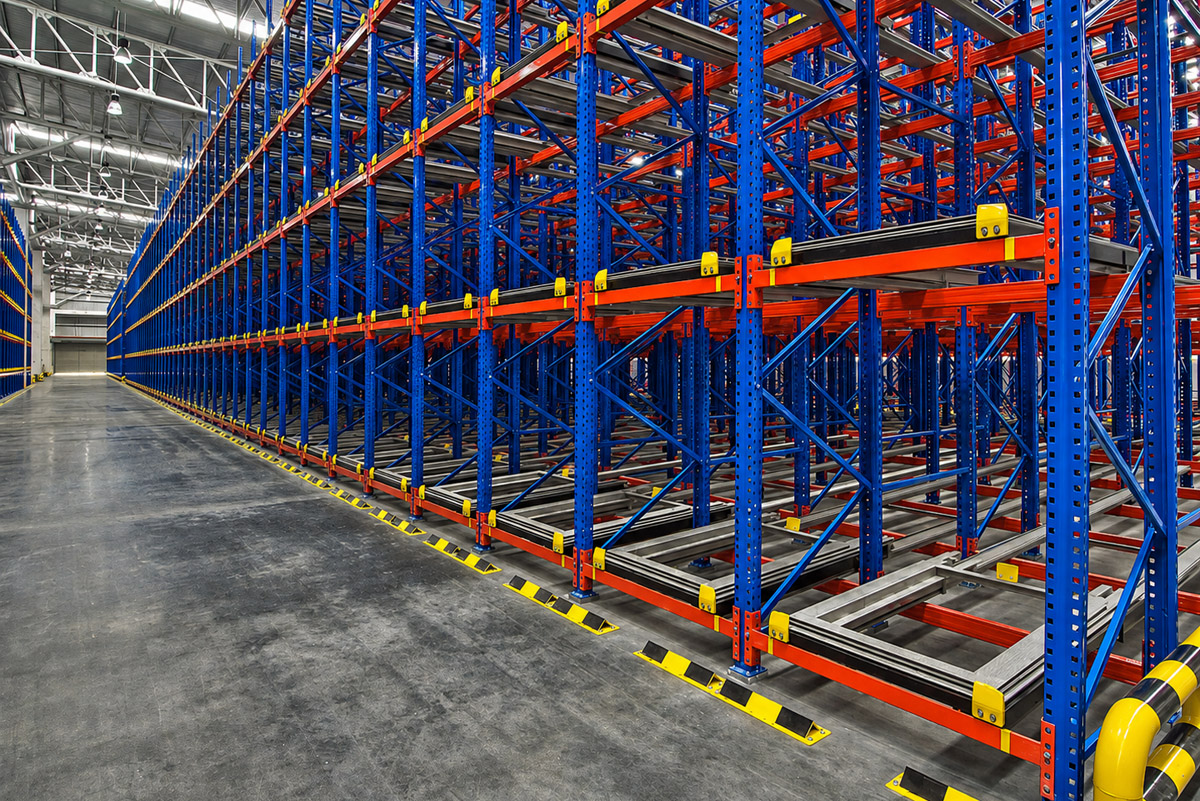
Pallet Flow Racking
Pallet Flow Racking uses inclined roller tracks to move pallets automatically from the loading side to the retrieval side of the system.
Key advantages:
- Supports First-In, First-Out stock rotation
- High-density pallet storage
- Automatic pallet movement using gravity
- Separates loading and picking operations
- Reduces forklift travel
- Suitable for high-volume distribution operations
It is particularly suitable for high-throughput warehouses where stock rotation, picking speed and inventory flow are critical.
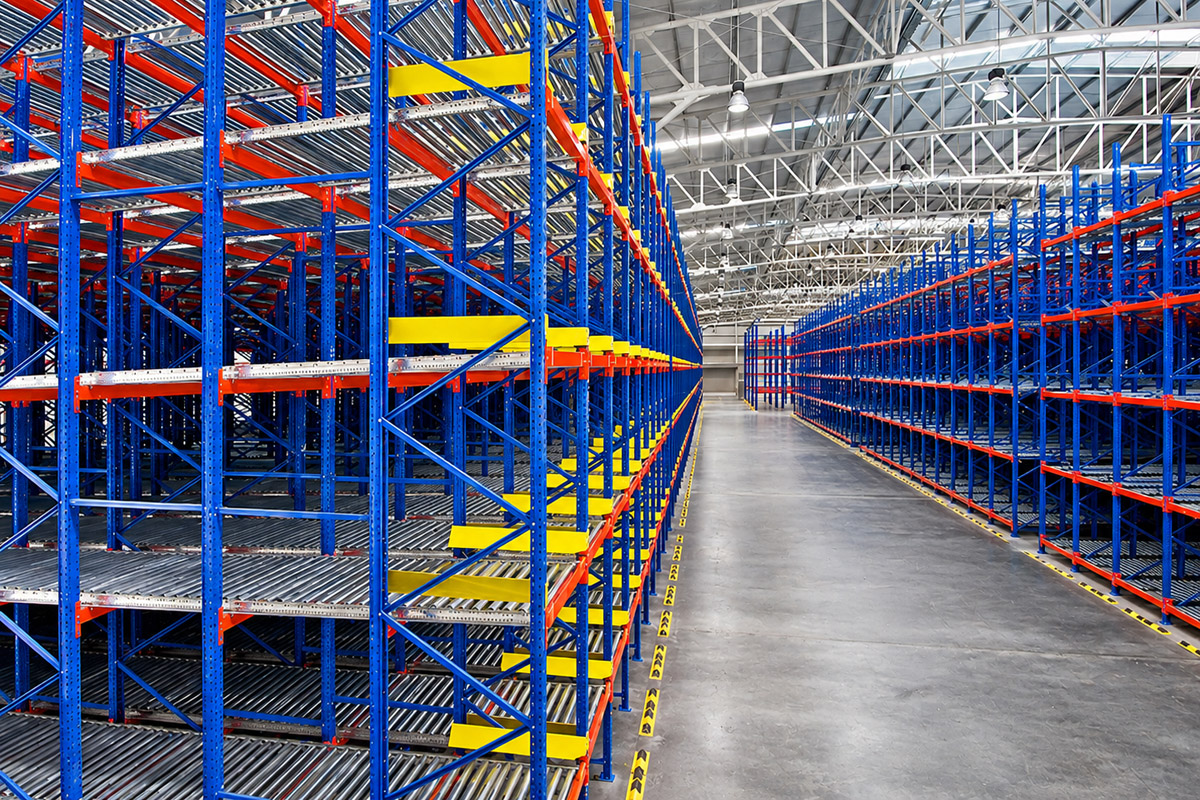
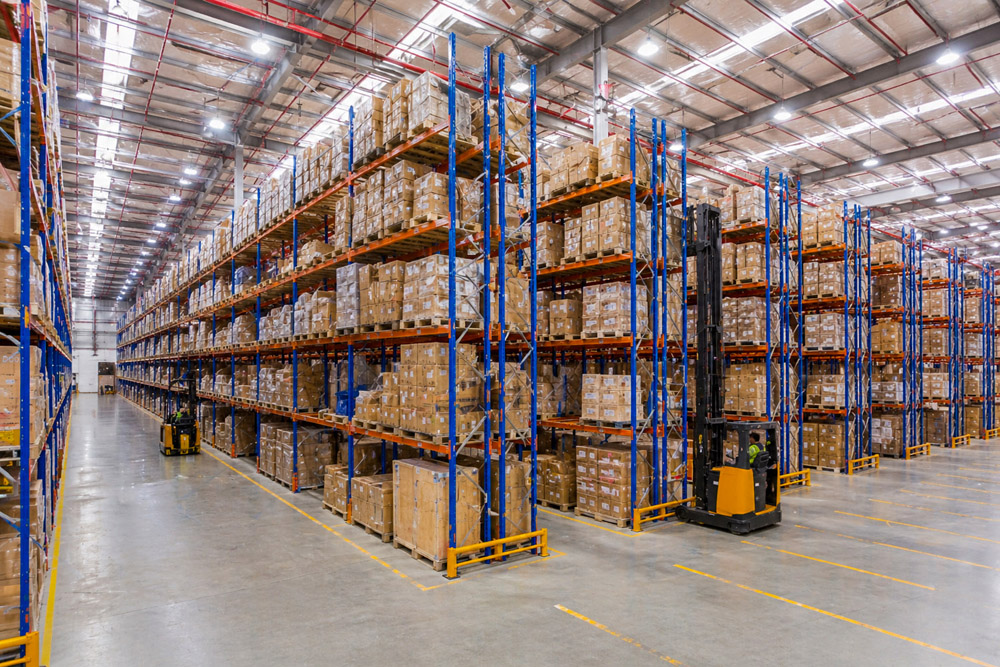
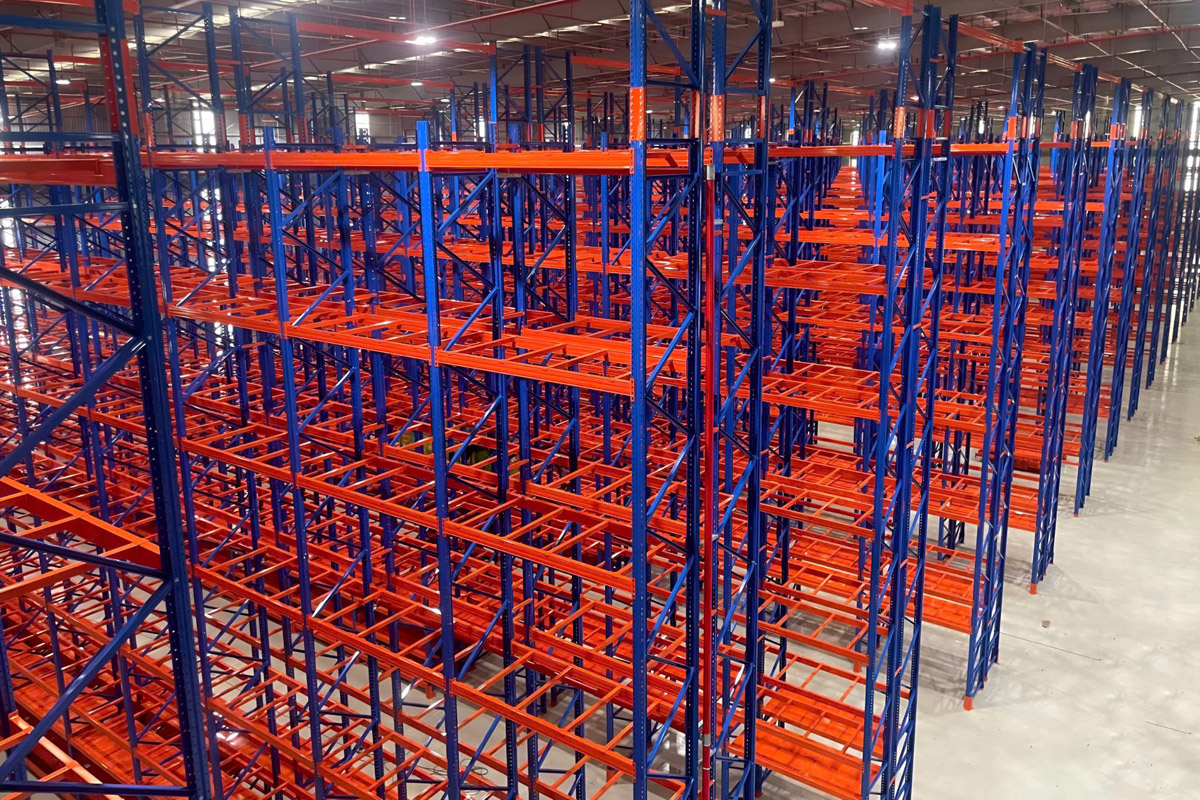
VNA Racking
VNA Racking (Very Narrow Aisle) is designed to increase storage capacity by significantly reducing the width of forklift aisles while maintaining direct access to individual pallet positions.
Key advantages:
- Maximises warehouse floor utilisation
- Narrower aisles increase pallet capacity
- Maintains direct pallet access
- Makes effective use of warehouse height
- Suitable for high-density SKU storage
- Ideal for facilities using specialised VNA forklifts
The system is suitable for high-bay warehouses where both vertical space and floor area need to be used efficiently.
Shuttle Racking
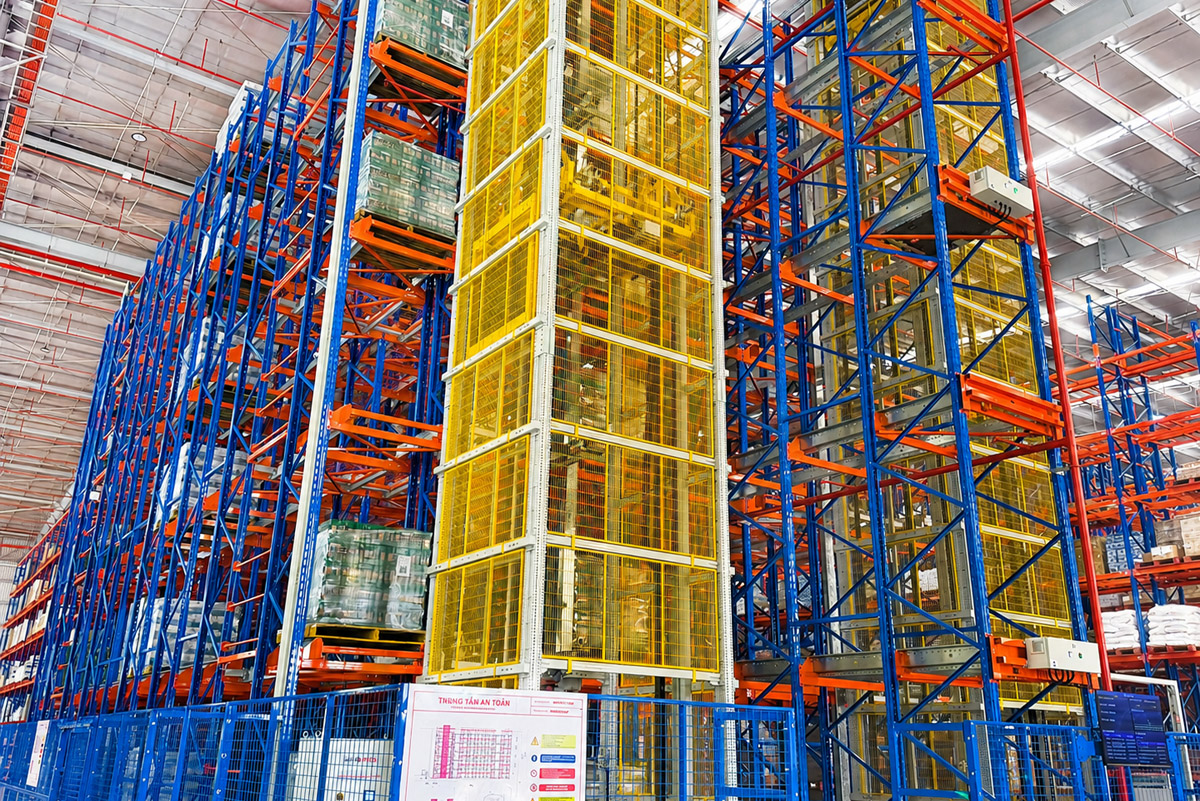
Shuttle Racking is a semi-automated or automated high-density storage system that uses shuttle robots to transport pallets within deep storage lanes.
Key advantages:
- Very high storage density
- Reduces forklift travel inside storage lanes
- Faster pallet handling
- Supports deep-lane storage
- Can support FIFO or LIFO configurations
- Suitable for high-volume warehouse operations
- Can be integrated into automated warehouse environments
By reducing the need for forklifts to enter the rack, shuttle systems can increase storage density, improve pallet handling efficiency and reduce repetitive forklift movements.
Why Choose Vinatech for Pallet Racking in Smithfield?
Vinatech Australia supports businesses requiring pallet racking in Smithfield, NSW, as well as warehouses and industrial facilities throughout Western Sydney and across New South Wales.
- Factory-direct manufacturing: Direct manufacturing provides greater control over rack specifications, production quality and project configuration.
- Custom warehouse design: Each layout can be developed around warehouse dimensions, pallet loads, clear height, columns, aisle requirements and operational objectives.
- 2D and 3D layout support: Warehouse layouts can be reviewed before installation to assess rack positions, aisles, pallet capacity and material flow.
- Multiple pallet racking solutions: Different racking systems can be selected or combined to balance accessibility, storage density and operational requirements.
- Professional installation: Installation is coordinated according to the approved warehouse layout and project specifications.
- Australian standards: Applicable pallet racking systems are engineered with relevant requirements of AS 4084:2023 in mind, supporting safe and reliable warehouse storage.
- End-to-end project support: Vinatech can support warehouse projects from consultation and design through manufacturing, supply and installation.
- Local Australian presence: Vinatech Australia is based at 34 Paramount Bvd, Cranbourne West VIC 3977, providing local consultation and technical support for warehouse projects.
For Smithfield businesses experiencing storage constraints, redesigning an existing warehouse layout can often increase pallet capacity without immediately requiring additional warehouse space. Planning a new warehouse or upgrading your existing facility in Smithfield? Contact Vinatech Australia today to request a Free 2D & 3D Warehouse Layout for your Smithfield facility.
Vinatech Australia: Industrial Warehouse Racking – Warehouse Shelving Solutions
🌐 Website: https://vinatech.com.au/
☎️ Phone number: 0406 916 355
📩 Email: info@vinatech.com.au
📌 Address: 34 Paramount Bvd, Cranbourne West VIC 3977, Australia
FAQs about Pallet Racking in Smithfield
A well-planned pallet racking layout can increase storage capacity, improve stock organisation and support efficient picking and replenishment. Selecting the right system helps businesses make better use of available warehouse space while maintaining practical access to stored goods.
Selective Pallet Racking is suitable for warehouses requiring direct access to individual pallets. Double Deep, Push Back, Drive-In and Shuttle Racking may be better for operations that prioritise higher storage density and store larger quantities of selected products.
Yes. Heavy-duty pallet racking can be engineered to accommodate specified pallet weights, product dimensions and storage configurations. The design should account for beam capacity, upright frames, floor conditions and the intended operating environment.
Selective Pallet Racking works well for wholesalers and distributors managing diverse product ranges. High-density systems may suit businesses storing bulk quantities of fewer SKUs. The best choice depends on order profiles, stock turnover and pallet accessibility requirements.
Yes. A warehouse assessment can identify suitable racking dimensions, aisle widths, storage levels and forklift clearances. The proposed design should also account for columns, loading areas, fire protection systems and other building constraints.
Businesses can review unused vertical space, optimise aisle layouts and consider high-density storage systems. Options such as Double Deep, Push Back, Drive-In and Shuttle Racking can increase pallet storage density when matched to the warehouse’s inventory and handling requirements.
Automated solutions, including pallet shuttle systems and automated storage and retrieval systems (ASRS), can reduce manual handling and support consistent material flow. Suitability depends on throughput requirements, inventory characteristics, available space and the level of automation needed.
Costs depend on the racking type, number of pallet positions, load requirements, warehouse dimensions, materials, installation complexity and any automation. A tailored warehouse layout and project quotation provide a more accurate estimate than a standard price per bay.
Businesses should consider appropriate load ratings, floor anchoring, safe operating clearances, impact protection and visible load notices. Racking should be installed, operated and maintained in accordance with the applicable Australian Standards, manufacturer instructions and workplace safety requirements.
Compare suppliers based on warehouse design capability, documented load capacities, product quality, installation experience, safety documentation and after-sales support. A supplier that assesses your operational requirements can recommend a system suited to your current needs and future growth.