



The Australian Standard Pallet measures 1165 × 1165 mm with an overall height of 150 mm. Governed by standard AS 4068, this square pallet is designed to fit seamlessly into the nation’s local transport infrastructure, such as Australian railway RACE containers.
Standard Pallet Dimensions by Region
Australia: 1165 mm × 1165 mm
The Australian Standard Pallet is specifically designed to fit Australian RACE railway containers efficiently, maximizing transport capacity and handling efficiency.
International Export (Asia): 1100 mm × 1100 mm
Commonly used in countries such as Japan and South Korea, this pallet size is optimized for ISO shipping containers and international freight operations.
North America: 1219 mm × 1016 mm (48″ × 40″)
Often referred to as the GMA pallet, this is the most widely used pallet size in the United States and Canada, particularly within retail, manufacturing, and distribution networks.
Europe (Euro Pallet): 1200 mm × 800 mm
Standardized by the European Pallet Association (EPAL), the Euro pallet is the benchmark pallet size throughout Europe and is widely adopted across regional supply chains.
What Are Standard Pallet Size Dimensions?
The Australian standard pallet dimensions are 1165mm x 1165mm, with an average height of approximately 150mm, as specified in the national standard AS 4068. This distinctive square design was developed specifically to fit perfectly within Australia’s RACE (Railway Container Express) rail container system.
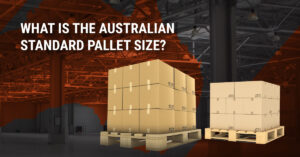
Unlike the rectangular pallets commonly used in Europe or the United States, the Australian standard pallet dimensions were carefully calculated to optimize cargo space utilization within the country’s domestic transport and warehousing systems. With its square shape, pallets can be efficiently loaded in both directions within rail or truck containers, minimizing unused space and improving load stability during transportation.
This design also provides high operational efficiency across the logistics chain — from trucks and trains to automated warehouse racking systems. Many storage facilities and racking systems in Australia, such as Selective or Double Deep racks, are built to these Australian standard pallet dimensions, ensuring full compatibility, safety, and efficiency in handling and operations.
Why are Australian standard pallets a different size?
The Australian standard pallet dimensions were established after World War II, when Australia began adopting palletized cargo handling methods inspired by the United States. Initially, the standard size was 46 x 46 inches (approximately 112 x 112 cm). During that period, Australia sought to modernize and streamline its freight transport system, improving interoperability between rail and road networks.
When Australia transitioned to the metric system, instead of redesigning the pallet entirely, the country chose to retain its distinctive proportions and simply convert them to millimeters, creating the 1165mm x 1165mm standard used today. This practical decision allowed businesses to maintain consistency across existing storage, handling, and transport systems — avoiding costly redesigns or equipment replacements.
The Australian standard pallet dimensions reflect a unique design philosophy, rooted in the country’s rail infrastructure, container widths, and logistics efficiency requirements. Nevertheless, some industries continue to adopt alternative pallet sizes to better suit their products and operational needs.
Detailed Dimension Breakdown
The Australian standard pallet dimensions are precisely engineered to ensure compatibility across all stages of transport, storage, and material handling. The standard measurements – 1165mm in length, 1165mm in width, and an average height of 150mm — include the thickness of the top deck boards, typically a maximum width of 150mm and a minimum thickness of 22mm.

In warehouse design, these dimensions are critical for determining racking layouts, forklift clearance, and truck/container loading configurations. While the square structure of the pallet remains consistent, its height can vary slightly depending on the material (wood, plastic, or steel) and the load-bearing design.
Types and Materials of Australian Pallets

Load Capacity and Industry Use
Australian industries rely on various pallet types and load capacities based on specific operational and safety requirements. The choice of pallet and its Australian standard pallet dimensions depends not only on the weight of the goods but also on hygiene standards, frequency of use, and environmental conditions.
-
Light-duty pallets: Reduce transport weight and costs; suitable for light goods or short-term applications.
-
Medium-duty pallets: Balance durability and affordability; ideal for moderate loads and one-way transport.
-
Heavy-duty pallets: Designed for repeated use and heavy loads, offering maximum strength and stability.
Structurally, Australian standard pallets come in two main designs: stringer pallets and block pallets. Stringer pallets use parallel beams to support the deck, while block pallets use solid wooden blocks that allow four-way forklift access — improving handling efficiency and load stability.
Compliance with Australian Standards
All pallets used for transport and storage in Australia must meet the AS 4068 standard, which defines the official Australian standard pallet dimensions. This ensures long-term safety, compatibility, and durability across supply chains.

Key AS 4068 requirements include:
-
Deck boards must be at least 22mm thick and no more than 150mm wide, with no cracks, splinters, or exposed nails beyond 1mm.
-
Knots and holes cannot exceed 50% of board width. Pallets must remain intact, free of mold, warping, and contamination.
-
Pallets must be clean, pest-free, and free of loose debris to ensure safe handling.
In addition, for export applications, businesses must comply with international quarantine and heat treatment regulations under the ISPM 15 (Heat Treatment Certification) standard. Pallets certified under AS 4068 and ISPM 15 not only help companies maintain reliability and operational efficiency, but also minimize the risk of non-compliance with international import and export regulations.
Comparison of Australian Pallet Sizes with International Standards
Unlike most international standards which typically follow a rectangular format — the Australian standard pallet dimensions feature a square design, optimizing container space in both RACE rail containers and domestic trucks.
According to ISO 6780, six globally recognized pallet dimensions are used for international trade. However, Australia’s 1165mm x 1165mm pallet does not belong to this group, as it was engineered specifically for local infrastructure.
This difference can pose challenges in export operations. Companies often transfer goods from Australian standard pallets to Euro or ISO pallets, increasing handling time and cost. To solve this, many exporters use plastic or hybrid pallets compatible with both Australian standard pallet dimensions and international standards — ensuring smoother global logistics.
Export Pallet Dimensions and Alternatives
Pallets for export from Australia typically do not use the domestic 1165mm x 1165mm size. Instead, exporters often use the 1100mm x 1100mm dimension, which aligns with ISO-standard containers, particularly in markets like Japan, South Korea, and across Asia.

Other common pallet sizes include:
-
European Pallet (Euro Pallet): 1200mm x 800mm — widely used across Europe under EPAL/ISO standards.
-
U.S. GMA Pallet: 1219mm x 1016mm — the dominant size in North America.
-
Asian Export Pallet: 1100mm x 1100mm — common in Asia, ideal for mixed cargo shipments.
Selecting the right export pallet size — alongside understanding Australian standard pallet dimensions — ensures optimal container space utilization, reduced freight costs, and full compliance with international logistics requirements.
Choosing the Right Pallet Size for Your Business
Choosing the right pallet size plays a critical role in ensuring operational efficiency, safety, and cost optimization throughout the entire supply chain. The ideal size depends on multiple factors such as product dimensions, logistics equipment, industry requirements, and operating costs.
- Consider product size and packaging method
A pallet should fully support the load across its surface — without excess or insufficient space. Goods that overhang the pallet are more likely to be damaged, while unused space reduces transport and storage efficiency.
- Assess compatibility with logistics equipment and warehouse systems
This includes evaluating forklifts, pallet jacks, conveyors, and racking systems. If your warehouse uses Australian-standard Selective or Double Deep racking, the 1165mm x 1165mm pallet is the most suitable choice. However, for businesses that frequently export, Euro pallets (1200mm x 800mm) or U.S. GMA pallets (1219mm x 1016mm) may offer greater international compatibility.
- Consider industry-specific requirements
Industries such as food, pharmaceuticals, and chemicals often favor plastic pallets for hygiene and regulatory compliance, whereas mining and automotive sectors typically require hardwood or reinforced-frame pallets capable of supporting heavy loads and long-term use.
- Balance cost and sustainability factors
Wooden pallets are generally more affordable and easier to repair, while plastic pallets, though more expensive upfront, offer longer lifespan, lighter weight, and easier cleaning — making them a durable and sustainable investment over time.
Vinatech Australia’s Role in Supporting Efficient Pallet Racking and Storage Solutions
At Vinatech Australia, we understand that the foundation of an efficient warehouse begins with standardized and well-engineered pallet systems. That’s why all our storage solutions are designed to fully align with Australia’s standard pallet dimensions (1165mm x 1165mm), ensuring perfect compatibility, safety, and ease of operation across every logistics setup.
Our expertise lies in developing customized racking systems — from Selective Racking, Drive-In Racking, to Automated Storage and Retrieval Systems (AS/RS) — all optimized for 1165 x 1165mm pallets in accordance with AS 4068 standards. Each system is carefully engineered to maximize storage density, improve accessibility, and streamline material handling, regardless of warehouse scale or industry type.
By integrating standard pallet specifications with smart storage design, Vinatech Australia helps businesses achieve safer, faster, and more efficient warehouse operations, setting a new benchmark for performance and reliability in the Australian logistics industry.

My name is William Harris, and I am the Production Director at Vinatech Australia. I oversee the entire manufacturing operation for our industrial warehouse racking systems and the development of smart warehouse solutions.