


Pallet racking can look perfectly fine until a closer inspection reveals hidden damage. So, how often should pallet racking be inspected to keep your warehouse safe? In Australia, formal inspections should take place at least every 12 months, but routine checks are just as important. Knowing when and what to inspect helps you catch problems early and avoid costly disruptions.
How often should Pallet Racking be inspected?
Under Australian workplace safety guidance, pallet racking should undergo a formal inspection by a competent person at intervals not exceeding 12 months. This aligns with the inspection guidance associated with AS 4084:2023, the Australian Standard covering the operation and maintenance of steel storage racking.
However, an annual inspection alone isn’t enough. Warehouse staff should also carry out regular visual checks to identify damage, overloading or other safety concerns before they become serious.
Here’s a practical breakdown of inspection frequency:
| Inspection Type | Recommended Frequency |
Responsible Person
|
| Routine visual checks | Daily or weekly, depending on site conditions |
Trained warehouse staff
|
| Formal inspections | At least every 12 months |
Competent person
|
| Additional inspections | Following incidents or significant changes, as needed |
Suitably competent person
|
These timeframes aren’t a one-size-fits-all schedule. The frequency of routine checks should reflect your warehouse’s operating conditions and the recommendations of the manufacturer or a competent person.
Types of Pallet Racking inspections
Not every inspection needs to be a detailed structural assessment. Routine checks and formal inspections serve different purposes, and both help keep racking in safe working condition.
Routine Visual Inspections
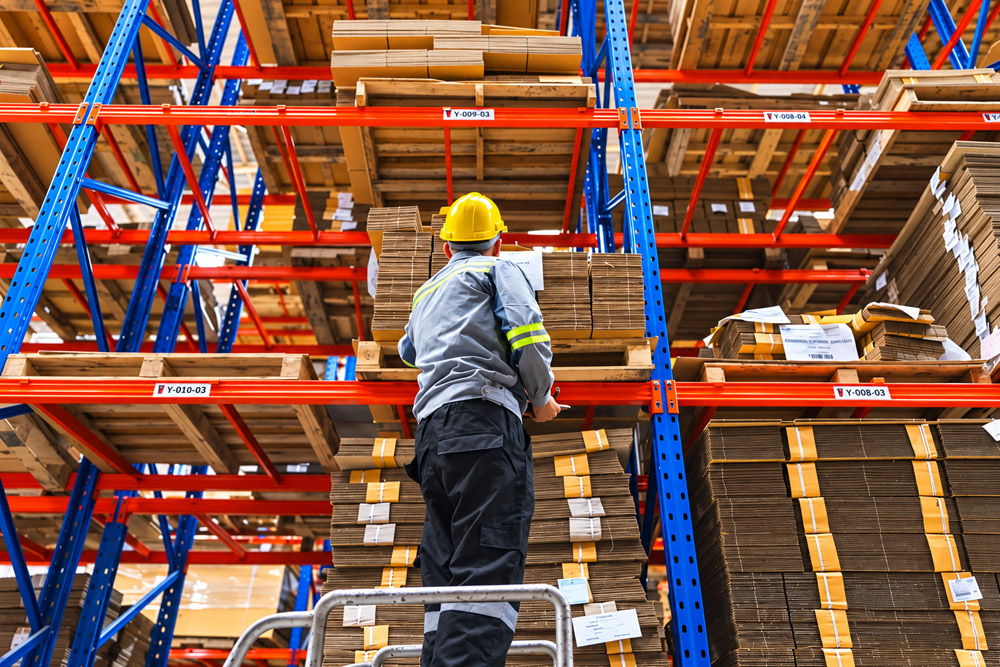
Routine inspections focus on spotting obvious problems during everyday warehouse operations. Staff should look for bent uprights, damaged beams, missing safety locks or signs of overloading.
These checks can be included in regular warehouse safety routines. Any damage should be reported promptly, even if it appears minor.
Formal Pallet Racking Inspections
Formal inspections involve a more detailed assessment carried out by a competent person. The inspector examines structural components, load conditions and damage that could affect the system’s safety.
Findings should be documented, with recommendations for repairs or further assessment where necessary.
Read more: Selective Pallet Racking
What factors affect racking inspection frequency?
Two warehouses may use similar pallet racking but face very different safety risks. That’s why inspection frequency should consider how the system is actually used.
Key factors include:
- Forklift traffic: Frequent vehicle movements increase the chance of accidental impacts.
- Operating hours: Warehouses running multiple shifts may experience greater wear and exposure to damage.
- Load conditions: Heavy loads or frequent stock movements can increase demands on the system.
- Racking condition: Older systems or racks with previous damage may need closer monitoring.
- Storage environment: Moisture, corrosion and temperature conditions can affect racking components.
A busy distribution centre with constant forklift activity will generally need more frequent visual checks than a low-traffic storage area. Reviewing these factors helps establish a practical inspection schedule rather than relying solely on the annual check.

When should Pallet Racking be inspected immediately?
Some situations shouldn’t wait until the next scheduled inspection. If the safety of a rack is uncertain, the affected area should be assessed before normal use continues.
Pay particular attention to:
- Forklift impacts: Report collisions immediately and assess any resulting damage.
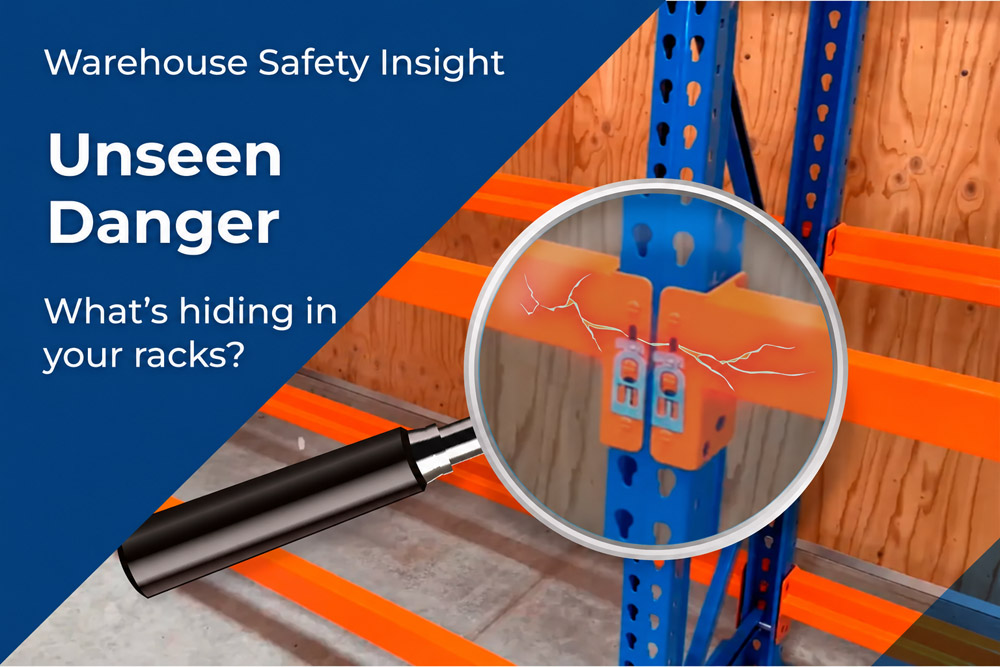
- Visible structural damage: Bent uprights, deformed beams or loose connections need prompt attention.
- Racking modifications: Changes to beam positions or structural components may affect load capacity.
- Changes in stored loads: New pallet sizes or heavier goods may exceed the original design limits.
- Relocation or major repairs: Reinstalled or repaired racking may require further checks before use.
Not every incident requires a full inspection of the warehouse. However, damage should be assessed by someone with the appropriate competence, and affected racking should not be used where safety cannot be confirmed.
What should be checked during a Pallet Racking inspection?
A thorough inspection looks beyond visible dents. It considers whether the racking remains structurally sound and suitable for the loads being stored.
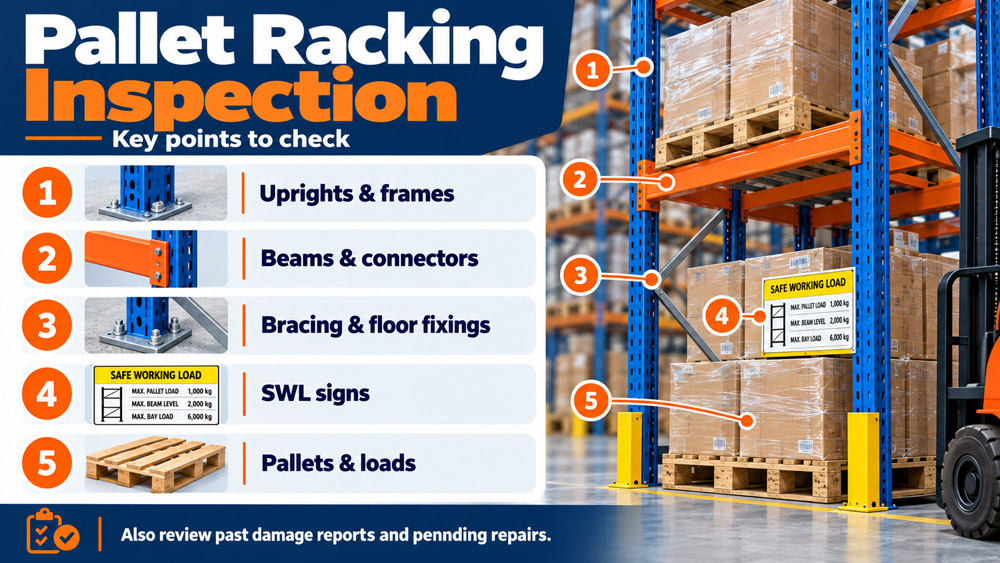
The main areas to check include:
- Uprights and frames: Bending, impact damage or misalignment.
- Beams and connectors: Deflection, damaged connections or missing safety locks.
- Bracing and floor fixings: Loose anchors, damaged braces or unstable connections.
- Safe Working Load (SWL) signs: Clear, accurate ratings that match the current configuration.
- Pallets and stored loads: Proper positioning, suitable pallets and compliance with load limits.
Inspectors should also review previous damage reports and outstanding repairs. A problem that keeps returning may point to an issue with forklift movements, storage layout or operating practices.
How to keep your racking inspection schedule on track
Keeping up with inspections doesn’t need to be complicated. A simple, consistent process can make a significant difference to warehouse safety.
- Set a clear schedule: Plan routine checks around site risks and book formal inspections within the required timeframe.
- Assign responsibilities: Make sure staff know who performs inspections and who receives damage reports.
- Keep accurate records: Document inspection dates, identified defects, repairs and any outstanding actions.
- Review after changes: Update the schedule when warehouse operations, racking configurations or risk levels change.
Most importantly, don’t let inspection reports become paperwork that sits in a folder. Identified problems need appropriate action, and completed repairs should be recorded.
Keep Your Warehouse Safe Between Inspections
So, how often should pallet racking be inspected? Formal inspections should be completed at least every 12 months, supported by regular visual checks and additional assessments when needed. The goal isn’t simply to meet an inspection date. It’s to keep your racking safe throughout the year. By checking regularly, reporting damage early and acting on inspection findings, you can reduce risks and keep warehouse operations running smoothly.
Vinatech Australia: Industrial Warehouse Racking – Warehouse Shelving Solutions
🌐 Website: https://vinatech.com.au/
☎️ Phone number: 0485 083 868
📩 Email: info@vinatech.com.au
📌 Address: 34 Paramount Bvd, Cranbourne West VIC 3977, Australia

William Harris is the Production Director at Vinatech Australia, with more than 10 years of experience in industrial warehouse racking, manufacturing, warehouse optimisation and smart storage technologies. His professional background combines engineering, production management and warehouse operations, enabling him to oversee the development of storage systems designed for safety, durability, efficiency and long-term operational performance.