

Choosing the right pallet racking dimensions starts with more than measuring the available warehouse space. Pallet size, load weight, forklift type, clear height and aisle requirements all influence the final rack configuration. Understanding these measurements early can help you use warehouse space more effectively while keeping pallet handling practical.
Pallet Racking Dimensions
Pallet racking dimensions are not based on a single standard configuration. The right dimensions depend on the warehouse layout, pallet size, load weight, storage levels, forklift requirements and available space. At Vinatech Australia, pallet racking systems are designed as made-to-measure solutions, allowing the dimensions and configuration to be adapted to the requirements of each warehouse.
The dimensions shown below are reference configurations from our product catalogue. Final racking dimensions and load capacities are determined according to the specific project requirements and the selected system configuration.
Frame Height & Depth
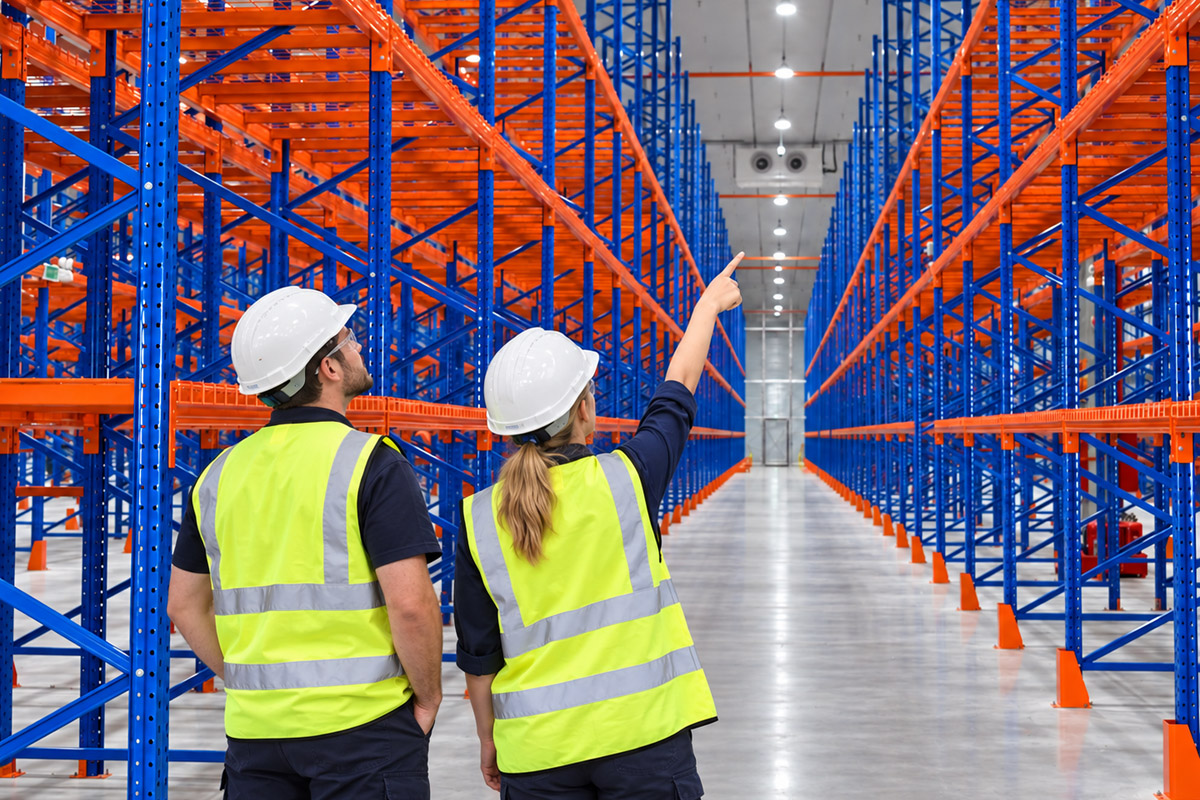
The frame height and depth of a pallet racking system should be selected according to the warehouse building, pallet dimensions, storage requirements and material handling equipment. Vinatech’s catalogue includes upright frame configurations from 3,048mm to 6,096mm in height, with frame depths of 838mm and 1,219mm.
Frame height is generally determined by the available clear height of the warehouse, the number of storage levels required, pallet load height and forklift reach. The position of each beam level can also be adjusted to suit different pallet and product dimensions.
Frame depth should be selected according to the pallet dimensions, load overhang and required operating clearances. For this reason, the frame depth is not necessarily fixed for every pallet racking project. Vinatech can develop different frame configurations to suit the specific pallet and storage requirements of each warehouse.
The catalogue also includes upright profiles from 90 × 68mm to 200 × 180mm, with a 76.2mm hole pitch for adjustable beam positioning. The appropriate upright profile is selected according to the required load capacity and overall racking configuration.
| Component | Reference configurations | Typically based on |
|---|---|---|
| Frame height | 3,048–6,096mm | Warehouse clear height, storage levels and forklift reach |
| Frame depth | 838mm / 1,219mm | Pallet dimensions, load overhang and required clearances |
| Upright profile | 90 × 68mm to 200 × 180mm | Load requirements and rack configuration Pallet dimensions, load overhang and required clearances |
| Hole pitch | 76.2mm | Required beam level adjustment |
Beam Length & Weight Capacity
Beam length plays an important role in determining both the number of pallets that can be stored within each bay and the load capacity of the racking system. The appropriate beam length should be based on pallet dimensions, the number of pallets stored per level, required clearances and the available warehouse space.
Vinatech’s catalogue includes beam lengths from 1,372mm to 4,500mm, together with a range of beam profiles from 50 × 80mm to 50 × 200mm.
Longer beams can accommodate more pallet positions within a bay, but beam length is also an important factor in determining load capacity. The required beam profile and thickness should therefore be selected according to the beam span and the actual load requirements of the warehouse.
Rather than applying one fixed beam size to every project, Vinatech can customise beam length and configuration around your pallet dimensions, storage requirements and available warehouse space.
Reference Beam Lengths
The current catalogue includes the following beam lengths:
- 1,372mm
- 1,524mm
- 1,829mm
- 2,591mm
- 2,743mm
- 2,833mm
- 3,048mm
- 3,350mm
- 3,658mm
- 3,810mm
- 4,200mm
- 4,500mm
These are catalogue reference configurations rather than a fixed list of standard sizes. The final beam length can be selected and customised according to the pallet arrangement and warehouse layout.
Beam Length × Load Capacity
The following matrix shows the reference load capacity per pair of beams for the beam profiles and lengths listed in the Vinatech catalogue. Load capacity varies according to both beam length and beam profile.
| Beam Length | 80×50×1.5 | 90×50×1.5 | 100×50×1.5 | 110×50×1.5 | 120×50×1.5 | 140×50×1.5 | 160×50×1.5 | 160×50×1.8 | 160×50×2.0 |
|---|---|---|---|---|---|---|---|---|---|
| 1,372mm | 3,781kg | 4,283kg | 4,500kg | 4,500kg | 4,500kg | 4,500kg | 4,500kg | 4,500kg | 4,500kg |
| 1,524mm | 3,404kg | 3,855kg | 4,348kg | 4,500kg | 4,500kg | 4,500kg | 4,500kg | 4,500kg | 4,500kg |
| 1,829mm | 2,836kg | 3,213kg | 3,623kg | 3,893kg | 4,056kg | 4,500kg | 4,500kg | 4,500kg | 4,500kg |
| 2,591mm | 1,520kg | 1,937kg | 2,427kg | 2,748kg | 2,863kg | 3,340kg | 3,908kg | 4,500kg | 4,500kg |
| 2,743mm | 1,356kg | 1,728kg | 2,165kg | 2,559kg | 2,705kg | 3,155kg | 3,691kg | 4,332kg | 4,500kg |
| 2,833mm | 1,098kg | 1,399kg | 1,754kg | 2,073kg | 2,356kg | 2,839kg | 3,322kg | 3,898kg | 4,351kg |
| 3,048mm | 909kg | 1,158kg | 1,452kg | 1,716kg | 1,950kg | 2,583kg | 3,022kg | 3,547kg | 3,959kg |
| 3,350mm | 763kg | 972kg | 1,218kg | 1,439kg | 1,636kg | 2,226kg | 2,768kg | 3,248kg | 3,626kg |
| 3,658mm | 703kg | 896kg | 1,122kg | 1,326kg | 1,508kg | 2,052kg | 2,657kg | 3,119kg | 3,481kg |
| 3,810mm | 578kg | 737kg | 924kg | 1,092kg | 1,241kg | 1,689kg | 2,258kg | 2,650kg | 2,957kg |
| 4,200mm | 540kg | 642kg | 805kg | 951kg | 1,081kg | 1,471kg | 1,967kg | 2,308kg | 2,576kg |
| 4,500mm | — | — | — | — | — | — | — | — | — |
Required Clearances for Pallet Racking
Clearances are an important part of pallet racking design because they provide sufficient space for pallets, forklifts and stored loads to operate safely within the system.
The required clearance depends on pallet dimensions, load configuration, racking design and material handling equipment. WorkSafe Victoria also advises that aisle width should be matched to the turning circle and operating requirements of the forklift used in the warehouse.
For adjustable pallet racking, guidance referencing AS 4084.2:2023 identifies the following minimum unit-load clearances:
| Clearance | Reference minimum |
|---|---|
| Unit load to upright frame | 75mm |
| Between adjacent unit loads on the same beam pair | 100mm |
| Vertical clearance for unit loads below 6m | 100mm |
| Vertical clearance for unit loads at or above 6m | 125mm |
These values are reference minimums for the applicable racking arrangement and should not be treated as universal dimensions for every warehouse. The final clearances should be confirmed as part of the engineering and layout design for the specific system.
EXPLORE OUR PALLET RACKING SPECIFICATIONS
Discover detailed racking configurations, dimensions and load capacities to help you choose the right solution for your warehouse.
Pallet Racking Dimensions for different rack types
Not every pallet racking system follows the same dimensional logic. The selected storage system can significantly change rack depth, aisle requirements and overall warehouse layout.
Selective Pallet Racking
Selective racking normally stores pallets one position deep and provides direct access to each pallet from the aisle. Its dimensions are generally determined by:
- Pallet width and depth.
- Number of pallets per bay.
- Pallet height.
- Load weight.
- Available warehouse height.
- Forklift aisle requirements.
Because of its relatively simple structure, Selective racking offers considerable flexibility when configuring different pallet sizes.
Detailed technical specifications are as follows:
| Specification | Reference range |
|---|---|
| Height | 3,000 – 12,000 mm |
| Beam Length | 1,800 – 3,600 mm |
| Depth | 800 – 1,200 mm |
| Load capacity/Level | 1,000 – 3,000 kg |
| Accessibility | 100% |
Double Deep Racking
Double Deep Racking places one pallet behind another, creating a deeper storage configuration.
Vinatech Australia’s Double Deep system, for example, lists rack depths ranging approximately from 1,200 to 4,500 mm, depending on the configuration, with heights of up to around 10 metres.
The increased depth improves storage density but requires suitable reach equipment to access rear pallet positions.
Detailed technical specifications are as follows:
| Specification | Reference range |
|---|---|
| Load capacity/Level | 3000 kg |
| Rack Length | 1,150 – 4,000 mm |
| Rack Depth | 1,200 – 4,500 mm |
| Maximum Height | 10 m |
| Space Utilization | 80 – 85% |
| Pallets/Level | 2-4 pallets |
| Handling Method | LIFO (Last in First out) |
Drive-in Racking
Drive-In racking uses deep pallet lanes rather than individual aisle-facing pallet positions. As a result, depth can extend across several pallets instead of being based on a single pallet.
This can considerably increase storage density but requires a different approach to pallet access and stock rotation.
Detailed technical specifications are as follows:
| Specification | Reference range |
|---|---|
| Load capacity | ≥ 1000 kg/pallet |
| Handling method | Forklifts of all type |
| Shelf storage capacity | Up to 10-12 pallets deep and 6-7 pallets high |
| Warranty period | 24 months |
| Optimal utilization | 80% of pallets in stock |
| Handling Method | FIFO/LIFO |
Push Back Racking
Push Back Racking systems use inclined rails or carts to store multiple pallets within the same lane. Vinatech’s system can store 2 to 5 pallets in depth and reach a maximum height of 9 metres, helping warehouses increase storage density while making better use of vertical space.
Detailed technical specifications are as follows:
| Specification | Reference range |
|---|---|
| Height | 6,000 – 10,000 mm |
| Depth | 2 – 5 pallets (3,000 – 7,500 mm) |
| Load capacity/Pallet | 1,000 – 1,500 kg |
| Storage capacity | 90% increase vs. Selective |
| Handling Method | LIFO (Last In First Out) |
Pallet Flow Racking
Pallet Flow Racking uses inclined roller lanes to move pallets automatically from the loading side to the picking side. Vinatech’s system can reach a maximum height of 10 metres and support loads of up to 1,000 kg per pallet, making it suitable for high-density storage where FIFO stock rotation and efficient pallet movement are important.
Detailed technical specifications are as follows:
| Specification | Reference range |
|---|---|
| Height | 4,000 – 8,000 mm |
| Depth | 2,500 – 20,000 mm |
| Load capacity/Pallet | 3 – 20 pallets |
| Storage capacity | 800 – 1,500 kg |
| Handling Method | FIFO (First In First Out) |
VNA Racking
Very Narrow Aisle Racking changes the warehouse dimension that matters most: aisle width. Vinatech’s VNA systems can reach approximately 10,000-15,000 mm in height, with rack depths around 900-1,200 mm and narrow operating aisles around 1,600-1,800 mm.
This allows more of the warehouse footprint to be dedicated to storage, but specialised VNA equipment is required. The important takeaway is that there is no single set of warehouse racking sizes that can be applied across every rack type.
Detailed technical specifications are as follows:
| Specification | Reference range |
|---|---|
| Height | 10,000 – 15,000 mm |
| Aisle Width | 1,600 – 1,800 mm |
| Depth | 900 – 1,200 mm |
| Load Capacity/Pallet | 1,000 – 2,500 kg |
| Space Savings | 40% vs. Selective |
What are the standard Pallet Racking Dimensions?
There is no single set of pallet racking dimensions that works for every warehouse. While rack components are manufactured in standard profiles and size ranges, the finished system is normally configured around the pallets, products, available warehouse height and material-handling equipment.
When discussing pallet racking sizes, the main dimensions to understand are:
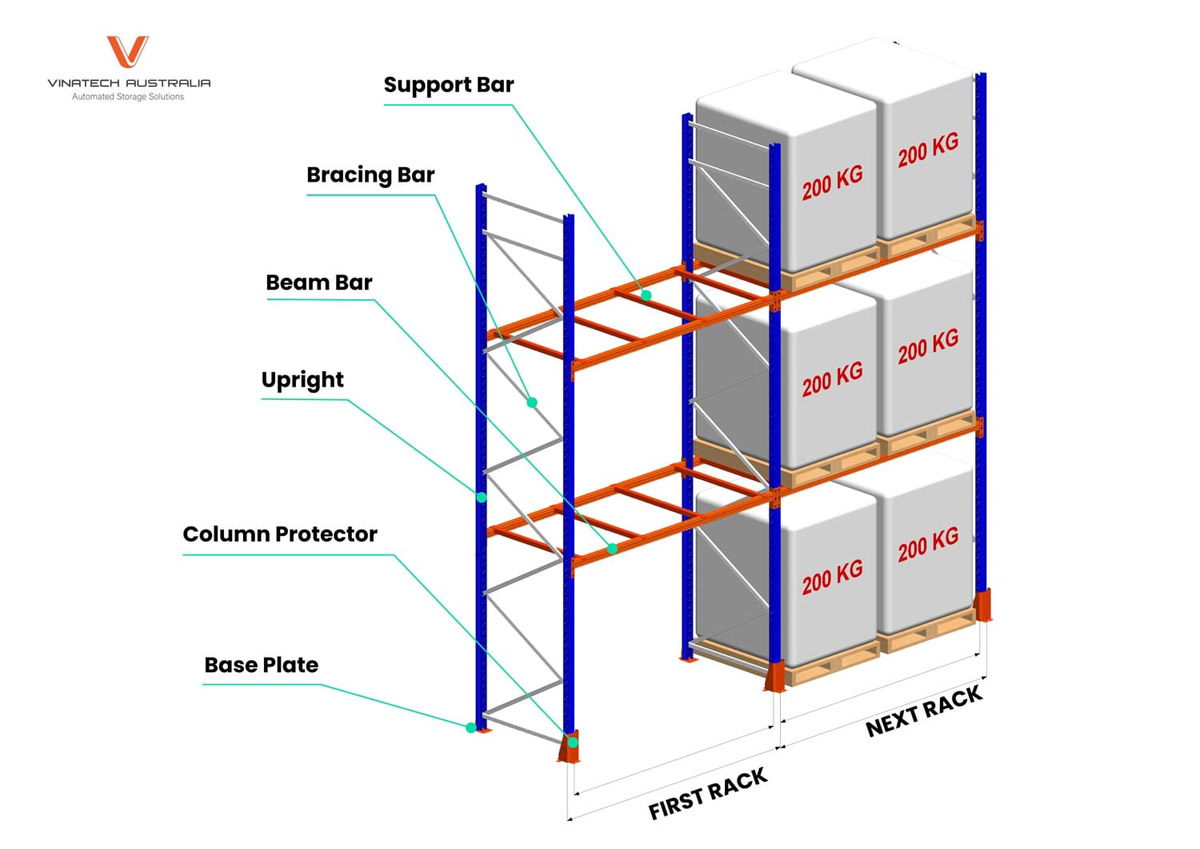
- Rack height – the overall height of the upright frame.
- Rack depth – the front-to-back depth of the frame.
- Bay width or beam length – the horizontal distance available for pallet storage.
- Beam height and profile – selected according to span and load requirements.
- Beam level spacing – the vertical distance between storage levels.
- Aisle width – the operating space between rack rows.
- Upright profile – determined by the structural requirements of the system.
Rather than selecting one “standard rack size”, the goal is to combine these dimensions into a configuration that suits the warehouse operation.
Common Mistakes When Choosing Pallet Racking Dimensions
Getting rack dimensions wrong does not always mean the pallets will not fit. Often, the larger problem is that the warehouse becomes unnecessarily difficult or inefficient to operate. Some common mistakes include:
Designing Around Floor Space Only
A layout may maximise the number of rack rows but ignore forklift turning space, loading areas or vertical storage opportunities. Looking at the full warehouse volume rather than only the floor plan usually produces a more useful design.
Assuming Every Pallet Is the Same
Even when a business uses standard Australian pallets, loaded dimensions can vary substantially between products. Always measure the complete load rather than relying only on the nominal pallet size.
Making Beam Levels Too Tight
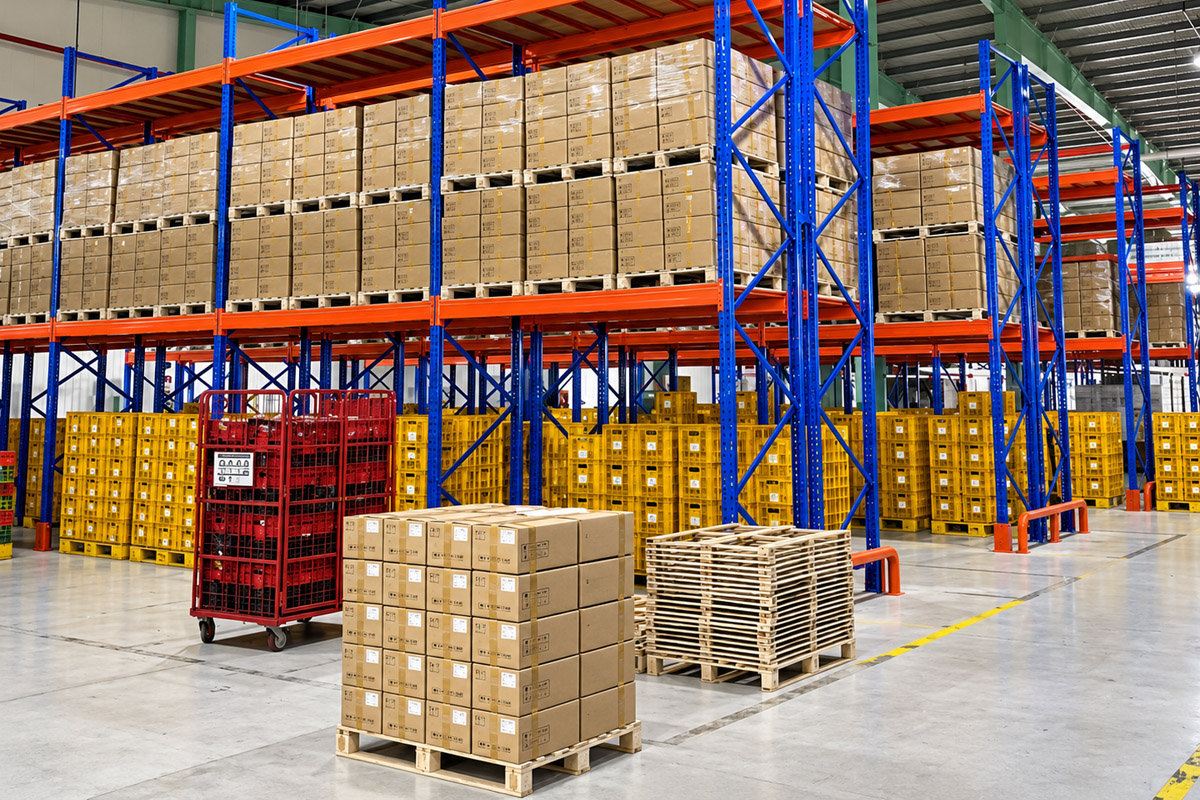
Reducing vertical clearance may appear to create more storage space, but it can make pallet placement unnecessarily difficult. The rack needs enough operational clearance for everyday forklift handling.
Choosing Aisle Width Before Confirming the Forklift
This can result in either wasted floor space or a layout the existing equipment cannot operate efficiently. Different forklift types require different turning and manoeuvring clearances, so aisle width should always be planned around the actual handling equipment. Forklift specification and aisle width should therefore be determined together from the beginning.
Focusing on Dimensions but Ignoring Weight
A pallet can fit perfectly into a bay while still exceeding the designed load capacity. Pallet weight affects beam selection, upright capacity and the overall structural requirements of the rack. For this reason, dimensions and load capacity need to be assessed together rather than treated as separate design considerations.
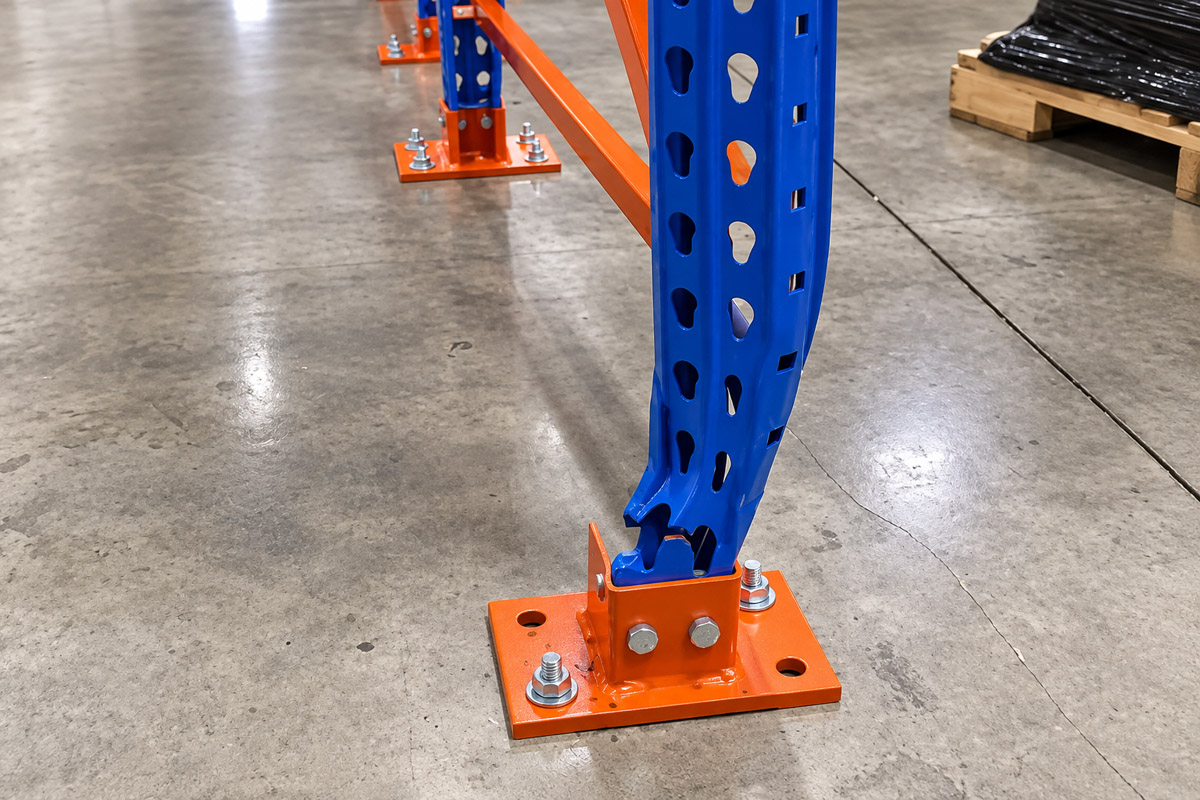
Small sizing mistakes can quickly turn into bigger operational problems inside the warehouse
Pallet Racking Dimensions and AS 4084:2023
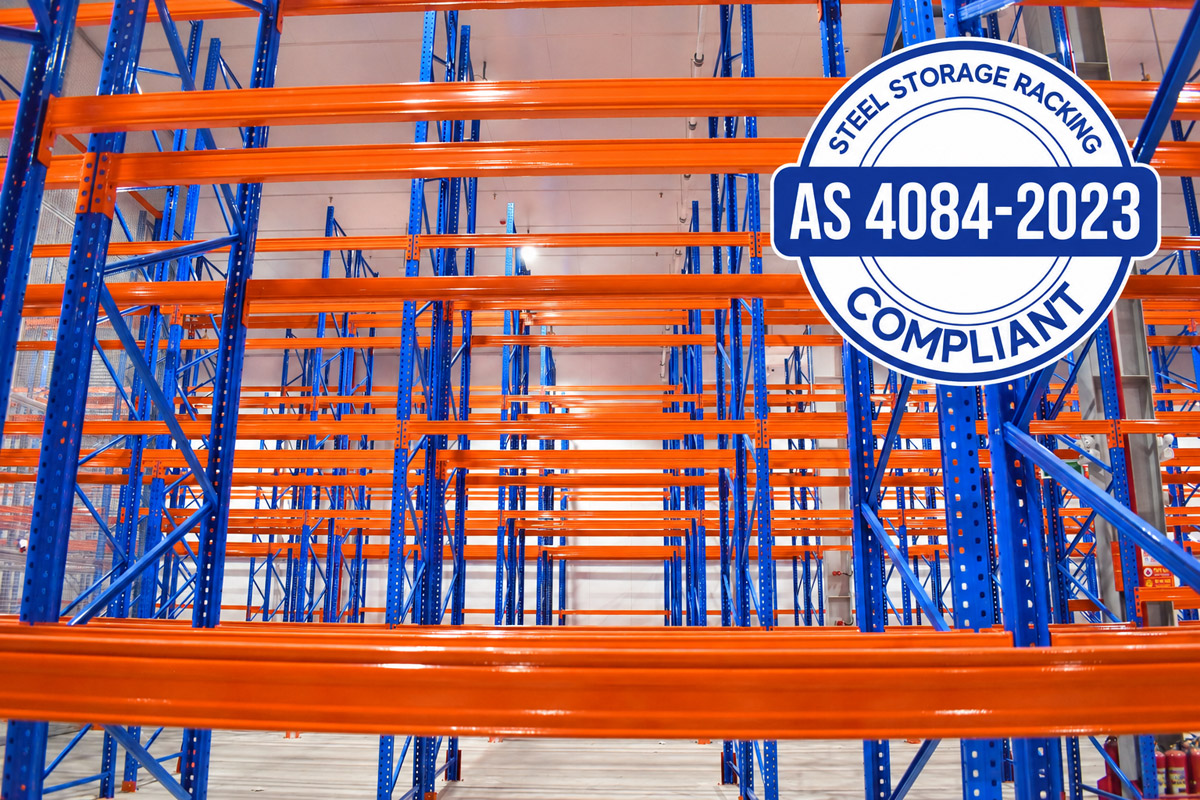
Rack dimensions should not be considered separately from structural design. In Australia, AS 4084:2023 – Steel storage racking covers the design, operation and maintenance of steel storage racking, and Vinatech Australia states that its pallet racking systems are certified to this standard.
For warehouse operators, this means dimensions such as rack height, beam span and beam spacing need to be assessed together with load capacity and overall structural performance. A rack may physically fit within the available space, but that does not automatically mean the configuration is suitable for the intended loads.
Changes to an existing rack should therefore be reviewed carefully. Moving beam levels, increasing pallet weight or adding more storage levels can alter the way loads are distributed through the structure, so any modification should be checked before it is put into use.
Rack dimensions should always be considered together with load capacity and structural requirements
Pallet Racking Dimensions from Vinatech Australia
Vinatech Australia provides warehouse racking solutions covering planning, customised layout design, manufacturing and installation. Its pallet racking portfolio includes Selective, Double Deep, Drive-In, Push Back, Pallet Flow, VNA and other storage systems designed for different combinations of accessibility and storage density.
A warehouse design can take into account:
- Pallet dimensions and weight.
- Required pallet positions.
- Rack height and beam configuration.
- Forklift specifications.
- Aisle widths.
- Warehouse clear height.
- Columns and building obstructions.
- SKU movement and stock rotation.
- Receiving and dispatch flow.
- Future capacity requirements.
Choosing the right pallet racking dimensions is essential for making efficient use of warehouse space while maintaining safe and practical storage operations. Frame height, frame depth, beam length, load capacity, pallet dimensions and forklift requirements should all be considered when developing a racking layout. If you are planning a new warehouse or upgrading an existing storage system, contact Vinatech Australia for a custom pallet racking design tailored to your warehouse.
Vinatech Australia: Industrial Warehouse Racking – Warehouse Shelving Solutions
🌐 Website: vinatech.com.au
☎️ Phone number: 0485 083 868
📩 Email: info@vinatech.com.au
📌 Address: 34 Paramount Bvd, Cranbourne West VIC 3977, Australia
FAQs about Pallet Racking Dimensions

William Harris is the Production Director at Vinatech Australia, with more than 10 years of experience in industrial warehouse racking, manufacturing, warehouse optimisation and smart storage technologies. His professional background combines engineering, production management and warehouse operations, enabling him to oversee the development of storage systems designed for safety, durability, efficiency and long-term operational performance.