
Simple, flexible and easy to operate, conventional pallet racking remains one of the most widely used ways to store palletised goods. With direct access to individual pallets and an adjustable layout, it works particularly well for warehouses managing a broad range of SKUs. The key is designing the system around your stock, forklifts and day-to-day material flow.
What is Conventional Pallet Racking?
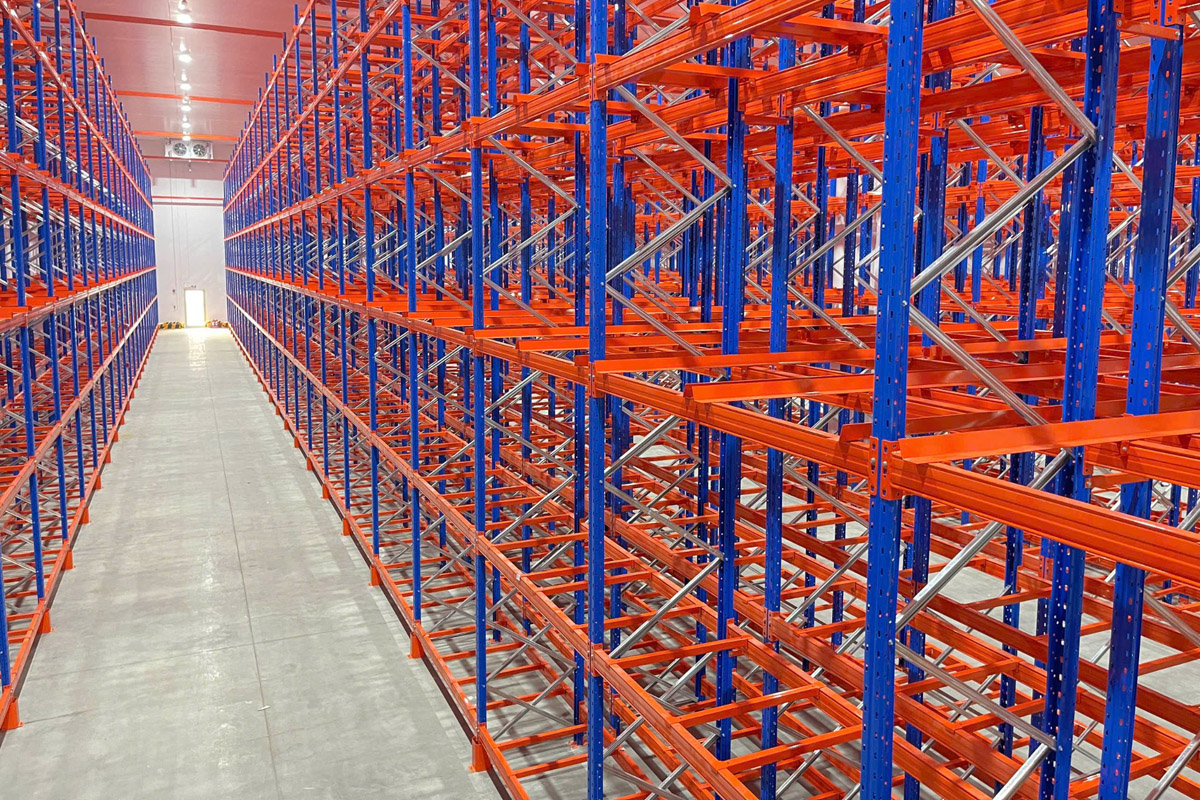
Conventional pallet racking is a pallet storage system built around upright frames and horizontal beams, with operating aisles between rack rows so forklifts can access individual pallet positions directly.
In Australia, the term is commonly associated with Selective Pallet Racking, the familiar single-deep system found in warehouses, distribution centres and manufacturing facilities across a wide range of industries. A typical system includes:
- Upright frames that provide the main vertical structure.
- Horizontal beams that support pallet loads at different levels.
- Baseplates and anchors securing the frames to the floor.
- Beam locking devices help keep beams correctly positioned.
- Rack protection such as upright protectors or end-of-row barriers where required.
- Load signage showing the designed operating limits of the system.
While the structure itself is relatively simple, the final configuration can be adjusted to suit pallet size, load weight, warehouse height and handling equipment.
Why is Conventional Racking so widely used?
Warehouses rarely stay exactly the same for long. Product ranges expand, pallet heights change, new customers come on board and inventory levels fluctuate. A storage system therefore needs to accommodate change without making normal warehouse operations unnecessarily complicated.
This is where conventional racking performs particularly well, the main benefits include:
- Direct pallet access: forklifts can retrieve individual pallets without relocating surrounding stock.
- High selectivity: particularly useful for warehouses handling many SKUs.
- Flexible configuration: rack heights and beam levels can be designed around different pallet requirements.
- Straightforward stock control: individual pallet positions are easy to identify and manage.
- Compatibility with common forklifts: conventional systems can work with widely used counterbalance and reach trucks when the aisle layout is designed accordingly.
- Easy expansion: additional bays or rack rows can often be incorporated as warehouse requirements grow.
For many businesses, this combination of accessibility and flexibility is more valuable than achieving the highest possible number of pallets per square metre.
How does Conventional Pallet Racking work?
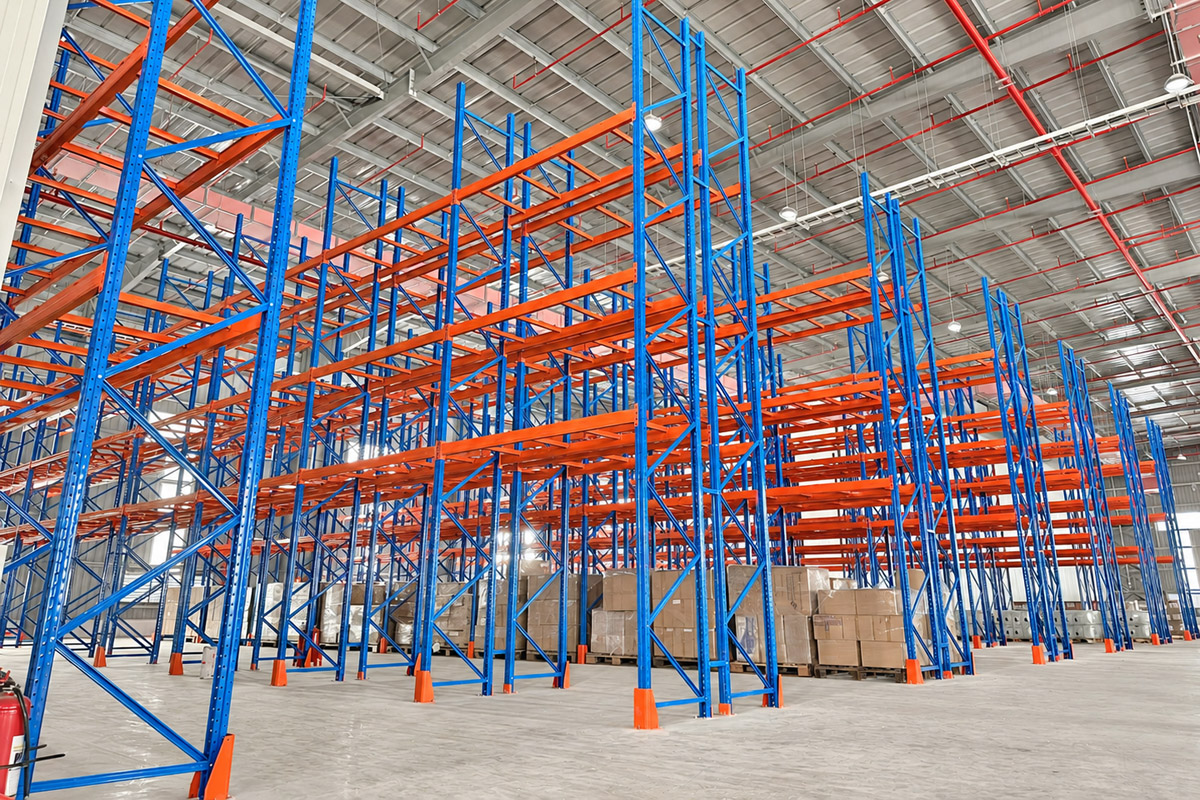
The operating principle is simple. Pallets are placed on horizontal beams, while aisles between rack rows provide the forklift with access to each storage location.
Depending on the warehouse layout, racks may be installed as single rows against a wall or arranged back-to-back through the centre of the facility. The height of each rack, beam spacing and aisle width can then be adjusted to suit the building and material-handling equipment.
In a standard configuration, the process looks like this:
- A forklift enters the required aisle.
- The operator travels directly to the assigned pallet position.
- The pallet is placed onto or removed from the appropriate beam level.
- Other pallets within the rack remain accessible without needing to be moved.
This direct-access principle is what distinguishes conventional pallet racking from many high-density systems.
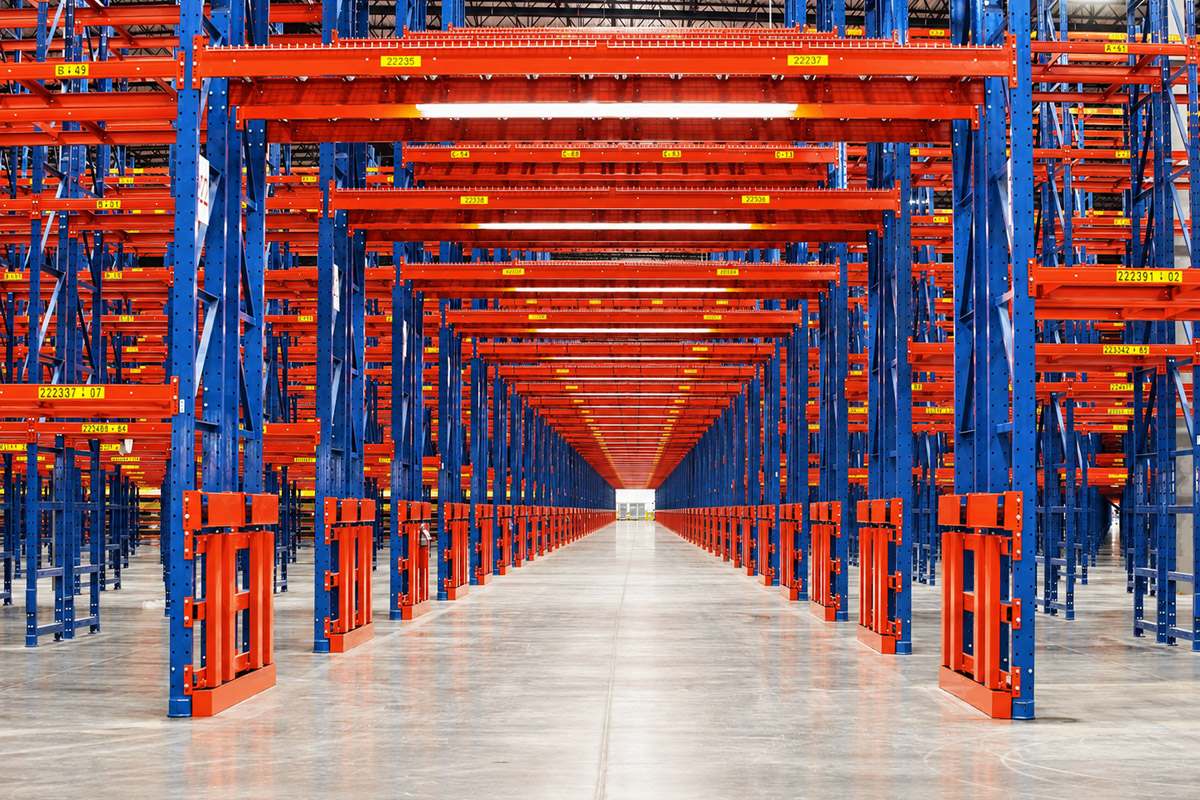
Conventional Pallet Racking vs High-Density Racking
Conventional pallet racking generally prioritises accessibility and flexibility, while systems such as Drive-In, Double Deep, Push Back or Shuttle Racking place greater emphasis on storage density. The right choice depends on what the warehouse needs to achieve.
A simple comparison looks like this:
| Factor | Conventional Pallet Racking | High-Density Racking |
|---|---|---|
| Pallet access | Direct access to individual pallets | Access depends on system configuration |
| SKU variety | Well suited to high SKU counts | Often better for larger quantities per SKU |
| Storage density | Moderate | Higher |
| Number of aisles | More aisles required | Fewer aisles generally required |
| Stock management | Simple and flexible | May require more structured stock rotation |
| Forklift operation | Straightforward | May require specialised equipment or procedures |
| Layout flexibility | High | Depends on system type |
The choice therefore comes down to a practical question: does your operation benefit more from having more pallets in the building, or from being able to reach each pallet quickly?
For many warehouses, the answer sits somewhere between the two. Different storage systems can also be used in separate warehouse zones rather than forcing one solution across the entire facility.
When does Conventional Pallet Racking make sense?
Conventional racking is especially effective where pallet accessibility is important and stock moves frequently. It can be a strong option for:
Warehouses with many SKUs
When hundreds or thousands of product lines share the same facility, operators need to reach the correct pallet without repeatedly moving other stock.
Direct access makes this much easier.
Distribution Centres
Distribution environments often handle a mixture of inbound stock, replenishment and outbound orders throughout the day. A flexible rack layout supports these changing movements without requiring complicated pallet sequencing.
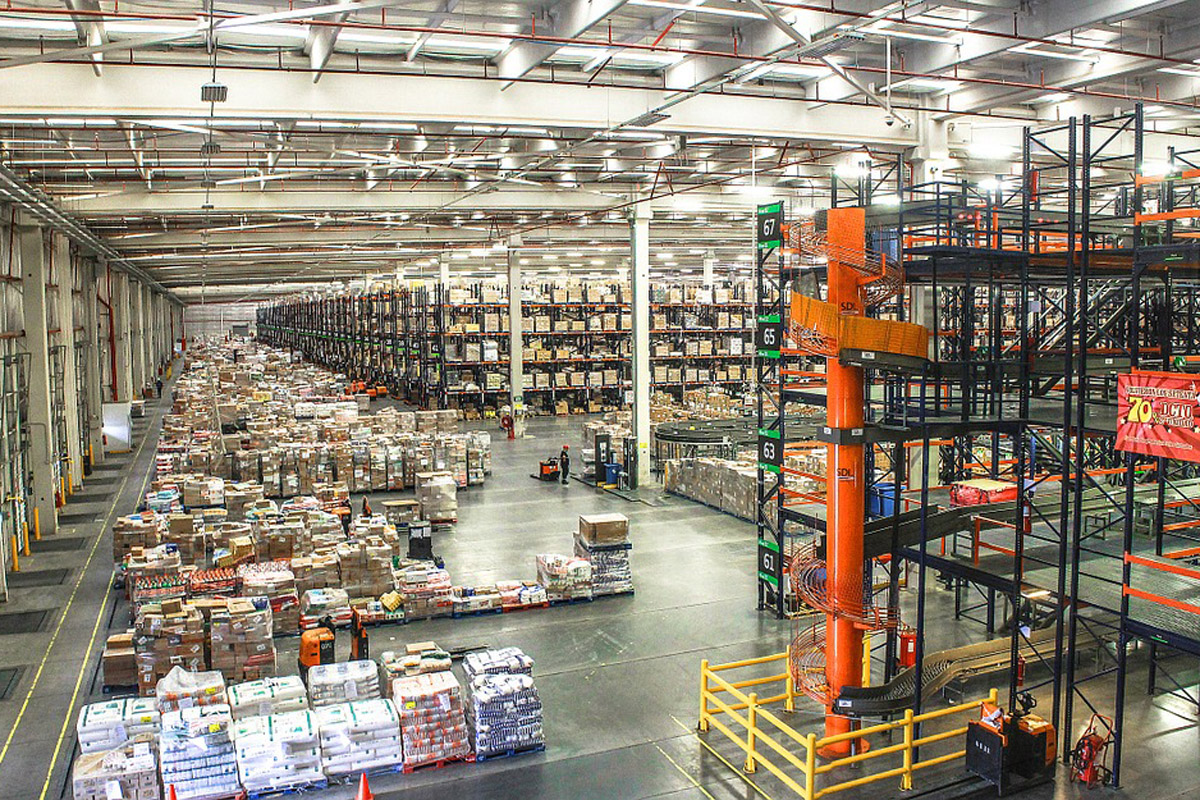
Manufacturing Warehouses
Manufacturers may need to store raw materials, work-in-progress and finished products within the same facility.
Conventional pallet racking allows different areas to be organised around individual material flows while retaining direct access to each pallet.
3PL Operations
Third-party logistics providers frequently manage stock for multiple customers with different SKU profiles and turnover rates.
A highly selective system can make it easier to allocate locations and adapt the warehouse as customer requirements change.
Businesses with changing inventory
If pallet heights, product ranges or stock quantities change regularly, an adjustable rack system provides more flexibility than highly specialised storage configurations.
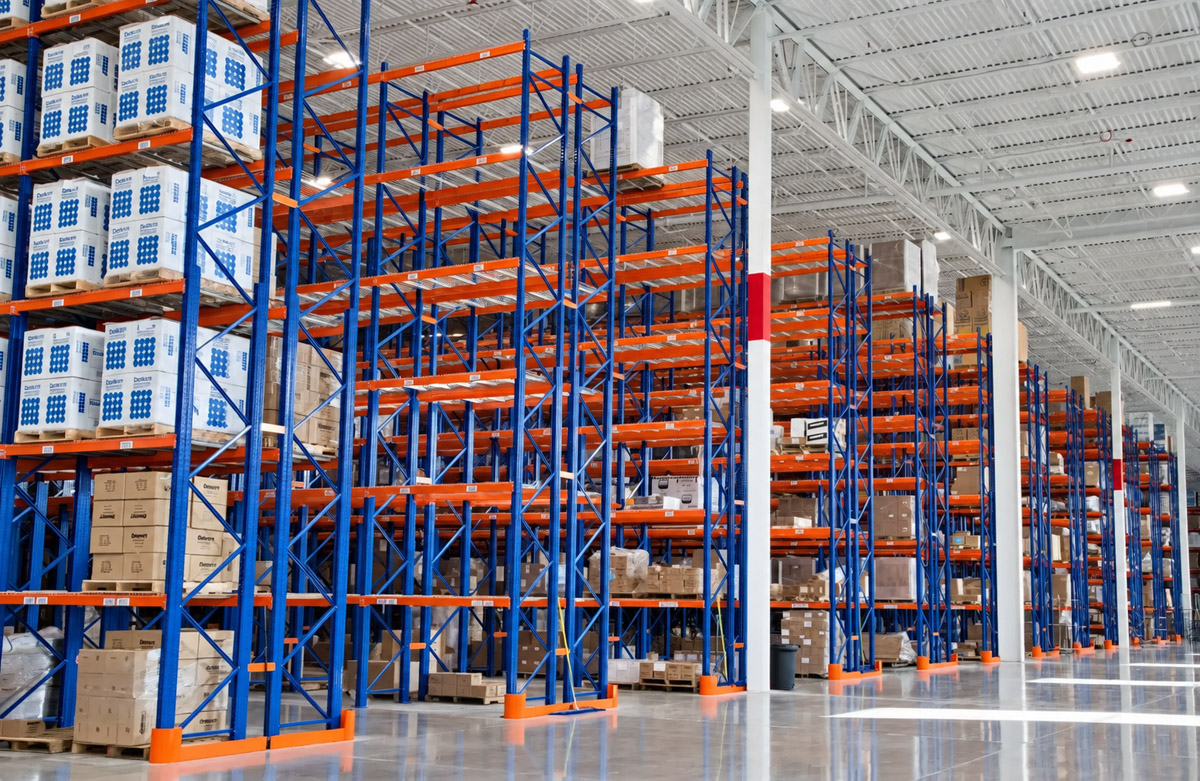
Key factors when designing Conventional Pallet Racking
A good rack layout should begin with the warehouse operation rather than the steel itself. Before deciding how many rack rows will fit into the building, it is worth understanding what those racks actually need to store and how they will be accessed.
Pallet Size and Weight
The starting point is the pallet. Design information should include:
- Pallet width and depth.
- Loaded pallet height.
- Maximum pallet weight.
- Product overhang, if any.
- Number of pallets required per beam level.
- Variation between different pallet types.
For Australian operations using standard pallets, the rack configuration can be designed accordingly, but actual pallet and load dimensions should still be confirmed rather than assumed.
Warehouse Height
Increasing the number of beam levels may provide additional pallet positions without changing the warehouse footprint, although several other factors need to be considered alongside building height.
These include forklift reach, sprinkler clearance, lighting, roof structure and other building services.
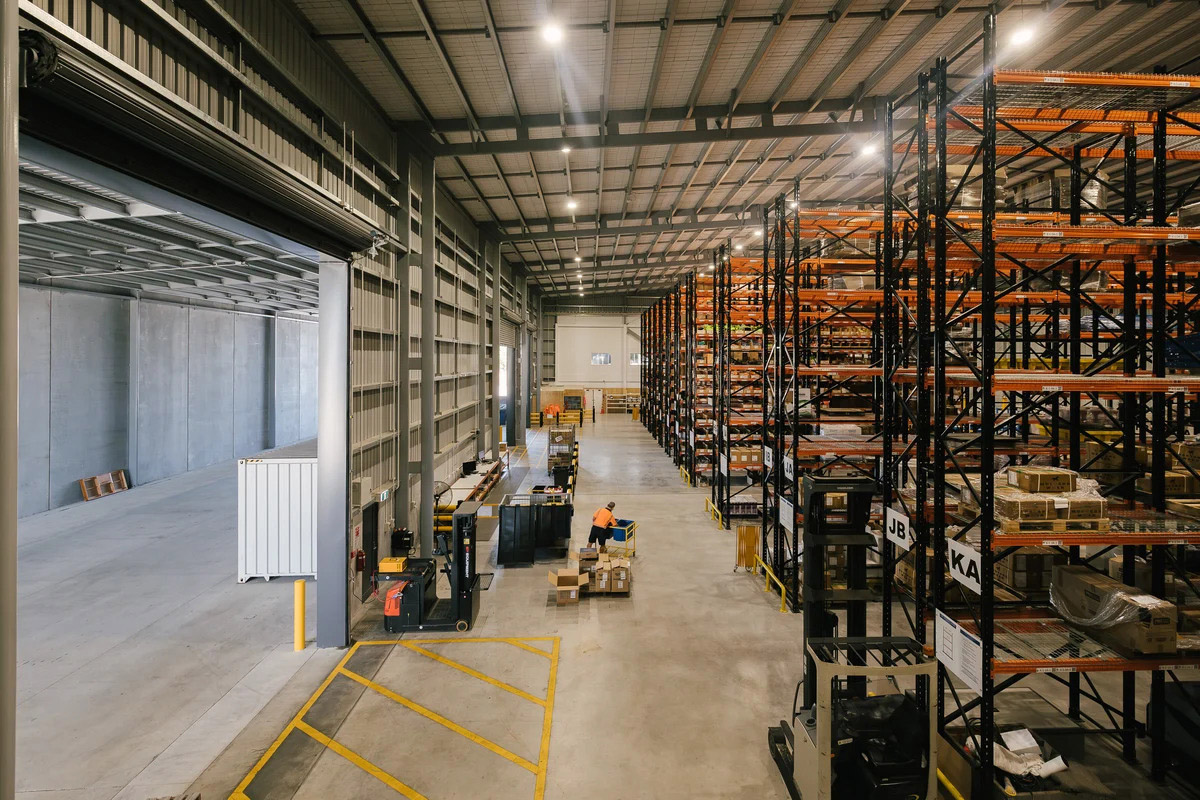
Forklift Type
The warehouse should be designed around the forklift rather than expecting the forklift to adapt to an impractical rack layout.
Counterbalance forklifts generally require wider aisles, while reach trucks can operate within narrower spaces. Very Narrow Aisle configurations take this further by using specialised handling equipment to reduce aisle requirements.
Knowing the equipment specification early helps determine how much floor area needs to remain available for forklift movement.
SKU Profile
Two warehouses containing the same number of pallets may require completely different rack layouts. A facility with 2,000 pallets across 1,000 SKUs has very different access requirements from a facility with 2,000 pallets across 20 SKUs.
Understanding SKU quantity, stock depth and turnover allows the racking system to be designed around real inventory behaviour.
Material Flow
Rack capacity should never be considered in isolation from receiving, picking and dispatch operations.
A warehouse may gain additional pallet positions but lose efficiency if the layout creates long forklift travel distances or congestion around key operating areas. Good design therefore considers questions such as:
- Where does stock enter the warehouse?
- Where are fast-moving SKUs located?
- How frequently are pallets replenished?
- Where does picking take place?
- How do forklifts move between storage and dispatch?
- Could certain rack positions create traffic bottlenecks?
This wider view often has a greater impact on warehouse productivity than simply adding another rack row.
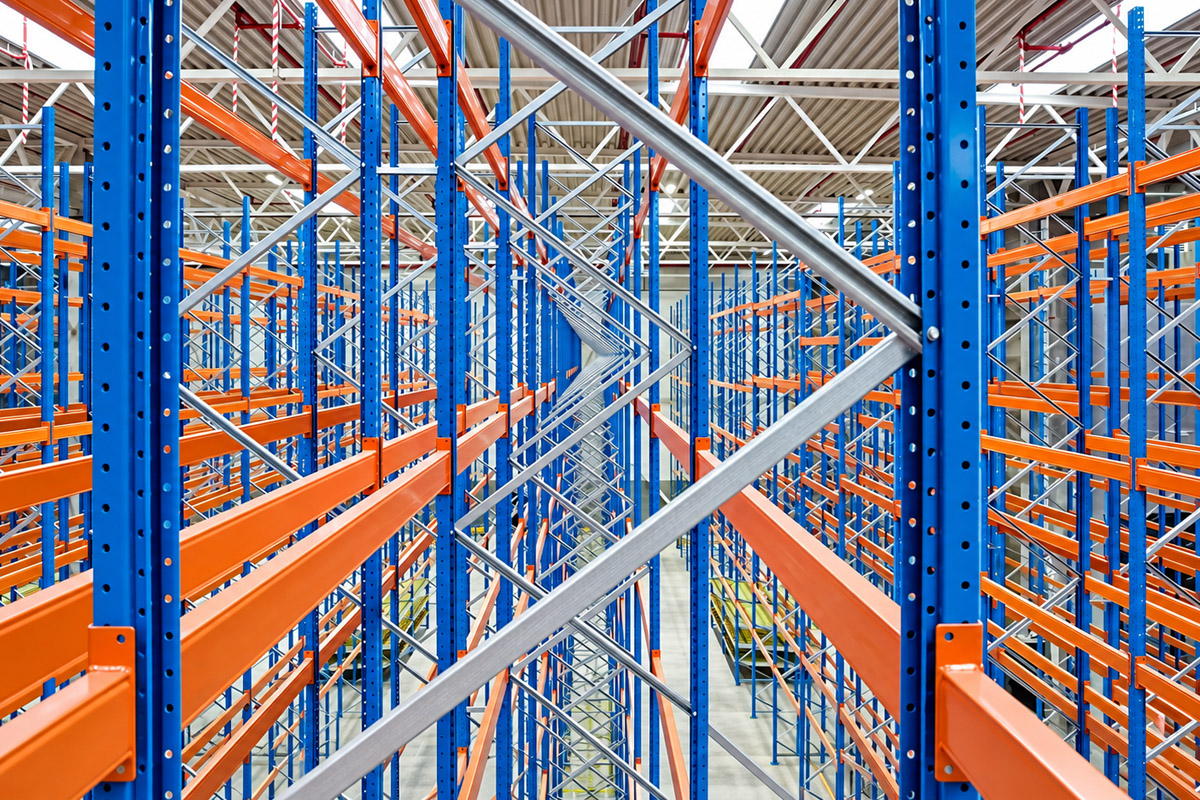
Conventional Pallet Racking from Vinatech Australia
Choosing the rack type is only one part of a warehouse storage project. Racking dimensions, aisle widths, pallet loads and material flow all need to work together if the finished system is going to perform effectively.
Vinatech Australia provides pallet racking and warehouse storage solutions covering the process from initial planning through to manufacturing, installation and ongoing support. Its current pallet racking range includes Selective, Double Deep, Drive-In, Push Back, Pallet Flow, VNA and other storage configurations.
Depending on the project, Vinatech Australia can support:
- Warehouse assessment and storage planning.
- Custom 2D and 3D warehouse layouts.
- Pallet and SKU analysis.
- Rack and aisle configuration.
- Selective and high-density storage systems.
- Factory-direct racking manufacture.
- Professional installation.
- Rack inspection and maintenance support.
- Future warehouse expansion or reconfiguration.
Vinatech Australia also states that its pallet racking systems are certified to comply with AS 4084:2023.
Rather than starting with a particular rack system, the better approach is to understand how the warehouse operates first. Conventional pallet racking may be the right solution for one part of the facility, while higher-density storage may make more sense elsewhere.
Vinatech Australia – Automated Warehouse & Pallet Racking Systems
🌐 Website: https://vinatech.com.au/
☎️ Phone number: 0485 083 868
📩 Email: info@vinatech.com.au
📌 Address: 34 Paramount Bvd, Cranbourne West VIC 3977, Australia
FAQs about Conventional Pallet Racking
Conventional Pallet Racking, also known as Selective Pallet Racking, uses upright frames and horizontal beams to create individual pallet storage locations. Forklifts can access each pallet directly from the aisle, making it suitable for warehouses handling a wide variety of products.
The main advantages include direct access to individual pallets, flexible stock management, adjustable beam levels and straightforward inventory rotation. Its modular design also makes it easier to adapt the layout as storage requirements change.
Load capacity depends on beam dimensions, upright frame specifications, beam spans, storage levels and the overall system configuration. Each installation should be engineered for its intended loads, with clearly displayed load notices indicating the applicable capacity limits.
Yes. Conventional Pallet Racking is particularly suitable for warehouses storing many different SKUs because each pallet can be accessed independently. This supports flexible picking, replenishment and inventory management.
Conventional Pallet Racking prioritises direct access to individual pallets, while high-density systems such as Drive-In, Push Back and Shuttle Racking reduce the space allocated to aisles or use deeper storage lanes. High-density systems can increase storage density but may involve different access and stock rotation requirements.
The required aisle width depends on the forklift model, turning radius, pallet dimensions, load overhang and operating clearances. The layout should be designed around the actual material handling equipment rather than using a single aisle width for every warehouse.
Yes. Beam levels can often be repositioned within the system’s design limits, and compatible bays may be added if the warehouse layout and engineering specifications allow. Changes must maintain the required load capacities and safety clearances.
Conventional Pallet Racking suits distribution centres, manufacturing facilities, wholesale warehouses, retail distribution operations and many other businesses that need organised pallet storage with direct product access.
Important considerations include suitable floor anchoring, upright protection where impact risks exist, pallet supports where required, visible load notices and adequate operating clearances. Regular inspections and prompt assessment of damaged components are also essential for safe operation.
Consider pallet dimensions and weights, SKU variety, required pallet positions, warehouse height, forklift specifications, aisle widths and future growth. A warehouse layout assessment can help determine the appropriate frame dimensions, beam lengths, storage levels and overall configuration.

William Harris is the Production Director at Vinatech Australia, with more than 10 years of experience in industrial warehouse racking, manufacturing, warehouse optimisation and smart storage technologies. His professional background combines engineering, production management and warehouse operations, enabling him to oversee the development of storage systems designed for safety, durability, efficiency and long-term operational performance.