



Pallet racking compliance is an important consideration for Australian warehouses, helping ensure storage systems are appropriately designed, installed and operated for their intended loads and conditions. Compliance involves more than selecting the right racking system; it can also include load capacity, installation, floor anchoring, safety clearances, inspections, maintenance and appropriate modifications. This guide explains the key pallet racking compliance considerations for Australian warehouses, including the role of AS 4084:2023 and practical steps for maintaining a safe and compliant racking system.
What is Pallet Racking Compliance?
Pallet racking compliance refers to the way a storage system is designed, installed and managed in accordance with applicable standards, manufacturer requirements and workplace safety obligations.
A compliant system should not only be structurally suitable when first installed. It should continue to operate within its approved configuration and load capacity as warehouse conditions change.
This includes factors such as:
- Pallet dimensions and maximum weights.
- Rack configuration and beam levels.
- Safe Working Loads (SWL).
- Forklift and aisle requirements.
- Floor fixings and rack alignment.
- Load signage.
- Protection against forklift impact.
- Inspection and damage reporting.
- Repairs, replacement components and rack modifications.
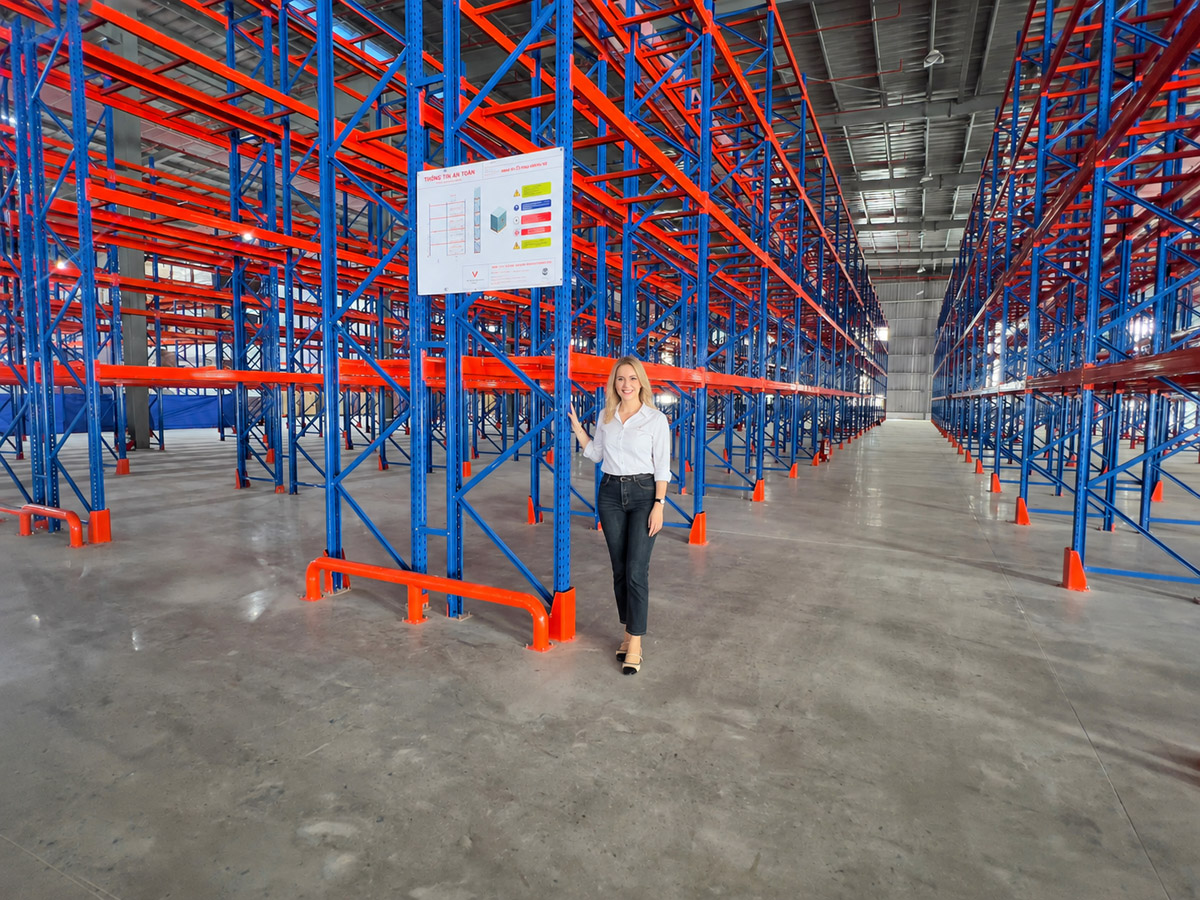
SafeWork NSW advises that workplace racking should be designed specifically for the size, shape and weight of the products being stored and should be compatible with the material handling equipment used within the warehouse.
Read more: Selective Pallet Racking: Specifications, Components and Applications
What is AS 4084:2023?
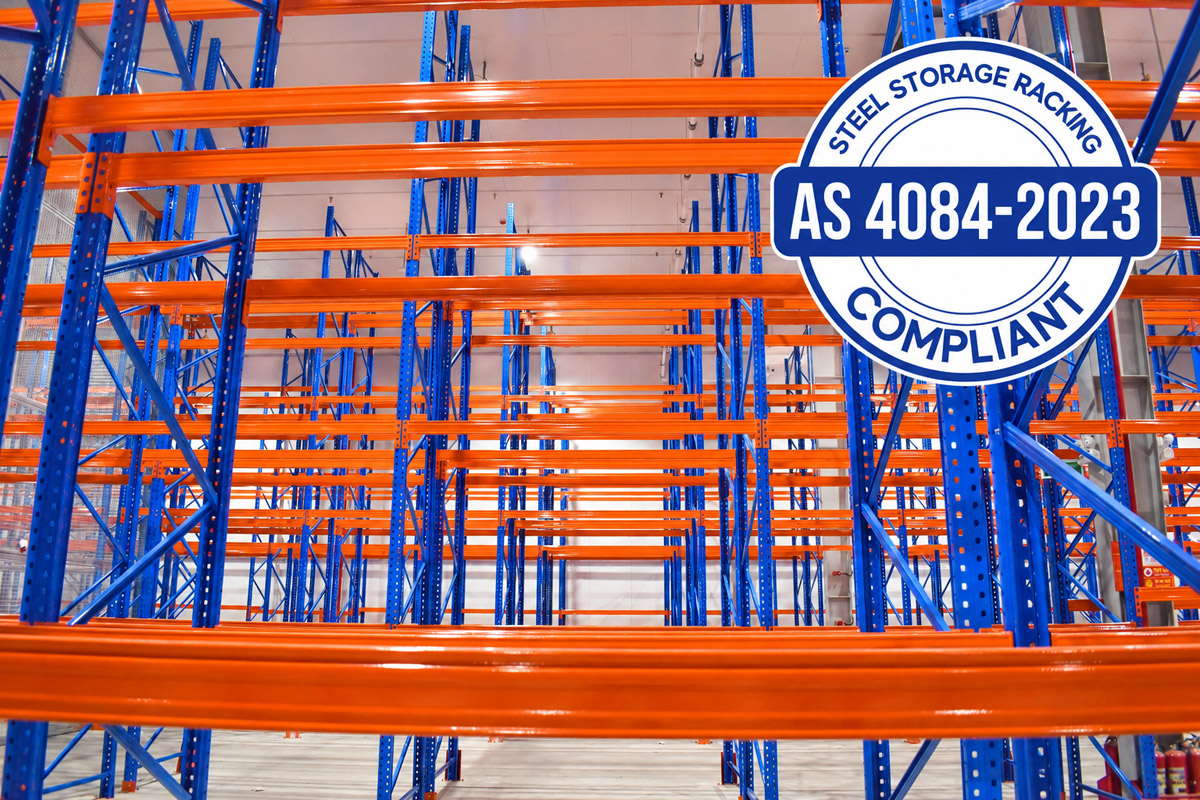
AS 4084:2023 is the current Australian Standard covering steel storage racking and replaced the previous AS 4084:2012 edition. The current standard is divided into two main parts.
AS 4084.1:2023 – Design
AS 4084.1:2023 addresses the analysis, design and testing of steel storage racking. It applies primarily to adjustable static pallet racking manufactured from cold-formed or hot-rolled steel structural members.
This part of the standard is particularly relevant when designing a new pallet racking system because factors such as rack height, beam spans, pallet weights, configuration and structural loads need to be considered together.
AS 4084.2:2023 – Operation and Maintenance
AS 4084.2:2023 focuses on how steel storage racking is installed, operated, inspected and maintained after it has been placed into service.
For warehouse operators, this is especially important because rack safety can change over time. Forklift impacts, overloaded beams, damaged uprights or unauthorised configuration changes can all affect the performance of a system that was originally installed correctly.
What Should You Check for Pallet Racking Compliance?
A warehouse rack should be considered as a complete storage system rather than a collection of frames and beams. Several factors need to work together for that system to remain suitable for daily operations.
Rack Design Must Match the Actual Loads
One of the first considerations is whether the rack was designed for the pallets that are actually being stored. The design should account for:
- Pallet width and depth.
- Loaded pallet height.
- Maximum individual pallet weight.
- Number of pallets per beam level.
- Total load carried by each bay.
- Load distribution across the beams.
The maximum unit load and total rated capacity of a rack bay should not be exceeded. SafeWork NSW also recommends that this information be clearly available to people using the racks.
Safe Working Load Signs Should Reflect the Rack Configuration
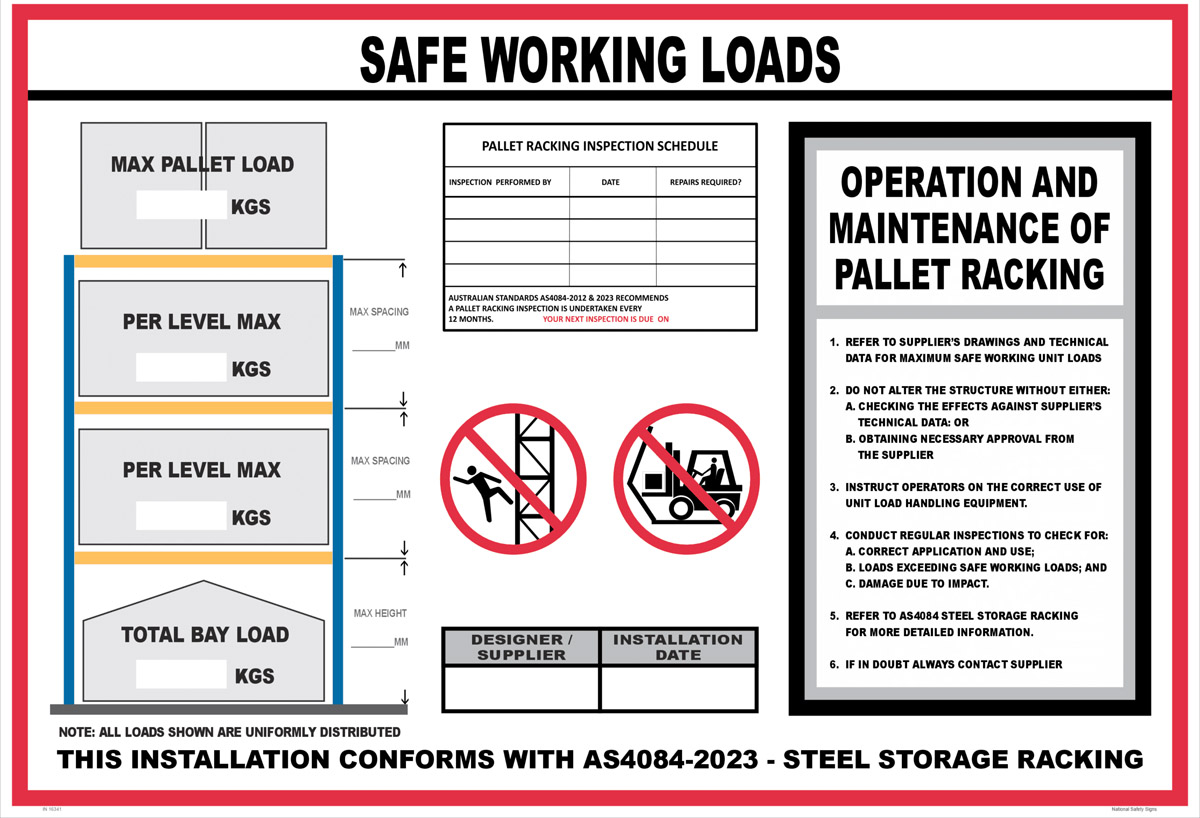
Clear load signage is an important part of pallet racking compliance because forklift operators and warehouse staff need to understand what the system has been designed to carry.
WorkSafe Victoria recommends that Safe Working Load information include details such as the unit load limit, total load limit for each beam level and total load limit for each bay.
The important point is that the load sign should correspond with the current rack configuration. If beam positions or rack configurations are changed, the original load capacity may also change. The signage, drawings and operating information may therefore need to be reviewed.
Installation Should Follow the Approved Design
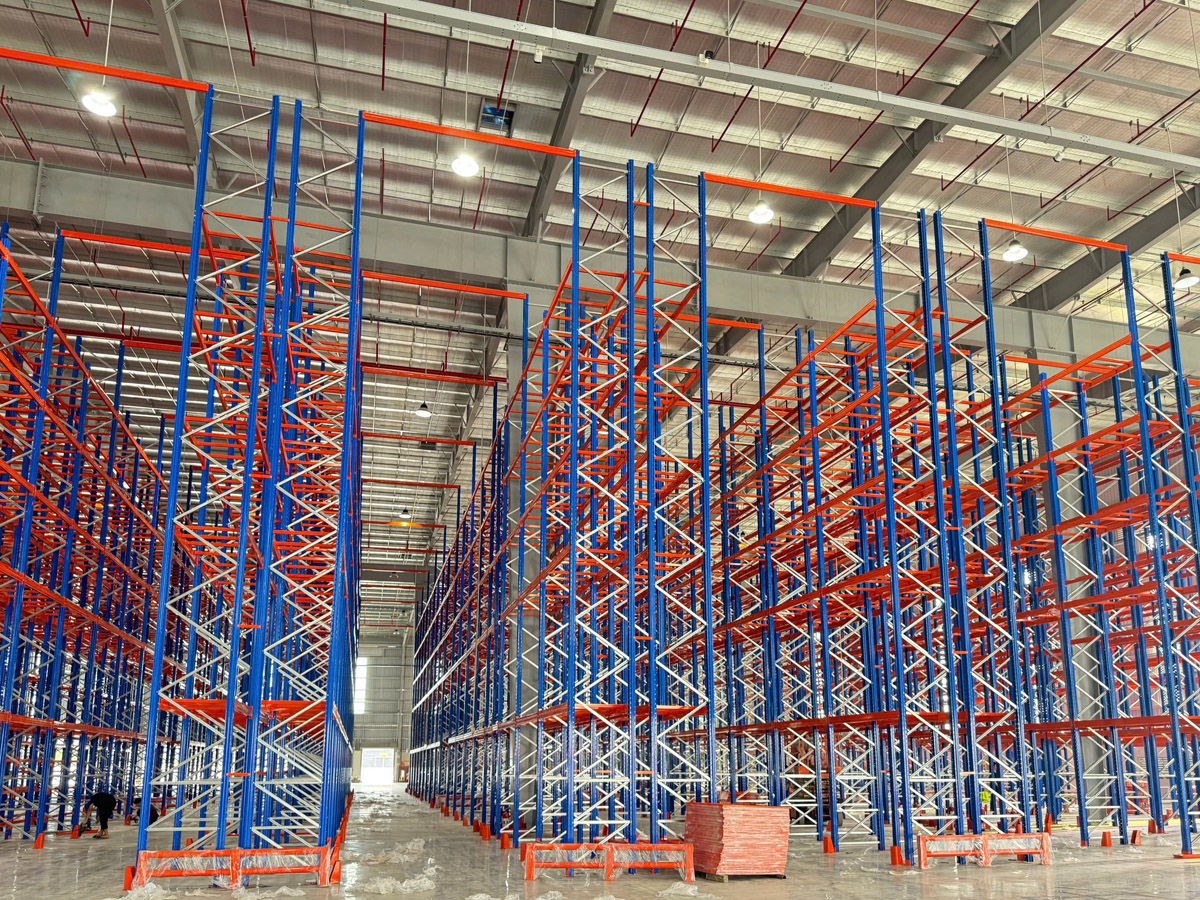
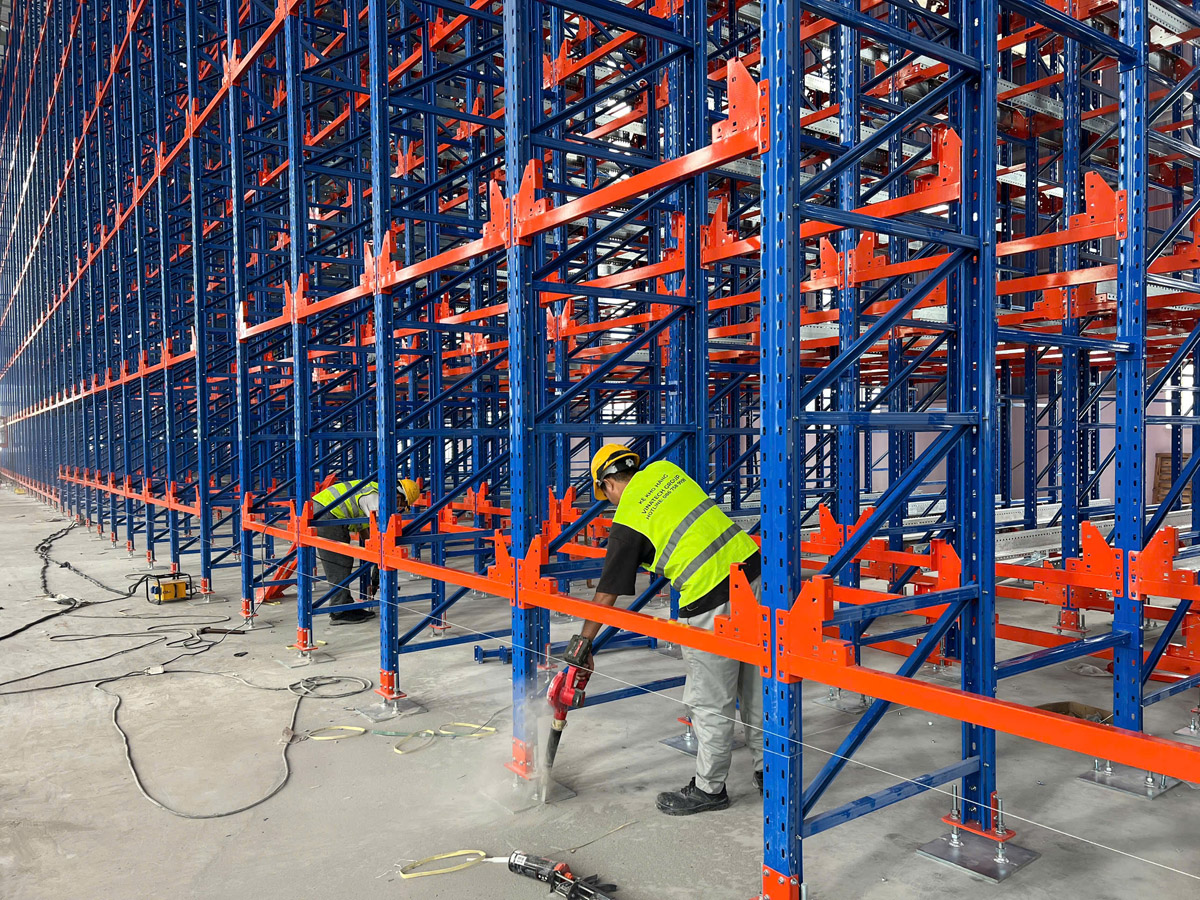
Even a correctly engineered rack can perform differently if the installation does not match the intended design. During installation, factors such as rack alignment, frame position, floor condition, anchoring and beam configuration all need to be considered.
Floor fixings should also remain in good condition. SafeWork NSW guidance specifically identifies floor anchors and footplates as items that should be checked during rack inspections.
This is why pallet racking installation should follow the approved layout and manufacturer’s technical requirements rather than being adjusted informally during assembly.
Forklift Operations Need to Match the Racking Layout
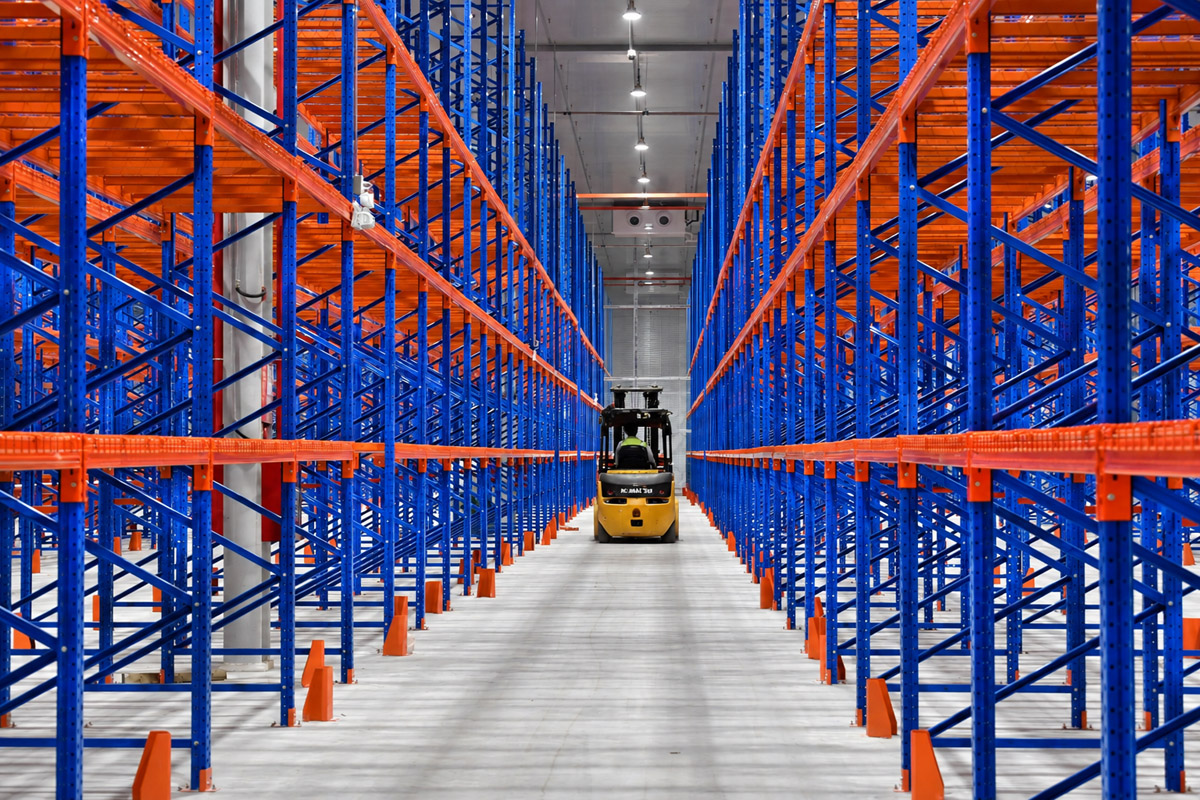
Pallet racking does not operate independently from the rest of the warehouse. Forklifts interact with the system every day, making equipment selection and aisle design important compliance considerations.
The layout should be suitable for the material handling equipment being used. Aisle widths, for example, need to provide sufficient operating space for the forklift turning circle and pallet handling movements.
Read more: Double Deep Racking: How It Works, Benefits & Applications
How Often Should Pallet Racking Be Inspected?
Regular inspection is one of the most important parts of ongoing pallet racking compliance. A formal inspection should also be completed by a competent person every 12 months. The inspection should be documented and should identify observations together with any corrective actions required.
During an inspection, attention may be given to:
- Damaged or bent uprights.
- Beam damage or excessive deflection.
- Missing beam safety clips.
- Damaged braces.
- Floor fixings and footplates.
- Rack alignment.
- Overloaded bays.
- Incorrect pallet sizes.
- Missing or outdated load signs.
- Changes to rack configuration.
- Evidence of forklift impact.
The objective is not simply to identify visible damage. Inspection also provides an opportunity to check whether the racking is still being used in the way it was originally designed.
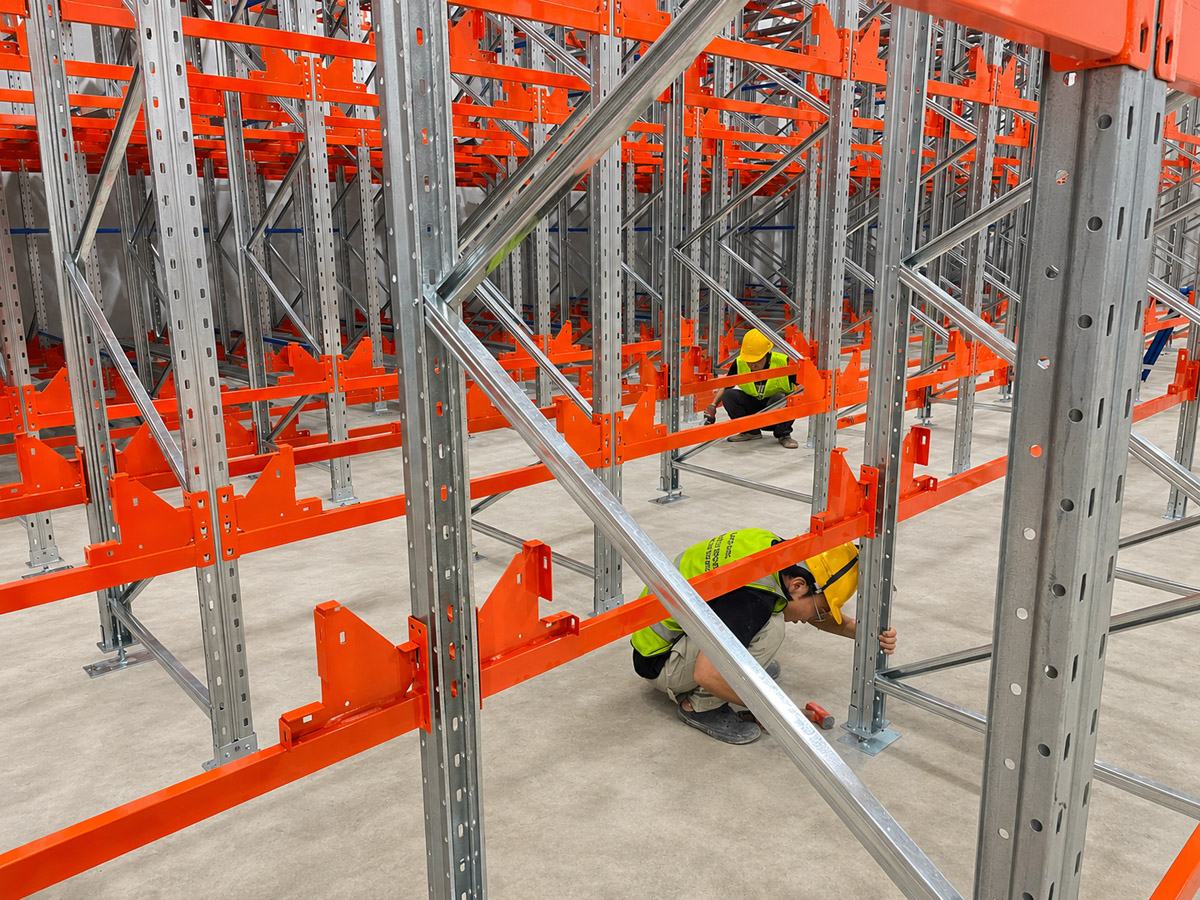
Ensuring pallet racking compliance is essential for maintaining safe and reliable warehouse storage operations. From appropriate system design and load capacity to correct installation, regular inspections and ongoing maintenance, each aspect plays a role in keeping racking systems suitable for their intended use. For Australian warehouses, considering AS 4084:2023 alongside applicable workplace safety requirements can help guide the design, operation and maintenance of steel storage racking.
Vinatech Australia supports warehouse projects from planning and racking design through manufacturing, supply and installation, with pallet racking solutions developed around operational requirements and relevant Australian standards.
Whether the project involves a new warehouse, an expansion or changes to an existing storage system, considering compliance early can help create a safer and more reliable warehouse operation.
Vinatech Australia: Industrial Warehouse Racking – Warehouse Shelving Solutions
🌐 Website: https://vinatech.com.au/
☎️ Phone number: 0485 083 868
📩 Email: info@vinatech.com.au
📌 Address: 34 Paramount Bvd, Cranbourne West VIC 3977, Australia

William Harris is the Production Director at Vinatech Australia, with more than 10 years of experience in industrial warehouse racking, manufacturing, warehouse optimisation and smart storage technologies. His professional background combines engineering, production management and warehouse operations, enabling him to oversee the development of storage systems designed for safety, durability, efficiency and long-term operational performance.