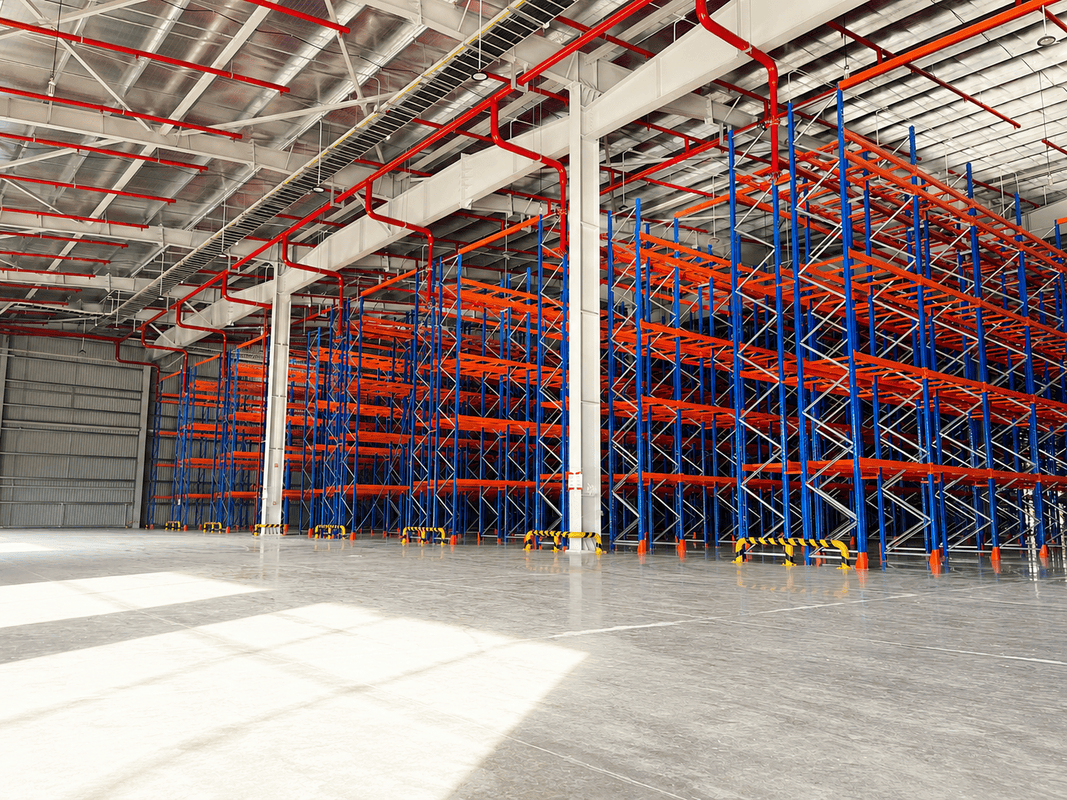

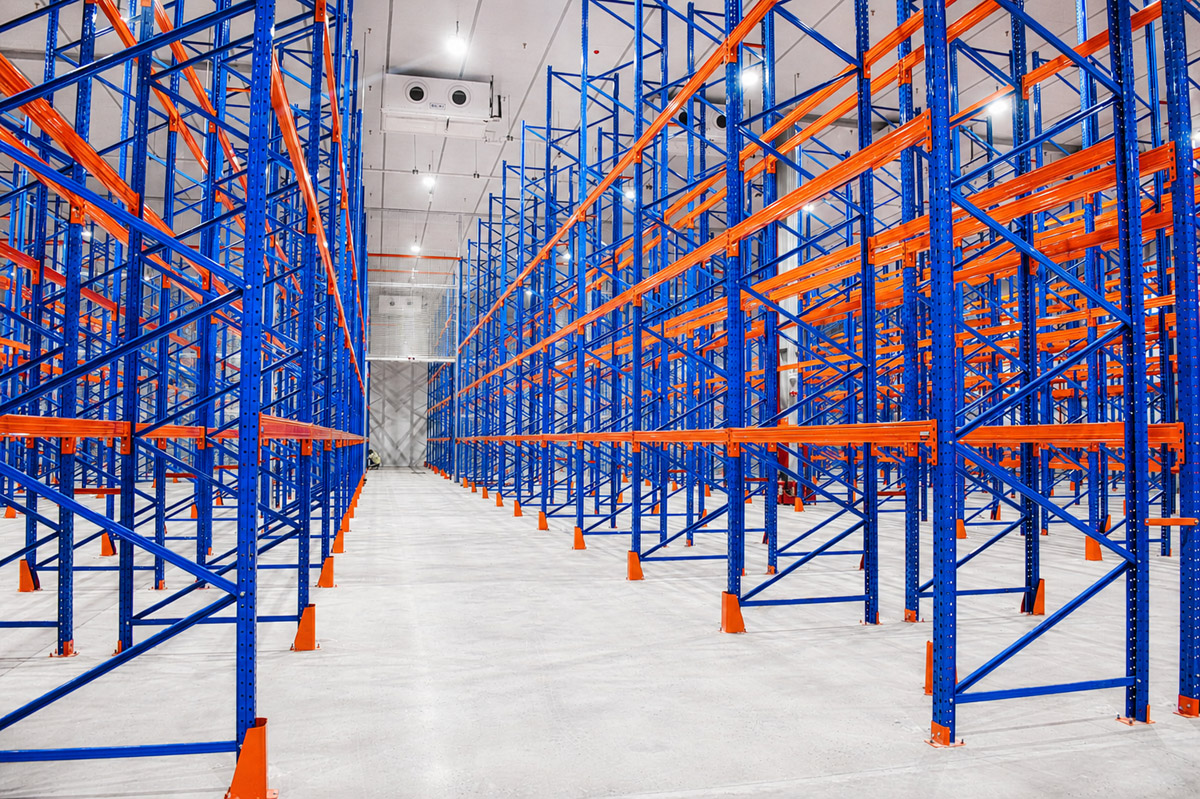




Mining warehouse racking helps mining operators organise heavy equipment, spare parts and maintenance supplies while improving storage capacity and inventory accessibility. The right system depends on your load weights, product dimensions, inventory range, available space and handling equipment.
For mining companies, maintenance workshops and industrial supply facilities, storage requirements can vary between small replacement parts, heavy machinery components and bulk maintenance inventory. A practical layout may combine several storage systems to accommodate frequently accessed spares, heavy palletised goods and materials with different handling requirements.
>> Read More:
1. Common Storage Challenges in Mining Warehouses
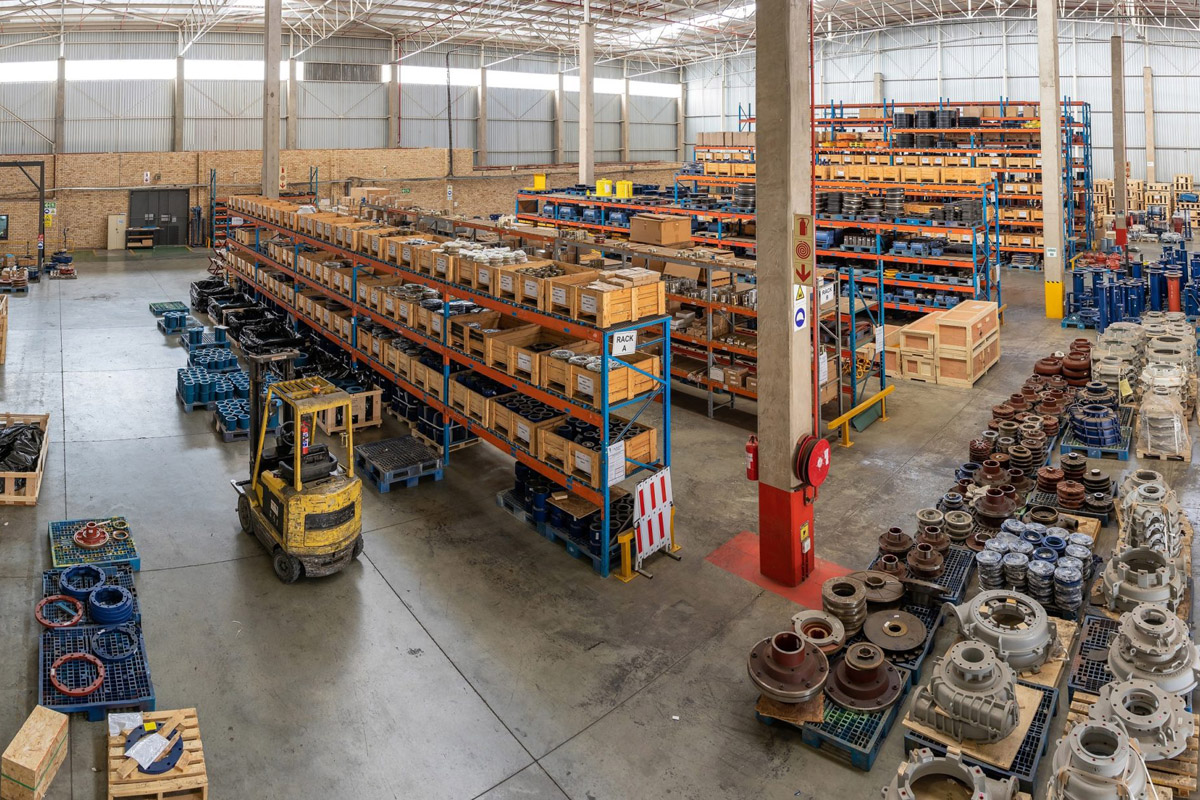
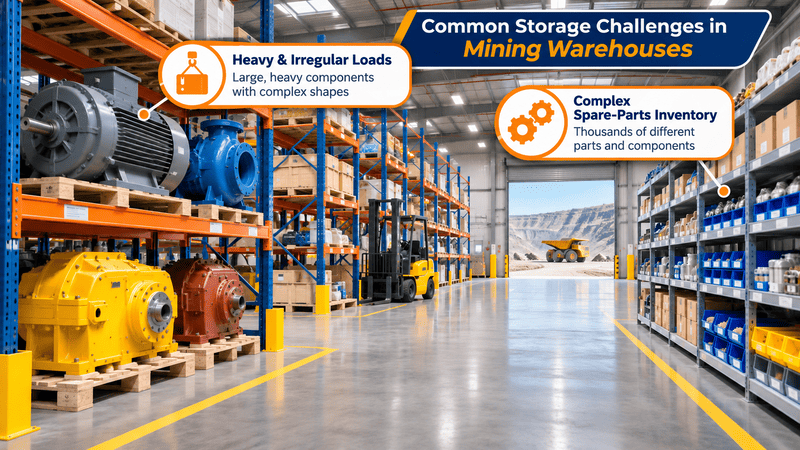
Common challenges in mining warehouses include heavy and irregular loads, diverse spare-parts inventory, limited storage space, difficult equipment access and demanding operating conditions. These issues affect how safely and efficiently materials can be stored, identified and retrieved.
Adding more racks does not always improve warehouse performance. If the layout restricts access to critical components or makes heavy loads difficult to handle, additional storage capacity can create more handling work and operational risk.
Compare industrial warehouse racking options based on load weights and access to spare parts.
The main challenges include:
- Heavy and irregular loads: Motors, pumps, gearboxes and mechanical components can have uneven weight distribution or dimensions that require specially assessed storage support.
- Complex spare-parts inventory: Mining warehouses may manage thousands of different components, from small replacement parts to large machinery assemblies, making inventory identification and allocation more difficult.
- Limited storage space: Floor-stacked equipment and oversized materials can occupy substantial warehouse space while leaving available building height underused.
- Critical spare-parts accessibility: Maintenance teams need reliable access to replacement components during planned servicing and unexpected equipment breakdowns.
- Material handling requirements: Heavy or oversized loads may require specific forklifts, lifting attachments or other handling equipment, affecting aisle widths and storage arrangements.
- Demanding operating conditions: Dust, moisture, corrosion exposure and frequent equipment movements can affect the durability and maintenance requirements of storage systems.
Identify where your operation loses the most time or usable space. A mining spare-parts warehouse handling many different components may benefit from direct-access pallet racking and shelving. A facility storing larger quantities of similar maintenance supplies may gain more from higher-density pallet storage.
>> Read More:
2. Types of Racking Systems for Mining Warehouses
Common mining warehouse storage systems include Selective Pallet Racking, Heavy-Duty Pallet Racking, Longspan Shelving, Double Deep, Drive-In, VNA and Shuttle Racking. Each addresses different requirements for load capacity, inventory accessibility, storage density and handling equipment.
Heavy-duty racking is an engineered load-capacity configuration rather than a separate storage mechanism. Its suitability depends on the approved design and the actual loads being stored.
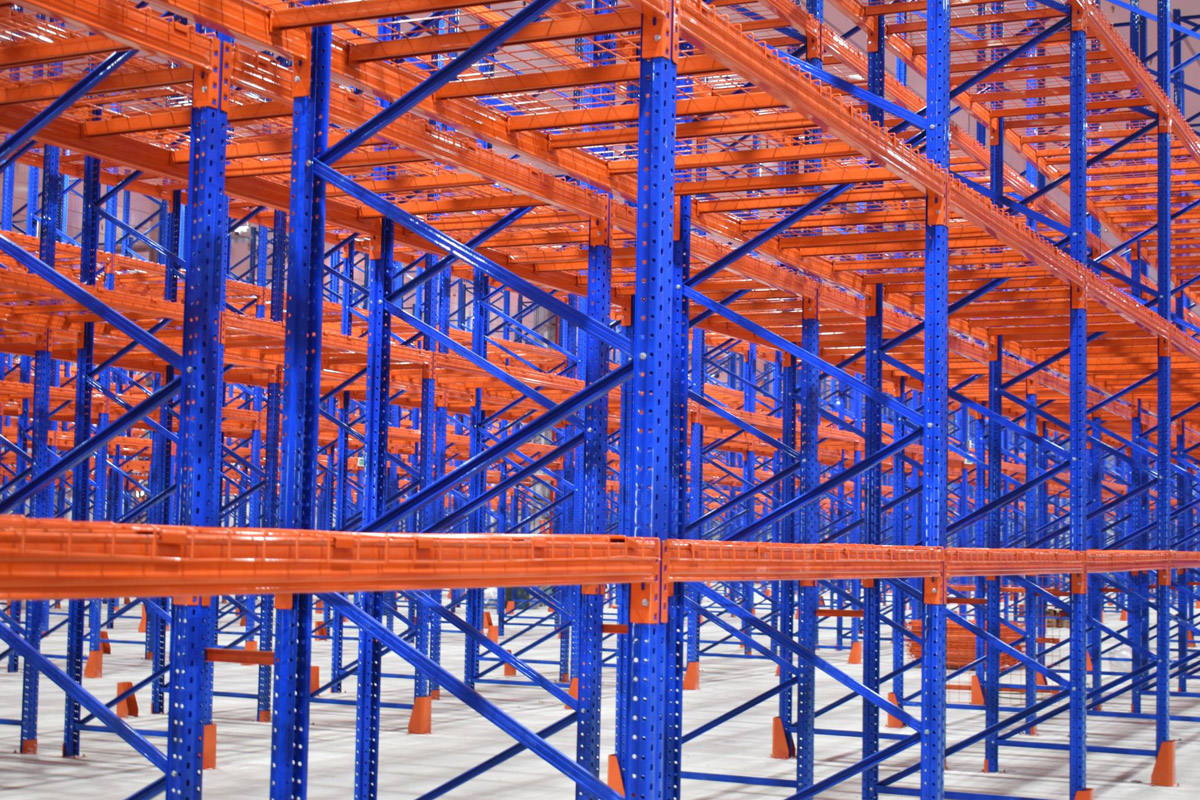
Selective Pallet Racking
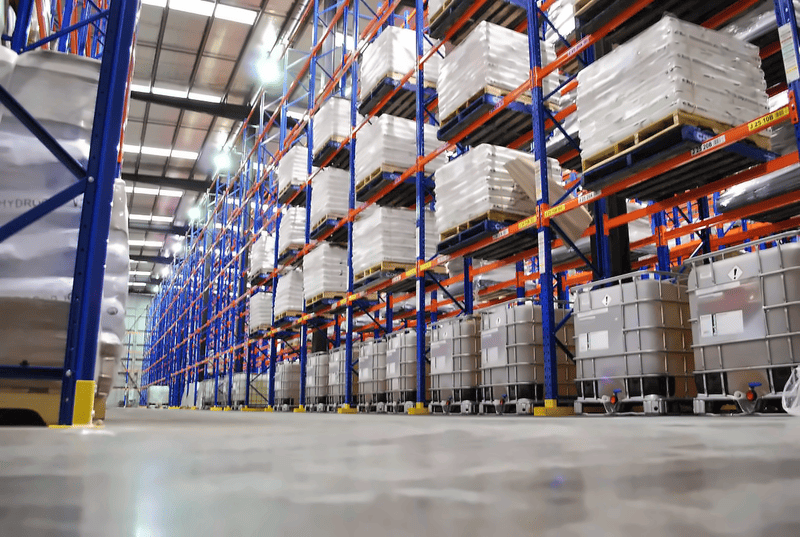
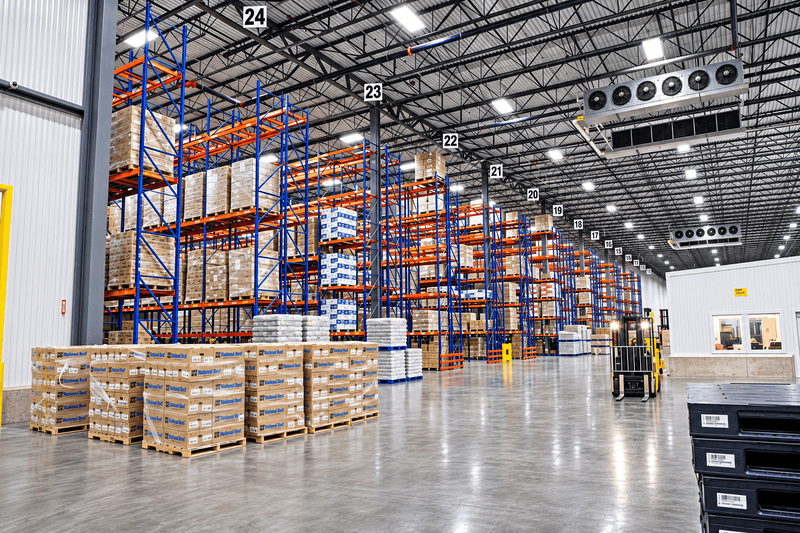
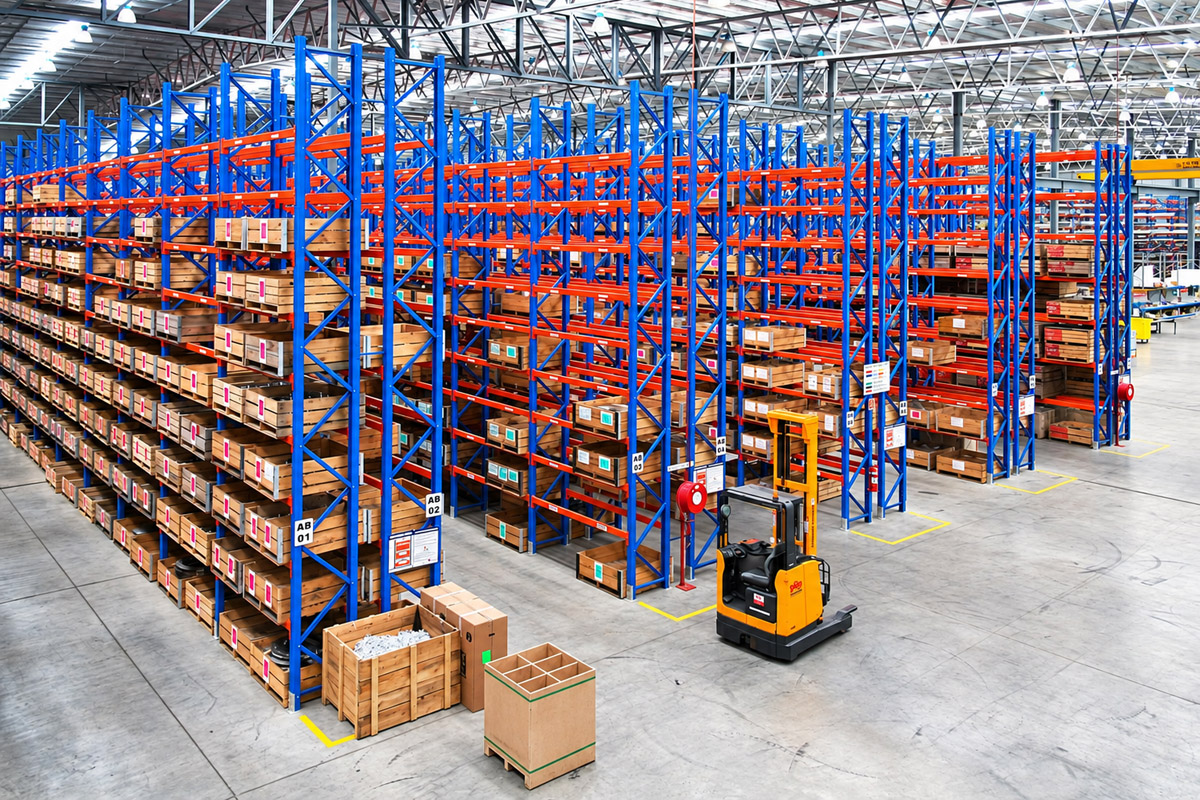
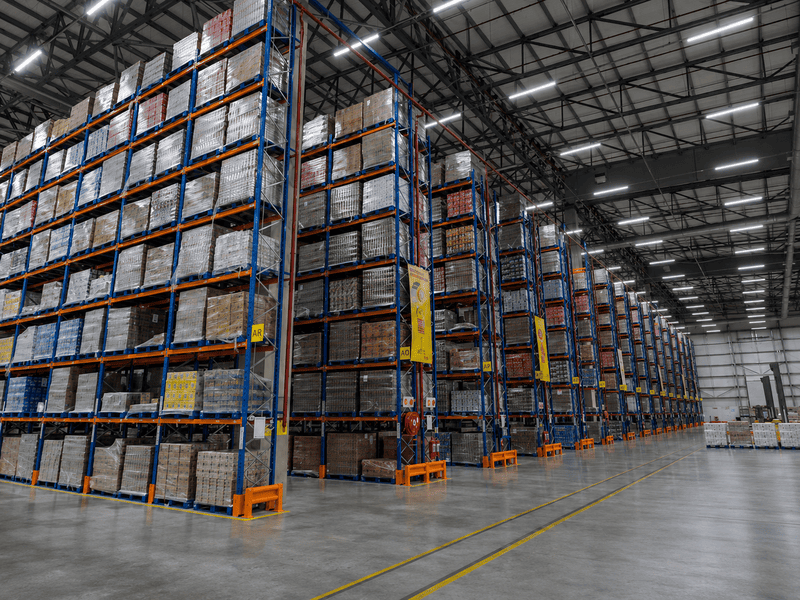
Selective pallet racking stores palletised goods on horizontal beams, with each position accessible directly from an operating aisle. Operators can retrieve individual pallets without moving other stored loads first.
This arrangement supports mining warehouses handling diverse replacement parts, different pallet sizes and frequent maintenance inventory movements.
- Best for: Mining spare-parts warehouses, maintenance facilities and operations handling many palletised SKUs.
- Advantages: Direct access to every pallet, straightforward inventory identification and flexible storage configurations.
- Consideration: Requires more aisle space than deeper storage systems, limiting storage density within the available footprint.
Double Deep Racking
Double deep racking stores pallets two positions deep, with one pallet positioned behind another. This arrangement reduces the number of operating aisles compared with standard selective racking.
A compatible deep-reach truck is required to retrieve rear pallets, making the system suitable for maintenance inventory stored in repeated pallet quantities.
- Best for: Reserve maintenance supplies, bulk consumables and multiple pallets of similar industrial products.
- Advantages: Increases pallet storage density while maintaining loading and retrieval from the operating aisle.
- Consideration: Rear pallets cannot be accessed until the front position is clear. Handling equipment and load characteristics must suit the required reach distance.
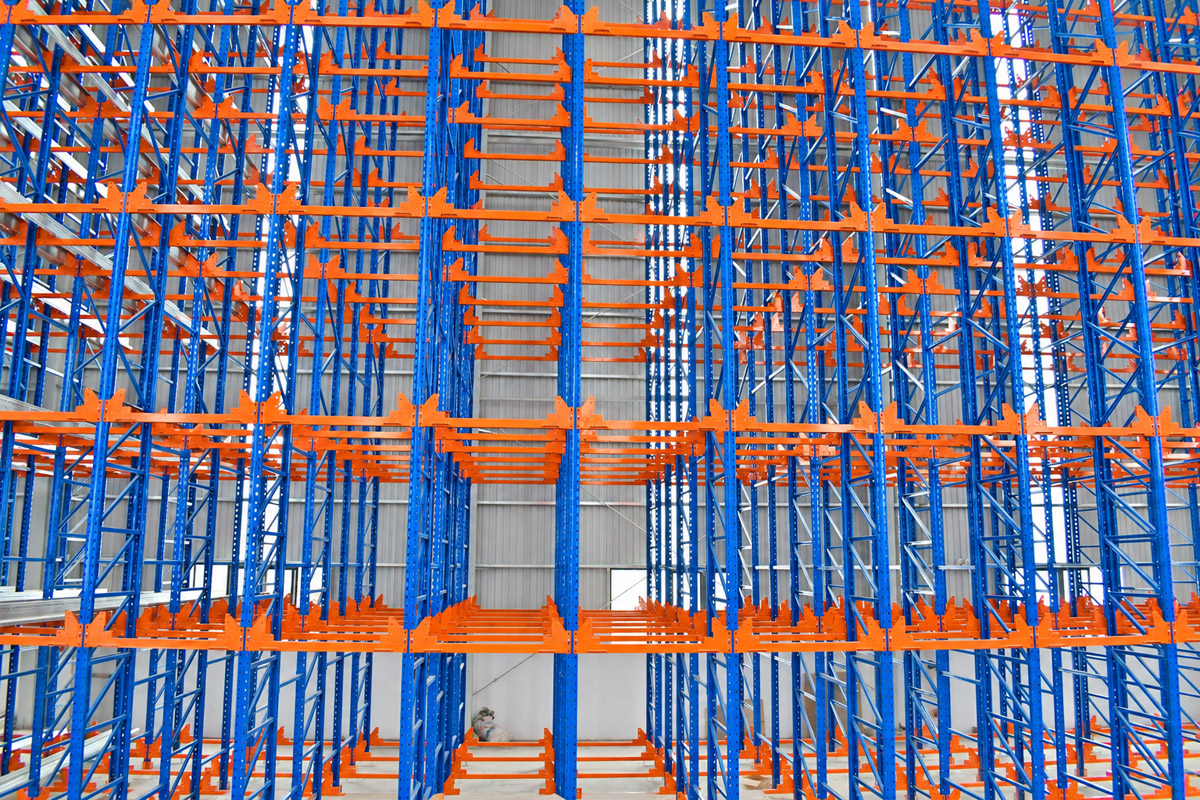
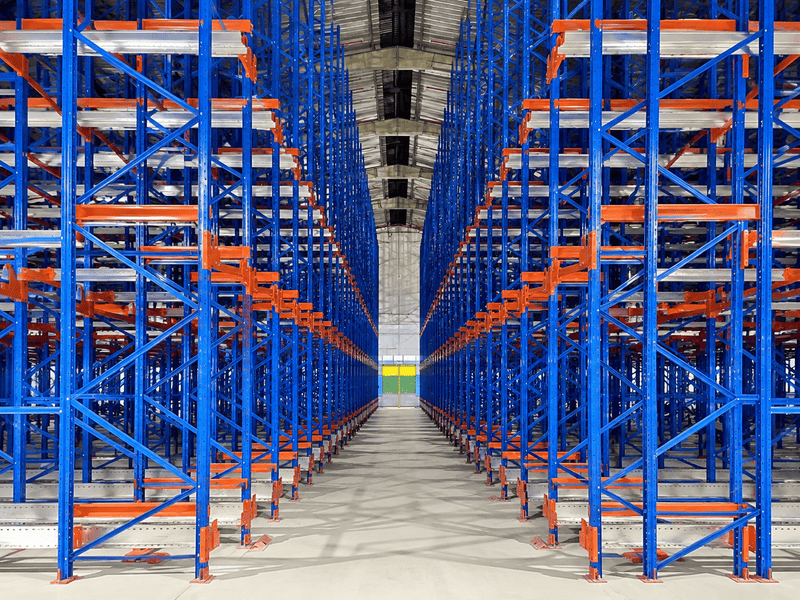
Drive-In Racking
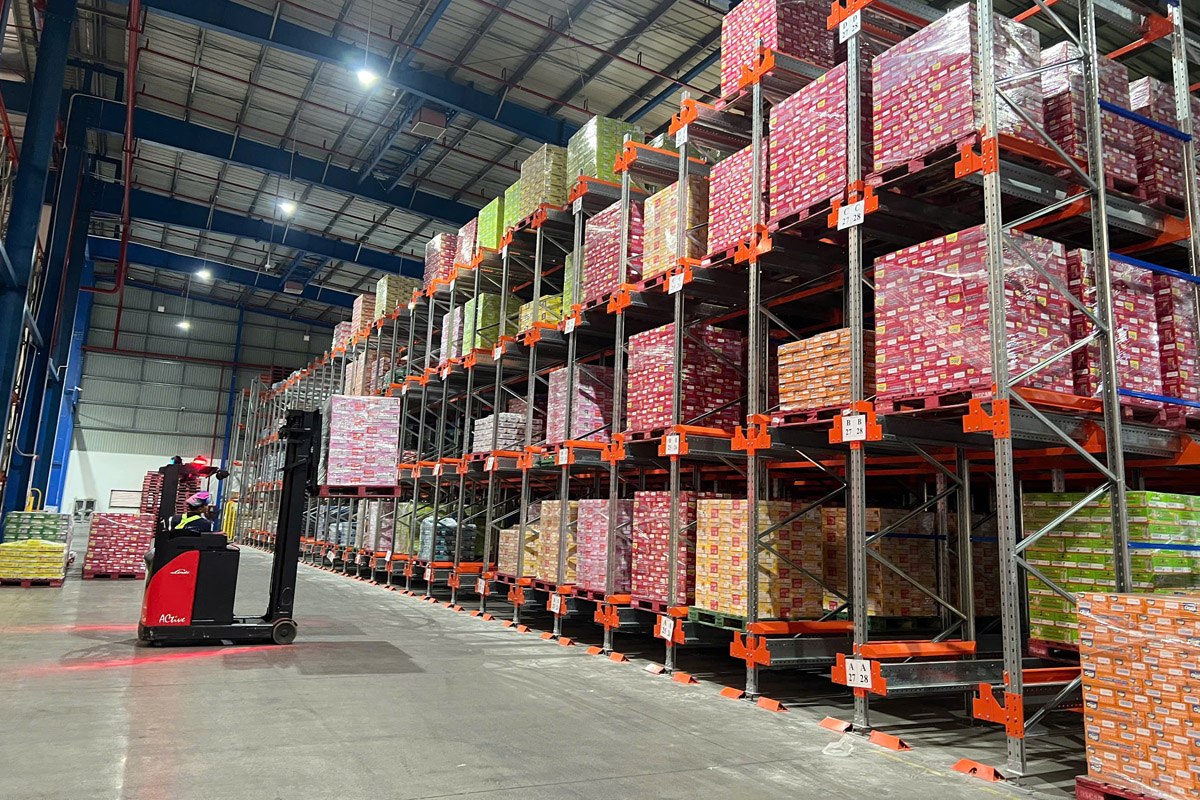
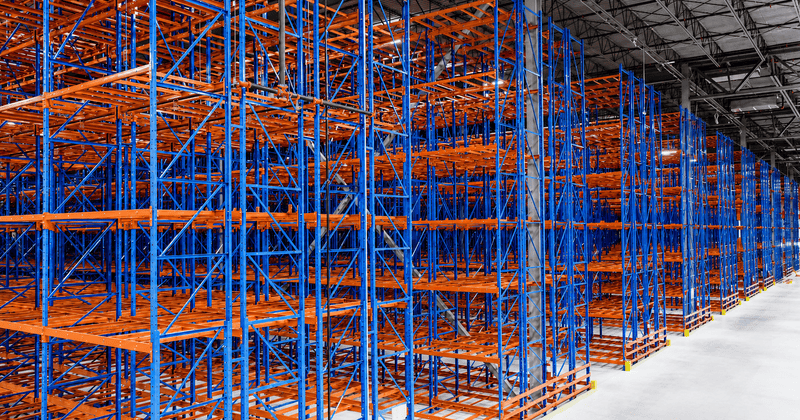
Drive-in racking stores pallets in deep lanes supported by rails. Forklifts enter the storage lanes to place and retrieve loads, reducing the number of conventional operating aisles.
Standard single-entry arrangements use the same end for loading and retrieval, resulting in last-in, first-out (LIFO) stock rotation.
- Best for: Bulk maintenance consumables and large quantities of similar palletised industrial supplies.
- Advantages: Reduces aisle requirements, allowing more floor space to accommodate pallet storage.
- Consideration: Less suitable for mixed spare parts, frequent individual pallet retrieval or irregular loads. Forklift access and pallet support requirements must be assessed.
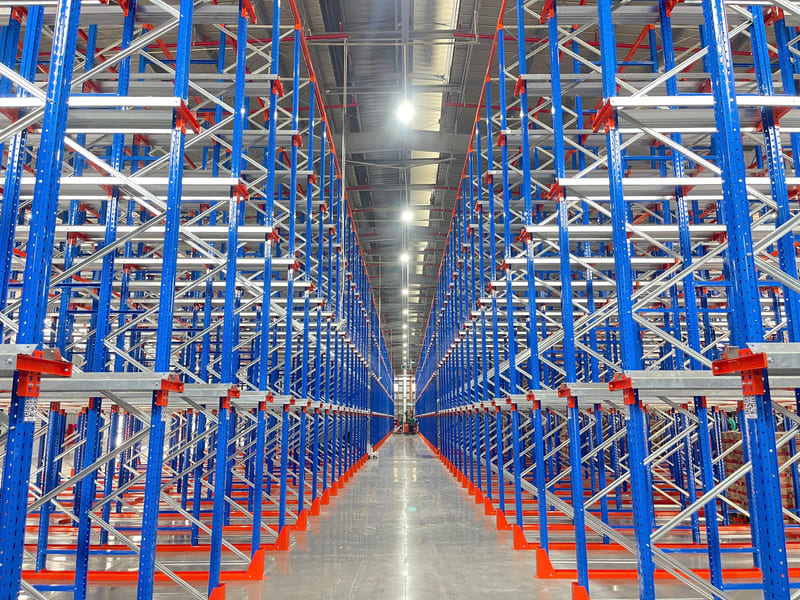
VNA Racking
Very narrow aisle (VNA) racking uses narrower operating aisles than conventional selective racking while maintaining direct access to individual pallet positions.
The system can also utilise available building height, making it worth considering where mining warehouses need accessible spare-parts storage within limited floor space.
- Best for: High-SKU mining supply warehouses with limited floor space and suitable building height.
- Advantages: Reduces aisle requirements while maintaining direct pallet accessibility and improving vertical space utilisation.
- Consideration: Requires specialist handling equipment, suitable floor tolerances and assessment of load dimensions, lifting capability and operating clearances.
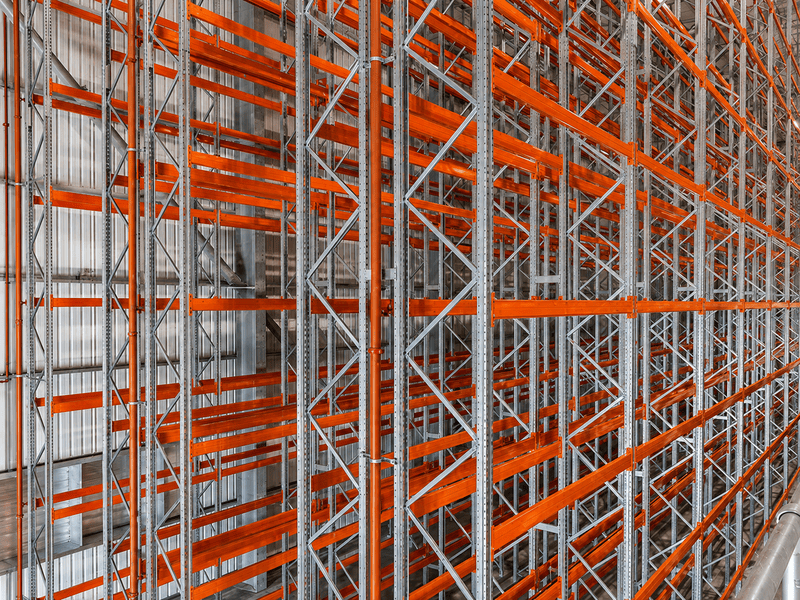
Shuttle Racking
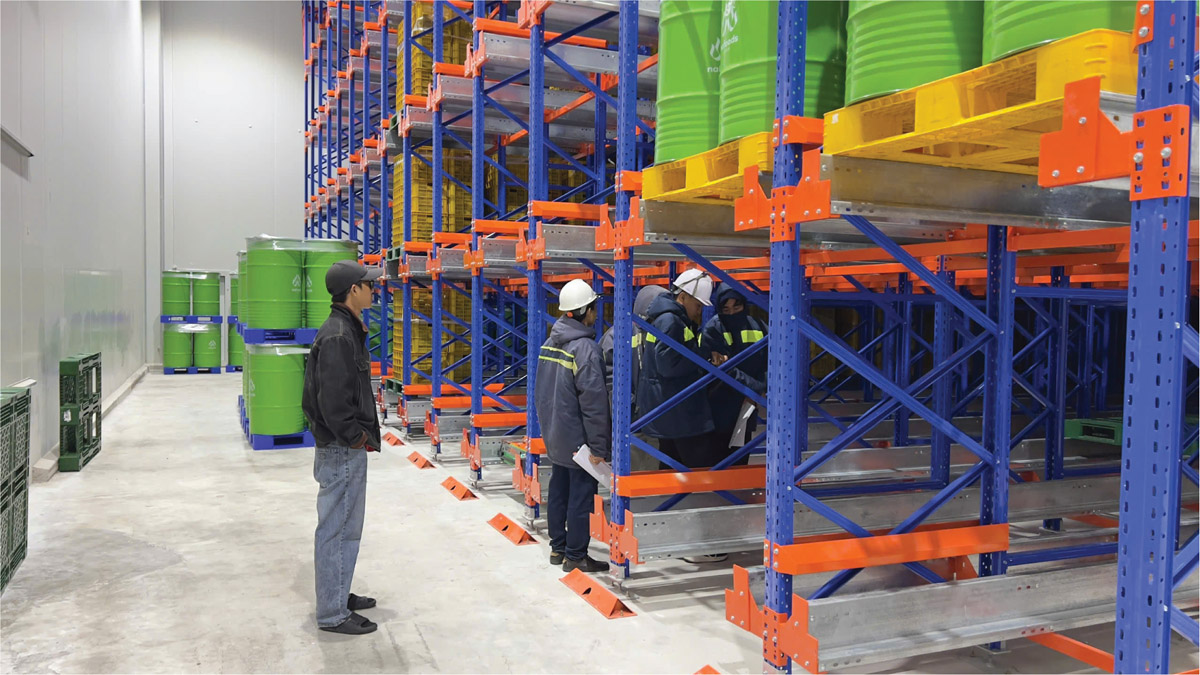
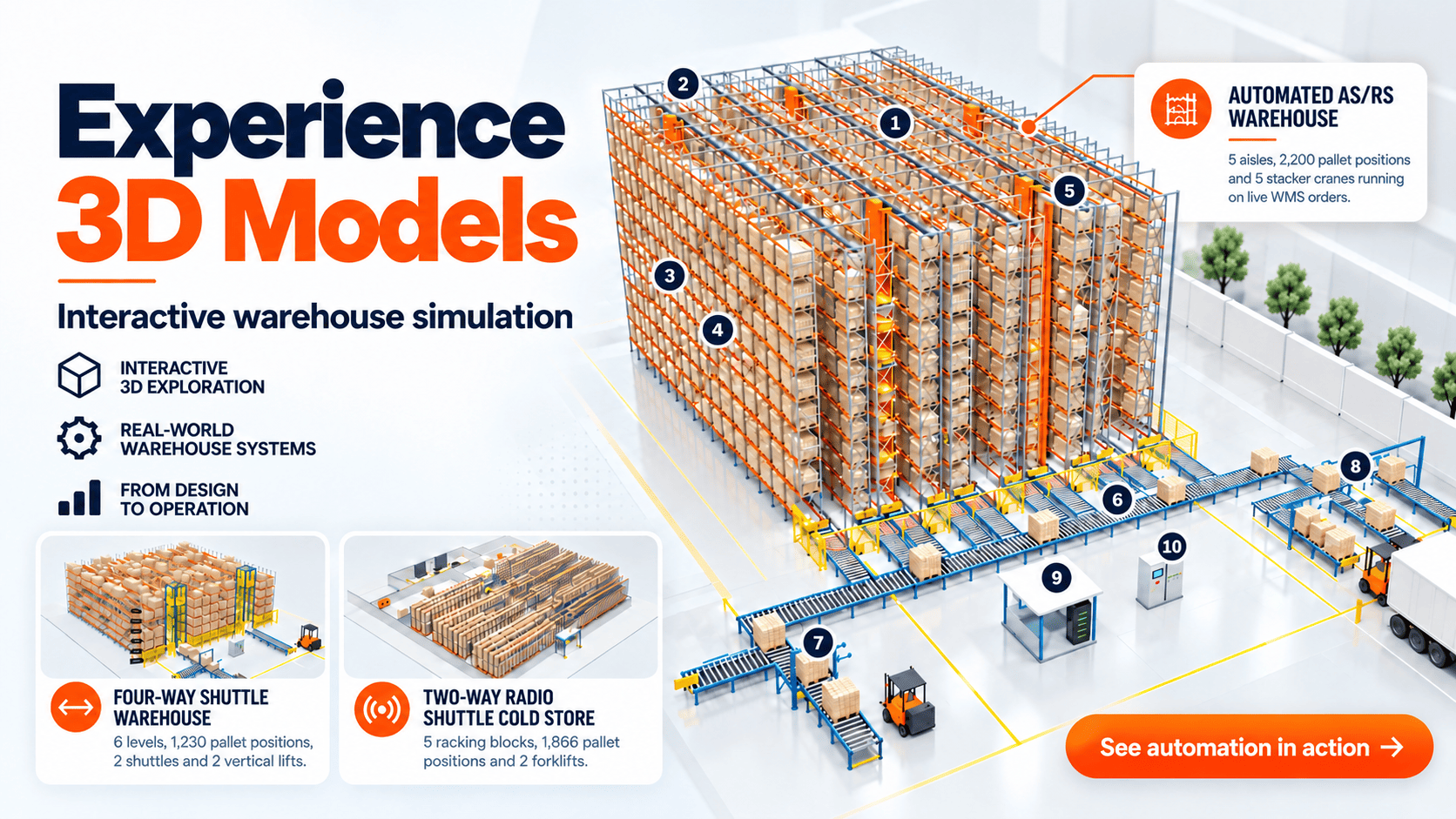
Shuttle racking uses a powered shuttle to transport pallets along deep storage channels. Forklifts typically handle pallets at channel entrances, while the shuttle moves loads to designated positions within the racking.
Two-way shuttle systems provide shuttle-assisted deep-lane storage, while four-way configurations can support broader automation. FIFO or LIFO operation depends on the loading arrangement and system configuration.
- Best for: High-volume mining supply facilities holding multiple pallets of similar maintenance materials or consumables.
- Advantages: Provides high-density storage and reduces the need for forklifts to enter storage channels.
- Consideration: Requires compatible pallet dimensions and load weights, investment in shuttle equipment and planning for charging, maintenance and shuttle availability.
3. How to Choose the Right Racking for Your Mining Warehouse
Choose mining warehouse racking based on load weight, inventory characteristics, access frequency, available space and handling equipment. Compare systems against maintenance requirements and daily warehouse operations to balance storage capacity with reliable access to critical components.
The following table connects common mining warehouse requirements with systems worth assessing:
| Warehouse requirement | Systems to consider | Key selection factor |
| Frequent access to diverse spare parts | Selective or VNA | Direct pallet access, SKU variety and retrieval frequency |
| Heavy machinery components | Engineered Heavy-Duty Pallet Racking | Load weight, distribution, support conditions and structural capacity |
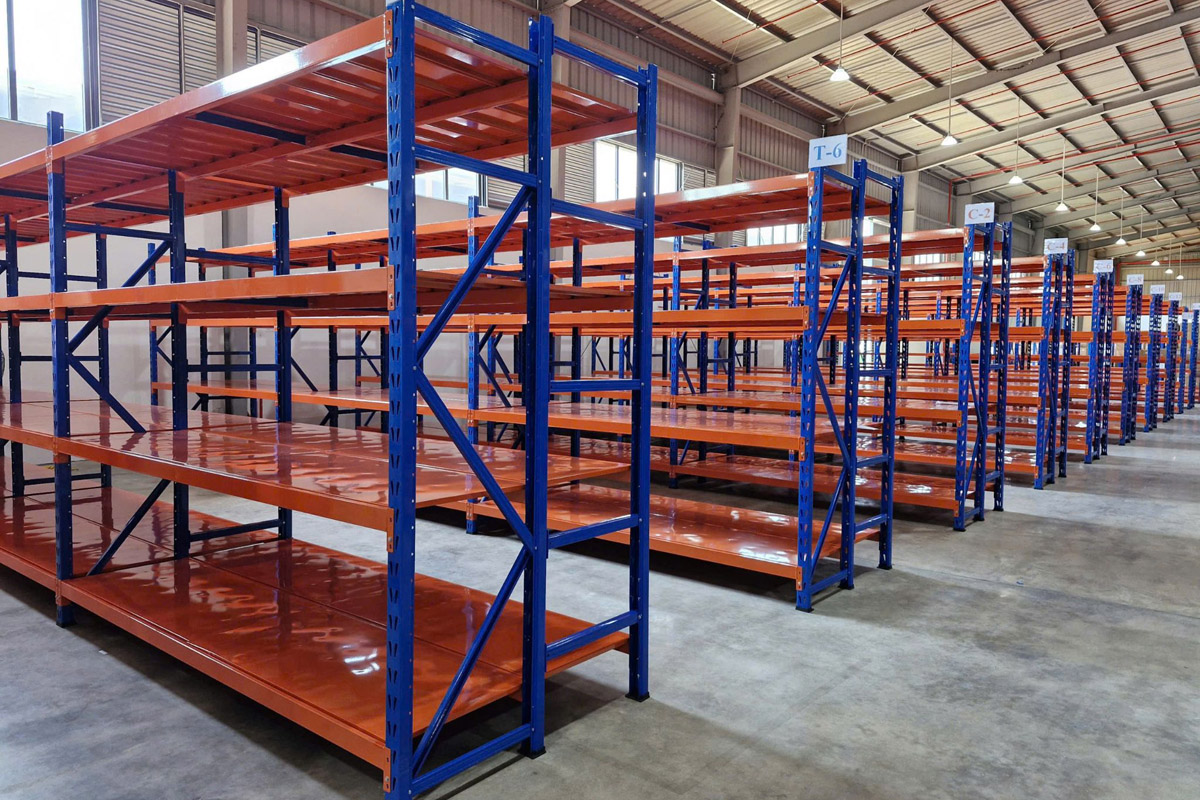
| Smaller maintenance parts and tools | Longspan Shelving | Manual accessibility, shelf capacity and inventory organisation |
| More capacity for reserve inventory | Double Deep | Pallets per SKU, retrieval sequence and reach-truck compatibility |
| Bulk storage of similar supplies | Drive-In or Shuttle | Storage lane depth, pallet compatibility and stock rotation |
| Limited floor space with many SKUs | VNA | Available building height, equipment requirements and floor tolerances |
| High-volume palletised inventory | Shuttle | Pallet quantities, load compatibility and equipment availability |
A mining maintenance warehouse holding thousands of replacement parts may prioritise selective pallet racking and longspan shelving for direct access. A bulk supply facility storing repeated pallet quantities may benefit from double deep, drive-in or shuttle storage.
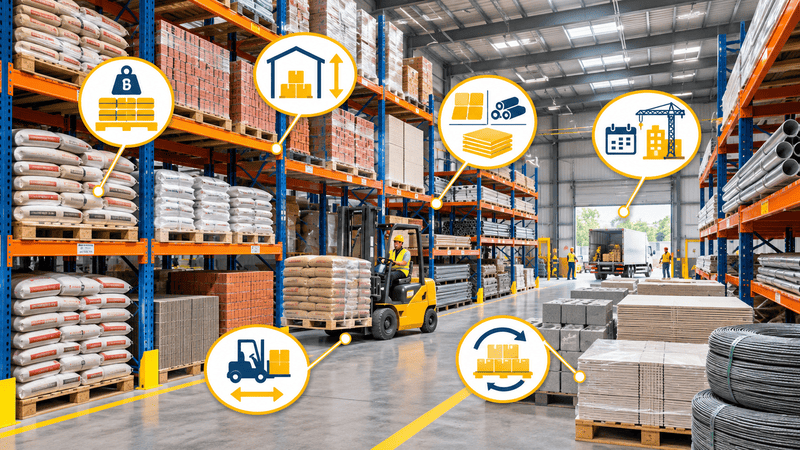
Different storage systems can also be combined within the same facility. Shelving may accommodate small replacement parts, selective racking can hold frequently accessed palletised components, and higher-density systems can provide reserve storage for suitable bulk inventory.
The most appropriate configuration depends on how materials are stored, identified and retrieved, rather than maximising pallet positions alone.
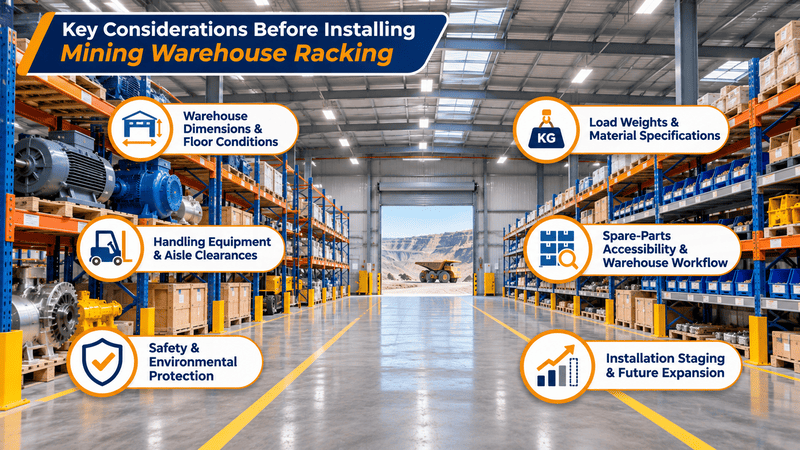
4. Key Considerations Before Installing Mining Warehouse Racking
Before installation, assess warehouse dimensions, floor conditions, load specifications, handling equipment, inventory access, environmental exposure and applicable safety requirements. These factors determine whether the proposed system can accommodate mining materials and support safe daily operations.
Warehouse dimensions and floor conditions
Measure usable floor space and clear height, accounting for columns, doors, building services and areas required for loading, unloading and equipment movement. Allow adequate space for oversized components and material handling rather than allocating the entire warehouse footprint to storage.
Assess the floor slab for rack loads, concentrated loading and anchoring requirements. Heavy mining components may impose significant forces on rack supports and floor connections, making engineering assessment important before installation.
Load weights and material specifications
Provide actual dimensions, maximum weights, centre-of-gravity information and load distribution details for stored equipment and components. Motors, gearboxes and machinery assemblies may require dedicated supports where standard pallets are unsuitable.
Confirm that pallet construction, beam capacity and rack configuration accommodate the intended loads. Uneven or concentrated loading should be assessed separately rather than assuming the load is uniformly distributed across each beam level.
Handling equipment and aisle clearances
Confirm forklift dimensions, lifting capacity, reach distance and any specialised attachments against the proposed layout. Heavy or oversized components may require different handling equipment from conventional palletised warehouse goods.
Review the complete movement path, including aisle entry, loading areas and access to maintenance or workshop zones. Allow sufficient clearance for load dimensions, vehicle turning and safe separation between pedestrian and equipment movements.
Spare-parts accessibility and warehouse workflow
Map receiving, inspection, storage, picking and transfer activities before finalising the layout. Frequently required spare parts should remain identifiable and accessible to support maintenance operations.
Separate smaller manually handled components from heavy forklift-handled inventory where practical. Storage locations should also support part identification, inventory tracking and efficient movement between the warehouse and maintenance teams.
Safety and environmental protection
Confirm applicable Australian requirements with the supplier and relevant professionals. The design assessment should address structural capacity, anchoring, safe working load signage, impact protection, operating clearances and suitable load restraints.
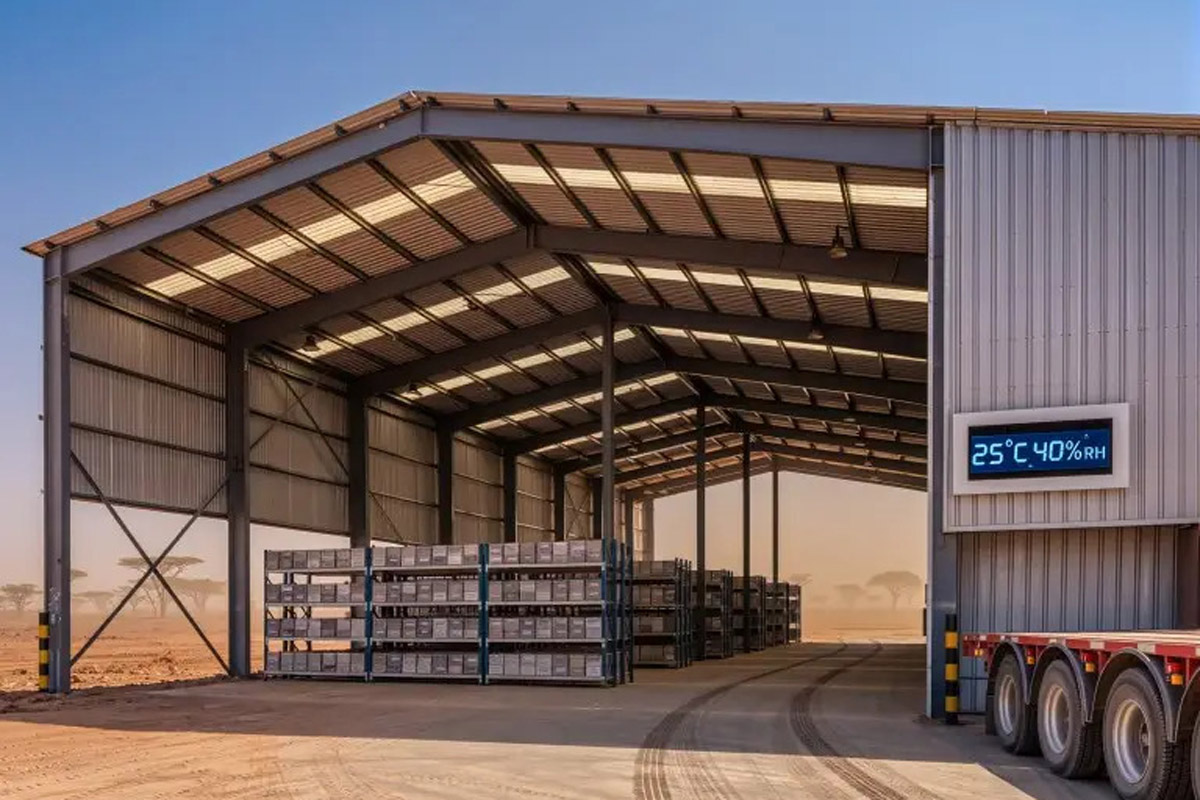
Mining warehouses may be exposed to dust, humidity, moisture or corrosive conditions. Select protective finishes and maintenance arrangements according to the actual environment, and establish inspection procedures to identify damage, overloading or deterioration.
Installation staging and future expansion
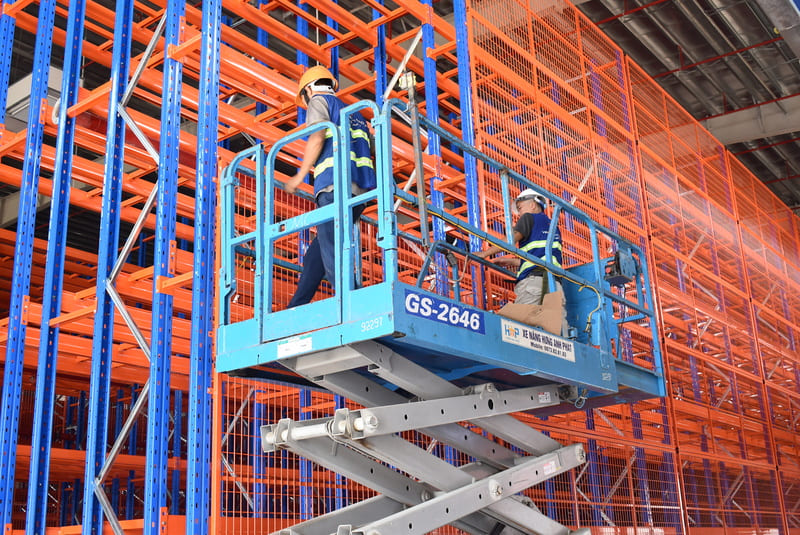
For an operating mining warehouse, installation may require temporary relocation of spare parts and controlled access to work areas. Plan the installation sequence around maintenance schedules, incoming supplies and equipment movements.
Consider future changes in machinery types, spare-parts inventory and handling equipment. Discuss potential rack reconfiguration or expansion and ensure any changes affecting load capacity are assessed against the approved design.
5. Vinatech Mining Warehouse Racking Solutions and Featured Projects
Vinatech provides warehouse racking solutions applicable to mining and industrial storage, with layout design, supply and installation support. Featured industrial projects include a 4,200-position selective racking installation and a radio shuttle installation for heavy raw materials, illustrating different approaches to inventory access and storage density.
Planning considers warehouse dimensions, load specifications, inventory profiles and daily handling requirements. Design support, including 2D and 3D layouts, helps you review rack positions, operating aisles and proposed capacity before installation.
Double Deep Racking for a Manufacturing Warehouse
Vinatech delivered a double deep pallet racking solution for a manufacturing warehouse, using two-deep pallet storage to increase storage density and reduce the number of operating aisles.
The configuration supports organised storage of palletised industrial materials and reserve inventory. It illustrates an approach relevant to mining supply warehouses handling multiple pallets of similar spare parts and maintenance supplies, where storage capacity must be balanced with forklift accessibility.
View the Manufacturing Double Deep Racking Project
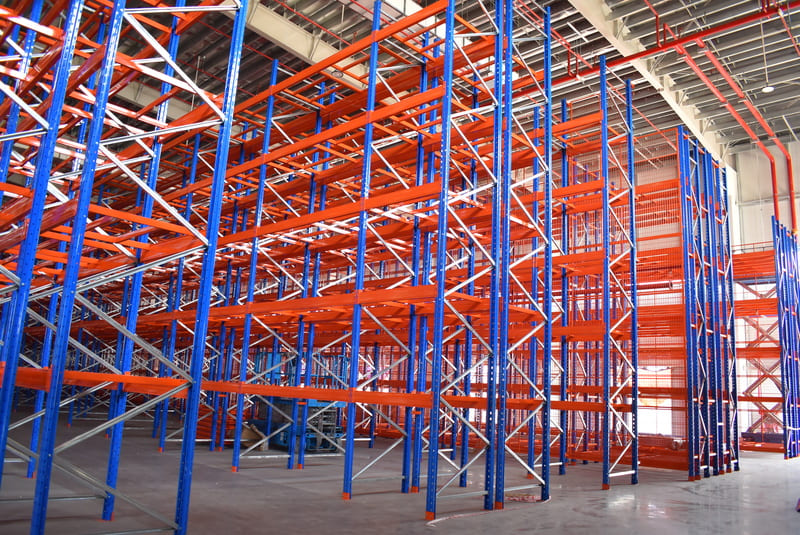
Explore Vinatech’s industrial storage solutions for mining spares, equipment and maintenance supplies.
Start with the issue that most affects your mining operation: limited storage capacity, difficult spare-parts access, heavy-load handling or inefficient material movement. Use that priority to assess which racking layout offers the most practical improvement for daily warehouse operations.
Contact Vinatech on 0485 083 868 or email info@vinatech.com.au to discuss your mining warehouse layout, load specifications and storage requirements.