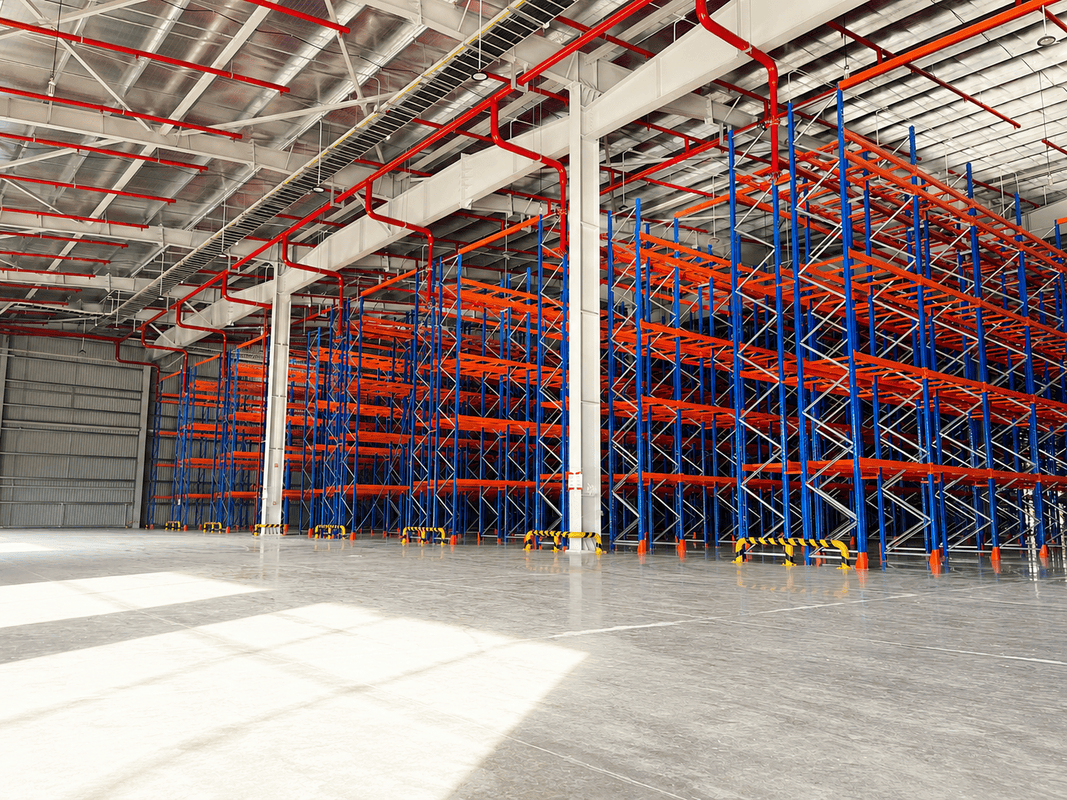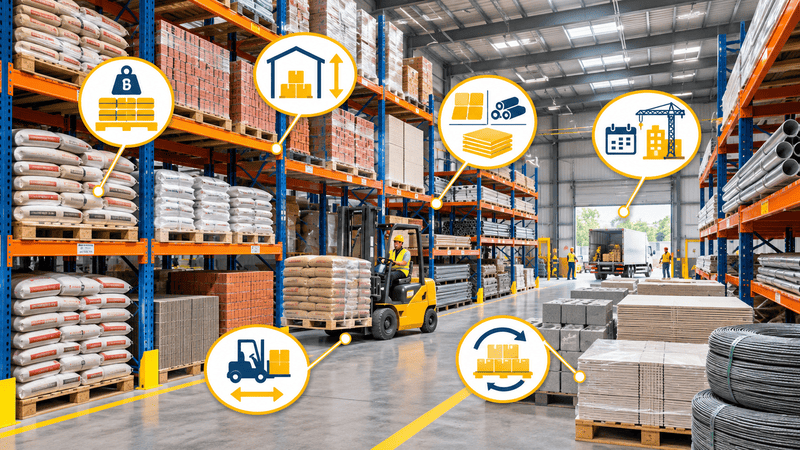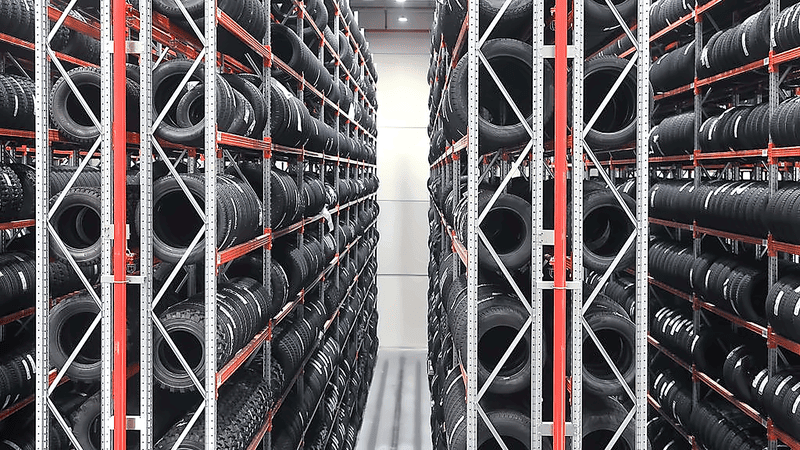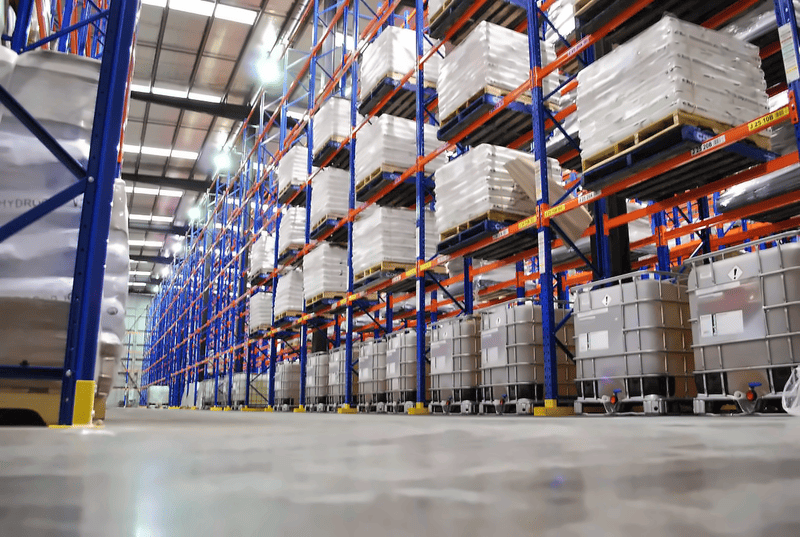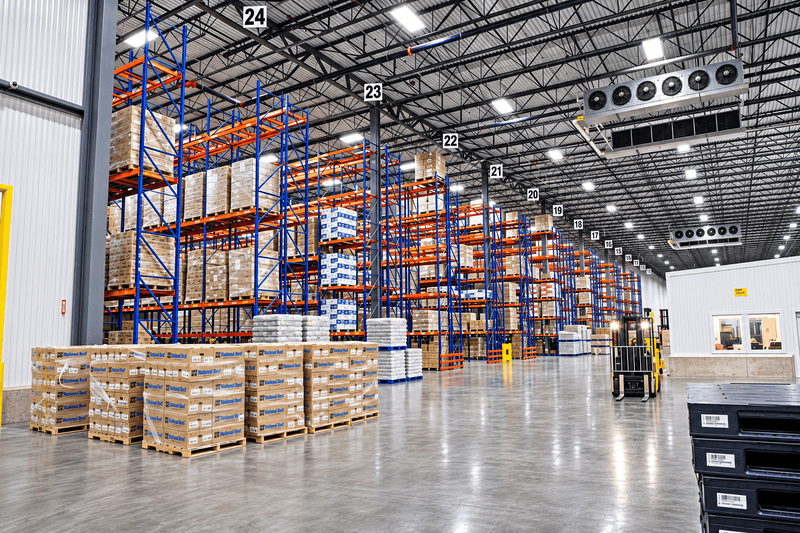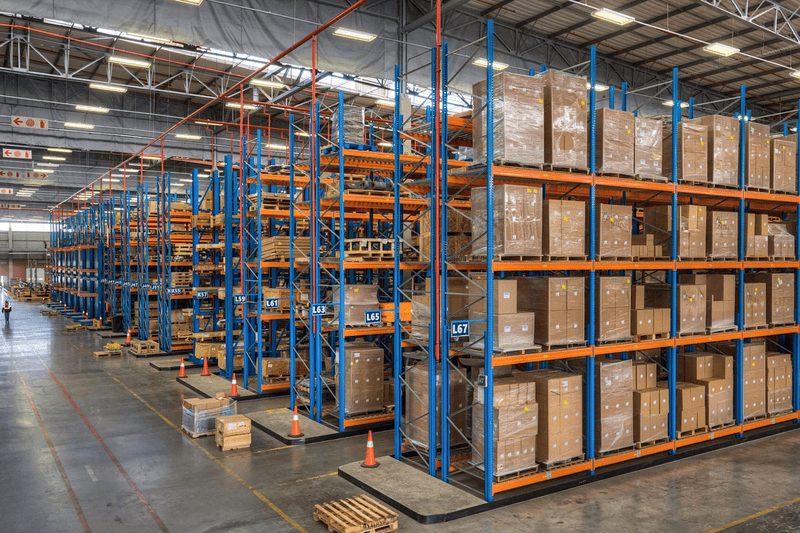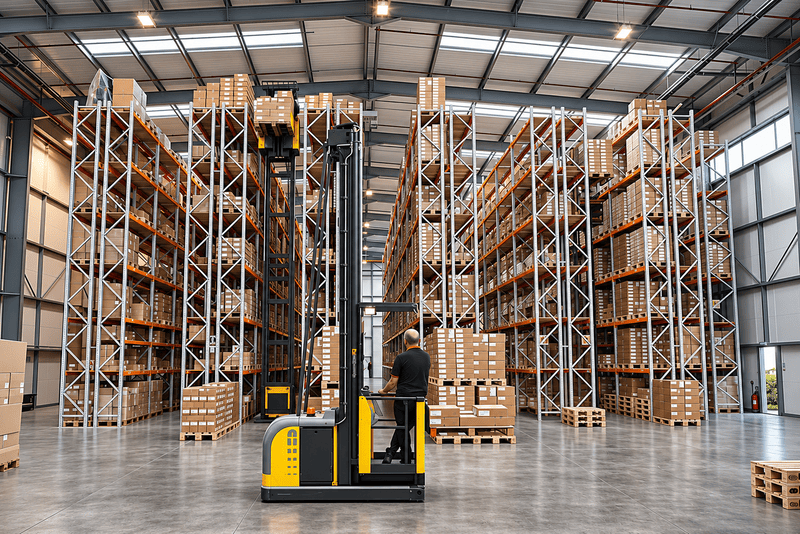




Cold storage warehouse racking helps refrigerated and frozen warehouses increase pallet capacity, organise inventory and maintain efficient stock movement within temperature-controlled environments. The right system depends on your product range, pallet quantities, stock rotation requirements, available space and handling equipment.
For food manufacturers, cold-chain logistics providers and refrigerated distribution centres, storage requirements can vary significantly between products and operating temperatures. A practical layout may combine several racking systems to accommodate frequently accessed goods, bulk frozen inventory and products with different shelf-life requirements.
>> Read More:
1. Common Storage Challenges in Cold Storage Warehouses
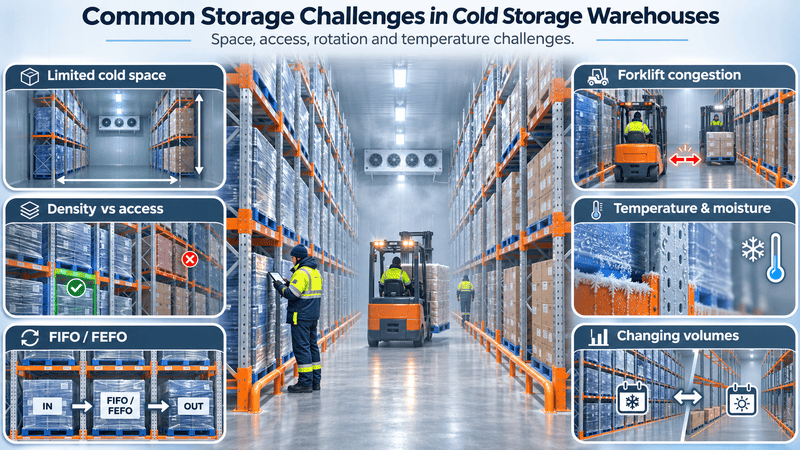
Common challenges in cold storage warehouses include limited refrigerated space, high storage density requirements, complex stock rotation, restricted forklift access and demanding temperature conditions. These factors influence how efficiently pallets can be stored, retrieved and moved through the facility.
Increasing the number of pallet positions does not always improve storage performance. If additional racking restricts forklift movement, reduces product accessibility or complicates stock rotation, the layout may create more handling work.
Compare warehouse pallet racking options based on pallet access and stock rotation in chilled or frozen facilities.
The main challenges include:
- Limited refrigerated storage space: Cold rooms and freezer warehouses have defined storage boundaries. Expanding the refrigerated footprint may require additional building and refrigeration infrastructure.
- Storage density and accessibility: High-density layouts can accommodate more pallets but may restrict direct access to individual loads. The appropriate balance depends on SKU variety and retrieval frequency.
- Stock rotation and expiry management: Food and pharmaceutical products may require first-in, first-out (FIFO) or first-expired, first-out (FEFO) handling to support inventory control and product shelf-life requirements.
- Forklift movement and congestion: Receiving, put-away, replenishment and dispatch activities can compete for limited aisle space, particularly during busy operating periods.
- Temperature and moisture conditions: Condensation, humidity and temperature changes can affect steel components, handling equipment and the condition of stored pallets.
- Changing inventory volumes: Seasonal demand, production cycles and customer requirements can create fluctuations in pallet quantities and storage allocation.
Identify whether your main challenge is insufficient pallet capacity, slow retrieval, limited aisle space or stock rotation. A freezer warehouse holding large quantities of similar products may benefit from deep-lane storage. A chilled distribution centre handling many SKUs may require more direct pallet access.
>> Read More:
Types of Racking Systems for Cold Storage Warehouses
Common cold storage warehouse racking systems include Selective, Double Deep, Drive-In, VNA, Push Back, Pallet Flow and Shuttle Racking. Each offers a different balance of storage density, pallet accessibility and stock rotation, with equipment and component specifications needing to suit the operating temperature.
Selective Pallet Racking
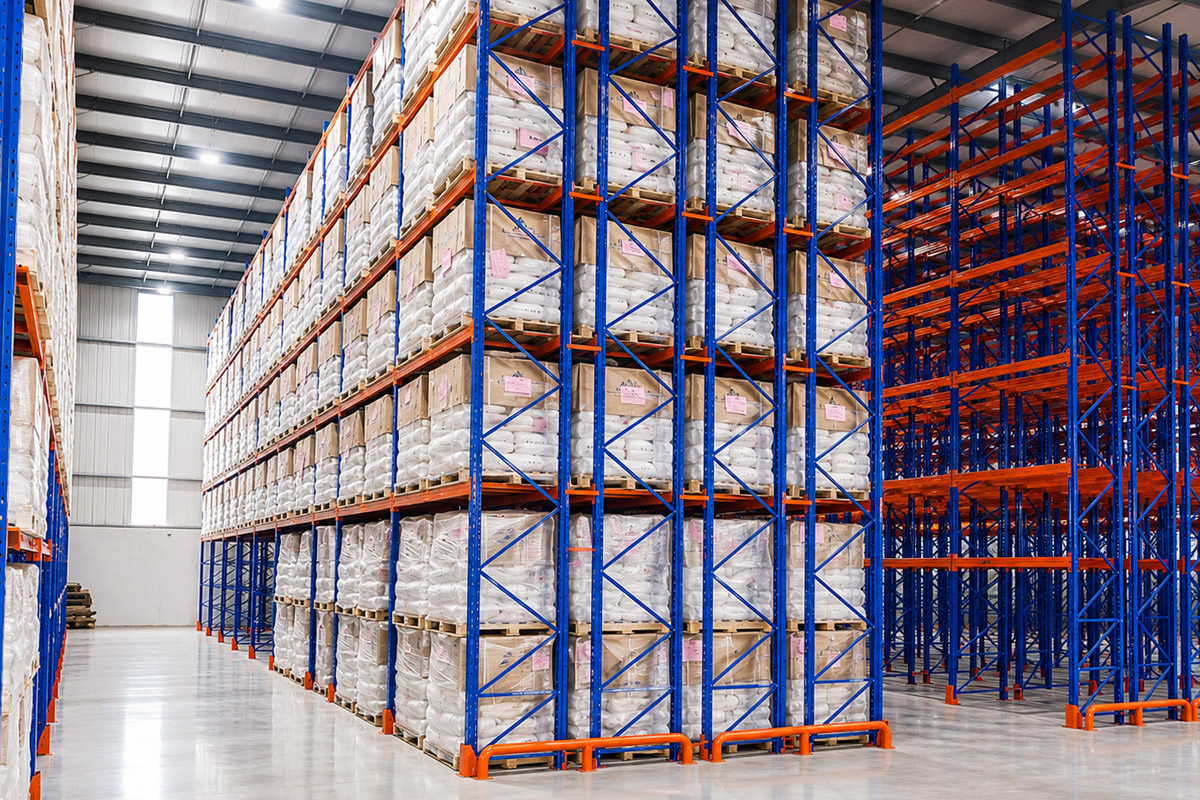
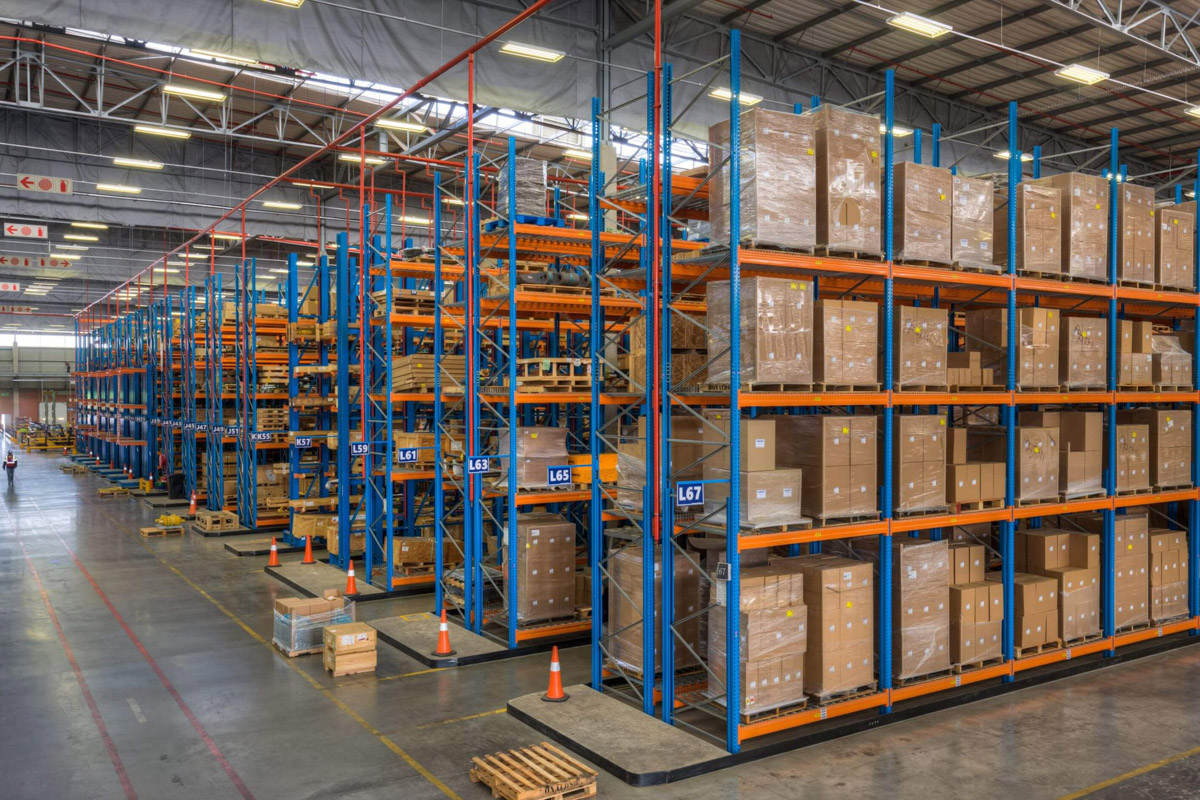
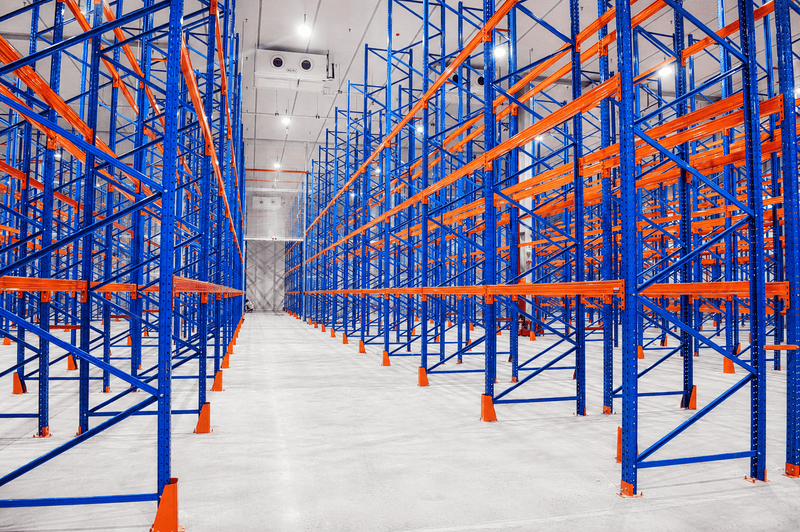
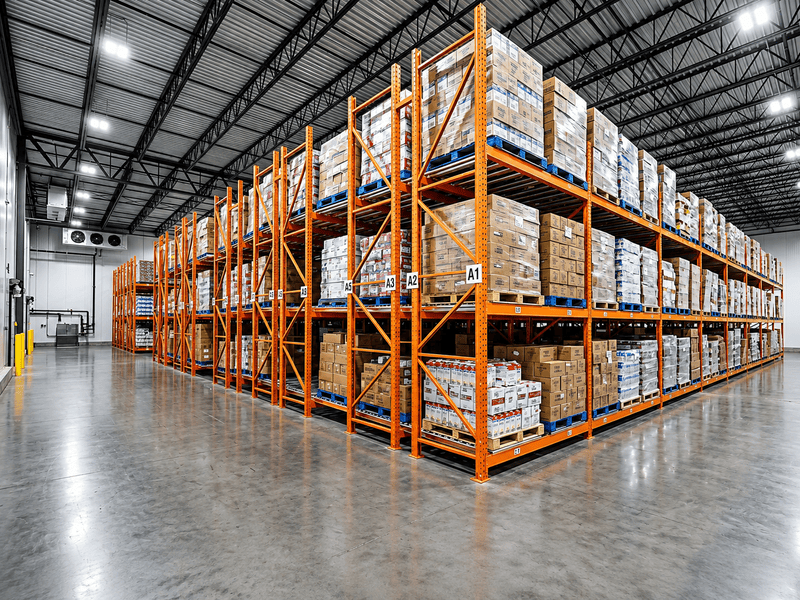
Selective pallet racking stores pallets on horizontal beams, allowing direct access to each pallet position from an operating aisle. Operators can retrieve individual pallets without first moving other loads.
This arrangement is particularly useful in refrigerated warehouses handling multiple product categories, frequent stock movements and different expiry dates.
- Best for: Chilled distribution centres, food warehouses and facilities handling many SKUs with frequent pallet access.
- Advantages: Direct access to every pallet, straightforward inventory allocation and flexible storage configurations.
- Consideration: Requires more operating aisle space than deeper storage systems, reducing the number of pallet positions within a given refrigerated footprint.
Drive-In Racking
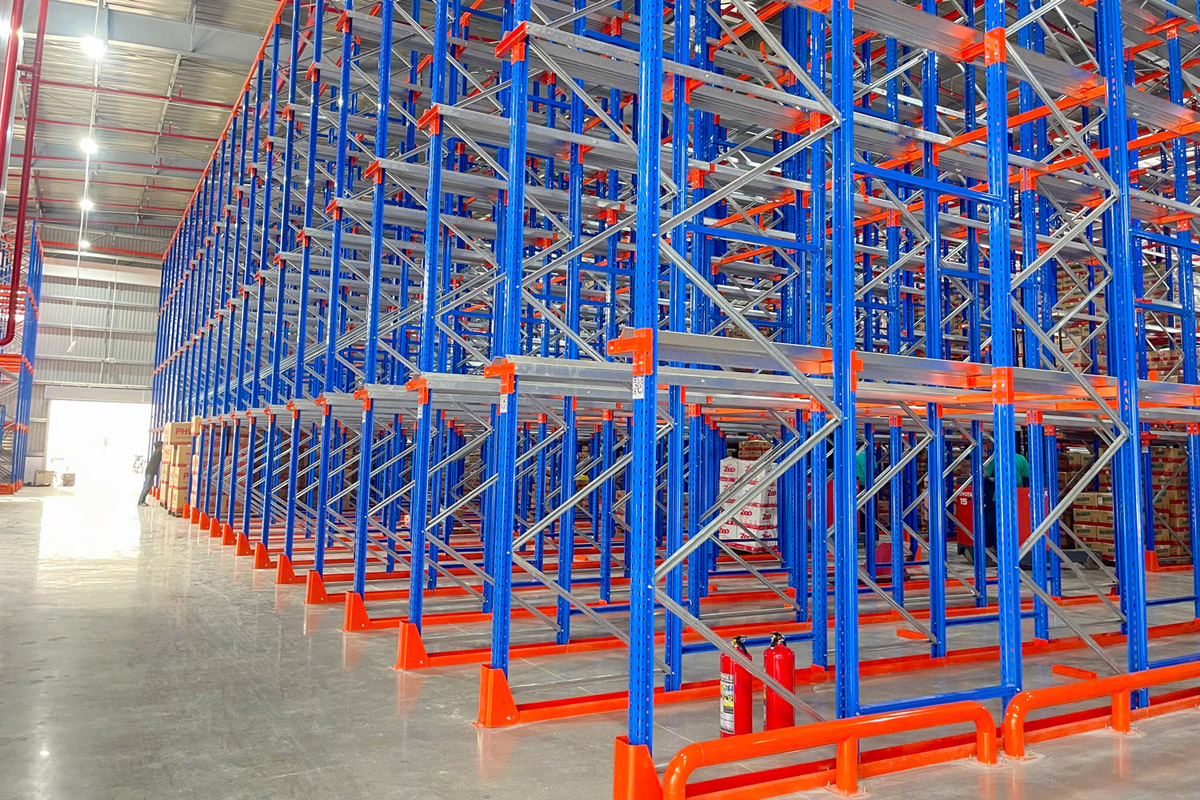
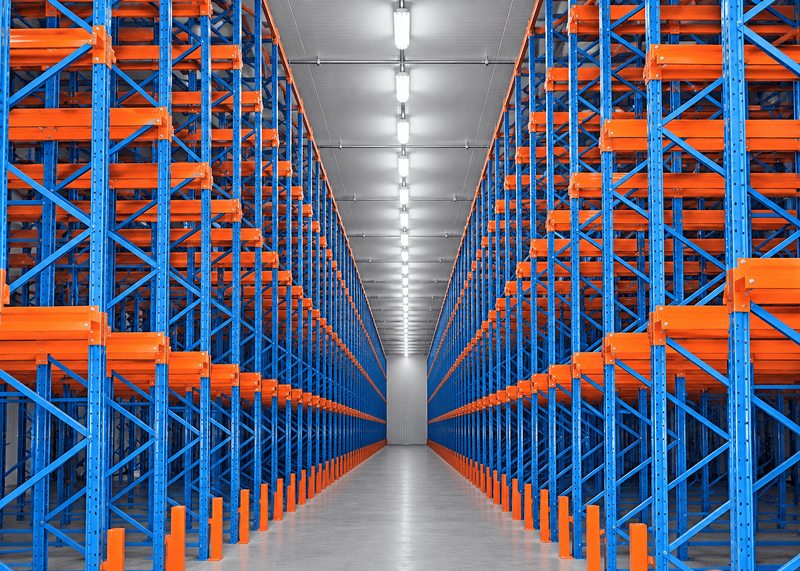
Drive-in racking uses deep storage lanes supported by pallet rails. Forklifts enter the lanes to place and retrieve loads, reducing the number of conventional access aisles.
This arrangement can accommodate large pallet quantities within a limited refrigerated footprint. Standard single-entry systems typically operate on a last-in, first-out (LIFO) basis.
- Best for: Bulk frozen food, meat, seafood, beverages and other products stored in large quantities per SKU.
- Advantages: Provides high-density pallet storage by reducing aisle requirements and allocating more floor area to storage lanes.
- Consideration: Less suitable for frequent individual pallet access or products requiring strict FIFO rotation. Lane depth and occupancy should match actual inventory volumes.
Double Deep Racking
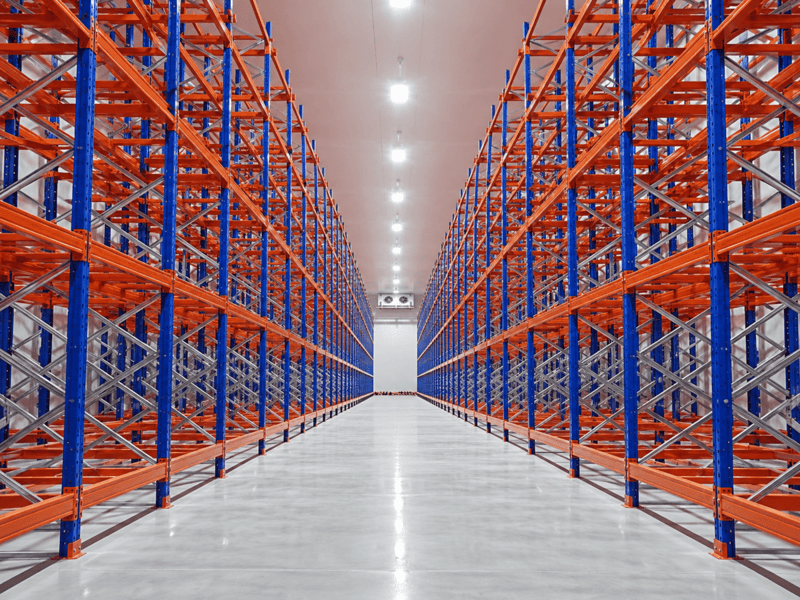
Double deep racking stores pallets two positions deep, placing one pallet behind another. This reduces the number of forklift aisles compared with standard selective racking while retaining access from the aisle.
A compatible deep-reach truck is required to place and retrieve pallets from the rear positions.
- Best for: Cold storage warehouses holding reserve inventory or multiple pallets of the same SKU.
- Advantages: Increases storage density, reduces aisle requirements and makes better use of available refrigerated floor space.
- Consideration: Rear pallets cannot be retrieved until the front position is clear. Forklift reach capability, pallet dimensions and stock allocation must be considered.
VNA Racking
Very narrow aisle (VNA) racking uses narrower operating aisles than conventional selective racking while maintaining direct access to individual pallet positions.
The system can also utilise available building height, making it worth considering where refrigerated floor space is limited but multiple SKUs require individual access.
- Best for: Cold storage warehouses with diverse product ranges, high ceilings and limited floor space.
- Advantages: Reduces aisle space while maintaining direct pallet accessibility and supporting efficient use of vertical storage space.
- Consideration: Requires specialist handling equipment suitable for the operating temperature, appropriate floor tolerances and assessment of truck guidance and clearance requirements.
Push Back Racking
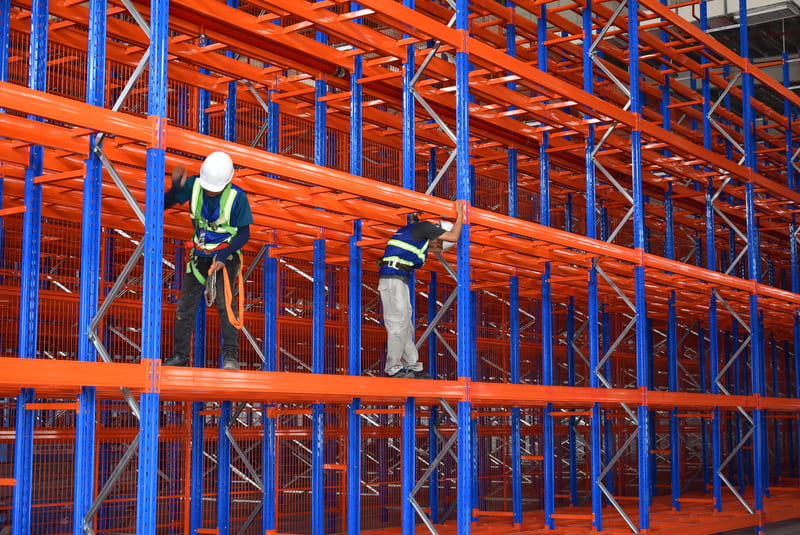
Push back racking stores pallets on moving carts along inclined rails. When a new pallet is loaded, it pushes existing pallets further into the lane. As the front pallet is retrieved, the remaining loads move towards the aisle.
Loading and retrieval take place from the same working face, making the system suitable for products that can follow LIFO rotation.
- Best for: Cold storage buffer stock, reserve inventory and multiple pallets per SKU without strict FIFO requirements.
- Advantages: Provides deeper pallet storage without requiring forklifts to enter the racking structure.
- Consideration: Does not support FIFO within an individual lane. Pallet condition, load compatibility and the suitability of moving components for low-temperature operation must be assessed.

Pallet Flow Racking
Pallet flow racking uses inclined roller tracks to move pallets from a loading face towards a separate retrieval face. As the front pallet is removed, the remaining pallets advance through controlled gravity movement.
This arrangement supports FIFO stock rotation and separates replenishment from retrieval activity.
- Best for: Chilled and frozen products requiring FIFO movement, regular replenishment and consistent pallet throughput.
- Advantages: Supports stock rotation, provides dense storage and allows loading and retrieval from separate working aisles.
- Consideration: Requires suitable pallet quality, access to both ends of the lanes and roller and braking components specified for the operating temperature. FEFO inventory management also requires appropriate stock allocation procedures.
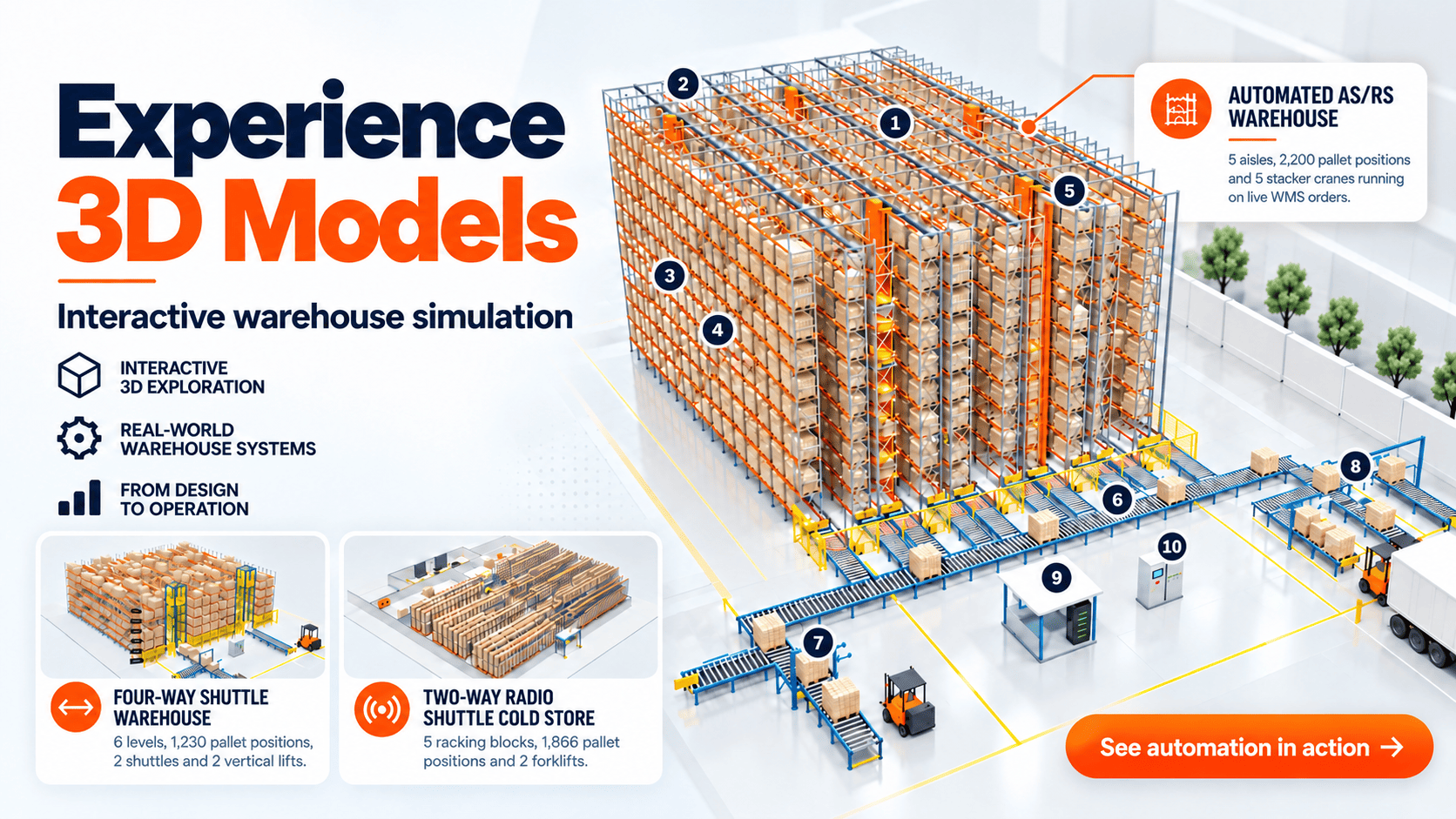
Shuttle Racking
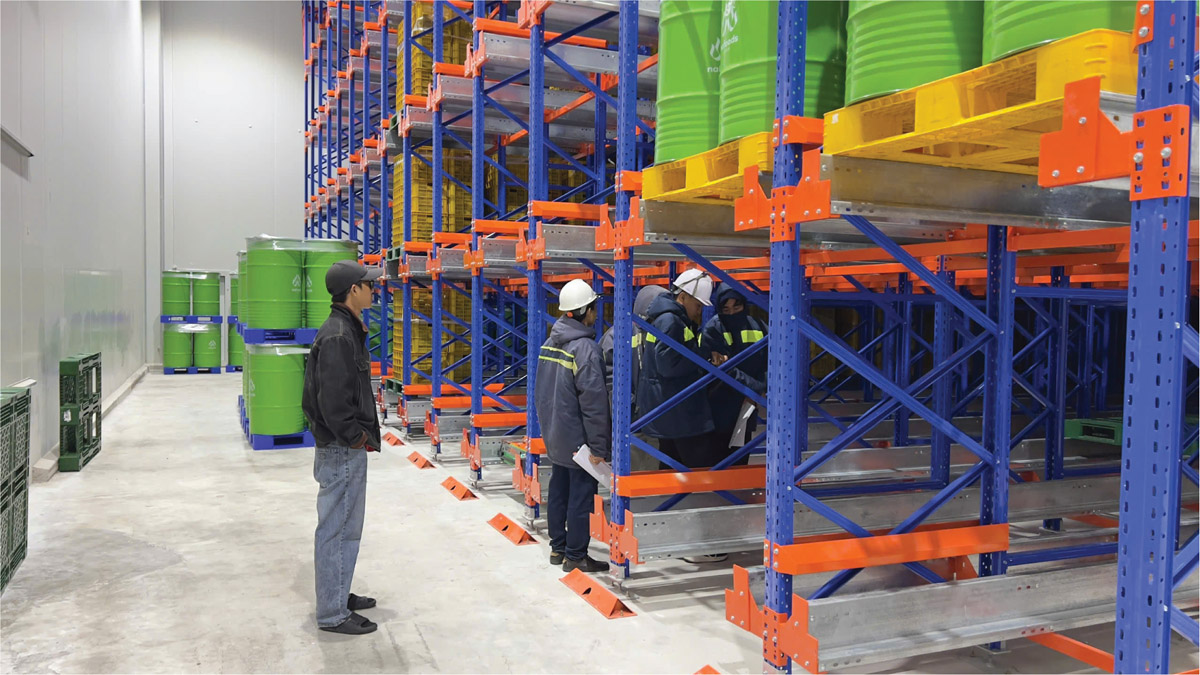
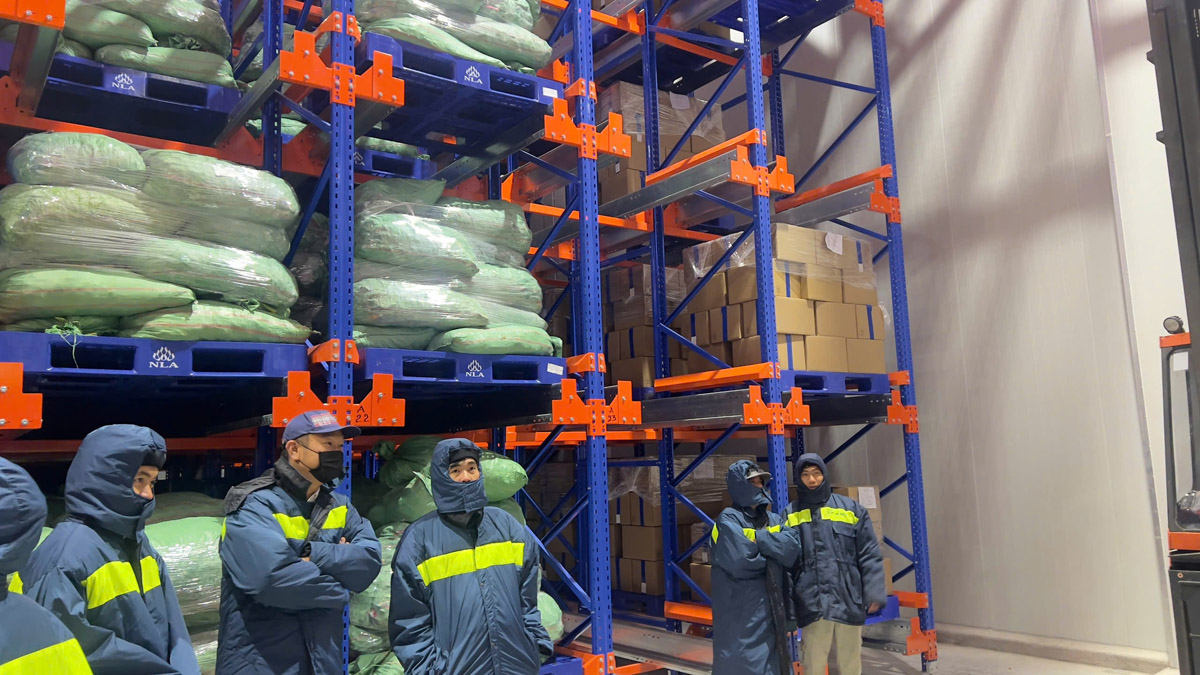
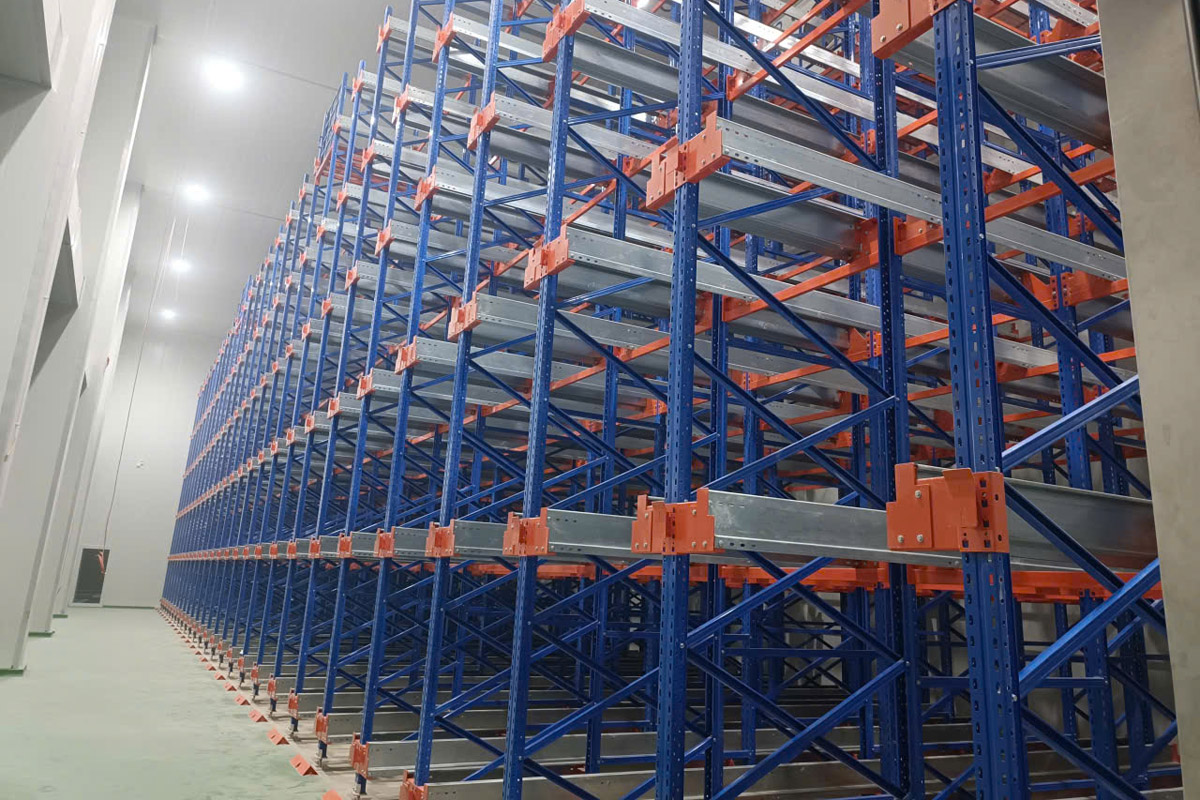
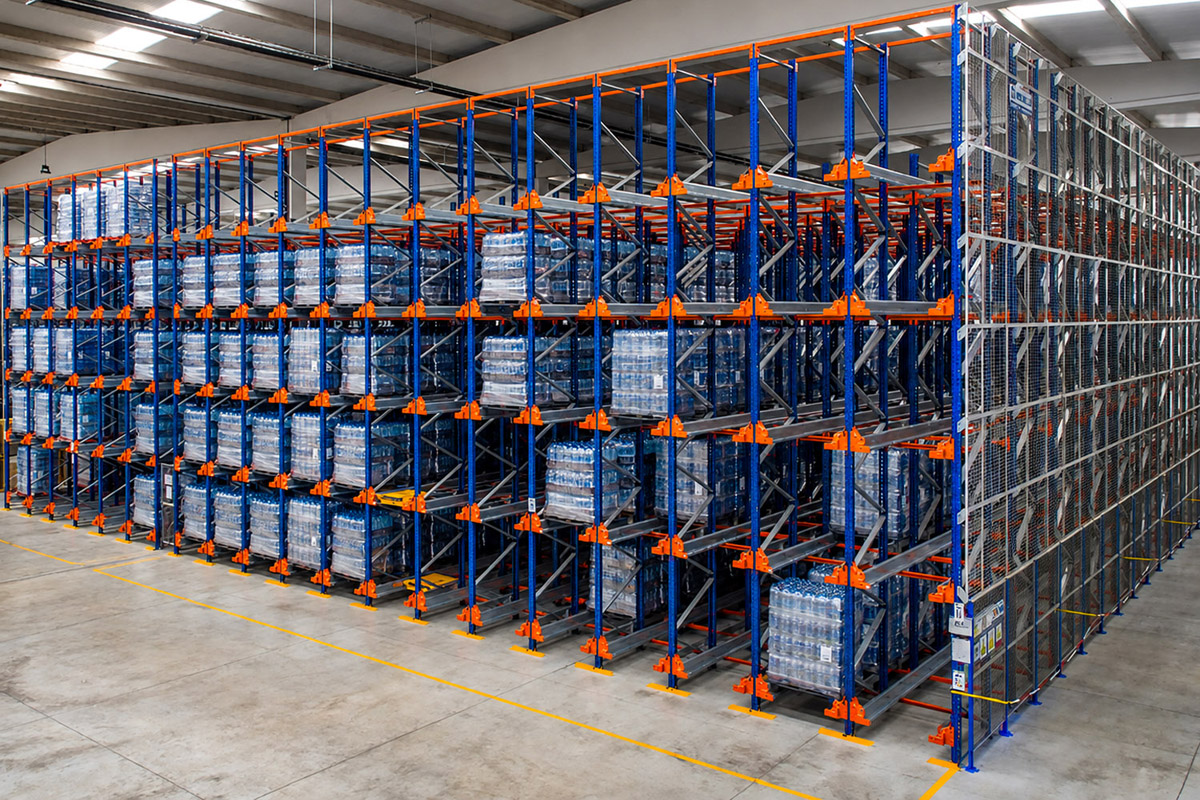
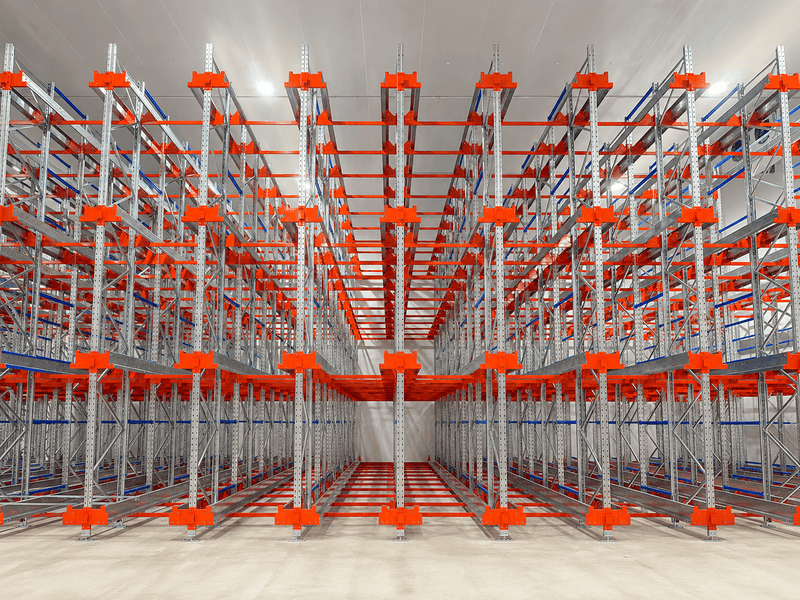
Shuttle racking uses a powered shuttle to move pallets along deep storage channels, reducing the need for forklifts to enter the rack structure.
Two-way shuttle configurations generally use forklifts at channel entrances, while four-way systems can support more extensive automation. FIFO or LIFO operation depends on the loading arrangement and system configuration.
- Best for: High-volume freezer warehouses, bulk cold storage and facilities handling many pallets per SKU.
- Advantages: Provides high-density storage, reduces forklift entry into storage channels and supports repetitive pallet handling.
- Consideration: Requires investment in shuttle equipment and assessment of battery performance, charging arrangements, component suitability and maintenance access under low-temperature conditions.
3. How to Choose the Right Racking for Your Cold Storage Warehouse
Choose cold storage racking based on your SKU range, pallets per SKU, stock rotation requirements, refrigerated space and handling equipment. The selected system should balance usable pallet capacity with reliable stock access and efficient daily operations.
The following table connects common cold storage requirements with systems worth assessing:
| Warehouse requirement | Systems to consider | Key selection factor |
| Frequent access across many SKUs | Selective or VNA | Direct pallet access, available space and forklift compatibility |
| More capacity for reserve inventory | Double Deep or Push Back | Pallets per SKU, retrieval sequence and load compatibility |
| Bulk frozen storage | Drive-In or Shuttle | Storage lane depth, SKU quantities and channel utilisation |
| FIFO stock movement | Pallet Flow or suitably configured Shuttle | Loading and retrieval arrangement, plus inventory allocation |
| Limited refrigerated floor space | Drive-In, VNA or Shuttle | Storage density, handling requirements and available building height |
| High-volume pallet handling | Shuttle or Pallet Flow | Peak pallet movements, equipment requirements and stock rotation |
A chilled warehouse handling many different products may prioritise direct pallet access. A freezer facility storing large quantities of a limited number of SKUs may benefit from higher-density storage.
Some facilities can use a combination of systems. For example, selective racking can accommodate frequently accessed products, while drive-in or shuttle racking provides deeper storage for bulk reserve inventory.
The most suitable arrangement depends on how pallets move through the warehouse, not simply the maximum number of positions that can fit within the room.
4. Key Considerations Before Installing Cold Storage Warehouse Racking
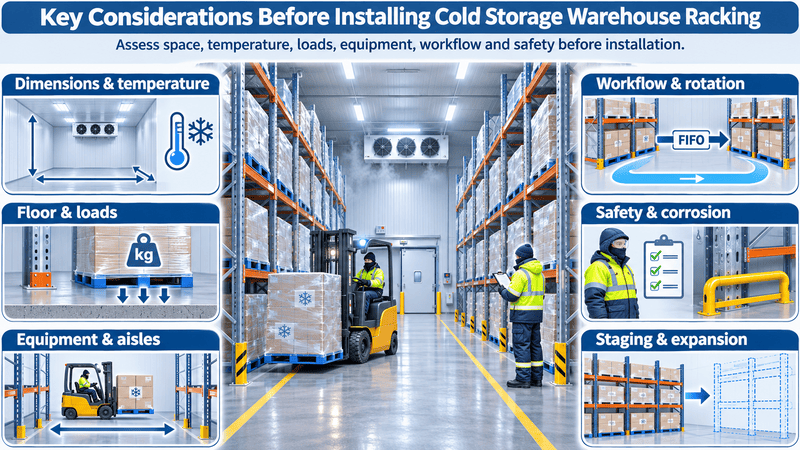
Before installation, assess cold room dimensions, temperature conditions, floor suitability, pallet loads, handling equipment, stock rotation and applicable safety requirements. These factors determine whether the proposed system can operate reliably within a refrigerated or frozen environment.
Warehouse dimensions and temperature conditions
Measure usable floor space and clear height, allowing for columns, doors, refrigeration equipment, building services and areas that must remain accessible.
Account for airflow requirements, including clearances around evaporators and other refrigeration components. Racking should not obstruct the airflow or access required for the approved refrigeration design.
The operating temperature also affects equipment and component selection. A chilled warehouse operating above freezing may have different requirements from a freezer facility operating continuously at sub-zero temperatures.
Floor conditions, pallet and load specifications
Assess the floor slab’s suitability for racking loads, anchoring and handling equipment. In freezer facilities, consider insulated floor construction and any underfloor systems to ensure concentrated loads and anchoring are compatible with the approved floor design.
Provide actual pallet dimensions, maximum load weights and load distribution details, including variations between pallet types. Pallet construction and condition are especially important for drive-in, push back, pallet flow and shuttle systems, where loads interact with rails or moving components.
Handling equipment and aisle clearances
Confirm that forklifts, reach trucks and other handling equipment are suitable for the operating temperature and proposed racking layout. Check truck dimensions, turning radius, lifting capacity and reach requirements against aisle widths and storage heights.
For freezer operations, consider battery performance, hydraulic systems and operator visibility under low-temperature conditions. Review the complete movement path, including aisle entry, pallet handling, staging areas and cold room doorways.
Warehouse workflow and stock rotation
Map receiving, put-away, replenishment, picking and dispatch activities before finalising the layout. Identify areas where forklift movements overlap and assess whether loading and retrieval can operate efficiently during peak periods.
Determine which products require FIFO, FEFO or other inventory allocation rules. Plan deep-lane storage around pallets per SKU and retrieval sequences, ensuring warehouse management procedures support batch tracking and expiry-date control.
Safety and corrosion protection
Confirm applicable Australian racking requirements, including structural capacity, anchoring, load signage, clearances and impact protection. Coordinate fire protection, refrigeration equipment access and inspection arrangements during the design stage.
Assess exposure to condensation, humidity and temperature changes, particularly around doorways and loading areas. Depending on site conditions, suitable finishes may include powder-coated, pre-galvanised or hot-dip galvanised steel components.
Installation staging and future expansion
Plan installation around ongoing cold storage operations, including temporary stock relocation, restricted work areas and coordination with refrigeration systems. Maintain required storage temperatures while accommodating receiving and dispatch activities.
Consider future changes in SKU quantities, pallet volumes and handling equipment when planning the layout. Establish inspection and maintenance procedures before handover, including arrangements for identifying and assessing damaged or corroded components.
5. Vinatech Cold Storage Racking Solutions and Featured Projects
Vinatech provides cold storage warehouse racking with layout design, supply and installation support. Featured projects include a 7,500-position shuttle racking installation and a 1,500-position seafood cold storage installation, illustrating different approaches to high-density storage and pallet handling.
Planning considers cold room dimensions, pallet specifications, temperature conditions, inventory profiles and stock rotation requirements. Design support, including 2D and 3D layouts, helps you review rack positions, operating aisles and proposed capacity before installation.
2-Way Shuttle Racking for a 5,500 m² Cold Storage Warehouse
Vinatech delivered a 2-way shuttle racking solution for a 5,500 m² cold storage warehouse, providing approximately 7,500 pallet positions across five storage levels with a racking height of around 12 metres.
The configuration uses deep storage lanes to reduce conventional aisle requirements and improve refrigerated space utilisation. It supports batch-based inventory management and provides approximately 50% more pallet capacity than a comparable selective racking layout.
View the Cold Chain Shuttle Racking Project

2-Way Shuttle Racking for a 2,000 m² Seafood Cold Storage Warehouse
For a 2,000 m² seafood cold storage warehouse, Vinatech implemented a 2-way shuttle racking solution providing approximately 1,500 pallet positions, with eight deep-storage lines operated by one shared shuttle.
The shared-shuttle configuration allows different seafood products and batches to be stored in dedicated lanes while reducing forklift entry into the racking. It demonstrates a high-density storage approach that balances refrigerated space utilisation with practical automation investment.
View the Seafood Cold Storage Shuttle Project

Explore Vinatech’s warehouse racking solutions for chilled and frozen warehouse operations.
Start with the issue that most affects your cold storage operation: limited pallet capacity, inefficient space utilisation, difficult stock rotation or excessive forklift movement. Use that priority to assess which racking layout offers the most practical improvement within your temperature-controlled facility.
Contact Vinatech on 0485 083 868 or email info@vinatech.com.au to discuss your cold storage layout, inventory profile and racking requirements.