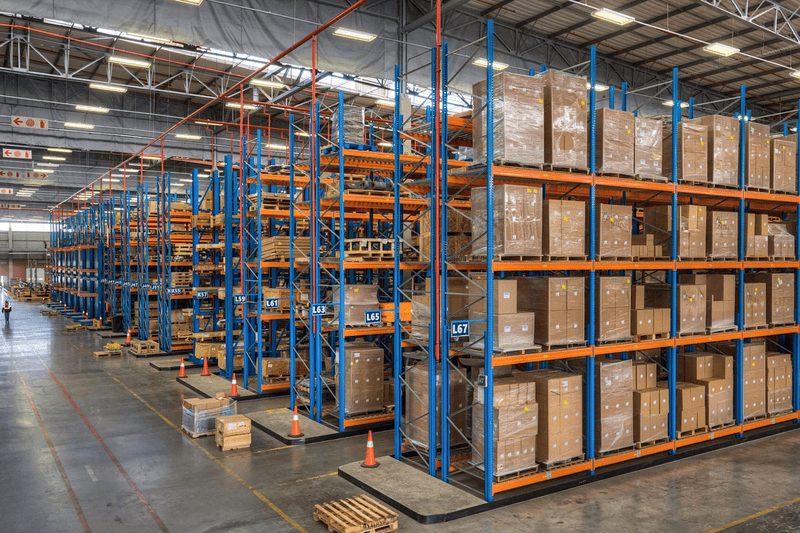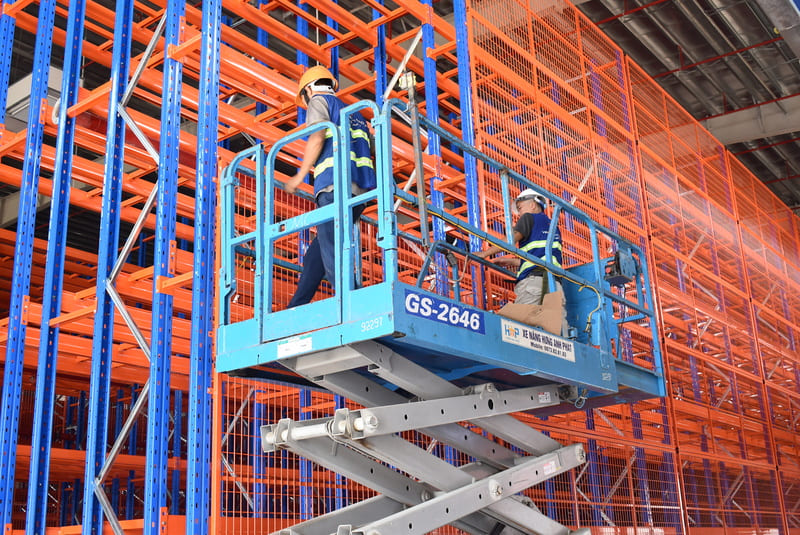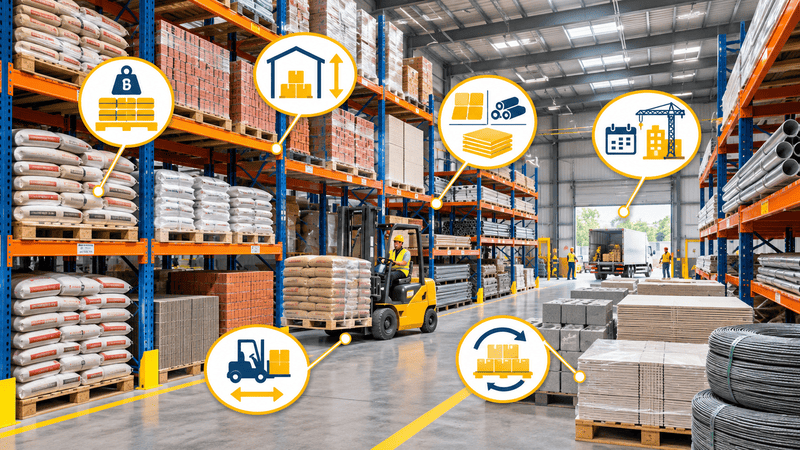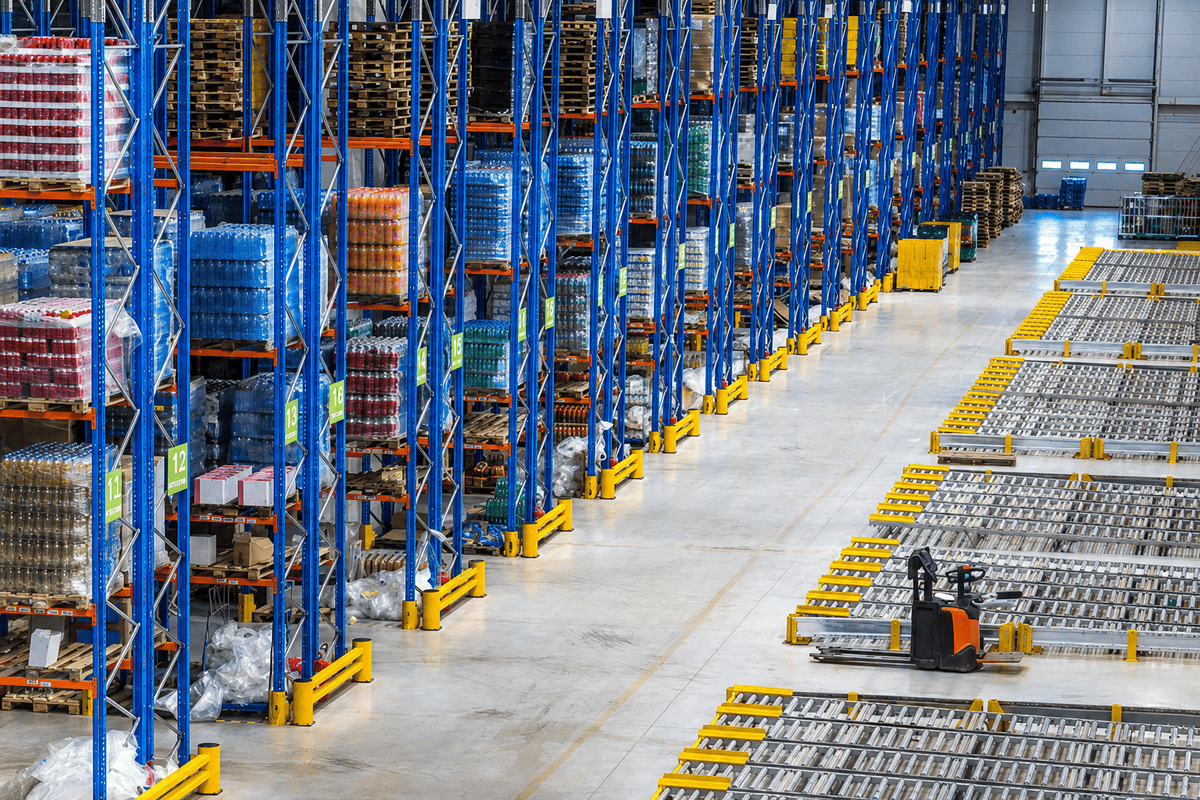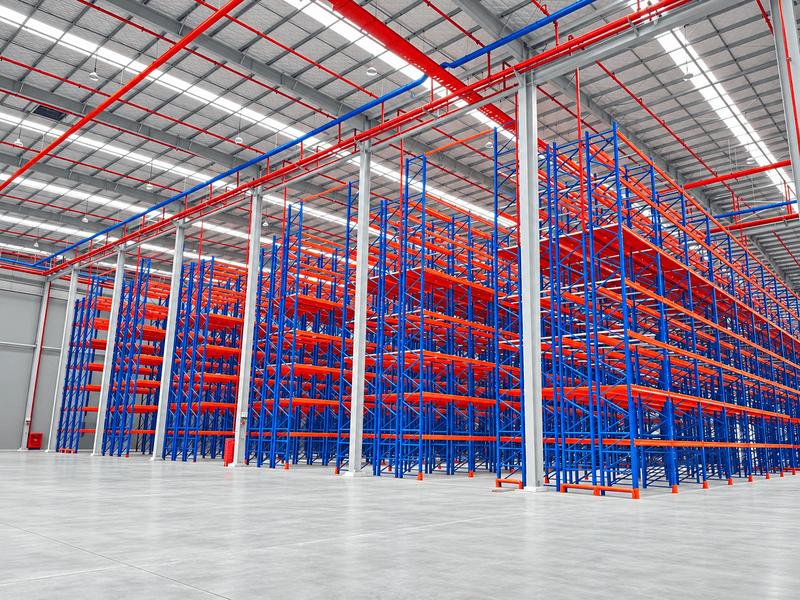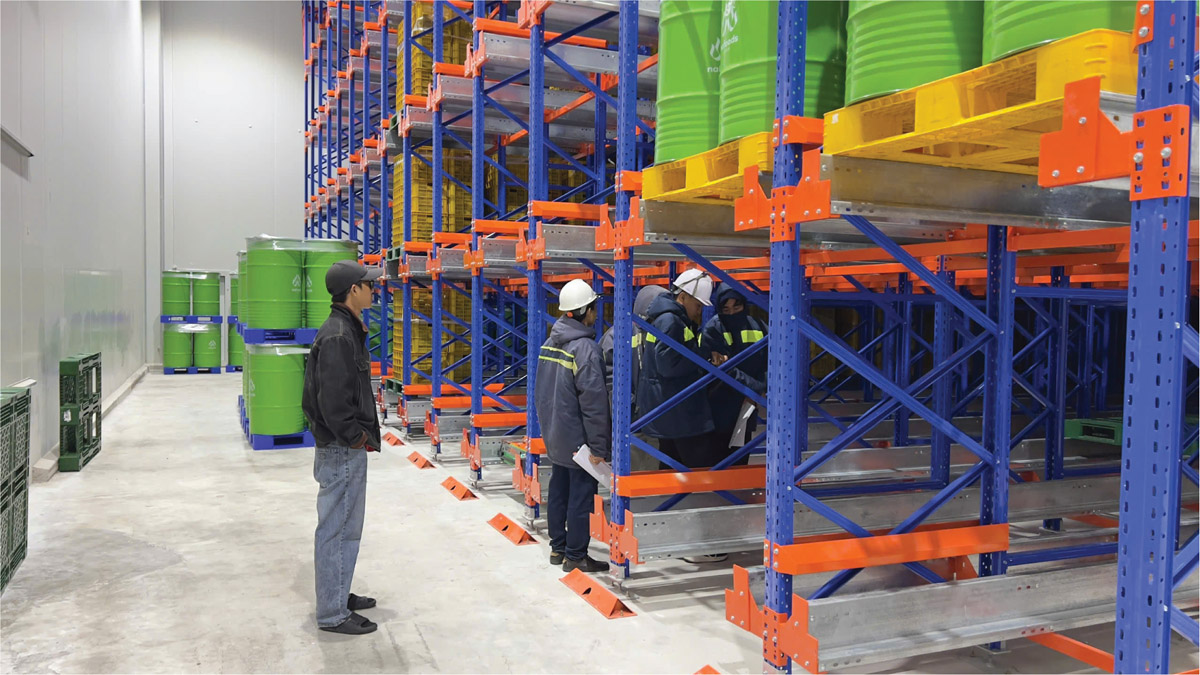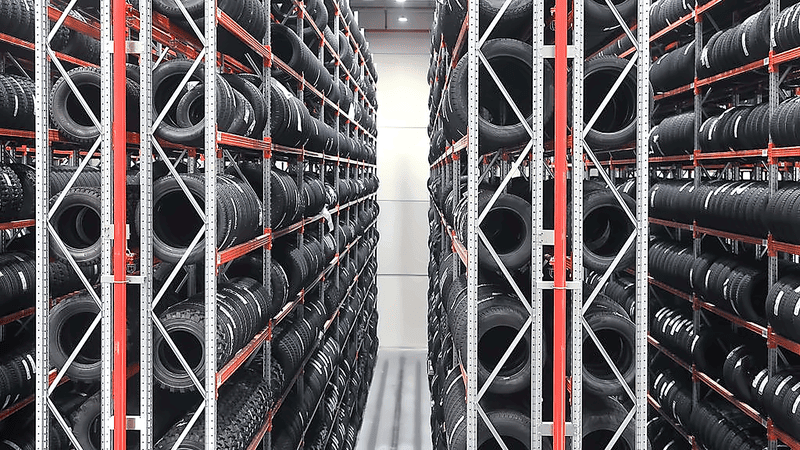


For chemical manufacturers, distributors and industrial suppliers, storage requirements can vary between drums, intermediate bulk containers (IBCs), packaged chemicals and bulk inventory. A practical chemical warehouse racking layout may combine several storage systems to accommodate frequently accessed products, larger stock quantities and different handling requirements.
>> Read More:
1. Common Storage Challenges in Chemical Warehouses
Common challenges in chemical warehouses include product segregation, heavy pallet loads, limited storage space, stock rotation requirements, spill risks and restricted forklift movement. These issues affect how safely and efficiently chemical products can be stored, identified, accessed and dispatched.
Adding more racks does not always improve warehouse performance. If the layout restricts access to chemical products, reduces separation between incompatible goods or complicates material handling, additional storage density can introduce operational and safety risks.
Compare pallet racking options based on load requirements and product segregation.
The main challenges include:
- Chemical segregation requirements: Different chemical products may have incompatible properties, requiring dedicated storage zones and appropriate separation to prevent hazardous interactions.
- Heavy and varied pallet loads: Chemical drums, IBCs and packaged materials can have different weights, dimensions and load distributions, complicating rack configuration and pallet handling.
- Limited storage space: Growing inventory puts pressure on the existing warehouse footprint, particularly where required separation distances, containment areas and access routes reduce usable storage space.
- Batch and stock rotation control: Products with expiry dates, limited shelf lives or batch-tracking requirements need organised storage allocation and reliable retrieval sequences.
- Spill and leakage risks: Damaged containers or handling incidents can cause chemical releases, making suitable containment, access and emergency procedures important.
- Forklift movement and operational safety: Receiving, put-away, picking and dispatch activities require sufficient aisle space to handle chemical loads while limiting vehicle congestion and potential impacts.
Identify where your operation faces the greatest storage or handling constraints. A warehouse managing many chemical products requiring separate storage zones may benefit from direct-access racking. A facility holding large quantities of compatible, similarly packaged goods may gain more from higher-density storage, subject to the required safety controls.

>> Read More:
2. Types of Racking Systems for Chemical Warehouses
Common chemical warehouse racking systems include Selective, Pallet Flow, Double Deep, Push Back, Drive-In, Shuttle, VNA and Automated Storage and Retrieval Systems (AS/RS). Each offers a different balance of storage density, pallet accessibility, stock rotation and handling requirements.
The suitability of each system must also be assessed against chemical compatibility, packaging integrity and applicable storage safety requirements.
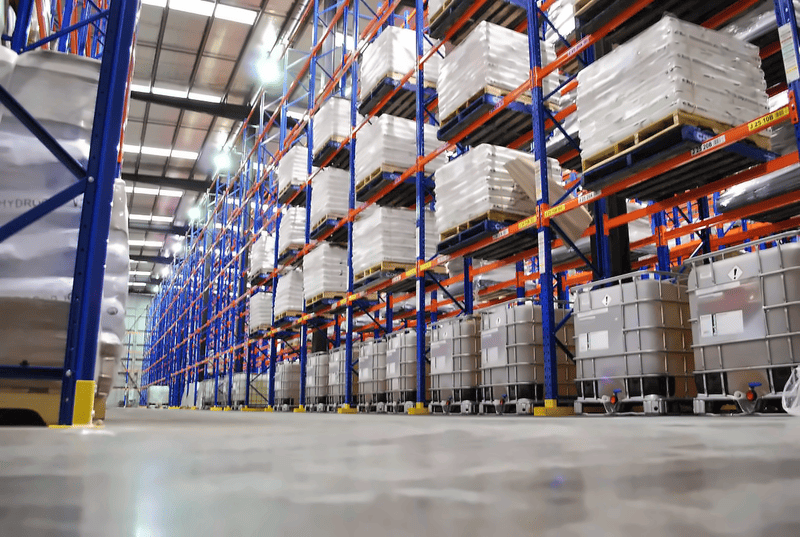
Selective Pallet Racking
Selective pallet racking stores pallets on horizontal beams, with each position accessible directly from an operating aisle. Operators can retrieve individual pallets without moving other stored loads first.
This arrangement supports chemical warehouses handling multiple product categories, frequent pallet movements and inventory that requires clearly defined storage locations.
- Best for: Chemical warehouses managing many SKUs, different product groups and frequent pallet access.
- Advantages: Direct access to every pallet, straightforward inventory identification and flexible storage configurations.
- Consideration: Requires more aisle space than deeper storage systems. Chemical segregation and containment requirements must be assessed separately from pallet accessibility.
Pallet Flow Racking
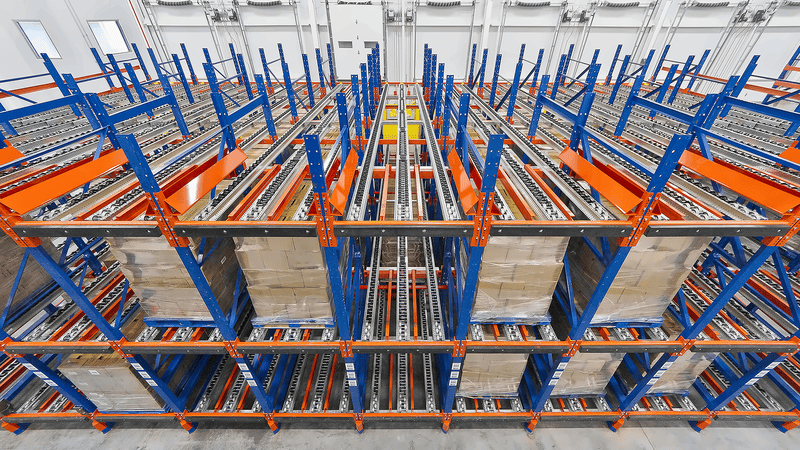
Pallet flow racking uses inclined roller tracks to move pallets from a loading face towards a separate retrieval face. As the front pallet is removed, the remaining pallets advance through controlled gravity movement.
This arrangement supports first-in, first-out (FIFO) stock rotation while separating replenishment from retrieval activities.
- Best for: Compatible packaged chemical products requiring FIFO movement, regular replenishment and batch-based inventory control.
- Advantages: Supports consistent stock rotation, provides dense storage and allows loading and retrieval from separate aisles.
- Consideration: Requires compatible pallets, suitable containers and maintenance of rollers and braking components. Spill containment, packaging suitability and batch allocation must also be assessed.
Double Deep Racking
Double deep racking stores pallets two positions deep, with one pallet positioned behind another. This arrangement reduces the number of operating aisles compared with standard selective racking.
A compatible deep-reach truck places and retrieves pallets from the rear positions, making the system suitable for products stored in repeated pallet quantities.
- Best for: Reserve inventory and compatible packaged chemicals stored in multiple pallets per SKU.
- Advantages: Increases storage density while maintaining pallet loading and retrieval from the operating aisle.
- Consideration: Rear pallets cannot be accessed until the front position is clear. Retrieval sequences, chemical compatibility and containment arrangements must suit the storage configuration.

Push Back Racking
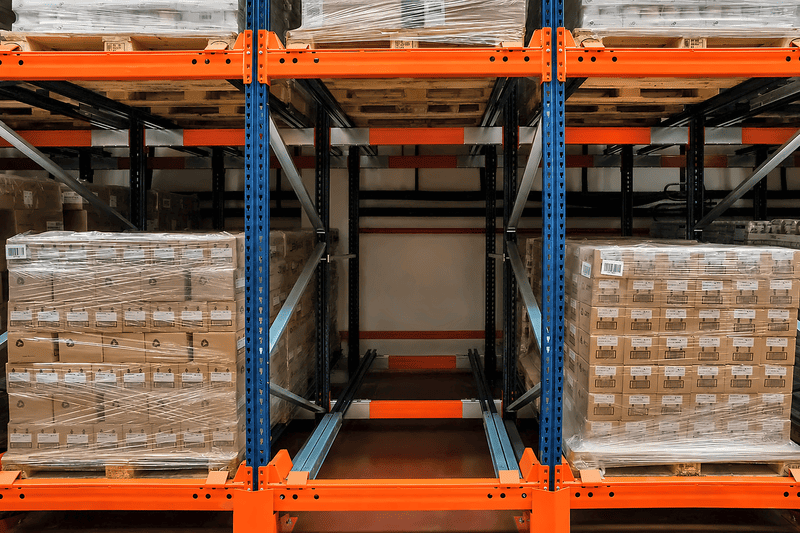
Push back racking stores pallets on moving carts along inclined rails. Loading a new pallet pushes existing pallets further into the lane, while retrieving the front pallet allows the remaining loads to move towards the aisle.
Loading and retrieval take place from the same working face, making the system suitable for inventory that can follow last-in, first-out (LIFO) rotation.
- Best for: Compatible palletised chemical goods, packaged industrial supplies and reserve inventory without strict FIFO requirements.
- Advantages: Provides deeper pallet storage without requiring forklifts to enter the racking structure.
- Consideration: Does not support FIFO within an individual lane. Pallet stability, container integrity and the suitability of moving components must be assessed for the stored chemicals.
Drive-In Racking
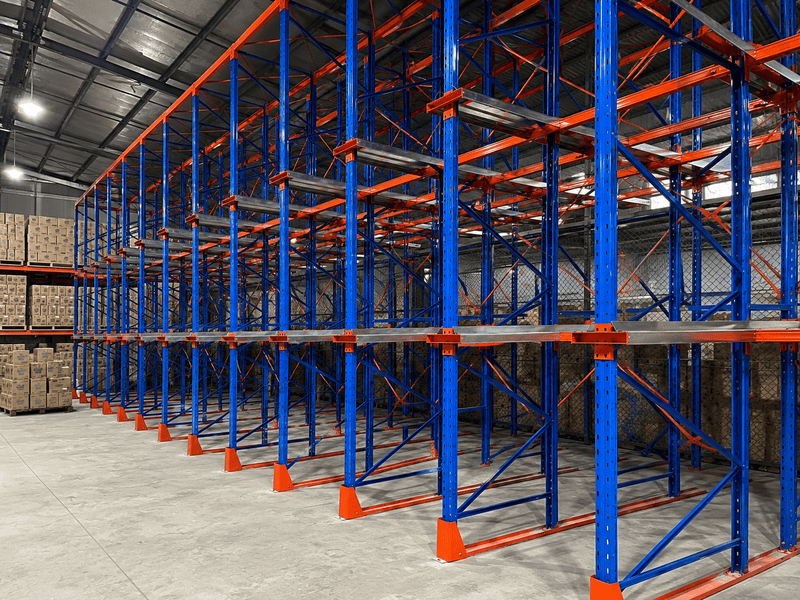
Drive-in racking stores pallets in deep lanes supported by rails. Forklifts enter the lanes to place and retrieve loads, reducing the number of conventional access aisles.
Standard single-entry configurations use the same end for loading and retrieval, resulting in LIFO stock rotation.
- Best for: Large quantities of similar, compatible palletised chemical products suitable for deep-lane storage.
- Advantages: Reduces aisle requirements, allowing more floor space to accommodate pallet storage.
- Consideration: Less suitable for mixed chemical inventories, frequent individual pallet access or products requiring strict FIFO rotation. Forklift entry, collision risks and spill response must be assessed carefully.
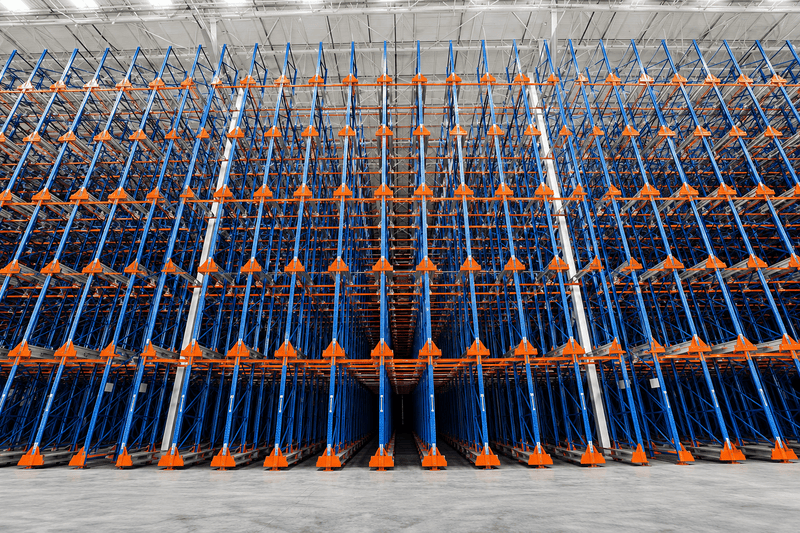
Shuttle Racking
Shuttle racking uses a powered shuttle to transport pallets along deep storage channels. Forklifts typically handle pallets at channel entrances, while the shuttle moves loads to designated positions within the racking.
Two-way shuttle configurations provide shuttle-assisted deep-lane storage, while four-way systems can support broader automation. FIFO or LIFO operation depends on the loading arrangement and system configuration.
- Best for: High-volume storage of compatible packaged chemical products with multiple pallets per SKU.
- Advantages: Provides high-density pallet storage and reduces the need for forklifts to enter storage channels.
- Consideration: Requires compatible load units, appropriate equipment specifications and assessment of chemical hazards, ignition risks, maintenance access and emergency procedures.
VNA Racking
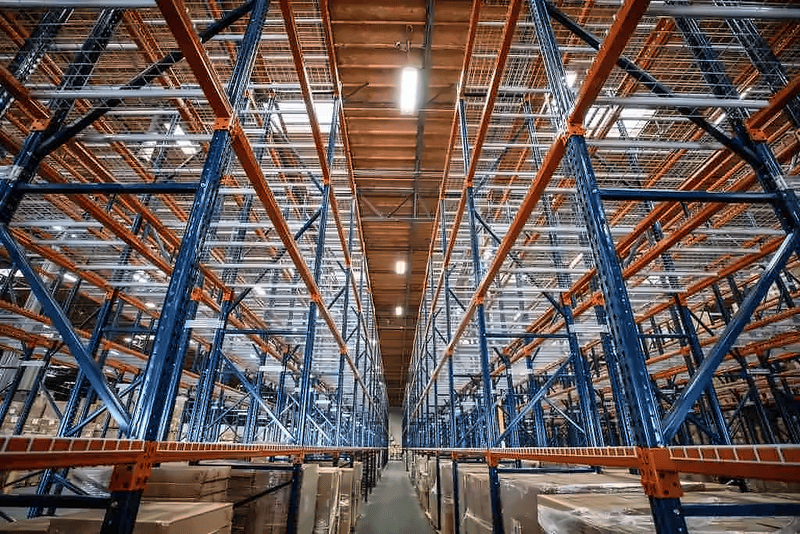
Very narrow aisle (VNA) racking uses narrower operating aisles than conventional selective racking while maintaining direct access to individual pallet positions.
The system can also utilise available building height, allowing chemical warehouses to increase pallet capacity within a limited footprint where the required safety clearances can be maintained.
- Best for: Chemical warehouses with many SKUs, high ceilings and limited floor space.
- Advantages: Reduces aisle space while maintaining direct pallet accessibility and improving vertical space utilisation.
- Consideration: Requires specialist handling equipment, suitable floor tolerances and assessment of operating clearances, chemical segregation, emergency access and ventilation requirements.
Automated Storage and Retrieval Systems (AS/RS)
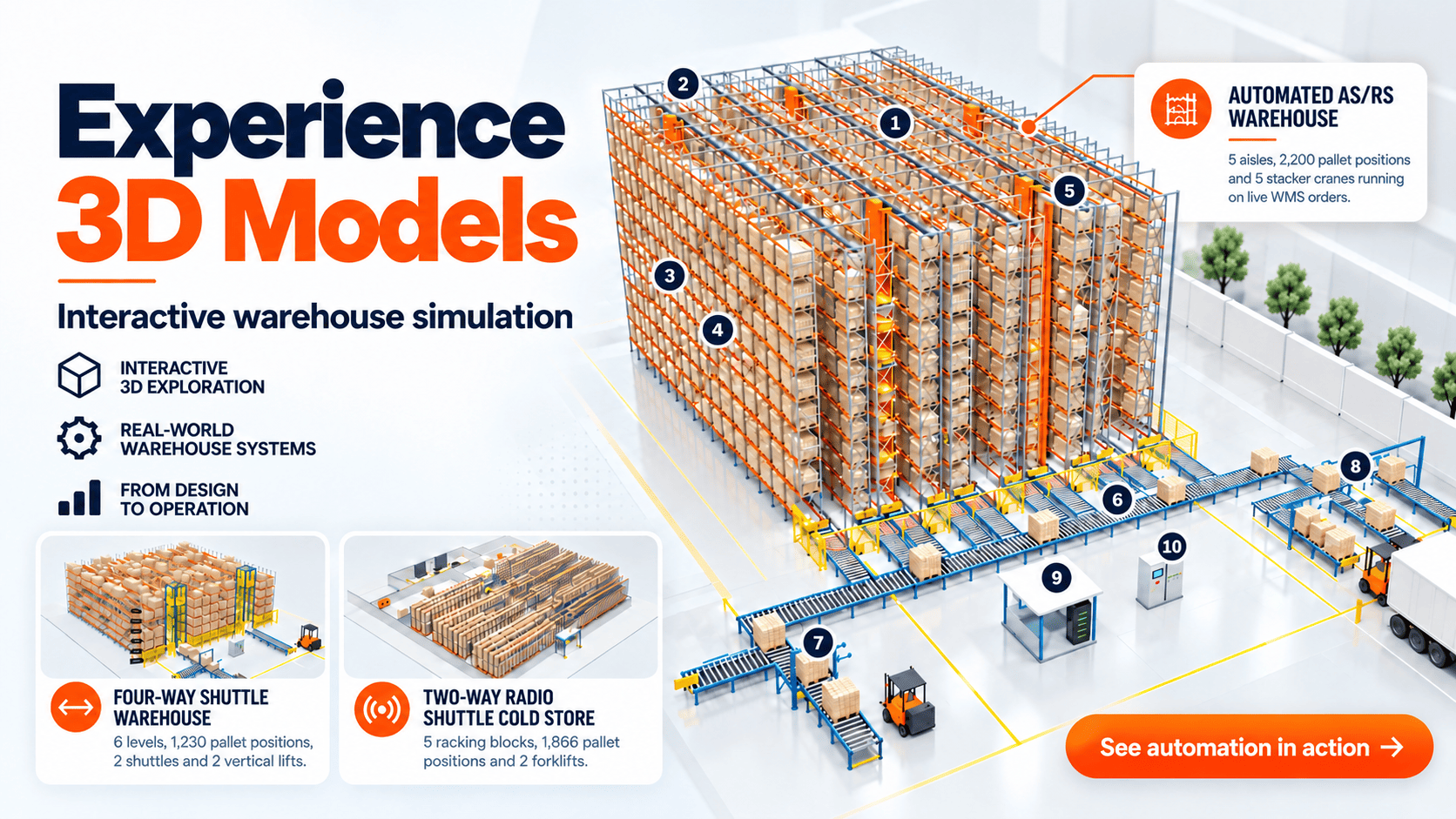
Automated Storage and Retrieval Systems (AS/RS) use computer-controlled equipment to store and retrieve pallets, bins or other load units from designated storage locations. Depending on the configuration, the system may integrate stacker cranes, shuttles, conveyors and warehouse control software.
This arrangement can support automated inventory movements in chemical warehouses handling repetitive storage and retrieval tasks.
- Best for: Large chemical manufacturing and distribution facilities with suitable packaged inventory and defined automation requirements.
- Advantages: Automates storage and retrieval, reduces routine manual handling and supports inventory tracking through integrated control systems.
- Consideration: Requires significant investment, compatible load units, appropriate fire and electrical safety engineering, and integration with warehouse management systems. Hazardous chemical suitability must be assessed for the specific installation.

3. How to Choose the Right Racking for Your Chemical Warehouse
Choose chemical warehouse racking based on chemical classification, packaging type, pallet loads, SKU range, stock rotation requirements and available space. Compare systems against daily operations and applicable safety controls to balance storage capacity with product accessibility and safe handling.
The following table connects common chemical warehouse requirements with systems worth assessing:
| Warehouse requirement | Systems to consider | Key selection factor |
| Frequent access across many chemical SKUs | Selective or VNA | Direct pallet access, segregation and operating clearances |
| More capacity for compatible reserve inventory | Double Deep or Push Back | Pallets per SKU, retrieval sequence and containment requirements |
| Bulk storage of similar products | Drive-In or Shuttle | Lane depth, chemical compatibility and handling risks |
| FIFO stock movement | Pallet Flow or suitably configured Shuttle | Loading arrangement, batch control and product suitability |
| Limited floor space with diverse SKUs | VNA | Warehouse height, forklift requirements and safety clearances |
| High-volume pallet handling | Shuttle or AS/RS | Throughput, equipment suitability and operational safety |
| Automated storage and inventory tracking | AS/RS | Chemical hazards, system integration and emergency access |
A chemical warehouse handling many product groups may prioritise selective racking for direct access and clearly defined storage zones. A facility storing large quantities of the same compatible packaged product may benefit from double deep or another higher-density arrangement where permitted by the risk assessment.
Different systems can also be combined within the same facility. Selective racking may accommodate frequently accessed products, while suitable high-density systems provide reserve storage for compatible inventory.
The most appropriate configuration depends on chemical hazards, required separation, pallet handling and inventory movement. Increasing storage density should not compromise the controls necessary for safe chemical storage.
4. Key Considerations Before Installing Chemical Warehouse Racking
Before installation, assess warehouse dimensions, floor conditions, chemical classification, pallet loads, handling equipment, stock rotation and applicable safety requirements. These factors determine whether the proposed layout can accommodate stored chemicals while supporting safe and efficient warehouse operations.
Warehouse dimensions and floor conditions
Measure usable floor space and clear height, accounting for columns, doors, building services, ventilation systems and areas required for receiving and dispatch. Include required separation zones, emergency access and spill containment areas rather than allocating the entire footprint to pallet storage.
Assess the floor slab for rack loading, concentrated loads and anchoring requirements. The proposed installation must also be compatible with any bunding, protective floor coatings and other containment infrastructure.
Chemical classification and load specifications
Identify the chemical hazards and storage conditions using product labels and current Safety Data Sheets (SDS). Determine which products require segregation, temperature controls, dedicated storage areas or other specific precautions before assigning rack locations.
Provide actual pallet dimensions, maximum loaded weights and load distribution details for drums, IBCs and packaged chemicals. Confirm container compatibility, pallet condition and support requirements, particularly where loads interact with rails, carts or rollers.
Handling equipment and aisle clearances
Confirm forklift dimensions, turning requirements, lifting capacity and reach distance against the proposed layout. Handling equipment and attachments must suit the intended pallet weights, container configurations and operating environment.
Review movement paths between receiving, storage and dispatch areas. Allow practical clearances for pallet transfers, pedestrian separation and emergency access, while considering whether equipment requires additional controls in areas with flammable atmospheres.
Warehouse zoning and stock rotation
Map receiving, inspection, storage, picking and dispatch activities before finalising the layout. Establish clearly identified storage zones based on chemical compatibility, packaging requirements and approved inventory allocation procedures.
Determine which products require FIFO, first-expired, first-out (FEFO) or other batch controls. Inventory records should support accurate product identification, lot tracking and retrieval without compromising chemical segregation.
Safety, spill containment and regulatory requirements
Confirm applicable Australian racking and hazardous chemical storage requirements with the relevant professionals and regulatory authorities. The assessment should address structural capacity, anchoring, load signage, impact protection, chemical segregation, ventilation, spill containment and fire safety.
Review the need for hazardous chemical registers, placards, manifests and emergency plans under the applicable state or territory rules. Establish inspection and maintenance arrangements for racking, storage containers and relevant safety infrastructure before handover.
Installation staging and future expansion
For an operating chemical warehouse, installation may require temporary stock relocation and controlled access to work areas. Plan installation activities around chemical handling procedures, emergency access and ongoing receiving and dispatch operations.
Consider future changes in chemical product ranges, storage quantities and handling equipment. Any proposed expansion or rack reconfiguration should be reviewed for its effect on load capacity, chemical segregation, containment and other approved safety controls.

5. Vinatech Chemical Warehouse Racking Solutions and Related Projects
Vinatech provides warehouse racking solutions suitable for chemical and industrial storage, with layout design, supply and installation support. The featured pallet flow racking project demonstrates an approach to improving FIFO stock rotation, pallet accessibility and inventory handling efficiency.
Pallet Flow Racking for FIFO Inventory Storage
Vinatech’s pallet flow racking solution illustrates the use of gravity-fed storage lanes to support first-in, first-out (FIFO) inventory movement and organised pallet retrieval.
The configuration allows pallets to move from the loading side towards a separate retrieval face, supporting consistent stock rotation and reducing unnecessary handling. It illustrates an approach relevant to warehouses managing compatible packaged chemicals with batch or shelf-life requirements, subject to appropriate safety controls.
View the FIFO Pallet Flow Racking Project
Explore Vinatech’s warehouse racking solutions for chemical warehouses with specific load and segregation requirements.
Start with the issue that most affects your chemical warehouse: limited capacity, difficult product access, stock rotation, segregation or material handling risks. Use that priority to assess which storage layout offers the most practical improvement while maintaining the necessary chemical safety controls.
Contact Vinatech on 0485 083 868 or email info@vinatech.com.au to discuss your chemical warehouse layout, pallet specifications and storage requirements.