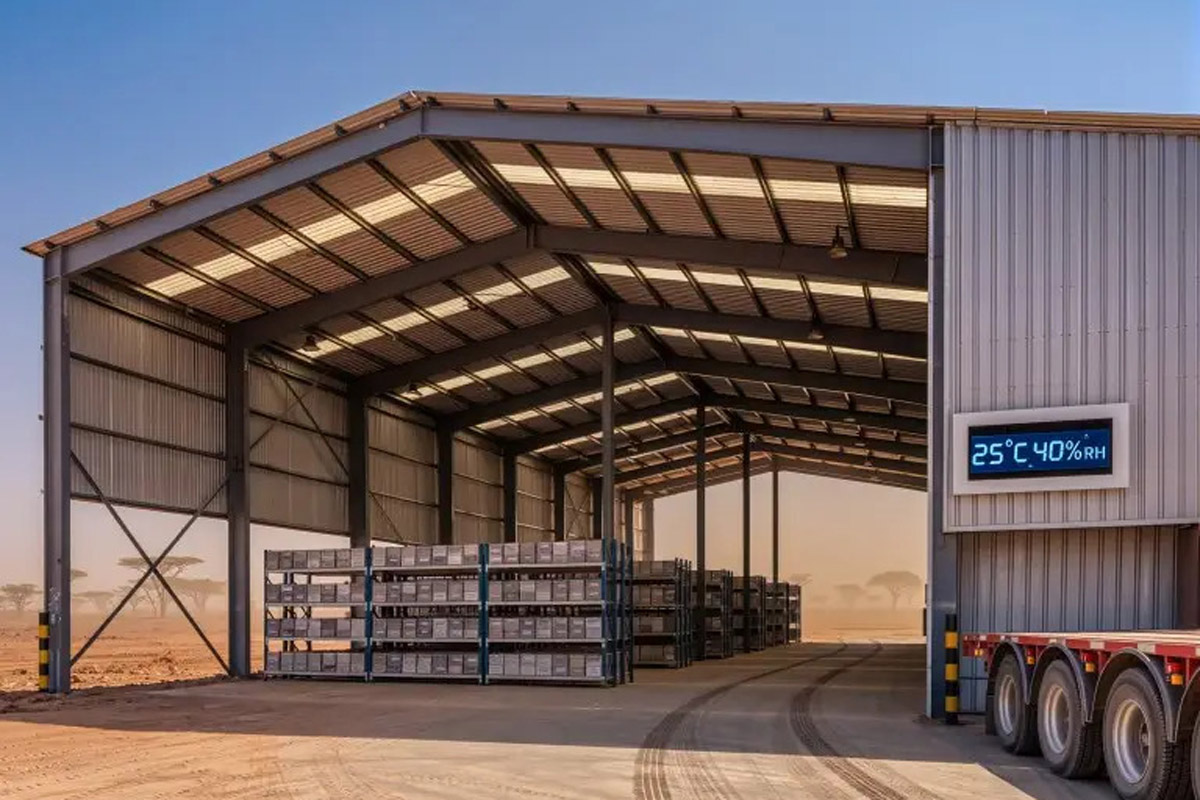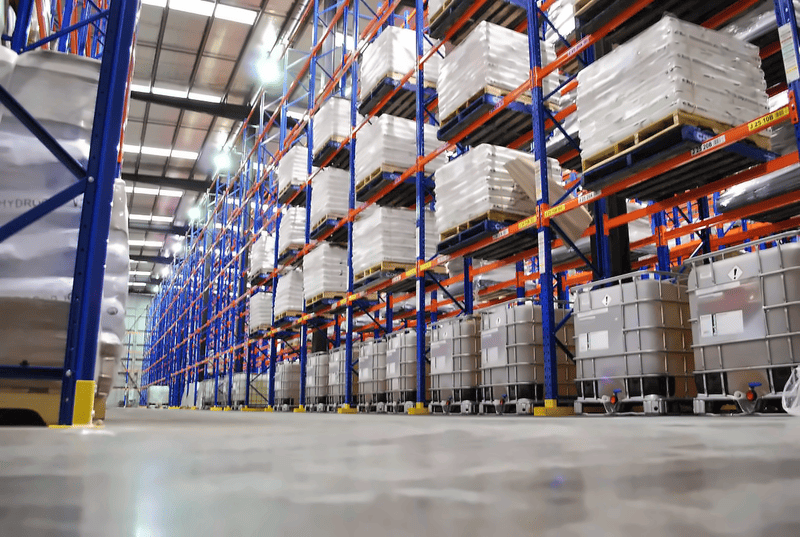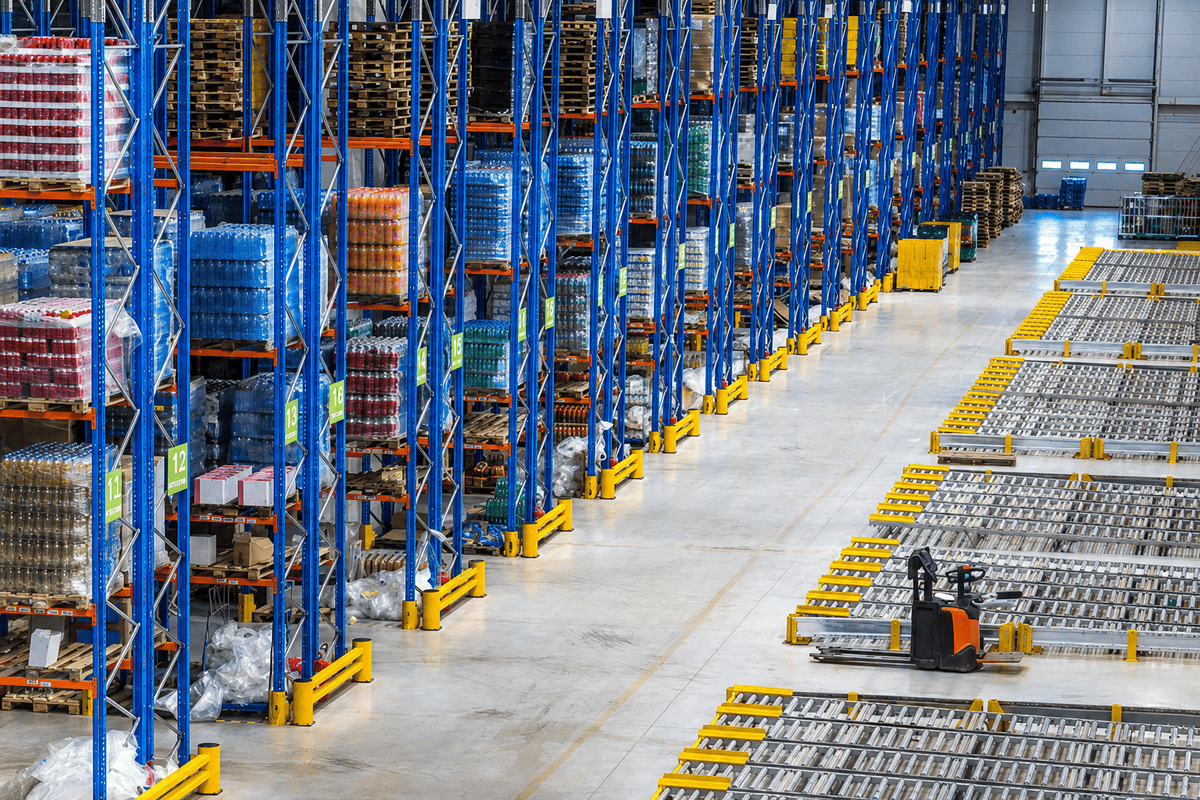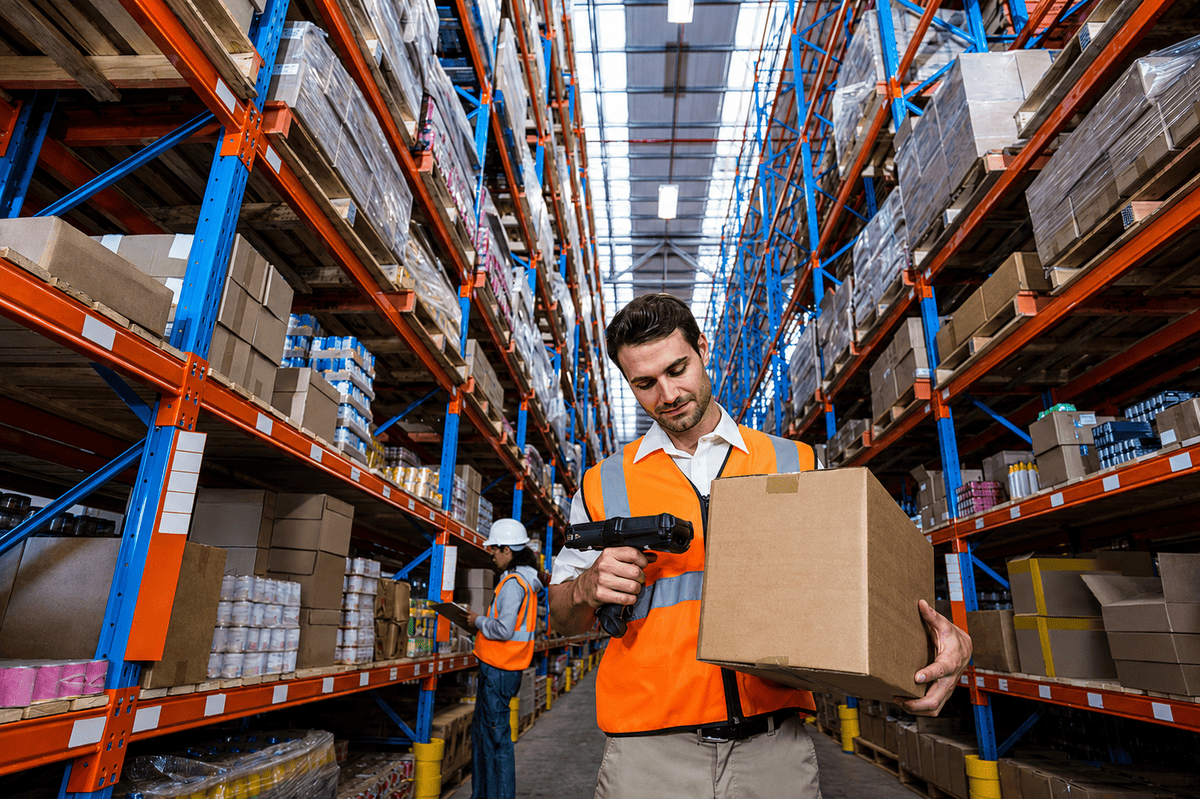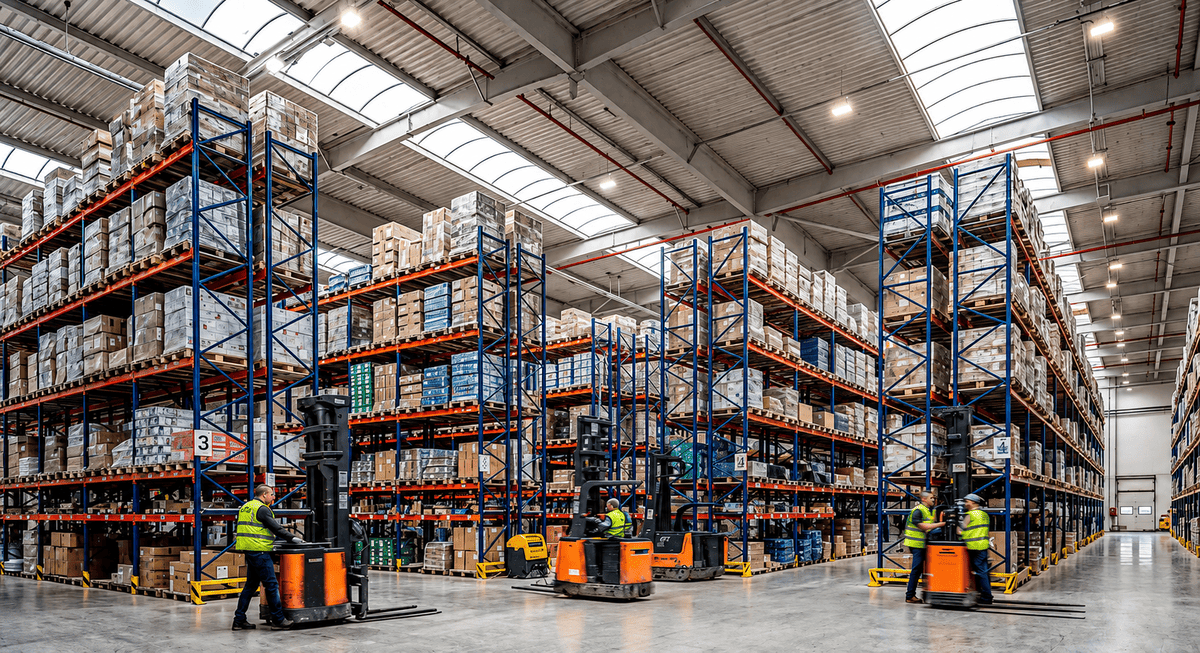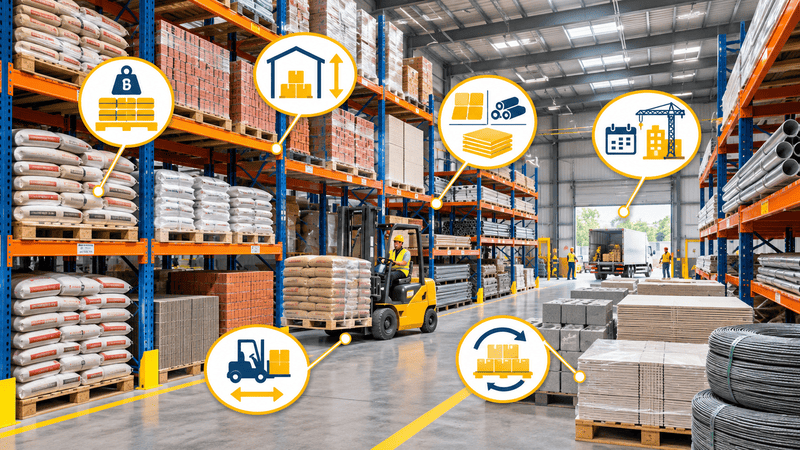


For manufacturers, storage requirements can vary between raw materials, production components, work-in-progress inventory and finished products. A well-planned manufacturing warehouse racking layout may combine several storage systems to accommodate frequently accessed materials, bulk reserve stock and changing production volumes.
>> Read More:
1. Common Storage Challenges in Manufacturing Warehouses
Common challenges in manufacturing warehouses include limited storage capacity, diverse inventory types, heavy pallet loads, production replenishment requirements and complex material flow. These issues affect how efficiently goods are stored, accessed and transferred between warehouse and production areas.
Adding more racks does not always improve warehouse performance. If the layout restricts access to production materials or increases forklift travel between storage and manufacturing lines, additional storage density can create more handling work and operational delays.
Compare warehouse racking options based on material flow and production replenishment.
The main challenges include:
- Limited storage space: Raw materials, packaging supplies and finished products compete for warehouse space, particularly where available building height is underused.
- Multiple inventory categories: Different materials, components and finished goods may have varying pallet sizes, weights and storage requirements, complicating inventory allocation.
- Production replenishment demands: Manufacturing lines require timely access to materials and components. Difficult pallet retrieval can increase handling time and disrupt replenishment schedules.
- Heavy and irregular loads: Industrial components, machinery parts and bulk raw materials may require specific load capacities, support arrangements and handling equipment.
- Batch and stock rotation requirements: Materials and finished goods may require first-in, first-out (FIFO), lot tracking or other inventory allocation procedures to support production and quality control.
- Forklift congestion and changing production volumes: Receiving, material transfer, production replenishment and dispatch can compete for the same aisles and staging areas, particularly during production peaks.
Identify where your operation loses the most time or usable space. A manufacturing warehouse handling many components with frequent production replenishment may benefit from direct pallet access. A facility storing large quantities of similar raw materials or finished goods may gain more from higher-density storage.

>> Read More:
2. Types of Racking Systems for Manufacturing Warehouses
Common manufacturing warehouse storage systems include Selective, Double Deep, Drive-In, Push Back, Pallet Flow, Shuttle, VNA, Mezzanine and Automated Storage and Retrieval Systems (AS/RS). Each offers a different balance of storage density, pallet accessibility, material handling and production requirements.
Selective Pallet Racking
Selective pallet racking stores pallets on horizontal beams, with each position accessible directly from an operating aisle. Operators can retrieve individual pallets without moving other loads first.
The system supports manufacturing warehouses handling diverse raw materials, production components and finished goods that require frequent access and replenishment.
- Best for: Manufacturing facilities handling many SKUs, mixed materials and frequent pallet movements.
- Advantages: Direct access to every pallet, straightforward stock allocation and flexible storage configurations.
- Consideration: Requires more aisle space than deeper storage systems, limiting storage density within the available footprint.
Double Deep Racking
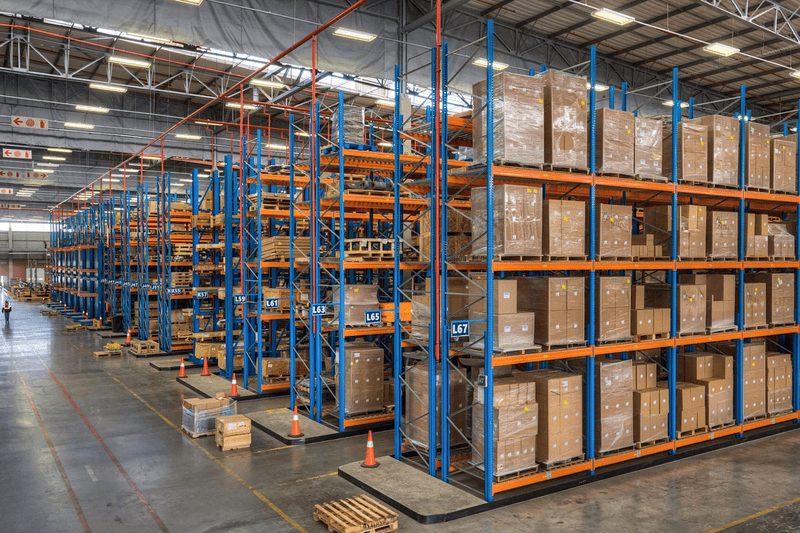
Double deep racking stores pallets two positions deep, with one pallet positioned behind another. This arrangement reduces the number of operating aisles compared with standard selective racking.
A compatible deep-reach truck places and retrieves pallets from the rear positions, making the system suitable for materials or finished products stored in repeated pallet quantities.
- Best for: Raw material reserves, packaging supplies and finished goods stored in multiple pallets per SKU.
- Advantages: Increases storage density while allowing pallet loading and retrieval from the operating aisle.
- Consideration: Rear pallets cannot be accessed until the front position is clear. Handling equipment and inventory allocation must suit the retrieval sequence.
Drive-In Racking
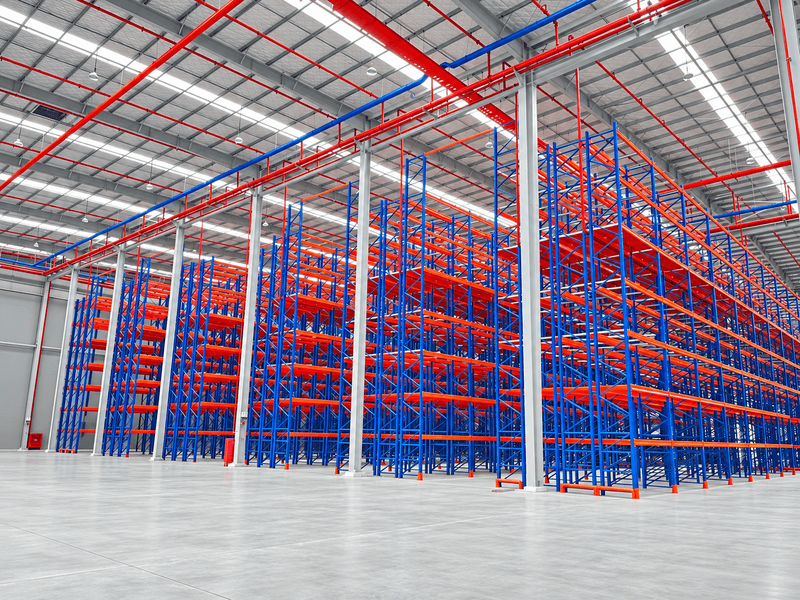
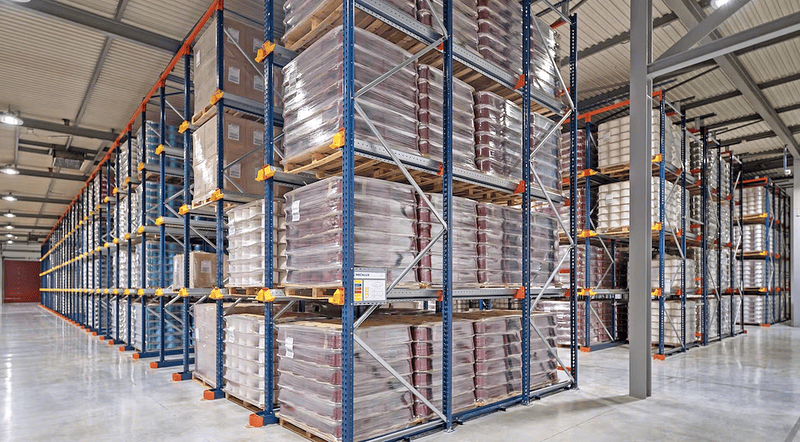
Drive-in racking stores pallets in deep lanes supported by rails. Forklifts enter the lanes to place and retrieve loads, reducing the number of conventional access aisles.
Standard single-entry configurations use the same end for loading and retrieval, resulting in last-in, first-out (LIFO) stock rotation.
- Best for: Bulk raw materials, production batches and large quantities of similar finished products.
- Advantages: Provides high-density storage by reducing aisle requirements and allocating more floor space to pallet positions.
- Consideration: Less suitable for mixed SKUs or frequent individual pallet access. Storage lane allocation should match batch quantities and stock rotation requirements.
Push Back Racking
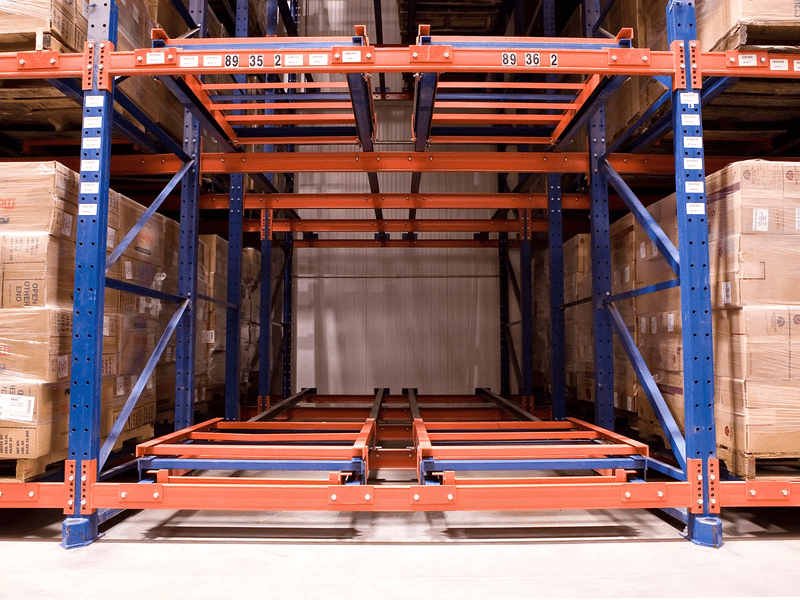
Push back racking stores pallets on moving carts along inclined rails. Loading a new pallet pushes existing pallets further into the lane, while retrieving the front pallet allows the remaining loads to move towards the aisle.
Loading and retrieval take place from the same working face, making the system suitable for products that can follow LIFO rotation.
- Best for: Manufacturing buffer stock, reserve inventory and multiple pallets per SKU.
- Advantages: Provides deeper pallet storage without requiring forklifts to enter the racking structure.
- Consideration: Does not support FIFO within an individual lane. Pallet dimensions, condition and load characteristics must be compatible with the cart system.
Pallet Flow Racking
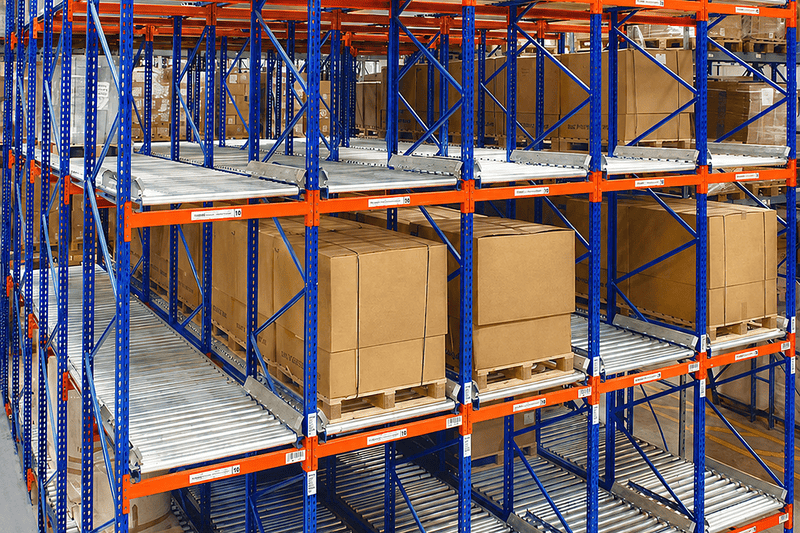
Pallet flow racking uses inclined roller tracks to move pallets from a loading face towards a separate retrieval face. As the front pallet is removed, the remaining loads advance through controlled gravity movement.
This arrangement supports FIFO stock rotation while separating replenishment from retrieval activities.
- Best for: Regularly replenished raw materials, batch-controlled inventory and finished goods requiring FIFO movement.
- Advantages: Supports consistent stock rotation, provides dense storage and allows loading and retrieval from separate aisles.
- Consideration: Requires compatible pallets, access to both working faces and maintenance of rollers and braking components. Batch-controlled materials also require suitable inventory allocation procedures.
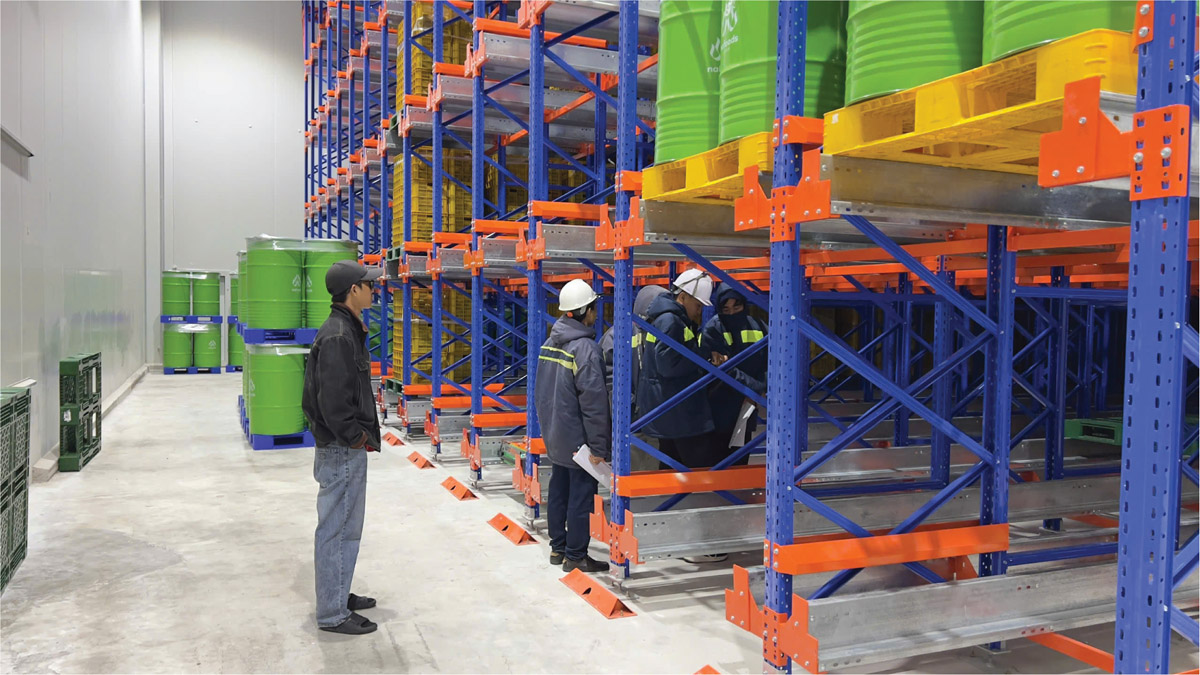
Shuttle Racking
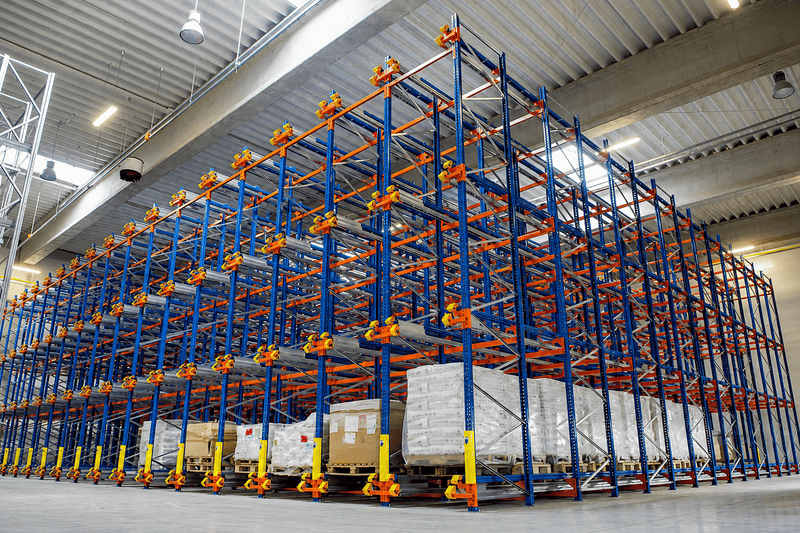
Shuttle racking uses a powered shuttle to transport pallets along deep storage channels. Forklifts typically handle pallets at channel entrances, while the shuttle moves loads to designated positions within the racking.
Two-way shuttle configurations provide shuttle-assisted deep-lane storage, while four-way systems can support broader automation. FIFO or LIFO operation depends on the loading arrangement and system configuration.
- Best for: High-volume manufacturing facilities handling large production batches and multiple pallets per SKU.
- Advantages: Provides high-density storage and reduces the need for forklifts to enter storage channels.
- Consideration: Requires investment in shuttle equipment and planning for channel allocation, charging, shuttle availability and maintenance during production peaks.
VNA Racking
Very narrow aisle (VNA) racking uses narrower operating aisles than conventional selective racking while maintaining direct access to individual pallet positions.
The system can also utilise available warehouse height, allowing manufacturers to increase pallet capacity without expanding the building footprint.
- Best for: Manufacturing warehouses with many SKUs, high ceilings and limited floor space.
- Advantages: Reduces aisle requirements while retaining direct pallet accessibility and improving vertical space utilisation.
- Consideration: Requires specialist VNA trucks, suitable floor tolerances and assessment of equipment guidance and operating clearances.
Automated Storage and Retrieval Systems (AS/RS)
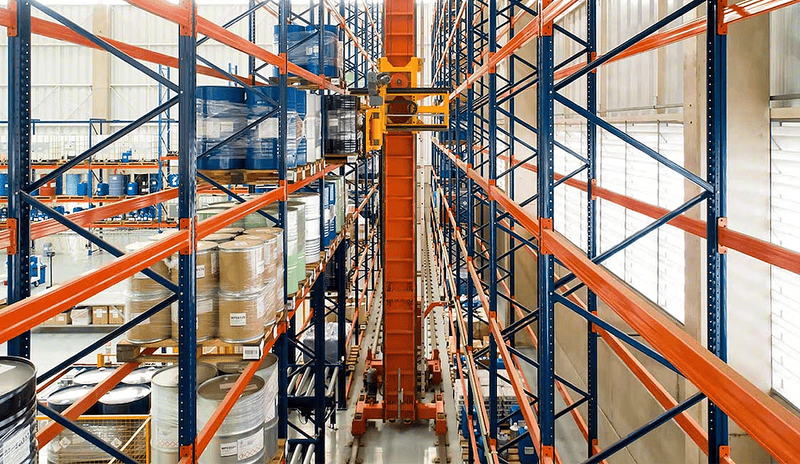
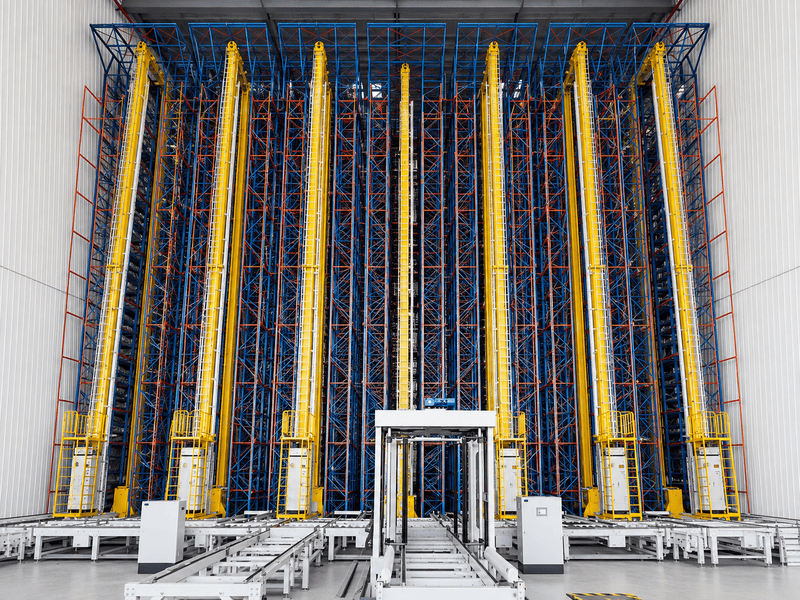
Automated Storage and Retrieval Systems (AS/RS) use computer-controlled equipment to store and retrieve pallets, bins or other load units from designated storage locations. Depending on the configuration, the system may integrate stacker cranes, shuttles, conveyors and warehouse control software.
This arrangement supports automated inventory movement in manufacturing facilities handling repetitive material transfers and high storage volumes.
- Best for: Large manufacturing plants, automated distribution facilities and operations requiring frequent or predictable material movements.
- Advantages: Automates storage and retrieval, reduces manual handling and supports inventory tracking through integrated control systems.
- Consideration: Requires significant investment, compatible load units, suitable building infrastructure and integration with warehouse management and production systems.
3. How to Choose the Right Racking for Your Manufacturing Warehouse
Choose racking based on your inventory categories, SKU range, pallets per SKU, production replenishment frequency, available space and handling equipment. Compare systems against daily production requirements and peak inventory volumes to balance storage capacity with efficient material access.
The following table connects common manufacturing warehouse requirements with systems worth assessing:
| Warehouse requirement | Systems to consider | Key selection factor |
| Frequent access to diverse raw materials | Selective or VNA | Direct pallet access, SKU variety and production replenishment |
| More capacity for reserve inventory | Double Deep or Push Back | Pallets per SKU, retrieval sequence and load compatibility |
| Bulk storage of similar products | Drive-In or Shuttle | Lane depth, production batch quantities and stock rotation |
| FIFO material movement | Pallet Flow or suitably configured Shuttle | Loading arrangement, batch control and inventory allocation |
| High-volume pallet storage | Shuttle | Production output, pallet throughput and shuttle availability |
| Additional component or packaging storage | Mezzanine | Available building height, load requirements and goods movement |
| Automated material storage and retrieval | AS/RS | Throughput requirements, system integration and investment |
A manufacturing warehouse handling many raw materials and components may prioritise selective or VNA racking for direct access. A facility producing large batches of similar finished goods may benefit more from double deep, drive-in or shuttle storage.
Different systems can also be combined within the same warehouse. Selective racking may accommodate frequently required production materials, while higher-density systems provide reserve storage for bulk inventory. Mezzanine levels can accommodate smaller components or packaging supplies.
The most suitable configuration depends on how materials move between receiving, storage, production and dispatch, rather than maximising pallet positions alone.
4. Key Considerations Before Installing Manufacturing Warehouse Racking
Before installation, assess warehouse dimensions, floor conditions, pallet loads, handling equipment, production workflow, stock rotation and applicable safety requirements. These factors determine whether the proposed layout can accommodate different manufacturing materials and support daily production operations.
Warehouse dimensions and floor conditions
Measure usable floor space and clear height, accounting for columns, doors, building services and areas required for receiving, material staging and dispatch. Allow adequate space for production replenishment and forklift circulation rather than allocating the entire warehouse footprint to storage.
Assess the floor slab for racking loads, concentrated loading and anchoring requirements. Floor tolerances are particularly important for specialist trucks operating in narrow aisles or at greater lifting heights.
Pallet and load specifications
Provide actual pallet dimensions, maximum loaded weights and load distribution details, including variations between raw materials, components and finished products. Heavy or irregular manufacturing loads may require dedicated support arrangements.
Confirm that pallet construction, beam capacity and rack configurations accommodate the intended goods. Pallet condition and compatibility are especially important where loads rest on rails, move along rollers or interact with shuttle equipment.
Handling equipment and aisle clearances
Confirm forklift dimensions, turning requirements, lifting capability and reach distance against the proposed layout. Equipment specifications must suit the intended pallet weights, storage heights and operating aisle widths.
Review movement paths between receiving, storage, production lines and dispatch areas. Allow practical clearances for pallet transfers, vehicle circulation and pedestrian access, particularly where production replenishment and finished-goods movements overlap.
Production workflow and inventory control
Map receiving, inspection, put-away, production replenishment, work-in-progress storage and dispatch activities before finalising the layout. Identify where materials need frequent access and where temporary storage may affect production movement.
Organise storage locations around material categories, batch numbers, production stages and stock rotation requirements. Inventory management procedures should support accurate material identification and traceability from receiving through production and finished-goods storage.
Safety and installation requirements
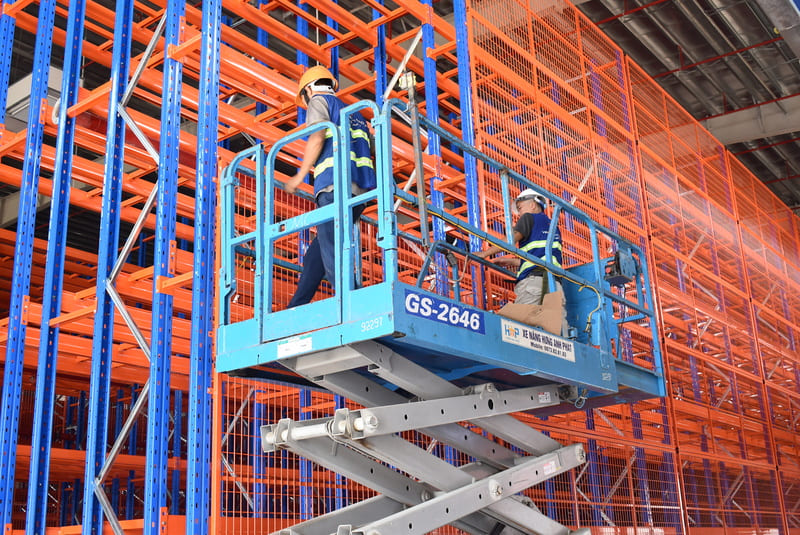
Confirm applicable Australian racking requirements with the supplier and relevant professionals. The assessment should address structural capacity, anchoring, load signage, impact protection, equipment clearances and safe pedestrian movement.
Consider the specific operating environment, including dust, moisture, temperature conditions and any materials requiring special storage controls. Establish inspection and maintenance procedures before handover, including arrangements for identifying and assessing damaged components.
Installation staging and future expansion
For an operating manufacturing warehouse, installation may require temporary stock relocation and controlled access to work areas. Plan installation around production schedules, material deliveries and finished-goods dispatch to minimise operational disruption.
Consider future changes in production capacity, product ranges, inventory volumes and handling equipment. Discuss whether the layout can accommodate additional storage, new material flows or automation, ensuring later modifications are reviewed against the approved design.

5. Vinatech Manufacturing Racking Solutions and Featured Projects
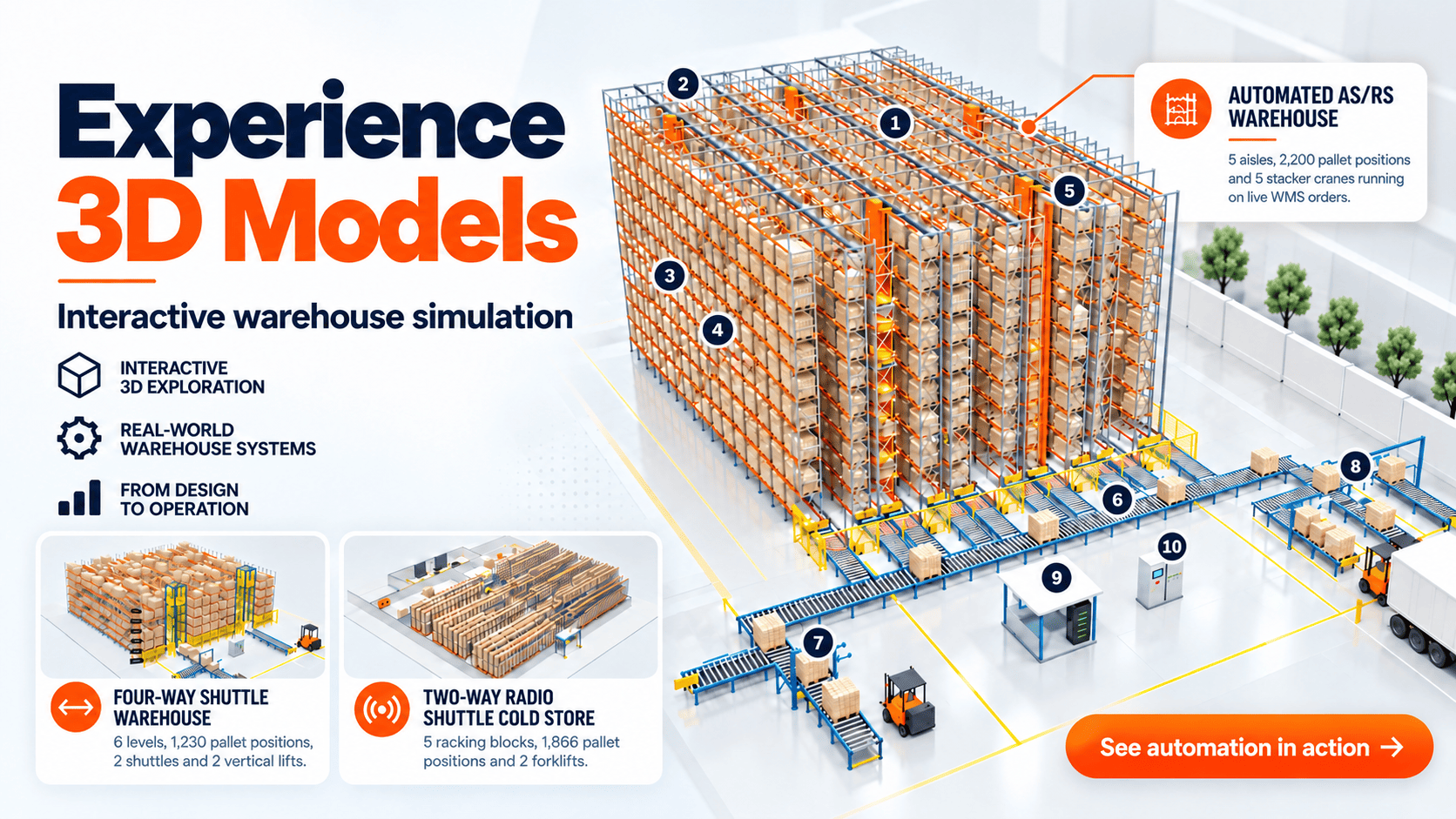
Vinatech provides manufacturing warehouse racking with layout design, supply and installation support. Featured projects include a 4,200-position selective racking installation for a manufacturing warehouse and a 5,200-position shuttle racking installation for food processing, illustrating different approaches to material accessibility and high-density finished-goods storage.
Planning considers warehouse dimensions, pallet specifications, production inventory profiles and daily handling activity. Design support, including 2D and 3D layouts, helps you review rack positions, operating aisles and proposed capacity before installation.
Double Deep Racking for a Manufacturing Warehouse
Vinatech implemented a double deep pallet racking solution for a manufacturing warehouse, using two-deep pallet storage to increase storage density and reduce conventional aisle requirements.
The configuration accommodates raw materials, packaging supplies and finished products stored in repeated pallet quantities. It illustrates a higher-density approach that balances reserve inventory capacity with practical forklift access and production replenishment.
View the Manufacturing Double Deep Racking Project
Discover Vinatech’s warehouse racking solutions for raw materials, production supplies and finished goods.
Start with the issue that most affects your manufacturing operation: limited storage capacity, difficult material access, inefficient production replenishment or forklift congestion. Use that priority to assess which racking layout offers the most practical improvement across normal and peak production periods.
Contact Vinatech on 0485 083 868 or email info@vinatech.com.au to discuss your manufacturing warehouse layout, inventory profile and storage requirements.