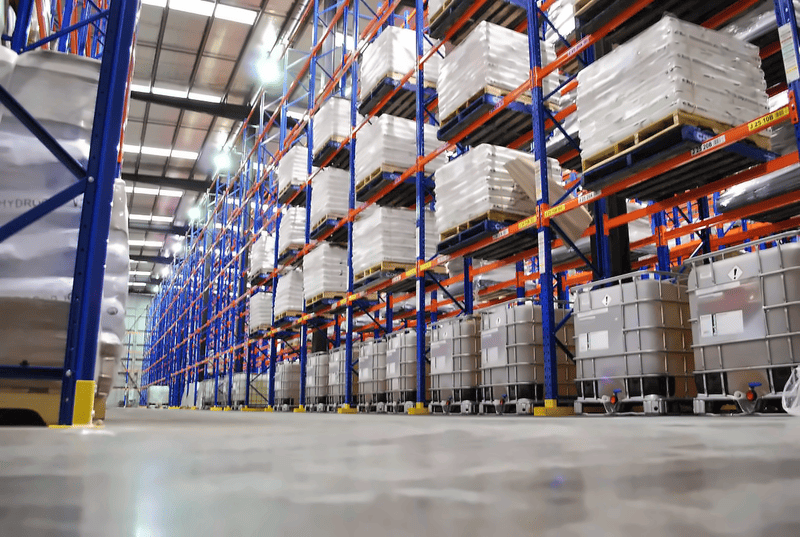




For pharmaceutical manufacturers, medicine distributors and pharmacy supply centres, storage requirements can vary considerably between products. Fast-moving medicines need easy access, while bulk inventory and temperature-sensitive goods may require more specialised arrangements. A well-planned Pharmaceutical Warehouse Racking layout brings these needs together, balancing storage efficiency with reliable inventory control.
1. Common Storage Challenges in Pharmaceutical Warehouses
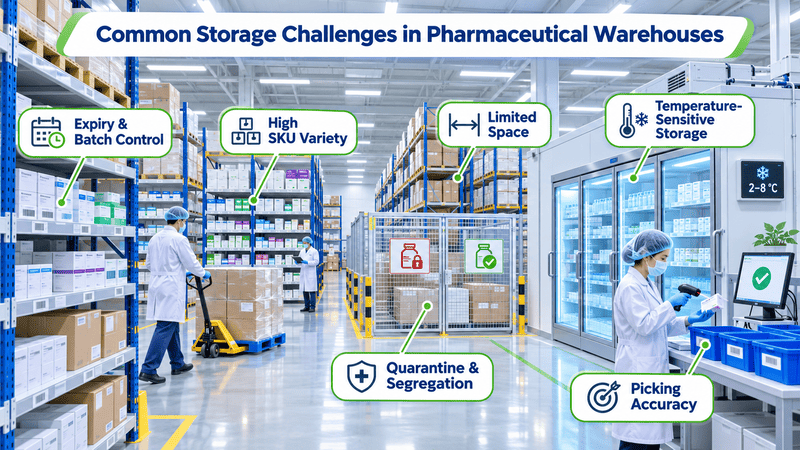
Pharmaceutical warehouses face several interconnected challenges, from expiry-date management and temperature-sensitive products to high SKU variety, limited space and batch traceability. How effectively these are managed can directly influence stock accuracy, handling efficiency and the reliability of medicine distribution.
Simply adding more racking does not necessarily make a pharmaceutical warehouse more efficient. Extra pallet positions offer little benefit if products become harder to locate, expiry dates are difficult to manage or operators spend more time moving stock to reach the right batch.
The main challenges include:
- Expiry-date and batch management: Medicines often arrive in different batches with varying expiry dates. Accurate stock identification and retrieval procedures are essential for supporting first-expired, first-out (FEFO) management and maintaining traceability.
- Temperature-sensitive storage: Certain pharmaceutical products require controlled temperatures or refrigerated conditions. Storage layouts must work alongside the facility’s environmental controls without restricting airflow or access to monitored areas.
- High SKU variety: A single warehouse may handle prescription medicines, over-the-counter products and healthcare supplies in different packaging formats. Keeping these products organised becomes more demanding as the inventory range grows.
- Limited storage space: Growing stock volumes, dedicated storage zones and operational clearances can put pressure on the available footprint, particularly when warehouse height is not being used effectively.
- Quarantine and product segregation: Returned, recalled, damaged, expired or unreleased products may need clearly identified and separated storage locations to prevent accidental selection or distribution.
- Picking accuracy and material handling: Frequent replenishment and dispatch activity require reliable product access. Poorly planned aisles and picking routes can increase handling time, congestion and the risk of product damage.
The most effective starting point is to understand where storage or handling creates difficulties. A medicine distribution centre managing hundreds of SKUs may benefit from direct pallet access and clearly organised picking locations. A facility storing larger quantities of the same products may have more to gain from higher-density systems, provided batch identification and stock rotation remain manageable.
2. Types of Racking Systems for Pharmaceutical Warehouses
Common pharmaceutical warehouse storage systems include Selective Pallet Racking, Longspan Shelving, Pallet Flow, Double Deep, VNA, Drive-In, Shuttle Racking and Automated Storage and Retrieval Systems (AS/RS). Each serves a different operational purpose, with its own balance of storage capacity, accessibility, stock rotation and handling requirements.
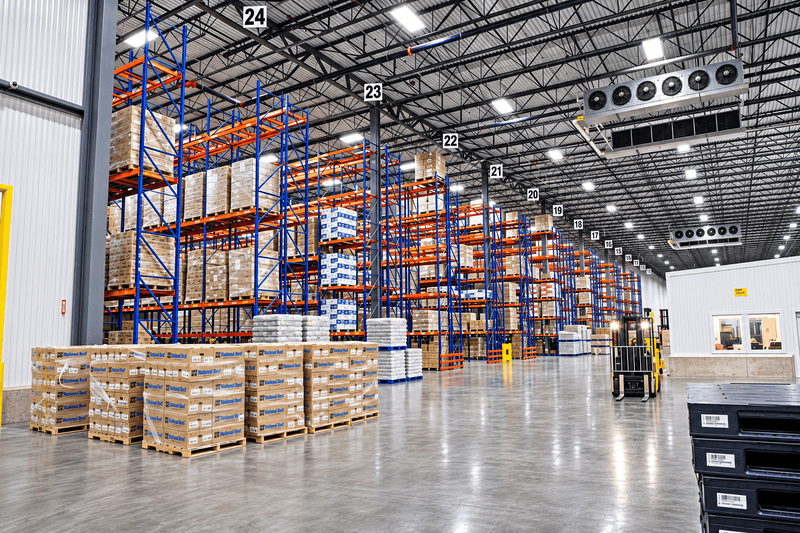
Selective Pallet Racking
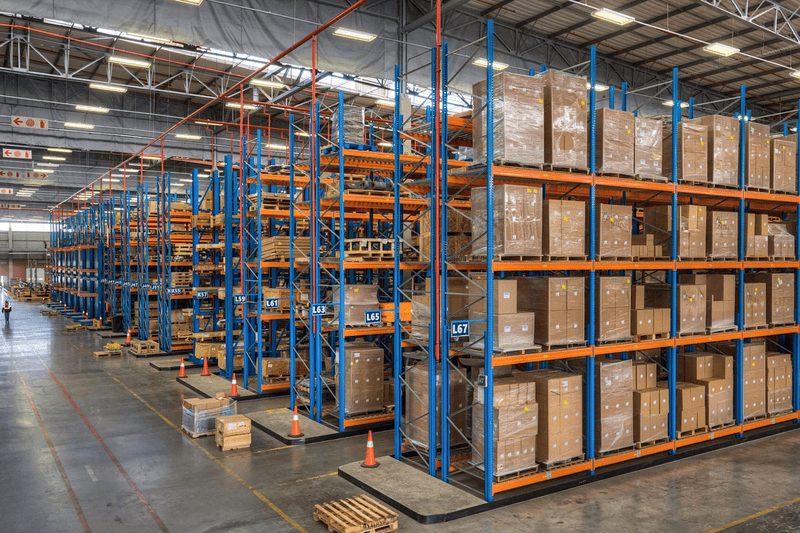
Selective pallet racking provides direct access to individual pallets stored on horizontal beams. Each position can be reached from an operating aisle, allowing warehouse teams to retrieve the required pallet without first moving other loads.
For pharmaceutical operations managing a broad product range, this accessibility is particularly valuable. Different medicines, batches and expiry dates can be assigned to clearly identified locations, making routine replenishment and inventory checks more straightforward.
- Best for: Pharmaceutical distribution centres managing many SKUs, multiple batches and frequent pallet movements.
- Advantages: Direct access to every pallet, straightforward stock identification and flexible storage configurations.
- Consideration: Requires more aisle space than deeper storage systems, which can limit pallet capacity within the available footprint.
Longspan Shelving
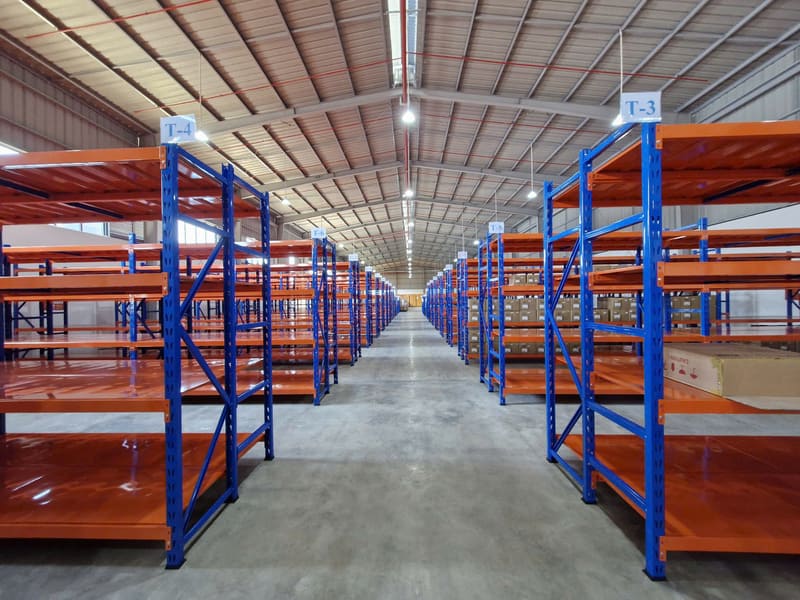
Longspan shelving offers practical storage for cartons, packaged medicines and smaller healthcare products that are picked manually. Adjustable shelf levels help accommodate different packaging sizes while keeping products visible and accessible.
In pharmacy supply operations, not every order involves a full pallet. Longspan shelving can create organised picking areas for smaller quantities, allowing operators to select products without relying on forklift-based retrieval.
- Best for: Packaged medicines, healthcare supplies, carton storage and manual picking operations.
- Advantages: Easy access to individual products, adjustable shelf configurations and organised picking locations.
- Consideration: Shelf load ratings, cleaning access and environmental conditions must suit the products being stored.
Pallet Flow Racking
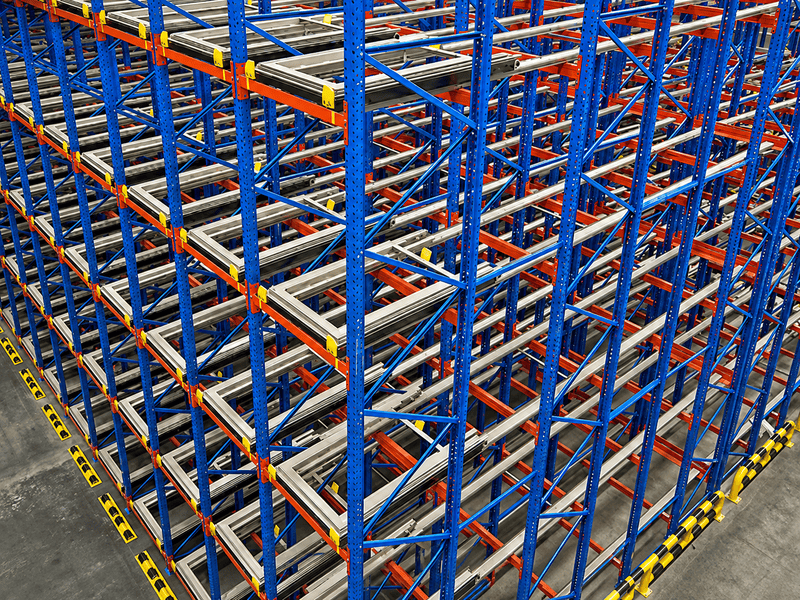
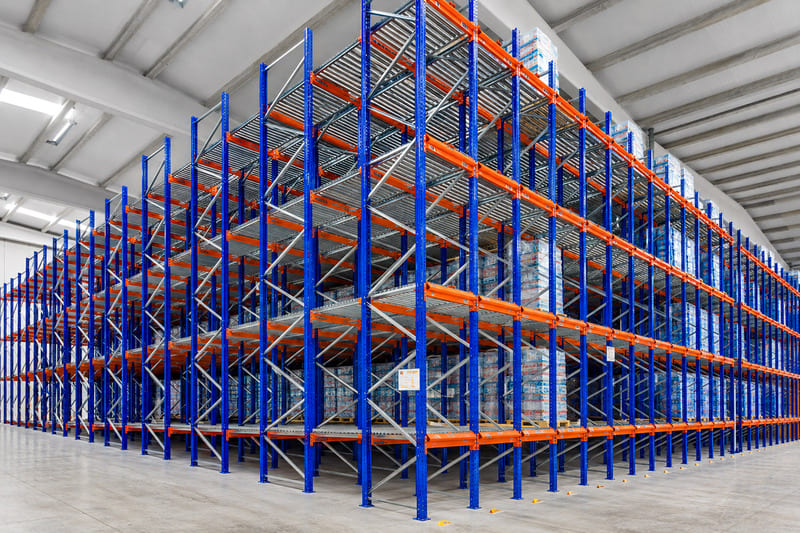
Pallet flow racking uses inclined roller tracks to move pallets through storage lanes. Products are loaded from one end and retrieved from the other, with the remaining pallets advancing through controlled gravity movement as stock is removed.
Separating loading and retrieval creates a clear stock movement path and supports first-in, first-out (FIFO) handling. For pharmaceutical products, this can be useful where batches are replenished regularly and a consistent retrieval sequence is required.
- Best for: Packaged pharmaceutical products requiring FIFO movement, regular replenishment and high pallet throughput.
- Advantages: Supports consistent stock rotation, provides dense storage and separates loading from retrieval activities.
- Consideration: Requires compatible pallets, access to both ends of the storage lanes and maintenance of rollers and braking components. FEFO management must be supported by appropriate batch allocation and expiry-date controls.
Double Deep Racking
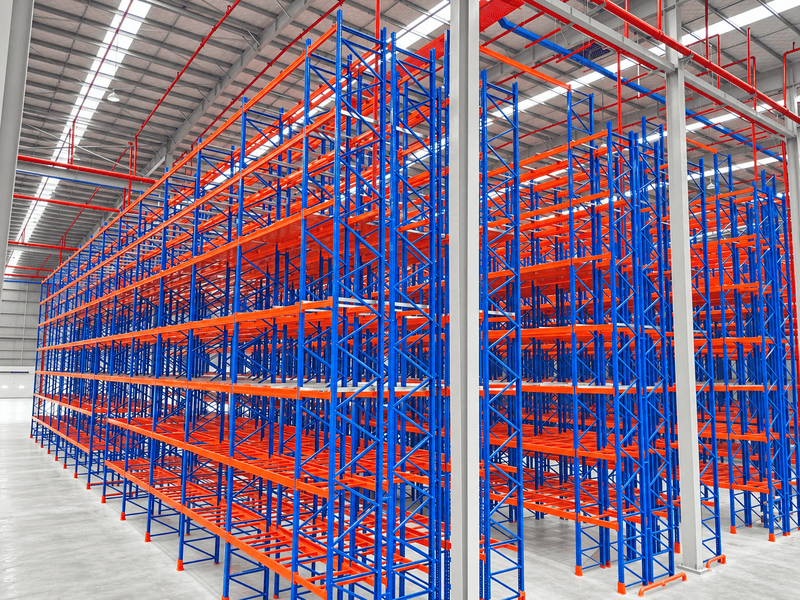
Double deep racking increases pallet capacity by storing loads two positions deep. Compared with selective racking, fewer operating aisles are needed, allowing more of the available floor area to be used for storage.
This approach can work well for pharmaceutical reserve inventory where several pallets of the same product or batch are held together. However, rear pallets are accessed using compatible deep-reach equipment, so stock allocation needs to account for the retrieval sequence.
- Best for: Reserve medicine inventory, packaged healthcare products and multiple pallets of the same SKU or batch.
- Advantages: Improves storage density while allowing pallet handling from the operating aisle.
- Consideration: Rear pallets cannot be retrieved until the front position is clear. Batch allocation and stock rotation procedures must accommodate this access limitation.
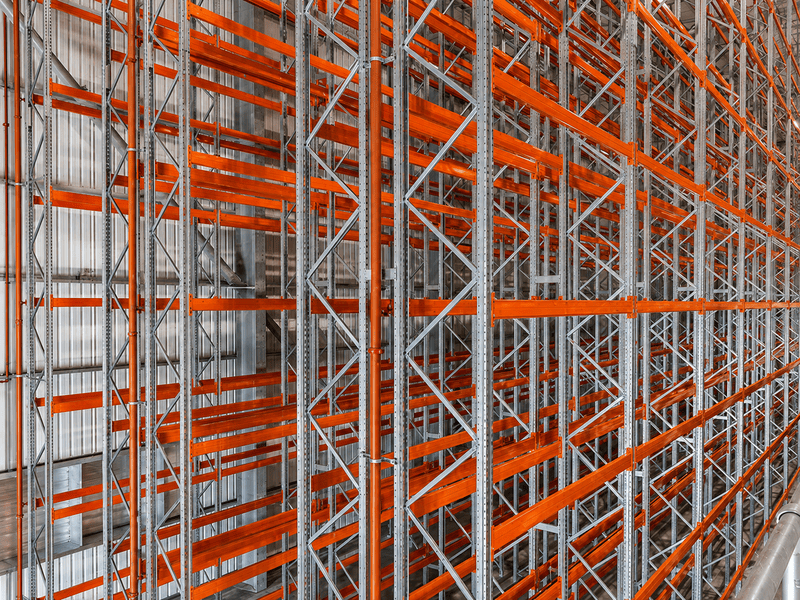
VNA Racking
Very narrow aisle (VNA) racking combines direct pallet access with narrower operating aisles. Specialist handling equipment works within these reduced clearances, allowing more space to be allocated to pallet storage.
For pharmaceutical warehouses with high ceilings and a diverse product range, VNA can provide an effective alternative to expanding the building footprint. Individual pallet positions remain accessible, making it easier to manage products with different batch and expiry-date requirements.
- Best for: Pharmaceutical warehouses with high SKU variety, limited floor space and sufficient building height.
- Advantages: Improves space utilisation while retaining direct pallet access and supporting organised inventory management.
- Consideration: Requires specialist handling equipment, suitable floor tolerances and careful assessment of operating clearances and environmental conditions.
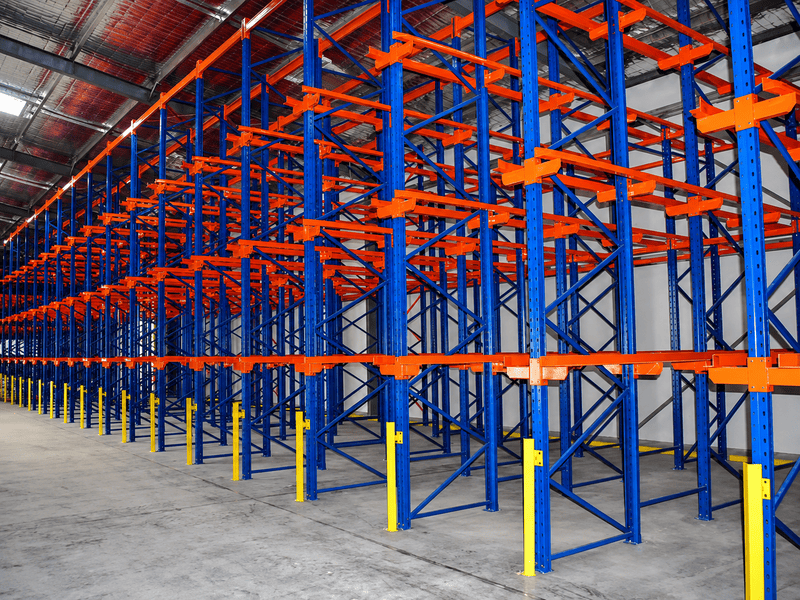
Drive-In Racking
Drive-in racking creates deep storage lanes where pallets rest on supporting rails. Forklifts enter the racking structure to place and retrieve loads, reducing the number of conventional access aisles.
Standard single-entry layouts follow last-in, first-out (LIFO) rotation. This makes drive-in storage more appropriate for compatible bulk inventory where frequent access to individual pallets or strict expiry-based retrieval is not required.
- Best for: Bulk pharmaceutical packaging materials and suitable healthcare inventory stored in large quantities per SKU.
- Advantages: Maximises storage density by reducing aisle requirements and accommodating more pallets within the available footprint.
- Consideration: Less suitable for mixed batches, frequent individual pallet access or strict FIFO/FEFO requirements. Product segregation and lane allocation need careful planning.
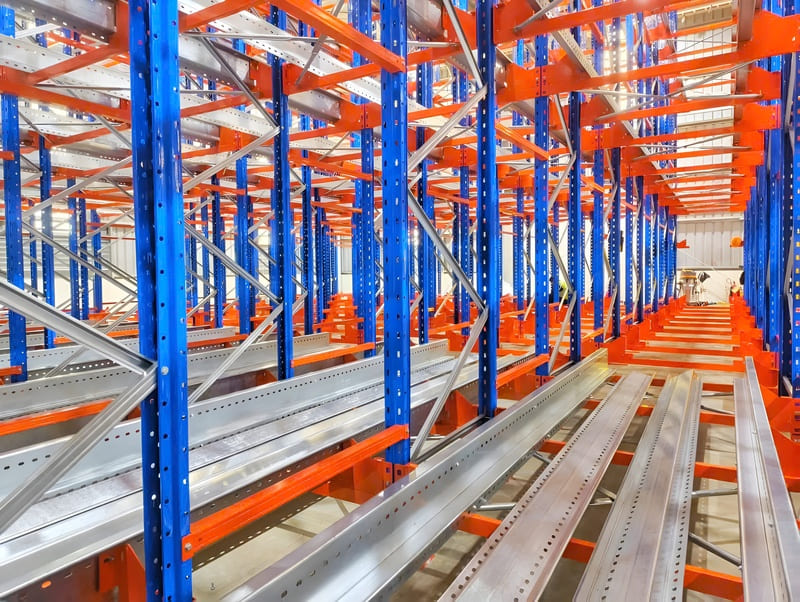
Shuttle Racking
Shuttle racking uses powered shuttles to transport pallets through deep storage channels. Instead of requiring forklifts to enter each lane, the shuttle moves loads between designated storage positions and transfer points.
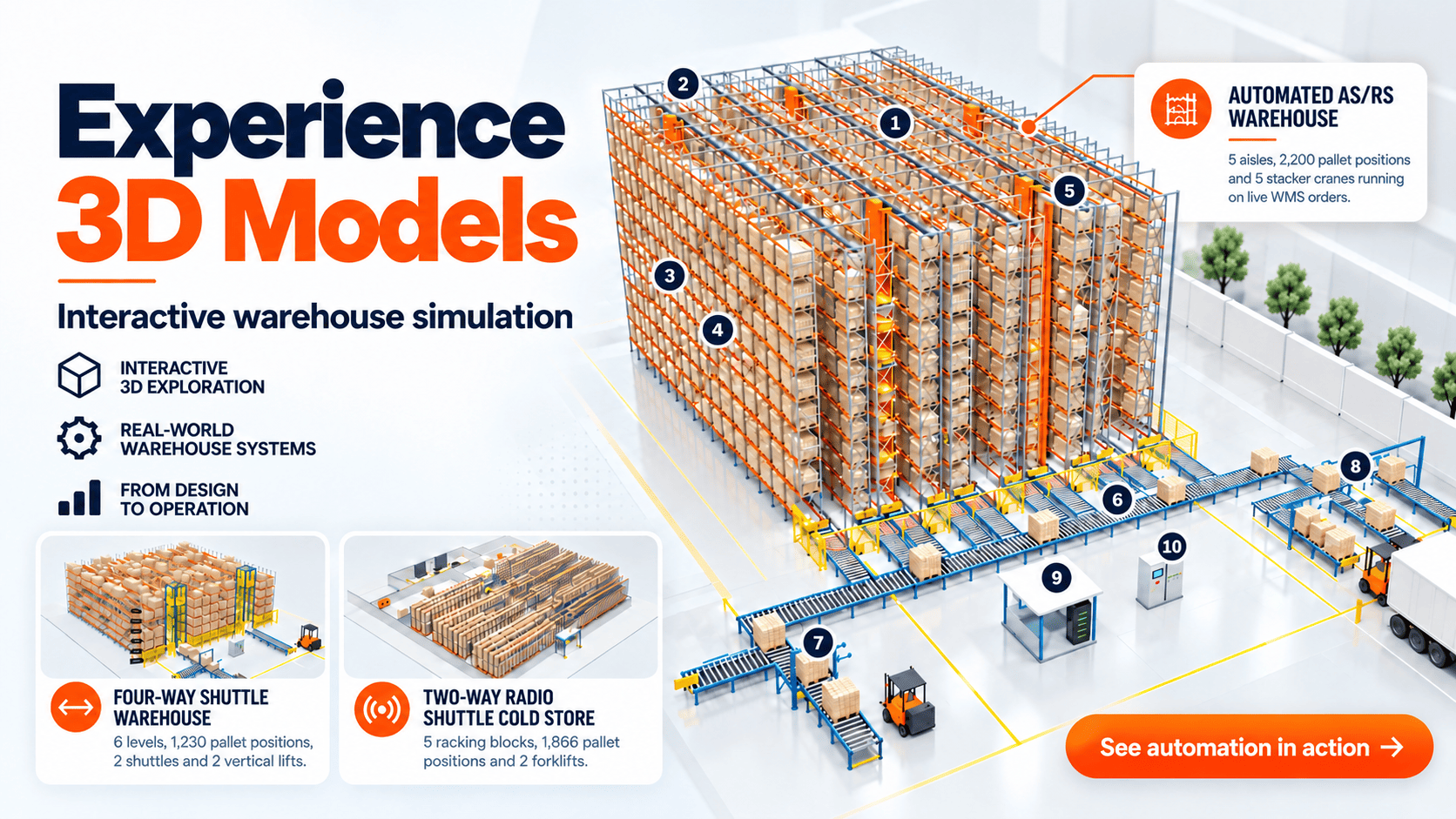
For pharmaceutical warehouses managing substantial reserve inventory, this can provide a useful combination of storage density and reduced internal forklift movement. Two-way shuttles support deep-lane storage, while four-way configurations can form part of more extensively automated operations.
- Best for: High-volume pharmaceutical warehouses handling repeated pallet quantities and suitable packaged inventory.
- Advantages: Provides high-density storage, reduces forklift entry into storage channels and supports automated pallet movement.
- Consideration: Requires compatible pallets, appropriate equipment specifications and planning for maintenance, shuttle availability and inventory software integration. FIFO or FEFO performance depends on the complete system configuration.
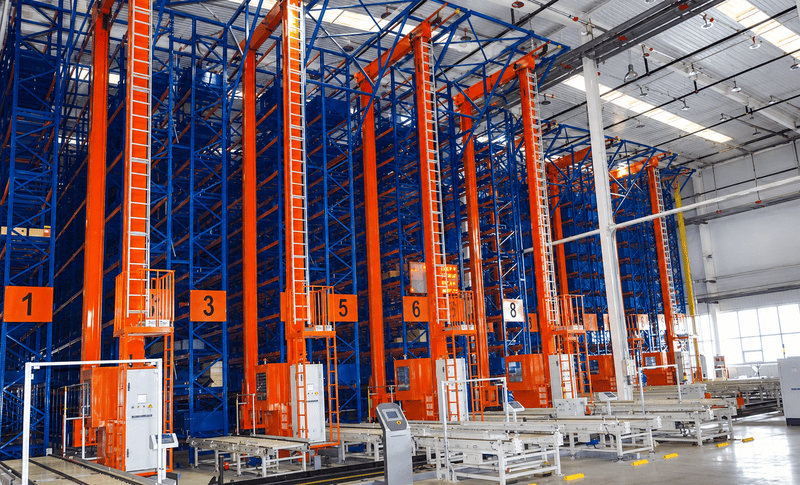
Automated Storage and Retrieval Systems (AS/RS)
Automated Storage and Retrieval Systems (AS/RS) use computer-controlled equipment to place and retrieve pallets, cartons or other load units. Depending on the application, the system may bring together stacker cranes, shuttles, conveyors and warehouse control software.
In large pharmaceutical facilities, automation can help manage repetitive inventory movements while reducing routine manual handling. When properly integrated with warehouse management procedures, it can also support more consistent stock identification and retrieval instructions.
- Best for: Large pharmaceutical distribution centres, medicine manufacturers and high-volume storage facilities.
- Advantages: Automates storage and retrieval, reduces routine manual handling and supports inventory tracking through integrated control systems.
- Consideration: Requires significant investment, compatible load units, suitable infrastructure and reliable software integration. Applicable pharmaceutical quality and system validation requirements must also be addressed.
3. How to Choose the Right Racking for Your Pharmaceutical Warehouse
The right pharmaceutical warehouse racking system depends on more than available space. SKU variety, batch quantities, expiry-date requirements, storage conditions and handling frequency all influence which configuration will work best. A practical assessment should consider how inventory moves through the warehouse on an ordinary day, as well as during periods of higher demand.
The following table highlights common storage requirements and the systems worth considering:
| Warehouse requirement | Systems to consider | Key selection factor |
| Frequent access across many medicine SKUs | Selective or VNA | Direct pallet access, batch identification and picking frequency |
| Smaller medicines and manual carton picking | Longspan Shelving | Product dimensions, shelf capacity and picking requirements |
| FIFO stock movement | Pallet Flow | Pallet compatibility, loading sequence and batch allocation |
| Higher reserve storage capacity | Double Deep | Pallets per SKU, batch quantities and retrieval sequence |
| Bulk storage of suitable products | Drive-In or Shuttle | Storage density, product segregation and stock rotation |
| Limited floor space with many SKUs | VNA | Available building height, forklift requirements and accessibility |
| High-volume pallet handling | Shuttle | Pallet throughput, equipment availability and inventory control |
| Automated storage and retrieval | AS/RS or automated Shuttle | System integration, traceability and operational requirements |
Consider a pharmaceutical distribution centre handling a wide selection of medicines with different expiry dates. Direct-access systems such as selective or VNA racking can simplify retrieval and help operators locate the required stock without moving unrelated pallets.
By contrast, a facility receiving large quantities of the same packaged products may find higher-density storage more practical. Pallet flow can support FIFO movement, while shuttle systems offer another option where pallet volumes and handling requirements justify automation.
Many facilities benefit from combining systems rather than relying on a single configuration. Selective racking can accommodate frequently accessed pallets, longspan shelving can support carton picking, and higher-density storage can hold suitable reserve inventory.
One distinction matters particularly in pharmaceutical operations: FIFO and FEFO are not interchangeable. FIFO prioritises the order in which stock enters storage, while FEFO prioritises products with the earliest expiry dates. The racking layout can support these processes, but accurate batch information and inventory procedures are equally important.
4. Key Considerations Before Installing Pharmaceutical Warehouse Racking
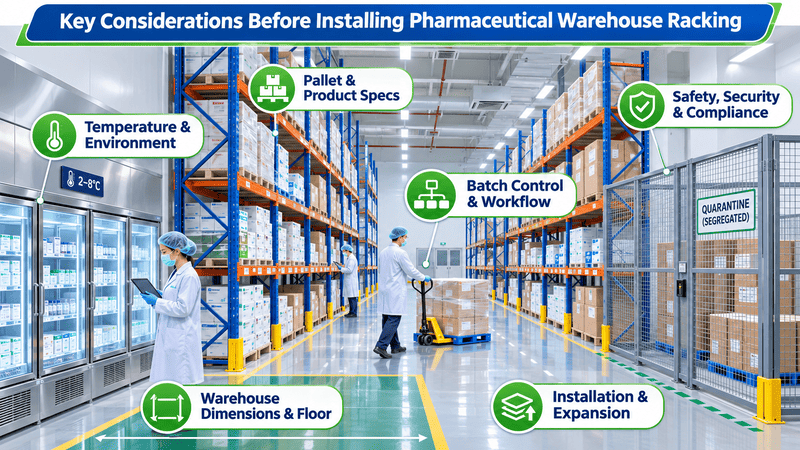
Before installing pharmaceutical warehouse racking, consider the building layout, product specifications, environmental conditions, inventory procedures, handling equipment and applicable safety requirements. Bringing these factors together early helps avoid a layout that looks efficient on paper but creates difficulties during everyday operation.
Warehouse dimensions and floor conditions
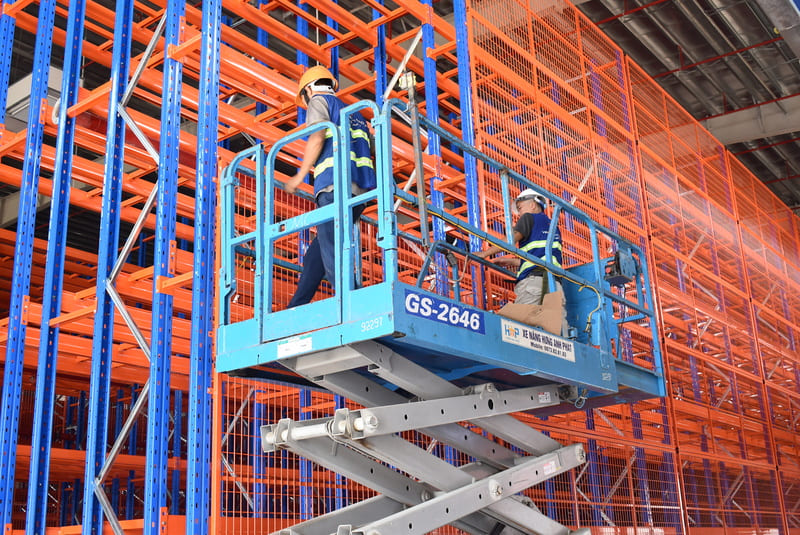
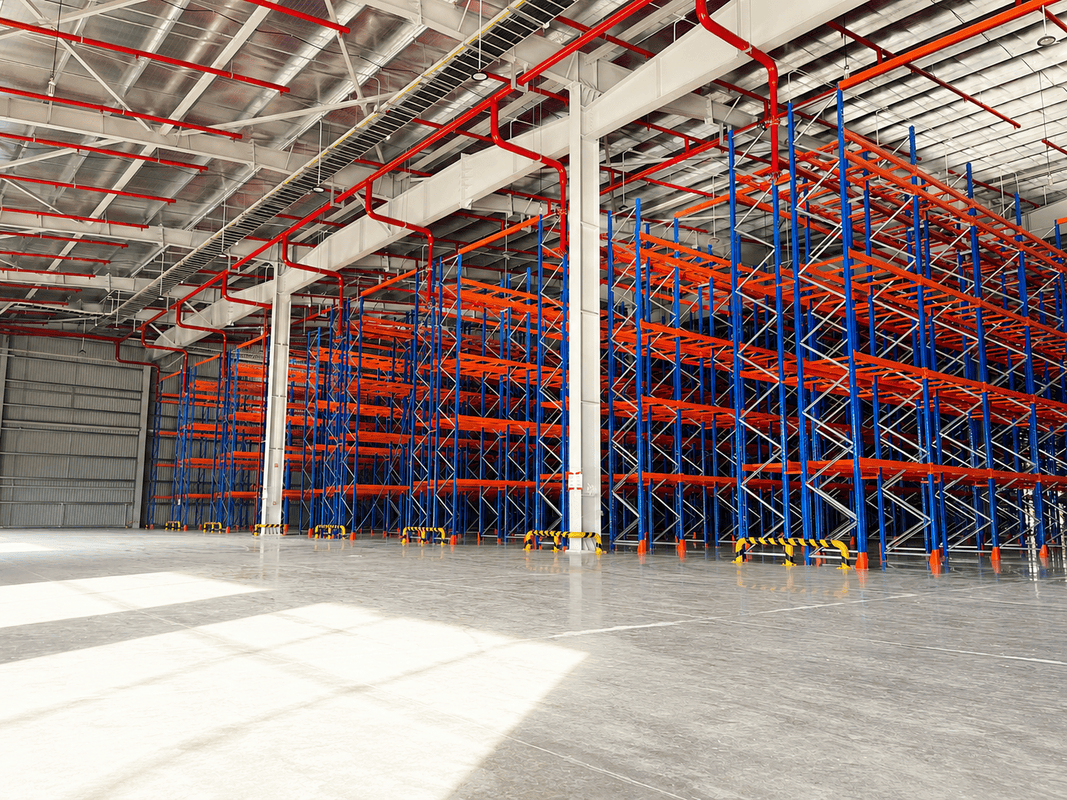
Start with an accurate assessment of the usable floor area and clear building height. Columns, doors, building services, receiving zones and dispatch areas all influence where racking can be installed. Pharmaceutical warehouses may also need dedicated space for inspection, quarantine and segregated inventory.
The floor slab must be assessed for the proposed rack loads, anchoring and equipment requirements. Where narrow-aisle trucks or higher storage levels are planned, floor tolerances and operating conditions become especially important.
Pallet and product specifications
Pallet dimensions, maximum loaded weights and load distribution should be confirmed before selecting a system. Pharmaceutical inventory may include cartons of medicines, packaged healthcare products and larger reserve shipments, each with different handling and storage characteristics.
Packaging condition also deserves attention. Pallets and support arrangements should protect goods from crushing or damage while allowing suitable cleaning and inspection access. For roller-based or shuttle systems, the actual pallets used must be compatible with the equipment.
Temperature and environmental conditions
Not all pharmaceutical products share the same storage requirements. Some medicines can be held within specified controlled room-temperature conditions, while others require refrigeration or more specialised temperature management. These requirements should be established from product information and relevant quality procedures.
Racking layouts must work with the warehouse’s environmental controls. Consider airflow, refrigeration equipment, monitoring locations and access routes, particularly where tall or dense storage configurations could affect temperature distribution. Temperature mapping and monitoring arrangements should be assessed as part of the wider facility design.
Batch management and warehouse workflow
A good storage layout should reflect the complete movement of pharmaceutical inventory, from receiving and inspection to put-away, picking and dispatch. The workflow also needs to account for products awaiting release, returned goods and stock requiring quarantine or further assessment.
Clearly identified storage locations make batch tracking and expiry-date management easier to administer. Where FEFO is required, inventory systems and picking procedures should ensure the correct batch is selected rather than relying on physical pallet movement alone.
Safety, security and regulatory requirements
Racking design should address applicable Australian requirements, including structural capacity, floor slab suitability, anchoring, load signage, impact protection and safe operating clearances. Regular inspections and clear procedures for managing damaged components are also essential.
Pharmaceutical facilities may have additional obligations relating to product security, segregation, handling and documentation. Relevant Therapeutic Goods Administration (TGA) guidance and state or territory requirements should be reviewed alongside the specific products stored. Racking selection alone does not establish pharmaceutical regulatory compliance.
Installation staging and future expansion
Installing new racking in an operating pharmaceutical warehouse requires careful coordination. Temporary stock relocation, restricted work zones and changes to normal handling routes should be planned to minimise disruption to receiving, picking and dispatch.
Future requirements are worth considering at the design stage. New product ranges, higher inventory volumes or changes in handling technology may affect how storage space is used. A layout that allows for sensible expansion can provide greater long-term value, provided any later modifications are reviewed against the approved design.
5. Vinatech Pharmaceutical Racking Solutions and Featured Projects
Vinatech provides pharmaceutical warehouse racking solutions with layout design, supply and installation support. Its 2D and 3D design support helps businesses optimise storage capacity, pallet access and warehouse operations before installation.
4-Way Shuttle Racking for a 2,200 m² Pharmaceutical Warehouse
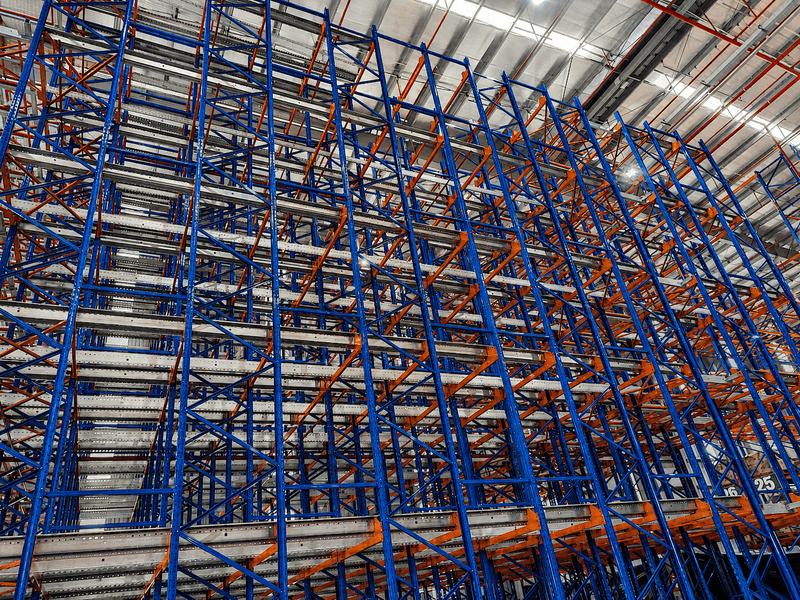
Vinatech’s pharmaceutical warehouse project features a four-way shuttle racking system designed to accommodate approximately 7,200 pallet positions within a 2,200 m² facility.
The system uses automated shuttles to move pallets between storage locations, reducing the need for conventional forklift aisles and making better use of the available space. This high-density approach supports efficient pallet handling while providing a foundation for more organised inventory management.
For pharmaceutical operations, integration with suitable warehouse management software can also support batch identification, expiry-date tracking and FEFO stock rotation, helping businesses manage inventory more effectively as storage demands grow.
View the Pharmaceutical 4-Way Shuttle Racking Project
Explore related warehouse racking solutions
Compare cold storage warehouse racking for temperature-sensitive inventory and food and beverage warehouse racking for layouts that support stock rotation.
Start with the issue that most affects your pharmaceutical operation: limited storage capacity, difficult product access, expiry-date management or inefficient pallet handling. Understanding these priorities makes it easier to identify a storage solution that improves daily operations while maintaining appropriate inventory controls.
Contact Vinatech on 0485 083 868 or email info@vinatech.com.au to discuss your pharmaceutical warehouse layout, inventory profile and storage requirements.