Choosing between a reach truck and a counterbalance forklift can make a real difference to how your warehouse operates. From lifting capacity and aisle space to pallet racking compatibility, each option has its strengths. This guide breaks down the key differences to help Australian businesses choose the right equipment and plan a warehouse layout that works for their needs.
1. What are Reach Trucks and Counterbalance Forklifts?
At first glance, both machines do much the same job: lift, move and position pallets. The difference lies in how they’re built and where they work best.
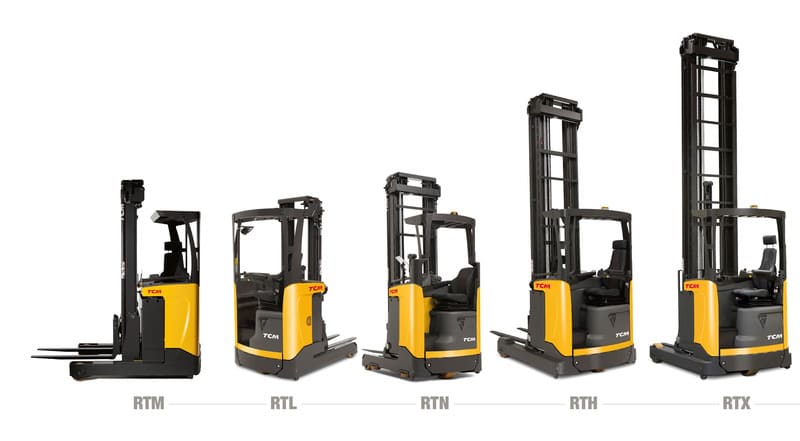
What is a Reach Truck?
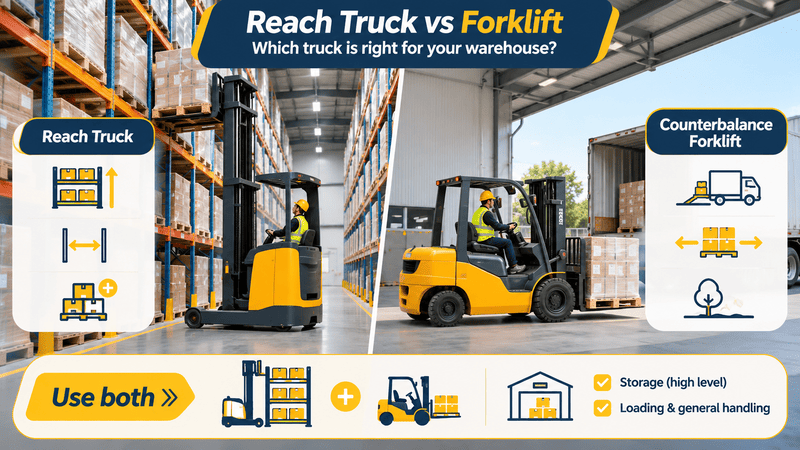
A reach truck is a specialised forklift designed for high-level pallet storage, particularly in warehouses with narrow aisles. Its compact design and extendable reach mechanism allow operators to access pallets at height without moving the entire truck forwards, making it a practical choice for warehouses where storage space is limited.
Key features of reach trucks include:
- Reach mechanism: The mast or forks extend forwards to position and retrieve pallets from racking.
- Compact design: Requires less manoeuvring space than a conventional counterbalance forklift, making it suitable for narrower aisles.
- High-level storage: Designed to access pallets on tall racking systems, depending on the model’s lift height and load capacity.
- Typical applications: Commonly used in distribution centres, logistics facilities and warehouses handling large volumes of palletised goods.
- Power and operating conditions: Most models are electric and operate on smooth, level indoor floors. However, specialist outdoor models, such as Toyota’s Reflex RRE160HR, are also available in Australia.
What is a Counterbalance Forklift?
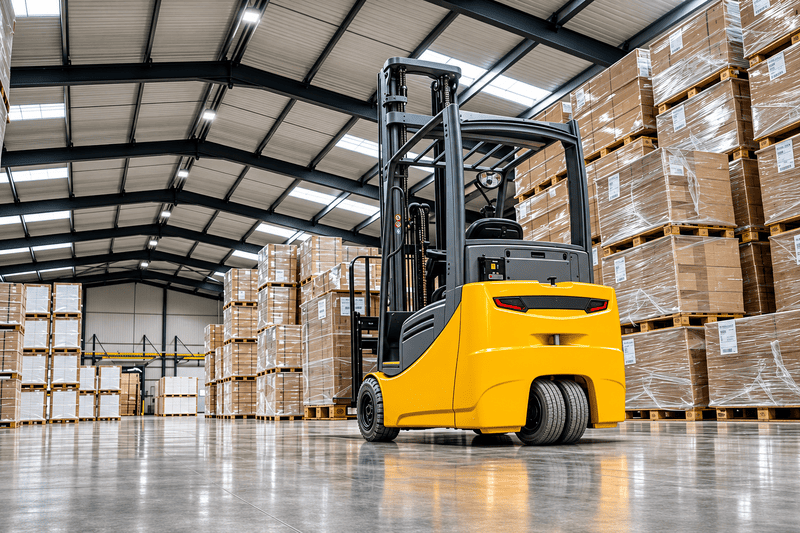
A counterbalance forklift is a versatile material handling vehicle that uses a heavy rear counterweight to balance loads carried on its front forks, and it generally moves the entire vehicle into position to lift or place pallets, making it suitable for a wide range of warehouse and loading operations.
Key features of counterbalance forklifts include:
- Counterweight design: A rear counterweight balances the load on the front forks without the forward support legs typically found on reach trucks.
- Flexible load handling: Suitable for lifting, transporting and positioning pallets across different warehouse areas.
- Aisle requirements: Generally needs more turning and manoeuvring space than a reach truck when accessing pallet racking.
- Typical applications: Used for loading and unloading delivery vehicles, transferring goods between storage areas and handling pallets in loading zones.
- Power and operating conditions: Available in electric, LPG and diesel models, with tyre configurations suited to different indoor and outdoor surfaces.
>> Read More:
- Pallet Racking Relocation: Move safely, Rethink storage
- FIFO vs LIFO: Key Differences and Warehouse Applications in Australia
2. Reach Truck vs Forklift – Key Differences
Neither machine is automatically better than the other. What matters is whether its capabilities match the loads you’re handling and the space available.
Here’s how the two compare:
| Comparison Factor | Reach Truck | Counterbalance Forklift |
| Operating environment | Primarily used indoors for high-rack storage and narrower aisles. Specialist outdoor models are available. | Suitable for general warehouse handling, loading docks and outdoor work where the model and conditions allow. |
| Lift height | Commonly designed for high-level pallet storage, with mast options for tall racking. | Available in different lift heights, depending on the model and application. |
| Load capacity | Rated capacity varies by model and must be checked at the required height and reach position. | Capacity depends on the truck, lift height, load centre and any attachments. |
| Aisle requirements | Generally needs less manoeuvring space than a conventional counterbalance forklift. | Usually needs wider aisles for turning and positioning pallets. |
| Stability and load handling | Uses a reach mechanism and supporting legs to handle loads. | Relies on a rear counterweight to balance the load on its front forks. |
| Tyres and floor conditions | Typically designed for smooth, level floors, although specialist models suit other surfaces. | Offers tyre options for different operating surfaces and environments. |
| Power source | Predominantly electric. | Electric, LPG and diesel options are available. |
Lift Height and Capacity: Look Beyond the Headline Numbers
Reach trucks are designed for high-level pallet storage, although lift height and load capacity vary by model. Examples available in Australia include:
- Toyota Reflex RRE160HR: Maximum lift height of 7,500 mm and rated load capacity of up to 1,600 kg.
- Crown ESR 1240 Series: Maximum lift height of up to 14,205 mm and rated load capacities ranging from 1,400 to 2,000 kg, depending on the configuration.
However, maximum rated capacity does not necessarily apply at maximum lift height. Actual capacity depends on factors such as load centre, mast configuration and reach position. The manufacturer’s load chart should be checked against the required pallet weight and storage height.
Aisle Width: Where the difference really matters
Reach trucks generally operate in narrower aisles than counterbalance forklifts, allowing more floor space to be used for pallet racking. This makes them particularly useful in warehouses where maximising storage capacity is a priority.
However, aisle width depends on the forklift model, pallet dimensions and manoeuvring requirements. Warehouse layouts should follow the selected truck’s specifications to ensure safe pallet handling without compromising storage accessibility.

3. Which truck is right for your warehouse?
Choosing between a reach truck and a counterbalance forklift depends on warehouse operations, available space and pallet handling requirements. Each type is suited to different tasks:
- Choose a reach truck: Best suited to warehouses with tall pallet racking, narrow aisles and frequent high-level storage operations. Its compact design can reduce aisle space requirements, potentially allowing more pallet positions within the same warehouse.
- Choose a counterbalance forklift: A practical option for loading and unloading vehicles, transporting pallets between warehouse areas and handling general warehouse tasks. Suitable models can also operate in outdoor yards and loading zones.
- Consider using both: Reach trucks can manage high-level pallet storage, while counterbalance forklifts handle loading, unloading and general pallet transport. This approach can suit warehouses with separate storage and dispatch operations.
Ultimately, the right choice depends on pallet weights, storage heights, floor conditions and daily handling requirements. Warehouse layouts should be planned around the selected equipment to ensure sufficient aisle space, safe movement and convenient access to pallet racking.
>> Read More:
- What is an SKU? From product codes to smarter warehouses
- ABC Analysis: Know Your Stock, Plan a Smarter Warehouse
4. Matching your truck to your warehouse racking
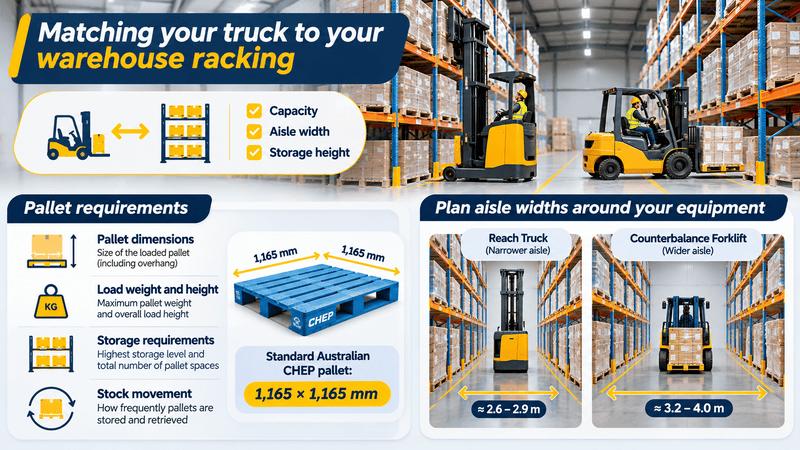
Forklift selection and warehouse racking design should be planned together. The truck’s lifting capacity, manoeuvring requirements and pallet dimensions all influence aisle widths, storage heights and the number of pallet positions available.
Start with your pallet requirements
Before choosing a racking layout, confirm the following details:
- Pallet dimensions: Include the size of the fully loaded pallet and any overhanging goods.
- Load weight and height: Identify the maximum pallet weight and overall load height.
- Storage requirements: Determine the highest storage position and total number of pallet spaces needed.
- Stock movement: Consider how frequently pallets are stored and retrieved.
The standard Australian CHEP pallet measures 1,165 × 1,165 mm, but actual load dimensions may vary. These measurements are essential for checking forklift compatibility and racking clearances.
Plan aisle widths around your equipment
Aisle widths should be based on the selected forklift’s specifications and actual pallet dimensions, rather than general estimates. Key factors include:
- Forklift requirements: Manufacturer’s right-angle stacking aisle width and turning characteristics.
- Load dimensions: Pallet size, orientation and required operating clearances.
- Warehouse access: Space for cross-aisles, pedestrian routes, loading areas and emergency access.
Switching to reach trucks may allow narrower aisles and additional pallet positions. However, any potential increase in storage capacity should be confirmed through a complete warehouse layout assessment to maintain safe and practical operations.
Choose racking that works with your forklift
Different warehouse racking systems have specific forklift requirements. Choosing a compatible combination is essential for safe pallet handling, efficient storage and smooth warehouse operations.
| Racking System | Forklift Compatibility | Key Considerations |
| Selective Pallet Racking | Suitable for both reach trucks and counterbalance forklifts. | Provides direct access to every pallet position. Aisle widths, lift heights and operating clearances must match the selected truck. |
| Double Deep Racking | Typically requires a reach truck specifically equipped for double-deep pallet handling. | Stores pallets two positions deep to reduce aisle space. Requires sufficient fork reach and lifting capacity, with limited access to rear pallets. |
| Very Narrow Aisle (VNA) Racking | Typically requires specialist equipment, such as turret trucks or purpose-designed narrow-aisle forklifts. | Maximises storage density through narrower aisles. Requires careful planning of truck guidance, floor conditions and operating clearances. |
| Other Racking Systems (Drive-In, Push Back, Pallet Flow) | Compatibility depends on the specific racking design and handling equipment. | Each system has different pallet access, storage density and stock rotation requirements. Equipment suitability must be confirmed before installation. |
Forklift compatibility should be assessed alongside racking design, pallet dimensions and daily handling requirements to ensure safe access and practical warehouse operations.
Choosing the right forklift is only part of effective warehouse planning. Pallet dimensions, storage heights, aisle widths and racking compatibility all need to work together to maximise storage space and support smooth daily operations.
Browse Vinatech’s warehouse storage solutions for storage options suited to your space and stock.
At Vinatech Australia, we provide tailored warehouse racking solutions, professional consultation and 2D/3D layout design. Whether it’s Selective Pallet Racking, Double Deep Racking or a high-density storage system, our team can help plan a practical layout that suits your handling equipment and operational needs.