
Warehouse lighting should match the visibility needs of each task. In pallet aisles, ensure clear visibility at floor level and along rack faces, while picking and packing stations need sufficient light for reading labels and screens comfortably. At loading docks, consider brightness differences between the dock, yard and trailer interior.
Safe Work Australia’s model code on the work environment and facilities considers the work activity, natural light, glare and reflections. Use it to brief your lighting designer alongside the requirements applicable to your site.
1. Lighting for pallet racking aisles
Check the light that reaches the rack face as well as the floor. A lux reading on the floor tells you little about whether a worker can read a label on a vertical beam or see the bottom of a loaded bay. Tall frames and stock can block light that appeared adequate when the warehouse was empty.
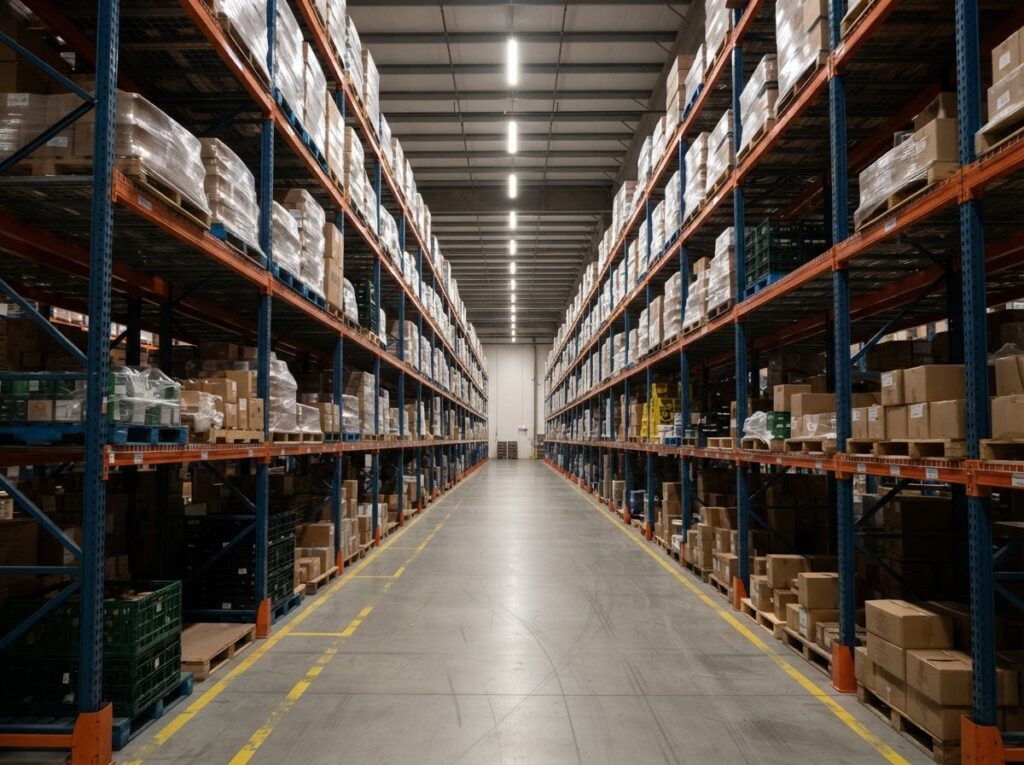
Provide the lighting designer with the proposed pallet racking layout, including rack heights, aisle centres, mezzanines and potential obstructions. Assess lighting conditions with stock in place, paying attention to poorly lit rack faces, blind corners and crossings. Check visibility from the operator’s usual position in both travel directions, then compare the findings with light measurements at relevant surfaces.
2. Picking, checking and packing stations
Place light where staff read small print, inspect goods or apply labels. A bench can look bright while a worker’s hands or cartons cast a shadow over the area they need to see. Glossy labels and scanner screens can also reflect a light positioned directly in the viewing angle.
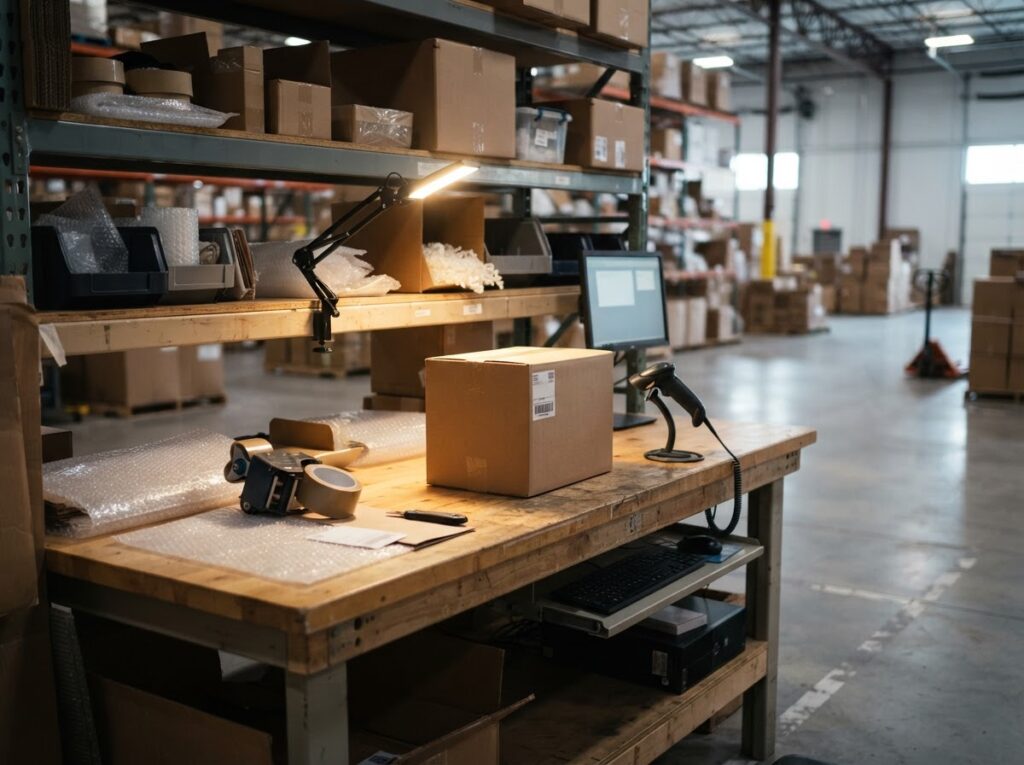
Assess lighting under normal working conditions to ensure labels and screens are easy to read. Where glare affects visibility, consider adjusting task lighting or workstation placement rather than increasing brightness. For areas exposed to daylight, repeat the assessment across shifts to account for changing light conditions.
3. Lighting at loading docks
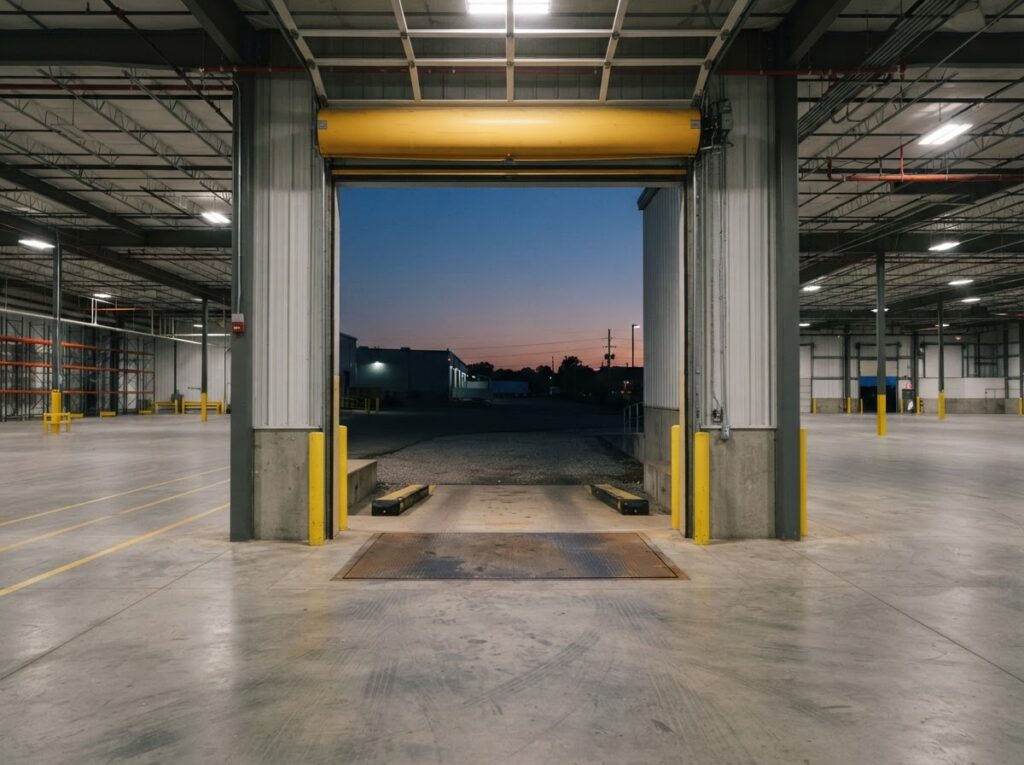
Assess lighting along the entire loading route, from staging areas to the trailer interior, accounting for changes in brightness between the yard, dock and trailer. Test visibility with a representative vehicle and load under normal operating conditions, including daytime and nighttime lighting. The review should also cover pedestrian routes and crossings.
4. How to check and maintain warehouse lighting
Measure light levels in lux at key working surfaces, including rack labels, packing benches and dock thresholds. Record the location and time of each reading to allow consistent comparisons after lighting adjustments.
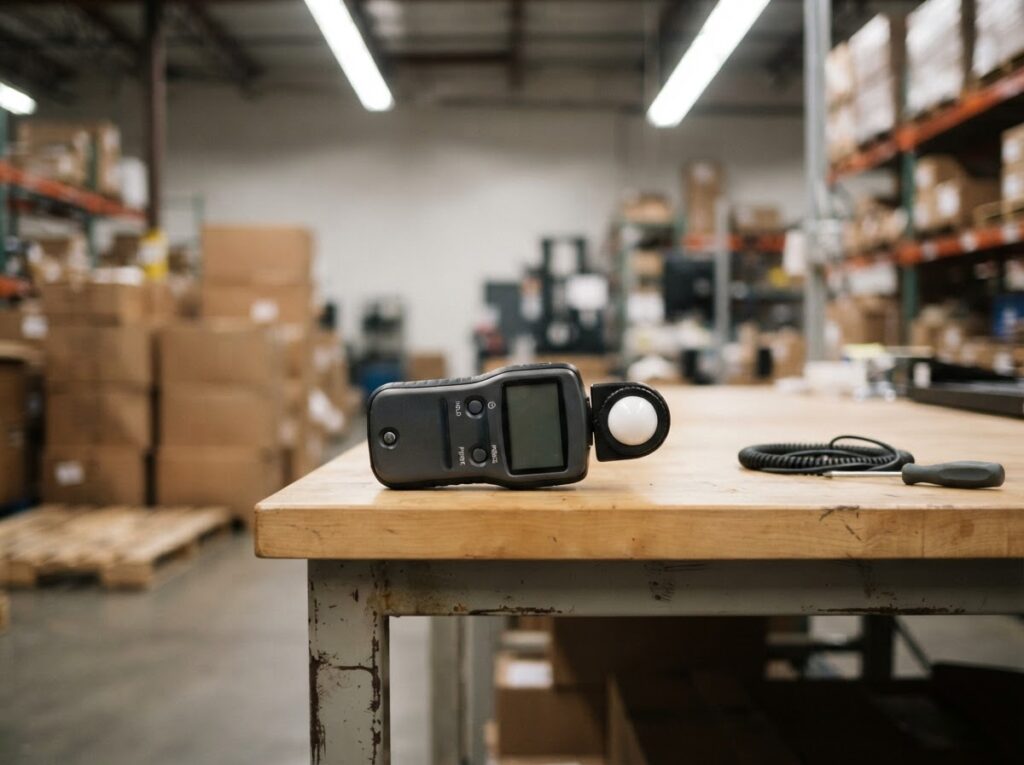
- Measurement record. Note what was in place, including stock, racks, benches and any task lights in use. Record shadows or glare workers reported.
- Recheck triggers. Repeat the assessment after changes to racks, benches, vehicle routes or fittings.
- Maintenance access. Plan cleaning and servicing around warehouse operations so maintenance does not create conflicts with normal work.
If you are moving racks or benches, coordinate the lighting brief with your warehouse design and layout so the lighting designer can assess the finished arrangement.
Start with the places where poor visibility can change how people work. A site walk with workers, followed by targeted measurements under normal operating conditions, will show what needs to be adjusted before you sign off the lighting plan.