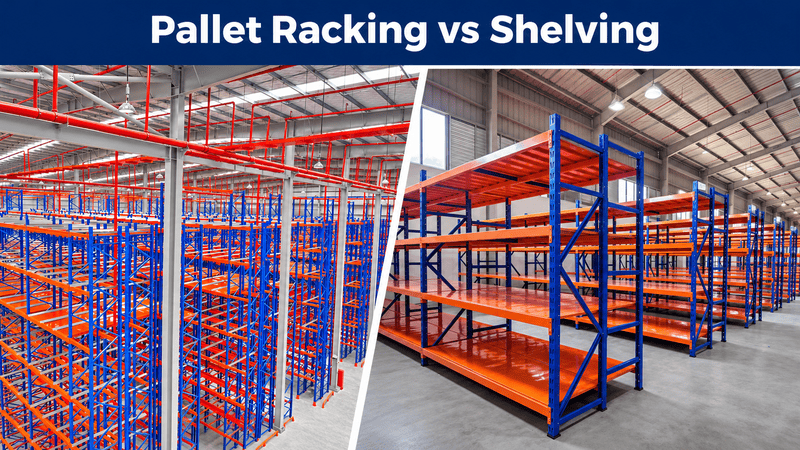
Choosing between pallet racking and shelving comes down to more than storage capacity. How your goods are handled, picked and moved through the warehouse plays a big part in finding the right fit. This guide breaks down the key differences, where each system works best, and how combining both can support a safer, more practical warehouse layout.
1. Pallet Racking vs Shelving: What’s the Difference?
Pallet racking is designed for palletised goods handled by forklifts or other material-handling equipment, while industrial shelving provides easy access to cartons, bins, tools and individually picked items.
Choosing the right system depends on more than load capacity. Product dimensions, handling methods and picking frequency all influence how your warehouse should be organised.
For warehouses managing both bulk stock and individual orders, combining pallet racking and shelving can offer a practical way to accommodate different storage and picking needs.
>> Read More:
- How to Install Pallet Racking in Australia: Steps and Requirements
- How to Maximise Warehouse Space: Racking, Layout and Inventory Strategies
2. Pallet Racking vs Shelving – Direct Comparison
The clearest distinction between pallet racking and industrial shelving is how goods are handled. Pallet racking accommodates loads moved by machinery, while shelving is generally arranged around products that staff need to access individually.
That difference affects everything from aisle widths to storage heights and the way inventory is replenished.
| Factor | Pallet Racking | Industrial Shelving |
| Loading method | Pallets are placed and retrieved using forklifts or other compatible handling equipment. | Goods are typically loaded and picked by hand. |
| Load capacity | Designed for specified pallet loads, with rated capacities for beam levels and complete bays. | Capacity varies with the shelf design, materials, dimensions and load distribution. |
| Structure and materials | Usually consists of steel upright frames, beams, bracing and approved accessories or decking where required. | Typically uses steel posts or frames, shelf supports and surfaces such as steel panels, mesh or particleboard. |
| Storage height | Can make use of higher storage levels, provided the handling equipment can reach them safely. | Often arranged at accessible picking heights, although specialised designs can provide additional levels. |
| Inventory type | Best suited to palletised stock and goods stored as complete unit loads. | Commonly used for cartons, spare parts, tools, bins and loose inventory. |
| Access requirements | Needs aisles and clearances suited to forklifts, pallet sizes and the racking configuration. | Primarily requires safe pedestrian access and enough space for picking and replenishment. |
| Expansion options | Additional bays and layout changes are possible using compatible components, subject to engineering requirements and approval. | Modular systems can often be extended or adjusted to accommodate changing stock requirements. |
Pallet racking handles palletised loads, while industrial shelving can also support heavy items. The key difference is how goods are stored, handled and accessed, not simply their weight. Pallet racking suits forklift-handled pallets, while shelving offers easier access to individual items, even heavier ones.
3. Which Storage System Does Your Warehouse Need?
Choosing between pallet racking and shelving depends on how inventory is stored, handled and retrieved. Product dimensions, picking frequency, handling equipment and available warehouse space all play a role in determining the right storage arrangement.
3.1 Choose Pallet Racking for Palletised Goods
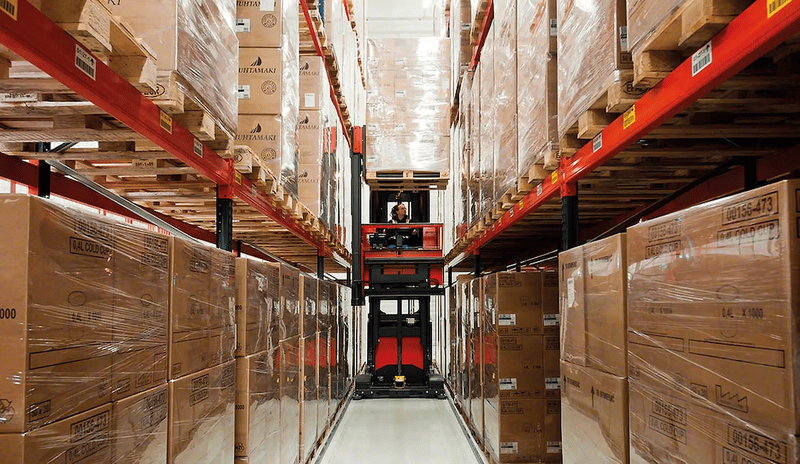
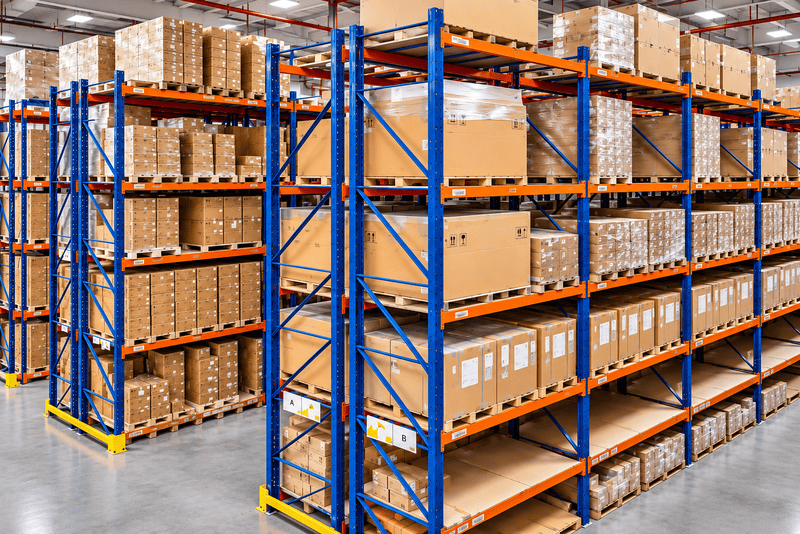
Pallet racking is best suited to warehouses storing and moving full pallet loads using forklifts or other handling equipment. Commonly found in distribution centres, manufacturing facilities and wholesale warehouses, it allows goods to be stored across multiple levels while making use of available vertical space.
For operations handling a wide range of SKUs, selective pallet racking provides direct access to individual pallets. The layout should account for pallet dimensions, load capacities, forklift specifications and aisle clearances.
3.2 Choose Shelving for Hand-Picked Goods
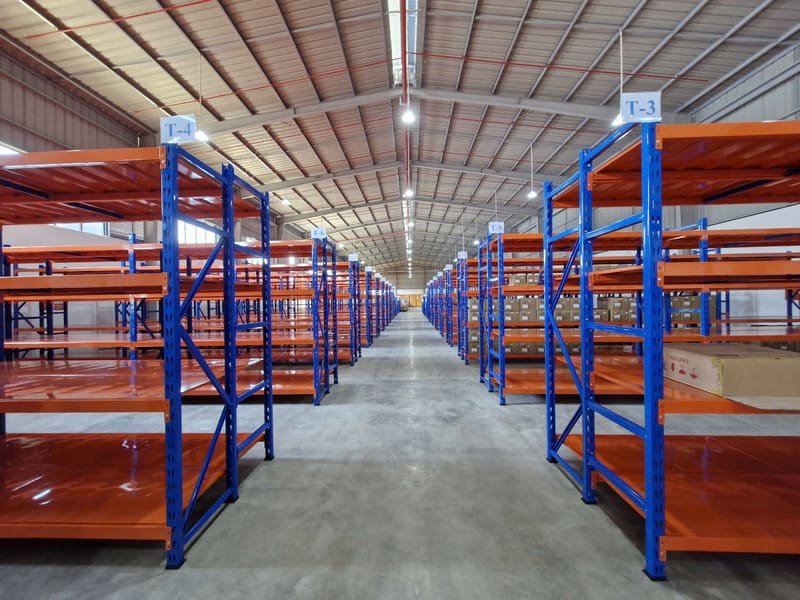
Industrial shelving is suitable for cartons, bins, tools and individual products that require frequent manual picking. It is commonly used in e-commerce fulfillment, automotive parts storage, workshops and retail stockrooms, where quick access to individual items is essential.
Longspan shelving accommodates larger cartons and bulky goods, while heavy-duty shelving can support heavier components when appropriately rated. Shelf capacity, accessibility and safe handling should guide the selection.
3.3 Combine Pallet Racking and Shelving for Mixed Inventory
Warehouses handling both bulk stock and individual orders can benefit from combining pallet racking and shelving. This approach separates pallet storage from manual picking, creating a more organised inventory flow.
A typical combined layout includes:
- Reserve pallet storage: Full pallets are stored in racking until needed for dispatch or replenishment.
- Forward picking area: Frequently ordered cartons and individual items are placed on shelving for easy access.
- Stock replenishment: Goods move from reserve storage to picking shelves as inventory levels decrease.
This arrangement can reduce unnecessary pallet movements and improve order picking, particularly in wholesale distribution and e-commerce warehouses. Safe forklift access and pedestrian routes remain essential.
3.4 Key Factors to Consider Before Choosing
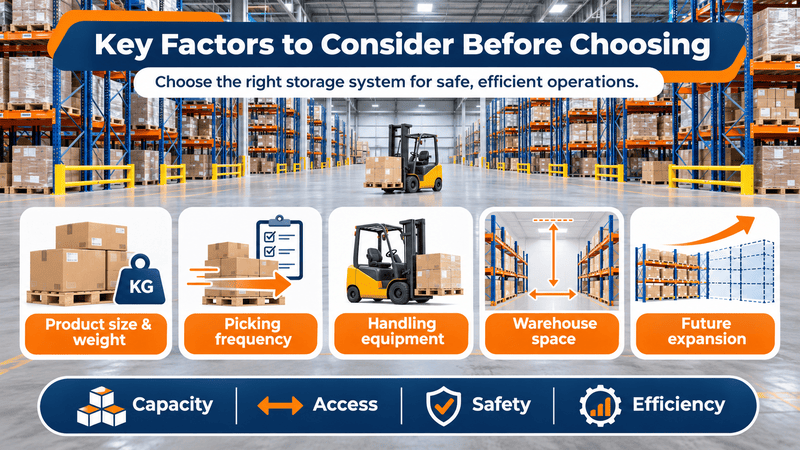
Selecting the right storage system requires an assessment of both inventory characteristics and daily warehouse operations. The following factors should guide the decision:
- Product dimensions and weight: Pallet sizes, loaded heights, item dimensions and load distribution.
- Picking frequency: Order volumes, stock turnover and SKU accessibility.
- Handling equipment: Forklift types, lifting heights and manual handling requirements.
- Warehouse space: Available floor area, clear height, aisle widths and pedestrian access.
- Future expansion: Expected changes in stock volumes, product ranges and operational needs.
The best choice balances storage capacity, accessibility, safe handling and operational efficiency rather than focusing on storage density alone.
>> Read More:
- FIFO vs LIFO: Key Differences and Warehouse Applications in Australia
- Reach Truck vs Forklift: Key Differences for Australian Warehouses
In summary, pallet racking suits full pallets moved by forklifts, while industrial shelving provides easy access to cartons, bins and individual items picked by hand. If your warehouse handles both, use racking for reserve stock and replenish the picking shelves as needed. When planning the layout, consider how often each product is picked, how much space the handling equipment needs and how staff will move safely between storage and picking areas.