
Last-mile delivery is the final transport leg from a warehouse, store or local depot to the customer’s address or chosen collection point. For fulfilment and customer service teams, two events matter: when the carrier accepts the parcel and what happens at the final delivery attempt. Knowing the difference helps teams trace a delay and give the customer the right next step.
1. Where the Last Mile Starts
The last mile begins at the point that sends the parcel on its final run. After an interstate transfer, that point may be a local depot. For an order collected directly by a local courier and taken to the customer, it may be the warehouse itself. The Fair Work Commission’s published industry advice describes this last transport phase as the movement from a facility such as a hub, warehouse or distribution centre to the final destination.
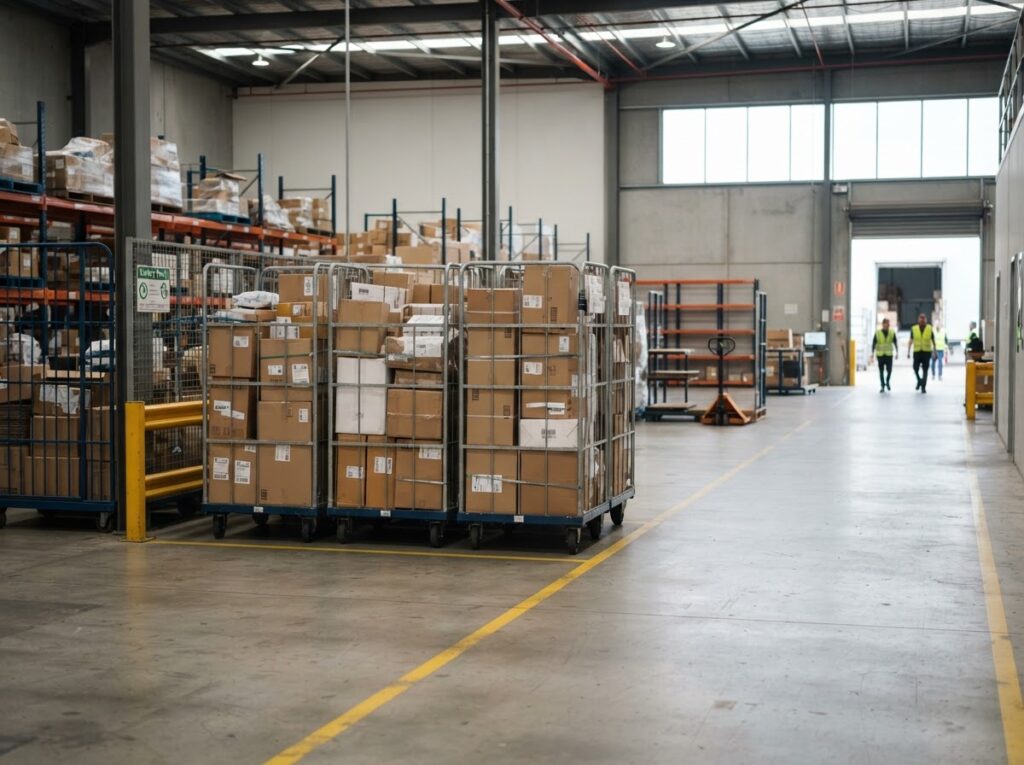
Consider a parcel going from a Sydney warehouse to a customer in Melbourne. The interstate movement takes it to the Melbourne depot. Once it leaves that depot on the local route, it is on its last-mile leg. A local same-day courier could handle collection and final delivery on a single run.
>> Read More:
- Warehouse Traffic Management Plan Example for Australian Sites
- Warehouse Lighting: Planning for Aisles, Picking and Loading Docks
2. How a Parcel Moves from Despatch to Delivery
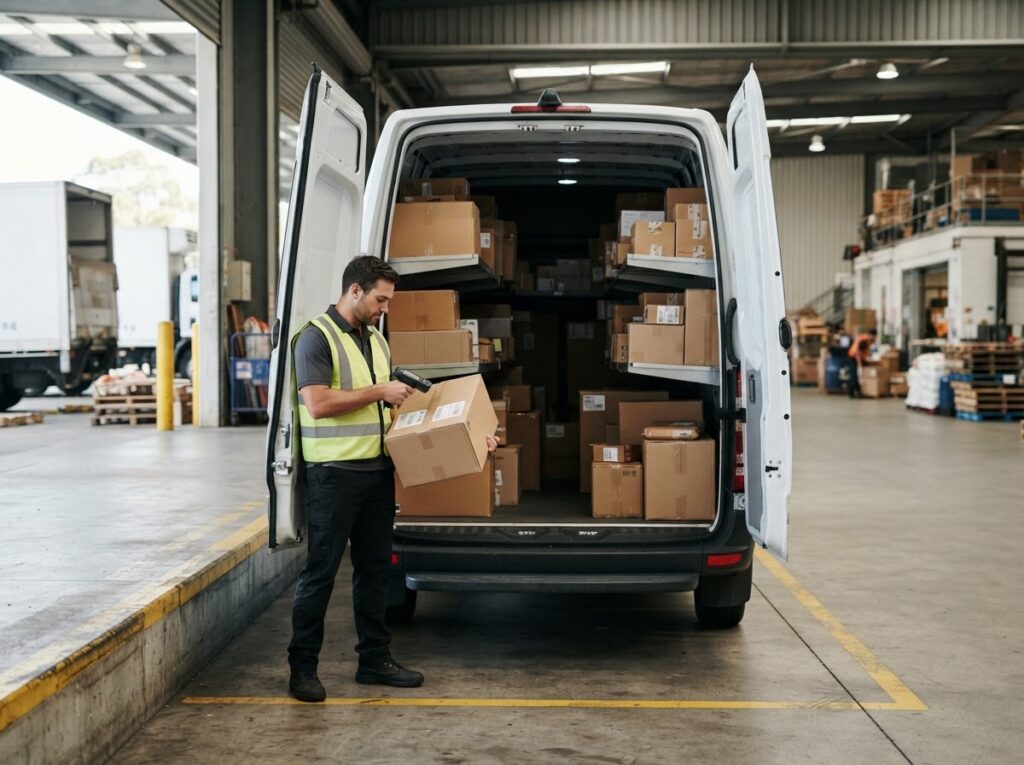
A parcel moves through several handovers, and each scan answers a different question. At the warehouse, a printed label identifies the parcel. A collection scan or accepted manifest records the transfer to the carrier. At the other end, the delivery event records what happened when the driver reached the destination.
- Prepare the order. Check the items and delivery address, select the agreed service and match each carton to its own label.
- Confirm carrier acceptance. Stage the cartons for the correct pickup. Use the agreed scan or manifest process to record which parcels actually left the dock.
- Check the final run. Where the carrier uses a depot, the parcel is sorted onto a local route. An ‘out for delivery’ event indicates that it has been assigned to the delivery run.
- Record the outcome. The carrier records a handover, an authorised drop-off or a failed attempt. Check the event and any supporting proof of delivery when investigating an exception.
Keep the order number, each parcel’s tracking number and the carton count together in the warehouse despatch workflow. If a two-carton order arrives with one carton missing, staff can look up the second parcel directly. An order-level status alone may hide different outcomes for the two parcels.
3. Delivery Options and What Happens After a Missed Attempt
Delivery options depend on the carrier, the service selected by the sender and the instructions it can accept from the recipient. These details determine whether a parcel can be left at the address and what happens if nobody can take it.
- Signature. The driver seeks a signature or other confirmation required by the service. If the recipient is unavailable, check which fallback the sender and carrier permit.
- Authorised safe place. The parcel can be left when the service and instructions allow it and the driver can identify a suitable location.
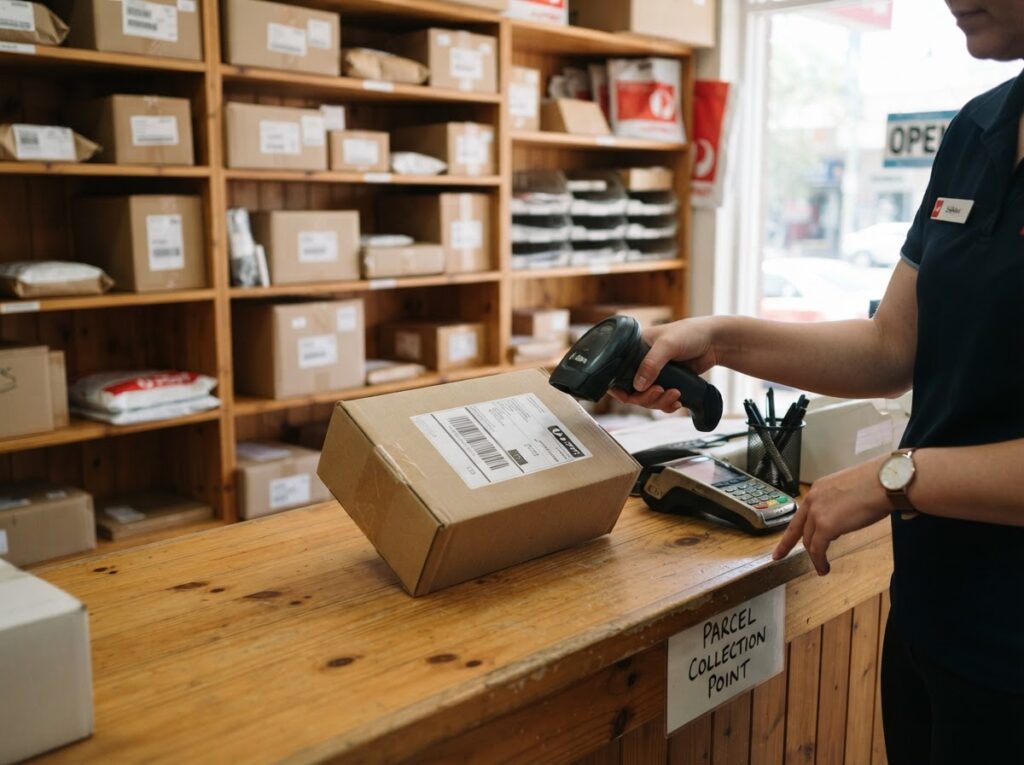
- Collection. The service may deliver to a chosen collection point or redirect an eligible parcel there after a failed attempt. The tracking event or notification should show the next step.
For example, Australia Post’s Safe Drop guidance explains that a parcel may go to a Post Office when the driver cannot follow the delivery instructions or leave it safely. Before promising another attempt, check the latest carrier event, the reason given and whether the parcel is already awaiting collection.
>> Read More:
- Pallet Racking vs Shelving: Key Differences and Warehouse Uses
- How to Maximise Warehouse Space: Racking, Layout and Inventory Strategies
4. How Warehouses Can Reduce Last-Mile Delivery Problems
Start with the point where the exception first appears. A parcel with a printed label but no confirmed pickup needs a dock or manifest check. An accepted parcel with an unresolved access issue calls for a review of the delivery instructions and the carrier’s next available action.
- Before printing a label. Check unit numbers, entrance details and any signature requirement. Confirm that the chosen service supports the delivery instructions.
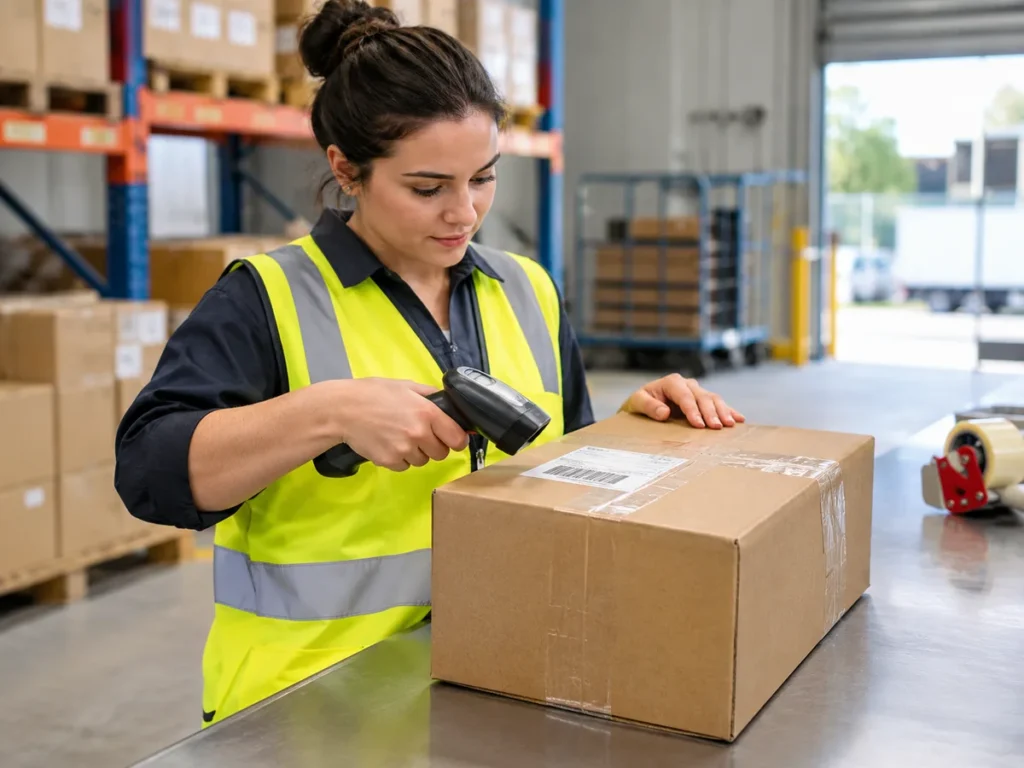
- At carrier collection. Separate parcels by pickup and match the accepted count and tracking numbers to the staged list. Assign someone to investigate anything left behind.
- After a missed attempt. Record the order, parcel ID, latest event, stated reason and owner of the follow-up. Tell the customer whether to expect another attempt or collect the parcel once the carrier confirms the option.
- During weekly reviews. Compare first-attempt success for the same service and reporting period. Use a consistent definition, such as completed deliveries on the first attempt divided by parcels with a recorded first attempt. Track missed pickups separately to keep warehouse handover failures visible.
If first-attempt failures cluster around apartment deliveries, check whether unit and access details reach the driver. If the problems cluster before carrier acceptance, review pickup staging and the manifest process. Each pattern points to a different place to act.