

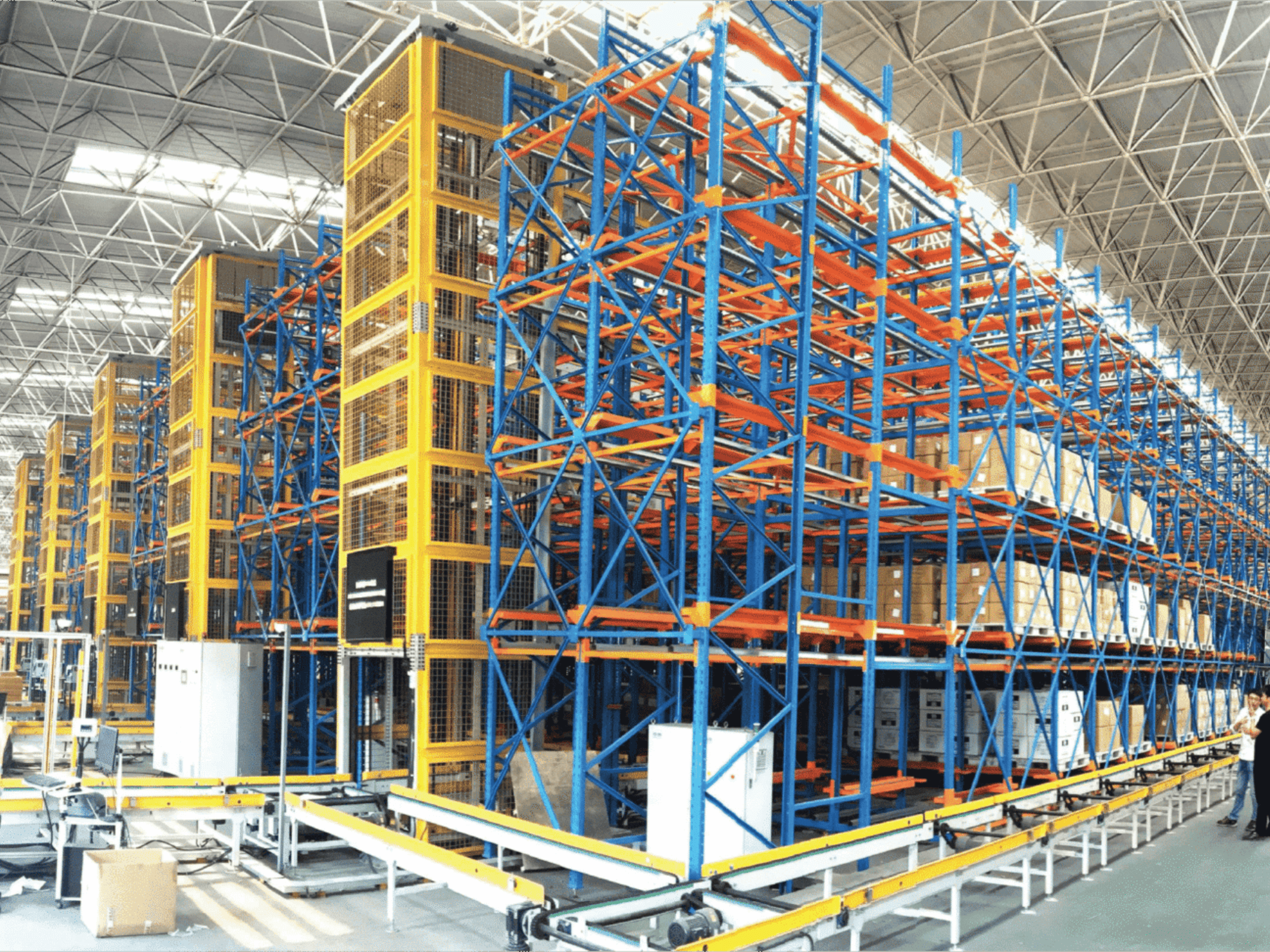


1. What Is a 4-Way Shuttle System?
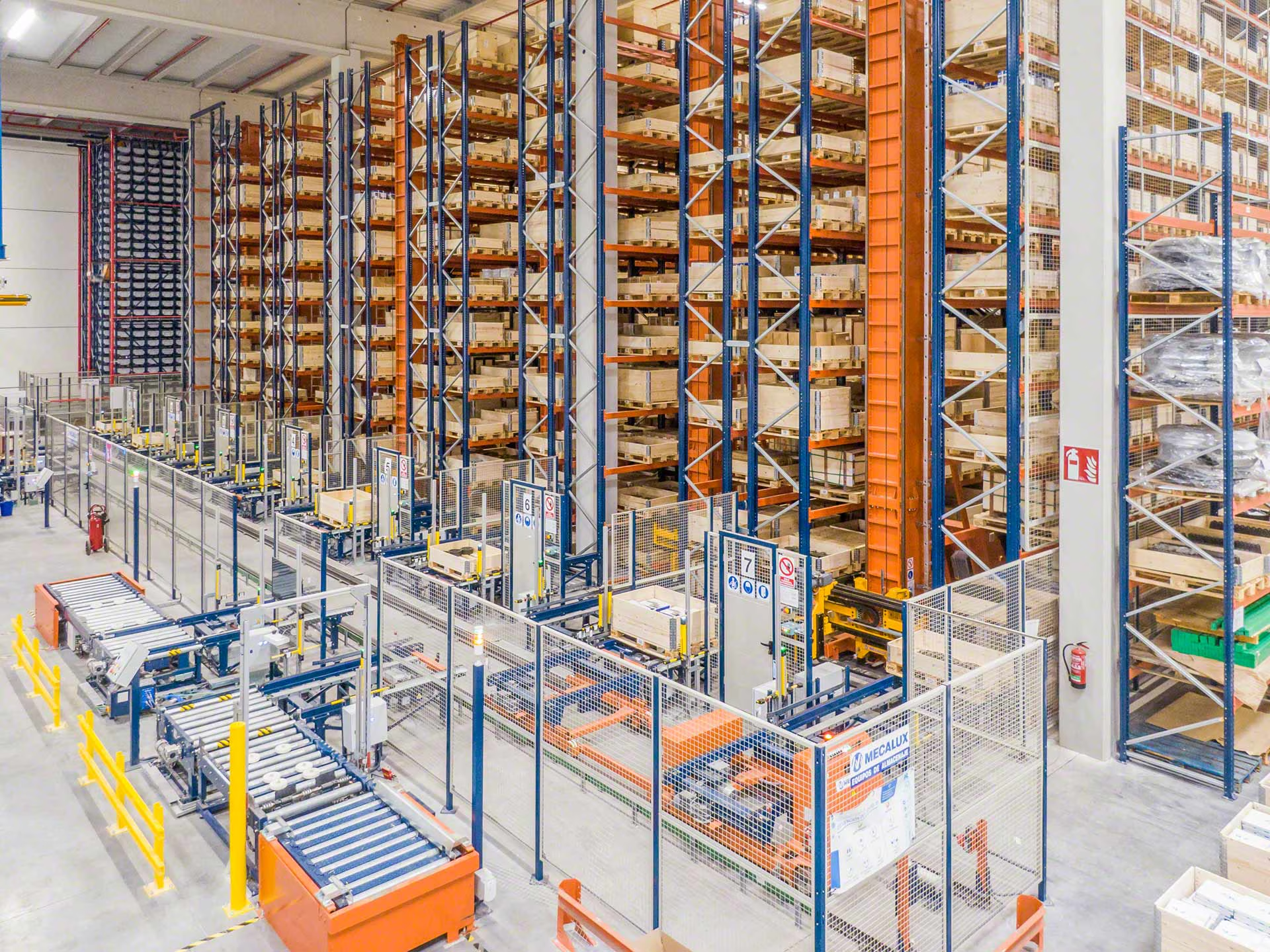
A 4-way shuttle system is an advanced automated storage and retrieval technology (AS/RS) designed to move in all four horizontal directions forward, backward, left, and right while integrating with vertical elevators for multi-level travel. This innovation transforms modern warehousing by significantly increasing storage density, improving throughput, and enabling highly flexible and scalable warehouse design.
Compare four-way shuttles with other warehouse pallet racking options when planning pallet access and storage capacity.
Key Operational Benefits of a 4-Way Shuttle System
- Maximised Storage Density: By eliminating wide forklift aisles, 4-way shuttle systems enable high-density, multi-deep racking configurations. This can increase storage capacity by up to 65% or more within the same warehouse footprint.
- High-Volume Throughput: Multiple shuttles can operate simultaneously on the same level, significantly increasing inbound and outbound processing speeds. This makes the system highly suitable for e-commerce, retail distribution, and high-demand logistics operations.
- Improved Inventory Accuracy: Integration with Warehouse Execution Systems (WES) and Warehouse Management Systems (WMS) ensures real-time inventory tracking, reduced human error, and efficient stock rotation using FIFO or LIFO strategies.
- Optimised Labour Costs: Automation of put-away, retrieval, and internal transport reduces reliance on forklift operations, allowing labour resources to be redirected toward higher-value tasks.
- Superior Scalability: The system can be easily expanded by adding more shuttles or extending racking structures without interrupting ongoing warehouse operations, making it highly adaptable to business growth.
- High Reliability and Resilience: Because the system operates as a fleet of independent shuttles, the failure of a single unit does not halt overall operations, ensuring continuous warehouse functionality.
- Cold Storage Capability: 4-way shuttle systems can be customised for extreme environments, including sub-zero cold storage facilities, making them ideal for food, beverage, and pharmaceutical logistics.
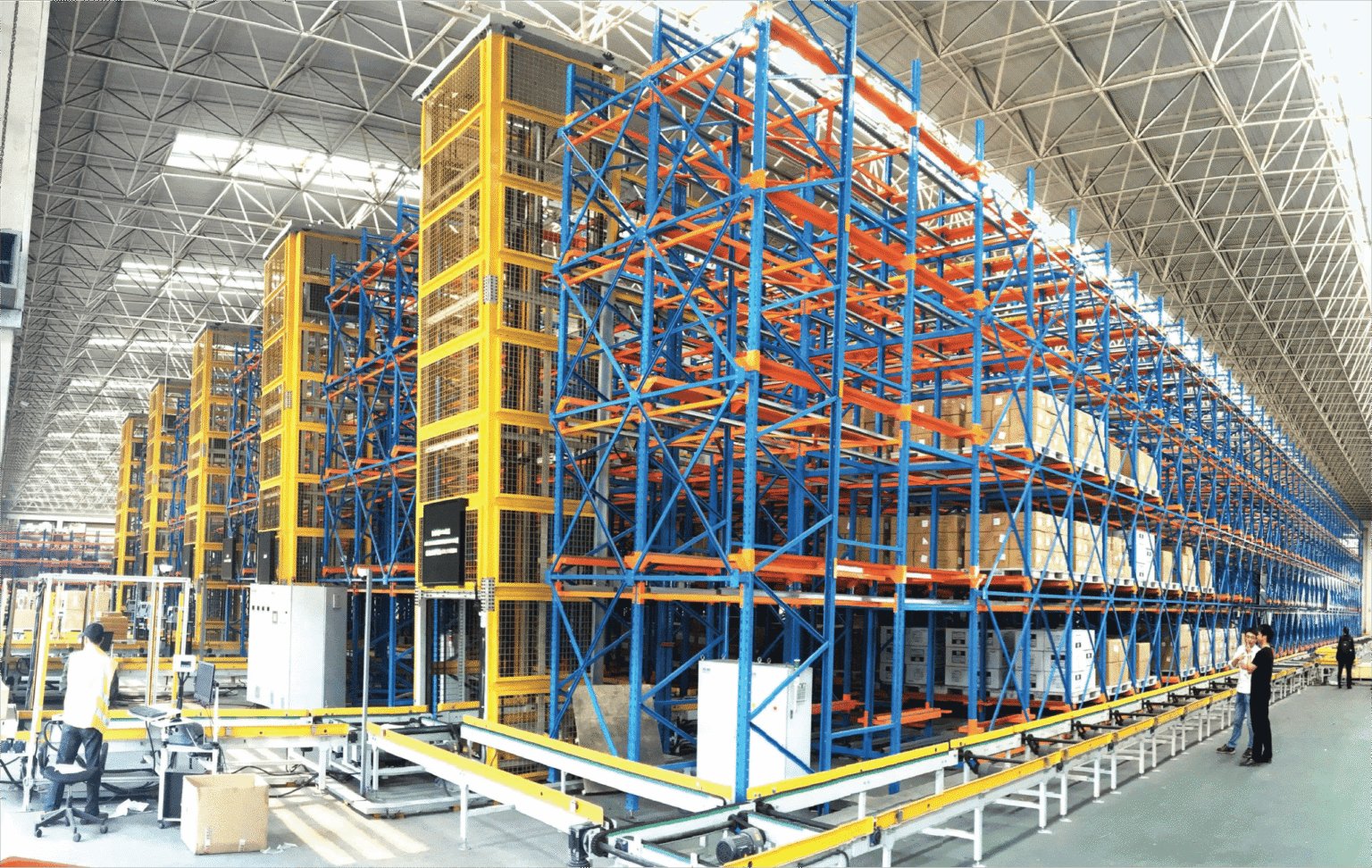
CONSULTATION ON 4-WAY SHUTTLE FOR YOUR WAREHOUSE
Call: 0485 083 868 Get In Touch
2. How Does a Four Way Shuttle System Work?
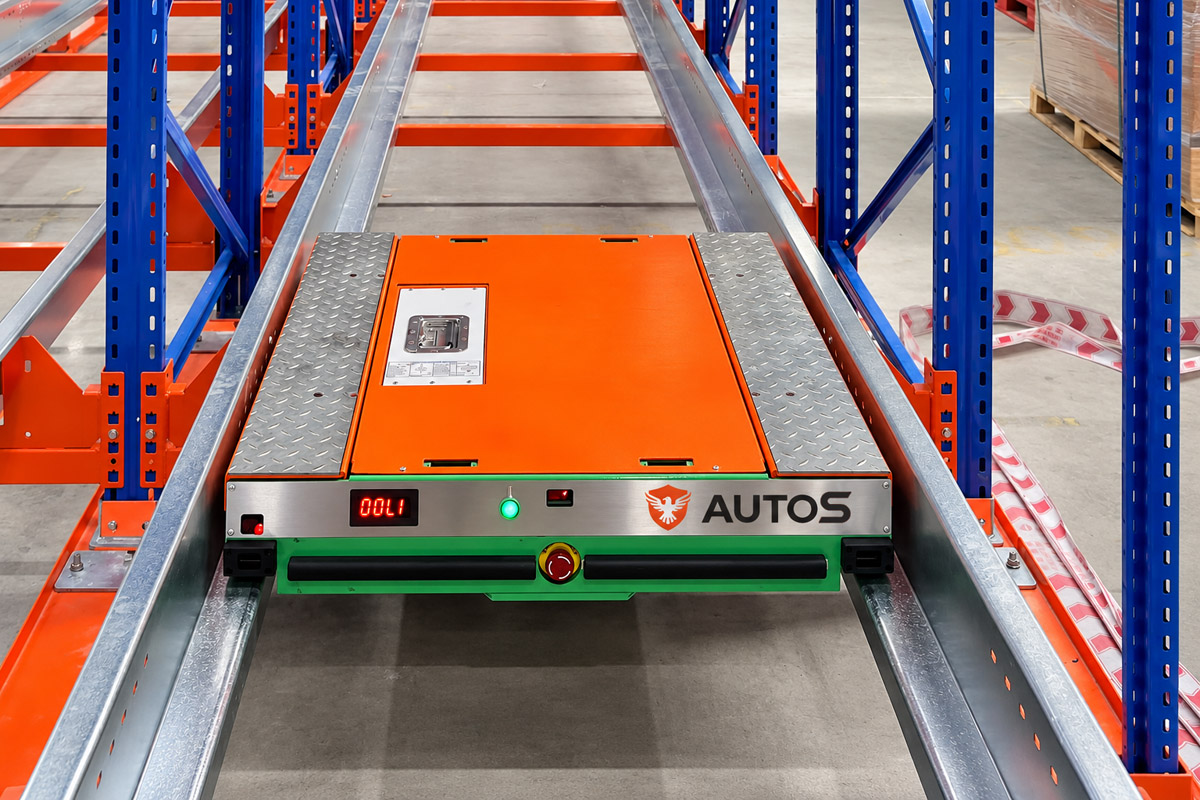
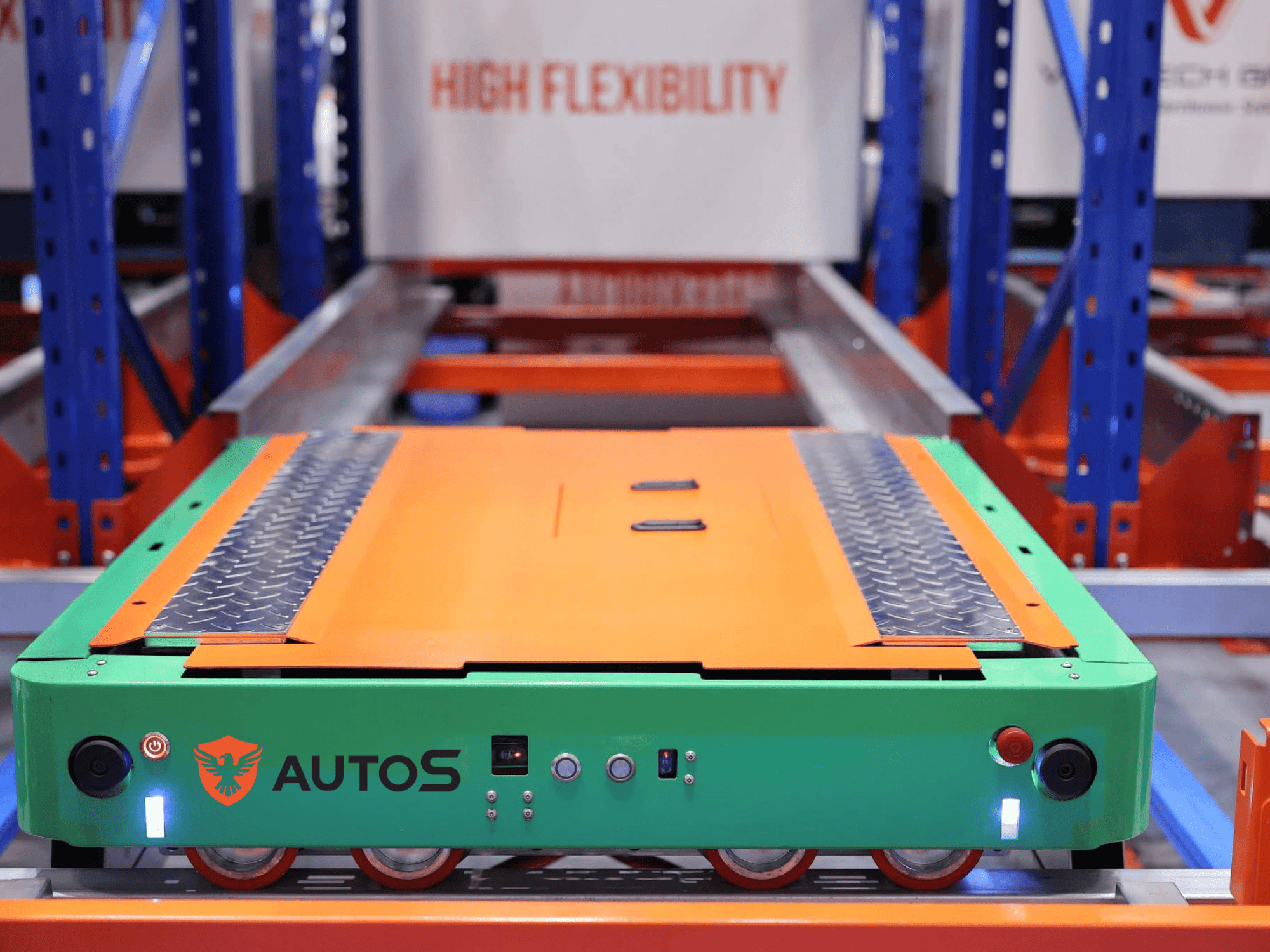
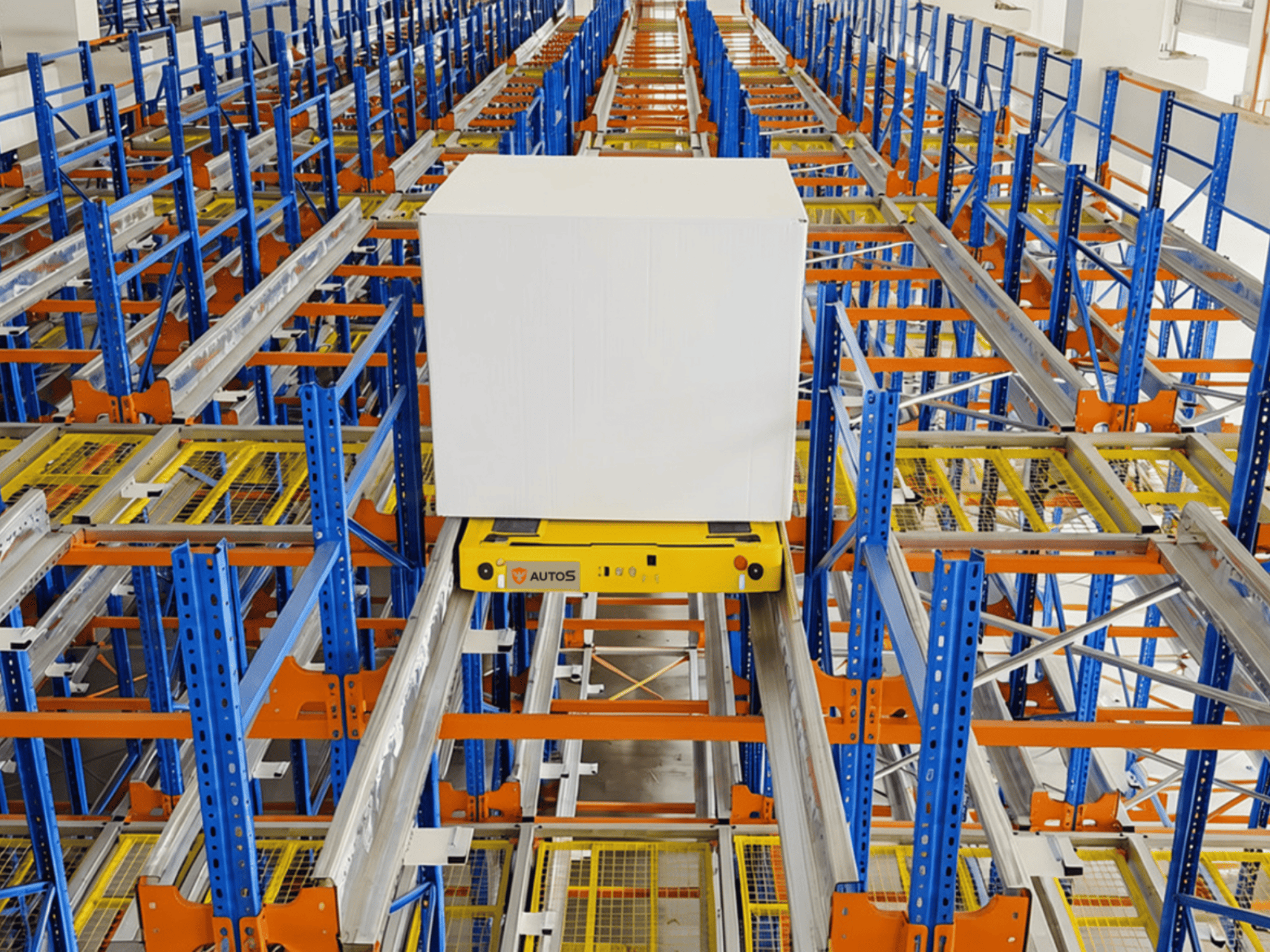
A 4-way shuttle is an autonomous, battery-powered robotic vehicle designed for high-density warehouse storage and retrieval operations. Operating within a specialised racking system, it travels along an interconnected rail network to transport, store, and retrieve pallets automatically. By eliminating the need for forklifts inside storage aisles, the system significantly increases storage density, improves operational efficiency, and enhances warehouse throughput.
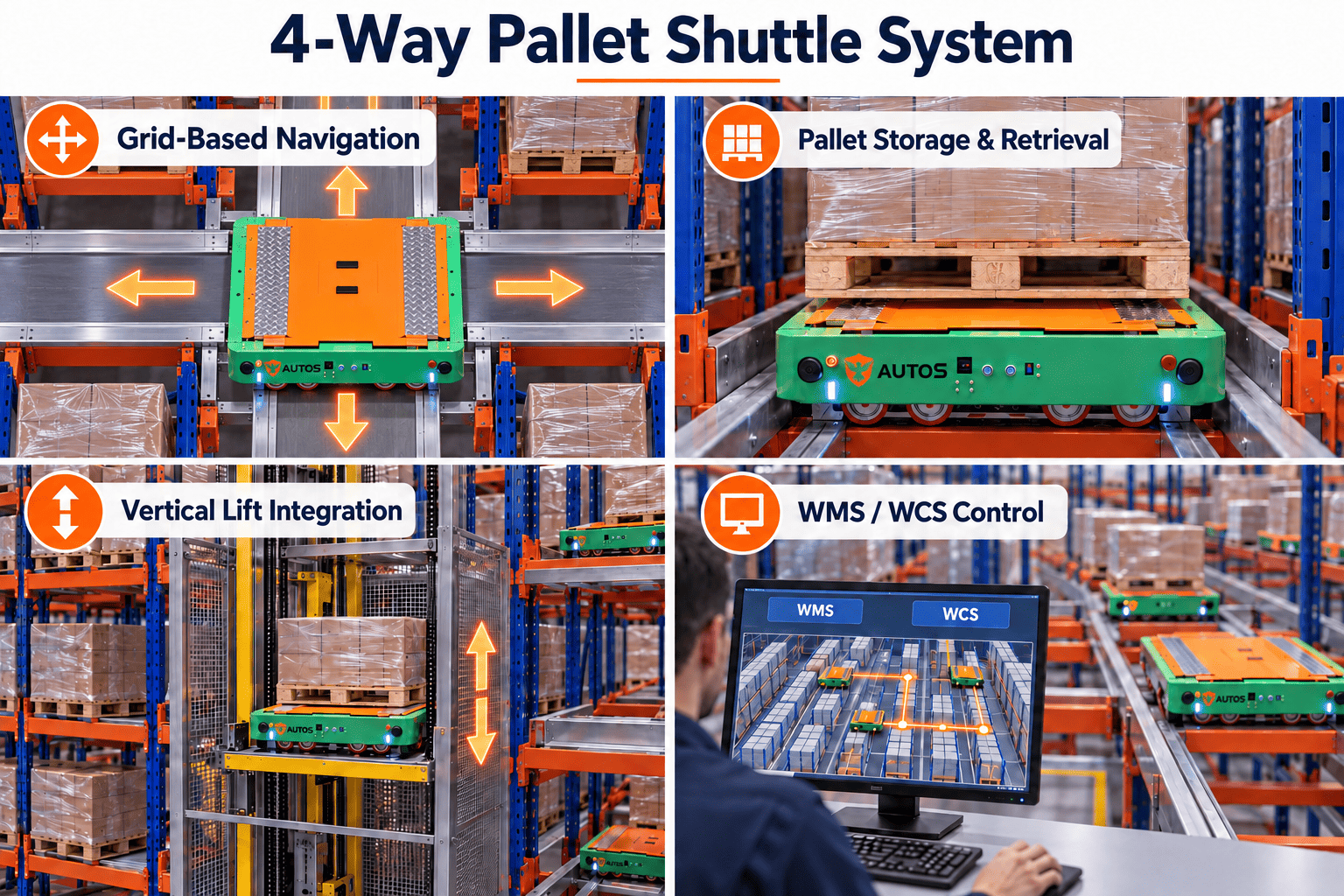
- Grid-Based Navigation: The shuttle is equipped with a multi-directional wheel system that enables movement in four directions—forward, backward, left, and right. This allows the robot to travel across intersecting rail tracks and switch between storage lanes without manual intervention, providing maximum flexibility within the racking structure.
- Pallet Storage and Retrieval: During operation, the shuttle moves beneath a pallet, lifts it slightly, and transports it to the assigned storage location. It can travel both along storage channels and across aisles, enabling efficient pallet handling throughout the warehouse.
- Vertical Movement: Since each shuttle typically operates on a single storage level, automated vertical lifts are used to transfer pallets and shuttles between different rack levels. This integration enables seamless three-dimensional movement and maximises the use of available warehouse height.
- Intelligent Software Control: All shuttle movements are coordinated by integrated software platforms such as a Warehouse Management System (WMS) and Warehouse Control System (WCS). These systems optimise travel routes, manage inventory locations, balance workloads across multiple shuttles, and ensure safe, collision-free operation.
By combining autonomous robotics, vertical lifts, and intelligent software, 4-way shuttle systems deliver a highly efficient, scalable, and fully automated solution for modern warehouse operations.
>> Read More:
- Shuttle Pallet Racking System: Types, Benefits and Applications
- Automated Warehouse Systems: Levels, Technologies and Benefits
3. Key Benefits of a 4-Way Shuttle System
A 4-way shuttle system combines high-density storage with automated pallet handling to help warehouses increase capacity, improve throughput and reduce manual operations. Its key benefits include:
- Higher Storage Density: By reducing the need for wide forklift aisles, the system enables multi-deep pallet storage and makes better use of the available warehouse footprint.
- Increased Throughput: Multiple shuttles can operate simultaneously to accelerate pallet storage and retrieval, supporting faster order processing during periods of high demand.
- Reduced Labour Requirements and Improved Safety: Automated pallet movements reduce reliance on manual forklift handling and limit forklift traffic within storage lanes, helping minimise handling risks.
- Cold Storage Capability: Specially configured systems can operate in sub-zero environments, including freezer warehouses at temperatures down to −25°C, making them suitable for temperature-controlled logistics.
Actual capacity gains, throughput improvements and labour savings depend on the warehouse layout, pallet profile, system configuration and operating conditions.
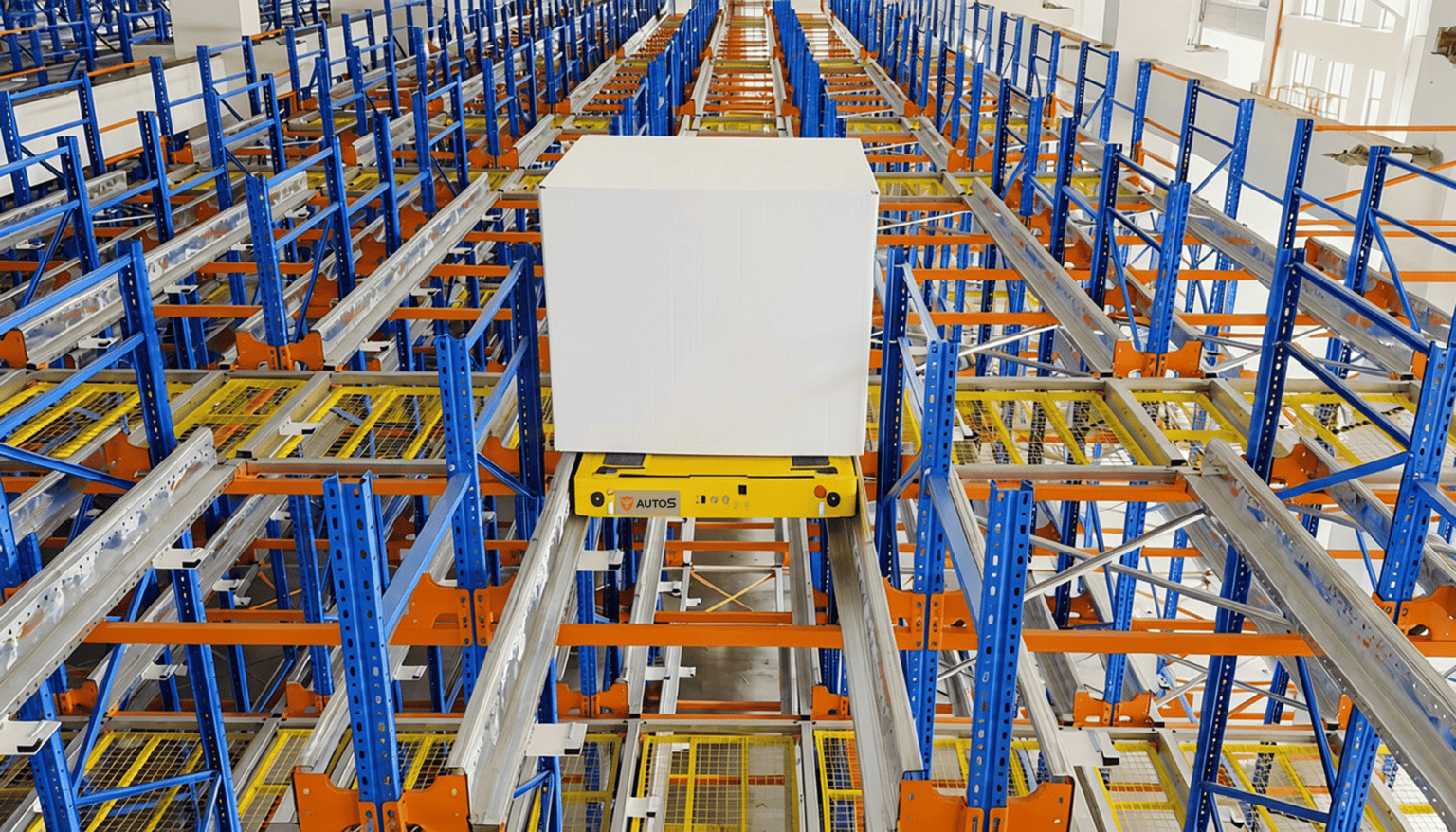
4. Components of a 4-Way Shuttle System
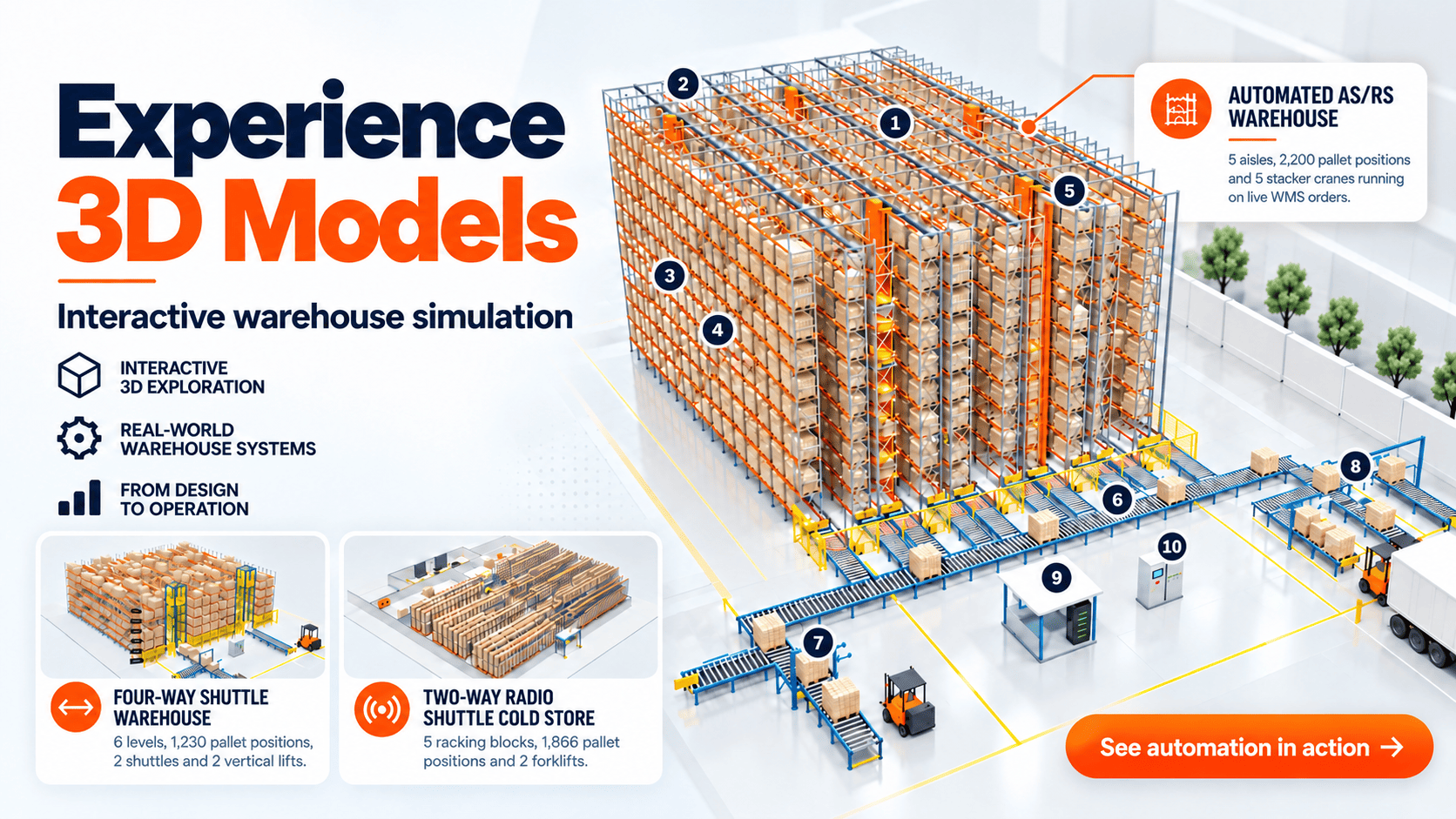
A 4-Way Shuttle System is a high-density automated storage and retrieval solution that combines autonomous robotic shuttles, specialised racking, vertical lifts, and intelligent software to automate pallet storage and retrieval. The system is designed to maximise warehouse capacity, improve throughput, and reduce manual handling by eliminating the need for traditional forklift aisles.
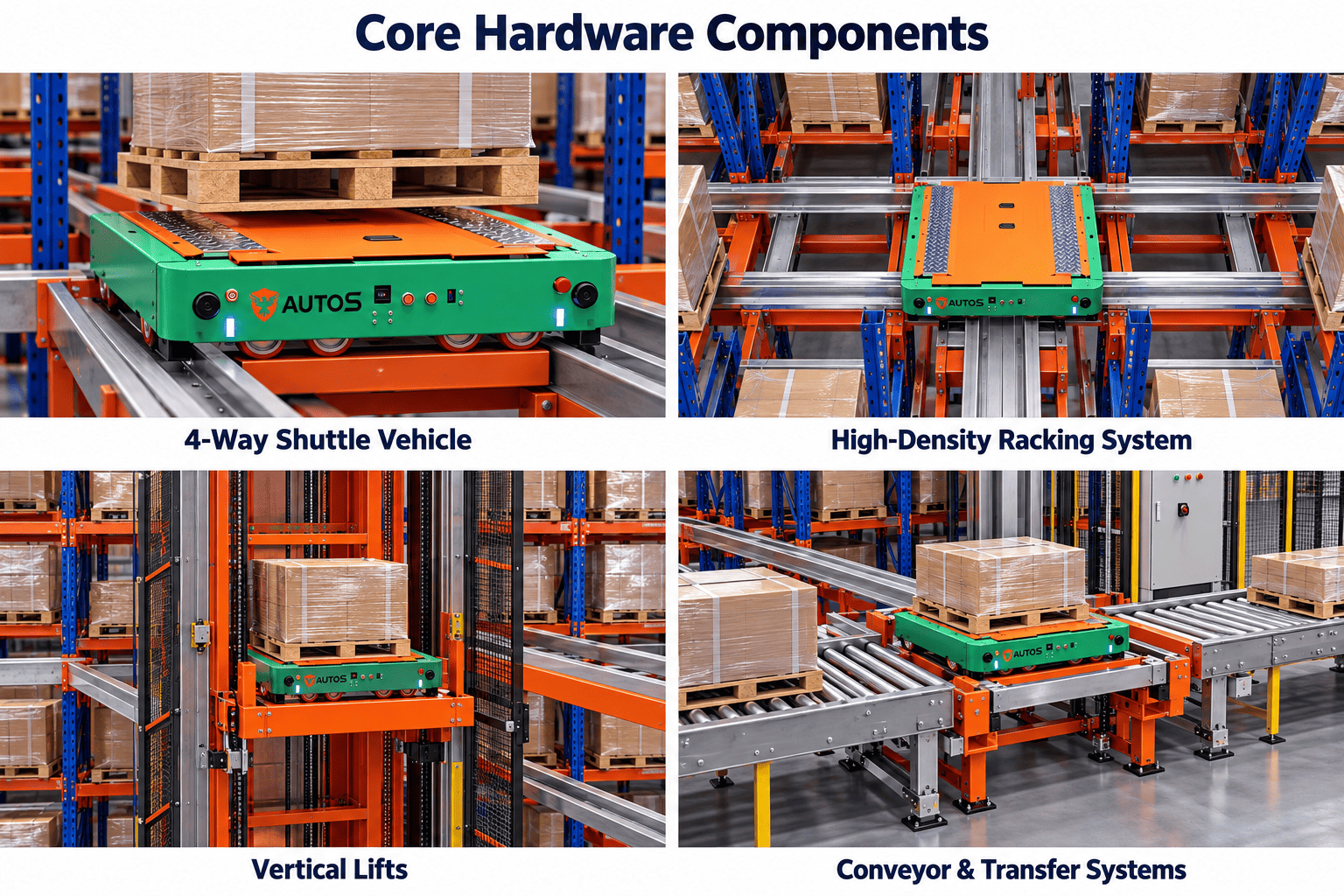
Core Hardware Components
- 4-Way Shuttle Vehicle: The 4-way shuttle is an intelligent, battery-powered robot that travels along the rail network to transport pallets throughout the racking system. Equipped with an integrated lifting mechanism, it can automatically pick up, carry, and place pallets at designated storage locations.
- High-Density Racking System: The racking structure is specifically designed with bidirectional guide rails that allow shuttle movement in both longitudinal and lateral directions. This configuration enables high-density, multi-deep pallet storage while maximising warehouse space utilisation.
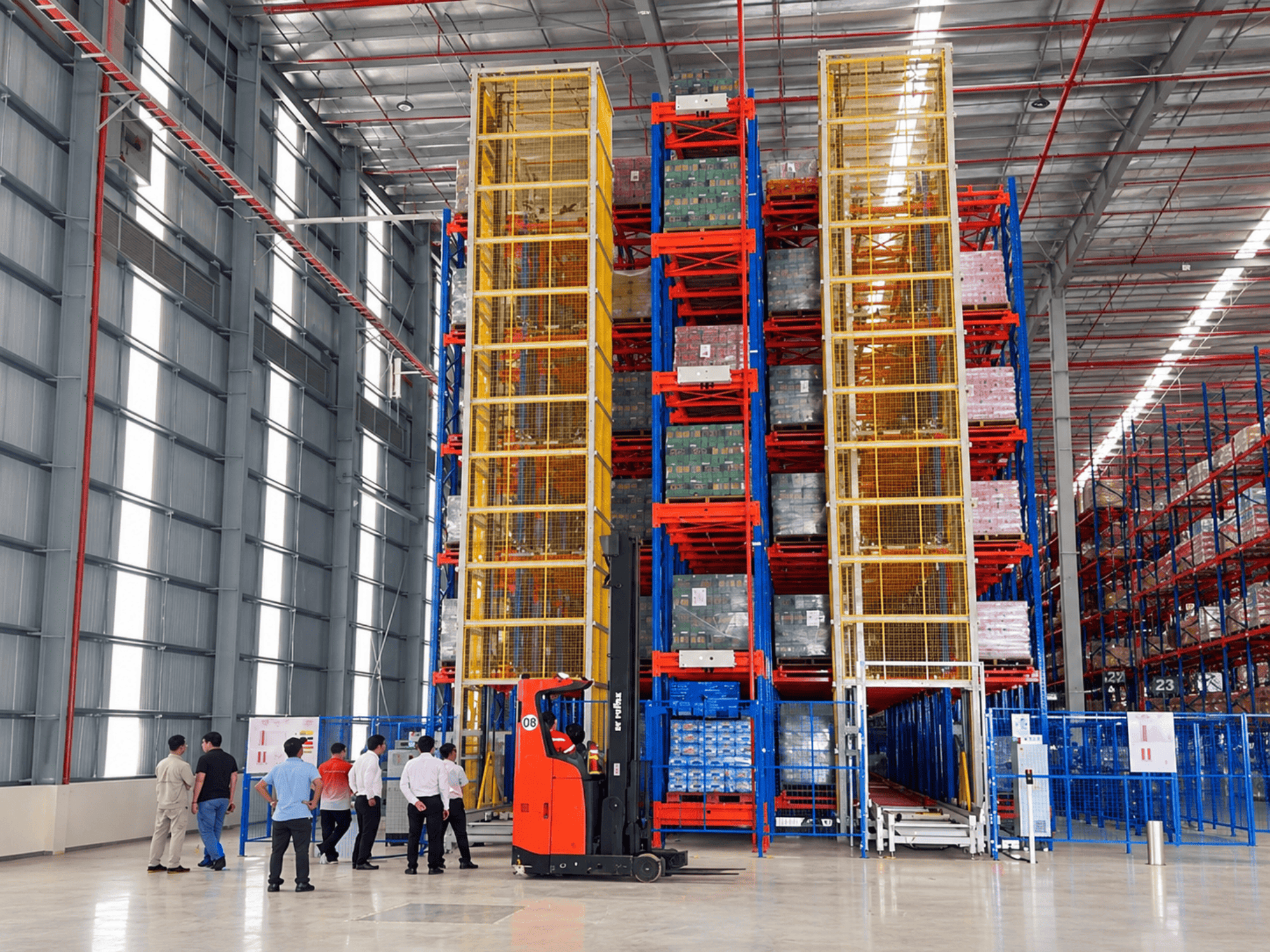
- Vertical Lifts: Automated lifts or elevators transfer pallets and shuttle vehicles between different storage levels. These lifts enable seamless three-dimensional movement and allow the system to fully utilise available warehouse height.
- Conveyor and Transfer Systems: Conveyors and transfer cars connect inbound and outbound warehouse operations with the shuttle system. They transport pallets between receiving, storage, picking, and shipping areas, ensuring a continuous material flow.
Control and Software Components
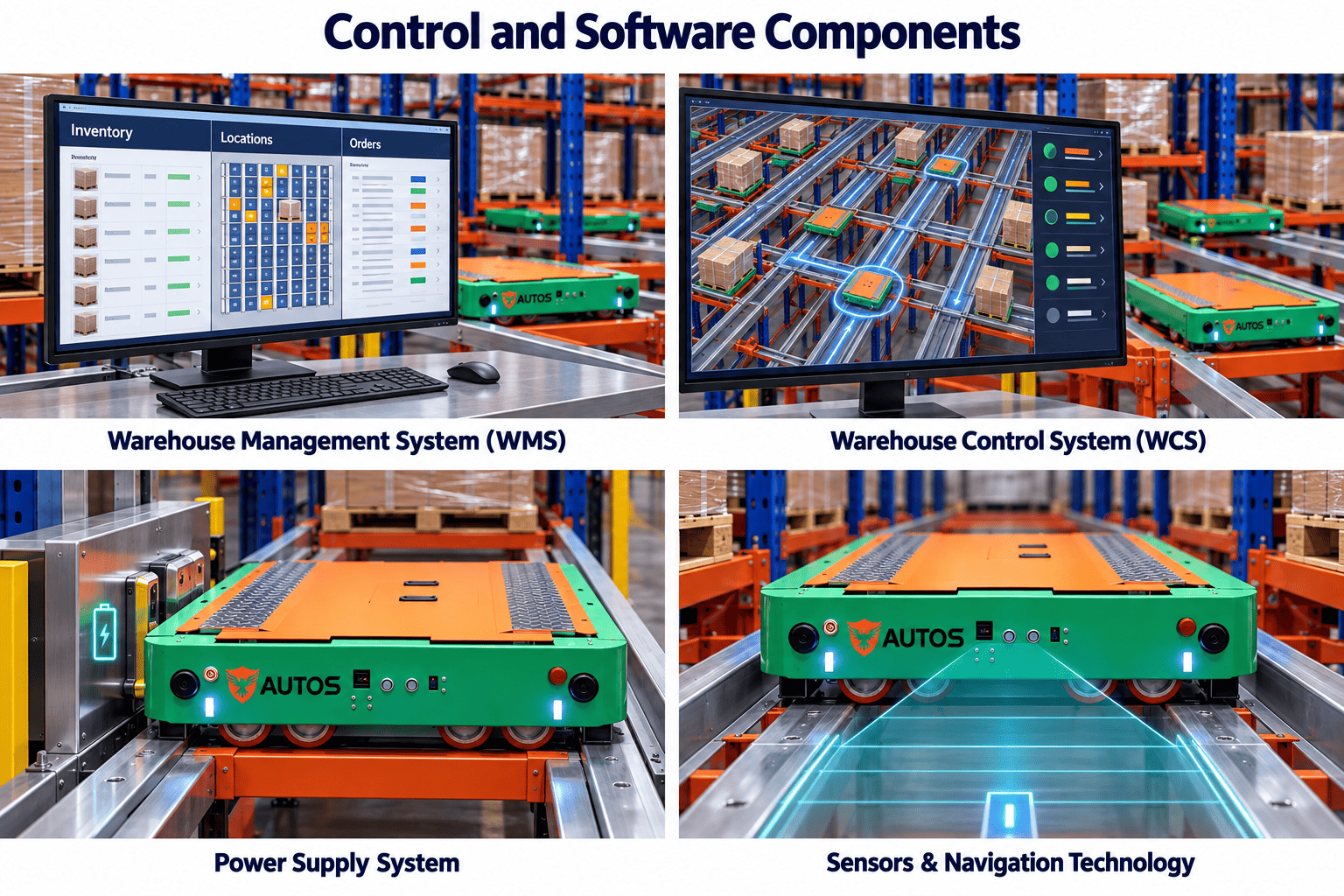
- Warehouse Management System (WMS): The WMS manages inventory records, storage locations, order processing, and warehouse operations. It determines where products should be stored and when they should be retrieved.
- Warehouse Control System (WCS): The WCS acts as the communication layer between the WMS and the physical equipment. It coordinates shuttle movements, assigns tasks, optimises travel routes, and ensures efficient system performance in real time.
- Power Supply System: Most 4-way shuttles are powered by high-performance lithium-ion batteries. Automated charging stations help maintain continuous operation while minimising downtime.
- Sensors and Navigation Technology: Advanced sensors, positioning systems, LiDAR technology, and rail-based identification systems enable precise navigation, pallet tracking, obstacle detection, and collision avoidance. These technologies ensure safe and accurate operation throughout the warehouse.
By integrating advanced robotics, intelligent software, and high-density storage infrastructure, 4-way shuttle systems provide a flexible, scalable, and highly efficient solution for modern automated warehouses.
>> Read More:
- ASRS System: Components, Types, and Benefits
- Mobile Racking Systems: How It Works, Components and Applications
5. 4-Way vs 2-Way Pallet Shuttle: Key Differences
The main difference between a 2-way and a 4-way pallet shuttle is how they move within the racking system and transfer between storage lanes. A 2-way shuttle travels forward and backward within a single lane, typically relying on a forklift to move it between lanes or levels. A 4-way shuttle also moves sideways, allowing it to switch lanes automatically via interconnected rails. Integrated vertical lifts transfer pallets and, where configured, shuttle vehicles between levels.
These differences affect automation, operational flexibility and investment requirements.
| Factor | 2-Way Pallet Shuttle | 4-Way Pallet Shuttle |
| Direction of Travel | Forward and backward within a storage lane | Forward, backward, left and right across a rail network |
| Lane Switching | Typically transferred by forklift; automated configurations may use a shuttle carrier | Automatically switches lanes through interconnected rails |
| Vertical Transport | Typically handled by forklifts or external lifting equipment | Integrated lifts transfer pallets and, where configured, shuttles between levels |
| SKU Suitability | Well suited to large quantities of relatively few SKUs | Offers greater routing flexibility for mixed-SKU operations |
| Pallet Handling | Usually organised around individual storage lanes and batch movements | Supports coordinated pallet movements using multiple shuttles |
| Initial Investment | Generally lower, with simpler infrastructure | Generally higher due to additional rails, lifts and control systems |
A 2-way shuttle system is a practical option for warehouses prioritising dense storage with a lower initial investment. A 4-way shuttle system suits operations requiring greater automation, flexible routing and reduced manual intervention. The best choice depends on SKU mix, pallet volumes, throughput targets and warehouse layout.
6. Real-World 4-Way Shuttle Projects by Vinatech
Vinatech has implemented automated warehouse solutions across different industries, demonstrating how 4-way shuttle systems can maximise storage capacity, optimise warehouse space and reduce manual pallet handling.
Case Study 1 – 4-Way Shuttle System for Retail Distribution
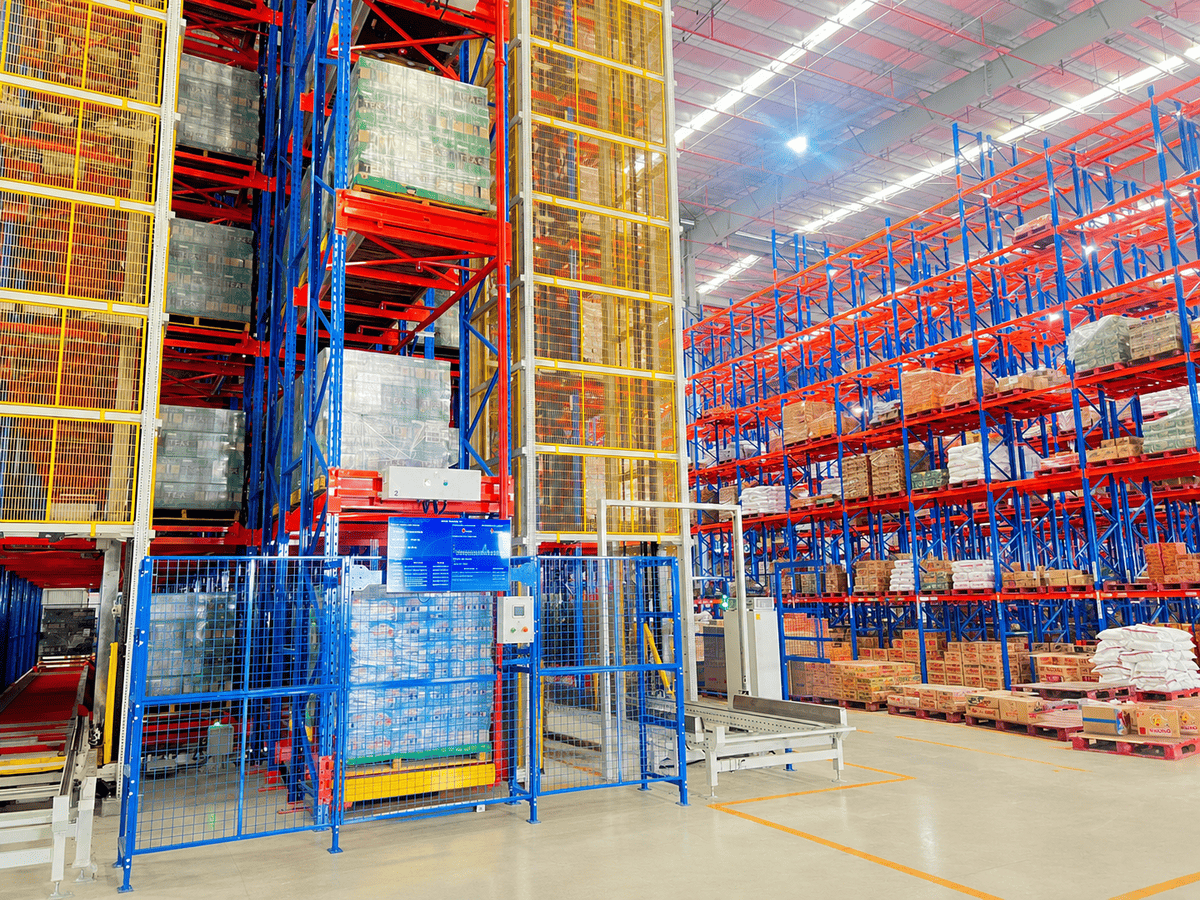
For a large-scale retail distribution centre, Vinatech implemented a 4-Way Shuttle Racking System accommodating 46,500 pallet positions within a 13,950 m² warehouse. The system maximises the facility’s 22-metre height across 8 storage levels, achieving approximately 3,333 pallet positions per 1,000 m².
By reducing conventional forklift aisles and automating internal pallet movements, the solution supports high-density storage, more efficient pallet handling and greater flexibility during seasonal demand peaks.
Case Study 2 – Automated Pharmaceutical Warehouse with 4-Way Shuttle System
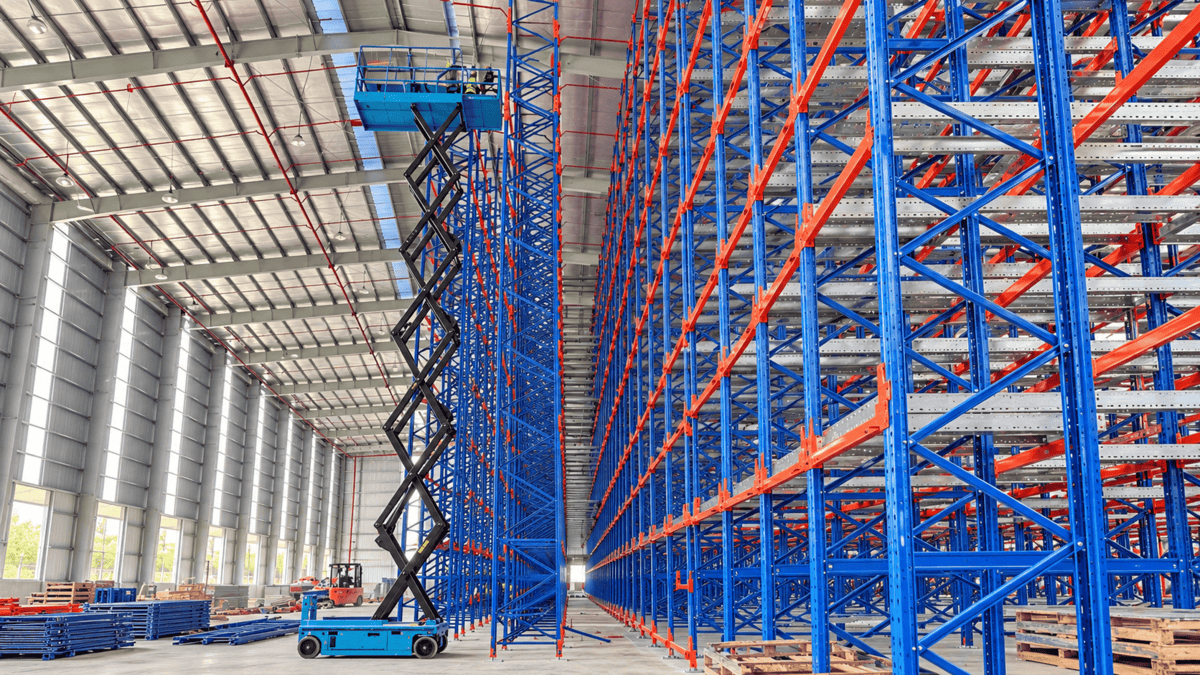
Vinatech implemented a 4-Way Shuttle System for a pharmaceutical warehouse, providing 7,200 pallet positions within 2,200 m², achieving a storage density of approximately 3,273 pallet positions per 1,000 m².
The automated solution maximises storage capacity, reduces forklift aisle requirements and streamlines pallet handling. This project demonstrates how 4-way shuttle technology supports high-density storage, efficient warehouse operations and scalable pharmaceutical inventory management.
Automated Pharmaceutical Warehouse with 4-Way Shuttle System – Vinatech Australia
Explore Vinatech’s warehouse storage solutions for high-density pallet storage and automated retrieval.
With expertise in high-density racking and warehouse automation, Vinatech Australia delivers 4-way shuttle systems that maximise storage capacity, streamline pallet handling and support long-term warehouse efficiency.
FAQs about 4-Way Shuttle