

Pallet racking handles a lot in a busy warehouse, from heavy loads to constant forklift movements. Over time, even a minor collision or an unsuitable component can affect the safety of your storage system. That’s why pallet racking accessories matter. From protective barriers to support bars, these components play an important role in keeping your racking secure, your goods properly supported and daily operations running smoothly.
What are Pallet Racking Accessories?
Pallet racking accessories are additional components designed to protect, support and improve the functionality of warehouse racking systems. While upright frames and beams form the main structure, accessories serve specific purposes that contribute to safer storage and easier day-to-day operations.
Depending on their design, these components generally fall into three categories:
- Protection: Reduce the risk of damage caused by forklifts, pallet handling and everyday warehouse activities.
- Support and stability: Provide additional support or maintain the correct positioning of racking components.
- Warehouse safety: Help prevent falling goods, secure connections and make load limits clear to operators.
Not every warehouse needs the same accessories. A busy distribution centre with frequent forklift traffic may require additional rack protection, while a facility handling different pallet sizes might need specialised support components.
>> Read More:
- Pallet Rack Weight Capacity Guide for Australian Warehouses
- Pallet Racking Audits & Safety Inspections In Australia
Essential types of Pallet Racking Accessories
From small locking clips to heavy-duty barriers, each accessory serves a particular purpose. Let’s look at six common types and where they can make a difference.
1. Column protectors and Crash barriers
Column protectors are installed around the lower sections of rack uprights to help reduce impact damage. Crash barriers, meanwhile, are generally positioned along exposed rack ends or other high-risk areas to provide a physical barrier between moving equipment and the racking.
These accessories are particularly useful in:
- Busy forklift aisles and turning areas
- Loading and unloading zones
- The exposed rack ends near traffic routes
- Areas with frequent pallet movements
2. Pallet support bars
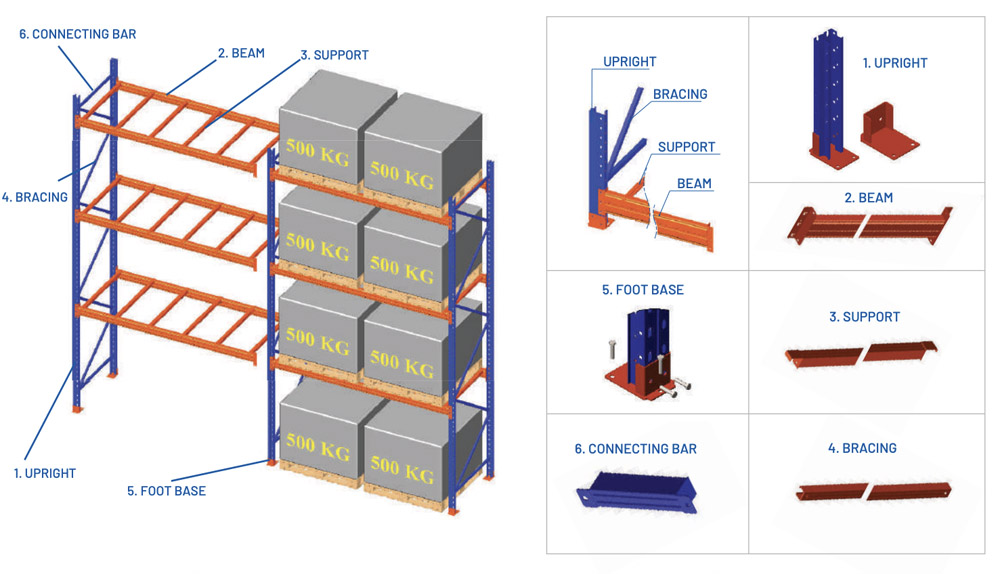
Pallet support bars are steel members installed between the front and rear beams to provide support beneath suitable loads. They’re particularly useful when a pallet’s design requires additional support points or when a storage configuration calls for a specific support arrangement.
3. Wire mesh decking and Mesh backing
Wire mesh decking and mesh backing may look similar, but they perform different functions within a warehouse storage system.
- Wire mesh decking: sits across the racking beams to provide a storage surface, supporting suitable pallets, cartons or other stored goods.
- Mesh backing: is installed vertically behind the racking to help prevent stored items from falling into nearby aisles or working areas.
Both accessories contribute to safer storage, but they must be selected according to their intended purpose, load requirements and compatibility with the existing racking.
4. Beam safety clips
Beam safety clips, also known as locking pins or beam safety locks, are small components that secure the connection between horizontal beams and upright frames. Their purpose is to reduce the risk of beams being accidentally lifted out of position during forklift operations.
5. Row spacers and Connecting bars
Row spacers connect neighbouring frames and maintain the distance specified in the racking design. Depending on the system, connecting bars may also be used to link designated structural components and support the intended configuration.
6. Safe Working Load signs
Every pallet racking system has a maximum load it can safely support, and warehouse operators need to understand those limits before placing goods into storage.
Safe Working Load (SWL) signs display essential loading information, including:
- Maximum unit load: The permitted weight of an individual loaded pallet.
- Beam level capacity: The maximum combined load allowed on a specified beam level.
- Bay capacity: The total load permitted within a racking bay.
Clear and accurate signs make it easier for forklift operators and warehouse staff to check loading limits during daily operations.

How to choose the right Pallet Racking Accessories
With so many accessories available, choosing the right ones starts with understanding how your warehouse operates rather than simply adding more components.
The table below highlights common warehouse challenges and the accessories worth considering.
| Warehouse challenge | Accessory to consider |
| Frequent forklift traffic near rack uprights | Column protectors or crash barriers |
| Pallets requiring additional support | Pallet support bars |
| Risk of goods falling behind racks | Mesh backing |
| Missing or damaged beam locking devices | Compatible beam safety clips |
| Back-to-back racking requiring connection | Row spacers or connecting bars |
| Unclear or missing load information | Safe Working Load signs |
While this is a useful starting point, choosing the right accessory also means checking how it fits into your existing system. Here are four things to consider before installation:
- Compatibility with your racking system
Racking dimensions, beam connections and upright profiles vary between manufacturers. Accessories need to be compatible with the specific system they’re designed to support.
- Load requirements
For load-bearing accessories such as support bars and mesh decking, check the rated capacity and how the weight will be distributed. The accessory must suit both the stored goods and the approved racking configuration.
- Warehouse traffic and impact risks
Pay attention to forklift turning points, exposed rack ends and busy loading areas. These are often the first places to assess when considering additional rack protection.
- Accessibility and daily operations
An accessory should make the storage system safer without restricting normal warehouse activities. For example, a poorly positioned crash barrier could interfere with forklift access or make pallet placement more difficult.
The right combination of accessories should address your warehouse’s actual needs while working safely with the existing racking structure.

>> Read More:
- Anatomy of a Pallet Racking System: A Deep Dive into Beams, Frames, and Bracing
- A Glossary of Common Pallet Racking Terms You Need to Know
Pallet Racking Accessories and Australian Safety Standards
Pallet racking safety isn’t just about choosing strong materials or installing protective equipment. In Australia, it’s also important to follow relevant standards and ensure that the entire storage system remains suitable for its intended use.
AS 4084.1:2023 covers the design of steel storage racking within its scope, while AS 4084.2:2023 addresses operation and maintenance. Some specialised racking configurations fall outside these standards and may require additional engineering guidance.
According to WorkSafe Victoria, replacing racking components or making changes that affect the structure should involve appropriate compatibility checks and technical assessment.
This is particularly important when replacing damaged beams, locking devices, uprights or other components. Parts from different manufacturers may appear similar but have different connection details or structural properties.
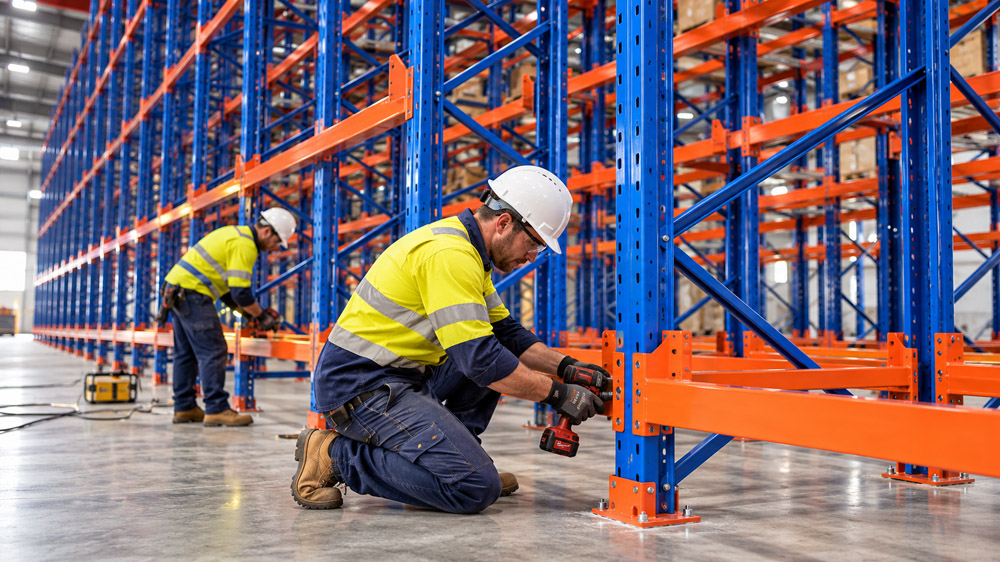
Beyond supplying racking components, we also provide warehouse layout planning and installation services. By considering storage capacity, pallet access and forklift movements together, our team can help businesses choose arrangements that suit their facilities and daily operations.
Discover Vinatech’s warehouse storage solutions and compare options for your facility.
Complete Your Warehouse Racking System with Vinatech Australia
Choosing the right pallet racking accessories is easier when they’re considered as part of the overall storage design. After all, even a well-made component needs to suit the racking structure, the products being stored and the way equipment moves around the warehouse.
At Vinatech Australia, we design and install warehouse storage systems tailored to different operational needs. Our pallet racking solutions include supporting components and protective accessories such as:
- Support Bars: Provide additional support where required by the approved storage design.
- Connecting Bars: Link designated racking components according to the system configuration.
- Foot Bases and Covers: Form part of the rack base arrangement and provide protection around designated areas.
- Single and Double Crash Barriers: Help protect exposed uprights in areas where forklift impacts are a concern.
Beyond supplying racking components, we also provide warehouse layout planning and installation services. By considering storage capacity, pallet access and forklift movements together, our team can help businesses choose arrangements that suit their facilities and daily operations.